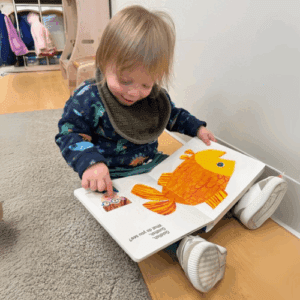

Finding the right daycare for your child is one of the biggest decisions you’ll make as a parent. It shapes their daily routine, social development, and early learning during their most formative years. But with so many options, knowing what to look for can feel overwhelming. This guide breaks down exactly how to choose a daycare with confidence. We’ll show you what a high-quality program looks like in action, from understanding different teaching methods like the Creative Curriculum to knowing how to evaluate daycare reviews, so you can make an informed choice for your family.
With so many options available, knowing what to look for in a daycare can feel overwhelming. This guide walks you through every step of the process, from understanding different types of childcare to evaluating safety standards, curriculum quality, and staff credentials. By the end, you will have a clear daycare checklist for parents that makes the decision easier and more confident.
What Are the Different Types of Daycare?
Before you start touring facilities, it helps to understand the main types of daycare available to families.
Daycare Centers are licensed facilities that care for larger groups of children organized by age. They typically offer structured schedules, educational programming, and trained staff. Centers follow state licensing requirements for safety, staff-to-child ratios, and curriculum standards.
Home-Based Daycare operates out of a caregiver’s residence with a smaller group of children, often mixed ages. Some parents prefer this setting for its intimate, family-like environment. Home-based providers may or may not be licensed depending on your state’s regulations.
Preschool Programs focus more heavily on educational preparation and are designed for children ages 3 to 5. These programs often follow a specific curriculum philosophy, such as Reggio Emilia, Montessori, or play-based learning. For a detailed look at evaluating preschool options specifically, see our guide on how to choose the right preschool.
Nanny or Au Pair Care provides one-on-one attention in your own home. While this option offers maximum flexibility, it does not provide the social interaction that group settings offer.
Understanding these options helps you narrow your search based on your child’s age, your budget, and the type of learning environment you value most.
Daycare vs. Preschool
While many people use the terms “daycare” and “preschool” interchangeably, they often have different focuses. Traditionally, daycare provides safe supervision for children, especially infants and toddlers, while parents are at work. Preschool, on the other hand, is typically geared toward older children and centers on school readiness. As our own guide on choosing a preschool notes, “Preschool programs focus more heavily on educational preparation and are designed for children ages 3 to 5.” These programs often follow a specific curriculum, such as the Reggio Emilia philosophy, which views children as capable and curious learners. The best programs successfully blend the two, offering a nurturing, safe environment that also provides a strong educational foundation from the very beginning.
The Practical First Step: Navigating Waitlists
Once you begin your search, you’ll quickly encounter one of the biggest hurdles for parents: the waitlist. It’s a common frustration. As one parent on Reddit shared, “Many parents said the biggest challenge is simply finding a daycare that has an open spot for their child, due to long waitlists in many areas.” This isn’t an exaggeration. High-quality centers often have limited availability, especially in infant classrooms where staff-to-child ratios are smallest. The demand for excellent, reliable care simply outpaces the supply in many communities, leading to lists that can be months or even years long. Understanding this reality is the first practical step in your search.
Because waitlists are the norm, the best strategy is to be proactive and organized. Don’t just find one center you love and put all your hopes there; get on the waitlist for two or three of your top choices. The process usually involves filling out an application and sometimes paying a small, non-refundable fee to hold your spot in line. This doesn’t lock you into a commitment, but it does keep your options open. Use this time to ask about their waitlist policies and how they communicate openings. You can find answers to common questions like these on a center’s Frequently Asked Questions page. This approach gives you the best chance of securing a spot in a program that feels right for your family when you need it.
Why You Should Start Your Search Early
Given the reality of long waitlists, the single most important piece of advice is to begin your childcare search as early as possible. It might feel premature, but it’s a crucial step. As Children’s Hospital Colorado advises, you should “start looking for childcare as soon as possible, even before your baby is born.” Starting early transforms the process from a frantic, last-minute scramble into a thoughtful, deliberate choice. It gives you the time you need to thoroughly research different programs, understand their educational philosophies like The Project Approach, and schedule unhurried tours. An early start ensures you’re not just grabbing the first available spot but are making an empowered decision that aligns with your family’s values and sets your child up for success.
How to Verify Daycare Safety and Licensing
Safety should be the first thing you evaluate when choosing a daycare. Every reputable facility should meet or exceed your state’s licensing requirements.
Check licensing status. In Connecticut, the Office of Early Childhood maintains a database of licensed childcare providers. A valid license confirms that the facility meets minimum standards for health, safety, and staff qualifications.
Review staff-to-child ratios. Lower ratios mean more individual attention for your child. The National Association for the Education of Young Children (NAEYC) recommends the following ratios:
- Infants (birth to 12 months): 1 caregiver for every 3 to 4 infants
- Toddlers (12 to 28 months): 1 caregiver for every 3 to 6 toddlers
- Preschoolers (3 to 5 years): 1 caregiver for every 7 to 10 children
Inspect the physical environment. Look for secure entry systems, childproofed spaces, clean and well-maintained facilities, and clearly posted emergency procedures. Fire exits should be accessible and smoke detectors visible.
Ask about background checks. All staff members should undergo comprehensive background screening before working with children. Reputable programs complete these checks without being prompted.

Go Beyond a Basic License Check
A state license is the absolute minimum requirement for any childcare program. While it’s a crucial first step to verify, think of it as the floor, not the ceiling. A license confirms that a center meets basic health and safety regulations, but it doesn’t tell you much about the quality of the educational experience, the warmth of the teachers, or the overall philosophy of the program. To truly understand if a daycare is the right fit for your family, you need to dig a little deeper. Looking beyond the license certificate on the wall will give you a much clearer picture of a program’s day-to-day operations and its commitment to excellence.
Review State Inspection Reports and Violation Histories
One of the best ways to see how a center operates behind the scenes is to review its inspection reports. These documents are public records and provide a detailed history of any health or safety violations a program has had, from minor infractions to more serious concerns. You can see what the issues were, how the center responded, and whether there are recurring problems. Don’t panic if you see a minor violation; what’s more important is observing a pattern. A center that consistently has the same issues or fails to correct them quickly might not have the strong operational oversight you’re looking for. These reports give you an unbiased look at a program’s track record.
Check for State Quality Rating Systems
Some states have implemented a Quality Rating and Improvement System (QRIS) to help parents easily identify high-quality childcare. These systems evaluate programs on a scale, awarding ratings based on standards that often exceed basic licensing requirements. Factors like teacher qualifications, curriculum quality, learning environment, and family engagement are typically assessed. This gives you a simple, at-a-glance way to compare the quality of different programs. While not every state has a QRIS, it’s worth checking to see if this tool is available in your area. It’s another layer of information that helps you move beyond the simple pass/fail of a license check.
Understanding Accreditations like NAEYC
While licensing is mandatory, accreditation is a voluntary choice that signals a program’s deep commitment to excellence. Think of it as a mark of distinction. To become accredited, a daycare must go through a rigorous process to prove it meets the highest national standards for quality early childhood education. The most respected credential is from the National Association for the Education of Young Children (NAEYC). This accreditation is considered the gold standard in our field, and it’s a clear indicator that a program is dedicated to providing an exceptional environment for children, families, and educators.
Programs with NAEYC Accreditation are evaluated on ten comprehensive standards, which include curriculum, teaching practices, health, and relationships with families. A key part of this is ensuring the center supports its staff with fair pay, benefits, and professional development opportunities. This leads to happier, more experienced teachers and lower staff turnover, which is incredibly important for your child. Consistent caregivers allow children to form secure, trusting bonds, which are essential for healthy development. When you see that a school has earned this accreditation, you know it has invested significant time and effort into creating a top-tier learning environment. It’s a powerful sign that they don’t just meet the standards—they strive to set them.
What Will Your Child Learn? A Look at Daycare Curriculums
A quality daycare does more than keep children safe. It provides a structured learning environment that supports cognitive, social, and emotional growth.
Ask about the educational philosophy. Programs that follow recognized approaches like Reggio Emilia, Montessori, or Creative Curriculum tend to be more intentional about developmental milestones. A strong educational daycare weaves learning into every part of the day, from structured lessons to free play.
Look for age-appropriate activities. Infants need sensory exploration and bonding time. Toddlers benefit from hands-on activities that build motor skills and language. Preschoolers thrive with activities that develop early literacy, numeracy, and social-emotional skills.
Review the daily schedule. A well-balanced day includes a mix of structured learning, free play, outdoor time, meals, and rest periods. Ask the director for a sample daily schedule so you can see how time is divided.
Consider kindergarten readiness. If your child is approaching school age, look for programs that actively prepare children for the transition. Ask about pre-reading skills, number concepts, and social skills they teach in the months before kindergarten. A program focused on kindergarten readiness can make a meaningful difference.
Fostering Social and Emotional Skills
Beyond letters and numbers, a high-quality daycare curriculum places a huge emphasis on helping children understand their feelings and navigate social situations. This is often called social-emotional learning (SEL), and it’s one of the most important foundations for success in school and in life. A program that intentionally teaches these skills helps children learn how to share, take turns, resolve conflicts, and express their emotions in healthy ways. When you’re evaluating a daycare, ask how they integrate SEL into the daily routine. Is it treated as a core part of the curriculum, or is it an afterthought?
Great programs create a safe and supportive environment where children feel comfortable practicing these new skills. Teachers act as guides, helping children make sense of their interactions with peers. They use specific strategies to build empathy, self-regulation, and positive relationship skills. At Strong Start, our entire approach is built around nurturing confident, capable learners, and a huge part of that is developing a strong social and emotional foundation. We believe that when children feel secure and understood, they are free to explore, learn, and grow into compassionate individuals. Look for a program that shares this philosophy and can clearly explain how they bring it to life in the classroom.
Practice Through Role-Play
Social skills aren’t something children are born with; they have to be learned and practiced, just like any other skill. Role-playing is a fantastic and low-pressure way for kids to try out different social scenarios. In a daycare setting, a teacher might guide children through acting out common situations, like asking to join a game or sharing a popular toy. By practicing what to say and do in a playful environment, children build the confidence to use these skills in real-life moments. This proactive approach helps prevent conflicts before they start and gives children a toolbox of strategies to pull from when they feel stuck.
Praise Positive Interactions
When you see your child handle a social situation well, acknowledging it can make a huge difference. The same is true in a daycare classroom. Attentive teachers look for moments when children use their developing social skills and offer specific, positive feedback. Instead of a generic “good job,” they might say, “I saw you give Leo a turn with the truck. That was very kind and made him so happy.” This kind of praise does more than just make a child feel good; it reinforces the desired behavior and helps them understand exactly what they did right, making it more likely they’ll repeat the action in the future.
Point Out Social Cues in Daily Life
Everyday interactions are packed with learning opportunities. A skilled educator uses these moments to help children understand social cues and the impact of their actions. They might narrate what’s happening in the room, pointing out how one child’s behavior affects another. For example, a teacher might say, “When you smiled at the new student, it helped her feel welcome.” This approach is a cornerstone of philosophies like the Reggio Emilia inspiration, which views the environment and daily experiences as a “third teacher.” By connecting actions to outcomes in real-time, children learn empathy and begin to see the world from others’ perspectives.
Prompt with Gentle Reminders
Learning new social skills takes time, and children will inevitably forget to use them. The key is how adults respond in those moments. Instead of nagging or scolding, effective teachers offer gentle prompts to guide children back on track. A simple reminder like, “What’s a kind way to ask for that toy?” can empower a child to solve their own problem without feeling criticized. This supportive guidance helps children internalize skills and builds their confidence as capable problem-solvers. It’s a strategy that strengthens the teacher-child relationship and is something you can continue at home, creating consistency between school and family life through active parent partnerships.
Who Will Be Caring for Your Child?
The people caring for your child matter just as much as the facility itself.
Ask about credentials. Look for staff with degrees or certifications in early childhood education, child development, or related fields. Ongoing professional development training is a sign of a program that invests in quality.
Observe caregiver interactions. During your visit, watch how teachers interact with children. Are they warm, engaged, and responsive? Do they get down to the child’s level when speaking? The quality of these interactions is one of the strongest predictors of a positive daycare experience.
Inquire about teacher turnover. High turnover disrupts the consistency children need to feel secure. Ask how long most teachers have been with the program. Stable staffing indicates a healthy work environment and better outcomes for children.
Check the lead teacher-to-assistant ratio. Classrooms should have qualified lead teachers supported by trained assistants, not the other way around.

The Importance of Qualified and Well-Supported Educators
The educators are the heart and soul of any early childhood program. While credentials like degrees in early childhood education are important, staff stability is just as critical. High turnover can disrupt the secure attachments that are so vital for young children. As research and parent experiences show, a center with low turnover often indicates a healthy work environment where teachers feel valued and supported. This translates directly into warmer, more engaged, and responsive care for your child. A program that invests in its people is a program that invests in your child’s well-being. At Strong Start, we believe that supporting our exceptional educators with ongoing professional development and a positive culture is the most important thing we do to ensure your child receives the best possible care and education.
Understanding the Daycare Environment and Child Well-being
Beyond the daily schedule and the toys on the shelves, the emotional climate of a daycare is one of the most critical factors for your child’s well-being. A daycare is more than just a place; it’s a community where your child will form some of their first relationships outside the family. The way caregivers interact with children can shape their sense of security, confidence, and even their physiological stress responses throughout the day. Understanding what a truly supportive environment looks and feels like is key to choosing a program where your child will not just be cared for, but will genuinely thrive emotionally and socially.
How Quality of Care Impacts a Child’s Stress Levels
It’s normal for children to experience some stress when adapting to new environments, and studies show this can be measured through cortisol, the body’s stress hormone. Research has found that for many children, cortisol levels can rise throughout the day while at daycare. However, the quality of care plays a huge role in managing this response. Daycares with an “intrusive, over-controlling” style—where caregivers are overly directive or negative—are linked to a much larger spike in these stress levels. This underscores the importance of finding a program that prioritizes a nurturing and responsive approach, helping children feel secure and emotionally supported instead of managed or controlled.
Identifying a Supportive vs. Over-Controlling Environment
So, how can you spot the difference? During your tour, pay close attention to the interactions. A supportive environment is filled with warmth. You’ll see teachers kneeling to speak with children at eye level, responding to their needs with patience, and offering comfort freely. This type of care is linked to children feeling less anxious and aggressive. Another powerful indicator is staff stability. Ask about teacher turnover; low turnover is often a sign of a healthy work environment and allows children to form the secure, consistent attachments they need to feel safe. Programs that invest in their exceptional educators create the stability that children and families can depend on.
The Ultimate Daycare Tour Checklist: What to Ask
A daycare tour is your best opportunity to see the program in action. Come prepared with a list of specific questions that go beyond the basics.
Health and safety questions:
- What is your illness policy? When must a child stay home?
- How do you handle medical emergencies?
- What is your policy on allergies and medication administration?
Curriculum and communication questions:
- How do you communicate with parents about daily activities and milestones?
- What does a typical day look like for my child’s age group?
- How do you handle behavioral challenges?
Logistics and policies:
- What are your hours of operation and holiday schedule?
- What is your tuition structure and what is included?
- What is your policy on late pickup?
For a more detailed guide on what to ask during visits, especially for younger children, check out our resource on questions to ask when touring a daycare for an infant.
How Much Does Daycare Cost?
Daycare costs vary significantly based on location, type of care, and the age of your child. Understanding your options helps you plan effectively.
Get the full picture on pricing. Ask about tuition, registration fees, supply fees, and any additional costs for meals or activities. Some programs include meals in their tuition while others do not. You can explore typical daycare costs in Connecticut to set realistic expectations.
Explore financial assistance options. Many families qualify for programs that help offset childcare costs. Options include:
- Care 4 Kids (Connecticut’s childcare subsidy program)
- Dependent Care Flexible Spending Accounts (FSAs) through your employer
- Child and Dependent Care Tax Credit on your federal tax return
- Head Start and Early Head Start programs for income-eligible families
If you are considering full-time daycare and concerned about affordability, researching these programs early gives you more options.
Compare value, not just price. The least expensive option is not always the best value. Consider what is included in the tuition, the quality of the program, staff credentials, and the overall environment. A program that costs slightly more but provides a stronger educational foundation and lower ratios may be worth the investment.
Does the Daycare Fit Your Schedule? Location and Hours
Practical factors play a major role in your daily experience with daycare.
Consider proximity. A daycare close to your home or workplace reduces commute stress and makes pickup easier, especially during emergencies. If you have multiple children at different schools, centralizing care can simplify your routine.
Review hours of operation. Make sure the facility’s hours align with your work schedule, including any extended care options for early drop-off or late pickup. Some programs offer flexible scheduling, while others require full-time enrollment only. Understanding the hours and rates upfront prevents surprises later.
Check the enrollment process. Popular programs often have waitlists, especially for infant care. Start researching and visiting daycares well before you need care to ensure you secure a spot.
Ask about the transition period. Quality programs offer a gradual transition plan for new children, allowing shorter initial days to help your child adjust. This is especially important for infants and toddlers who may experience separation anxiety.
Assessing Program Reliability and Closures
Your childcare is your support system, but it can quickly become a source of stress if it’s not reliable. For many working parents, frequent, unexpected closures are a deal-breaker, and they are often a symptom of a larger issue: staffing instability. High teacher turnover not only disrupts your work schedule but also affects your child’s ability to form secure attachments with their caregivers. When you tour a facility, ask direct questions about reliability. Inquire about their policy for closures due to weather or staffing shortages. A crucial question is, “What is the average length of time your lead teachers have been with the center?” A program that invests in its exceptional educators and has low turnover is more likely to provide the consistent, dependable care your family needs. Also, check the center’s state licensing records for any history of violations related to staffing ratios or supervision, as this can be a red flag for future problems.
Finding a Daycare for a Child with Special Needs
If your child has special needs, the search for the right daycare involves an extra layer of consideration. You are not just looking for a safe and caring environment; you are looking for a program that can actively support your child’s unique developmental path. This means finding a center with the right expertise, resources, and philosophy to help your child thrive. While it may require more research, identifying a truly inclusive program is possible when you know what to look for. The key is to focus on their ability to provide reasonable accommodations, the qualifications of their staff, and an environment that supports your child’s specific sensory and learning needs.
Understanding Your Rights: Reasonable Accommodations
First, it’s important to know that under the Americans with Disabilities Act (ADA), childcare centers cannot legally refuse to enroll a child based on a disability unless their presence would pose a direct threat to others or require a fundamental alteration of the program. Centers are required to make “reasonable accommodations” to welcome children with special needs. This could include things like administering medication, adapting activities, or working with an outside therapist who comes to the center. When you tour a facility, be open about your child’s needs and ask directly how they would support them. This initial conversation will tell you a lot about their willingness and ability to be a true partner in your child’s care.
What to Look for in an Inclusive Program
Beyond basic accommodations, a truly inclusive program has the training and structure to support diverse learners. Many traditional daycares lack staff with specialized training, so it’s crucial to ask about their educators’ qualifications and experience with special needs. Look for programs where teachers receive ongoing professional development. A flexible, child-led curriculum is also a strong indicator of an inclusive environment. Philosophies like the Reggio Emilia inspiration and The Project Approach are naturally adaptive, allowing children to learn at their own pace and explore their own interests. This individualized approach is far more effective than a rigid, one-size-fits-all curriculum. Finally, a strong commitment to partnering with parents is non-negotiable, as consistent communication ensures your child receives seamless support between home and school.
Sensory Considerations for Children with Autism
For children with autism or sensory processing disorders, the physical environment can make or break their experience. A typical daycare can be noisy and visually crowded, which can feel overwhelming. When you visit a potential center, pay close attention to the sensory environment. Is there a quiet, cozy corner where a child can go to decompress if they feel overstimulated? Is the room filled with harsh fluorescent lighting, or is there plenty of calming, natural light? Ask how the staff manages the overall noise level. A well-designed classroom will have designated quiet areas and offer a balance of stimulating and calming activities, showing an intentional approach to meeting diverse sensory needs.
How to Choose a Daycare: Your Decision-Making Checklist
Use this checklist when evaluating each daycare you visit. A systematic approach ensures you do not overlook important details.
Safety and Licensing:
- Facility is licensed and in good standing
- Staff-to-child ratios meet or exceed NAEYC recommendations
- Secure entry system and visible safety measures
- All staff have completed background checks
- Clean, childproofed environment
Curriculum and Staff:
- Clear educational philosophy and age-appropriate activities
- Qualified staff with early childhood education credentials
- Low teacher turnover rate
- Daily schedule balances learning, play, and rest
Communication and Policies:
- Regular parent communication (daily reports, conferences)
- Clear illness, emergency, and behavioral policies
- Transparent pricing with no hidden fees
Practical Fit:
- Hours align with your work schedule
- Location is convenient for your commute
- Tuition fits within your budget (with financial assistance if needed)
- Your child feels comfortable during the visit
For an even more detailed evaluation framework, visit our comprehensive childcare center checklist for parents.
Frequently Asked Questions
What is the best age to start daycare?
Many children begin daycare between 3 months and 12 months old, though every family’s situation is different. Research shows that high-quality daycare can support healthy development starting in infancy. The most important factor is the quality of the program, not the specific age your child starts.
How many daycares should I tour before deciding?
Visiting 3 to 5 programs gives you enough comparison to make an informed decision. Take notes during each tour and revisit your top choice for a second look before committing.
What are red flags to watch for during a daycare tour?
Watch for disengaged staff, unsanitary conditions, children who appear bored or distressed, reluctance to answer your questions, and a lack of visible licensing documentation. Trust your instincts if something feels off.
How far in advance should I start looking for daycare?
Start your search at least 3 to 6 months before you need care. Infant programs tend to have longer waitlists and may require even more lead time. Touring facilities during the school year gives you a more accurate picture of daily operations.
What is the difference between daycare and preschool?
Daycare provides care for children across a broader age range and typically operates during full business hours. Preschool programs focus more on educational preparation for children ages 3 to 5 and may offer half-day or full-day options. For a detailed comparison, see our guide to daycare vs preschool. Many programs, including educational daycares, combine both elements.
Preparing Your Child for the Transition to Daycare
Once you’ve chosen the right daycare, the next step is preparing your child for this big change. A smooth transition sets the stage for a positive experience and helps ease the separation anxiety that both children and parents often feel. The key is to make the new routine feel as familiar and predictable as possible before the first day even arrives. By taking a few simple, proactive steps, you can help your child feel secure, confident, and even excited about starting their new adventure. The following strategies focus on practicing the routine, easing in gradually, and involving your child in the process to build a strong foundation for success.
Practice the New Routine at Home
Starting daycare introduces a whole new schedule, and practicing it beforehand can make a world of difference. A week or two before the start date, begin your “daycare morning” routine. Wake up, have breakfast, and get dressed at the same time you will on a real daycare day. These trial runs help your child’s internal clock adjust and reduce the feeling of being rushed or stressed on the first official morning. If your schedule allows, consider starting your child in care a week before you return to work. This gives you the flexibility to begin with shorter days and provides a buffer to handle the emotional and logistical adjustments without added work pressure.
Ease in with a Gradual Start
A quality daycare program understands that children need time to adapt. Many centers, including Strong Start, encourage a gradual transition where your child begins with shorter days and slowly works up to a full day. This approach is especially helpful for infants and toddlers who are still developing a sense of object permanence and may struggle with separation anxiety. Starting with a two-hour visit, then a half-day, and then a full day allows your child to build trust with their new caregivers and become comfortable in the environment at their own pace. This gentle introduction shows them that daycare is a safe, fun place and that you will always come back for them.
Involve Your Child in the Process
Giving your child a sense of ownership can transform their anxiety into excitement. Talk about daycare in positive terms, focusing on the new friends they will make and the fun activities they will do. If possible, visit the center together before their first day to meet the teachers and see the classroom. For toddlers and preschoolers, let them help with preparations. They can pick out a special backpack, a new lunchbox, or a comfort item from home to bring with them. Describing what their day will look like also helps them feel prepared. You can explain the flow of your child’s day, from circle time to outdoor play, so the experience feels predictable and secure.
Trusting Your Gut: Making the Final Daycare Choice
Choosing a daycare is deeply personal. No checklist can replace the feeling you get when you walk into a program and see your child light up, or the peace of mind that comes from watching caregivers who genuinely love what they do.
Take your time, ask hard questions, and trust the research you have done. The right daycare will feel like a natural extension of your family, a place where your child is known, celebrated, and gently challenged to grow.
If you are exploring early care and education options in Connecticut, schedule a visit to see what a nurturing, play-based learning environment looks like in action.
Key Takeaways
- Begin your search early and verify quality beyond the basics: High-quality daycares often have long waitlists, so start looking months in advance. Move past a simple license check by reviewing public inspection reports and looking for top-tier accreditations like NAEYC, which show a program’s deep commitment to excellence.
- Prioritize the educators and the emotional environment: A program is only as good as its teachers. Look for centers with low staff turnover and observe how educators interact with children, ensuring they create a warm, supportive atmosphere that nurtures social and emotional skills.
- Use the tour to assess the daily reality: A tour is your chance to see a program in action. Pay close attention to the interactions between staff and children, ask specific questions about safety and communication, and trust your intuition about whether the environment feels like the right fit for your child.
Written By
Marc Hoffman
Founder, Strong Start Early Care & Education
Marc founded Strong Start in 2014, inspired by his studies at Williams College, Yeshiva University, and research at Yale University. His child-centered, inquiry-based approach to early education has helped hundreds of families in the Trumbull and Bridgeport communities. As a parent himself, Marc understands the importance of finding a nurturing environment where every child can learn, grow, and flourish.