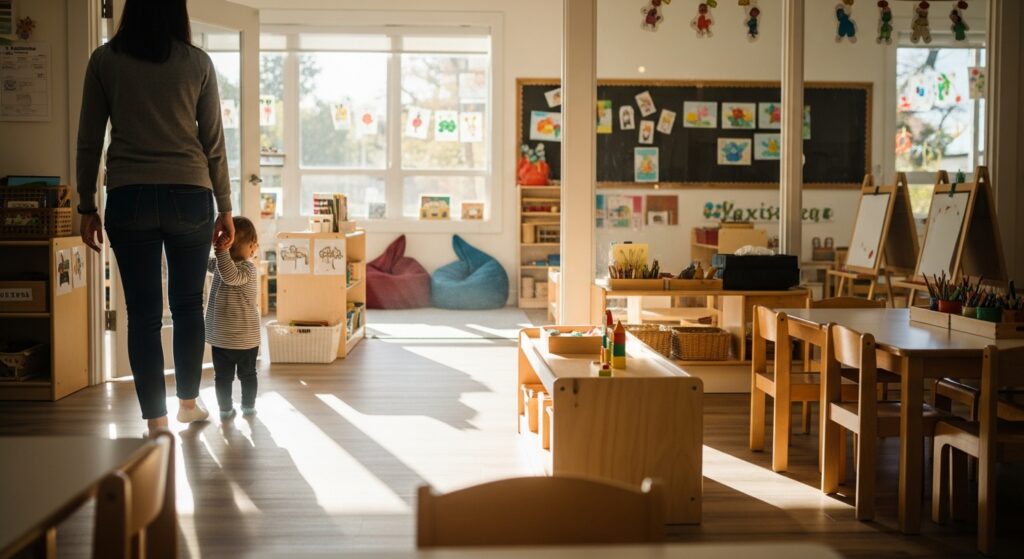
Finding the right preschool is one of the most meaningful decisions you’ll make. It’s not just about finding a place for your child to spend the day. You’re choosing a community that will shape how they see themselves and approach learning for years to come. The real question is how to pick a preschool that truly fits. It’s about looking beyond the shiny brochures to find the warmth and connection that will help your child thrive. This guide will show you exactly what to look for.
With so many options available, from Montessori and Reggio Emilia-inspired programs to play-based centers and faith-based schools, the search can feel overwhelming. This guide walks you through the most important factors to consider when choosing a preschool, the questions you should ask during tours, and the signs that a program is truly built around your child’s needs.
Why Preschool Matters More Than You Think
Research consistently shows that high-quality early childhood education builds the foundation for lifelong learning. Children who attend quality preschool programs develop stronger social-emotional skills, better self-regulation, and deeper cognitive abilities that carry through elementary school and beyond.
But not all programs deliver the same results. The difference between a mediocre program and a great one often comes down to teacher quality, curriculum philosophy, and how well the environment supports each child’s natural development. That is exactly why choosing carefully matters.
Understanding the Preschool Application Timeline
One of the most surprising parts of the preschool search isn’t just figuring out what you’re looking for, but when you need to start looking. Many parents are caught off guard by how early the process begins. Because high-quality programs are often in high demand, planning ahead is the key to a calm and confident search. This isn’t about creating a sense of urgency, but about giving yourself the gift of time. When you aren’t rushed, you can thoughtfully explore each school’s philosophy, meet the educators, and truly picture your child thriving in that environment before making a commitment.
Most preschools follow a traditional academic calendar, which means applications for fall enrollment are typically due the winter before. If you’re hoping for your child to start in September, you should plan on touring schools and submitting applications during the previous autumn. This cycle is especially important for sought-after programs with limited spots. We always encourage families to connect with us early, not to rush the decision, but to begin a conversation. It gives you a genuine opportunity to see if our Reggio Emilia-inspired approach and nurturing community feel like the right fit for your family’s journey.
When to Start Your Search
So, when exactly should you begin? A good rule of thumb is to start your research about a year before your desired start date. For most families targeting a fall start, this means you’ll want to begin looking into options the previous autumn. It might feel surprisingly early to be thinking about preschool when your child has just celebrated their second birthday, but this generous timeframe gives you plenty of breathing room. You can tour different schools and talk with directors without the pressure of a fast-approaching deadline, which is helpful for popular schools with waiting lists.
While many children begin preschool around age three, every child develops on their own schedule. Some programs offer a continuum of care from a younger age. At Strong Start, our infant and toddler classrooms provide a nurturing foundation that makes the eventual transition feel seamless. Generally, application deadlines fall in the winter, with acceptance letters arriving in early spring. After accepting a spot, you will typically have a few weeks to complete the paperwork and provide a deposit to secure your child’s place.
First, Define Your Family’s Must-Haves
Before visiting any preschool, take a few minutes to write down what matters most to your family. Every family’s priorities look a little different, and getting clear on yours will help you evaluate programs more objectively.
Consider these questions:
- Schedule needs: Do you need full-day care, or would a half-day program work? What are your drop-off and pick-up time requirements?
- Location and commute: How far are you willing to travel? Is proximity to home or work more important?
- Philosophy and values: Do you prefer a play-based approach, an academic-focused curriculum, or something in between? Are there cultural or religious values you want reflected?
- Budget: What is your monthly budget for preschool? Have you explored financial assistance programs, employer tuition benefits, or state-funded pre-K options?
- Special considerations: Does your child have any developmental needs, allergies, or other requirements that the program must accommodate?
Having a clear list of non-negotiables versus nice-to-haves will save you time and help you compare programs side by side.
Budgeting for Preschool Costs
Let’s be honest: the cost of preschool is a significant part of the decision for most families. Tuition can vary quite a bit depending on your location, the type of program (like full-day versus half-day), and the school itself. Before you get too far into your search, it’s helpful to have a clear picture of your monthly budget. This isn’t just about figuring out what you can afford; it’s about narrowing your options so you can focus your energy on the schools that are a genuine fit. Many programs offer financial assistance, and it’s always worth asking about scholarships or grants during your tours. You might also be surprised to learn about employer programs, like a tuition benefit, that can make a high-quality education more accessible than you thought.
How to Evaluate a Preschool’s Curriculum
The curriculum is the heart of any preschool program. It determines what your child will learn, how they will learn it, and whether the experience will spark their curiosity or dampen it. For a detailed comparison of early childhood education program types, including Montessori, Reggio Emilia, Waldorf, and play-based approaches, see our comprehensive guide.
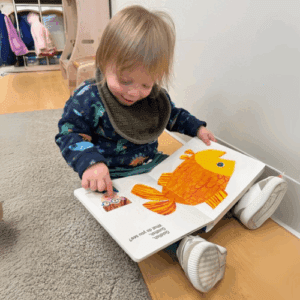
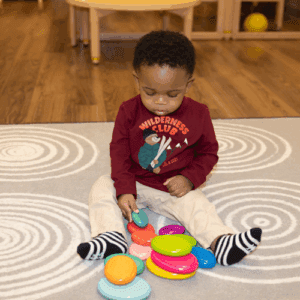
Play-based learning: The most respected early childhood education experts agree that young children learn best through play, exploration, and hands-on discovery, not through worksheets or rote memorization. Look for programs where children have meaningful choices, engage in creative projects, and learn through inquiry rather than instruction alone.
Social-emotional development: A strong preschool curriculum goes beyond ABCs and 123s. It should intentionally teach children how to identify their feelings, resolve conflicts, share, take turns, and build friendships. These social-emotional skills are among the strongest predictors of school readiness and long-term success.
Emergent and project-based approaches: Some of the most effective preschool curricula, including those inspired by Reggio Emilia and the Project Approach, allow children to guide their own learning through extended investigations of topics that genuinely interest them. This builds critical thinking, collaboration, and intrinsic motivation.
Kindergarten readiness: While drilling academic skills is not appropriate for preschoolers, a quality program will naturally build the foundational skills children need for kindergarten, including fine motor development, early literacy and numeracy concepts, attention and focus, and the ability to follow multi-step directions. If you are still deciding whether your child is ready to start, our guide to signs your child is ready for preschool can help.
Look for Active, Engaged Learning
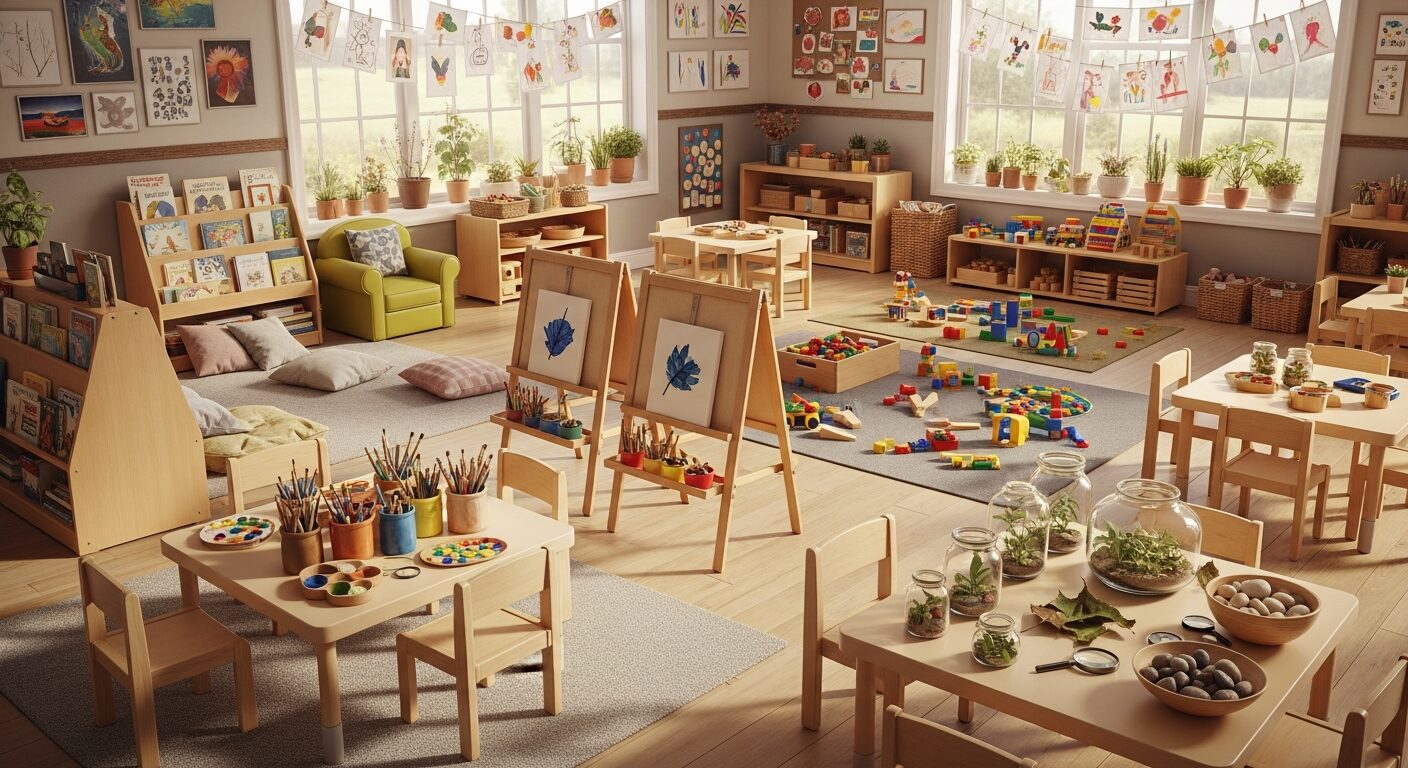
When you step into a classroom, observe how learning happens. Are children actively exploring, creating, and collaborating, or are they passively receiving instruction? The most effective preschools champion learning through play and hands-on discovery, not through worksheets or rote memorization. You should see children engaged in meaningful projects and given choices in their activities. This approach builds critical thinking and a genuine love for learning. For example, curricula inspired by Reggio Emilia or that use the Project Approach allow children’s interests to guide deep investigations, turning their natural curiosity into powerful learning moments. A great program also intentionally weaves social-emotional development into every day, teaching kids how to manage feelings, resolve conflicts, and build friendships—skills that are foundational for success in school and life.
How Progress is Measured
Progress in preschool isn’t about grades; it’s about growth. High-quality programs measure development through careful observation and documentation rather than tests. Teachers watch and listen to children, collecting work samples, photos, and notes to create a portfolio that tells the story of your child’s learning journey. This approach provides a rich, holistic view of their cognitive, social, and emotional development. Ask how the school documents and shares this information with families. The best programs see this as a collaborative effort and prioritize partnering with parents. They provide regular updates through conferences, daily reports, and open communication, ensuring you are always connected to your child’s experience and growth.
How to Spot Great Teachers and a Nurturing Classroom
Research from the National Institute for Early Education Research consistently identifies teacher quality as the single most important factor in preschool effectiveness. When you visit a preschool, pay close attention to how teachers interact with children.
Key Traits of an Amazing Preschool Teacher
- Warm and responsive interactions: Teachers get down to children’s eye level, listen attentively, and respond to individual needs with patience and genuine care.
- Intentional facilitation: Rather than directing every activity, skilled teachers ask open-ended questions, extend children’s thinking, and scaffold new skills based on each child’s developmental stage.
- Low staff-to-child ratios: Smaller ratios mean more individualized attention. For preschool-age children (3 to 5 years), look for ratios no higher than 1:10, with 1:8 or lower being ideal.
- Professional development: Ask whether teachers participate in ongoing training and professional growth opportunities. Programs that invest in their educators tend to deliver better outcomes for children.
A Mix of Experience and Energy
The best classrooms are led by teachers who are positive, kind, and genuinely excited to be with children. During your tour, observe how the staff interacts with the kids. Do they get down on the floor to join in the play? Do they speak to children at eye level with a warm and encouraging tone? This blend of joyful energy and patient guidance is a hallmark of a nurturing environment. A great teacher doesn’t just manage a classroom; they create a space where every child feels seen, heard, and valued. Programs that truly invest in their educators understand that this positive connection is the foundation upon which all learning is built.
Supported Staff are Happy Staff
High teacher turnover can be a major red flag. Frequent staff changes can signal underlying issues within a school and disrupt the stable, trusting relationships that are so crucial for young children. When you’re evaluating a program, don’t be shy about asking about staff longevity and what the school does to support its teachers. Schools that offer competitive pay, benefits, and ongoing professional development tend to have happier, more experienced staff. This isn’t just an administrative detail—it directly impacts the quality and consistency of care your child receives every single day. A school’s commitment to its teachers is a direct reflection of its commitment to excellence.
What a Nurturing Classroom Should Look Like
A well-designed preschool classroom tells you a lot about the program’s philosophy:
- Organized learning centers: Look for clearly defined areas for dramatic play, blocks and building, art, science exploration, reading, and sensory activities.
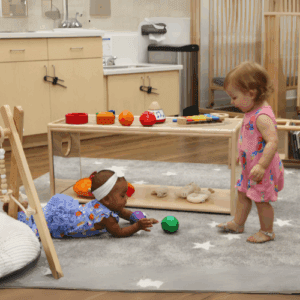
- Child-sized furniture and materials: Everything should be accessible to small hands. Children should be able to reach their own supplies, choose activities independently, and feel ownership of the space.
- Documentation of learning: The best classrooms display children’s work, photographs of projects in progress, and documentation panels that show how learning unfolds over time.
- Natural light and a calm atmosphere: A preschool classroom should feel inviting and purposeful, not chaotic. Look for natural materials, plants, and thoughtful organization over bright plastic clutter.
Guiding Behavior and Social Skills
A great preschool does more than teach letters and numbers; it teaches children how to be good friends. What we know from years of research is that a child’s ability to manage their feelings, resolve conflicts, and connect with their peers is one of the strongest predictors of future success. A quality program intentionally teaches these skills. Instead of just telling children to “share,” teachers guide them through the process of taking turns, navigating disagreements, and understanding another person’s perspective. This focus on social-emotional learning is a cornerstone of a curriculum that prepares children for life, not just for kindergarten.
When you tour a classroom, pay attention to how teachers guide behavior. The goal should be to teach self-control, not just to demand compliance. You shouldn’t see a heavy reliance on punishment or time-outs. Instead, look for positive guidance strategies in action. You might see a teacher helping a child use their words to express frustration, using a visual timer to help with sharing a popular toy, or calmly redirecting a child to a more appropriate activity. This approach helps children develop empathy and problem-solving skills, building a foundation for positive behavior that comes from within.
Ultimately, this all comes back to the relationship between teachers and children. A warm, nurturing environment is built on trust. Look for teachers who get down on a child’s level, make eye contact, and validate their feelings, even during a moment of conflict. When children feel seen, heard, and respected, they develop the emotional security needed to navigate the social world. This is why programs that invest in exceptional educators who are skilled in building these connections make such a profound difference in a child’s development and overall happiness at school.
Your Health, Safety, and Licensing Checklist
Safety is non-negotiable. Every preschool you consider should meet or exceed your state’s licensing requirements. Here is what to verify:
- Current licensing and accreditation: Check whether the program is licensed by your state’s Department of Education or Department of Children and Families. Accreditation from organizations like the National Association for the Education of Young Children (NAEYC) indicates an additional layer of quality that goes beyond minimum licensing standards.
- Health and sanitation protocols: Ask about handwashing procedures, illness policies, cleaning schedules, and how meals and snacks are handled. A program with clear, consistent health and safety practices protects every child in the classroom.
- Emergency preparedness: The school should have documented procedures for fire drills, lockdowns, severe weather, and medical emergencies. Staff should be trained in CPR and first aid.
- Secure entry and release procedures: Verify that the building has controlled access and that the school has a strict policy about who can pick up your child.
- Outdoor play space: A safe, well-maintained outdoor area is essential. Children need daily outdoor time for physical development, and the space should be age-appropriate and properly fenced.
Checking Licensing and Violations
Your state’s licensing agency is your first line of defense in verifying a program’s basic safety and compliance. You can typically find a school’s license status and any reported violations on your state’s Department of Children and Families or Department of Education website. A quick search for “[Your State] childcare license lookup” should point you in the right direction. While licensing sets the minimum standard, look for programs that go further. Accreditation from organizations like the National Association for the Education of Young Children (NAEYC) signals a much deeper commitment to quality, with rigorous standards for curriculum, teacher qualifications, and family partnerships.
Accommodating Food Allergies
For parents of children with food allergies, nothing is more important than knowing a school has a solid plan. Don’t hesitate to ask for specifics. According to Food Allergy Research & Education, every child with a food allergy should have a detailed emergency care plan on file, and staff must be trained to recognize the signs of a reaction and administer epinephrine if needed. Ask to see the school’s written allergy policy. How do they handle snack time? How do they prevent cross-contamination in the classroom? A prepared, confident response from the director is a sign that they take this responsibility seriously.
Support for Children with Special Needs
A truly great preschool is one that can meet every child where they are. If your child has developmental delays or special needs, look for a program with an inclusive philosophy and teachers who have training or degrees in child development. The environment should feel supportive, not just tolerant. Ask about the school’s experience with different needs and how they collaborate with parents and outside therapists. A strong curriculum that intentionally teaches social-emotional skills—like identifying feelings, sharing, and resolving conflicts—is especially important, as these skills provide a critical foundation for all children to succeed in school and in life.
Key Questions to Ask on Your Preschool Tour
Visiting a preschool in person is the most valuable step in the selection process. A tour gives you the chance to see the program in action and get a feel for the culture and community.

About the program:
- What is your educational philosophy, and how is it reflected in daily activities?
- How do you assess each child’s progress and development?
- What does a typical day look like from arrival to pick-up?
- How do you handle the transition from home to school for new students?
- What enrichment programs do you offer beyond the core curriculum?
About the staff:
- What qualifications and experience do your lead teachers have?
- What is the teacher-to-child ratio in each classroom?
- How do you handle staff turnover, and what is your current retention rate?
- Do teachers receive ongoing professional development?
About communication and family involvement:
- How do you communicate with parents about their child’s day and progress?
- Are parents welcome to visit or volunteer in the classroom?
- Do you have a family council or parent involvement program?
- How do you partner with parents on important developmental milestones?
About logistics:
- What are your hours of operation, and do you offer extended care options?
- What is your tuition structure, and are there any additional fees?
- What is your sick-child policy?
- How do you handle food allergies and dietary restrictions?
Questions About Daily Operations
Beyond philosophy and curriculum, the daily logistics of a preschool must align with your family’s practical needs. Understanding the flow of a typical day, from the morning drop-off routine to afternoon pick-up, helps you picture the rhythm and structure your child will experience. Be sure to confirm the hours of operation and whether extended care is available if you need that flexibility. It is also essential to get clear answers on the school’s sick-child policy and other health and safety protocols, especially how they manage food allergies and dietary restrictions. Clarifying these details upfront helps ensure a smooth, predictable, and safe experience for your child and family.
Preschool Red Flags You Can’t Ignore
While most preschool programs have good intentions, some warning signs should give you pause:
- High staff turnover: If teachers are constantly leaving, it disrupts children’s attachment and signals deeper problems with the program’s management or working conditions.
- Rigid, worksheet-heavy curriculum: Preschoolers should not spend significant time sitting at desks doing worksheets. If a program emphasizes academic drills over play-based learning, it is out of step with what research tells us about how young children learn best.
- Limited outdoor time: Children need daily outdoor play. Programs that minimize or skip outdoor time are shortchanging your child’s physical and sensory development.
- Poor communication: If the program is vague about policies, dismissive of your questions, or resistant to parent involvement, that is a significant concern.
- Unlicensed or unwilling to share credentials: Any reputable program will freely share its licensing status, accreditation, and inspection history. Reluctance to do so is a serious red flag.
- Chaotic or disengaged classrooms: During your visit, watch how teachers respond to challenging moments. If children seem unsupervised, overly regimented, or disengaged, the classroom environment may not support healthy development.
Children’s Emotional Needs Aren’t Met
This is one of the most subtle but significant red flags. A program might look great on paper, with a strong academic focus, but if it doesn’t intentionally nurture your child’s emotional world, it’s missing the most important piece of the puzzle. A quality curriculum should teach children how to identify their feelings, resolve conflicts, and build friendships. If you see teachers dismissing a child’s big feelings or a classroom that lacks warmth and empathy, it’s a sign that social-emotional learning isn’t a priority. These skills are the true foundation for school readiness and long-term success, giving children the confidence and resilience they need to thrive in any learning environment.
The Importance of a Strong Parent-School Partnership
When you choose a preschool, you are not just enrolling your child; you are choosing a partner in their development. You are your child’s first and most important teacher, and a high-quality program will recognize and respect that. The relationship between your family and the school should be built on trust, open communication, and mutual respect. Teachers should see you as an essential part of the team, listening to your hopes and worries for your child and actively seeking your input. This collaboration is vital because it creates a consistent and secure world for your child, where the values and routines of home and school are aligned.
A strong partnership goes far beyond daily drop-off chats. It means you feel comfortable asking questions, sharing concerns, and celebrating milestones together. Look for programs that offer multiple ways to stay connected, whether through daily communication apps, regular conferences, or opportunities for family involvement. When educators and parents truly partner with parents, they create a powerful support system that helps children feel understood and secure. This sense of community ensures that everyone is working together to help your child grow into a confident, capable learner.
A Welcoming Environment for All Families
From the moment you walk in the door, a preschool should feel like a caring and friendly place. This feeling of belonging is crucial for both you and your child. A truly welcoming environment is one where teachers get to know each child and their family well, showing genuine interest in your background, culture, and traditions. It’s a place where your child feels safe to be themselves and where you feel seen and heard as a parent. This atmosphere of inclusivity builds the trust necessary for a strong partnership and lets your child know that their family is valued, which is a cornerstone of their developing self-esteem.
How to Pick the Best Preschool for Your Child
After visiting your top choices, it can help to use a simple evaluation framework to compare them objectively.
Create a comparison chart that includes:
- Curriculum approach and philosophy alignment
- Teacher qualifications and ratios
- Safety protocols and accreditation status
- Communication style and parent partnership opportunities
- Schedule flexibility and logistics
- Overall feeling during your visit
Trust your instincts alongside your research. The right preschool should feel like a place where your child will be known, valued, and gently challenged to grow. It should feel like an extension of your family’s values, not a compromise.
Frequently Asked Questions About Choosing a Preschool
When should I start looking for a preschool?
Start researching preschool options at least 6 to 12 months before you want your child to begin. Many high-quality programs have waitlists, and starting early gives you time to visit multiple schools, ask questions, and make a thoughtful decision without feeling rushed. If you are searching in the Trumbull area, our guide to preschool in Trumbull, CT covers local options, licensing standards, and costs.
What age should my child start preschool?
Most children begin preschool between ages 3 and 4, though some programs accept children as young as 2 years old. The right age depends on your child’s individual development, temperament, and readiness for a group learning environment.
How do I know if my child is ready for preschool?
Signs of readiness include interest in other children, growing independence with self-care tasks like hand-washing and using the bathroom, ability to separate from parents for short periods, and curiosity about new experiences. If you are unsure, many preschools offer trial days or gradual enrollment options.
Is a more expensive preschool always better?
Not necessarily. Price does not always correlate with quality. Focus on the factors that matter most: teacher quality, curriculum philosophy, safety, and how well the program fits your child’s needs. Some excellent programs are publicly funded or offer financial assistance.
What is the difference between daycare and preschool?
While there is significant overlap, preschool programs typically place greater emphasis on structured educational curriculum and kindergarten preparation. Daycare programs may offer similar care but with a broader age range and a primary focus on supervision and care rather than curriculum-driven learning. Many centers, including those offering full-day preschool, combine the best of both worlds.
Finding the “Best Fit,” Not the “Perfect” School
It’s easy to get caught up in the search for the “perfect” preschool, but the reality is that no program will check every single box. Instead of chasing an impossible ideal, shift your focus to finding the “best fit” for your unique child and family. This is where your list of non-negotiables versus nice-to-haves becomes so important. A school might not have the exact schedule you wanted, but if it offers an incredible curriculum and teachers who make you feel instantly at ease, it could be the right choice. The goal is to find a community that aligns with your core values and feels like a supportive extension of your home. After all the research and tours, trust your instincts. The right preschool should feel like a place where your child will be known, valued, and gently challenged to grow, creating a foundation for a lifelong love of learning.
Feeling Confident in Your Preschool Choice
Choosing the right preschool is about more than checking boxes on a list. It is about finding a place where your child will develop confidence, curiosity, and a genuine love of learning. The best programs nurture the whole child, with exceptional educators who see your child as a capable, creative individual.
For families specifically looking at the Trumbull area, our guide to preschool in Trumbull, CT covers local program types, licensing requirements, and what to expect from early education in Fairfield County.
If you are exploring preschool options in Connecticut, we invite you to see what a thoughtful, child-centered program looks like in action. Schedule a visit to one of our locations in Trumbull, Shelton, or Wilton and discover how we help children thrive from their very first day.
Key Takeaways
- Create your family’s checklist: Before visiting schools, decide on your must-haves for budget, schedule, and learning style. This personal framework makes it easier to compare programs and confidently identify the best fit for your family.
- Look for warm interactions, not just a nice facility: Pay close attention to how teachers speak to children. A great program is defined by educators who get down on a child’s level, ask thoughtful questions, and guide learning through play and genuine connection.
- Balance logistics with your intuition: After confirming the non-negotiables like licensing, safety, and parent communication, trust your gut feeling. The right school will not only check the boxes but will also feel like a welcoming community where your child will be known and valued.
Related Articles
- Finding the Right Private Preschool: A Parent’s Guide
- How to Choose the Right Preschool for Your Child: A Parent’s Guide
Written By
Marc Hoffman
Founder, Strong Start Early Care & Education
Marc founded Strong Start in 2014, inspired by his studies at Williams College, Yeshiva University, and research at Yale University. His child-centered, inquiry-based approach to early education has helped hundreds of families in the Trumbull and Bridgeport communities. As a parent himself, Marc understands the importance of finding a nurturing environment where every child can learn, grow, and flourish.