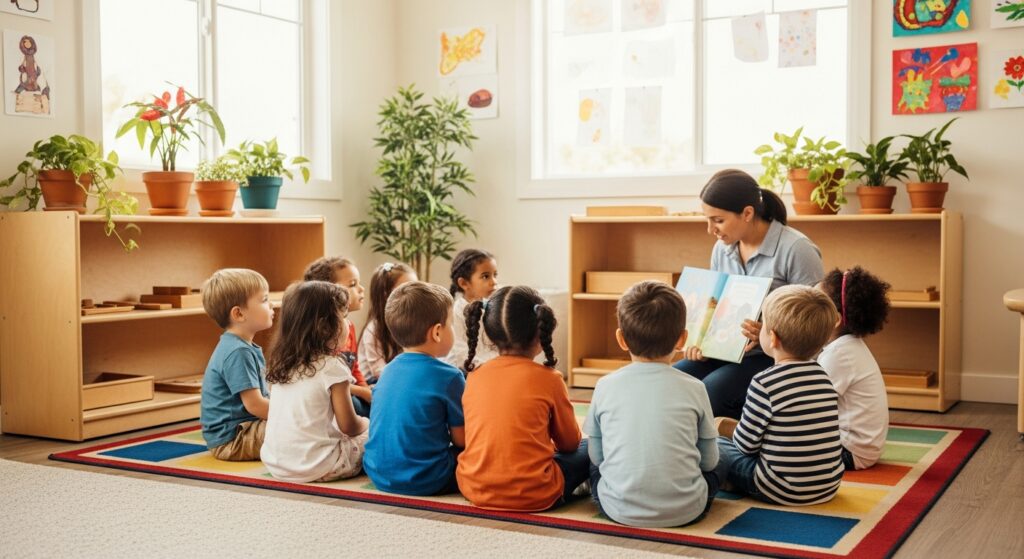
Choosing where your child will spend their days is one of the biggest decisions you’ll make as a parent. As you research, you’ve likely seen two terms pop up constantly: daycare and preschool. This can make the daycare vs preschool debate feel overwhelming. What is the real difference between daycare and preschool, anyway? While they once served very different purposes, many modern programs now offer a blend of both. Understanding these nuances is the key to making a choice that truly fits your family.
The truth is, there is no single “right” answer. The best choice depends on your child’s age, temperament, and developmental needs, as well as your family’s schedule and priorities. This guide breaks down the real differences between daycare and preschool so you can feel confident in your decision.
What Exactly Is Daycare?
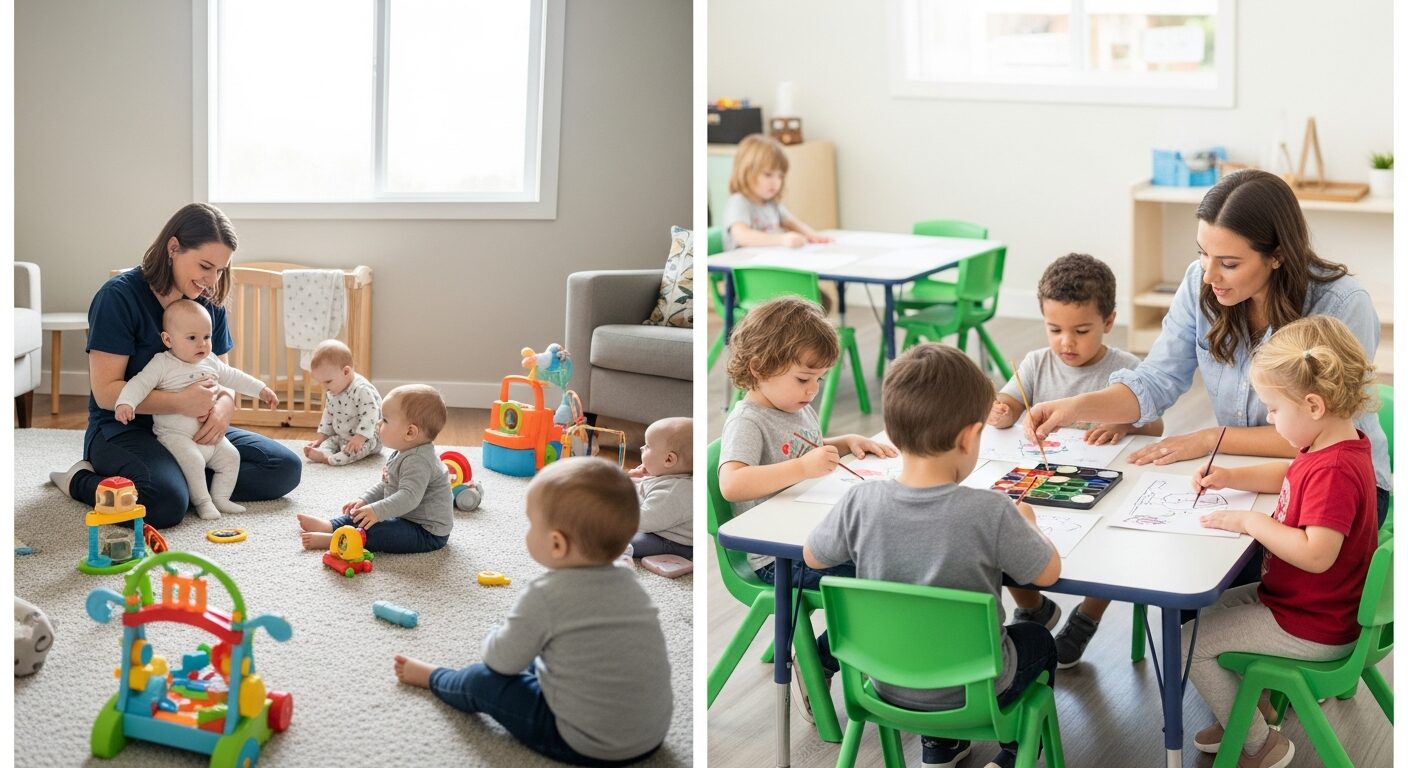
Daycare, sometimes called a childcare center, is a program designed to provide consistent, full-day care for children. Most daycare centers accept children from as young as six weeks old through age five, making them a reliable option for working families who need care throughout the entire workday.
The primary focus of daycare is providing a safe, nurturing environment where children are supervised, fed, and engaged in age-appropriate activities. While learning is absolutely part of the day, the structure is typically built around routines like meals, nap times, free play, and group activities rather than a formal academic curriculum.
Key characteristics of daycare:
- Accepts infants through preschool-age children (typically 6 weeks to 5 years)
- Full-day hours that align with work schedules (often 7 AM to 6 PM)
- Year-round operation, including summer months
- Focus on safe, nurturing care with learning woven into daily routines
- Play-based activities that support social, emotional, and physical development
And What Is Preschool?
Preschool is an early education program specifically designed to prepare children for kindergarten. Preschool programs typically serve children between the ages of two-and-a-half and five, with a stronger emphasis on structured learning activities, early literacy, numeracy skills, and social development.
The daily schedule at a preschool is often organized around a curriculum with specific learning goals. Children participate in circle time, guided art projects, early reading and writing activities, science exploration, and structured group play. The intent is to build the academic, social, and emotional skills a child needs to thrive when they enter elementary school.
Key characteristics of preschool:
- Serves children ages 2.5 to 5 years
- May offer part-day (half-day) or full-day schedules
- Often follows a school-year calendar (September through June)
- Curriculum-driven with specific learning objectives
- Strong focus on kindergarten readiness, including early literacy and social skills
Daycare vs. Preschool: The Key Differences
Understanding the practical differences can help you weigh your options more clearly. Here is how daycare and preschool typically compare across the factors that matter most to families.
What Ages Do They Serve?
Daycare centers generally accept children starting at six weeks old and serve them through age five. This makes daycare the only option for families with infants and very young toddlers. Preschool programs usually begin accepting children around age two-and-a-half to three, once they are potty-trained and ready for a more structured group setting.
How Do Their Schedules Compare?
This is one of the most significant practical differences. Daycare typically operates on a full-day schedule, often from early morning through early evening, to accommodate parents’ work hours. Preschool may offer only half-day sessions (typically three to four hours) or follow a schedule that mirrors the local school calendar. Some preschool programs do offer extended-day options, but the core program hours are often shorter than daycare.
Curriculum: Play-Based vs. Academic
Both daycare and preschool support children’s development, but the approach can differ. In a daycare setting, learning tends to happen organically through play, daily routines, and responsive caregiving. A quality daycare will have intentional activities planned, but the day is structured around the rhythms of care.
Preschool programs are typically more curriculum-driven, with defined learning objectives in areas like language development, early math concepts, social-emotional skills, and creative expression. The daily schedule often includes structured blocks for circle time, small-group instruction, and guided exploration.
It is worth noting that many high-quality childcare programs blur this line entirely. Programs that follow research-based approaches like the Reggio Emilia philosophy or the Project Approach integrate deep, meaningful learning into every part of the day, whether the program calls itself a “daycare” or a “preschool.”
Comparing the Costs
Costs vary widely depending on your location, but daycare and preschool pricing structures can look different. Daycare, because it offers more hours of care, tends to have a higher monthly cost. Preschool tuition may be lower per month if the program is part-day, but the hourly cost can actually be similar. Some states offer publicly funded preschool programs for three- and four-year-olds, which can significantly reduce costs.
Who Is Teaching Your Child?
Preschool teachers are often required to hold specific degrees or certifications in early childhood education, depending on the state and program. Daycare staff requirements can vary more widely. However, the best childcare centers invest heavily in hiring and retaining qualified, experienced educators regardless of what the program is called.
Potty Training Requirements
This is often a non-negotiable for many programs and a huge factor for parents. Because daycare centers care for children as young as infants, they are fully prepared to handle diapering. They expect that children in their infant and toddler classrooms will not be potty-trained and will work with you when your child starts showing signs of readiness. This flexibility is a major advantage for families who aren’t on a strict potty-training timeline. In contrast, many preschools require children to be fully and independently potty-trained before their first day. Since their programs are geared toward older children in a more structured setting, they often don’t have the staffing or facilities to manage diapering. It’s always a good idea to ask about a specific school’s policy and how they partner with parents on this important milestone.
Is Daycare the Right Fit for Your Family?
Daycare can be an excellent fit for your family if:
- Your child is under three years old. Most preschool programs do not accept infants or young toddlers. Daycare provides the consistent, responsive care that very young children need during these critical early years.
- You need full-day, year-round care. If both parents work full-time, a daycare schedule is often the most practical option, offering care from early morning through early evening, twelve months a year.
- Your child thrives with routine and familiarity. Daycare provides a stable daily rhythm. Children build deep bonds with their caregivers and peers, which creates a strong foundation for their emotional development.
- You want your child to grow up alongside peers of different ages. Many daycare centers group children in mixed-age settings or provide a seamless transition between rooms as a child grows, fostering mentorship and social skills across age groups.
Is Preschool the Best Option for Your Child?
Preschool may be the better fit if:
- Your child is three or older and ready for more structure. If your child is craving “big kid” activities, showing interest in letters and numbers, and enjoys group learning, a preschool environment can nurture that curiosity.
- You have flexibility in your schedule. If one parent works part-time or you have other childcare support, a half-day preschool program can provide focused learning time without the need for full-day care.
- Kindergarten readiness is a top priority. Preschool programs are specifically designed to prepare children for the transition to elementary school, with a curriculum that builds the academic and social skills they will need.
- Your child benefits from a highly structured environment. Children who do well with clear expectations, consistent schedules, and guided activities often thrive in a preschool setting.
Hybrid Programs: Combining Daycare and Preschool
Here is something many parents do not realize: you do not always have to choose one or the other. A growing number of early childhood programs combine the full-day, year-round convenience of daycare with the curriculum-driven learning of preschool.
These programs offer the practical scheduling that working families need while delivering a rich, intentional educational experience. Children benefit from a structured curriculum during the morning hours and continue learning through play, exploration, and enrichment activities throughout the afternoon.
At Strong Start Early Care & Education, for example, the program is designed to provide exactly this combination. Children receive a research-based curriculum inspired by the Reggio Emilia philosophy within a full-day, year-round setting. Infants, toddlers, and preschoolers all benefit from exceptional educators and intentional learning environments, along with enrichment programs in art, cooking, fitness, and STEM.
This approach means families do not have to compromise. Your child gets the academic preparation of a preschool and the reliable, nurturing care of a daycare, all in one place.
Your Childcare Tour Checklist: What to Ask
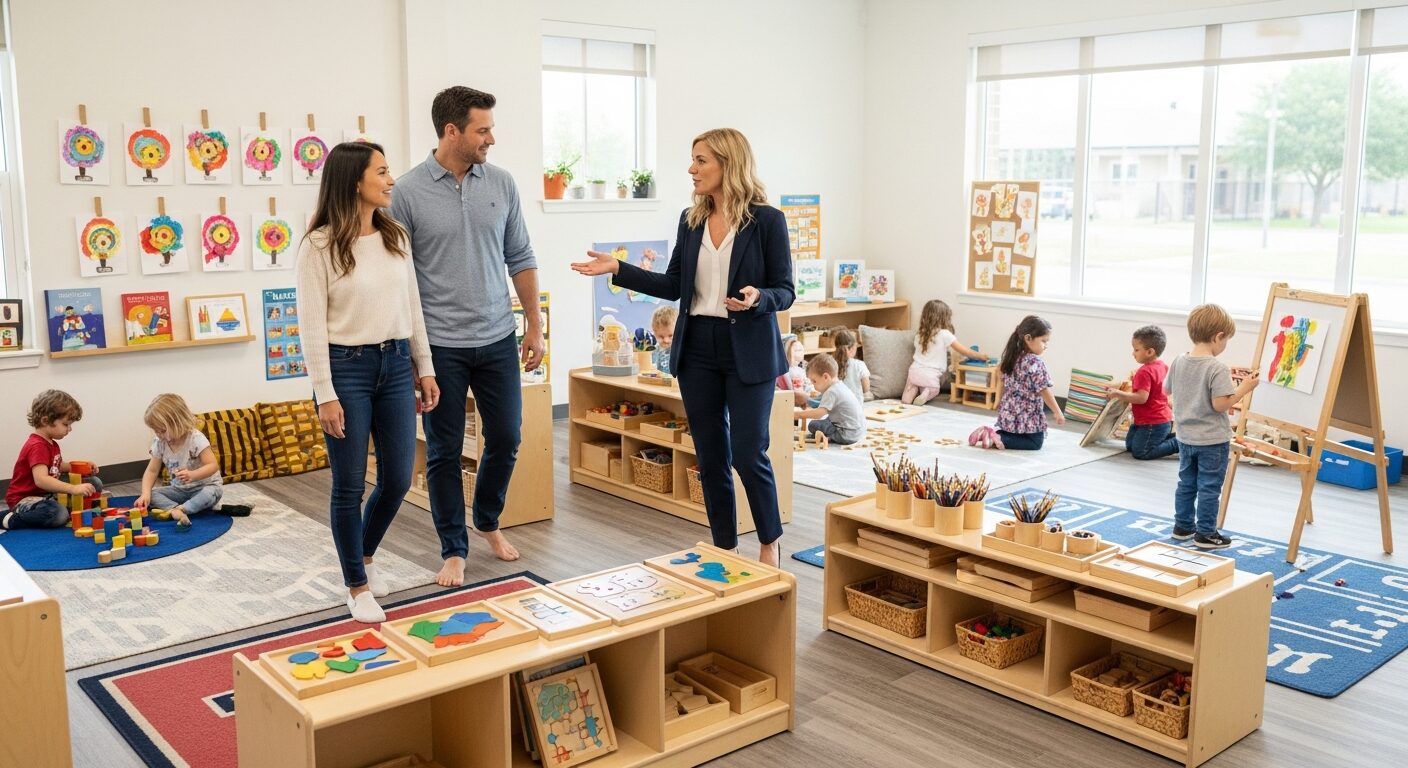
Whether you are visiting a daycare, a preschool, or a program that combines both, the right questions can reveal a lot about the quality of care your child will receive. Here are the most important things to ask:
- What is your curriculum, and how do children learn each day? Look for a program that uses a recognized, research-based approach and can describe what a typical day looks like.
- What are your teacher qualifications and staff-to-child ratios? Lower ratios mean more individual attention for your child. Ask about ongoing professional development for staff.
- How do you communicate with families? Strong programs prioritize open communication with parents, offering regular updates, conferences, and opportunities to be involved.
- What is your approach to social-emotional development? Children learn best when they feel safe and supported. Ask how the program handles conflict, encourages friendships, and builds emotional skills.
- Are you licensed and accredited? Licensing is a baseline requirement. Accreditation from organizations like NAEYC indicates a program that meets the highest national standards for quality.
- What does your health and safety policy include? Ask about illness policies, emergency procedures, cleaning protocols, and outdoor safety measures.
- Can I visit and observe a classroom in action? A quality program will welcome you to see their teachers and children in their natural rhythm. Trust your instincts about what you observe.
The General Atmosphere and Philosophy
Beyond the daily schedule, the overall philosophy of a program shapes your child’s entire experience. A traditional daycare’s primary focus is providing a safe, nurturing environment where learning happens through play and daily routines. In contrast, preschool programs are typically more curriculum-driven, with defined learning objectives designed to build specific skills. When you tour, pay attention to the feeling in the classrooms. Do the children seem happy and engaged? Do the teachers seem warm and responsive? High-quality programs often blend the best of both worlds, integrating intentional learning into a nurturing, play-based day. This is often achieved through a thoughtful educational philosophy, like the Reggio Emilia approach, which honors a child’s natural curiosity and allows learning to emerge from their interests.
Health, Safety, and Allergy Policies
Nothing is more important than your child’s well-being, so a program’s approach to health and safety should be a top consideration. During your tour, don’t hesitate to ask detailed questions. A quality center will be transparent about its policies. You should inquire about their illness policy, emergency procedures, cleaning protocols, and outdoor safety measures. How do they manage food allergies to keep all children safe during meals and snack times? Look for a program with clear, documented procedures that are consistently followed. A center that prioritizes safety will have this information readily available and will be happy to walk you through its comprehensive health and safety plan, giving you peace of mind.
Schedules and Reliability
For many working families, this is the deciding factor. Daycare typically operates on a full-day schedule, often from early morning through early evening, and remains open year-round to accommodate parents’ work hours. On the other hand, many preschools offer only half-day sessions or follow a schedule that mirrors the local school calendar, including summer breaks and holidays. This can create challenges for families who need consistent, full-time care. Because it offers more hours, daycare tends to have a higher monthly cost, but it provides a reliable solution. When choosing, be realistic about your family’s needs and find a program whose schedule aligns with your work life to avoid the stress of patching together care during school closures.
Finding Support for Children with Diverse Needs
Every child develops at their own pace, and sometimes their journey includes unique strengths and challenges. If you suspect your child may have diverse learning, developmental, or behavioral needs, finding the right support can feel overwhelming. But you are your child’s best advocate, and there is a whole community of resources ready to help you. The key is knowing where to look and how to build a team that will champion your child’s success right alongside you. This process is about empowering your child by giving them the tools and environment they need to flourish.
Accessing Professional Services
Your child’s pediatrician is an excellent first stop. They can provide initial guidance and refer you to specialists like developmental pediatricians, occupational therapists, or speech-language pathologists. Hospitals and clinics often have family resource centers that can connect you with local services. Don’t overlook the expertise within your child’s early education program. Experienced educators are trained to observe child development and can be invaluable partners. A strong program will work closely with families, sharing observations and collaborating on strategies. This partnership with parents is fundamental, ensuring that everyone is working together to support a child’s individual journey.
Building Your Support Network
Following this path is much easier when you have a village. Building a strong support network is one of the most powerful things you can do for your family’s well-being. This network can include local organizations, parent-to-parent support groups, and even online communities. Many parents find immense comfort and practical advice by joining Facebook groups for families of children with similar needs. Connecting with others who truly understand your experience can be incredibly validating. Your childcare center can also be a source of community, connecting you with other families and creating a built-in support system, much like our Family Council does for our school community.
How to Make the Right Choice for Your Family
Think about your child. Consider their age, personality, and what kind of environment helps them feel most secure and engaged. Some children blossom with more structure; others need the flexibility and comfort of a routine-driven day.
Think about your family. Be honest about your scheduling needs, your budget, and what kind of support system you have. The best program for your child is one that also works for your family’s real life.
Trust your instincts. When you walk into a program that is the right fit, you will likely feel it. Pay attention to how the teachers interact with the children, the warmth of the environment, and whether you can picture your child happy there.
The labels “daycare” and “preschool” matter less than the quality of the people, the environment, and the philosophy behind the program. A loving, well-run daycare can be far more enriching than a mediocre preschool, and vice versa. Focus on finding a place where your child will be known, supported, and inspired to learn. For families in the Trumbull area, our guide to preschool in Trumbull, CT can help you explore local early education options.
Looking for a program that combines the best of daycare and preschool? Schedule a tour at Strong Start Early Care & Education to see our Reggio Emilia-inspired classrooms in Trumbull, Shelton, or Wilton, CT.
Gauging Your Child’s Readiness
Before you get into the logistics of schedules and costs, take a moment to observe your own child. Their unique personality and developmental stage are your best clues. Preschool may be the better fit if your child is three or older and ready for more structure. If you notice them craving “big kid” activities, showing an interest in letters and numbers, and enjoying group learning, a preschool environment can nurture that curiosity. On the other hand, daycare is an excellent fit for children under three. Most preschools do not accept infants or young toddlers, and daycare provides the consistent, responsive care that very young children need during these critical early years. Think about what kind of environment helps your child feel most secure and engaged—some children blossom with structure, while others need the flexibility of a routine-driven day.
Partnering with Your Child’s Teacher
A program is only as good as its people, so finding a place where you can build a real partnership with your child’s teacher is essential. When you visit, ask about the qualifications of the staff and what kind of ongoing professional development they receive. Strong programs prioritize open communication with parents, offering regular updates, conferences, and opportunities to be involved. You’ll also want to inquire about teacher-to-child ratios, as lower numbers mean more individual attention. But the most telling sign is what you see and feel. A quality program will welcome you to observe a classroom in its natural rhythm. Trust your instincts when you see happy, engaged children interacting with caring, attentive educators—that’s the real magic.
Frequently Asked Questions
What is the main difference between daycare and preschool?
The main difference is their primary focus. Daycare is designed to provide consistent, full-day care that fits working parents’ schedules, while preschool is focused on structured early education to prepare children for kindergarten. Many quality programs now combine both elements.
At what age should my child start preschool?
Most children start preschool between ages three and four. However, readiness matters more than age. If your child is comfortable in group settings, shows interest in learning activities, and can handle basic self-care tasks like using the bathroom, they may be ready.
Can my child go to daycare and preschool at the same time?
Some families enroll their child in a half-day preschool program and use daycare or a nanny for the remaining hours. However, programs that combine daycare and preschool into one full-day experience are often simpler and provide more consistency for young children.
Is preschool better than daycare for my child’s development?
Not necessarily. Research shows that the quality of a program matters far more than what it is called. A high-quality daycare with qualified teachers, a responsive curriculum, and strong relationships can support your child’s development just as effectively as a preschool.
How much does daycare vs. preschool cost?
Costs vary significantly by location. Daycare often costs more per month because it provides more hours of care. Part-day preschool may have a lower monthly tuition, but the hourly rate is often comparable. Some states offer free or subsidized preschool for eligible families.
What should I look for when touring a childcare program?
Focus on teacher-child interactions, cleanliness, safety measures, curriculum quality, staff qualifications, communication practices, and licensing or accreditation status. Most importantly, trust how you feel when you observe the classroom in action.
Key Takeaways
- Assess Your Family’s Schedule: Start by considering your practical needs. Daycare typically offers full-day, year-round care ideal for working families, while preschool often has shorter days and follows a school calendar.
- Look Beyond the Title: A program’s quality is determined by its teachers, environment, and philosophy, not whether it is called a “daycare” or “preschool.” Prioritize finding a place with warm interactions and a clear educational approach.
- Seek the Best of Both Worlds: You do not have to choose between care and education. Many modern centers now combine the flexible, full-day schedule of daycare with the intentional, curriculum-based learning of preschool.
Related Articles
- Daycare vs. Preschool: What’s the Difference and Which Is Right for Your Child?
- Daycare Meaning in School: What Parents Should Know
Written By
Marc Hoffman
Founder, Strong Start Early Care & Education
Marc founded Strong Start in 2014, inspired by his studies at Williams College, Yeshiva University, and research at Yale University. His child-centered, inquiry-based approach to early education has helped hundreds of families in the Trumbull and Bridgeport communities. As a parent himself, Marc understands the importance of finding a nurturing environment where every child can learn, grow, and flourish.