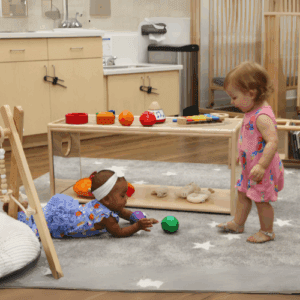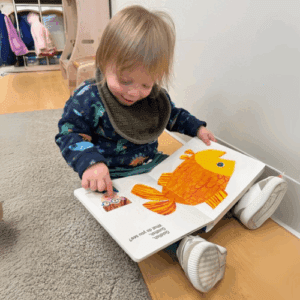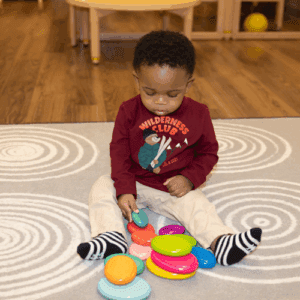
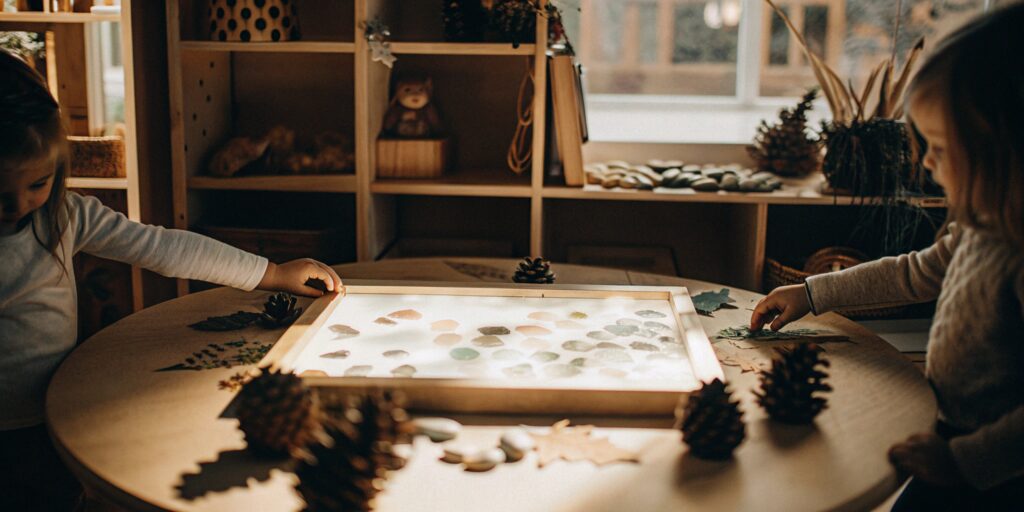
What if the classroom itself could be the third teacher, working alongside educators and peers to inspire learning? In the Reggio Emilia philosophy, the environment is intentionally designed to be beautiful, inviting, and rich with possibilities. An early childhood Reggio Emilia classroom feels less like a traditional school and more like a creative workshop. From natural light to open-ended materials, every detail is a deliberate choice. This philosophy is a key part of our Reggio Emilia preschool lesson plans, empowering children to lead their own explorations and construct their own understanding of the world.
Key Takeaways
- Embrace a curriculum that follows your child’s lead: This approach swaps rigid lesson plans for explorations born from your child’s natural curiosity, which makes learning feel relevant and exciting.
- View the classroom as an intentional learning space: The environment is thoughtfully designed to be a “third teacher,” filled with inspiring, open-ended materials that encourage children to explore their ideas, solve problems, and collaborate.
- Partner in making learning visible: Through careful documentation like photos and notes, your child’s thought process is made visible, creating a powerful feedback loop that guides the curriculum and invites you to be an active participant in their educational journey.
What is the Reggio Emilia Approach?
Before we get into planning, it’s helpful to understand the core ideas behind the Reggio Emilia approach. It’s more than just a teaching method; it’s a philosophy centered on seeing children as curious, capable individuals with a natural desire to learn about the world around them. This approach originated in the town of Reggio Emilia, Italy, after World War II, born from a community’s desire to raise children who valued critical thinking and collaboration.
At its heart, this philosophy is built on a foundation of respect for the child. It trusts their ability to explore, discover, and construct their own understanding through hands-on experiences. Instead of a rigid, pre-planned curriculum, learning emerges from the children’s own interests and questions. This creates a dynamic and engaging environment where educators, children, and families work together as partners in the learning journey.
The History of Reggio Emilia
The story of the Reggio Emilia approach is one of resilience, community, and a powerful vision for a new way of learning. It began in the villages around Reggio Emilia, Italy, in the immediate aftermath of World War II. In a time of rebuilding, parents and community members came together with a shared goal: to create a different kind of school for their children. They wanted to raise a new generation of citizens who were capable of critical thinking, collaboration, and democratic participation. This grassroots movement was driven by the belief that children’s education was a collective responsibility, laying the groundwork for a philosophy that deeply values relationships and community connection.
Loris Malaguzzi and Community Origins
At the center of this movement was a young teacher and psychologist named Loris Malaguzzi. He was inspired by the community’s determination and joined their efforts, becoming a key figure in shaping the educational philosophy. Malaguzzi worked closely with local parents and educators, particularly women, to develop an approach that viewed children as protagonists in their own learning. This wasn’t a top-down system but one that emerged from a community’s desire to foster curiosity and cooperation. This history is a core part of our own Reggio Emilia inspiration at Strong Start, as we believe in the power of collaboration between educators, children, and families to create a rich and meaningful learning experience.
A Global Philosophy
What started in a small Italian town has since grown into a globally respected educational philosophy. The Reggio Emilia approach has spread to over 145 countries, adapted and embraced by diverse cultures because its core principles are so universal. It is founded on an image of the child as strong, capable, and full of potential, with countless ways to express their ideas and understanding. This perspective shifts the focus from teaching a rigid curriculum to creating an environment where children can grow through their relationships with others and their surroundings. This belief guides our exceptional educators, who are dedicated to honoring each child’s unique voice and nurturing their innate curiosity.
What Are Its Core Principles?
The guiding philosophy of Reggio Emilia is that children learn best through experiences of touching, moving, listening, and observing. It’s a hands-on approach that gives children endless opportunities to express themselves and make sense of their world. Learning isn’t a one-way street where a teacher delivers information. Instead, it’s a collaborative process where children are active participants.
This philosophy is grounded in a deep respect for the child’s potential and a belief in the power of community. Our own Reggio Emilia inspiration guides us to create a school environment where every child feels seen, heard, and valued. The goal is to nurture their natural curiosity and help them develop a lifelong love of learning through discovery and play.
Seeing the Child as Capable and Curious
A core principle of the Reggio Emilia approach is its image of the child. Children are viewed as competent, resourceful, and full of potential from the moment they are born. They are not empty vessels waiting to be filled with knowledge, but rather co-constructors of their own learning journey. This perspective changes everything about how we interact with them. When we see children as capable, we trust them to lead their own explorations, solve problems, and communicate their ideas in countless ways.
This belief empowers children to take ownership of their learning and builds their confidence. Our exceptional educators are trained to listen carefully to children’s questions and theories, guiding them as they investigate their interests more deeply.
The Hundred Languages of Children
The Reggio Emilia philosophy celebrates the idea that children have “a hundred languages” they can use to express their thoughts, feelings, and ideas. This beautiful concept moves beyond verbal communication to embrace drawing, painting, building, sculpting, dancing, and dramatic play as equally valid forms of expression. When a child builds a towering block structure or paints a vibrant picture, they are not just playing; they are communicating their understanding of the world. This approach encourages us to listen with our eyes and value the many ways children make their thinking visible, fostering creativity and a much deeper level of understanding.
By providing a rich variety of materials and opportunities, we honor every child’s unique voice. Our enrichment programs are designed with this principle in mind. Whether a child is expressing their creativity with clay in Exploration Through The Arts or discovering cause and effect in a STEM Learning project, they are using a unique language to process their world. We give children dedicated time and diverse tools to explore these different forms of expression, helping them discover which “languages” they connect with most. This not only builds their confidence as communicators but also equips them with versatile problem-solving skills for the future.
The Three Teachers: Parents, Educators, and the Environment
In the Reggio Emilia approach, learning is a collaborative effort supported by “three teachers”: the parents, the educators, and the environment itself. Parents are recognized as the child’s first and most important teacher, bringing invaluable insights into their child’s personality and needs. We believe that partnering with parents is essential to creating a consistent and supportive experience for every child. The classroom educator acts as a co-learner and guide, observing children’s interests and providing resources to extend their learning, rather than simply delivering information.
Finally, the environment is intentionally designed to be the “third teacher.” The physical space, from the natural light in our preschool classrooms to the thoughtfully organized, open-ended materials on the shelves, is arranged to provoke curiosity and inspire collaboration. We create beautiful, orderly spaces that feel like a workshop and a home, inviting children to explore their theories and work together on long-term projects. Together, these three “teachers”—parent, educator, and environment—create a powerful, interconnected community that surrounds the child, nurturing their growth in every possible way.
How Your Classroom Becomes the Third Teacher
In the Reggio Emilia philosophy, the classroom environment is considered the “third teacher,” working alongside the educators and the children. The physical space is intentionally designed to be beautiful, inviting, and rich with possibilities. It’s a place that encourages communication, collaboration, and exploration. You’ll notice an emphasis on natural light, order, and beauty, creating a calm and welcoming atmosphere where children feel comfortable and inspired.
The materials provided are open-ended, meaning they can be used in many different ways. Think natural items like stones and leaves, recycled materials, and art supplies that spark imagination. Our preschool classrooms are thoughtfully arranged to provoke curiosity and invite children to engage in meaningful, long-term projects.
The Atelier and Piazza
A key feature of a Reggio Emilia-inspired space is the “atelier,” or art studio, a special workshop filled with a wide variety of materials for creative expression. Led by a dedicated teacher with an arts background, known as an “atelierista,” this space is where children can experiment with paint, clay, wire, and recycled materials to bring their ideas to life. It’s a place for exploration and discovery, where the process is valued just as much as the final product. This creative hub, a core part of our enrichment program, often opens onto a “piazza,” a central common area that encourages children from different classrooms to come together, share their work, and build a sense of community, much like a town square.
The Outdoor Classroom
Learning doesn’t stop at the classroom door. In the Reggio Emilia philosophy, the outdoor environment is seen as a natural extension of the indoor learning space and is planned with just as much intention. The goal is to create a seamless flow between indoors and out, where children can take their projects outside or bring elements of nature inside. This approach not only provides new contexts for learning but also fosters a deep connection to the natural world. An outdoor classroom offers unique sensory experiences, scientific observation, and imaginative play, making it an essential part of your child’s day.
Neutral Backgrounds to Highlight Children’s Work
When you walk into a Reggio-inspired classroom, you might notice that the walls and furniture are often in calm, neutral colors. This is a deliberate choice. The goal is to create a serene and beautiful environment where the children’s own vibrant artwork, projects, and discoveries can take center stage. Instead of brightly colored plastic bins, you’ll likely see natural materials like wooden shelves and woven baskets. This calm backdrop minimizes distractions and allows the children’s creativity to be the main focus, communicating that their work is important and valued. It’s a core part of our Reggio Emilia inspiration, creating a space that feels more like a home or a studio.
Student Co-Creation of Materials
In a Reggio-inspired classroom, children are active participants in creating their own learning environment. This means they are often invited to help make the materials they use every day, from labeling storage bins to creating posters that outline classroom agreements. This process of co-creation does more than just decorate the room; it fosters a powerful sense of ownership and belonging. When children see their own contributions reflected in the space, they feel more connected to it and to their peers. This collaborative spirit mirrors our commitment to partnering with parents, building a community where everyone helps shape the learning experience.
Why Reggio Emilia Lesson Plans Are Different
If you’re used to traditional preschools, you might picture lesson plans built around a “letter of the week” or a seasonal theme like pumpkins in the fall. Reggio Emilia-inspired planning looks quite different. Instead of a top-down, pre-determined schedule, it’s a dynamic and collaborative process that flows from the children themselves. It’s less about a rigid set of activities and more about creating a rhythm of observation, reflection, and response.
This approach requires a fundamental shift in how we view both teaching and learning. The teacher isn’t just delivering information; they are a co-researcher alongside the children, discovering what questions are worth exploring. The curriculum isn’t a fixed document but a living, breathing thing that evolves with the group’s curiosities. This makes learning feel personal, meaningful, and genuinely exciting for everyone involved. At Strong Start, our Reggio Emilia inspiration guides us to see lesson planning not as a checklist to complete, but as a way to map out a journey of discovery.
A Philosophy, Not a Certified Method
It’s important to know that Reggio Emilia is not a formal, certified methodology with a strict rulebook. Unlike some other educational models, you won’t find schools that are officially “Reggio Emilia certified.” Instead, it’s a philosophy—a set of guiding principles and values that educators adapt to fit their unique community and the children within it. This flexibility is one of its greatest strengths. It allows learning to be a dynamic and collaborative process that flows from the children’s own curiosities rather than a rigid set of pre-planned activities. This means our approach is always responsive to the needs and interests of the children currently in our care, making their educational experience deeply personal and relevant.
Adapting the Approach for Older Children
Because it’s a philosophy, the Reggio Emilia approach grows with your child. The core principles of curiosity, exploration, and collaboration are just as relevant for a four-year-old as they are for a toddler. As children get older, their investigations simply become more complex. A project might last longer, involve more in-depth research, and require more sophisticated problem-solving. Our educators act as co-researchers, guiding older children as they tackle bigger questions and document their findings in more detailed ways. This method of sustained inquiry is at the heart of The Project Approach, which helps children develop critical thinking skills that prepare them for kindergarten and beyond.
Emergent Curriculum: Following the Child’s Lead
In a Reggio Emilia-inspired classroom, the curriculum is “emergent,” meaning it grows organically from the children’s interests, questions, and theories. If a group of toddlers becomes fascinated with the way shadows move across the playground, that becomes the curriculum. The educators don’t redirect them to a pre-planned activity about farm animals; instead, they provide materials like flashlights, sheer fabrics, and objects of different shapes to help them investigate their interest in shadows more deeply. This approach honors the idea that children are born curious and capable of constructing their own learning when given the right support and opportunities. It respects their intelligence and trusts that their interests are valid starting points for deep, meaningful learning.
Putting Children in the Driver’s Seat of Learning
This brings us to one of the biggest differences: the shift from teacher-led to child-led learning. In this model, children are the protagonists of their educational journey. Our educators are expert observers, carefully listening to conversations and watching how children interact with materials to identify what truly captivates them. From these observations, they develop long-term investigations, known as The Project Approach. A simple interest in how a toy car rolls down a ramp could evolve into a month-long project exploring motion, gravity, and engineering. This gives children a powerful sense of ownership over their learning and shows them that their ideas have value, building confidence that lasts a lifetime.
Why Flexible Planning Matters
Flexible planning is the glue that holds this entire approach together. It allows educators to be responsive to the children in real-time. A plan might be in place for the day, but if a child brings in a unique bird’s nest they found over the weekend, a great teacher can pivot to explore that spontaneous learning opportunity. This flexibility shows children that their world is full of interesting things to learn about. It also requires highly skilled and exceptional educators who can thoughtfully prepare the classroom environment to invite exploration while remaining open to the unexpected directions children’s curiosity might take them. This adaptability ensures that learning is always relevant and engaging.
How to Create Your Reggio Emilia Preschool Lesson Plan
Creating a lesson plan in a Reggio Emilia-inspired classroom looks a little different from what you might expect. Instead of a rigid, pre-planned schedule of activities, it’s a flexible and dynamic process that flows directly from the children’s own curiosity. Think of it less as a map with a fixed destination and more as a compass that helps guide the learning journey. This approach is built on a partnership between educators and children, where planning is an ongoing cycle of observing, provoking thought, preparing the environment, and reflecting together. It’s about being intentionally responsive to what fascinates your child, allowing their interests to become the curriculum.
Step 1: Observe and Document What They Love
The first and most important step is to simply watch and listen. A Reggio-inspired lesson plan begins with careful observation of the children. What are they playing with? What questions are they asking each other? What ideas keep coming up in their conversations and drawings? Our exceptional educators act as researchers, documenting these moments through notes, photos, and recordings of conversations. This documentation isn’t just for keepsakes; it’s the raw material for planning. By paying close attention, we can identify the authentic interests and theories the children are exploring. These observations become the foundation for everything that follows, ensuring the learning is meaningful and deeply engaging for every child.
Step 2: Use “Provocations” to Spark Curiosity
Once we have a sense of what children are curious about, we plan “provocations.” This is a core part of our Reggio Emilia inspiration. A provocation is an intentional setup of materials or an open-ended question designed to spark curiosity and extend children’s thinking. It’s not an activity with a specific outcome, but an invitation to explore. For example, if children are interested in shadows, an educator might set up a projector with various translucent objects nearby. Instead of giving answers, the teacher asks questions like, “What do you notice?” or “What do you think would happen if…?” to encourage problem-solving and discovery. These provocations challenge children to think more deeply and express their ideas in new ways.
Step 3: Design a Space That Invites Exploration
In the Reggio Emilia philosophy, the environment itself is viewed as the “third teacher.” This means the classroom is intentionally designed to be a source of inspiration and learning. The space should be beautiful, orderly, and filled with materials that encourage exploration, imagination, and creativity. You’ll see rooms with plenty of natural light, real tools and materials, and displays that showcase the children’s ongoing projects. Everything has a purpose, from the organization of art supplies to the comfortable nooks for quiet reflection. We create a space that respects children as capable learners and invites them to investigate their surroundings, test their theories, and collaborate with their peers.
Step 4: Let Reflective Talks Guide Your Plan
Planning is not a solitary activity done at a desk. It’s a collaborative and reflective process. Our educators meet regularly to discuss their observations and review the documentation they’ve collected. Together, they interpret what the children are doing and learning, asking questions like, “What theories are the children developing?” and “How can we best support their investigation?” This ongoing dialogue is essential for keeping the curriculum emergent and responsive. It allows teachers to build on children’s ideas and thoughtfully plan the next steps, whether that’s introducing new materials or connecting with an expert from the community. This reflective practice ensures that our planning is always evolving to meet the children’s needs, and we love partnering with parents to share in this journey.
Creative Activities for Your Reggio Emilia Classroom
In a Reggio Emilia-inspired classroom, learning is an active, hands-on experience. Instead of worksheets and rote memorization, children are invited to explore, question, and create. The activities are designed to be open-ended, allowing each child to engage with the materials in their own unique way. This approach not only builds a strong foundation for academic skills but also nurtures a child’s natural curiosity and love for learning. It’s all about providing rich experiences that let children construct their own understanding of the world.
How to Guide Long-Term, Child-Led Projects
Instead of single-day activities, learning often unfolds through long-term projects that can last for weeks or even months. These projects are born directly from the children’s own questions and curiosities. For example, if a child finds an interesting beetle on the playground, it might spark a group investigation into insects. The children might draw insects, build models of them with clay, read books about them, and even create a habitat. This Project Approach allows children to explore topics deeply, encouraging critical thinking, problem-solving, and collaboration as they work toward a shared goal. It shows them that their ideas are valuable and that learning is an exciting, ongoing adventure.
Using Natural Materials for Creative Expression
Art in a Reggio-inspired setting is less about following instructions and more about self-expression. You won’t find many pre-cut craft kits here. Instead, children are given access to a wide array of high-quality, open-ended materials—often natural or recycled. Think clay, wire, paint, charcoal, twigs, leaves, and fabric scraps. This approach, which we call Exploration Through The Arts, allows children to experiment and communicate their ideas in countless ways. The focus is always on the creative process itself, not just the final product. This helps children develop confidence in their own creative abilities and see beauty and potential in the world around them.
Encourage Sensory Play to Explore Nature
Sensory exploration is a cornerstone of early learning, and nature provides the ultimate sensory playground. Activities like digging in a garden, splashing in water, or painting with mud connect children to the natural world in a very real and tangible way. This kind of play isn’t just for fun; it’s how children learn foundational science and math concepts. They feel the difference between wet and dry sand, observe how water flows, and sort rocks by size and texture. By engaging all their senses, children build neural pathways and develop a deeper understanding of their environment. It’s a joyful way to learn that also supports physical development and coordination.
Foster Teamwork with Collaborative Building
Learning is a social act. Children are encouraged to work together in small groups on all kinds of activities, from building intricate block cities to creating a large-scale mural. These collaborative experiences are rich with opportunities for social and emotional growth. As children share materials, negotiate roles, and combine their ideas, they learn how to communicate effectively, solve problems as a team, and respect different perspectives. This emphasis on community builds a classroom culture of cooperation and mutual respect. It reflects a core belief that we are all learners and teachers, and that we can achieve more together than we can alone.
How Documentation Shapes Your Lesson Plans
In a Reggio Emilia-inspired classroom, documentation is much more than just taking pictures or saving artwork. It’s an active tool that shapes the entire learning experience. Think of it as a way to listen to children’s ideas, understand their thought processes, and make their learning visible to everyone—including the children themselves. By carefully recording conversations, photographing projects in progress, and displaying evolving work, educators create a living record of the learning journey.
This practice is central to planning because it provides authentic insight into what truly captures a child’s interest and what skills they are developing. Instead of moving on to the next predetermined topic, teachers use this documentation to reflect with children and ask, “What should we explore next?” It transforms the curriculum into a collaborative story co-authored by teachers and students. This process not only honors the children’s work but also helps educators thoughtfully prepare materials and provocations that will deepen understanding and extend their discoveries. It’s a continuous cycle of observing, documenting, reflecting, and planning that keeps learning dynamic and deeply personal.
How to Make Learning Visible
The first step in meaningful documentation is careful observation. Our exceptional educators are trained to be keen observers, watching and listening for clues about what children are thinking and wondering. Learning isn’t always loud or obvious; it can be found in the quiet concentration of a child building a tower, in the questions they ask during a story, or in the way they mix colors at the art easel. Teachers look for these moments in conversations, projects, and play because children often show what they know long before they can put it into words. This attentive observation is the foundation for understanding each child’s unique perspective and interests.
Documenting the “Story” of Their Learning
Documentation is all about telling the story of how learning unfolds. By gathering photos, writing down children’s exact words, and displaying their work, we create a narrative of their growth over time. You might see a project wall in one of our classrooms that shows the entire arc of an investigation—from the initial questions and sketches to the final creation. This visual story includes pictures of the children collaborating, quotes from their discussions, and teacher reflections on their progress. It helps children see themselves as capable learners and allows them to revisit their ideas, building on their knowledge as part of a long-term Project Approach.
Using Documentation to Plan What’s Next
Documentation isn’t just a look back at what happened; it’s a critical tool for planning what comes next. By reviewing notes, recordings, and children’s work, teachers gain a clear picture of where the children’s interests are leading them. This information directly informs their next steps. For example, if documentation shows a group of toddlers is fascinated by how water moves, the teacher might plan a provocation with ramps and tubes in the sensory table. This responsive planning, a core part of our Reggio Emilia inspiration, ensures that the curriculum remains relevant and engaging, always building on the children’s natural curiosity.
How to Share Learning Stories with Families
One of the most powerful aspects of documentation is its ability to build a bridge between school and home. When we share photos, learning stories, and project updates, we invite you directly into your child’s world. This practice helps you see not just what your child is doing, but how they are thinking, problem-solving, and collaborating with their peers. It creates opportunities for meaningful conversations at home and strengthens the connection between all of us. We believe that partnering with parents is essential, and documentation is one of the key ways we keep you informed and involved as a vital member of our classroom community.
How to Truly See What Interests Your Students
To create a curriculum that truly resonates with children, we first have to understand what makes them tick. Observation is the heart of the Reggio Emilia approach. It’s not about watching from a distance; it’s about being a present, curious partner in your child’s exploration. Our educators are trained to listen with their eyes and ears, looking for the sparks of interest that can ignite a whole new learning adventure. By carefully and respectfully observing children, we can discover the questions they’re asking about the world and find meaningful ways to help them find the answers.
The Power of Keeping Anecdotal Notes
One of the most effective ways our teachers tune into a child’s world is by keeping anecdotal records. These are simply short, objective notes about what a child does and says during their day. We carefully watch children to find clues about what they are learning, whether it’s in their conversations, their block structures, or their paintings. By taking notes, recording their amazing quotes, and looking closely at their work, we gather valuable insights into their thought processes. These records aren’t assessments; they are stories of discovery. They help our Exceptional Educators see patterns in a child’s interests, allowing them to plan activities that are both engaging and personally meaningful.
Asking Questions That Reveal Their Thinking
A conversation can be a powerful window into a child’s mind. Instead of asking questions with simple yes-or-no answers, we engage children in reflective conversations. We ask open-ended questions like, “What were you thinking when you chose that color?” or “Can you tell me the story of your drawing?” This approach encourages children to look back at their own work, talk about their ideas, and celebrate their progress. These discussions validate their thinking and show them that their perspectives are valued. This is a key part of The Project Approach, where children’s theories and ideas guide the direction of an in-depth study.
Capture Learning with Photos and Videos
If you walk into one of our classrooms, you’ll see the children’s learning journey displayed on the walls. We use photos, transcripts of conversations, and the children’s own artwork to document their explorations. This practice, known as making learning visible, is central to the Reggio Emilia philosophy. It’s more than just decoration; it’s a tool for reflection. This documentation allows children, teachers, and families to revisit and build upon past experiences. It tells the story of how skills and ideas grow over time, creating a living history of the classroom’s collaborative work and strengthening our commitment to partnering with parents.
Using Provocations to Discover Passions
Sometimes, the best way to see what a child is interested in is to offer them something new and intriguing to explore. We use “provocations”—thoughtfully arranged materials or questions designed to spark curiosity and deep thinking. For example, an educator might set out clay, wire, and loose parts after noticing a group of children building complex structures. Instead of giving answers, our teachers use these setups to help children experiment and solve problems on their own. This strategy is a cornerstone of our Reggio Emilia Inspiration, as it honors the child’s role as a capable researcher and allows their natural curiosity to lead the way.
Why Involving Families Makes Your Curriculum Stronger
In the Reggio Emilia approach, learning isn’t confined to the classroom walls. It’s a collaborative effort that thrives on the rich connections between children, teachers, families, and the wider community. When we view education as a shared responsibility, the curriculum becomes more meaningful, dynamic, and deeply connected to a child’s world. This partnership creates a supportive ecosystem where children feel seen, valued, and understood, allowing their natural curiosity to guide their learning journey in incredible ways.
How to Co-Create the Curriculum with Parents
We believe that you are your child’s first and most important teacher. Your insights, experiences, and understanding of your child are invaluable resources that help shape what happens in the classroom. In a Reggio Emilia-inspired setting, partnering with parents is fundamental. We move beyond simple updates and actively invite families to be a part of the curriculum-making process. Whether it’s sharing a family story that sparks a new class project or offering feedback on school activities, your voice matters. This collaboration ensures that the learning experiences we design are truly responsive to your child’s needs and interests, creating a seamless connection between home and school.
Bringing Family Culture into Your Classroom
Every family has a unique culture, with its own traditions, stories, languages, and skills. Bringing these elements into the classroom makes the learning environment richer and more authentic for every child. When we incorporate family knowledge, we show children that their backgrounds are important and respected. A grandparent might visit to share a special recipe, a parent could teach a song in another language, or families might contribute artifacts for a cultural exploration project. This approach not only deepens a child’s sense of identity and belonging but also broadens the perspectives of all the children in the class, fostering empathy and a genuine appreciation for diversity.
Building Bridges Between Your Classroom and Community
Learning becomes more powerful when children see its relevance in the world around them. We view our local community as an extension of the classroom—a vibrant place full of learning opportunities. This could mean taking a walk to the local market to learn about food, inviting a neighborhood artist to share their craft, or studying the architecture of the buildings on our street. By connecting with our community, we help children understand their place within it. These experiences provide real-world context for their projects and investigations, showing them that learning is an active, ongoing process that happens everywhere, not just at school.
Simple Ways to Build Collaborative Relationships
At the heart of this approach are strong, respectful relationships between children, families, and educators. Our teachers act as guides and co-researchers alongside your child, carefully observing their interests and providing resources to support their explorations. This requires open and continuous communication, where teachers share documentation of your child’s learning journey and you share your observations from home. Our exceptional educators are dedicated to building this trust. This collaborative loop ensures that we are all working together, creating a consistent and nurturing environment that supports your child’s growth in every possible way.
Facing Common Challenges with Reggio Emilia Planning
The Reggio Emilia approach is a beautiful and deeply respectful way to guide early learning, but bringing it to life in the classroom isn’t always a straight path. Like any thoughtful practice, it comes with its own set of challenges that require skill, creativity, and dedication from educators. Understanding these hurdles can give you a deeper appreciation for the incredible work that goes into creating a child-led, inquiry-based environment. It’s about turning these challenges into opportunities for growth—for both the children and the teachers who guide them. At its core, it’s a commitment to getting it right for every child.
How to Balance Standards with Child-Led Learning
One of the biggest puzzles for educators is weaving together the fluid, child-led nature of an emergent curriculum with the more structured learning goals often expected in early education. The magic happens when teachers can see the bridge between a child’s fascination with building block towers and the foundational principles of physics and math. It’s a delicate dance. Our educators are experts at connecting children’s natural curiosity to meaningful learning experiences, ensuring that their spontaneous discoveries also build a strong foundation for future schooling. This is where The Project Approach becomes so powerful, allowing deep dives into topics that genuinely fascinate children while touching on key developmental skills.
Making the Reggio Emilia Approach Culturally Responsive
The Reggio Emilia philosophy was born in a specific town in Italy, and a great program knows it can’t just be copied and pasted into a different community. The approach is a set of guiding principles, not a rigid rulebook. A classroom in Connecticut should reflect the children, families, and culture of Connecticut. This means thoughtfully adapting the core ideas to fit our unique environment. We believe the curriculum becomes richer and more relevant when we partner with parents to bring their family’s knowledge, traditions, and stories into the classroom. This ensures every child feels seen, valued, and connected to their learning environment.
Tips for Mastering the Art of Documentation
In a Reggio-inspired classroom, documentation is so much more than snapping photos or saving artwork. It’s the practice of carefully observing, listening, and recording the process of learning to make it visible. This is a complex skill that our teachers continually refine. They capture quotes, sketches, and sequences of play to understand a child’s thinking process and to guide their next steps. This documentation tells the story of your child’s growth, helps teachers reflect on their practice, and gives you a beautiful window into your child’s world at school. It’s a vital tool that transforms assessment from a simple checklist into a meaningful narrative of progress.
How to Create an Environment That Inspires Wonder
The idea of the environment as the “third teacher” is central to the Reggio Emilia philosophy, but creating such a space is a significant undertaking. It goes far beyond being clean and organized. The challenge is to design a classroom that intentionally provokes curiosity, encourages collaboration, and communicates respect for children. Every choice matters—from the natural materials on the shelves to the way furniture is arranged to invite small group conversations. Our preschool classrooms are thoughtfully designed to be beautiful, inspiring spaces that empower children to explore, create, and discover. It’s a constant, evolving process of observing how children use the space and making adjustments to better support their inquiries.
How to Assess Learning in the Reggio Emilia Approach
When you think about assessing a child’s learning, you might picture quizzes or report cards. The Reggio Emilia approach takes a much different, more holistic view. Instead of focusing on right or wrong answers, assessment is about understanding a child’s unique learning process. It’s about seeing how they think, question, and connect ideas. This method honors the fact that learning isn’t always linear and doesn’t always fit neatly into a checkbox.
At its core, assessment in a Reggio-inspired classroom is a continuous cycle of observation, documentation, and reflection. Our exceptional educators act as researchers, carefully listening to children’s conversations and watching their interactions to understand their interests and theories about the world. This approach makes learning visible, allowing teachers to see what truly captivates a child and how their understanding evolves over time. It’s a collaborative process that involves the child, the teacher, and the family, creating a rich picture of a child’s growth. This deep understanding helps guide the curriculum in a way that is meaningful and responsive to each child.
Using Observation for Authentic Assessment
In a Reggio Emilia-inspired classroom, teachers are keen observers. They carefully watch and listen to find clues about what children are learning and what they’re curious about. Learning isn’t just found in completing a worksheet; it’s visible in conversations during block play, in the stories told through a painting, and in the collaboration that happens during a group project. Teachers look for learning in unexpected places because children often know and understand far more than they can put into words. This authentic, in-the-moment observation provides a much richer and more accurate picture of a child’s abilities and thought processes than a standardized test ever could.
How to Track Growth with Student Portfolios
To capture a child’s learning journey, teachers create individual portfolios. These aren’t just collections of artwork; they are thoughtful compilations of a child’s work and progress. A portfolio might include photos of a complex block structure, transcribed conversations about a science experiment, and samples of early writing or drawings. By gathering these artifacts over time, teachers can show how a child’s skills, ideas, and confidence grow. These portfolios become a beautiful, tangible story of development that can be shared with families, helping everyone celebrate the child’s unique path of discovery and learning.
Letting Documentation Show You Their Progress
Documentation is a cornerstone of the Reggio Emilia philosophy. It’s the practice of making learning visible to everyone. Teachers use photos, videos, and written notes to record and display children’s work and learning processes throughout the classroom. This not only validates the children’s efforts but also serves as a tool for reflection. Children can look back on their work, teachers can plan next steps, and parents can get a clear window into their child’s day. This practice is a key part of partnering with parents, as it tells the story of learning and invites families to be active participants in their child’s educational journey.
How Reggio Emilia Compares to Montessori
Many parents exploring child-centered education find themselves comparing the Reggio Emilia and Montessori philosophies. Both are wonderful, deeply respectful approaches that empower children as capable learners, but they have distinct differences in their structure and daily flow. While both value hands-on, self-directed activity, their core philosophies lead to different classroom experiences. Understanding these key distinctions can help you decide which environment might be the best fit for your child and family. The primary differences often come down to the teacher’s role in guiding the learning and how the children are grouped together for their day.
The Teacher’s Role: Co-Learner vs. Director
In the Reggio Emilia approach, the teacher is a co-learner and researcher, learning right alongside the children. They act as a guide, carefully observing and listening to discover what sparks a child’s interest. This information is then used to shape the curriculum as it emerges. Our exceptional educators don’t come in with a rigid plan; instead, they partner with the children to investigate their theories about the world. In contrast, a Montessori teacher acts more as a director or guide who prepares a very specific learning environment with specialized, self-correcting materials. After introducing a material, the teacher steps back, allowing the child to work independently and at their own pace with minimal interruption.
Classroom Grouping: Same-Age vs. Mixed-Age
Another key difference is how the classrooms are structured. Reggio Emilia-inspired schools, like ours, typically group children with peers of the same age. For example, our preschool classrooms are filled with children in a similar developmental stage. This fosters a strong sense of community and allows the group to dive into collaborative, long-term projects that align with their shared interests and abilities. Montessori classrooms, on the other hand, are well-known for their mixed-age groups, often spanning three years (e.g., children ages three to six all in one room). The philosophy here is that younger children learn by observing and being mentored by their older peers, while the older children solidify their own knowledge by becoming leaders and teachers.
Related Articles
- Reggio Emilia Inspiration – Strong Start
- reggio infant classroom – Strong Start Early Care and Education
- The Project Approach – Strong Start
Frequently Asked Questions
This approach sounds very flexible. How do you make sure my child is learning the basics they’ll need for kindergarten? That’s a great question and a common one for parents exploring this philosophy. While the curriculum is flexible, it is also very intentional. Instead of teaching letters and numbers in isolation, our educators skillfully weave these foundational skills into the projects that children are passionate about. For example, an investigation into building a pretend restaurant will naturally involve writing menus, counting money, and measuring ingredients. This approach helps children learn academic concepts in a meaningful context, which builds a much deeper and more lasting understanding than rote memorization ever could.
What is my role as a parent in a Reggio Emilia-inspired classroom? Your role is essential because we see you as your child’s first and most important teacher. We view our relationship as a partnership. You can support the curriculum by sharing what your child is curious about at home, which can spark new classroom investigations. You might also be invited to share a special skill, story, or family tradition that relates to a project. By staying connected through the documentation we share, you can have richer conversations with your child about their day and extend their learning at home.
My child is quiet and doesn’t always speak up in groups. How will teachers know what they’re interested in? Children communicate in many ways, and speaking is just one of them. Our educators are trained to be careful observers of all forms of expression. They pay close attention to what a child chooses to play with, how they interact with materials, and the ideas they explore through their drawings, paintings, and constructions. These non-verbal cues are just as valuable as spoken words and provide deep insight into a child’s thinking and interests, ensuring even the quietest children are seen and heard.
What does a “long-term project” actually look like for a preschooler? A long-term project starts with a simple spark of curiosity and grows from there. For instance, if a few children become fascinated by the way shadows move on the playground, that might become a project. It could start with them tracing their own shadows with chalk. The next day, a teacher might bring in flashlights and different objects to see how they can create new shadows inside. This could lead to creating a shadow puppet theater, reading stories about light and dark, and drawing pictures of their discoveries. The project evolves based on the children’s questions and can last for several weeks as they explore the topic from many different angles.
How is the Reggio Emilia approach different from Montessori? This is a question many families have. While both approaches deeply respect children, their methods differ. Montessori classrooms often feature specific, self-correcting materials designed to be used in a particular way, and children typically work individually. The Reggio Emilia approach, on the other hand, emphasizes collaboration and relationships, with children often working together in small groups on long-term projects. The materials are open-ended—like clay, wire, and natural items—to encourage creative expression and problem-solving in countless ways.
Written By
Marc Hoffman
Founder, Strong Start Early Care & Education
Marc founded Strong Start in 2014, inspired by his studies at Williams College, Yeshiva University, and research at Yale University. His child-centered, inquiry-based approach to early education has helped hundreds of families in the Trumbull and Bridgeport communities. As a parent himself, Marc understands the importance of finding a nurturing environment where every child can learn, grow, and flourish.