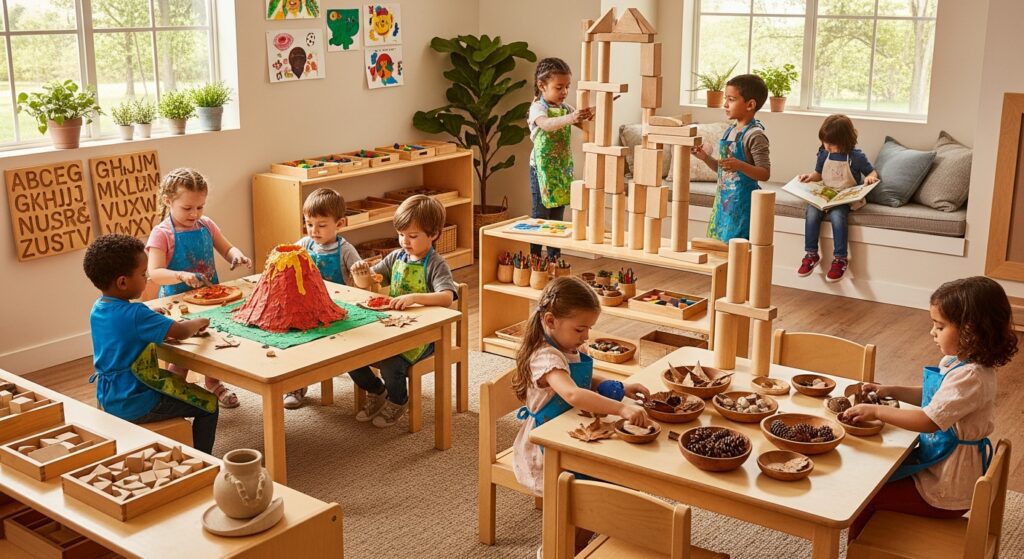
Every preschool in Trumbull, CT promises a “high-quality” experience, but what does that truly mean for your child? It’s found in the details: passionate teachers, a curriculum that sparks genuine curiosity, and a true partnership with families. This guide will show you how to identify the signs of an exceptional program. You’ll learn exactly what to look for and what questions to ask on a tour. Our goal is to help you find a benchmark for excellence, like Strong Start Trumbull, so you can feel confident your child is getting a fantastic strong start.
This guide covers everything Trumbull parents need to know, from types of preschool programs and Connecticut licensing standards to what quality early education actually looks like in practice.
How Preschool Gives Your Child a Strong Start in Trumbull
Research from the National Institute for Early Education Research consistently shows that children who attend high-quality preschool programs enter kindergarten with stronger literacy, math, and social-emotional skills than peers who do not. For Trumbull families, where Trumbull Public Schools maintain high academic standards, giving your child a strong start before kindergarten can make a meaningful difference.
Connecticut ranks among the top states for early childhood education investment, and Trumbull sits within Fairfield County’s competitive educational landscape. Whether your child is two, three, or four years old, the preschool years are when foundational skills in communication, problem-solving, and social interaction take shape.
Finding the Right Fit: Preschool Programs Near Trumbull
When searching for a preschool in Trumbull, CT, you will encounter several program types. Understanding the differences helps you find the right fit for your family’s needs and your child’s learning style.
Exploring Center-Based Preschools
Center-based programs operate in dedicated facilities with multiple classrooms, structured schedules, and professional teaching staff. These programs typically offer full-day and part-day options, serve children from infancy through pre-kindergarten, and follow a defined curriculum.
What to look for: Low student-to-teacher ratios, a research-based curriculum, and teachers with degrees in early childhood education or child development.
Understanding Home-Based and Family Childcare
Licensed family childcare providers operate out of private homes and serve smaller groups of children. These settings can offer a more intimate, home-like environment, which some families prefer for very young children.
What to consider: Connecticut licenses family childcare homes separately from centers. Ask about the provider’s training, backup care plans, and how they handle mixed-age groups.
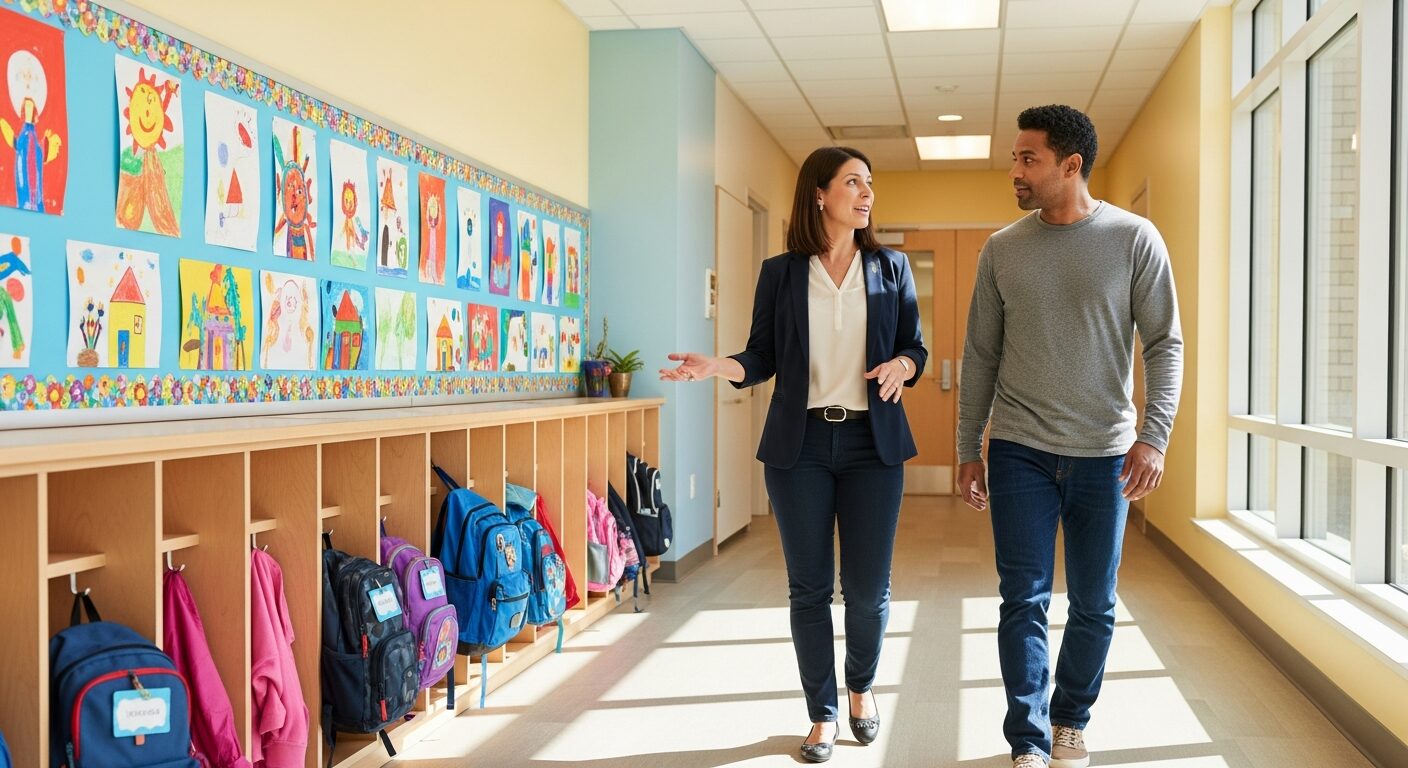
A Guide to Public and School-Based Pre-K
Trumbull offers some public pre-kindergarten options through the school district, though availability is limited. These programs typically serve four-year-olds and follow the Connecticut Early Learning and Development Standards (CT ELDS).
Key consideration: Public pre-K programs often have limited hours that may not align with working parents’ schedules, and enrollment slots can be competitive.
Considering Faith-Based and Community Options
Several churches and community organizations in the Trumbull area operate preschool programs. These vary widely in curriculum, schedule, and educational philosophy.
Common Preschool Models and Philosophies
Beyond the type of program, it’s helpful to understand the educational philosophy that guides a school’s curriculum. This is the “why” behind their daily activities and shapes everything from the classroom layout to how teachers interact with children. You’ll hear names like Montessori, Waldorf, and Reggio Emilia, each offering a unique perspective on how children learn best. Some schools are strict adherents to one model, while many of the best modern programs draw inspiration from several child-centered approaches to create a rich and responsive learning environment. Knowing the basics can help you identify a program that aligns with your own values and your child’s personality.
Play-Based Programs
Play-based programs are founded on the simple but powerful idea that play is the most important work of childhood. Instead of formal lessons, learning happens organically as children explore, create, and interact with their environment and each other. A block corner becomes a lab for budding engineers to test balance and gravity, while a dramatic play area helps develop social skills and emotional intelligence through role-playing. This approach is designed to nurture a child’s natural curiosity, empowering them to become confident, self-motivated learners. The goal is to make learning so engaging that children develop a genuine love for discovery that lasts a lifetime.
Waldorf Schools
Waldorf education emphasizes creativity, imagination, and hands-on learning within a predictable, nurturing rhythm. The environment is typically filled with natural, open-ended toys that encourage imaginative play, and the curriculum integrates storytelling, art, and music. While the Waldorf model offers one path to nurturing creativity, other philosophies also champion child-led discovery. For example, the Reggio Emilia approach, which inspires our curriculum at Strong Start, views children as capable and curious researchers. This philosophy is often put into action with The Project Approach, where teachers and children collaborate on in-depth investigations of topics that capture their interest, turning their questions into exciting, hands-on learning.
Keeping Kids Safe: Connecticut’s Preschool Licensing and Standards
Every licensed preschool in Connecticut must meet standards set by the Connecticut Office of Early Childhood (OEC). As a parent, understanding these baseline requirements helps you evaluate programs more effectively.
What Does a Connecticut Preschool License Mean?
- Staff-to-child ratios: Connecticut requires specific ratios by age group. For preschool-age children (3-5 years), the state requires at least one teacher for every ten children. Higher-quality programs exceed these minimums significantly.
- Teacher qualifications: Lead teachers in licensed centers must hold at least a Child Development Associate (CDA) credential, though top programs employ teachers with bachelor’s or master’s degrees in early childhood education.
- Health and safety: All programs must meet building, fire, health, and sanitation codes, maintain current immunization records, and have emergency procedures in place.
- Curriculum requirements: Licensed programs must implement a developmentally appropriate curriculum that addresses cognitive, physical, social, and emotional development.
The Gold Standard: What is NAEYC Accreditation?
While licensing is the minimum, the National Association for the Education of Young Children (NAEYC) accreditation represents a higher standard. Only about 8% of childcare programs nationwide hold NAEYC accreditation. When evaluating a preschool in Trumbull, CT, ask whether the program is accredited or pursuing accreditation.
Why NAEYC is the Mark of Excellence
Think of the National Association for the Education of Young Children (NAEYC) accreditation as the highest seal of approval in early childhood education. It’s not just a certificate to hang on the wall; it’s the result of a rigorous, voluntary process where a program proves it meets top-tier standards for curriculum, teaching, health, and family partnership. Fewer than 10% of childcare programs in the U.S. achieve this distinction, making it a powerful indicator of true quality. Earning NAEYC accreditation shows a school is deeply committed to creating an exceptional learning environment that goes far beyond basic state licensing.
For families in Trumbull, this distinction matters. Research consistently shows that children from NAEYC-accredited programs enter kindergarten with stronger literacy, math, and social-emotional skills. Given the high academic standards of Trumbull’s public schools, providing this strong foundation is one of the best things you can do for your child’s future learning. When you tour a preschool, asking if they are accredited or actively pursuing it is a key question. It confirms you’re partnering with a program dedicated to continuous improvement and to giving your child the best possible start.
Key Signs of a High-Quality Preschool Program
Beyond licensing and accreditation, these are the hallmarks of a truly excellent early education program.
How Will My Child Learn? A Look at Curriculum and Approach
The best preschool programs use a research-based curriculum that balances structured learning with child-directed exploration. Look for programs that emphasize hands-on, experiential learning rather than worksheets and rote memorization. Approaches like Reggio Emilia, Montessori, and project-based learning have strong evidence supporting their effectiveness for young children.
How Will My Child Learn? A Look at Curriculum and Approach
The best preschool programs use a research-based curriculum that balances structured learning with child-directed exploration. Look for programs that emphasize hands-on, experiential learning rather than worksheets and rote memorization. Approaches like Reggio Emilia, Montessori, and project-based learning have strong evidence supporting their effectiveness for young children.
The Project Approach: Learning Through Investigation
One powerful method you might encounter is The Project Approach, which centers learning around in-depth investigations of topics that capture children’s interest. Instead of a teacher simply presenting a theme like “transportation,” children might collectively decide to study how a bridge works after seeing one on a walk. This curiosity sparks a project where they ask questions, research answers, and collaborate on solutions. They might build their own model bridge, interview an engineer, or draw detailed blueprints. This method fosters critical thinking and problem-solving skills, turning natural curiosity into a rich learning experience that builds confidence and a genuine love for discovery that extends far beyond the classroom.
Aligning with Connecticut’s Learning Standards
Regardless of the specific teaching philosophy, all licensed programs in Trumbull are required to follow the Connecticut Early Learning and Development Standards (CT ELDS). These standards are not just a checklist; they are a comprehensive framework designed to ensure every child develops the essential skills needed for kindergarten and beyond. The CT ELDS cover key domains like communication, problem-solving, social interaction, and creative expression. A high-quality program seamlessly integrates these standards into daily activities. For example, a project on gardening can address science concepts (ELDS), teamwork (social skills), and measuring plant growth (early math). This ensures your child receives a well-rounded education that prepares them academically and socially for their journey into Trumbull Public Schools.
Why Teacher Quality and Low Turnover Matter
The single most important factor in a preschool program is the quality of its teachers. Look for educators who are warm, responsive, and genuinely engaged with children. Teacher turnover is a critical indicator; programs with low staff turnover provide more consistent, secure relationships for your child.
Teacher Compensation in Trumbull
When you’re evaluating a preschool, it’s worth considering how they invest in their teaching staff. Competitive compensation is crucial for attracting and retaining talented, experienced educators, which directly impacts your child’s daily experience. In Trumbull, teacher pay can vary, but some programs offer wages significantly above the national average. This is a positive sign for the local early education community. Schools that prioritize fair pay often have lower staff turnover, meaning your child can build a secure, lasting bond with their teacher. This stability is foundational for learning and emotional well-being. Don’t be afraid to ask directors how they support their teachers—it’s a powerful indicator of a program’s quality and commitment to excellence.
Is the Classroom Safe, Clean, and Engaging?
The physical environment plays a critical role in early learning. Look for classrooms that are clean, organized, and designed to encourage exploration. Outdoor play spaces, natural materials, and age-appropriate learning centers all signal a program that takes the learning environment seriously.
Essential Safety and Security Features
Your child’s safety is non-negotiable, and a high-quality preschool will treat it the same way. When you tour a facility, look beyond the clean floors and organized shelves to the specific security measures in place. A secure entry point, like a keypad-access door, is a great start, but also ask about the visitor policy. Is there a formal check-in and check-out system for everyone who enters the building? A school should also be transparent about its emergency preparedness, including regular fire drills and lockdown procedures. It’s also essential to confirm that every single staff member, from teachers to administrative support, has undergone a thorough background check. These layers of protection, from physical security to rigorous staff vetting, are part of a school’s fundamental promise to keep your child safe. A program that openly discusses its health and safety protocols isn’t just following rules; it’s showing you that your child’s well-being is their top priority.
Staying Connected: How the School Communicates with Families
Strong preschool programs treat families as partners in their child’s education. Daily communication, regular parent-teacher conferences, and opportunities for family involvement indicate a program that values the home-school connection.
Will My Child Be Ready for Kindergarten?
Ultimately, you want a program that prepares your child for a successful transition to kindergarten. This means more than teaching letters and numbers. True kindergarten readiness includes social-emotional skills like sharing, taking turns, following directions, and managing emotions, along with confidence, independence, and a love of learning.
Preschool vs. Pre-K: Understanding the Difference
You’ll often hear the terms “preschool” and “pre-K” used interchangeably, but they generally refer to distinct stages in early education. High-quality preschool programs typically serve children from around two-and-a-half to four years old, with a primary focus on social-emotional growth, learning through play, and developing communication skills. It’s where children learn to share, cooperate, and explore their curiosity in a structured environment. Pre-kindergarten, or pre-K, is designed for the year just before kindergarten, usually for four- and five-year-olds. While it continues to build social skills, the curriculum becomes more focused on academic readiness, introducing foundational concepts in literacy, math, and problem-solving to ensure a smooth transition to elementary school. Think of preschool as building the social and emotional foundation, while pre-K adds the academic framework for what comes next.
How Much Does Preschool Cost in the Trumbull Area?
Childcare costs in Fairfield County are among the highest in Connecticut. For families researching how much daycare costs in CT, here is what to expect in the Trumbull area.
A Breakdown of Typical Preschool Costs
Full-time preschool (3-5 year olds) in Fairfield County typically ranges from $250 to $475 per week, depending on the program type, hours, and quality level. Infant and toddler care tends to cost more due to lower required ratios.
What Influences the Cost of Preschool?
- Full-day vs. half-day: Full-day programs (typically 7 AM to 6 PM) cost more than half-day (8:30 AM to 12:30 PM) options
- Program quality: Centers with highly trained staff, low ratios, and enrichment programs often charge more, reflecting their investment in quality
- Age of child: Younger children require more staff per child, which increases costs
- Additional services: Some programs include meals, enrichment activities, and extended care in tuition; others charge separately
Ways to Make Preschool More Affordable
Connecticut’s Care 4 Kids program provides childcare subsidies for eligible working families. Income guidelines and application procedures are available through the Connecticut Office of Early Childhood. Some employers also offer dependent care flexible spending accounts (FSAs) that allow you to set aside pre-tax dollars for childcare expenses.
Getting to Know Trumbull: A Guide for Families
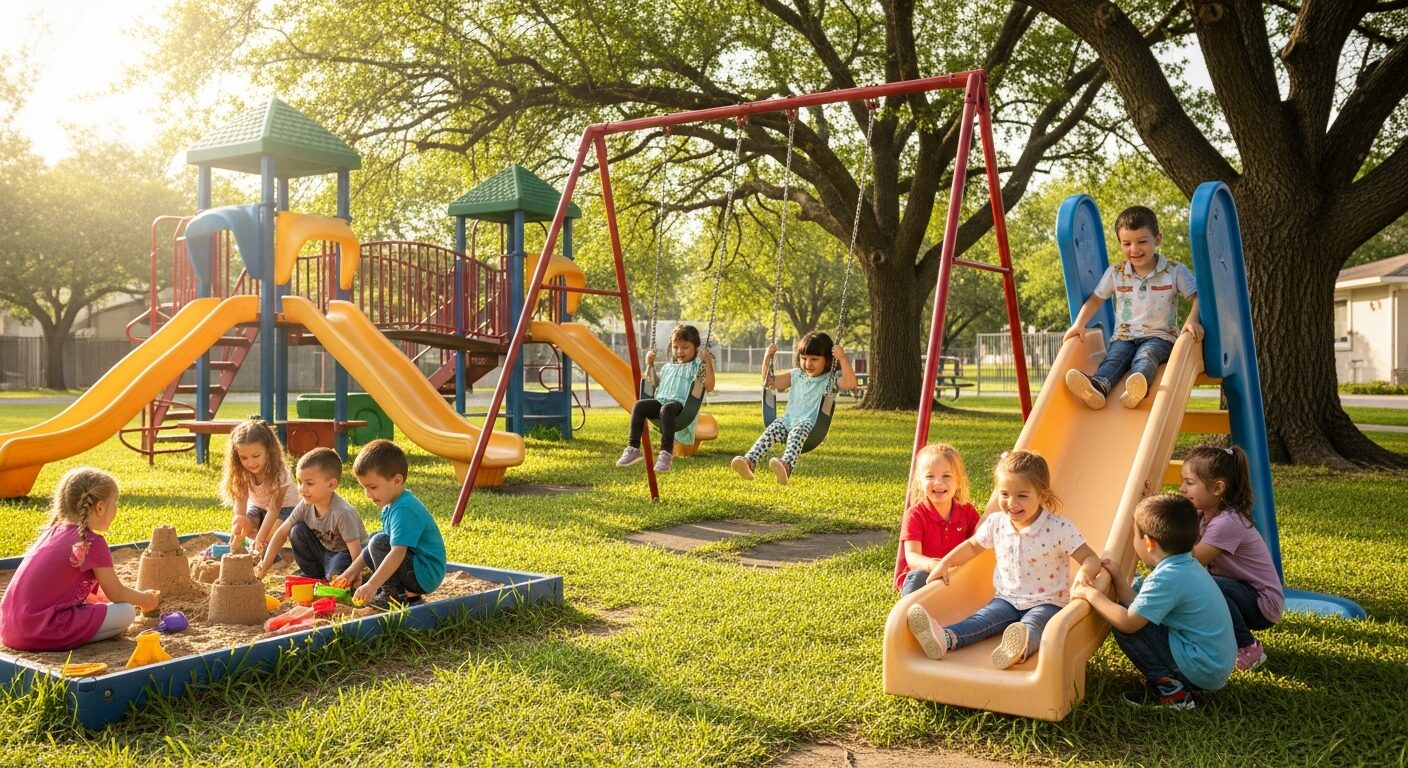
Trumbull offers a family-friendly environment that complements quality early education. The town features several parks, playgrounds, and recreational programs through the Trumbull Parks and Recreation Department. The Trumbull Library hosts regular storytime and early literacy programs that supplement what children learn in preschool.
Trumbull’s location along the Route 25 and Route 8 corridors also gives families access to preschool options in neighboring communities, including Bridgeport, Shelton, Monroe, and Fairfield, expanding your choices if a nearby center is the right fit.
Why Trumbull Families Choose Strong Start Early Care & Education
For families seeking a research-based preschool program near Trumbull, Strong Start Early Care & Education in Trumbull offers a Reggio Emilia-inspired, project-based learning approach at 56 Quarry Road, Trumbull, CT 06611.
What sets Strong Start apart:
- Owner-operated by Marc Hoffman, who maintains daily on-site presence and brings a background in child psychology and emotional intelligence research from Yale University
- Research-based curriculum where children learn through meaningful projects driven by their own curiosity and interests
- Low staff turnover ensures children build lasting relationships with teachers who know them deeply
- Programs from infancy through pre-K, providing continuity of care as your child grows
- State-of-the-art facility designed as a learning environment, with intentional spaces that invite exploration and discovery
- Strong family partnerships with regular communication, documentation of your child’s learning journey, and opportunities for engagement
Strong Start goes beyond traditional childcare to provide the kind of early education that builds kindergarten readiness across every developmental domain: academic, social, emotional, and physical.
Our History: A Community-Focused Approach
In a world of large chains, Strong Start stands out by being intentionally small and community-focused. We are not a big corporation; we are a local, owner-operated program dedicated to putting children and families first. This approach means you’ll find a leadership team that is present and involved in the daily life of the school, creating a warm, personal environment where every child is known and celebrated. Our commitment is to the families we serve right here in the Trumbull area, building a true partnership in your child’s early education. This philosophy is at the heart of everything we do, ensuring that our focus remains on providing exceptional care and fostering a genuine love of learning from the very beginning.
Led by Experienced Early Childhood Professionals
The quality of an early childhood program is a direct reflection of its educators. At our Trumbull school, Director Daisy brings over 20 years of experience in early childhood education, guiding a team of passionate and qualified teachers. We believe that consistent, nurturing relationships are the foundation of learning, which is why we invest in our staff to create a stable and supportive environment. Our commitment to hiring and retaining exceptional educators means your child will be cared for by professionals who are not only experts in child development but are also deeply dedicated to their craft. This experience and dedication translate into classrooms that are joyful, engaging, and responsive to the needs of every child.
Programs for Every Stage of Early Childhood
Children grow and change so much in their first five years, and their educational environment should evolve with them. Strong Start provides a seamless learning journey with programs designed for each specific developmental stage, from infancy through preschool. This continuity of care allows children to build secure, lasting bonds with teachers and peers, making transitions smoother and less stressful. Families appreciate the stability of staying within one trusted school community as their child progresses. Our distinct programs ensure that the curriculum, classroom environment, and daily routines are perfectly tailored to your child’s age and developmental needs, providing the right balance of support and challenge every step of the way.
Infant Program (6 weeks – 12 months)
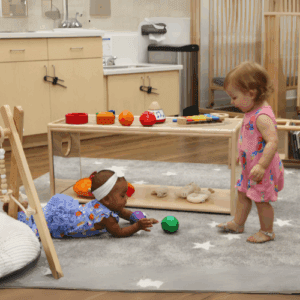
Our infant classrooms are designed to be a home away from home, providing a warm, safe, and nurturing space for our youngest learners. We focus on creating strong, trusting bonds between infants and their primary caregivers, who are attuned to each baby’s unique schedule and needs. The environment is rich with sensory experiences that encourage exploration and discovery, supporting the rapid brain development that occurs in the first year. Through gentle interactions, floor time, and responsive care, we lay the groundwork for curiosity, communication, and a secure sense of self. Our low teacher-to-infant ratios ensure your baby receives the individual attention and affection they need to thrive.
Toddler Program (12 – 24 months)
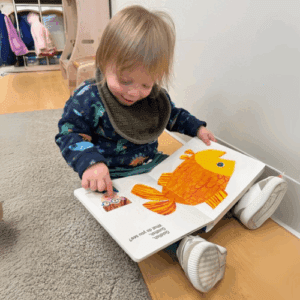
The toddler years are a time of incredible growth, as children begin to walk, talk, and assert their independence. Our toddler program channels this boundless energy into purposeful play and exploration. The classroom is carefully designed to support developing motor skills, language acquisition, and early social interactions. Teachers guide toddlers through hands-on activities that build confidence and problem-solving skills, from stacking blocks to engaging in simple art projects. We celebrate each new milestone, whether it’s learning to share a toy or using new words to express a need, creating a positive and encouraging environment where toddlers feel safe to explore their growing world.
Bridge Program (2 – 3 years)
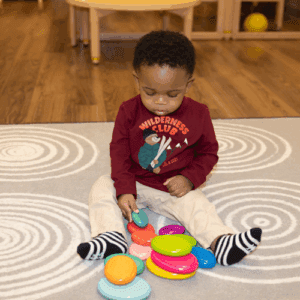
Designed for two- and three-year-olds, our Bridge Program serves as a crucial link between the toddler and preschool years. This is an age of burgeoning social skills and a growing desire for independence. In our Bridge classrooms, children engage in more complex, collaborative play and begin to participate in small-group projects. Teachers foster early literacy and numeracy skills through stories, songs, and hands-on activities that feel like play. We focus on helping children develop self-help skills, manage their emotions, and learn to be part of a classroom community, all while nurturing their natural curiosity and preparing them for the more structured learning of preschool.
Preschool Program (3 – 5 years)
Our preschool program prepares children for kindergarten and a lifetime of learning by focusing on critical thinking, collaboration, and creativity. Children’s questions and interests drive long-term projects, allowing them to investigate topics deeply and make meaningful connections. The curriculum integrates literacy, math, science, and the arts into these hands-on explorations. Preschoolers develop essential social-emotional skills as they learn to negotiate with peers, solve problems together, and contribute to their classroom community. We focus on building not just academic skills but also the confidence, independence, and intrinsic motivation that are the true hallmarks of kindergarten readiness.
Our Educational Philosophy: Facilitating Learning from the Inside Out
We believe that children are born curious and capable, with an innate desire to understand the world around them. Our educational philosophy is inspired by the Reggio Emilia approach, which views children as active protagonists in their own learning. Instead of simply delivering information, our teachers act as researchers and guides, co-constructing knowledge alongside the children. This is put into practice through The Project Approach, where learning is organized around in-depth investigations of topics that capture the children’s interest. This method facilitates learning from the inside out, creating an intrinsic motivation to ask questions, experiment, and discover, which is far more powerful than rote memorization.
State-of-the-Art Facilities Designed for Children
The environment is often called the “third teacher” in the Reggio Emilia philosophy, and our Trumbull facility was designed with this principle in mind. Every space, from our large, light-filled classrooms to our expansive outdoor playground, is intentionally created to be safe, engaging, and rich with learning opportunities. We use natural materials and thoughtfully organized learning centers to invite exploration and encourage children to interact with their surroundings in meaningful ways. Our school is more than just a building; it’s a dynamic environment that supports children’s development, sparks their curiosity, and provides the tools they need to bring their ideas to life.
Indoor Gym and Dedicated STEM Lab
A well-rounded education addresses the needs of the whole child, which is why our facility includes specialized spaces for different types of learning and play. Our large indoor gym ensures that children have ample opportunity for gross motor development and physical activity every day, regardless of the weather. We also feature a dedicated STEM Lab, a unique space designed to foster early skills in science, technology,engineering, and math. Here, children can engage in experiments, work with building materials, and explore concepts in a hands-on way, laying a strong foundation for future learning in these critical fields.
Secure and Safe Learning Environments
Your child’s well-being is our highest priority. We have implemented comprehensive health and safety protocols to ensure our school is a secure and protected environment for every child. Our Trumbull facility is equipped with a secure entry system, allowing access only to authorized staff and families. We also have cameras throughout the building for added oversight. Beyond the physical security measures, our staff is fully trained in emergency procedures, first aid, and CPR. This commitment to safety allows you to have peace of mind, knowing your child is cared for in a safe, clean, and well-supervised setting.
Engaging Enrichment Programs
To provide a truly holistic and enriching experience, we integrate a variety of special subjects into our weekly curriculum at no extra cost. Our enrichment programs are designed to expose children to new interests and forms of expression. Through activities like art, yoga, music, and specialized STEM projects, children can explore their creativity, develop body awareness, and deepen their understanding of the world. These experiences are not treated as separate “add-ons” but are woven into the fabric of our daily learning, led by our talented teachers who bring their own passions and expertise into the classroom, ensuring a well-rounded and joyful early education.
Serving Trumbull and Surrounding Communities
Conveniently located at 56 Quarry Road, our Trumbull school is easily accessible for families throughout the area. With its proximity to major roads like the Route 25 and Route 8 corridors, we are a practical choice for parents commuting to and from work. We are proud to serve not only families from Trumbull but also those from surrounding towns, including Monroe, Shelton, and Bridgeport. Our location makes it simple for families in the region to access a high-quality, community-focused early education program without a difficult commute, making the morning drop-off and evening pick-up a little bit easier for busy working parents.
Your Preschool Checklist: Finding the Right Fit in Trumbull
Use this checklist when visiting preschool programs in the Trumbull area:
- Visit during operating hours to see classrooms in action
- Observe teacher-child interactions for warmth, engagement, and responsiveness
- Ask about curriculum and whether it is research-based and developmentally appropriate
- Check ratios, lower is better, especially for younger children
- Ask about teacher qualifications and tenure
- Review the daily schedule for a balance of structured and unstructured time
- Assess the environment for cleanliness, organization, and learning design
- Ask about communication and how you will know what your child is learning
- Understand pricing and what is included
- Ask about waitlists and enrollment timelines
Is Your Child Ready for Preschool?
Deciding if your child is ready for preschool is less about their age and more about their developmental stage. While many children start around age three, readiness isn’t a switch that flips on their birthday. Instead, it’s a collection of emerging skills and social behaviors that show they are prepared to thrive in a group learning environment. Look for signs that your child is becoming more independent, is interested in other children, and shows a natural curiosity about the world. Remember, every child develops at their own pace, and the goal is to find a program that will meet them where they are and support their continued growth.
Signs of Independence
One of the clearest signs of preschool readiness is a child’s growing desire for independence. This doesn’t mean they need to be fully self-sufficient, but you might notice them wanting to do things on their own. Can they pull on their own rain boots, even if they end up on the wrong feet? Do they try to help put toys away after playing? These small acts of self-help are important building blocks. Another key indicator is their ability to be away from you for short periods without becoming overly distressed. A quality program, especially in the Bridge Classrooms for two- and three-year-olds, is designed to help children build this confidence and practice these new skills in a supportive, nurturing setting.
Social and Emotional Readiness
Preschool is a highly social environment, so a child’s readiness often hinges on their social and emotional skills. Are they beginning to show interest in playing alongside other children? Can they follow simple, two-step directions like, “Please get your cup and bring it to the table”? True readiness also involves the early stages of managing emotions. While tantrums are a normal part of being a toddler, a child who is ready for preschool is starting to learn how to express their feelings with words. A strong program focuses on building these skills, teaching children how to share, take turns, and communicate their needs, which is why partnering with parents is so essential to fostering this development both at school and at home.
Curiosity and a Desire to Learn
A curious child is a child who is ready to learn. If your little one is constantly asking “Why?” and shows a genuine interest in exploring their surroundings, they are primed for a preschool environment that encourages investigation. This natural inquisitiveness is the foundation of early learning. At Strong Start, our curriculum is inspired by the Reggio Emilia philosophy, which views children as capable and full of potential. We use The Project Approach to turn their questions into deep, hands-on investigations about topics that genuinely interest them. When a child’s own curiosity guides their learning, they develop a true love for discovery that will prepare them for kindergarten and beyond.
Factors for Your Family to Consider
While your child’s readiness is key, the right preschool also needs to work for your entire family. Practical considerations are just as important as educational philosophy. Think about your daily schedule. Do you need a full-day program that accommodates a working parent’s schedule, or is a half-day option sufficient? Consider your commute and the school’s location; a convenient drop-off and pick-up can make a huge difference in your daily routine. Your family’s values should also align with the school’s approach. Look for a program that prioritizes open communication and sees parents as true partners in their child’s education. Opportunities for involvement, like a Family Council, show a school’s commitment to building a strong community around your child.
A Practical Timeline for Your School Search
Finding the right preschool in Trumbull takes time, so starting your search early can help you feel prepared and confident in your choice. A good rule of thumb is to begin your research about a year before you plan to enroll. This is the time to learn about different program types and talk to other local parents. About nine to twelve months out, create a shortlist of schools and begin scheduling tours. Many popular programs have waitlists, so getting in early is always a good idea. In the winter and early spring, you will likely submit applications for fall enrollment, which is the most common time for children to start preschool after turning three. Once you have accepted a spot, you can focus on completing paperwork and preparing your child for a positive and exciting transition to school. The best first step is always to see a school for yourself and ask plenty of questions. You can learn more about our Trumbull school and schedule a visit to see if our community is the right fit for your family.
Ready to Give Your Child a Strong Start?
Choosing a preschool in Trumbull, CT is an investment in your child’s future. Whether you prioritize a specific educational philosophy, convenient location, or a program that truly partners with families, taking time to visit and ask questions will help you find the right fit.
Schedule a tour at Strong Start Trumbull to see our Reggio Emilia-inspired classrooms in action and learn how project-based learning prepares children for kindergarten and beyond.
Frequently Asked Questions
How do I know a play-based or project-based curriculum will actually prepare my child for kindergarten in Trumbull? This is a great question because it gets to the heart of what true kindergarten readiness is. While memorizing letters and numbers seems like a head start, true preparation comes from developing skills like critical thinking, problem-solving, and collaboration. A project-based approach teaches children how to learn. When they investigate a topic that fascinates them, they are practicing communication, asking questions, and working with others to find answers. This builds the confidence and genuine curiosity that helps them succeed in a formal school setting and beyond.
What is the real difference between a licensed preschool and one that is NAEYC accredited? Think of it this way: state licensing is the mandatory requirement for a program to operate legally. It ensures a school meets the basic health and safety standards. NAEYC accreditation, however, is a voluntary and much more rigorous process. It is a mark of excellence that a program actively pursues to demonstrate its commitment to the highest standards in teaching, curriculum, and family partnership. It signals that a school goes far beyond the minimum requirements to provide an exceptional environment for children.
My child is only two. How can I be sure they are ready for a structured program? Readiness is less about a specific age and more about a child’s growing independence and interest in others. For two-year-olds, a high-quality program isn’t about rigid structure; it’s about providing a safe, nurturing space to practice new social and emotional skills. In our Bridge Program, for example, the “curriculum” is built around purposeful play, learning to share, and communicating needs. The goal is to meet children where they are and gently guide them as they build the confidence to be part of a group.
How will I know what my child is learning and doing all day? A great school sees parents as partners, and that requires excellent communication. You should expect more than just a quick summary at pickup. Look for programs that use a combination of tools to keep you connected, such as a private app for daily photos and updates, detailed documentation of classroom projects, and scheduled conferences. This transparency helps you see your child’s growth, understand their learning process, and feel like a valued part of the school community.
When should I start my preschool search? It’s wise to start your research about a year before you hope for your child to start school. This gives you plenty of time to understand the different options in Trumbull without feeling rushed. We recommend scheduling tours about nine to twelve months in advance, especially since many high-quality programs have waitlists. This timeline allows you to visit several schools, ask questions, and find the one that feels like the best fit for your child and your family.
Key Takeaways
- Prioritize People and Philosophy: The best programs are defined by their passionate, experienced teachers and a clear educational approach, like project-based learning, that nurtures a child’s natural curiosity.
- Observe with Purpose: During a tour, focus on how teachers interact with children and how the classroom environment encourages exploration; a warm, engaging atmosphere is just as important as the curriculum itself.
- Balance Child Readiness with Family Needs: The right preschool supports your child’s developmental stage, like growing independence and social skills, while also fitting your family’s practical needs for location, hours, and communication.
Related Articles
- Preschool in Trumbull, CT: A Parent’s Guide to Early Education
- Day Care in Trumbull: Tips & Insights | Strong Start Early Care & Education
Written By
Marc Hoffman
Founder, Strong Start Early Care & Education
Marc founded Strong Start in 2014, inspired by his studies at Williams College, Yeshiva University, and research at Yale University. His child-centered, inquiry-based approach to early education has helped hundreds of families in the Trumbull and Bridgeport communities. As a parent himself, Marc understands the importance of finding a nurturing environment where every child can learn, grow, and flourish.