Choosing the right daycare in Shelton, CT, is a huge decision. You’re not just looking for a place to drop your child off; you’re searching for a community that will keep them safe, support their incredible development, and give you peace of mind. As you start your search, you’ll find Shelton families have many options, from home-based care to licensed centers. Understanding the different learning approaches is key to finding the perfect fit. This is why we built Strong Start Shelton on a child-led philosophy, where learning is an exciting adventure every single day.
This guide covers what you need to know about daycare in Shelton, including the types of programs available, what quality care looks like, typical costs in Fairfield County, and how to evaluate your options.
Shelton Daycare Programs: What Are My Options?
Shelton offers a range of childcare options to meet different family needs. Understanding the differences can help you find the right fit.
Licensed Childcare Centers operate in commercial spaces with multiple classrooms organized by age group. These centers follow Connecticut Office of Early Childhood (OEC) regulations, maintain specific teacher-to-child ratios, and typically offer structured curricula. Many centers in Shelton serve children from infancy through pre-kindergarten.
Family Childcare Homes are run by licensed providers in residential settings. Connecticut allows family childcare homes to care for up to six children (or more with an assistant). These settings can feel more homelike and often offer flexible hours.
Preschool Programs focus on children ages 3 to 5 and emphasize school readiness. Some preschools in Shelton follow specific educational philosophies, such as Montessori, play-based, or Reggio Emilia-inspired approaches.
Before and After School Care serves school-age children who need supervision outside of regular school hours.
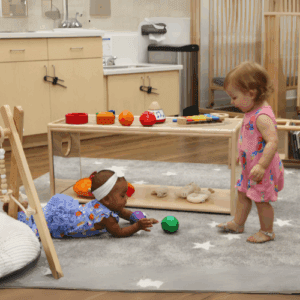
For families with infants and toddlers, finding a center with dedicated age-specific classrooms is especially important. Programs like Strong Start’s Shelton infant program create environments designed specifically for the youngest learners, with low ratios and caregivers trained in early developmental milestones.
Signs Your Child Is Ready for Preschool
While there’s no magic age, you can look for developmental cues that suggest your child is ready for a more structured learning environment. Readiness is less about mastering specific skills like potty training and more about social and emotional development. Is your child showing more interest in playing with other kids, learning how to share and take turns? Do they have a growing sense of independence and an ability to follow simple, two-step instructions? These are strong indicators. A child who is ready for preschool can often handle short separations from you without extreme distress and is comfortable with predictable routines, which helps them feel safe and secure. They are also likely brimming with curiosity, constantly asking questions and eager to explore. A quality program will meet this curiosity with engaging activities that help them learn how to solve problems and work with others.
Your Checklist for Finding a Great Shelton Daycare
Not all daycare programs are created equal. Here are the key factors Shelton parents should evaluate when choosing childcare.
Is the Daycare Properly Licensed?
Every daycare center and family childcare home in Connecticut must be licensed by the Office of Early Childhood. You can verify a provider’s license status through the OEC’s online database. Licensed programs must meet minimum standards for health, safety, staff qualifications, and facility conditions.
Look for programs that go beyond minimum requirements. Centers that exceed state-mandated ratios, invest in ongoing staff training, and maintain accreditations from organizations like the National Association for the Education of Young Children (NAEYC) demonstrate a deeper commitment to quality.
Understanding NAEYC Accreditation
When you see that a center is accredited by the National Association for the Education of Young Children (NAEYC), it means they’ve voluntarily gone through a rigorous process to prove they meet the highest national standards for early childhood education. Think of it as the gold standard for quality. This accreditation isn’t just about checking boxes; it’s a deep evaluation of a program’s teachers, curriculum, health and safety practices, and family partnerships. An accredited center has demonstrated a commitment to creating an environment where children can truly thrive—developing critical thinking skills, curiosity, and a love for learning. For parents, choosing a NAEYC-accredited program like Strong Start provides an extra layer of confidence that you’re making an excellent choice for your child’s development and well-being.
How Will My Child Learn and Play?
The best daycare programs do more than provide supervision. They offer intentional learning experiences that support cognitive, social, emotional, and physical development.
Ask potential providers about their curriculum approach. Research-based methods, such as the Reggio Emilia-inspired approach used at Strong Start in Shelton, emphasize child-led exploration, project-based learning, and making learning visible through documentation. These approaches help children develop critical thinking, creativity, and a genuine love of learning.
The Importance of Play-Based Learning
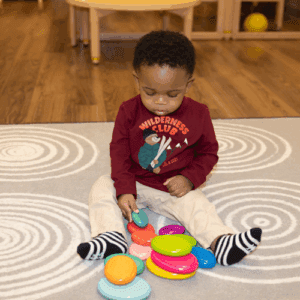
When you peek into a high-quality classroom, you’ll see that play is serious business. It’s how children make sense of their world, test theories, and learn to collaborate. A play-based learning environment isn’t a free-for-all; it’s a carefully designed space where teachers guide children through activities that build foundational skills. As children build a block tower together or run a pretend grocery store, they are practicing negotiation, problem-solving, and self-control. Research confirms that this kind of intentional play helps children learn how to manage their emotions and get along with others, setting the stage for success in school and life.
Our Approach: Reggio Emilia and The Project Approach
At Strong Start, our curriculum is guided by two powerful, research-backed philosophies. Our Reggio Emilia inspiration means we view the classroom environment as a “third teacher.” Every material and every corner of the room is intentionally set up to spark curiosity and encourage exploration. We combine this with The Project Approach, which allows children to do deep, meaningful investigations into topics that fascinate them—whether it’s learning about insects they found on the playground or the construction happening down the street. This inquiry-based method empowers children to ask questions, experiment, and become confident, capable learners who love discovering new things.
Who Will Be Caring for Your Child?
The people caring for your child matter most. Look for programs where teachers hold degrees or credentials in early childhood education and participate in regular professional development.
Staff turnover is a critical factor that many parents overlook. High turnover disrupts the relationships children form with their caregivers, which can affect emotional security and development. Programs with low staff turnover and consistent teaching teams provide the stability young children need.
How Will They Keep You in the Loop?
Strong daycare programs keep parents informed and involved. Look for centers that offer daily updates, parent-teacher conferences, digital communication tools, and an open-door policy that welcomes family visits at any time.
A Closer Look at Strong Start in Shelton
When you’re looking for the right fit, sometimes you need to see a program up close. Located at 901 Bridgeport Ave, Strong Start in Shelton offers a warm, inviting, and dynamic environment for infants, toddlers, and preschoolers. We designed our center to be more than just a daycare; it’s a community where your child’s curiosity is celebrated and their potential is nurtured from the very beginning. Our goal is to create a place where children feel excited to learn and explore, and where Shelton families feel confident, connected, and supported.
Our approach is built on a deep respect for children as capable and competent learners. We combine a research-backed curriculum with a genuine commitment to building relationships, creating a space where every child feels seen, heard, and valued. By focusing on child-led inquiry and project-based learning, we help children develop critical thinking skills and a true love of learning. This philosophy is woven into every aspect of our day, from the materials in our classrooms to the interactions between teachers and children, ensuring a rich and meaningful early education experience.
Our Location and Leadership
A school’s environment is shaped by its physical space and the people who lead it. Our Shelton location is designed to be a welcoming second home for your child, but it’s our dedicated leadership that truly brings our philosophy to life. The center director sets the tone for the entire school, ensuring that our high standards for education, safety, and family partnership are met every single day. They are the go-to resource for families and the mentor for our team of exceptional educators, making their role central to your family’s experience.
Meet Our Shelton Director, Daisy
Our Shelton school is led by Director Daisy Rivera, a passionate early childhood professional with over two decades of experience. Daisy’s leadership ensures that every classroom provides a nurturing and stimulating experience. She works closely with teachers to implement our Reggio Emilia-inspired curriculum and is a constant, supportive presence for children, staff, and parents. Her dedication is a cornerstone of the trusting, high-quality environment that Shelton families have come to rely on for their children’s care and education.
Our Safe and Stimulating Facility
A child’s surroundings play a huge role in their learning and development. That’s why we’ve been so intentional about every aspect of our Shelton facility. We believe children deserve beautiful, organized, and inspiring spaces that encourage them to explore, create, and connect with the world around them. From our bright, open classrooms to our secure play areas, every detail is designed with your child’s well-being and intellectual growth in mind, providing a safe and engaging backdrop for their daily adventures and discoveries.
Indoor and Outdoor Play Spaces
At our Shelton location, children have plenty of room to move, play, and learn. The center features open and spacious classrooms filled with natural light, an indoor gym for gross motor activities on rainy days, and a large, well-equipped outdoor playground. These varied environments give children the chance to develop physically, test their abilities, and engage in imaginative play. Whether they are building with blocks inside or running freely outdoors, our spaces are designed to support every part of your child’s development.
Commitment to Health and Safety
Your child’s well-being is our top priority. We maintain the highest standards for health and safety, with features like a secure-entry system, video cameras in all classrooms, and direct communication links to first responders. Our strict health policies, including rigorous cleaning protocols and illness guidelines, help ensure a healthy environment for all children and staff. These measures allow you to feel confident that your child is in a safe and protected space while in our care.
Enrichment Programs for Holistic Development
We believe in educating the whole child, which is why our core curriculum is supplemented with a variety of enrichment activities. At our Shelton school, children participate in programs like music, yoga, physical education, and early literacy activities. These experiences are woven into the weekly schedule to spark new interests and support well-rounded growth. Our enrichment programs help children develop their creativity, physical coordination, and cognitive skills in fun, engaging ways, adding another layer of discovery to their day.
Partnering with Our Shelton Families
We see parents as our most important partners in a child’s education. A strong connection between home and school is essential for a child’s success and emotional security. We are committed to building a collaborative relationship with every family through open, consistent communication and opportunities for involvement. From daily updates to community events, we work to ensure you are always connected to your child’s life at school and feel like a valued member of the Strong Start community.
Communication Through the Brightwheel App
Staying connected to your child’s day is simple with the Brightwheel app. This tool is our primary way of sharing real-time updates, photos, and messages with you throughout the day. You’ll receive notifications about meals, naps, and learning activities, giving you a window into your child’s experiences. The app also provides a direct and convenient way to communicate with your child’s teachers and the school director, ensuring that we can partner with you effectively.
The Shelton Parent Council
Our families are an integral part of our school community, and the Shelton Family Council is one way we encourage active involvement. This group provides a forum for parents to share feedback, collaborate with school leadership, and help plan family events. Participating in the council is a wonderful way to connect with other parents and play a meaningful role in shaping the school environment. It reinforces our belief that we are stronger when we work together.
The Lifelong Benefits of Quality Early Education
Choosing a high-quality early education program is an investment in your child’s future. The experiences children have in their first five years build a critical foundation for lifelong learning and well-being. A great program does more than prepare a child for kindergarten; it equips them with the social, emotional, and cognitive tools they need to thrive in school and in life. By providing a nurturing and intellectually rich environment, we help children develop confidence, curiosity, and a positive disposition toward learning that will serve them for years to come.
These lifelong benefits don’t happen by accident. They are the direct result of an intentional environment where children feel safe enough to take risks, curious enough to ask questions, and supported enough to persevere through challenges. In a quality program, learning isn’t about memorizing facts. It’s about discovering how the world works, learning how to collaborate with others, and seeing yourself as a capable, creative thinker. This early foundation is what empowers children to become adaptable, resilient, and engaged members of their communities.
Building Social and Emotional Skills
One of the most significant benefits of early schooling is the development of social and emotional skills. In a classroom setting, children learn how to get along with their peers, share materials, take turns, and work together to solve problems. Guided by caring teachers, they begin to understand and manage their own feelings while learning to recognize the feelings of others. These early lessons in empathy, cooperation, and self-regulation are especially prominent in our toddler classrooms and are fundamental for building healthy relationships and navigating social situations with confidence throughout their lives.
Laying the Foundation for Academic Success
Quality early education sets the stage for future academic achievement. Through playful, hands-on experiences, children develop a love of learning and build foundational skills in literacy, math, and science. Our approach, inspired by The Project Approach, encourages children to ask questions, investigate topics that interest them, and think critically. This method turns learning into an exciting process of discovery rather than a chore, helping children become engaged, capable learners who are well-prepared for the challenges of elementary school and beyond.
How Much Does Daycare Cost in Shelton, CT?
Childcare costs in Connecticut are among the highest in the nation. Understanding the typical price range helps you plan your family budget.
As of 2026, average annual childcare center costs in Connecticut are approximately:
- Infant care: $18,492 per year (about $1,541 per month)
- Toddler care: $18,829 per year (about $1,569 per month)
- Preschool-age care (4-year-olds): $15,297 per year (about $1,275 per month)
Shelton falls within Fairfield County, where costs can run at or above these state averages. For a detailed breakdown of daycare pricing across Connecticut, see our guide on how much daycare costs in CT.
Can I Get Help Paying for Childcare?
Several programs can help offset childcare costs for eligible families:
- Care4Kids: Connecticut’s childcare subsidy program helps low-to-moderate income families pay for licensed childcare. Eligibility is based on income, family size, and work or educational activity.
- Early Start CT: A newer state program expanding access to affordable early childhood education.
- Head Start and Early Head Start: Federally funded programs providing free early education for income-eligible families.
- Dependent Care Flexible Spending Accounts (FSA): Employers may offer pre-tax accounts that can be used for childcare expenses, saving families money on their tax bill.
When evaluating daycare costs, consider the full picture. Programs with strong educational curricula, experienced teachers, and low ratios may cost more upfront but deliver better developmental outcomes that benefit your child for years to come.
Understanding Head Start and Early Head Start
If you’re exploring financial assistance options, you’ll likely come across Head Start and Early Head Start. These are free, federally funded programs designed to help young children from low-income families prepare for school. Early Head Start serves pregnant women and families with children younger than three, while Head Start is for children between three and five years old. Both programs provide high-quality early education and comprehensive services that support a child’s health and overall development.
A key component of these programs is family involvement, which is encouraged through home visits and volunteer opportunities. Head Start centers must follow strict federal regulations, which often means their teachers have advanced education and training. This extra government oversight helps ensure a high standard of care. To find out if your family is eligible and to locate a program near you, you can search the official Head Start locator tool online.
Connecticut Childcare Licensing: What It Means for Your Family
Connecticut’s Office of Early Childhood oversees licensing for all childcare programs in the state. Understanding what licensing covers helps you make informed decisions.
Licensed centers must meet standards for:
- Teacher-to-child ratios (which vary by age group)
- Background checks for all staff
- Health and safety protocols, including emergency procedures
- Physical space requirements, including indoor and outdoor areas
- Nutrition guidelines for meals and snacks
- Regular inspections and compliance reviews
What licensing does not guarantee is educational quality, curriculum depth, or the warmth of the caregiving environment. That is why visiting in person, observing classrooms, and asking detailed questions remains essential.
Parents can search for licensed providers and view inspection reports through the Connecticut OEC website at ctoec.org/licensing.
How Programs Adapt as Your Child Grows
Children have different needs at every stage of development. Here is what to look for in Shelton daycare programs based on your child’s age.
Nurturing Care for Infants (6 Weeks to 12 Months)
Infant care should prioritize safety, nurturing relationships, and responsive caregiving. Look for programs with very low teacher-to-child ratios (Connecticut requires at least 1:4 for infants), sensory-rich environments, and caregivers who focus on building secure attachments.
The best infant programs support early milestones like tummy time, reaching, babbling, and social smiling through intentional daily activities. Strong Start’s infant classrooms in Shelton are designed with these developmental priorities in mind.
A World of Discovery for Toddlers (12 Months to 3 Years)
Toddlers need space to move, explore, and develop independence. Quality toddler programs offer a balance of structured activities and free play, with a focus on language development, social skills, and physical growth.
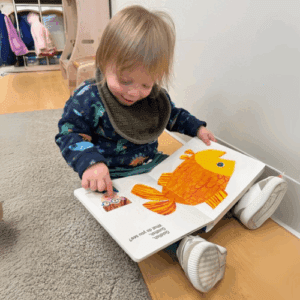
Look for classrooms that encourage hands-on exploration, storytelling, music, and outdoor play. Teachers should guide behavior with patience and positive reinforcement rather than punishment.
Kindergarten Readiness for Preschoolers (3 to 5 Years)
Preschool programs should prepare children for kindergarten while honoring the way young children learn best, through play, exploration, and social interaction. A strong preschool curriculum develops pre-literacy and pre-math skills, emotional regulation, and the ability to work with peers.
Ask about how the program measures and documents your child’s progress. Centers that share portfolios, learning stories, or regular developmental assessments give you a clearer picture of how your child is growing.
Preschool vs. Pre-K: What’s the Difference?
You’ll often hear the terms “preschool” and “pre-K” used interchangeably, but they generally refer to distinct stages. Preschool programs are typically for younger children, around ages 2.5 to 4. The focus is on learning through play, exploring new materials, and building social skills. It’s a time for children to become more independent, learn to share, and get introduced to basic concepts like colors and shapes in a gentle, hands-on way. Pre-K, or pre-kindergarten, is designed for children in the year before they start kindergarten, usually ages 4 to 5. While still play-based, pre-K is more structured and intentionally builds the foundational skills needed for school, such as early literacy, math concepts, and problem-solving within a group.
Public vs. Private Pre-K Programs
When looking at pre-K options, you’ll find both public and private programs. Public pre-K is often funded by the state and must follow specific government regulations. Private programs, on the other hand, have more flexibility in their curriculum and teaching methods. This allows centers like Strong Start to adopt specific educational philosophies, such as the Reggio Emilia-inspired approach, which centers learning around the child’s own interests and curiosity. While pre-K is not mandatory in Connecticut, most educators strongly recommend it to help children feel confident and prepared for the structure of a kindergarten classroom.
From Pre-K to Kindergarten
Many families find that sending their child to preschool first, followed by a pre-K program, creates the smoothest transition into formal schooling. This progression allows children to adjust to a classroom setting at their own pace. They get comfortable with daily routines, grow their social confidence, and learn how to cooperate with their peers in a supportive environment. By the time they enter kindergarten, they have a solid foundation for both academic learning and social-emotional development. This gradual path helps ensure your child walks into their kindergarten classroom feeling capable, curious, and ready to learn, which is a goal we share with every family.
What to Ask on Your Shelton Daycare Tour
Before enrolling your child, schedule a tour and come prepared with these questions:
- What is your teacher-to-child ratio, and do you exceed state minimums?
- What educational philosophy or curriculum do you follow?
- What is your staff turnover rate? Programs with stable teams provide better continuity for children.
- How do you handle transitions between age groups?
- What does a typical day look like? Ask to see a sample daily schedule.
- How do you communicate with parents? Look for daily reports, apps, or regular conferences.
- What are your health and safety protocols? Including illness policies, emergency procedures, and cleaning routines.
- Do you accept childcare subsidies like Care4Kids?
- What meals and snacks are provided? Ask about accommodations for allergies or dietary needs.
- Can I visit unannounced? Open-door policies indicate transparency and confidence in their program.
Pay attention to how the children and teachers interact during your visit. Are children engaged and happy? Do teachers get down to the children’s level and speak to them with respect? These observations tell you more than any brochure.
Frequently Asked Questions About Daycare in Shelton, CT
How do I find licensed daycares in Shelton, CT?
You can search for licensed childcare providers in Shelton through the Connecticut Office of Early Childhood website at ctoec.org. The database lets you search by location and view licensing status, capacity, and inspection history.
What is the average cost of daycare in Shelton?
Daycare costs in Shelton align with Fairfield County averages. As of 2026, infant care in Connecticut centers averages about $1,541 per month, while toddler care averages approximately $1,569 per month. Preschool-age care averages around $1,275 per month.
What age can a child start daycare in Connecticut?
Many licensed daycare centers in Connecticut, including programs in Shelton, accept infants as young as 6 weeks old. Availability varies by provider, so contact centers directly to ask about openings for your child’s age group.
Does Strong Start in Shelton accept Care4Kids?
Strong Start accepts Care4Kids subsidies to help make quality early childhood education accessible to more families. Contact the Shelton center at (203) 242-8233 for enrollment and subsidy information.
What should I look for in a quality daycare program?
Focus on licensing status, teacher qualifications, staff stability, curriculum approach, communication practices, and the overall environment. Visit in person, observe classroom interactions, and ask about teacher-to-child ratios, professional development, and how the program supports your child’s individual needs.
Feeling Confident in Your Shelton Daycare Choice
Choosing daycare is a deeply personal decision, and there is no one-size-fits-all answer. The right program for your family depends on your child’s age, your schedule, your budget, and your values around early education.
Shelton families are fortunate to have options ranging from home-based care to center-based programs with research-backed curricula. Take the time to tour multiple programs, ask questions, and trust your instincts about which environment feels right for your child.
If you are looking for a Shelton daycare that combines a research-based Reggio Emilia-inspired curriculum with experienced educators and an owner-operated commitment to quality, schedule a tour at Strong Start Early Care and Education to see the difference a thoughtful, relationship-centered approach can make.
Key Takeaways
- Look beyond the license: A state license is the minimum requirement. True indicators of quality include NAEYC accreditation, low staff turnover, and experienced educators, which signal a stable and enriching environment for your child.
- Understand the learning approach: A great program has a clear educational philosophy. Ask how their curriculum, whether play-based or Reggio Emilia-inspired, intentionally builds skills like critical thinking and collaboration, turning daily activities into powerful learning opportunities.
- Prioritize the parent partnership: Your peace of mind depends on strong communication. Choose a center that actively partners with you through daily updates, open-door policies, and family involvement, making you a valued member of your child’s school community.
Related Articles
- Daycare in Shelton, CT: What Parents Need to Know in 2026
- Our Shelton Infant Daycare Classroom – Strong Start
Written By
Marc Hoffman
Founder, Strong Start Early Care & Education
Marc founded Strong Start in 2014, inspired by his studies at Williams College, Yeshiva University, and research at Yale University. His child-centered, inquiry-based approach to early education has helped hundreds of families in the Trumbull and Bridgeport communities. As a parent himself, Marc understands the importance of finding a nurturing environment where every child can learn, grow, and flourish.