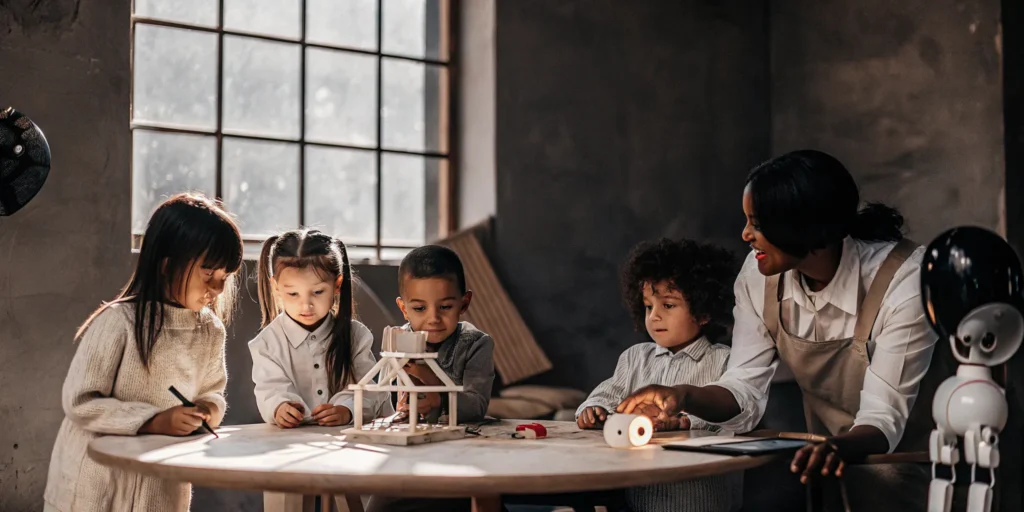
You don’t learn to cook by just reading a recipe book, right? You get into the kitchen, get your hands messy, and learn by doing. That hands-on, sometimes messy, but always memorable process? That’s the heart of project-based learning for children. It takes kids out of the ‘recipe book’ and puts them into the ‘kitchen’ of discovery, where their own questions become the ingredients for deep, meaningful investigations. In a supportive early learning center, this approach helps children become confident, creative problem-solvers who truly understand their world.
Key Takeaways
- Child-led learning builds critical thinkers: This approach lets your child’s curiosity lead the way, turning their questions into hands-on investigations. They learn to solve problems and think creatively, making education a meaningful and active process.
- Projects develop key life skills: Beyond academics, this method helps children build confidence, independence, and social awareness. By working together, they learn to communicate their ideas, collaborate with friends, and grow emotionally.
- Your support at home makes a difference: You can extend the benefits of project-based learning by simply encouraging your child’s curiosity. Ask about their day, provide simple creative materials, and stay connected with their teachers to create a seamless learning experience.
So, What Exactly Is Project-Based Learning?
At its heart, project-based learning is a way of teaching that lets children explore their own questions about the world. Instead of learning about a topic for an hour and then moving on, children dive deep into a subject that genuinely interests them over an extended period. It’s a hands-on approach where they learn by doing, investigating, and working together to answer a complex question or solve a meaningful problem. This method turns learning into an exciting adventure driven by natural curiosity, making school a place they are excited to be.
For young children, a project might start with a simple question like, “How do flowers grow?” or “Why do spiders build webs?” This question then blossoms into a full investigation. The children might plant seeds, observe insects, read stories, and create art, all centered around their initial query. Through this process, they aren’t just memorizing facts; they are developing critical thinking skills, learning how to collaborate, and discovering that learning is a joyful and rewarding experience. It’s a dynamic way to build a strong foundation for a lifetime of learning, which is central to The Project Approach we use in our classrooms. This approach helps children see that their ideas have value and that they are capable researchers and creators.
The Core Ideas Behind Project-Based Learning
Project-based learning is guided by a few core ideas that make it so effective for young learners. First, the project itself is the curriculum. Learning happens through the process of investigation, not just from a worksheet. It’s driven by the children’s own questions, which gives them a sense of ownership and makes the work more meaningful. Teamwork is also key, as children learn to share ideas and work together toward a common goal. Our exceptional educators act as facilitators and co-researchers, guiding the discovery process rather than simply giving answers. The focus is always on the journey of learning, celebrating the questions and discoveries along the way.
Is It a Project, or Is It Project-Based Learning?
It’s a common point of confusion, but the difference is significant. Think of a traditional project as a short, simple activity that comes after a lesson is already finished. For example, a teacher might talk about seasons and then ask children to draw a picture of their favorite one. The drawing is the project, but it’s separate from the core learning. Project-based learning, on the other hand, isn’t an add-on; it’s the entire framework for learning. The project itself is the vehicle for discovery, where children’s questions guide the curriculum from start to finish. It’s a much deeper, more immersive experience that puts your child in the driver’s seat of their own education.
The “Main Course” vs. the “Dessert”
A great way to understand the distinction is to think of it as the “main course” versus the “dessert.” A simple craft or activity is like a sweet treat at the end of a meal—it’s fun, but it’s not where the real substance is. Project-based learning is the main course. It’s the rich, nutrient-dense experience where all the essential learning happens. At Strong Start, we believe in serving the main course first. Our curriculum, guided by The Project Approach, ensures that children are engaged in meaningful investigations that nourish their minds and build a solid foundation for future learning, rather than just getting a taste of a topic.
The Key Ingredients: Driving Questions and Public Products
So what makes project-based learning work? It comes down to a few key ingredients, the first being a “driving question.” This isn’t a simple question with a one-word answer. Instead, it’s a big, open-ended question that sparks genuine curiosity and can’t be answered with a quick search. For example, instead of asking, “What color is a ladybug?” the driving question might be, “How can we create a garden that helps the bugs on our playground?” This kind of question encourages children to think critically, explore a topic from many angles, and work together to find solutions. It transforms them from passive listeners into active investigators, fully engaged in their own learning journey.
The second key ingredient is the “public product.” This means the children’s work doesn’t just end up on the refrigerator; it’s shared with an audience beyond their teacher. They might create a book about their bug garden to share with another classroom, build a model of a safe community to present to their families, or create a short play about their findings. This step is crucial because it gives their work a real-world purpose and shows them that their ideas have an impact. It builds confidence and communication skills. At Strong Start, we love seeing children proudly share their work, which is a wonderful way we partner with parents to celebrate every step of their child’s learning journey.
A Peek Inside a Project-Based Classroom
So, what does this actually look like in a classroom full of toddlers or preschoolers? It’s lively, a little messy, and full of purpose. A project idea might come from the children themselves, a teacher’s observation, or something happening in the community. Through play, thoughtful interactions, and guided experiences, children learn to express their feelings, build relationships, and solve problems. You might see a group of children building a large-scale bird’s nest out of natural materials they collected outside, while another group documents their findings through drawings. In our preschool classrooms, learning is visible, interactive, and deeply connected to the children’s world.
How Project-Based Learning Helps Your Child Thrive
When we think about what we want for our children in their early years, it goes far beyond learning letters and numbers. We want them to be curious, confident, and kind. We want them to know how to ask questions, work with others, and feel proud of what they can accomplish. This is where a project-based curriculum truly shines. Instead of focusing on rote memorization, this approach nurtures the whole child by turning their natural curiosity into deep, meaningful learning experiences.
At its heart, project-based learning is about exploring topics that genuinely interest children. A simple question like, “Where do squirrels sleep in the winter?” can blossom into a weeks-long investigation. Children might build squirrel nests, read books about hibernation, and observe wildlife in the playground. Through this process, they aren’t just learning facts; they are developing critical thinking skills, learning to collaborate, and building the confidence that comes from seeing their ideas come to life. This approach helps children make connections between what they’re learning and the world around them, creating a solid foundation for a lifetime of discovery. It’s a dynamic way to learn that honors your child’s voice and intelligence.
Building Critical Thinking and Problem-Solving Skills
In a project-based classroom, children are active thinkers, not passive listeners. When a group of preschoolers decides to build a bridge for their toy cars, they immediately face real challenges. How long does it need to be? What materials are strong enough? This kind of hands-on exploration is the foundation of The Project Approach. Children learn to ask thoughtful questions, test their ideas, and learn from their mistakes. They aren’t just given answers; they are guided to find solutions themselves. This process helps them develop essential problem-solving skills and a flexible mindset, teaching them how to think critically and creatively when faced with a new challenge.
Growing Their Confidence and Independence
When children have a voice in their own learning, their confidence blossoms. A project-based curriculum empowers them to follow their interests and take ownership of their work. Imagine a child who is fascinated by gardening. By helping to plan, plant, and care for a small classroom garden, they see the direct results of their efforts. This experience teaches them that their ideas matter and that they are capable of making a real impact. This sense of accomplishment is incredibly powerful. It helps children build self-esteem and independence, giving them the courage to try new things and trust in their own abilities as they grow.
Sparking Creativity and Collaboration
Projects are rarely a solo activity. Whether children are painting a mural, writing a story, or building a cardboard city, they are learning to work together. This collaborative environment encourages them to share their unique ideas, listen to their friends’ perspectives, and find ways to combine their talents to achieve a common goal. Our exceptional educators are skilled at guiding these interactions, helping children learn to communicate respectfully and value the contributions of others. This focus on teamwork not only sparks creativity but also teaches children vital social skills that will serve them well in school and in life.
Building the “4Cs”: Skills for a Modern World
Project-based learning is incredibly effective at developing what educators call the “4Cs”: critical thinking, collaboration, creativity, and communication. These aren’t just buzzwords; they are the foundational skills children need to thrive. When children work on a project, they learn to think critically by asking questions and testing their ideas to solve real problems. They practice collaboration as they share perspectives and work toward a common goal, learning to communicate their thoughts and listen to others. This entire process sparks creativity, empowering them to take ownership of their learning and see their unique ideas come to life. Our curriculum, inspired by Reggio Emilia, is designed to nurture these skills, preparing your child not just for kindergarten, but for a future where they can confidently and creatively contribute to the world.
Developing Key Social and Emotional Skills
Working together on a long-term project provides endless opportunities for social and emotional development. Children learn to manage the natural give-and-take of a group setting. They practice sharing materials, taking turns, and expressing their feelings in a constructive way. When disagreements arise, they learn to negotiate and find compromises with gentle guidance from their teachers. These daily interactions help them develop empathy, resilience, and an understanding of how to be a caring member of a community. By partnering with parents, we can work together to support this crucial aspect of your child’s growth, both at school and at home.
Fostering a Sense of Justice and Fairness
Young children have a strong, innate sense of justice—we’ve all heard the passionate cry, “That’s not fair!” A project-based curriculum channels this powerful instinct into constructive exploration. It provides a framework for children to look beyond their own experiences and ask important questions about the world. For example, a project might explore how to ensure everyone in the community has enough food or how to care for the environment in their own neighborhood. This process helps children think about how to make things right, fostering empathy and a sense of social responsibility. It’s a core part of how The Project Approach empowers them to become thoughtful, caring citizens who know they can make a positive impact.
The Proof Is in the Project: What Research Shows
Improved Academic and Social-Emotional Skills
Project-based learning helps children gain knowledge and skills by actively working on real-world challenges. Instead of just learning about plants from a book, they might design and tend a garden. This hands-on process makes abstract concepts concrete and connects different subjects—like science, math, and art—in a way that makes sense to them. As they work together to solve problems that arise, they also build crucial social skills like communication, collaboration, and empathy. This method of learning through investigation is the foundation of The Project Approach, turning children into engaged citizens who understand how to make a meaningful impact on the world around them.
Empowering Girls to Lead and Innovate
One of the most exciting findings from research is the profound impact this learning style has on girls. Studies show that project-based learning environments are particularly effective in helping girls recognize their own abilities and value their ideas. When a young girl sees her design for a birdhouse built by her group or her question about rain lead to a class-wide investigation, she learns that her voice is powerful and her contributions are important. This process builds a deep-seated confidence that encourages her to lead, innovate, and tackle challenges without hesitation. It creates a space where she is not just a participant but a creator, fostering a strong sense of self-worth that will support her for years to come.
It’s Great for Teachers, Too
A happy, engaged child often has a happy, engaged teacher. Project-based learning revitalizes the classroom for educators, too. Instead of sticking to a rigid script, teachers become creative guides and co-learners, exploring new topics alongside their students. This dynamic approach leads to more interesting and varied student work, which reduces boredom for everyone and fosters a genuine passion for discovery. Research confirms that this method creates stronger connections between teachers and students. When you have passionate, inspired educators who are deeply invested in your child’s curiosity, you create the best possible environment for learning. It’s why we are so committed to supporting our exceptional educators in facilitating these rich, project-based experiences.
Project-Based vs. Traditional Learning: What’s the Difference?
When you picture a classroom, you might imagine a teacher at the front of the room and children sitting at desks, all working on the same worksheet. This is a snapshot of traditional learning, where the curriculum is often predetermined and teacher-led. It’s a structured path where every child learns the same thing at the same time.
Project-based learning flips that model. Instead of focusing on memorizing isolated facts, it centers on investigating and responding to a complex question, problem, or challenge. Think of it as the difference between following a strict recipe and creating a new dish based on your own curiosity. The learning journey is guided by the children’s interests, turning them into active participants rather than passive listeners. At Strong Start, we embrace The Project Approach because it empowers children to ask their own questions, find their own answers, and develop a genuine passion for discovery that lasts a lifetime. It’s a dynamic, collaborative, and deeply engaging way to learn.
Child-Led Curiosity vs. Teacher-Directed Lessons
In a traditional classroom, the teacher often directs the lessons. If it’s “letter B week,” every activity revolves around the letter B, whether or not the children are particularly interested in it. The learning path is set by the adult.
In a project-based environment, learning is driven by child-led inquiry. A child’s question, like “How do birds build their nests?” can become the starting point for an entire project. The class might observe birds outside, gather materials like twigs and leaves, and try to build their own nests. The teacher’s role shifts from instructor to facilitator, guiding the children as they explore their own questions. This approach respects a child’s natural curiosity and shows them that their ideas have value.
Why the Process Matters More Than the Product
Traditional education often emphasizes the final product. Success might be measured by a perfectly colored worksheet or a craft that looks identical to the teacher’s example. While a finished product is great, project-based learning places a much higher value on the process.
The real learning happens during the investigation. It’s in the conversations between children as they solve a problem, the trial-and-error of building a structure that won’t fall down, and the critical thinking required to figure out the next step. This focus on the journey helps children develop essential skills like teamwork, communication, and resilience. Our exceptional educators are experts at documenting and celebrating this process, recognizing that the messy, hands-on work is where true growth occurs.
Making Real-World Connections Through Learning
Sometimes, traditional lessons can feel abstract and disconnected from a child’s daily life. Project-based learning, however, is grounded in the real world. Children tackle problems and explore topics that are tangible and relevant to their own experiences, which makes learning much more meaningful and memorable.
Instead of simply counting blocks, children in our preschool classrooms might design a garden, figuring out how many seeds to plant in each row. They aren’t just learning math; they’re learning about biology, planning, and patience in a context that makes sense to them. By connecting learning to their lived experiences, we help children see that knowledge is a powerful tool they can use to understand and interact with the world around them.
Project-Based vs. Problem-Based Learning
You might hear the term “problem-based learning” used alongside “project-based learning,” and it’s easy to see why—they’re close cousins! Both get children actively involved in their education. The main difference is the starting point and the end goal. Problem-based learning typically starts with a specific, defined problem that needs a solution. Think of it like a puzzle to be solved. Project-based learning, on the other hand, begins with a more open-ended question or challenge that leads to a tangible creation or presentation. The focus is less on finding a single right answer and more on the journey of investigation and creation. In The Project Approach, children become researchers and creators, where the process of building, drawing, and collaborating is just as important as the final project itself.
How We Bring Project-Based Learning to Life at Strong Start
At Strong Start, project-based learning is the heart of everything we do. We combine powerful educational philosophies to create an environment where your child’s curiosity leads the way. This approach allows us to guide them as they explore their interests, ask big questions, and make meaningful discoveries. Here’s a closer look at the core components that shape your child’s experience in our classrooms.
Our Inspiration: The Reggio Emilia Approach
Our curriculum is guided by our Reggio Emilia inspiration, a philosophy that sees every child as strong, capable, and full of wonder. Instead of viewing children as empty vessels, we see them as active participants in their own education. This perspective shifts the dynamic in the classroom. We listen to your child’s ideas, respect their theories, and trust in their ability to explore complex topics. It’s a partnership where we honor their natural curiosity and provide the support they need to build upon their knowledge, helping them grow into confident learners.
Our Project-Based Approach in Action
We put this philosophy into practice through The Project Approach, where children take part in deep investigations of real-world topics. A simple question like, “Where do puddles go?” can blossom into a weeks-long project involving observation and experimentation. Our teachers act as facilitators, guiding the exploration rather than dictating it. They help children find answers by providing interesting materials, asking thoughtful questions, and encouraging teamwork. This method helps children develop critical thinking and problem-solving skills as they learn to research, collaborate, and share their findings in a hands-on way.
Partnering with Families and Our Community
Learning is a team sport, and we believe the strongest teams include families and the local community. A child’s world is interconnected, and their education should be too. That’s why we are deeply committed to partnering with parents and bringing the community into our classrooms. When trusted adults get involved, it makes the learning experience so much richer. A project on building might include a visit from a parent who is an architect, while an investigation into food could involve a trip to a local farm. These real-world connections show children that learning is everywhere and that their community is full of experts ready to share their knowledge. It helps them explore the local area and see that they are part of something bigger than themselves.
The Classroom as the “Third Teacher”
In the Reggio Emilia philosophy, the environment is known as the “third teacher,” and we take that idea to heart. Our classrooms are intentionally designed to be inspiring and full of possibilities. You’ll find open-ended materials, natural light, and cozy spaces that invite children to explore, create, and collaborate. We carefully arrange our infant classrooms and all our learning spaces to encourage independence, allowing children to access materials and make choices. By displaying their artwork and documenting their project work, we show children that their ideas are valued and their learning journey is important.
What Kinds of Projects Will My Child Explore?
One of the most exciting things about a project-based approach is that there’s no limit to what children can learn. Since projects spring from their own questions and interests, the topics are always fresh, engaging, and relevant to their world. An overheard conversation about a rainy day could lead to a week-long investigation of weather, while a fascination with a spiderweb on the playground might spark a deep study of insects. Our educators are experts at observing these moments of curiosity and helping children turn their questions into rich, hands-on learning experiences. This child-led philosophy is at the heart of everything we do, ensuring that learning feels like play because it’s driven by genuine wonder.
We believe that children are capable researchers, and our role is to provide the tools, guidance, and environment they need to find their own answers. This method allows learning to be deep and meaningful, as children aren’t just memorizing facts; they are constructing knowledge through direct experience. You won’t see teachers standing at the front of the room delivering a pre-planned lesson to everyone at once. Instead, you’ll see them on the floor with a small group, asking thoughtful questions like, “What do you think will happen next?” or “How can we find out more about that?” This responsive teaching style honors each child’s unique ideas and pace. The possibilities are truly endless, but projects often fall into a few key areas of discovery, giving you a glimpse into the vibrant and dynamic learning that happens every day in our classrooms.
Investigating Nature and Science
Young children are natural scientists, full of wonder about the world around them. Projects in this area tap into that innate curiosity, turning the classroom and playground into living laboratories. Your child might spend weeks planting a garden to see how seeds sprout, observing the life cycle of butterflies, or building a weather station to track the changing seasons. These hands-on investigations do more than just teach facts; they encourage children to ask questions, make predictions, and test their ideas. Through this process, they build a strong foundation for STEM learning and develop a lifelong appreciation for the natural world.
Exploring Community and Culture
Children are constantly working to understand their place in the world and how they connect to others. Community-based projects help them explore these relationships in a meaningful way. A project might begin with children building a block model of their neighborhood, which could lead to creating their own classroom post office to send letters to friends and family. They might also explore the diverse family traditions within their class, sharing stories and creating a collaborative cookbook. These experiences help children develop a sense of belonging and respect for others. They also see how they can make a positive contribution to their community, a key part of our partnership with parents.
Creating Art and Telling Stories
Art and storytelling are powerful tools for self-expression and communication. In a project-based classroom, these aren’t just separate activities; they are woven into every investigation. Children might work together to write, illustrate, and bind their own storybooks, put on a puppet show to retell a favorite tale, or create a large-scale mural depicting what they’ve learned about the ocean. Our Exploration Through The Arts program gives children the vocabulary to express their ideas and emotions. Through these creative projects, children learn to share their perspectives, listen to the ideas of others, and collaborate on a shared vision, building essential social and emotional skills along the way.
Designing and Building with Purpose
Some of the most memorable projects involve designing, constructing, and testing new creations. Whether it’s a small-scale challenge like building a bridge that can hold a certain weight or a large-scale endeavor like turning a corner of the classroom into a spaceship, these projects are packed with learning. Children engage in real problem-solving as they figure out how to make their structures stable or how to create a ramp that sends a ball rolling exactly where they want it to go. This is The Project Approach in action, where children plan, experiment, and refine their ideas. They learn to work as a team, communicate their plans, and celebrate the process of bringing an idea to life.
The Teacher’s Role: A Guide, Not a Lecturer
In a project-based classroom, the teacher’s role looks quite different from what you might remember from your own school days. Instead of standing at the front of the room as the sole source of information, our educators become partners in learning. They are researchers, guides, and storytellers who walk alongside your child on their path of discovery. This shift is fundamental to creating an environment where children feel empowered to ask big questions, explore their own ideas, and take ownership of their education. Our teachers are experts at observing, listening, and responding to children’s interests, which allows learning to unfold in a truly authentic and meaningful way. They model curiosity and a love of learning, showing children that even adults are always discovering new things about the world.
Acting as a Guide, Not Just an Instructor
Instead of simply delivering lessons, our teachers act as guides and mentors. They skillfully design and plan learning experiences, then coach children through the process of investigation. If a group of preschoolers becomes fascinated with how buildings are constructed, their teacher won’t just show them a book. Instead, she might ask, “What do we need to make our own building strong?” or “Where could we find more information about this?” Our exceptional educators are trained to help children find resources, develop teamwork skills, and learn how to bring their big ideas to life. They support and facilitate, allowing your child to be the true driver of their learning.
Following a Framework for Success
While project-based learning is fueled by children’s curiosity, it’s not a free-for-all. To ensure every project is a rich learning experience, our educators use a thoughtful framework. Think of it as a recipe for a great project. This structure helps teachers intentionally design investigations that are challenging, meaningful, and connected to important developmental goals. It ensures that as children explore their interests, they are also building foundational skills in literacy, math, science, and social studies. This approach, often called Gold Standard PBL, provides the backbone for high-quality projects that go beyond just a fun activity and lead to deep, lasting understanding.
The 7 Essential Project Design Elements
This framework is built on key design elements that make projects work. It starts with a challenging problem or question that feels relevant to children’s lives. From there, it encourages sustained inquiry, where children ask questions and find answers over time. Authenticity is also crucial—the project connects to the real world. Most importantly, it gives your child a voice and a choice in how the project unfolds. The process also includes feedback, revision, and a public presentation of their work, whether that’s sharing a model with another class or explaining their findings to you. This structure ensures every project is a powerful learning journey.
Guiding a Project from Start to Finish
A project unfolds over time, moving through distinct phases. It all begins with a spark—a moment of curiosity or a question that captures the children’s interest. From there, our teachers help them develop the topic and make a plan for their investigation. The second phase is the hands-on exploration, where children conduct research, experiment with materials, and work together to find answers. This is often the longest and most active part of the project. Finally, the project concludes with children sharing what they’ve learned. This might involve creating a display, putting on a performance, or presenting their findings, celebrating their hard work and new knowledge.
Practical Tools for Planning and Management
To keep projects on track and ensure learning goals are met, our teachers use practical planning tools. One of the most important is the “driving question,” a simple, open-ended question that guides the entire investigation, like “How can we help the birds in our playground?” Teachers also create a “learning map” that connects the project activities to specific developmental skills. This map ensures that while children are busy building a bird feeder, they are also practicing measurement, learning about natural habitats, and developing teamwork skills. These tools help our educators intentionally weave learning into every step of The Project Approach, making sure the journey is just as valuable as the destination.
Using Technology to Broaden Horizons
In our classrooms, technology is used thoughtfully as a tool to expand the world of a project, not as a substitute for hands-on learning. When children have questions that can’t be answered with the materials on hand, technology can open new doors. They might use a tablet to watch a video of a spider spinning its web, look up pictures of different kinds of bridges, or use a digital microscope to get a closer look at a leaf. Technology also helps children document their work, using a camera to take photos of their progress. This purposeful use of technology is part of our enrichment program, helping children see it as a powerful resource for discovery and collaboration.
Creating an Inspiring Learning Environment
We believe the classroom environment itself is a powerful teacher. Our educators are intentional designers, creating inspiring learning spaces that invite exploration and discovery. You won’t see rows of desks; instead, you’ll find thoughtfully arranged learning centers filled with open-ended materials. These spaces are dynamic and change based on the children’s current projects and interests. For example, a project on gardens might lead to a science area with soil samples and magnifying glasses, an art easel with floral-colored paints, and a building corner with materials for constructing a greenhouse. Our preschool classrooms are carefully curated to spark curiosity and give children the tools they need to investigate their world.
Documenting Each Child’s Learning Journey
A huge part of a teacher’s role is to make your child’s learning visible. Our educators are careful observers, documenting the amazing work your child does every day through photos, transcribed conversations, and displays of their work. This documentation isn’t just for keepsakes; it’s a vital tool for reflection. It allows children to look back on their process, see how their ideas have evolved, and think about what they want to do next. It also serves as a wonderful window into their world for you. By partnering with parents, we use this documentation to share your child’s progress and celebrate the incredible discoveries they make each day at school.
How You Can Support Project-Based Learning at Home
Your child’s learning journey is a partnership, and the skills they build in the classroom can be beautifully reinforced at home. You don’t need a teaching degree or a perfectly curated playroom to support their growth. By embracing their natural curiosity and celebrating their discoveries, you can extend the magic of project-based learning beyond the school walls. Here are a few simple, actionable ways to get involved and watch your child’s confidence and creativity flourish.
Follow Their Natural Curiosity
Your child is a natural explorer, and you can be their trusted guide. When you see them fascinated by a ladybug on the sidewalk or the way water swirls down the drain, lean into that moment. Ask open-ended questions like, “What do you think it’s doing?” or “Where do you think it’s going?” These simple prompts encourage them to think critically and form their own theories. Through play and guided experiences, children learn to make sense of the world. You can support this by planning small adventures to a local park, a museum, or even just the backyard to see what you can discover together, much like the enrichment activities they enjoy at school.
Partner with Your Child’s Teachers
Think of your child’s teachers as your teammates. Open, consistent communication is the key to a successful educational experience for your little one. We believe in building strong parent partnerships because you know your child best. Share what you’re observing at home, from new interests to big questions they’re asking. In turn, their teachers can share what projects are unfolding in the classroom. This collaboration creates a seamless learning environment where your child feels supported from all sides. Don’t hesitate to ask teachers for tips on how to connect home activities with what’s happening at school; we’re always happy to share ideas.
Ask About Their Daily Discoveries
When your child comes home excited about a project, make time to listen and engage. Asking them to talk about their discoveries helps them process what they’ve learned and practice articulating their thoughts. Instead of asking, “What did you do today?” try more specific questions like, “Tell me about the tower you were building,” or “What was the most interesting thing you learned about worms?” This approach, central to The Project Approach, validates their work and shows them that their ideas have value. It also gives you a wonderful window into their world and the incredible connections their growing minds are making every day.
Keep Simple Project Materials on Hand
You don’t need to spend a lot of money on fancy supplies to inspire creativity. Often, the best materials for a project are things you already have around the house. A collection of cardboard boxes, toilet paper rolls, yarn, and tape can become a castle, a robot, or a sprawling city. Natural items like sticks, leaves, and rocks are perfect for building and creating. By providing these simple, open-ended materials, you give your child the freedom to bring their own ideas to life. This mirrors how our classrooms are set up and gives you a better sense of what their day looks like at Strong Start.
How to Choose the Right Project-Based Learning Center
Choosing an early learning center is a big decision, and finding one that aligns with your family’s values is key. When you’re looking for a program that uses a project-based approach, you’ll want to pay attention to a few specific things during your search. These elements are often clear indicators of a high-quality, child-centered environment where your little one can truly thrive. Here’s what to look for as you tour different centers and talk with their teams.
What to Look for in Teachers and Staff
The heart of any great early learning center is its teachers. In a project-based classroom, educators are more like guides or facilitators than traditional instructors. They observe the children’s interests, ask thoughtful questions to deepen their thinking, and provide the resources they need to explore their ideas. During a tour, watch how the teachers interact with the children. Do they seem genuinely engaged and curious? Ask the director about their hiring process and how they support their staff. A center that invests in its team is investing in your child’s growth. At Strong Start, we are committed to our team of exceptional educators who are skilled in guiding inquiry-driven learning.
Observe the Classrooms and Materials
Take a good look around the classrooms. A project-based learning environment should feel like an inspiring workshop for little minds. You should see a variety of open-ended materials like blocks, clay, paint, and natural items that children can use in countless ways. Look for evidence of ongoing projects, such as drawings, models, and photos documenting the children’s work. The space should be organized and inviting, with different areas for different kinds of play and exploration. This thoughtful design, inspired by our Reggio Emilia philosophy, treats the classroom as a “third teacher,” encouraging discovery and collaboration at every turn.
Ask About Their Approach to Parent Partnerships
A strong connection between home and school makes a world of difference in your child’s education. The best project-based centers see parents as true partners in the learning process. Ask how the center keeps you informed about your child’s day and the projects they’re working on. Do they use an app for daily updates? Are there regular opportunities for parent-teacher conversations? Find out how you can get involved, whether it’s contributing materials for a project or joining a family council. We believe that partnering with parents is essential, because you are your child’s first and most important teacher. Consistent communication helps create a seamless experience for your child.
Review Accreditation and Quality Standards
How can you be sure a center is committed to the highest standards of care and education? Look for official accreditations. This is a sign that the center has undergone a rigorous review process and meets high standards for its curriculum, teacher qualifications, and health and safety practices. For example, NAEYC accreditation is a benchmark for quality in early childhood education. It shows a program’s dedication to providing a safe, nurturing, and stimulating environment. Don’t hesitate to ask about a center’s licensing and accreditation status. It’s an important indicator of their commitment to excellence and to your child’s well-being.
Your Project-Based Learning Questions, Answered
It’s completely normal to have questions about a learning approach that might feel different from your own childhood school experience. The project-based model is intentionally designed to meet children where they are, and we find that parents often have similar curiosities about how it all works. Let’s explore some of the most common questions we hear from families.
How Does It Support Different Learning Styles?
Every child has a unique way of seeing and interacting with the world. A project-based curriculum is wonderfully suited to support all learning styles because it doesn’t rely on a single method of instruction. Instead of asking every child to learn the same thing in the same way, a project invites them to contribute their unique strengths. A hands-on learner might build a model, a visual learner might draw a plan, and a verbal learner might share the group’s story. Because projects are rooted in real-world problem-solving, they connect with a child’s own experiences, making learning more meaningful and engaging for everyone, no matter how they learn best.
Is There a Balance Between Freedom and Structure?
One of the biggest questions parents have is whether a child-led approach is just unstructured playtime. While it may look different from a traditional classroom, there is a thoughtful and intentional structure guiding every project. Our teachers are skilled facilitators who act as guides and mentors. They carefully design the environment and introduce materials that spark curiosity, then coach children through the process of discovery. The project itself, which is shaped by the children’s questions, provides a natural framework for learning. This balance gives children the freedom to explore their ideas while feeling the safety and support of a gently structured day.
How Will I Know What My Child Is Learning?
In a project-based classroom, we don’t measure progress with tests or quizzes. Instead, we focus on observing and documenting your child’s individual journey. Our educators use a combination of photos, videos, notes on conversations, and samples of your child’s work to create a rich portfolio that shows their growth over time. This allows us to see progress in all areas of development, from critical thinking and problem-solving to social and emotional skills. We believe in partnering with parents and share these observations with you regularly, so you always have a clear picture of how your child is learning and thriving.
Preparing Your Child for Kindergarten and Beyond
The transition to kindergarten is a huge milestone, and it’s natural to wonder if your child will be ready. While knowing letters and numbers is helpful, true school readiness goes much deeper. It’s about showing up to that new classroom with confidence, a healthy dose of curiosity, and the ability to connect with teachers and new friends. It’s about being able to solve small problems, manage big feelings, and see learning as an exciting adventure. This is where a project-based environment truly shines. By centering our curriculum around your child’s own questions and ideas, we help them develop the skills and the mindset they need to thrive.
Instead of just memorizing information, children in our programs learn how to think critically, work collaboratively, and stick with a challenge. They experience the joy of discovery firsthand, which builds a positive and lasting relationship with learning. They practice navigating social situations, sharing their thoughts, and listening to the perspectives of others every single day. This holistic approach nurtures the whole child, building a solid foundation not just for a successful start to kindergarten, but for a lifetime of joyful learning and exploration. We’re focused on preparing them for their next big adventure and all the ones that will follow.
Building a Strong Foundation for School Readiness
When children are deeply engaged in a project, they learn essential academic skills in a way that feels natural and meaningful. As they build a pretend grocery store, they’re not just playing; they’re sorting items, counting money, and writing signs. Research shows that children in high-quality early learning programs enter school with stronger language, literacy, and math skills. Our approach ensures that learning these fundamentals is an exciting part of their daily explorations. This hands-on experience in our Preschool Classrooms helps children build a concrete understanding of concepts they’ll use for years to come, making them confident learners from day one.
Fostering a Lifelong Love of Learning
More than just teaching facts, our goal is to nurture your child’s innate curiosity. When children have the freedom to explore questions they genuinely care about, learning becomes an exciting adventure rather than a chore. This is the heart of The Project Approach. Instead of simply being told information, children become active researchers, investigators, and creators. This process empowers them to see themselves as capable learners who can find answers and solve problems. They enter kindergarten not just knowing things, but with a powerful desire to know more, setting the stage for a positive and engaged school experience.
Building Emotional Intelligence and Resilience
Kindergarten is a big social step, and having strong emotional skills makes all the difference. Working together on long-term projects gives children constant practice in collaboration and communication. They learn how to share materials, listen to a friend’s idea, and work through disagreements with gentle guidance from our educators. Through play and nurturing interactions, children build the emotional toolkit they need to manage their feelings, form friendships, and handle new challenges with resilience. We see this development as a core part of our curriculum and believe that partnering with parents is the best way to support your child’s social and emotional growth.
Related Articles
Frequently Asked Questions
Will my child still learn core skills like reading and math in a project-based classroom? Absolutely. Academic skills are woven into every project in a way that feels natural and meaningful to your child. For example, a project about building a class grocery store naturally involves writing signs and shopping lists (literacy), sorting food items by category (early math), and counting money (numeracy). By learning these skills in a real-world context, children build a much deeper and more lasting understanding than they would from a worksheet.
How does this approach work for very young children, like toddlers? For our youngest learners, project-based learning is all about sensory exploration and discovery. While a preschooler’s project might last for weeks, a toddler’s investigation might be focused on the immediate wonders of their environment. A project could be as simple as exploring what happens when they mix different colors of paint or discovering all the things they can do with water and sponges. The core principle remains the same: we follow their lead, honor their curiosity, and provide rich materials to help them make sense of the world.
What if my child is shy or doesn’t always want to join a group project? We believe every child participates in their own unique way, and there is no single “right” way to engage. Our skilled educators are experts at creating an inclusive environment where all personalities can thrive. A quieter child might prefer to be an observer first, or they might contribute by drawing the group’s plans or working on a related task alongside their peers. We gently encourage collaboration but always respect a child’s individual pace and comfort level, ensuring they feel secure and valued.
Is there any structure to the day, or is it just free play? While it may look different from a traditional classroom, our days are thoughtfully structured to support your child’s learning and well-being. We have a predictable rhythm that includes group meeting times, outdoor play, meals, and rest. Within this gentle structure, our teachers intentionally design the learning environment and guide the projects. The freedom your child has to explore their own ideas is carefully balanced with the security of a consistent routine and the guidance of our caring educators.
How will this approach prepare my child for a more traditional kindergarten classroom? Project-based learning prepares children for kindergarten and beyond by focusing on the skills that matter most: critical thinking, collaboration, and a genuine love of learning. Instead of just knowing facts, your child will know how to ask questions, solve problems, and work with others. They learn to be flexible, resilient, and confident in their own abilities. These are the foundational skills that help children adapt and thrive in any new learning environment they encounter.
Written By
Marc Hoffman
Founder, Strong Start Early Care & Education
Marc founded Strong Start in 2014, inspired by his studies at Williams College, Yeshiva University, and research at Yale University. His child-centered, inquiry-based approach to early education has helped hundreds of families in the Trumbull and Bridgeport communities. As a parent himself, Marc understands the importance of finding a nurturing environment where every child can learn, grow, and flourish.