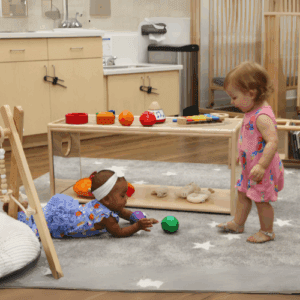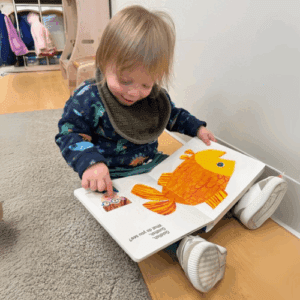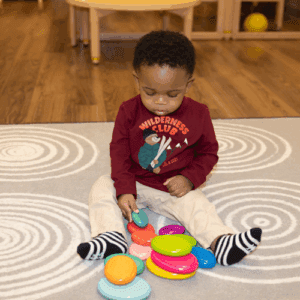
You know your child best. You see their passions, their questions, and what makes them truly curious. We believe that partnership is everything. Your insights are the most valuable part of our reggio emilia approach for preschoolers. When you tell us your child spent the weekend watching a spider spin a web, that becomes the spark for our next project. It’s how we move beyond a rigid reggio emilia lesson plan template and create a curriculum that’s alive and connected to your child’s world. This is what our home-school connection looks like in action—a true community built around your child.
Key Takeaways
- Learning is built on genuine curiosity: We follow your child’s lead to explore topics deeply, which builds critical thinking skills and a true passion for discovery, rather than just covering predetermined subjects.
- The classroom is a space for discovery: Our educators and the carefully designed environment work together, acting as partners that provide inspiring materials and ask thoughtful questions to guide learning without giving away the answers.
- Progress is shared through a story of growth: Instead of report cards, we use portfolios and detailed observations to show you how your child thinks and learns, making you an essential partner in their educational journey.
What is the Reggio Emilia Approach?
When you hear the term “Reggio Emilia,” it’s helpful to think of it less as a strict teaching method and more as a philosophy. Originating in the town of Reggio Emilia, Italy, after World War II, this approach is built on a foundation of respect, responsibility, and community. It’s a way of seeing children as curious, capable individuals with a deep desire to learn about the world around them. At its core, this philosophy trusts that children can guide their own learning journey when given a supportive and enriching environment.
The History and Core Philosophy
To truly appreciate the Reggio Emilia approach, it helps to understand where it came from. This isn’t a curriculum that was designed in a boardroom; it was born from a community’s hope for a better future. The philosophy is grounded in a deep and optimistic belief in the potential of children, teachers, and families to learn and grow together. It views the child as a central figure in their own education, surrounded by a network of support that includes their educators, their environment, and you, their parents. This perspective shapes everything from the layout of the classroom to the way we document and celebrate your child’s learning journey.
Loris Malaguzzi’s Post-War Vision
The story begins in the villages around Reggio Emilia, Italy, right after World War II. In the wake of immense destruction, parents and a young teacher named Loris Malaguzzi came together with a powerful idea: they wanted to create a new kind of school, one that would raise children to be critical thinkers capable of building a more democratic and just world. They believed that children learn best not by memorizing facts, but by exploring their own questions and solving real-world problems. This post-war vision was built on the image of the child as strong, capable, and full of potential, deserving of an education that respects their intelligence and curiosity from day one.
Understanding “Reggio-Inspired” vs. “Reggio Emilia”
You might see the terms “Reggio Emilia” and “Reggio-inspired” used, and it’s helpful to know the difference. The term “Reggio Emilia” technically only refers to the original municipal preschools in that specific city in Italy. Because the approach is so deeply tied to its local culture, it can’t be perfectly replicated elsewhere. Instead, schools like ours are “Reggio-inspired.” This means we embrace the core philosophy and guiding principles, but we adapt them to fit our own unique community. This allows us to honor the spirit of the approach while making it relevant for our children and families, a practice central to how we embrace our Reggio Emilia inspiration.
The Ideal Age for a Reggio-Inspired Start
Because it’s a philosophy and not a rigid curriculum, the Reggio Emilia approach is wonderfully suited for the earliest years of life, from infancy through preschool. It meets children exactly where they are. Instead of a one-size-fits-all lesson plan, learning emerges from the children’s own interests and discoveries. An infant’s fascination with light and shadow or a preschooler’s questions about how buildings stand can become the foundation for deep, meaningful projects. This approach is perfect for nurturing the natural curiosity of our youngest learners in our infant classrooms and preparing them for a lifetime of discovery in our preschool classrooms.
Why Your Child is the Heart of Our Philosophy
The Reggio Emilia approach starts with a powerful image of the child: they are strong, capable, and full of ideas. We don’t see children as empty slates waiting to be filled with information. Instead, we see them as researchers, actively building their own knowledge. This perspective shapes everything we do. We listen closely to their questions and theories, encouraging them to share their thoughts and explore their interests. Our entire Reggio Emilia inspiration is about honoring your child’s innate curiosity and empowering them to be the protagonist in their own educational story.
How is Reggio Emilia Different from Traditional Preschool?
Unlike traditional preschools where teachers might follow a set, pre-planned curriculum, a Reggio-inspired classroom is much more fluid. The curriculum emerges from the children’s own interests and explorations. Here, education is a shared journey. Our teachers act as guides and collaborators, learning alongside the children. The classroom itself is considered the “third teacher”—a beautiful, intentional space designed to spark discovery and creativity. This collaborative spirit extends to you, too. We believe that partnering with parents is essential, creating a strong, supportive triangle between child, teacher, and family that nurtures learning.
Comparison with Montessori
You’ve likely heard of Montessori, and it’s helpful to see how it compares. Montessori education often emphasizes independence, with children choosing activities from a carefully prepared environment filled with specific learning materials. The focus is on individual, self-directed work. In our Reggio-inspired classrooms, learning is more collaborative and inquiry-driven. While we also value independence, our curriculum emerges from the shared interests of the group. Our educators act as facilitators and research partners, guiding exploration rather than directly instructing. This is where The Project Approach comes to life, as children work together to investigate questions that truly fascinate them, building teamwork and communication skills along the way.
Comparison with Waldorf
Another approach you might be familiar with is Waldorf. This philosophy is centered around imagination, storytelling, and maintaining a consistent rhythm in daily activities, often with a strong focus on artistic expression and connection to nature. While we also cherish creativity and the arts, our Reggio-inspired approach is grounded in real-world, inquiry-based learning. We encourage children to explore their immediate interests and express their ideas and theories through many different mediums, from drawing and sculpting to building and dramatic play. The learning journey is less about following a set rhythm and more about following the dynamic, emergent flow of the children’s own curiosity and collaborative discoveries.
What Makes a Classroom “Reggio-Inspired”?
The Reggio Emilia philosophy isn’t a strict curriculum with rigid rules. Instead, it’s a way of thinking about children, learning, and the world around them. It’s built on a few core beliefs that guide everything we do, from how we arrange our classrooms to how we plan our day. These principles work together to create a vibrant, respectful, and collaborative learning community where every child can thrive. Understanding these ideas is the first step to seeing why a Reggio-inspired education is so special. It’s an approach that honors your child’s intelligence and potential, viewing them as the central figure in their own educational story.
Your Child: The Curious, Capable Protagonist
At the heart of the Reggio Emilia approach is a deep respect for children. We see every child as strong, capable, and full of incredible ideas. They aren’t empty buckets waiting for us to fill with facts; they are active constructors of their own knowledge. From the moment they enter our infant classrooms, we recognize them as natural researchers, driven by an innate curiosity to understand their world. Our role is to nurture that curiosity, encouraging them to ask questions, form theories, and test their ideas through hands-on exploration. We trust that children are capable of complex thinking and provide them with the opportunities to show us what they know and what they wonder about.
The Teacher’s Role: Guide and Research Partner
In a Reggio-inspired classroom, the teacher’s role is different from what you might traditionally expect. Our teachers are not simply instructors who stand at the front of the room. Instead, they act as co-learners and partners alongside the children. They are keen observers and thoughtful listeners, paying close attention to conversations, interests, and challenges that arise during the day. This careful observation allows our exceptional educators to plan activities and projects that are genuinely meaningful to the children. They guide learning by asking thought-provoking questions, providing resources, and documenting the children’s work to make their thinking visible. It’s a dynamic partnership where both child and teacher learn from each other.
The Classroom as the “Third Teacher”
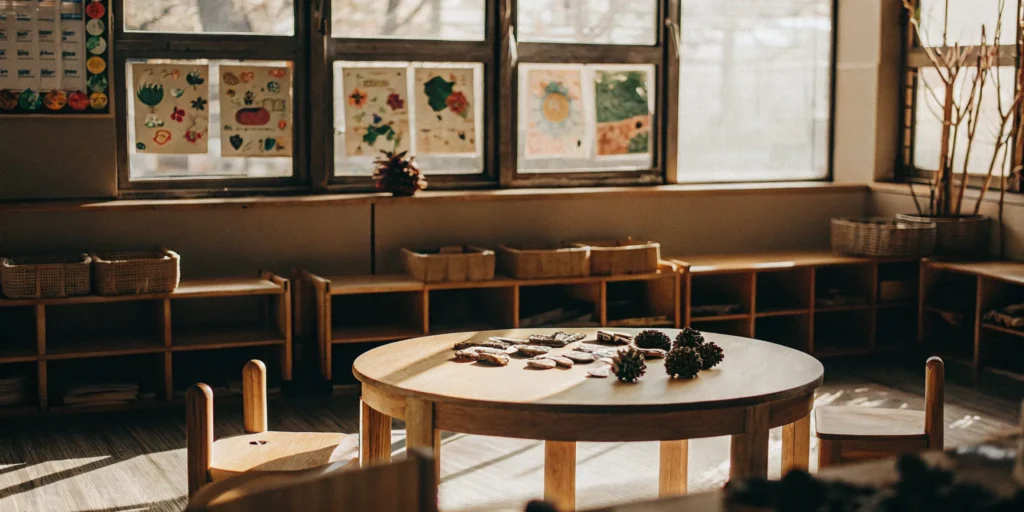
The environment itself is seen as a vital part of the learning process—so much so that it’s called the “third teacher.” We intentionally design our spaces to be beautiful, welcoming, and full of possibilities for discovery. You’ll notice an abundance of natural light, plants, and thoughtfully organized materials that invite children to touch, explore, and create. The classroom is arranged to encourage collaboration, communication, and independent thinking. Every corner, from a cozy reading nook to a well-stocked art studio, is set up to provoke curiosity and support the children’s ongoing projects and interests. The space is a reflection of the children’s learning and evolves with them throughout the year.
An Emergent Curriculum That Follows Your Child’s Lead
Because we believe children are born curious, we don’t rely on a one-size-fits-all curriculum. Instead, learning emerges directly from the children’s interests and passions. A simple question about why spiders build webs can blossom into a month-long investigation involving research, drawing, and constructing models. This is what we call The Project Approach. Our teachers skillfully weave important learning goals in literacy, math, and science into these deep explorations. This makes learning feel relevant and exciting for your child. When children are invested in what they’re studying, their engagement soars, and they develop a genuine, lifelong love for learning.
Covering Core Subjects Through Inquiry
It’s a common question: how do core subjects like reading and math fit into this child-led approach? The answer is that learning isn’t separated into boxes here. Let’s go back to that spiderweb investigation. As children explore their questions, they naturally engage with foundational academic skills. They build literacy skills by looking through books about spiders, learning new vocabulary, and documenting their findings. They use math concepts when they count a spider’s legs, identify geometric shapes in a web, or measure silk strands. This is the essence of The Project Approach. Instead of teaching subjects in isolation, our educators skillfully integrate them into explorations that feel exciting and relevant, building a deep and meaningful foundation for your child’s future learning.
Crafting a Reggio Emilia Lesson Plan That Sparks Curiosity
You won’t find rigid, pre-packaged lesson plans in our classrooms. Instead, we see curriculum as a flexible, evolving journey that we create with your child. Our approach is built on the belief that children are born curious and capable, and our job is to provide the right environment for their interests to blossom into deep, meaningful learning. This means our planning process is fluid, responsive, and always centered on the children in the room.
Our educators are expert observers, listening carefully to conversations and watching how children interact with the world around them. A simple question about why the sky is blue or a fascination with how shadows move can become the seed of a long-term project. This emergent curriculum is what makes our Reggio Emilia-inspired philosophy so dynamic. We trust that when children are genuinely invested in what they’re learning, the experience is not only more joyful but also more impactful, laying a strong foundation for a lifetime of discovery. We don’t just teach subjects; we teach children how to be thinkers, researchers, and collaborators from the very beginning.
Why We Start with Your Child’s Questions
Everything begins with listening. The most powerful learning happens when it’s driven by your child’s own wonder. Our teachers pay close attention to the questions children ask, the theories they form during play, and the topics that capture their imagination. If a group of children becomes fascinated with the different trucks they see outside the window, that becomes our starting point. We don’t move on to a predetermined “letter of the week”; instead, we follow their lead. This is the foundation of The Project Approach, where children’s interests guide the curriculum, making learning feel relevant and exciting.
Fostering a Natural Sense of Wonder
Once a topic emerges, our educators work to nurture that initial spark of curiosity. Their role isn’t to provide all the answers but to ask thoughtful questions and introduce materials that encourage deeper exploration. If the children are interested in trucks, a teacher might bring in books about construction vehicles, add different types of wheels and blocks to the building area, or set up an art invitation to paint with toy trucks. Our exceptional educators are skilled at creating these “invitations to learn,” carefully designing experiences that challenge children to think, experiment, and discover answers for themselves.
Provocations vs. Invitations: What’s the Difference?
You might hear us use the terms “provocations” and “invitations” to describe how we set up learning experiences. While they sound similar, there’s a subtle but important difference. Think of a provocation as a completely open-ended question posed with materials. We might place a collection of smooth stones, twigs, and clay on a table with no specific instructions, simply to see what children will do with them. An invitation is a bit more focused; it’s a gentle nudge toward a particular theme or idea. For example, we might set out the same stones and twigs, but this time add a book about bridges or pictures of animal habitats. Both are designed to spark curiosity, but provocations encourage pure, child-led discovery, while invitations offer a gentle starting point for exploration.
Examples of Reggio-Inspired Activities
So, what does this look like during your child’s day? These activities are not just about keeping busy; they are rich, multi-layered experiences where children build critical thinking skills, collaborate with peers, and make their ideas visible. You’ll see how academic concepts like science, math, and literacy are woven into play in a way that feels natural and exciting. Our enrichment programs build on this foundation, offering even more avenues for creative expression and discovery. Here are a few examples of how a simple setup can lead to incredible learning.
Science Provocation: Mixing Potions
Imagine a table set with clear bowls, droppers, and various safe kitchen ingredients like baking soda, vinegar, food coloring, and a bit of dish soap. This “potion mixing” station is a classic science provocation. As children begin to combine ingredients, they are instantly captivated by the fizzing and foaming of chemical reactions. They are not just making a fun mess; they are acting as true scientists. They measure, pour, and observe cause and effect. Soon, they start creating their own “recipes,” learning about volume and sequence while developing the language to describe what they see. This hands-on experimentation is foundational for our STEM Learning approach, fostering a love for inquiry from the earliest age.
Light & Shadow Provocation: Exploring Reflections
In a quiet corner of the room, an educator might set up a simple cardboard box with tissue paper stretched over an opening, a flashlight, and a basket of small animal figures. This invitation to explore light and shadow quickly becomes a theater for the imagination. Children discover that moving the flashlight makes the animals’ shadows grow and shrink. They begin to narrate stories, creating elaborate shadow plays for their friends. This activity beautifully blends scientific concepts like light and perception with the art of storytelling, building both analytical skills and creative confidence in our toddler classrooms and beyond.
Literacy and Math Provocation: A Playdough Bakery
A playdough bakery is a perfect example of how literacy and math skills can emerge naturally from play. We might set up a table with different colors of playdough, rolling pins, cookie cutters, and a toy cash register. Children naturally take on roles as bakers and customers. They might decide to write a menu, practicing early literacy skills as they sound out words like “cookie” and “cake.” As they “sell” their creations, they count out play money, handle transactions, and practice one-to-one correspondence. This kind of meaningful play makes learning abstract concepts feel concrete and fun, building a strong foundation for their future education in our preschool classrooms.
Weaving in Learning Goals, Naturally
A child-led curriculum doesn’t mean we leave learning to chance. Key developmental goals in literacy, math, science, and social skills are thoughtfully woven into every project. That investigation into trucks becomes a rich opportunity for learning. Children might count the wheels on different vehicles (math), learn the names for various parts (vocabulary), work together to build a garage (collaboration and engineering), and draw their own truck designs (art and fine motor skills). We believe that academic skills are best learned in a meaningful context, and we are committed to partnering with parents to make this authentic learning visible.
How We Make Learning Visible Through Documentation
In a Reggio Emilia-inspired classroom, learning isn’t a hidden process that ends with a test or a finished craft. Instead, we believe in making learning visible. This means we carefully document your child’s thoughts, questions, and discoveries to understand and celebrate their unique learning journey. Think of it as a story—the story of your child’s growth, told through their own words, creations, and interactions.
This practice, known as documentation, is more than just creating a scrapbook of memories. It’s a vital tool that helps our educators see the world through your child’s eyes. It allows us to reflect on their progress, share meaningful insights with you, and plan future activities that build directly on their current interests. By displaying this documentation on classroom walls, we create a living history of their work, showing every child that their ideas are valued and important. This approach is a cornerstone of how we build a strong home-school partnership, keeping you connected to the incredible discoveries your child makes each day.
Documentation as a Tool for Teacher Study
Documentation is just as important for our teachers as it is for you and your child. It serves as a powerful tool for professional growth, allowing our educators to reflect on their teaching practices and deepen their understanding of each child. By revisiting photos, videos, and transcripts of children’s conversations, our teachers can analyze learning as it unfolds. This process helps them see beyond the surface of an activity to uncover the complex thinking and strategies children are using. It prompts our exceptional educators to ask critical questions like, “What does this child already know?” and “How can I best support the next step in their inquiry?” This ongoing study ensures our teaching is always responsive, intentional, and tailored to the children in our care.
Using “Learning Stories” to Capture Growth
One of the most meaningful ways we document progress is through “Learning Stories.” Instead of a simple checklist of milestones, a Learning Story is a narrative that captures a specific moment of discovery. It tells the story of your child’s experience—what they were trying to do, the challenges they faced, and the skills they used to work through them. For example, a story might describe how your child worked with a friend to build a tall, stable tower, highlighting their problem-solving, communication, and persistence. These stories make learning tangible and celebrate the process, not just the final product. When we share these stories with you, they provide a rich, detailed picture of your child’s development and create a beautiful record of their journey.
Documenting Those “Aha!” Moments
We capture learning as it happens, in all its beautiful and messy forms. Our educators are always ready with a camera or a notebook to record those fleeting but significant moments of discovery. This might be a photo of your child concentrating as they figure out how to balance a stack of blocks, a short video of them explaining a story they drew, or a written note of a profound question they asked during circle time. We collect their sketches, their clay sculptures, and their early attempts at writing. These artifacts are treated with respect and displayed thoughtfully throughout the classroom, often accompanied by the child’s own words explaining their work. This creates a rich visual narrative that shows how their skills and ideas develop over time.
The Art of Observation and Note-Taking
Our teachers are skilled observers who understand that learning happens everywhere, not just during structured activities. They listen closely to conversations between children, watch how they solve problems during play, and notice which materials they are drawn to. Learning can be seen in the way a toddler sorts leaves by color, the way a group of preschoolers negotiates the rules of a game, or the quiet focus of a child painting at an easel. Our exceptional educators are trained to see these moments as valuable data. They take detailed notes and reflect on their observations to gain a deeper understanding of each child’s individual strengths, challenges, and passions, ensuring every child feels seen and understood.
How Documentation Shapes Future Lessons
The documentation we gather isn’t just for looking back—it’s for planning what comes next. By analyzing the photos, notes, and work samples, our teachers can identify emerging themes and interests within the classroom. If several children are fascinated by the insects they found on the playground, their documented questions and drawings become the foundation for a new project. This process allows the curriculum to be flexible and responsive, growing directly from the children’s own curiosity. It’s a core part of our Reggio Emilia-inspired philosophy, ensuring that learning is always engaging, relevant, and co-created with your child.
Practical Tips for Getting Started with Documentation
You don’t need to be a professional photographer or a teacher to start documenting your child’s learning journey at home. The most powerful tools are likely already in your pocket: your phone and a simple notebook. The next time your child is deeply engaged in an activity, try capturing the process. Take a photo of their hands as they mix colors or their face as they concentrate on a puzzle. Write down a direct quote or a question they ask—these are windows into their thinking. This practice isn’t about creating a perfect portfolio; it’s about seeing the world through their eyes and honoring their ideas. It’s a beautiful way to connect with your child and gather wonderful insights to share, strengthening our partnership in their education.
Using Flexible Templates for Planning
The documentation you collect at home, just like the observations we make in the classroom, becomes the blueprint for what comes next. But this blueprint isn’t a rigid set of instructions; it’s more like a flexible mind map of possibilities. If your notes show a growing fascination with how shadows change throughout the day, your “plan” can be a simple web of ideas. You might set out a flashlight and some objects for shadow puppets one day, or bring paper and crayons outside to trace shadows on the sidewalk the next. This responsive approach is the essence of The Project Approach, allowing learning to unfold organically from your child’s genuine curiosity rather than following a predetermined schedule.
Designing the “Third Teacher”: An Inspiring Learning Space
In the Reggio Emilia philosophy, the classroom environment is seen as a “third teacher.” This means the physical space is much more than just a room where learning happens; it’s an active participant in your child’s education. We intentionally design our classrooms to be beautiful, inviting, and full of possibilities. Think of a space filled with natural light, organized with care, and featuring displays of the children’s own work. This isn’t just about aesthetics; it’s about creating an atmosphere that respects children as capable and curious individuals.
Every corner of the room is thoughtfully arranged to encourage exploration, communication, and collaboration. We consider how light, color, and texture can create a calm yet stimulating environment. By moving away from clutter and overstimulation, we provide a backdrop where your child’s ideas can truly shine. Our Reggio Emilia-inspired approach ensures the classroom is a dynamic space that evolves with the children’s interests, empowering them to engage deeply with their surroundings and with each other. It’s a place where they feel comfortable, competent, and inspired to discover.
Setting Up “Invitations to Learn”
An “invitation to learn” is a carefully arranged collection of materials that sparks a child’s curiosity and encourages them to explore a concept or skill. Instead of simply placing toys on a shelf, our educators create thoughtful setups based on the children’s emerging interests. For example, if children are curious about shadows, we might set up a small table with a light source, translucent blocks, and natural objects like leaves and feathers. This arrangement doesn’t come with instructions; it’s an open-ended prompt that invites children to experiment, ask questions, and construct their own understanding of how light and shadows work.
Selecting Open-Ended Materials for Exploration
You’ll notice our classrooms are filled with materials that are open-ended and versatile. Instead of single-purpose plastic toys, we prioritize items like wooden blocks, clay, fabrics, recycled materials, and natural objects. These “loose parts” can become anything a child imagines, from the components of a towering castle to ingredients in a pretend kitchen. This approach encourages creativity, critical thinking, and problem-solving. By providing a rich variety of textures and materials, we support the “hundred languages” of children, allowing them to express their ideas through building, sculpting, drawing, and more. Our enrichment programs further extend this hands-on exploration.
The Power of “Loose Parts”
“Loose parts” are the simple, open-ended materials that fuel a child’s imagination because they don’t have a single, defined purpose. Think of pinecones, smooth stones, fabric scraps, buttons, and cardboard tubes. Unlike a toy fire truck that is always a fire truck, a simple wooden block can be a phone, a piece of food, or a building block for a magnificent castle. This versatility is where the magic happens. It empowers children to use their creativity to decide what an object will be, which is a far more engaging process than following instructions. This type of play is fundamental for developing critical thinking and problem-solving skills. As children experiment with these materials, they are testing theories and making connections, acting as the capable researchers we know they are. Our Reggio Emilia-inspired philosophy is built on providing these tools to help children bring their incredible ideas to life.
Designing Spaces for Collaboration and Reflection
The physical layout of our classrooms is designed to support both individual focus and group collaboration. You’ll find cozy nooks for quiet reading, small tables where a few children can work together, and larger open areas for group projects. The furniture is child-sized and often movable, empowering children to arrange the space to fit their needs. This flexibility is key to The Project Approach, where children often work together on long-term investigations. By creating an environment that fosters teamwork, we help children develop essential social skills like sharing ideas, listening to others, and solving problems as a group.
Using Light, Mirrors, and Natural Elements
We believe a classroom should feel calm, inspiring, and connected to the world outside. That’s why we prioritize natural light, which creates a warm and peaceful atmosphere far different from harsh fluorescent bulbs. You’ll also find mirrors used in interesting ways—not just for dress-up, but placed in corners or on the floor to offer new perspectives and encourage experiments with light and reflection. We bring nature indoors with plants, smooth stones, wood slices, and seashells, providing rich sensory experiences and beautiful, open-ended materials for play. These elements work together to create a thoughtful and serene environment that feels more like an artist’s studio or a cozy home than a traditional classroom, honoring your child’s need for a beautiful and welcoming space.
Displaying Children’s Work with Purpose
When we display children’s work, it’s about more than just decorating the walls. It’s a way of saying, “Your ideas are important, and your process matters.” You won’t just see a finished painting; you’ll see it displayed at your child’s eye level, often accompanied by photos of them at work and their own words explaining their creation. This practice of documentation turns the classroom into a living story of the children’s learning journey. It allows them to revisit their ideas and build upon them, and it shows them that their thinking is valued by their community. This approach makes learning visible and makes you a true partner in their educational journey, giving you a window into their world of discovery.
What Is Project-Based Learning?
You’ve probably seen your child get completely absorbed in something—a ladybug on a leaf, the way a tower of blocks falls, or the sounds a fire truck makes. Project-Based Learning takes that natural curiosity and turns it into the foundation for real, meaningful learning. Instead of moving through a list of pre-planned themes, we work with children on in-depth investigations of topics that genuinely fascinate them. It’s the difference between memorizing facts about seasons and actually planting a garden to watch the changes happen firsthand.
This hands-on approach, which is central to The Project Approach we use, allows children to ask their own questions and discover the answers through exploration and collaboration. A simple question like, “Where does rain come from?” can blossom into a multi-week project involving art, science experiments, and storytelling. Through these projects, children develop critical thinking, problem-solving skills, and a true love for learning. They see that their ideas are important and that learning isn’t just something that happens at a desk—it’s an exciting adventure they get to lead.
Deep Dives vs. Quick Activities
A quick craft activity can be a fun way to spend an afternoon, but a project is a much deeper journey. Think of it this way: a quick activity might be coloring a picture of an apple. A project, on the other hand, might start with a trip to an apple orchard. The children would then bring apples back to the classroom to wash, cut, and taste. They might paint with the apple halves, count the seeds, and even try baking a pie. This kind of long-term exploration allows children to fully immerse themselves in a topic, making connections and building a much richer understanding than a one-off activity ever could.
Taking Learning Outdoors
We believe the classroom doesn’t stop at the door. The world outside is a vibrant learning environment filled with endless opportunities for discovery. A simple nature walk can spark a project about the changing seasons, the insects living under a log, or the different types of leaves falling from the trees. Our educators use our outdoor spaces as an extension of the classroom, where children can engage all their senses. Feeling the rough bark of a tree or watching a bird build its nest are powerful learning moments. These experiences are a key part of our Enrichment Program, helping children build a strong connection to the natural world while learning about science, math, and art.
Letting the Project Lead the Way
The most powerful projects come directly from the children themselves. Our exceptional educators are expert observers, trained to notice the sparks of curiosity in your child. If a group of children becomes fascinated with the construction site across the street, that becomes the seed for a new project. We don’t steer them away to follow a pre-set lesson plan; we lean into their interest. This child-led approach shows children that their ideas have value and empowers them to take ownership of their learning. Our teachers then skillfully weave in foundational concepts of literacy, math, and science, ensuring that learning goals are met in a way that feels natural and exciting to the children.
How Does Art Fit into the Curriculum?
In our classrooms, art isn’t just a fun activity we do on Friday afternoons. It’s a fundamental part of how children learn, communicate, and make sense of the world around them. We see art as a language—or rather, many languages—that every child can speak. Our Reggio Emilia-inspired philosophy places creative expression at the heart of the curriculum, weaving it into every aspect of your child’s day. It’s how they show us what they’re thinking, test their theories, and share their unique perspectives.
Exploring the “Hundred Languages” of Children
The founder of the Reggio Emilia approach, Loris Malaguzzi, wrote a beautiful poem about the “hundred languages” of children. The idea is that children have countless ways to express themselves beyond words. They communicate through painting, sculpting, music, movement, and building. We believe it’s our job to listen to and value all of these languages. When a child uses clay to show us their idea of a family or paints a picture to process a new experience, they are communicating just as clearly as if they were writing a sentence. By honoring these forms of expression, we get a richer, more complete picture of who your child is and how they understand the world.
The Role of the Atelier and High-Quality Materials
Step into one of our classrooms, and you’ll see that our art areas look a little different. Instead of just crayons and construction paper, you’ll find a carefully curated collection of open-ended materials. We offer things like natural wood pieces, smooth stones, colorful fabrics, recycled containers, and clay. These materials don’t come with instructions; they invite curiosity and imagination. A simple piece of fabric can become a cape, a river, or a blanket. This approach encourages children to think creatively and solve problems as they bring their ideas to life. Our Exploration Through The Arts program is built on this principle of providing rich, inspiring resources that allow for unique artistic expression.
Process Art: Valuing the Journey Over the Destination
You’ll often hear us talk about “process art,” which simply means we focus on the experience of creating rather than the final product. This is different from a craft where everyone follows steps to make the same thing. With process art, there are no instructions and no “right” way to do it. We provide interesting materials—like clay, paint, and natural objects—and let children explore. The learning happens in the mixing, the squishing, the smearing, and the problem-solving. It’s about the joy of discovery and the freedom to express an idea without worrying about what it will look like in the end. This approach is central to our philosophy because it honors your child as a capable creator and thinker, valuing their unique journey of exploration over a uniform outcome.
Connecting Creativity to Every Subject
Art is not a standalone subject here—it’s a tool for exploration across all areas of learning. We integrate creative methods into every project to help children express their understanding. For example, if the class is curious about insects, they might not just read about them in a book. They might sculpt their favorite bugs out of clay, build a large-scale ant hill together, or create detailed drawings of butterfly wings they observed outside. This is a core part of The Project Approach, where children engage in deep, hands-on investigations. By blending art with science, math, and literacy, learning becomes more meaningful, memorable, and joyful.
What Are Some Common Challenges (and How We Address Them)?
The Reggio Emilia philosophy is a beautiful and effective way to support a child’s growth, but like any thoughtful approach, it requires dedication and skill to implement well. It’s not about simply letting kids do whatever they want; it’s about creating a carefully structured environment where their curiosity can lead to meaningful learning. At Strong Start, we see these “challenges” as opportunities to deepen our practice and provide the best possible experience for your child. Our educators are trained to handle the dynamic nature of a child-led classroom, ensuring that every day is full of purpose, discovery, and joy. Here’s a look at how we approach some of the common complexities of this inspiring philosophy.
Balancing Learning Goals with Children’s Passions
One of the first questions parents ask is how we ensure children are prepared for kindergarten while letting their interests guide the curriculum. It’s a great question, and the answer lies in the skill of our educators. They are experts at seeing the learning potential in every moment of play and exploration. If a group of children becomes fascinated with building tall towers, their teacher will naturally weave in concepts of physics, measurement, and teamwork. This method, known as The Project Approach, allows us to meet and exceed developmental goals in a way that feels like play, not work, connecting your child’s natural passions directly to foundational academic skills.
Why Thoughtful Preparation is Key
A Reggio-inspired classroom may look like a place of effortless discovery, but it’s the result of immense thought and preparation. Our teachers don’t just instruct; they act as co-learners and researchers alongside the children. Before your child even enters the room, our exceptional educators have intentionally designed the space to spark curiosity. Every material is chosen with a purpose, and every corner is arranged to invite collaboration and investigation. The classroom becomes a “third teacher,” a welcoming and inspiring environment with natural light and organized materials that empower children to take the lead in their own learning journey.
Our Commitment to Reflective Teaching
In a classroom that evolves with the children’s interests, how do we ensure every child’s needs are being met? The key is a commitment to reflective teaching. Our educators are keen observers who spend their days listening to conversations, watching interactions, and documenting moments of discovery. This careful observation isn’t just for creating cute keepsakes; it’s valuable data. By regularly reflecting on these observations, our teachers can adapt their plans to support individual children and the group as a whole. This ongoing cycle of observation and reflection is a cornerstone of our program and strengthens our ability to partner with parents by sharing meaningful insights into your child’s development.
How Can You Get Involved as a Parent?
In a Reggio Emilia-inspired classroom, you are more than just a parent—you are a partner, a co-researcher, and your child’s first and most important teacher. We see education as a shared journey, and your involvement is what makes the experience so rich and meaningful for your child. When we work together, we create a supportive community where your child can truly flourish.
Partnering with parents is at the heart of our philosophy. Your insights, skills, and participation are invaluable, helping us connect what happens in the classroom to your child’s life at home. Here are a few simple but powerful ways you can become an active part of our learning community.
Sharing Your Child’s Interests from Home
Did your child spend the weekend mesmerized by squirrels in the backyard or fascinated by the big construction site down the street? Let us know! Sharing these simple observations helps us tailor learning experiences that truly resonate with your child. When we know they’re curious about how a building gets so tall, we can bring in books about construction or add blocks and cranes to the play area. This collaboration turns their fleeting interests into deep, meaningful investigations. By connecting their home life with their school day, we show them that their ideas and questions are important, building a foundation for a lifelong love of learning.
Becoming a Valued Classroom Resource
Every family has unique skills, traditions, and knowledge to share, and we welcome you to bring your expertise into the classroom. You don’t need to be a formal expert to be a resource. Do you love to bake, play the guitar, or speak another language? Your passions can spark incredible new projects and experiences for the children. Your involvement can be as simple as sharing photos from a family trip, bringing in materials for a project, or reading a favorite story to the class. By contributing in a way that feels comfortable for you, you become an integral part of our Reggio Emilia-inspired curriculum and enrich the entire classroom community.
Building a Strong Home-School Connection
When parents and teachers work as a team, children feel secure, confident, and supported. This strong home-school partnership is a cornerstone of our approach. Consistent communication and collaboration ensure that your child experiences a seamless connection between their two most important worlds. By sharing in the documentation of their learning, attending school events, or simply chatting with teachers at drop-off and pick-up, you reinforce the message that we are all working together for their benefit. This active partnership enhances the learning environment and is crucial for supporting your child’s growth and development every step of the way.
Bringing Reggio-Inspired Ideas into Your Home
Budget-Friendly Ways to Encourage Exploration
You don’t need a classroom budget to foster a love of learning. The best resources are often free and already in your home. Think about open-ended materials like cardboard boxes, old fabrics, pinecones from the backyard, and plastic containers. These “loose parts” can become anything your child imagines, encouraging creativity far more than a single-purpose toy. The most important thing you can do is pay attention to what fascinates them. As we see every day, sharing your child’s interests from home helps us create learning experiences that truly resonate. If they’re captivated by the moon, you can read books about space, draw pictures of stars, and talk about it together. Following their lead shows them their ideas are valuable and makes learning a joyful part of everyday life.
A Simple Plan for Setting Up Learning Zones
The Reggio Emilia philosophy views the environment as the “third teacher,” and you can apply this powerful idea at home. You don’t need a huge playroom; it’s about creating small, intentional spaces. Designate a cozy corner with pillows and books for reading. Set up a small table with paper, crayons, and maybe some clay for art. Keep building blocks or puzzles in a low, accessible basket. The key is to make these zones inviting and organized, so your child knows where to find things and can easily engage. Our Reggio Emilia inspiration guides us to design beautiful and welcoming classrooms, and you can bring that same feeling home by displaying their artwork and keeping materials tidy. This thoughtful approach to space encourages independence and deep focus.
How We Track Your Child’s Progress (Without Tests)
One of the most common questions we hear from families is, “How will I know what my child is learning?” It’s a great question, and the answer is one of the most beautiful parts of the Reggio Emilia philosophy. In our classrooms, you won’t see traditional report cards with letter grades or standardized tests. Instead, we track progress through a meaningful and holistic process called “making learning visible.” This approach allows us to see and appreciate your child as a complex, capable individual, understanding not just what they know, but how they think, question, and connect with the world around them.
Our exceptional educators are skilled observers and storytellers. They document your child’s journey to understand their unique developmental path, celebrate their strengths, and plan future learning experiences that are tailored to their interests. This deep, ongoing assessment is a cornerstone of our partnership with parents, creating a shared understanding of your child’s growth. It’s a collaborative way to see the incredible progress your child makes every day, captured through careful observation, thoughtful documentation, and individual portfolios that tell their unique story of discovery.
Documenting Growth Through Daily Observation
In our classrooms, learning isn’t just measured by right answers. We see it happening everywhere—in conversations between friends, in the careful construction of a block tower, and in the questions that pop up during story time. Our teachers are trained to be keen observers, carefully watching children to find clues about what they are learning. This means taking notes on a fascinating discussion about shadows on the playground, recording a child’s detailed explanation of their drawing, or noticing how they patiently help a friend solve a puzzle. These moments are the true indicators of growth, showing us how your child’s social, emotional, and cognitive skills are developing in real-time.
Celebrating the Process, Not Just the Product
Have you ever seen a child work so hard on a painting, only to be more excited about the mixing of the colors than the final picture? We believe the learning is in the doing. That’s why we focus on celebrating the entire learning process, not just the finished product. Our teachers keep track of what children are learning by taking photos, writing notes, and displaying their work in a way that tells a story. You might see a “project wall” in the classroom that shows a project’s evolution from a simple question to a complex investigation. This approach honors their effort, curiosity, and the journey of discovery, showing how their skills and ideas grow over time.
Using Portfolios to Tell a Story of Learning
All of these observations, photos, and work samples come together in your child’s individual portfolio. Think of it as a living storybook of their time at school. This collection doesn’t just show what your child has made; it reveals their thinking, their passions, and their progress. Documenting children’s work helps everyone—teachers, parents, and even the children themselves—see and understand their thoughts and feelings, which is essential for learning and growth. This portfolio is a powerful tool that we use during parent-teacher conferences to share a rich, detailed picture of your child’s development. It’s a far more personal and insightful measure of progress than a checklist, providing a beautiful narrative of their learning journey.
Related Articles
Frequently Asked Questions
How do you ensure my child will be ready for kindergarten if the curriculum isn’t pre-planned? This is a question we love because it gets to the heart of our approach. Instead of teaching subjects in isolation, our skilled educators weave foundational skills like literacy, math, and science directly into projects that capture your child’s interest. When children are genuinely passionate about what they’re studying—whether it’s how gardens grow or why skyscrapers are so tall—they learn more deeply and retain information better. This method builds critical thinking and problem-solving skills, which are exactly what they need for a confident start in kindergarten and beyond.
What does a typical day look like in a Reggio-inspired classroom? While there’s no rigid, minute-by-minute schedule, our days have a predictable and comforting rhythm. You’ll see a blend of different activities: morning meetings where everyone shares ideas, long stretches of time for children to work on their projects in small groups or individually, and plenty of outdoor exploration. There are also times for meals, rest, and whole-group stories or music. The structure is there to make children feel secure, but it’s flexible enough to follow their curiosity wherever it may lead.
How is the Reggio Emilia approach different from Montessori? Both philosophies are wonderful and deeply respect children, but they have some key differences. Montessori classrooms often focus on individual, self-directed work using specific materials designed to teach a particular concept. The Reggio Emilia approach is built around collaboration and relationships. Learning happens through group projects that emerge from the children’s shared interests, with the teacher acting as a co-researcher and guide.
My child is quiet and sometimes hesitant to join in. How does this approach support different personalities? Our philosophy is built on the idea that children have “a hundred languages” to express themselves, and speaking is only one of them. We value all forms of communication, from drawing and building to observing and listening. Our teachers are expert observers who take the time to understand each child’s unique personality and communication style. They create a safe, nurturing space where quieter children can build confidence and find their own way to contribute to the group, ensuring every child feels seen and valued.
How will I know what my child is learning without traditional report cards or tests? We believe a checklist can’t capture the full story of your child’s growth. Instead of report cards, we use detailed documentation to make their learning visible to you. Through photos, transcribed conversations, and samples of their work, we create a portfolio that tells the story of their development. This gives you a much richer and more personal understanding of not just what your child is learning, but how they think, create, and solve problems.
Written By
Marc Hoffman
Founder, Strong Start Early Care & Education
Marc founded Strong Start in 2014, inspired by his studies at Williams College, Yeshiva University, and research at Yale University. His child-centered, inquiry-based approach to early education has helped hundreds of families in the Trumbull and Bridgeport communities. As a parent himself, Marc understands the importance of finding a nurturing environment where every child can learn, grow, and flourish.