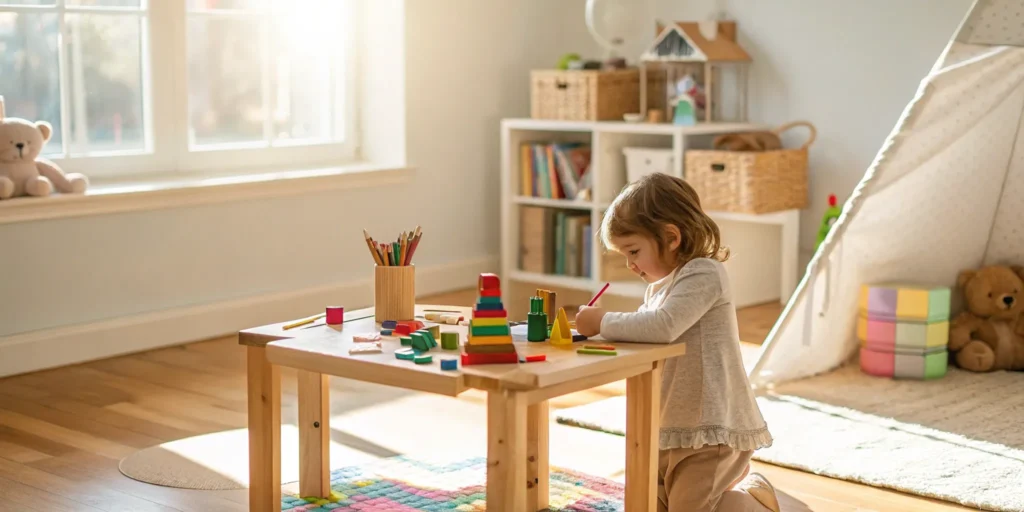
You are your child’s first and most important teacher, but that doesn’t mean you need all the answers. In fact, the most powerful learning happens when you discover things together. What if you could turn their natural curiosity into a shared adventure? That’s the core idea behind project based learning for preschool. It’s an approach you can easily bring into your home. Instead of just lessons, you’ll find child development project ideas that follow their lead, explore their interests, and guide them as they create something new, strengthening your connection every step of the way.
Key Takeaways
- Start with their questions: Project-Based Learning uses your child’s natural curiosity as the starting point for hands-on exploration, connecting learning to what they’re genuinely passionate about.
- Be a co-explorer, not a director: Your role is to ask good questions and provide support, not to give all the answers. This approach empowers children to become confident problem-solvers by trusting them to lead their own discovery.
- Celebrate the skills, not just the craft: The real goal of a project is to build foundational skills like teamwork, problem-solving, and resilience. Notice and praise their effort and collaboration—that’s where the most important learning happens.
What is Project-Based Learning for Preschool?
Have you ever noticed how your child learns best when they’re truly captivated by something, like figuring out how a toy works or why the moon looks different each night? That’s the magic behind Project-Based Learning, or PBL. Instead of just listening to a lesson and memorizing facts, PBL lets children dive into real-world questions and challenges that genuinely interest them. Think of it as learning by doing, on a grander scale. It’s an approach where kids actively explore a topic, ask their own questions, and work together to find answers or create something new.
This method helps children see that learning isn’t just something that happens inside a classroom—it’s connected to everything around them. For example, instead of simply learning the names of different plants from a book, a PBL project might involve the whole class planting a garden. They’d have to figure out what plants need to grow, how to care for them, and what to do with the vegetables they harvest. Through this single project, they’re learning about science, responsibility, teamwork, and even nutrition. Project Based Learning in early childhood is all about making these connections, turning natural curiosity into valuable knowledge and skills they’ll use for years to come. It’s less about finding the one “right” answer and more about the journey of discovery.
Who Can Lead a Project?
Child-Led vs. Teacher-Initiated Projects
The most exciting projects often begin with a child’s own curiosity. A simple question, a fascinating discovery on the playground, or a new interest can be the spark that ignites a deep exploration. When a project is child-led, the motivation is already there. Your child isn’t just completing an assignment; they are on a mission to find answers that genuinely matter to them. Of course, teachers and parents can also initiate projects. An educator might introduce a topic based on their observations of the children’s play or to explore a new concept. The key difference in this approach is that even when a project is introduced by an adult, it quickly becomes the children’s own, with their questions and ideas shaping its direction. The adult’s role shifts from instructor to research partner, guiding discovery by asking thoughtful questions and providing resources, not just giving out answers.
Individual, Small Group, and Whole-Class Projects
Projects are wonderfully flexible and can be tailored to fit the interests and energy of the children involved. Sometimes, a project is a solo mission, driven by one child’s unique passion. They might spend weeks meticulously drawing different types of cars or building intricate block structures. Other times, learning is a team sport. A small group of friends might decide to open a pretend post office, working together to design stamps, sort mail, and make deliveries. This is where collaboration, negotiation, and teamwork really come to life. And some projects are big enough to capture the imagination of an entire class, like planting a garden or creating a large-scale mural. At Strong Start, our Project Approach allows for all of these possibilities, ensuring that learning is always meaningful and engaging, whether it’s a personal quest or a shared adventure.
What Makes Project-Based Learning Work?
So, what makes a project “PBL”? It’s more than just a fun activity; it’s a structured approach with a few key ingredients. First, everything starts with a meaningful question or a problem to solve—something your child can really sink their teeth into. It’s also a process that values the journey as much as the destination, focusing on both the learning that happens along the way and the final product. Teamwork is another huge piece of the puzzle, as children learn to share ideas and work together. Most importantly, every project is designed to connect to real-world situations, making learning feel relevant and exciting for your little one.
The Gold Standard for High-Quality Projects
A truly great project goes beyond a simple craft. The “Gold Standard” for project-based learning is about creating an experience that is both engaging and deeply educational. It all begins with a challenging question that sparks genuine curiosity—not “what color is a leaf?” but “why do leaves change color and fall off the trees?” This kind of question doesn’t have a simple, one-word answer and invites a longer investigation. A high-quality project feels authentic and connects to your child’s world, helping them see how learning applies to their own life. Most importantly, it includes your child’s voice and choice, allowing them to have a real say in the direction of the exploration. This is the core of The Project Approach, where children are trusted as capable learners who can help guide their own educational journey.
Gold Standard Teaching Practices
Your role in a project is less of a teacher and more of a guide and co-researcher. Gold Standard teaching practices focus on creating a culture of curiosity where your child feels safe to ask questions and make mistakes. This means scaffolding their learning—offering just enough support to help them over a hurdle without taking over the task for them. For example, you might help them hold a nail steady but let them do the hammering. It also involves asking open-ended questions to stretch their thinking and coaching them through challenges. At Strong Start, our educators are experts at this, but it’s a skill any parent can develop. Remember, the goal isn’t a perfect final product. As experts at Edutopia note, the skills and confidence children gain are far more important than how polished the end result looks.
How is PBL Different from Traditional Learning?
You might be wondering how this is different from the school projects you remember. Often, a traditional project is a small task assigned at the end of a unit to show what you’ve learned—like a diorama or a poster. With PBL, the project is the unit. The learning happens through the project, not after it. This also changes the teacher’s role in a wonderful way. Instead of being the main source of information, the teacher becomes a guide. They provide resources and support, but they empower children to find solutions for themselves, encouraging them to think critically and take ownership of their learning.
Why Preschoolers Thrive with Project-Based Learning
Have you ever noticed how your preschooler learns best when they’re truly captivated by something? That’s the magic behind Project-Based Learning (PBL). It’s not about worksheets or memorization. Instead, it’s an approach that channels their natural curiosity into hands-on exploration. By working on meaningful projects, children don’t just learn facts—they learn how to think, collaborate, and solve problems. This method builds a strong foundation for a lifetime of learning by making it relevant, engaging, and incredibly fun.
Builds Curiosity and Problem-Solving Skills
Little kids are born investigators. They’re constantly asking “why?” and trying to figure out how the world works. Project-Based Learning leans right into that instinct. Instead of just being told information, children get to actively explore real-world questions that matter to them. Maybe they wonder where rain comes from or how a garden grows. A project lets them dig in, ask more questions, and test their own ideas to find answers. This process helps them develop critical thinking and problem-solving skills from a very young age, turning their curiosity into real knowledge.
Develops Collaboration and Social-Emotional Skills
Projects are rarely a solo mission. When children work together to build a model of their neighborhood or create a storybook, they’re learning essential social skills. They practice sharing materials, listening to each other’s ideas, and figuring out how to combine different perspectives into one final product. This kind of teamwork helps them develop self-control and empathy. They learn that their voice matters, but so do the voices of their friends. These early experiences in collaboration are fundamental for building strong relationships and emotional intelligence that will serve them well in school and beyond.
Builds Confidence with Hands-On Learning
When a child gets to take the lead on their own learning, something amazing happens: their confidence blossoms. PBL gives them the chance to make choices, try things out, and see their ideas come to life. Finishing a project—whether it’s a simple bird feeder or a classroom post office—gives them a huge sense of accomplishment. They feel proud and capable. Young children are always eager to share what they’ve made and learned, and engaging families and community members in this process makes it even more rewarding. It shows them that their work has value and that their contributions are important.
Fosters a Growth Mindset
One of the most valuable things a child can learn is that their abilities aren’t set in stone—they can grow and improve with effort. This is the core of a “growth mindset,” and it’s something Project-Based Learning naturally encourages. When children are working on a project, things don’t always go as planned. A block tower might tumble, or a plan for a classroom store might hit a snag. Instead of seeing these moments as failures, PBL reframes them as puzzles to be solved. The focus shifts from “I can’t do it” to “What can we try next?” This process teaches children to embrace challenges, take thoughtful risks, and understand that persistence is the key to figuring things out, building a resilient and confident approach to learning.
How to Bring Project-Based Learning to Your Classroom
Bringing project-based learning into your home or classroom doesn’t require a complete overhaul of how you do things. It’s more about a shift in perspective—moving from direct instruction to guided exploration. By focusing on a few key strategies, you can create rich, engaging experiences that let children take the lead in their own learning journey. It’s all about tapping into their natural curiosity and helping them explore real-world problems. This approach helps them gain useful knowledge and skills that stick. Here’s how you can get started.
The Five Phases of a Project
While every project is unique, they generally follow a natural progression that guides children from a simple question to a finished product. This structure helps them organize their thoughts, work through challenges, and feel a sense of accomplishment at each step. Think of it as a roadmap for their curiosity. At Strong Start, our exceptional educators are skilled at guiding children through these phases, ensuring that the learning is deep, meaningful, and child-led. Understanding these stages can also help you support your child’s project-based explorations at home, turning everyday moments of wonder into exciting learning adventures.
Phase 1: Project Presentation and Identification
Every great project begins with a spark—a question, a problem, or a moment of wonder. This is the phase where that initial curiosity is captured and turned into a focus for exploration. It might come from a child asking, “Why do spiders build webs?” or a group of children trying to figure out how to build a taller block tower without it falling. The key is that the topic is relevant and exciting to them. As noted by experts in early education, everything starts with a meaningful question that a child can really sink their teeth into. The teacher’s role here is to listen carefully and help the children frame their interest into a question they can investigate together.
Phase 2: Individual or Team Research
Once the question is set, it’s time to become detectives. In this phase, children actively investigate and gather information to answer their questions. This isn’t about sitting and listening to a lecture; it’s about hands-on discovery. They might look through picture books, observe things in nature, talk to a guest expert (like a local baker or firefighter), or watch a short video. This is where children get to explore real-world questions that matter to them. If they’re studying gardens, they might dig in the dirt to look for worms. If they’re curious about rain, they might put a bucket outside to see how much water it collects. This phase is all about exploration and gathering clues.
Phase 3: Design Development
After gathering information, children move into the planning stage. Here, they brainstorm ideas and decide what they want to create to share their findings. Will they build a model, draw a mural, write a story, or put on a play? This is a highly creative phase where they sketch out their ideas and make a plan. The teacher acts as a facilitator, asking questions like, “What materials will you need?” or “What should we do first?” This process is crucial because the learning happens *through* the project, not after it. It empowers children to think through a process from start to finish, taking ownership of their creation.
Phase 4: Building, Testing, and Evaluation
Now it’s time to bring their ideas to life! This is the hands-on construction phase where children build, create, and test their designs. It’s also where they learn some of the most valuable lessons, like resilience and teamwork. Things might not work perfectly the first time, and that’s okay. Learning to adjust a plan and try again is a critical skill. Since projects are rarely a solo mission, this phase is rich with social-emotional learning. Children practice sharing materials, listening to each other’s ideas, and working together toward a common goal. They learn to value different perspectives and contribute to a team effort.
Phase 5: Project Delivery
The final phase is all about sharing and celebrating their hard work. Children present their finished project to an audience, which could be their parents, another classroom, or even community members. This step is incredibly important for building confidence. Finishing a project gives them a huge sense of accomplishment and pride. When they get to share what they’ve learned and created, it validates their effort and shows them that their work has value. By engaging families and the community in this final presentation, it reinforces the connection between their learning and the world around them, making the entire experience even more meaningful.
Start with a Great Question
Every great project begins with a compelling question—one that’s open-ended and genuinely interesting to young minds. Instead of asking, “What color is a ladybug?” try something like, “How can we build a home for the ladybugs in our garden?” This kind of question doesn’t have a single right answer. It invites curiosity, investigation, and problem-solving. The best questions often come directly from the children’s own observations and wonderings. Listen for those “I wonder why…” moments and help shape them into a shared exploration. This approach puts children’s questions at the heart of the learning process, making it meaningful and exciting for everyone involved.
Design Projects Around Their Interests
The most effective projects are the ones that connect directly to what your children are already passionate about. Is there a sudden obsession with dinosaurs, construction trucks, or what happens to the rain? Use that! When learning is tied to a genuine interest, children are more motivated and engaged. A project about building a city for toy cars is much more exciting than a worksheet on shapes. This is because PBL connects learning to the real world, helping children see how concepts like size, shape, and community apply to their own play and surroundings. Pay attention during playtime and conversation—their next big project idea is probably already there.
Integrate Multiple Subjects
One of the best things about project-based learning is how naturally it blends different subjects together. A single project can be a rich tapestry of literacy, math, science, art, and social-emotional learning. For example, a project to create a classroom post office involves writing letters (literacy), counting stamps (math), learning about community helpers (social studies), and designing the mailbox (art and engineering). This interdisciplinary approach mirrors how we solve problems in real life. It shows children that learning isn’t confined to separate boxes; it’s all connected. The focus is on both the process of discovery and the final outcome, all while encouraging teamwork and exploration.
Shift from Teacher to Guide
Adopting a PBL mindset involves a subtle but powerful change in your role. Instead of being the expert with all the answers, you become a facilitator and co-learner. Your job is to ask thought-provoking questions, provide interesting materials, and help children find their own solutions. When a child asks, “How do we make the tower not fall over?” you can respond with, “That’s a great question. What are some of your ideas?” This approach changes the teacher’s role from director to guide. This shift empowers children, builds their confidence as capable thinkers, and shows them that you trust them to lead their own learning.
Create an Environment that Sparks Ideas
Think of your space as the third teacher in the room. A rich, inviting environment is key to sparking the curiosity that fuels great projects. You don’t need fancy toys; you need interesting materials. Stock your space with open-ended items like cardboard boxes, fabric scraps, natural objects like leaves and stones, and a variety of art supplies. At Strong Start, our approach is deeply inspired by the Reggio Emilia philosophy, which sees children as capable inventors and artists. By setting up different zones for building, creating, and quiet investigation, you give children the tools and the freedom to explore their questions. The goal is to create a space where they feel empowered to test their theories and bring their big ideas to life.
Value Every Child’s Contribution
In project-based learning, the process of working together is just as important as the final product. When kids collaborate on a project, they learn invaluable social skills like sharing, listening, and negotiating ideas. It’s important to create a culture where every child’s contribution is heard and respected, even if it’s not the idea that gets used in the end. This teaches them that their voice matters and that combining different perspectives often leads to the best results. You can extend this by involving family in the process. Sharing their progress with you makes the work feel even more meaningful and shows them that their efforts are valued by their community, which is a core part of our commitment to partnering with parents.
What Does a Great PBL Project Look Like?
So, what separates a simple craft activity from a truly great project-based learning experience? While both can be fun, a strong PBL project has a few key ingredients that help children learn and grow in meaningful ways. It’s not just about building a cool-looking volcano; it’s about the questions, the exploration, and the discoveries made along the way. A great project feels like an adventure with a purpose.
The best projects are designed with your child’s world in mind. They start with a question that genuinely sparks their interest and then give them the space to find the answers. Think of it as a guided exploration where the learning goals are clear, but the path to get there is flexible and full of child-led discovery. These projects are built to be hands-on, collaborative, and connected to the world outside the classroom. When these elements come together, you get a learning experience that is not only engaging but also incredibly effective at building foundational skills for school and life. Let’s look at the core components that make a PBL project shine.
Keep it Age-Appropriate
A great PBL project for young children meets them exactly where they are. It should be designed to be hands-on and suitable for their specific developmental stage. For a group of three-year-olds, a project about gardening won’t involve writing reports. Instead, it will mean digging in the dirt, planting seeds, watering sprouts, and maybe even tasting the vegetables they grew. The focus is on sensory exploration and direct experience. This approach makes learning feel like play, encouraging natural curiosity and discovery in a way that’s both fun and effective. When activities are a good fit for their abilities, children feel successful and are eager to participate.
Balance Clear Goals with Creative Freedom
The magic of PBL happens when there’s a perfect blend of structure and freedom. Effective projects have clear learning goals, but they also leave plenty of room for children to explore their own ideas and interests. For example, the goal might be to learn about different types of homes. While the educator guides the project, the children might decide to build a birdhouse, a block city, or a cozy blanket fort. This balance allows educators to steer the learning while also fostering creativity and problem-solving skills. It teaches kids that their ideas have value and that there can be many different ways to find an answer.
Connect Learning to the Real World
Connecting classroom activities to real-life situations is what makes learning stick. When children can see the relevance of what they’re doing, their engagement and understanding deepen. A project about community helpers becomes much more powerful when the class can visit a local fire station or have a mail carrier come speak to them. This real-world connection shows children that learning isn’t just something that happens at school—it’s all around them. It also provides a wonderful opportunity to engage families and the community, making everyone a partner in the child’s education.
How to See What Your Child is Learning
One of the biggest shifts with project-based learning is that progress doesn’t always look like a finished worksheet or a perfect craft. Instead, the real learning happens in the messy, wonderful process. So, how can you see all the amazing growth that’s taking place? It’s all about knowing what to look for.
When you tune into your child’s process, you get a front-row seat to their development. You’ll start to notice how they think, solve problems, and work with others. These methods aren’t about testing or grading; they’re about celebrating the small steps and big leaps your child is making every day. It’s a chance to understand your child on a deeper level and see their unique skills shine.
Observe and Take Notes
Sometimes, the best way to understand what your child is learning is simply to watch and listen. As early childhood experts note, “observations of actions and conversations are one of the best methods for assessing growth.” When your child is deep in play or working on a project, they’re showing you exactly what they know and what they’re curious about. You can see their problem-solving skills in action as they figure out how to keep a block tower from falling or their social skills as they negotiate with a friend. Keep a small notebook or a note on your phone to jot down interesting things they say or do. These little moments are powerful windows into their learning.
Create a Portfolio of Their Work
A portfolio is more than just a scrapbook; it’s a story of your child’s growth over time. This collection of their work can include drawings, paintings, photos of their block creations, or even short videos of them explaining what they made. These work samples are an essential way to see how their skills and ideas are evolving. Looking back at a drawing from a few months ago and comparing it to one from today can show you incredible progress in their fine motor skills and creativity. It’s a tangible and joyful way to document their learning journey and celebrate their hard work.
Encourage Reflection and Sharing
Taking a moment to talk about the learning process helps your child think more deeply about what they’ve done. You don’t need to conduct a formal interview; just make it a natural part of your conversation. Asking simple, open-ended questions can make a big difference. Try things like, “What was your favorite part of that project?” or “What was a little tricky to figure out?” This practice of reflection helps them understand their own thinking and build self-awareness. It turns a fun activity into a meaningful learning experience and shows them that you’re interested in their process, not just the final product.
Look for Growth in Real-World Skills
Project-based learning is fantastic for building the skills children will need throughout their lives. It’s designed to help them “think critically, solve real problems, collaborate effectively, and communicate clearly.” When you see your child working with a friend to build a fort or trying different ways to attach wings to their cardboard airplane, you’re seeing real-world learning in action. These experiences teach them resilience, teamwork, and creativity. Celebrate these moments, because they are just as important as learning letters and numbers. You’re watching your child build a foundation of essential life skills that will prepare them for school and beyond.
Fun Project-Based Learning Ideas for Preschool
The most memorable projects often grow from a child’s spontaneous question or a shared classroom experience. The key is to listen for those sparks of curiosity and help fan them into a flame of discovery. If you’re looking for inspiration, here are a few project themes that are always a hit with young learners, packed with potential for hands-on fun and meaningful learning. These ideas are just starting points—always let your children’s unique interests guide the way.
Projects for Exploring Nature and Science
Young children are natural scientists, constantly observing, questioning, and testing their theories about how the world works. A project exploring nature can start with something as simple as a collection of fallen leaves or a question about where rain comes from. For example, a project about the human body could begin when a child mentions a family member’s broken bone. This could lead to the class feeling their own bones, setting up a dramatic play area as a radiologist’s office, and building their own skeletons out of pasta or cotton swabs. They might even conduct simple experiments to see what keeps bones strong. The project can culminate in a “science fair” where they proudly share what they’ve learned with their families.
Projects About Our Community Helpers
Preschoolers are just beginning to understand the world beyond their own homes, and they are fascinated by the people who make their community run. A project focused on community helpers can build empathy and a sense of connection. Instead of just reading about firefighters or doctors, children can take an active role. You could help them organize a project that gives back, like cleaning up a local park, creating picture books to donate to the library, or holding a bake sale to raise money for an animal shelter. These activities teach valuable lessons about teamwork, responsibility, and how even small hands can make a big difference. It connects their learning directly to the world they live in, showing them they have a place in it.
Projects for Art and Storytelling
Art and storytelling are powerful ways for children to process their experiences and express their ideas. A great creative project connects to something they genuinely care about and gives them a real say in what they make. Let’s say your class loves a particular storybook. You could launch a project to create your own version, where each child illustrates a page. Or, you could work together to build puppets and a stage to put on a show for other classes. The goal isn’t a perfect final product, but the experience of collaboration, problem-solving, and bringing a shared vision to life. When children have ownership over their creative work, their confidence and passion for learning shine through.
How Families Can Get Involved with PBL
Project-based learning is a team sport, and you, the family, are the star players. When you get involved, you show your child that learning is an exciting adventure that doesn’t just happen within the classroom walls. It’s a part of everyday life. Engaging with your child’s projects strengthens the connection between home and school, making their learning experiences richer and more meaningful. When trusted adults from home join in, a child’s world of learning expands in incredible ways.
You don’t need a teaching degree to make a huge impact. Your curiosity, support, and unique knowledge are the most valuable tools you can offer. By simply talking with your child about their project, helping them find answers to their questions, and connecting their classroom work to the world around them, you become a vital partner in their education. This collaboration not only supports your child but also builds a stronger community around their learning. Let’s look at a few simple, powerful ways you can jump in and get involved.
Bring Project Learning Home
One of the easiest ways to support your child’s project is to simply show your interest. Ask them about what they’re working on and what they’ve discovered so far. Instead of asking, “What did you do at school today?” try more specific, open-ended questions like, “What’s the most surprising thing you learned about the class garden project this week?” This encourages them to think more deeply and share their excitement with you. You can also help them find materials around the house for their project or read a book together on the topic. These small actions reinforce their learning and show them you’re on their team.
Host a “Learning Night” to Showcase Work
The end of a project is the perfect time for a celebration, and there’s no better way to do that than by letting the children be the experts. Many schools host special events where kids can proudly showcase student projects and share what they’ve learned. This could be part of an open house or a dedicated “Learning Night.” Imagine a “Bugs and Butterflies” night where your child can walk you through their drawings, show you the bug hotel they helped build, and explain the life cycle of a monarch. These events give children a huge confidence boost by showing them that their hard work is valued by the entire community. It’s a chance for them to shine and for you to see their learning come to life.
Create Invitations Together
To make the showcase event even more special, get the children involved in creating the invitations. This isn’t just a cute craft; it’s a meaningful part of the project that gives them a sense of ownership and builds excitement. They can draw pictures related to their project, help write the words, and even decorate the envelopes. This simple step integrates literacy, art, and social skills, as they think about who they are inviting and what they want to share. When your child hands you an invitation they made themselves, their pride is palpable. It transforms the event from something they just have to attend into something they are genuinely thrilled to host, strengthening the spirit of partnering with parents in their educational journey.
Invite Community Resources and Experts
Your community is a treasure trove of learning opportunities. If your child’s class is studying plants, a trip to the local nursery or a chat with a grandparent who loves to garden can bring the project to life. Creating local partnerships is a cornerstone of great PBL. Think about the people and places you know. Is there a local baker, artist, or firefighter who could share their expertise? These real-world connections make learning tangible and memorable for young children, showing them how their classroom projects relate to the world they live in. Even a visit to the library to find books on their project topic can feel like a grand adventure.
Tips for Working with Community Experts
The idea of finding a “community expert” might sound a bit formal, but it’s usually as simple as reaching out to someone you already know. Think about your friends, family, and neighbors. Is there a chef who could talk about how they measure ingredients, a gardener who could show off their vegetable patch, or a musician who could explain how their instrument makes sound? Before you connect, a great tip is to help your child brainstorm a few simple questions to ask. This prepares them for the conversation and gives them a sense of ownership over the experience. The goal isn’t a formal lesson; it’s about making a real-world connection that makes learning stick. A short visit or even a quick video call can bring a project to life in a way that books alone can’t. This simple interaction shows your child that their questions are important and that learning is a collaborative adventure.
Help Families Understand the “Why”
It’s so much easier to get involved when you understand the purpose behind a project. Teachers often share the learning goals for upcoming projects through newsletters, emails, or classroom apps. Take a moment to read these updates. Knowing the “why” helps you have more meaningful conversations with your child about what they’re learning and why it matters. It transforms the conversation from “We’re building with blocks” to “We’re learning about architecture and how buildings stay strong.” This shared understanding makes you an informed and effective partner in your child’s education, helping you celebrate their progress every step of the way.
Common PBL Challenges (and How to Solve Them)
Starting any new approach can feel a little intimidating, and Project-Based Learning is no exception. It’s completely normal to hit a few bumps as you and your child find your rhythm. The good news is that most of these hurdles are common and have simple, practical solutions. Think of these challenges not as roadblocks, but as part of the learning adventure for both of you. Let’s walk through some of the most frequent questions and how to handle them with confidence.
Answering the “Are They Ready?” Question
It’s easy to wonder if preschoolers are truly ready for this kind of learning. The answer is a resounding yes! Young children are naturally curious and wired to explore. Far from being “too young,” they are actually in the perfect stage to learn in the deep ways that PBL encourages. This method meets them exactly where they are. Instead of pushing them to learn abstract concepts, it allows them to investigate things they can see, touch, and experience. If you’re feeling hesitant, start small. A project can be as simple as figuring out why some leaves on the sidewalk are crunchy and others are soft. Their innate curiosity is all the readiness they need.
How to Support Mixed Ages and Abilities
If you have children of different ages at home or in your classroom, you might worry about keeping everyone engaged. One of the biggest challenges for educators is differentiating instruction, but PBL actually makes this easier. A great project has room for everyone to contribute based on their unique abilities. For example, in a project about building a bird feeder, an older child might help measure and cut materials, while a younger one can paint it or help gather twigs. The focus is on teamwork, where each child plays a valuable role. This allows siblings and peers to learn from each other and appreciate different skills.
Making it Work with Limited Time and Resources
You don’t need a Pinterest-perfect craft room or hours of free time to do PBL. This approach is all about being resourceful and using what’s around you. Some of the best projects come from simple, everyday materials like cardboard boxes, old containers, and items from nature. Time can also feel like a major constraint, but projects don’t need to be completed in one afternoon. You can break them down into small, 15-minute activities spread across a week. Tackling these common challenges is about shifting your mindset. The goal isn’t a flawless final product; it’s the process of questioning, exploring, and discovering together.
Getting Comfortable in Your New Role as a Guide
One of the biggest shifts in PBL is for the adult. Your role changes from being a teacher with all the answers to a co-explorer who guides the process. This can feel strange at first! It’s tempting to jump in and show your child the “right” way to do something. Instead, try to step back and ask open-ended questions like, “What do you think we should try next?” or “I wonder what would happen if we did this?” Your job is to spark curiosity and provide the tools for them to find their own solutions. It’s less about having the answers and more about being present and curious alongside them.
Using Structured Activities with Young Learners
It’s a common question: if learning is child-led, how do we ensure they’re developing key skills? This is where the beauty of guided exploration comes in. Project-based learning isn’t a free-for-all; it’s a carefully scaffolded experience. While the overarching theme comes from the children’s interests, the educator intentionally designs smaller, structured activities within the project to target specific learning goals. For example, if the class decides to build a pretend restaurant, the teacher might introduce activities like writing menus (literacy), setting prices (math), and taking orders (social skills). These activities feel like natural parts of the game, but they are purposeful. This is the core of The Project Approach, where the structure supports discovery rather than dictating it, ensuring children build foundational skills in a context that feels meaningful and fun.
Your Project-Based Learning Resource List
Jumping into Project-Based Learning can feel exciting and maybe a little intimidating, but you don’t have to figure it all out on your own. Think of this as your starter toolkit—a collection of resources, ideas, and communities designed to support you whether you’re an educator in a classroom or a parent guiding projects at home. Having the right tools and support makes the process so much smoother and more enjoyable for everyone.
The goal isn’t to become a PBL expert overnight. It’s about gathering what you need to feel confident as you start exploring this incredible way of learning with your child. From professional training that’s surprisingly down-to-earth to simple ways of seeing what your child is learning, these resources will help you guide meaningful projects. You’ll also find tips on how to connect with other adults who are just as passionate about fostering curiosity and a love for learning in young children.
Find Training and Professional Development
You don’t need a special degree to facilitate great projects, but if you’re looking for a confidence boost or fresh ideas, there are some fantastic resources out there. Organizations like Early Childhood Project-Based Learning (ECPBL) offer training and tools specifically for educators working with kids from preschool to second grade. Even if you’re a parent, their approach is incredibly helpful for understanding how to blend play-based learning with project work. These programs are great for learning how to ask good questions, structure a project, and guide children without taking over. Think of it as learning a new mindset, not just a new method.
Helpful Planning and Assessment Tools
One of the biggest questions parents and teachers have is, “How do I know what my child is learning without tests?” In PBL, we see learning in action. Observing children’s conversations and actions is one of the most powerful ways to understand their growth. Another simple yet effective tool is creating a portfolio. This is just a collection of your child’s work—drawings, photos of their block creations, or stories they’ve dictated. It tells a story of their progress over time. This approach is part of what experts call authentic assessment, which means looking at what children can do and understand in real, meaningful situations, not just on a worksheet.
Find Your Support Network Online
Remember, you’re not in this alone. Shifting your role from a director to a guide is a big change, and it’s so helpful to connect with others on the same path. Look for online communities, parent groups, or social media forums dedicated to PBL in early childhood. These spaces are perfect for sharing project ideas, asking for advice when you feel stuck, and celebrating your child’s discoveries. Building a network also enriches your child’s learning. When you engage families and community members in projects, you show children that learning is a collaborative adventure that extends far beyond the classroom walls.
Related Articles
- The Project Approach
- Preschool Classrooms
- Inquiry-Based Learning for Toddlers
- Enrichment Program
- Toddler Classrooms
Frequently Asked Questions
How is this different from just doing a craft or playing? That’s a great question because it gets to the heart of what makes this approach so special. A typical craft usually has a specific set of instructions and a clear final product everyone is trying to make. Project-based learning, on the other hand, starts with a question. The learning happens as your child explores that question, tries out different ideas, and works through challenges. Think of it as the difference between following a recipe and inventing a new one. Both can be fun, but the invention process teaches problem-solving, creativity, and critical thinking in a much deeper way.
My preschooler can barely sit still. How can they possibly focus on a long project? This is a completely valid concern, and the beauty of project-based learning is that it’s designed for the way young children actually learn. A project isn’t one long activity they have to sit through. Instead, it’s broken down into many small, engaging steps that might take place over several days or even weeks. Because the project is built around something they are genuinely curious about, their attention is naturally captured. It’s less about forcing focus and more about following their excitement from one small discovery to the next.
What’s my role in all this? How much should I actually help my child? Your main role is to be a curious guide, not a director with all the answers. It’s a shift, for sure! Your job is to help create an environment for discovery by asking thoughtful questions, providing interesting materials, and offering encouragement. When your child gets stuck, instead of giving them the solution, try asking, “That’s a tricky problem. What’s one thing we could try?” This empowers them to become confident problem-solvers and shows them you trust their ability to figure things out.
Do I need a lot of special supplies or a big budget for these projects? Absolutely not. Some of the most creative and effective projects come from using simple, everyday items. Cardboard boxes, empty containers, sticks and leaves from the backyard, and basic art supplies are often all you need. The focus isn’t on having Pinterest-perfect materials but on the resourcefulness and imagination your child uses to bring their ideas to life. It’s about the quality of the exploration, not the cost of the supplies.
With all this focus on projects, are they still learning the basics like letters and numbers? Yes, and in a way that’s often more meaningful and lasting. Academic skills are naturally woven into the fabric of the projects. For example, a project to build and run a pretend grocery store involves writing signs and shopping lists (literacy), sorting food items (early math), and counting money (numeracy). When children use these skills to solve a real problem or achieve a goal they care about, the learning sticks. They see why letters and numbers are useful, which is a powerful motivator.
Written By
Marc Hoffman
Founder, Strong Start Early Care & Education
Marc founded Strong Start in 2014, inspired by his studies at Williams College, Yeshiva University, and research at Yale University. His child-centered, inquiry-based approach to early education has helped hundreds of families in the Trumbull and Bridgeport communities. As a parent himself, Marc understands the importance of finding a nurturing environment where every child can learn, grow, and flourish.