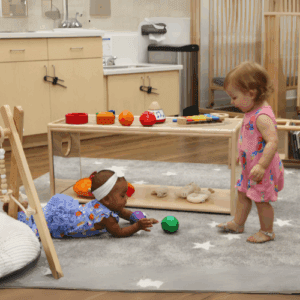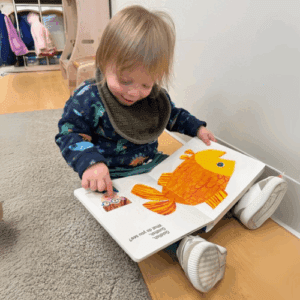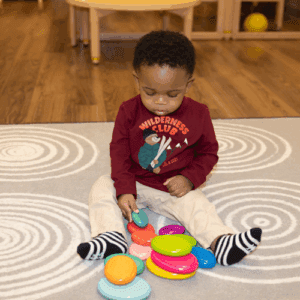
Forget the flashcards and worksheets. Your child learns best when they’re free to explore their own questions, just like a little scientist. This is the core idea behind the Reggio Emilia approach and the practice of creating provocations. A provocation isn’t a lesson—it’s an experience. It’s an open-ended invitation, set up with interesting materials, that lets your child take the lead. By creating these thoughtful, Reggio Emilia provocations, you show your child that their ideas are valued. We’ll walk you through how to set up these simple yet powerful invitations that nurture your child’s natural curiosity.
Key Takeaways
- Think Invitation, Not Instruction: A provocation is an open-ended setup of materials designed to spark your child’s curiosity, not a craft with a specific outcome. The goal is to encourage them to ask their own questions and explore their ideas freely.
- Become a Learning Partner: Your role is to observe what fascinates your child and then create experiences that build on those interests. By watching and listening, you can guide their learning in a way that feels personal and deeply engaging.
- Trust the Open-Ended Process: Let go of the need for a picture-perfect setup or a specific result. Real learning happens when children have the time and freedom to experiment and follow their curiosity, which builds their confidence as capable thinkers.
What is a Reggio Emilia Provocation?
If you’ve heard the term “provocation” in the context of early childhood education, you might wonder what it means. It sounds a bit intense, but it’s actually a beautiful concept at the heart of the Reggio Emilia philosophy. A provocation is simply an open-ended experience, designed with carefully chosen materials, that “provokes” a child’s thinking, curiosity, and creativity. It’s less about providing answers and more about encouraging children to ask their own questions and discover things for themselves. This approach honors a child’s natural desire to learn and explore the world around them.
The Origins and Core Beliefs of the Reggio Emilia Approach
To truly appreciate the power of a provocation, it helps to understand the philosophy behind it. The Reggio Emilia approach emerged in the villages of northern Italy after World War II, born from a desire to create a new, more democratic way of learning for children. This educational philosophy is built on a few powerful, interconnected beliefs that see children as central figures in their own education. These core ideas are what transform a simple collection of objects into a meaningful learning experience, and they are the foundation of our approach at Strong Start.
Loris Malaguzzi and the Image of the Child
At the heart of this philosophy is the work of its founder, Loris Malaguzzi, and his profound respect for the “image of the child.” This is the belief that every child is born strong, capable, and full of potential. Instead of viewing children as empty vessels that need to be filled with information, this approach sees them as competent protagonists of their own growth. They have their own theories, ideas, and questions from the very beginning. This perspective shifts the role of the adult from an instructor to a co-learner and guide, someone who listens to and respects the child’s thinking. This foundational belief is why our curriculum is inspired by Reggio Emilia; we trust in your child’s innate ability to learn.
The Hundred Languages of Children
Another beautiful concept from Reggio Emilia is “The Hundred Languages of Children.” This isn’t about learning to speak different languages; it’s a metaphor for the countless ways children express their thoughts and understanding. While adults often rely on words, children communicate through drawing, painting, building with blocks, sculpting with clay, dancing, and engaging in dramatic play. Each of these is a “language” that allows them to explore and represent their ideas. A provocation honors these many languages by providing a variety of materials, giving children the tools they need to show what they know in the way that feels most natural to them, whether through art, construction, or movement in our enrichment programs.
The Environment as the Third Teacher
Finally, the Reggio Emilia approach considers the learning environment to be “the third teacher,” working alongside the educators and parents. This means the physical space is never just a backdrop; it’s an active part of the educational experience. A well-designed environment is beautiful, organized, and filled with purpose. It invites exploration, encourages collaboration, and communicates respect for the children who inhabit it. Think natural light, accessible materials, and spaces that reflect the children’s ongoing projects. When you set up a provocation, you are creating a small-scale version of this “third teacher”—a thoughtful and intentional space designed to spark curiosity and support discovery, much like our own thoughtfully designed classrooms.
Why It’s More Than Just a Fun Activity
Think of a provocation as an invitation to learn. It’s not a craft with step-by-step instructions or an activity with a predetermined outcome. Instead, it’s a thoughtfully arranged space or collection of materials that invites children to explore and express their ideas. Originating in Italy after World War II, the Reggio Emilia approach views children as capable and full of potential. Provocations are a way to respect that potential, allowing children to engage with concepts and materials on their own terms. It’s how educators can introduce curriculum goals while letting a child’s own theories and ideas lead the way.
Developing Language and Communication Skills
When children engage with a provocation, they aren’t just playing; they’re building a foundation for strong communication. These experiences naturally encourage them to talk, share their ideas, and use descriptive words to explain what they’re seeing and doing. As they explore different sizes, shapes, and textures, they begin to form a richer vocabulary to describe their world. This focused play also helps them concentrate and articulate their thoughts more clearly. At Strong Start, our educators act as learning partners, asking open-ended questions like, “What do you notice about that?” or “What do you think will happen next?” to encourage children to express their theories and observations, turning simple curiosity into a meaningful conversation.
Building Social and Emotional Intelligence
Provocations are powerful tools for nurturing social and emotional growth. Because they are open-ended, they create a perfect environment for collaboration. As children work together, they learn to share materials, listen to different perspectives, and negotiate their ideas. When this approach is used consistently, children become more deeply involved in their learning and grow more confident in sharing their thoughts. This process shows them that their ideas are valued, which builds self-esteem and a genuine excitement for discovery. It’s a gentle way to practice essential life skills like teamwork and empathy, all while exploring something that genuinely interests them.
Refining Fine and Gross Motor Skills
The hands-on nature of provocations is fantastic for physical development. Many invitations to play involve sensory materials that support thinking, problem-solving, and, importantly, both fine and gross motor skills. When a child carefully places a small stone on a tower, they are refining their fine motor skills—the small, precise movements of their hands and fingers. When they reach, build, and carry larger objects, they are developing their gross motor skills, which involve the larger muscles in their arms and legs. Our enrichment programs build on this by providing diverse materials and activities that challenge children to move their bodies in new and creative ways.
How Provocations Spark Natural Curiosity
The real magic of a provocation is its open-ended nature. By moving away from activities that have only one right answer, we create space for unexpected discoveries. A collection of smooth stones, clear glass beads, and a light source doesn’t come with a manual; it comes with endless possibilities. This freedom empowers children to become the directors of their own learning. They follow their curiosity, test their theories, and build knowledge based on their own interests. This child-led exploration is a cornerstone of how we guide learning through The Project Approach, creating a classroom where learning is a joyful and personal adventure.
Provocations vs. Invitations: What’s the Difference?
In the world of Reggio Emilia, you’ll often hear the words “invitation” and “provocation” used together. While they’re related, they describe two different parts of the learning process. Understanding the distinction can help you create even more meaningful experiences for your child.
How to Tell Them Apart
Think of it this way: an invitation is the starting point. It’s when a teacher or parent thoughtfully arranges materials to make children curious and encourage them to come and explore. It’s a gentle nudge toward discovery, with no set expectations. A provocation, on the other hand, happens when a child accepts that invitation and begins to interact, think, and explore. It’s the action that follows the initial spark—the moment a child’s engagement brings the learning to life. A provocation can be an object, an idea, or even a question that deepens their thinking.
Invitations: Focused on a Specific Topic
An invitation is the starting point. It’s a thoughtfully arranged set of materials designed to gently nudge a child toward a specific area of exploration. For example, you might set out clay, a small bowl of water, and a few simple sculpting tools on a tray. This setup clearly invites the child to work with clay. While there’s no right or wrong way to engage, the materials themselves provide a focus. An invitation is perfect for introducing a new material or building on a skill you’ve noticed your child developing. It’s a quiet suggestion that respects their autonomy while still guiding their attention toward a new possibility.
Provocations: Open-Ended to Spark Curiosity
A provocation takes open-ended exploration a step further. It’s less about a specific material and more about a big idea. Imagine placing a collection of mirrors of different shapes and sizes alongside a basket of reflective objects like shiny beads, smooth stones, and foil. This setup doesn’t suggest a single activity; it provokes questions. Will they build? Will they explore reflections? Will they sort the objects? A provocation is designed to spark theories and encourage children to test their own ideas about how the world works. This is central to our Reggio Emilia-inspired philosophy, where we trust children to lead their own learning journey.
Adding a Question to Deepen the Thinking
Whether you start with an invitation or a provocation, your role as a learning partner is key. A simple, open-ended question can deepen a child’s thinking and extend their play. Instead of asking, “What are you making?” try a question that encourages observation and critical thinking, like, “I wonder what would happen if we added water to the sand?” or “What do you notice about the shadows these blocks are making?” These kinds of questions show your child that you value their thought process, not just the final product. It’s a powerful way of partnering with your child in their discovery, encouraging them to articulate their ideas and explore them further.
When to Offer a Provocation vs. an Invitation
So, how do you know which one to use? It really depends on your goal. Provocations are wonderfully open-ended. They are perfect for when you want to see what your child is truly interested in without a specific outcome in mind. You might set out clay and natural items just to see what they create. Invitations are a bit more focused. You might use an invitation when you want to guide your child’s learning toward a particular theme or project. For example, if your child is fascinated by bugs, you could set up a magnifying glass, a bug-catching kit, and books about insects. Both approaches are valuable—one encourages broad discovery, while the other helps deepen an existing interest.
Your Role: How to Guide Your Child’s Learning
In a Reggio Emilia-inspired setting, the teacher or parent isn’t a lecturer standing at the front of the room. Instead, think of yourself as a co-learner, a researcher, and a guide. Your role is to walk alongside your child, observing their journey and offering thoughtful support when needed. It’s a partnership where you provide the tools and environment, but the child leads the exploration.
This approach requires a delicate balance of planning and spontaneity. You’re responsible for creating a rich environment full of potential, but you also need to be flexible enough to follow the unexpected paths your child takes. The goal is to facilitate discovery, not to dictate outcomes. By carefully observing, thoughtfully preparing the space, and knowing when to engage, you can help your child build knowledge in a way that is deeply personal and meaningful.
First, Observe: What Is Your Child Curious About?
The first step in guiding learning is to become a great listener and observer. Before you can create a meaningful provocation, you need to understand what truly captures your child’s attention. Watch them play. What materials do they gravitate toward? What questions are they asking, either with their words or their actions? Pay attention to the small moments of wonder—a fascination with how shadows move or an intense focus on stacking blocks.
Documenting these observations is just as important. You can jot down notes, take photos, or record short videos of their discoveries. This isn’t about formal assessment; it’s about capturing their thinking process. This documentation helps you see patterns in their interests and allows you to reflect on their learning journey, making it easier to plan provocations that will genuinely resonate with them. Our Exceptional Educators are trained to be keen observers, using what they see to shape the curriculum.
Setting the Stage for Discovery
Once you have a sense of your child’s interests, you can begin to set up meaningful experiences. This is where the environment becomes the “third teacher.” Your role is to arrange materials in a way that is both beautiful and thought-provoking, showing your child that you believe in their ability to explore and create. The setup should be an open-ended invitation, not a task with a single correct outcome.
Think about how you can present familiar objects in a new light or combine different materials to spark new ideas. For example, if your child is interested in light and shadow, you might set up a projector with translucent blocks and natural objects. The goal is to create an atmosphere that feels personal, respects the child’s culture, and encourages them to ask questions and test their theories. This philosophy is at the heart of our Reggio Emilia Inspiration.
Know When to Step In and When to Step Back
Guiding learning through provocations is a dance between engagement and observation. After you set up the materials, the next step is often to step back and simply watch. Give your child the time and space to approach the materials on their own terms without any direction from you. This uninterrupted exploration is where deep learning happens. You’ll be amazed at what they come up with when given the freedom to experiment.
Of course, there are times to step in. You might join them as a playful partner, ask an open-ended question to extend their thinking (“I wonder what would happen if…”), or offer a new material if they seem stuck. The key is to be a facilitator, not a director. Your intervention should aim to stretch their knowledge and encourage deeper investigation, which is a core principle of The Project Approach we use in our classrooms.
What Materials Do You Need for a Provocation?
The magic of a provocation lies in the materials you choose. The right objects can capture a child’s attention and invite them to touch, explore, and ask questions. But this doesn’t mean you need to buy expensive, specialized toys. Often, the most compelling materials are simple, open-ended, and even found. The goal is to offer items that can be used in countless ways, sparking imagination rather than dictating a specific way to play. By thoughtfully selecting materials, you create a rich landscape for discovery that honors your child’s innate curiosity and intelligence.
Think Outside the Toybox: Natural Materials & Loose Parts
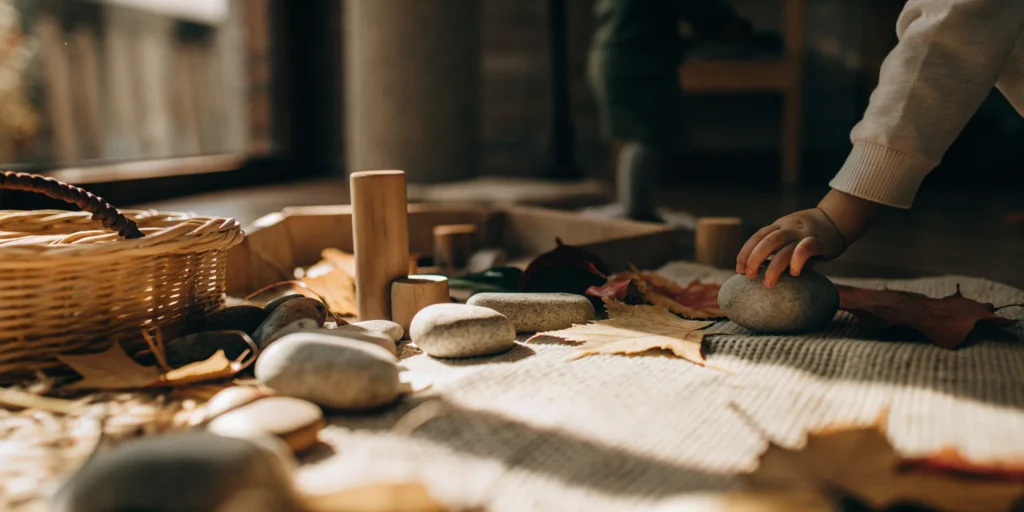
Some of the best resources for provocations are waiting right outside your door. Natural materials like smooth stones, fallen leaves, pinecones, and seashells offer a wonderful sensory experience with their varied textures, smells, and shapes. You can also gather “loose parts”—small, open-ended items that can be moved, combined, and redesigned. Think buttons, fabric scraps, wooden blocks, beads, or even recycled bottle caps. These simple objects encourage creativity because they don’t have a single, defined purpose. Our Reggio Emilia-inspired approach values these materials for their ability to empower children to build, sort, design, and invent in ways that are entirely their own.
Where to Find Inspiration and Affordable Materials
You don’t need a big budget to gather beautiful and engaging materials. Inspiration is all around you, often in places you’d least expect. Start by looking in your own home and backyard. Your kitchen drawers hold spoons, bowls, and measuring cups perfect for sorting and scooping. The recycling bin is a goldmine of cardboard tubes, plastic containers, and bottle caps. A walk around the block can yield interesting leaves, smooth stones, and sturdy sticks. Thrift stores and garage sales are also fantastic sources for unique baskets, fabric remnants, and old jewelry that can be deconstructed for its beads. The goal isn’t to buy new things, but to see the potential in everyday objects, which is a wonderful way to encourage the kind of creative expression we celebrate in our classrooms.
Finding Magic in Everyday Objects
You can also find fantastic materials for provocations right in your own home. Everyday objects like kitchen whisks, measuring cups, cardboard tubes, and colorful scarves can become tools for exploration. The key is to present them in a new and interesting way. A light table is a wonderful tool for this, as it illuminates objects from below, making translucent items glow and casting interesting shadows. This simple change in perspective can make familiar objects seem new and exciting, encouraging children to look closer and notice details they might have missed before. Our enrichment programs often use simple materials in creative ways to inspire this kind of deep engagement.
Choosing Materials by Age: From Infants to Preschoolers
As children grow, their abilities and interests change, so it’s important to choose materials that match their developmental stage. For infants, focus on sensory exploration with items that are safe to mouth, like soft fabrics, large smooth wooden rings, or high-contrast patterns. Our infant classrooms are filled with these kinds of materials. Toddlers, who are working on fine motor skills, benefit from objects they can stack, sort, and pour, such as chunky blocks or large pasta shapes. As children enter preschool, they are ready for more complex materials that support storytelling, problem-solving, and artistic expression, like clay, watercolors, and intricate building sets. Above all, safety is the top priority, so always supervise and ensure materials don’t pose a choking hazard for little ones.
How to Create Provocations at Home or School
You don’t need a teaching degree or a room full of expensive supplies to create meaningful learning experiences. Provocations are all about sparking curiosity with simple, thoughtful setups that invite exploration. Whether you’re at home or in a school setting, the key is to observe, listen, and respond to your child’s natural interests. Let’s look at a few practical ways you can bring this beautiful approach to learning into your child’s day.
Reggio-Inspired Provocations You Can Set Up Today
The beauty of a provocation is its open-ended nature—there’s no single right way for a child to engage with it. For infants, focus on simple sensory exploration. A basket filled with different textured fabrics (like silk, wool, and burlap), smooth wooden rings, and large, safe-to-mouth natural items can be fascinating. The goal is to invite them to touch, see, and explore with all their senses, much like we do in our Infant Classrooms. As children grow into toddlers and preschoolers, you can introduce more complex materials. A tray with playdough, beads, small sticks, and buttons invites them to create, while a collection of rocks and leaves paired with a magnifying glass encourages scientific observation.
Examples for Science and Sensory Exploration
Children are wired to experiment. You can support their inner scientist by setting up provocations that invite them to explore concepts like cause and effect, light, and texture. A light table with colorful, translucent shapes or a simple tray of water with droppers, sponges, and cups can keep them engaged for ages. The real magic of a provocation is its open-ended nature. A collection of smooth stones, clear glass beads, and a light source doesn’t come with a manual; it comes with endless possibilities. This freedom empowers children to become the directors of their own learning. This hands-on discovery is a key part of our STEM Learning, where we encourage children to ask big questions and find their own answers through play.
Examples for Art and Nature Connections
Connecting art with the natural world opens up a beautiful avenue for creativity. Instead of just offering crayons and paper, try setting out clay with a basket of twigs, leaves, and pebbles. Or, offer watercolors alongside flowers for a still-life painting invitation. Natural materials like smooth stones, fallen leaves, pinecones, and seashells offer a wonderful sensory experience with their varied textures, smells, and shapes. These materials encourage creativity because they don’t have a single, defined purpose. This approach allows children to express themselves in new ways, honoring the belief that there are a hundred languages of expression. It’s a philosophy we celebrate in our Preschool classrooms, where art is a daily exploration.
Examples for Dramatic Play
Provocations can be powerful tools for sparking imagination and storytelling. Instead of providing specific costumes, offer a basket of open-ended props like colorful silks, hats, and wooden blocks. This encourages children to create their own characters and build their own worlds. A simple tray with playdough, beads, small sticks, and buttons invites them to create characters and props for a story, while a collection of animal figurines and natural loose parts can become the foundation for an elaborate small world. These simple setups give children the freedom to direct their own narratives, building crucial social and emotional skills as they collaborate and problem-solve in our Toddler classrooms.
Following Their Lead: Building on Interests Over Time
The most powerful provocations come directly from what your child is already wondering about. Pay attention to their questions and the things that capture their attention. Did your toddler spend the entire walk home pointing at every truck that passed? That’s your cue. The next day, you could set out a few toy trucks, some blocks, and a roll of black tape to create roads on the floor. This simple act shows your child that their interests are valued and important. By following their lead, you help them become deeply engaged in their own learning, a core principle of The Project Approach we use in our classrooms. It builds their confidence and shows them that learning is an exciting adventure.
Finding Provocations in Everyday Life
Your home is already a rich learning environment. You can turn daily routines into moments of discovery without any extra setup. Let your child help sort the laundry by color, count the apples as you put them away, or mix the ingredients for pancakes. These simple tasks are packed with learning about math, science, and practical life skills. Think about how you can make your space more inviting for exploration. A low basket of books in the living room or a small, sturdy stool at the kitchen counter can empower your child to participate more fully in family life. Our Enrichment Program uses this same idea, turning activities like cooking and art into joyful, hands-on learning.
Safety First: Important Guidelines for Provocations
While it’s wonderful to give your child the freedom to explore, safety is always the most important consideration. Creating a safe environment for discovery is about being mindful, not about limiting their creativity. Before you set out any materials, take a moment to look at them from your child’s perspective. This simple step ensures that their exploration can be both joyful and secure. At Strong Start, our commitment to health and safety is woven into everything we do, from the design of our classrooms to the materials we choose for play. These guidelines will help you bring that same level of care to your provocations at home.
Supervising Play with Small Parts
One of the biggest safety concerns, especially for children under three, is the risk of choking. Toddlers are still in a developmental stage where they learn about the world by putting things in their mouths. Because of this, it’s essential to avoid using small loose parts—like beads, buttons, or small pebbles—in provocations for this age group. If you have older children who are using smaller materials, make sure their play area is separate from where your toddler can reach. For any activity, close supervision is key. It allows you to be present and engaged in your child’s learning while also ensuring they are exploring the materials safely.
Checking Materials for Hazards
Before offering any materials to your child, give them a quick inspection. This is especially important for natural items or recycled objects. Check for sharp edges on shells or rocks, splinters on sticks or wooden pieces, and any small, loose parts that could break off a larger toy. A quick once-over can prevent scrapes, splinters, or other minor injuries. It’s also a good practice to regularly check your child’s existing toys for any wear and tear that could create a hazard. By ensuring every item is safe and sound, you create a secure foundation for your child to build, create, and explore with confidence.
Being Mindful of Allergies with Natural Materials
Natural materials are fantastic for provocations, but it’s important to be mindful of potential allergens. Items like nuts, seeds, wheat, or certain types of grasses and flowers can cause allergic reactions in some children. If your child has known allergies, be sure to avoid those materials entirely. If you’re introducing a new natural element, keep a close watch for any signs of a reaction. It’s also a good idea to wash items you’ve collected from outside to remove any dirt, pesticides, or other irritants. This careful approach ensures that your nature-inspired play remains a positive and healthy experience for everyone.
How to Observe and Document Your Child’s Learning
After you set up a provocation, the next step is to step back and watch. Observing and documenting your child’s exploration is at the heart of the Reggio Emilia approach. This isn’t about testing them or grading their work; it’s about understanding their unique way of thinking and seeing the world. By capturing these moments, you make their learning visible and gain valuable insights into their interests and thought processes. This practice is a cornerstone of how we partner with parents to support every child’s journey. When we share these observations, we build a more complete picture of your child, strengthening the connection between home and school and ensuring they feel understood and supported in both environments.
Capture the Moment: Using Photos and Notes
When your child engages with a provocation, try to capture the moment. Photos and short videos are fantastic for documenting their process. Look for the little things: how they hold a paintbrush, the way they concentrate while stacking blocks, or the expression on their face when they make a new discovery. Alongside photos, keep simple anecdotal records. This is just a fancy term for jotting down quick notes about what you see and hear. A note might be as simple as, “Used the blue and yellow clay to make a snail. Said, ‘He’s going to find his family.’” These small observations are powerful clues that reveal what your child is thinking and questioning.
Telling Their Story: Creating a Learning Portfolio
A learning portfolio is a wonderful way to tell the story of your child’s growth. It’s a collection of the photos, notes, and even some of their creations over time. This doesn’t need to be complicated—a simple binder or a digital folder works perfectly. The goal is to gather examples that show their development and evolving interests. As you add to the portfolio, you’ll start to see a beautiful narrative of their learning journey. Reviewing it together can be a powerful experience for your child, helping them see how their ideas have grown and changed. This documentation is a key part of The Project Approach, where children’s work is honored and used to guide their learning.
From Observation to Action: Planning What’s Next
Your observations are more than just memories; they are your guide for what to do next. As you look through your notes and photos, you’ll notice patterns. What topics does your child keep coming back to? What materials do they love? What skills are they trying to master? Use these insights to plan future provocations. If your notes show a fascination with how water moves, your next setup might involve funnels, sponges, and containers. This responsive process ensures that learning remains deeply connected to your child’s natural curiosity, which is the essence of our Reggio Emilia inspiration. It shows your child that their interests are valued and important.
Feeling Stuck? Common Challenges with Provocations
Getting started with provocations is an exciting process, but it’s natural to hit a few bumps along the way. It’s a new way of thinking about learning, both for you and your child. The key is to stay curious and see these challenges as learning opportunities. Whether you’re worried about setting things up “correctly” or wondering if your child is truly engaged, remember that this approach is a practice. With a little patience and a few helpful tips, you can create meaningful experiences that truly follow your child’s lead.
Common Pitfalls to Avoid When You’re Starting Out
It’s easy to scroll through social media and see picture-perfect provocations that look more like art installations than play setups. One of the most common mistakes is focusing too much on aesthetics. While a beautiful presentation can be inviting, the real purpose isn’t how it looks—it’s about the thinking and exploration it inspires. The goal is to spark curiosity and encourage your child to make their own choices and discoveries. Instead of aiming for a perfect photo, focus on the why behind the materials you’ve chosen. A simple collection of rocks and leaves can be far more powerful than an elaborate setup if it genuinely connects with your child’s current interests and our Reggio Emilia inspiration.
Carving Out Time for Uninterrupted Play
In our fast-paced world, it can feel tempting to switch out a provocation after a day or two if it seems like your child is done with it. However, deep learning requires time. Children often need days, or even weeks, to fully explore a set of materials. They might interact with it for a few minutes one day and return to it with a completely new idea the next. This extended period of engagement allows them to experiment, test theories, and build on their ideas. Giving your child this uninterrupted time helps them develop focus and persistence. It also gives you more opportunities to observe their learning process and plan what might come next, which is a core part of The Project Approach.
Learning to Trust the Process (and Your Child!)
Many of us grew up with activities that had a clear, correct outcome, like coloring inside the lines or assembling a specific craft. Provocations ask us to let go of that mindset and embrace the unknown. There is no single right way for a child to interact with the materials. This shift can feel uncomfortable at first, but it’s where the magic happens. By welcoming unexpected discoveries, you show your child that their ideas are valuable. This process helps them become deeply involved in their own learning and builds their confidence in sharing their thoughts. When children see that their theories are respected, they grow into curious, self-assured learners who aren’t afraid to explore the world around them.
Practical Tips for Parents and Educators
As you begin creating provocations, remember to be kind to yourself. This is a journey of learning and discovery for you, too. There’s no secret formula, and what works for one child might not work for another. The goal is to stay curious, observe with an open heart, and enjoy the process of seeing the world through your child’s eyes. Here are a few practical tips to keep in mind as you get started.
Learning from Setups That “Flop”
It’s going to happen: you’ll spend time creating what you think is the perfect provocation, only to have your child ignore it completely. Don’t be discouraged! When a setup doesn’t spark interest, it’s not a failure—it’s feedback. Take a moment to reflect on why it might not have worked. Was it too complicated? Not connected to their current interests? Use these observations to inform your next idea. This process of observing, reflecting, and adapting is exactly how our Exceptional Educators refine their approach, constantly learning alongside the children to create meaningful experiences.
Repeating Activities to Build Mastery
If your child is completely captivated by a provocation, don’t feel pressured to introduce something new right away. Repetition is a powerful tool for learning. Bringing back the same materials the next day allows children to deepen their exploration, test new ideas, and build mastery. You can keep the setup exactly the same or change one small element to extend their thinking. This sustained engagement is how children develop focus and confidence. It’s a core principle of The Project Approach, where interests are explored over days or even weeks, allowing for truly deep learning to unfold.
Embracing the Mess as Part of the Process
Meaningful, hands-on learning is often messy. When children are deeply engaged in a provocation, the space might end up looking like a whirlwind of scattered objects, paint splatters, and clay smudges. That’s okay! A mess is simply evidence of exploration and imagination at work. Instead of worrying about keeping things tidy, try to see the mess as a sign of a rich learning experience. When you give children the freedom to fully explore materials without fear of making a mess, you empower them to experiment, problem-solve, and express their creativity without limits. A glimpse into your child’s day with us will show you this joyful, active learning in action.
Using Delicate Objects to Teach Care
It might feel counterintuitive, but introducing real, delicate items—like a small ceramic pitcher, glass beads, or a real tea set—can be a wonderful way to teach children respect and care. When you trust a child with something breakable, you send a powerful message: “I believe you are capable and responsible.” This trust inspires them to be gentle and mindful in their movements. Of course, this should always be done with supervision. By offering beautiful, real-world objects instead of only plastic toys, you enrich their sensory experience and teach them to handle their environment with care, a practice we balance carefully with our commitment to health and safety.
Beyond the Classroom: Another Look at the Word “Provocation”
The concept of a provocation feels so perfectly suited to the world of early learning, but it’s not just for children. It turns out, this idea of intentionally sparking new ways of thinking is a powerful tool used in the adult world, too, particularly in fields that depend on creativity and innovation. Understanding this connection can give you a whole new appreciation for what’s happening when your child is deeply engaged with a few simple materials. It’s not just play; it’s a foundational exercise in creative thinking that professionals use to solve complex problems.
When we see our children playing, it’s easy to think of it as just a way to pass the time. But when you reframe it through this lens of creative provocation, you start to see something much deeper happening. You’re not just setting out some interesting objects; you’re laying the groundwork for a mind that can think differently, solve problems creatively, and see possibilities where others see dead ends. This is the same mental muscle that innovators, artists, and entrepreneurs use every day. By encouraging this kind of open-ended exploration at home, you’re giving your child a powerful gift—the confidence to trust their own curiosity and the ability to approach the world with a flexible, imaginative mindset.
Edward de Bono’s Creativity Technique for Adults
Edward de Bono, a physician and writer, was a leading expert on creative thinking. He developed a technique he also called “provocation” to help adults break free from rigid thinking patterns. His goal was to deliberately disrupt the logical flow of thought to open up new, original ideas. For example, he might suggest a provocative statement like, “Cars should have square wheels,” not because it’s a practical idea, but because it forces the brain to question assumptions and explore completely new possibilities. This technique is designed to help you come up with concepts you wouldn’t have thought of otherwise.
This mirrors the philosophy behind the provocations we create for children. The magic of a provocation is its open-ended nature; it respects a child’s potential by allowing them to engage with materials on their own terms. De Bono’s method does the same for adults, trusting that a jolt to the system can lead to brilliant insights. Whether it’s a child exploring clay and sticks or an engineer considering a “provocative” design flaw, the goal is the same: to move beyond the obvious and make space for unexpected discovery. This belief in nurturing curiosity is at the core of our Reggio Emilia inspiration.
Related Articles
- Reggio Emilia Inspiration – Strong Start
- What is the Reggio Emilia Approach? A Parent’s Guide – Strong Start
- What is the Reggio Emilia Curriculum? A Guide – Strong Start
Frequently Asked Questions
What if my child ignores the provocation I set up? It’s completely normal for a child to walk right past a setup you’ve thoughtfully created. Try not to see it as a failure, but as information. It might mean their interests have shifted, or perhaps they just aren’t in the mood for that kind of exploration right now. You can leave the materials out for a day or two to see if they return to them later. If not, simply observe what they are doing and use that as the inspiration for your next idea.
How is a provocation different from just free play? This is a great question because the two are closely related. Think of it this way: free play is when a child has access to their usual toys and materials to use however they wish. A provocation is more intentional on your part. It’s a specific collection of materials that you’ve carefully chosen and arranged to spark curiosity around an idea or concept you’ve noticed your child is interested in. You are creating a thoughtful starting point for their exploration.
Do I need to spend a lot of money on special materials? Absolutely not. Some of the most successful provocations come from items you can find for free. Your kitchen, recycling bin, and backyard are full of treasures. Natural materials like leaves, stones, and sticks, or household items like cardboard tubes and fabric scraps, are fantastic because they don’t have a predetermined purpose. The focus is on the thinking and creativity the items inspire, not on how much they cost.
How long should I leave a provocation available for my child? It’s best to resist the urge to clean up or switch out materials too quickly. Deep learning takes time, and children often need several days, or even a week, to fully explore an idea. They might engage with the materials for a few minutes one day and then return the next with a completely new plan. Leaving the setup available gives them the chance to deepen their thinking and build on their previous discoveries.
I’m worried I won’t know what to say. How do I talk to my child about their exploration without taking over? Your role is to be a curious observer, not a director. Instead of asking questions that have a right or wrong answer, try making simple statements about what you see. You could say, “I notice you’re mixing the blue and yellow paint,” or ask a wondering question like, “I wonder what that feels like.” This shows you are present and interested without guiding the outcome. Often, the most powerful thing you can do is just sit with them in comfortable silence.
Written By
Marc Hoffman
Founder, Strong Start Early Care & Education
Marc founded Strong Start in 2014, inspired by his studies at Williams College, Yeshiva University, and research at Yale University. His child-centered, inquiry-based approach to early education has helped hundreds of families in the Trumbull and Bridgeport communities. As a parent himself, Marc understands the importance of finding a nurturing environment where every child can learn, grow, and flourish.