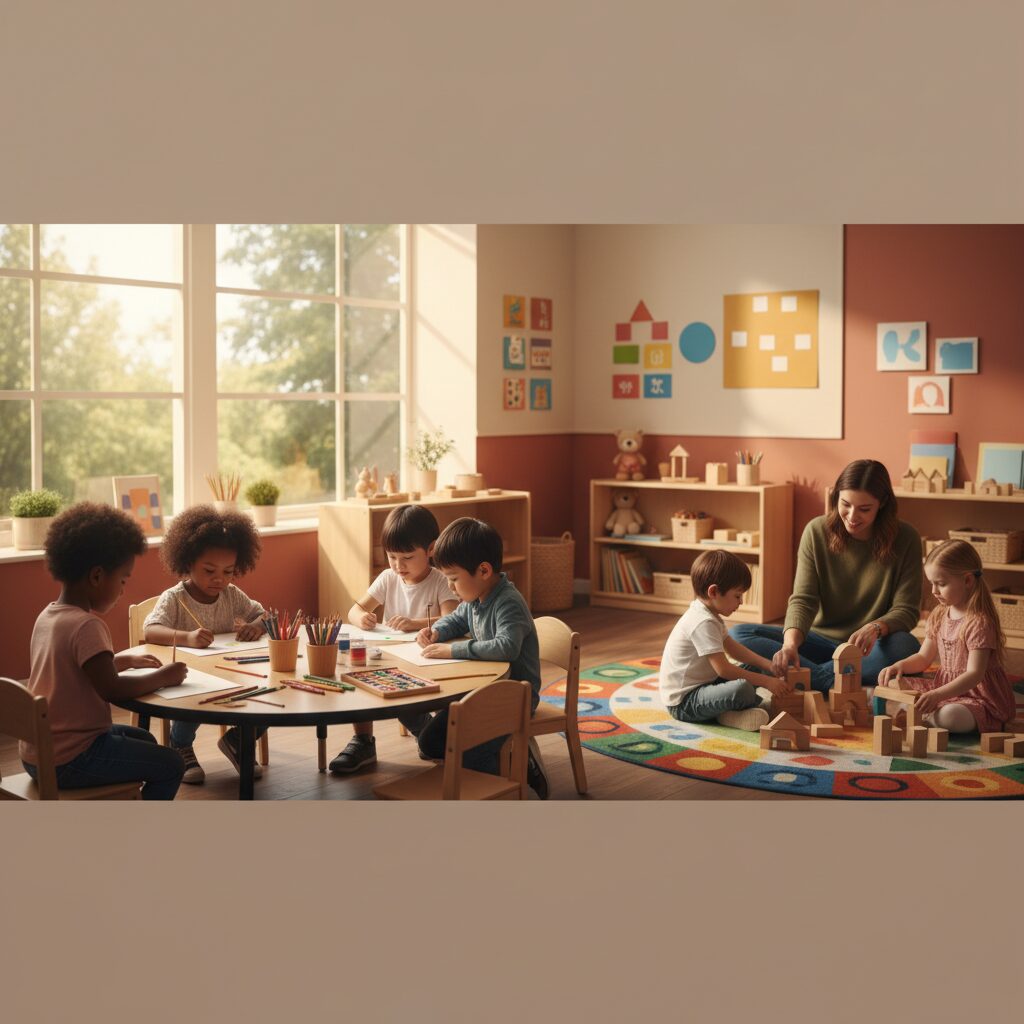
When you start researching childcare options, the terms “preschool” and “daycare” come up constantly. Many parents use them interchangeably, but they actually refer to different types of programs. Understanding the difference between preschool and daycare can help you choose the right setting for your child’s needs, your family’s schedule, and your goals for early learning.
This guide covers how preschool and daycare compare across curriculum, age range, schedule, cost, and learning outcomes so you can make a confident decision.
What Is Daycare?
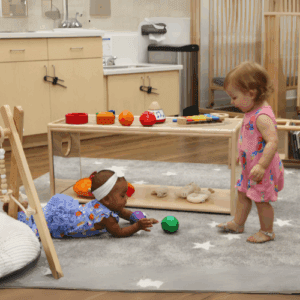
Daycare, sometimes called child care, is a program that provides supervised care for children while parents are at work or otherwise occupied. Daycare centers accept children from as young as six weeks old through school age, making them a go-to option for families who need full-day coverage.
The primary focus of traditional daycare is providing a safe, nurturing environment where children are looked after throughout the day. While many daycare centers incorporate age-appropriate activities, free play, and basic socialization opportunities, the emphasis is generally on caregiving rather than structured academic instruction.
Key features of daycare:
- Accepts infants through school-age children
- Typically operates full-day hours (often 7 AM to 6 PM)
- Focuses on safe, supervised care
- May include play-based activities and social interaction
- Open year-round, including summer months
What Is Preschool?
Preschool is an early childhood education program designed for children typically between ages two and a half and five. The core purpose of preschool is preparing children for kindergarten through structured learning experiences that support cognitive, social, emotional, and physical development.
Preschool programs follow a planned curriculum, often based on research-backed educational philosophies such as Reggio Emilia, Montessori, or project-based learning. Teachers in preschool settings typically hold degrees or specialized training in early childhood education.
Key features of preschool:
- Designed for children ages 2.5 to 5
- Follows a structured, research-based curriculum
- Taught by trained early childhood educators
- Prepares children for kindergarten readiness
- Emphasizes social-emotional development, early literacy, and critical thinking
Preschool vs Daycare: A Side-by-Side Comparison
While preschool and daycare may look similar from the outside, the differences show up in curriculum, staffing, schedule, and goals. Here is a direct comparison to help you see where they overlap and where they diverge.
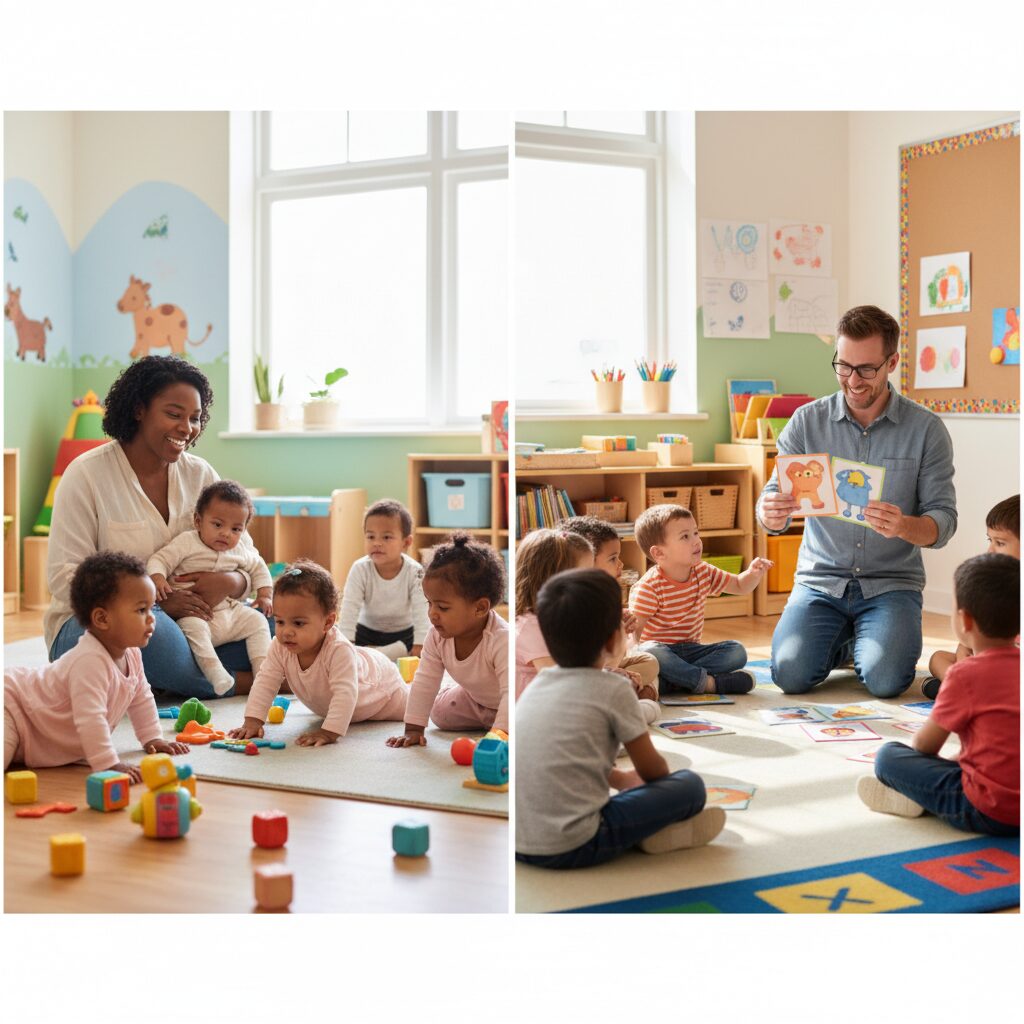
| Feature | Daycare | Preschool |
|---|---|---|
| Age Range | 6 weeks to school age | 2.5 to 5 years old |
| Primary Goal | Safe, supervised care | School readiness and development |
| Curriculum | Varies; often play-based | Structured, research-based |
| Hours | Full day (7 AM–6 PM typical) | Half-day or full-day options |
| Schedule | Year-round | May follow school calendar or year-round |
| Teacher Qualifications | Varies by state licensing | Often requires ECE degree or certification |
| Cost | $$–$$$ | $$–$$$ |
Curriculum and Learning Approach
One of the biggest differences between daycare and preschool is what happens during the day. In a traditional daycare setting, children spend time in supervised free play, outdoor activities, meals, and nap time. While some daycare programs offer structured activities like arts and crafts or circle time, there may not be a formalized curriculum guiding daily instruction.
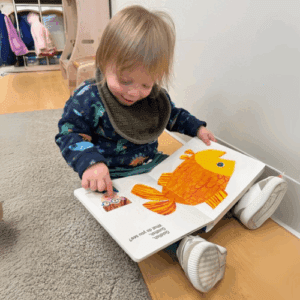
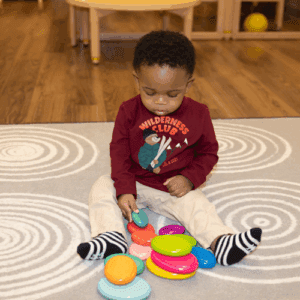
Preschool programs, on the other hand, build each day around intentional learning objectives. A preschool teacher plans activities that develop early literacy, math concepts, scientific thinking, and creative expression. Children practice skills like recognizing letters, counting, working in groups, and following multi-step directions, all of which directly support kindergarten readiness.
Programs inspired by the Reggio Emilia philosophy, for example, use child-led inquiry and project-based learning to encourage curiosity and deeper thinking. This approach treats children as capable learners who guide their own discovery, supported by skilled educators who observe, document, and extend each child’s interests.
Age Range and Enrollment
Daycare centers typically accept children starting from six weeks old. This makes them the first option for families returning to work after parental leave. Many daycare programs serve infants, toddlers, and preschool-age children in separate classrooms, often transitioning children to more structured programming as they grow.
Preschool programs generally enroll children from around two and a half to five years old. Some preschools offer a “bridge” or “transitional” classroom for younger toddlers who are not yet ready for a full preschool curriculum but have outgrown a purely care-based setting.
If your child is under two, daycare is likely your primary option. If your child is between three and five, you have the choice of daycare, preschool, or programs that combine both.
Schedule and Flexibility
For many working parents, schedule is the deciding factor. Daycare centers usually operate on extended hours, often opening by 6:30 or 7:00 AM and closing at 5:30 or 6:00 PM. They tend to stay open year-round, closing only for major holidays. This makes daycare a practical choice for parents who need full-day, full-year coverage.
Traditional preschool programs sometimes operate on a half-day schedule (3 to 4 hours per session) and may follow a school-year calendar with summers off. However, many modern preschool programs now offer full-day options that run year-round, giving parents the convenience of daycare with the educational benefits of preschool.
When evaluating programs, ask about early drop-off and late pick-up options, holiday schedules, and whether the program runs through the summer.
Do You Have to Choose One or the Other?
Here is the good news: you do not always have to choose between preschool and daycare. Many high-quality early childhood programs combine the best of both worlds, providing full-day care with a research-based educational curriculum.
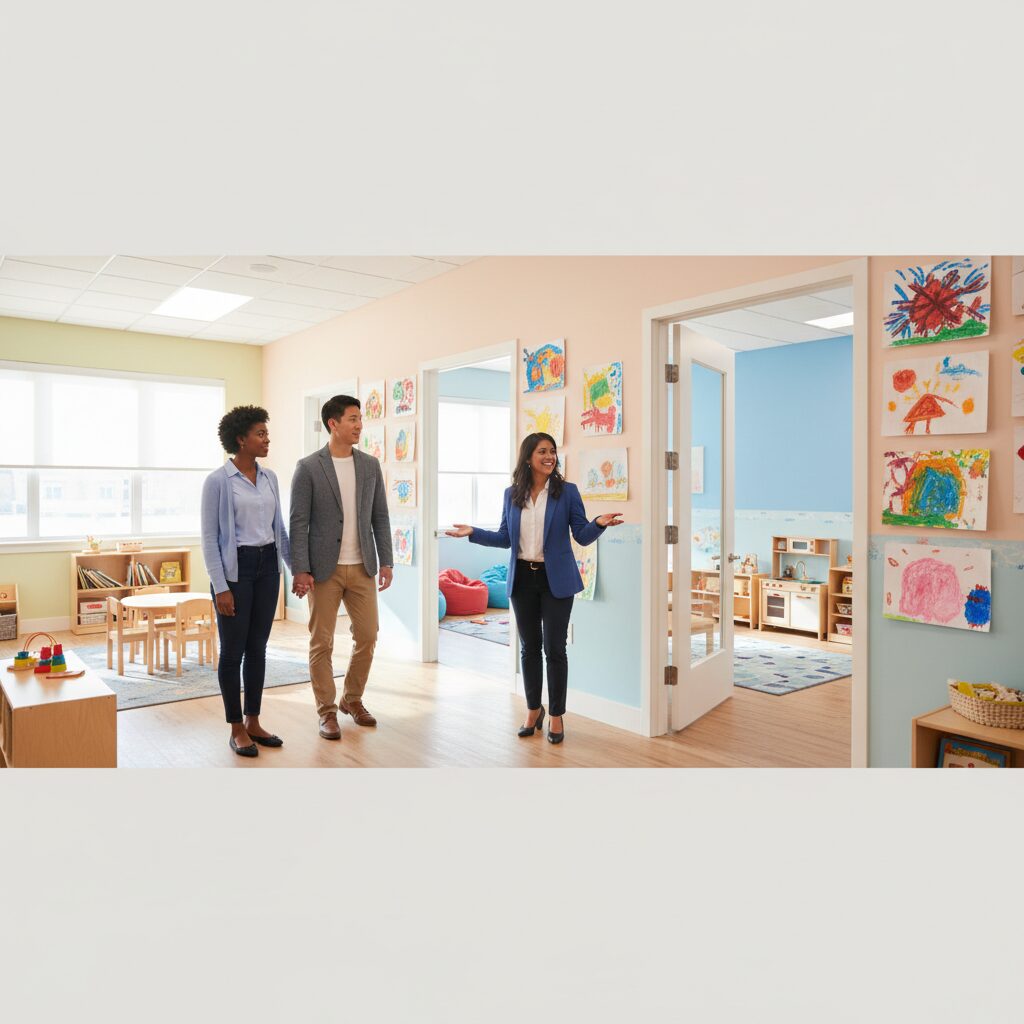
These programs, often referred to as early care and education centers, serve children from infancy through preschool age. Children receive structured, developmentally appropriate learning experiences throughout the day while families benefit from the consistent, full-day schedule they need.
Look for programs that hold accreditation from organizations like the National Association for the Education of Young Children (NAEYC), which sets rigorous standards for both care and education quality.
How to Decide What Is Right for Your Family
Choosing between preschool and daycare comes down to a few key questions about your family’s needs:
- What is your child’s age? If your child is under two, you will likely need a daycare or infant care program. For children ages three to five, preschool becomes a strong option.
- What are your scheduling needs? If you need full-day, year-round care, look for programs that offer both educational curriculum and extended hours.
- What are your goals for your child’s development? If kindergarten readiness and early learning are priorities, a program with a structured curriculum is essential.
- What is your budget? Compare the total cost of each option, including any additional fees for extended care, meals, or enrichment programs.
- What does the staff look like? Ask about teacher qualifications, turnover rates, and child-to-teacher ratios. Programs with experienced, dedicated educators make a measurable difference in outcomes.
Visiting a program in person is the best way to evaluate whether it is the right fit. Pay attention to how teachers interact with children, how the space is organized, and whether children seem engaged and comfortable. For a step-by-step evaluation framework, see our complete guide to choosing a preschool.
Frequently Asked Questions
Is preschool better than daycare?
Neither is universally better. Preschool focuses more on structured education and kindergarten readiness, while daycare prioritizes supervised care with flexible hours. The best choice depends on your child’s age, your schedule, and your goals. Many families find that programs combining full-day care with a research-based curriculum offer the most complete solution.
At what age should a child start preschool?
Most children start preschool between ages two and a half and four. Some programs accept children as young as two if they meet developmental milestones. If your child shows interest in playing with other children, can follow simple instructions, and is ready for short periods away from home, they may be ready for a preschool program.
Can daycare prepare my child for kindergarten?
Some daycare programs do incorporate educational activities that support kindergarten readiness. However, programs with a formal early childhood education curriculum are specifically designed to build the academic, social, and emotional skills children need for school. Look for daycare programs that include structured learning alongside care.
What is an early care and education center?
An early care and education center combines the convenience of full-day childcare with the learning benefits of preschool. These programs follow a research-based curriculum, employ trained early childhood educators, and serve children from infancy through preschool age. They are ideal for families who need both care and education in one program.
Finding the Right Program for Your Child
Whether you are leaning toward preschool, daycare, or a program that blends both, the most important thing is finding a place where your child feels safe, supported, and inspired to learn. A quality early childhood program builds confidence, nurtures curiosity, and gives children a foundation that carries them well beyond their first day of kindergarten.
At Strong Start Early Care & Education, we combine full-day care with a Reggio Emilia-inspired curriculum designed to meet children where they are and help them grow into confident, capable learners. Our programs serve children from infancy through preschool age at our locations in Trumbull, Shelton, and Wilton, Connecticut.
Have questions? Visit our FAQ page or schedule a tour to see what a Strong Start looks like in person.
Written By
Marc Hoffman
Founder, Strong Start Early Care & Education
Marc founded Strong Start in 2014, inspired by his studies at Williams College, Yeshiva University, and research at Yale University. His child-centered, inquiry-based approach to early education has helped hundreds of families in the Trumbull and Bridgeport communities. As a parent himself, Marc understands the importance of finding a nurturing environment where every child can learn, grow, and flourish.