That full-blown meltdown over a broken banana? It’s not defiance. It’s the sound of a little person struggling with big feelings they don’t have words for yet. Giving them an emotional vocabulary is the heart of social and emotional learning. It’s how they learn to share, wait their turn, and express frustration without hitting. This guide is filled with simple, effective activities for 2-3 year olds that you can weave right into your day. These emotional activities for toddlers turn challenging moments into opportunities for connection and growth.
Key Takeaways
- Connect words to their big emotions: When you name a feeling for your toddler—like saying, “You feel frustrated that the tower fell”—you give them the tools to understand their inner world and show them you’re a safe person to share feelings with.
- Make play the practice ground for social skills: Simple, interactive games like rolling a ball back and forth or engaging in pretend play are the most effective ways for toddlers to learn about sharing, taking turns, and seeing things from another’s perspective.
- Hold boundaries with empathy: Acknowledge your child’s anger or disappointment while redirecting their behavior. Saying “I know you’re upset, but we don’t hit” validates their feelings and teaches them that while all emotions are acceptable, not all actions are.
What Are Social-Emotional Skills for Toddlers?
When we talk about social and emotional skills, we’re really talking about two big jobs your toddler is learning to do: how to get along with others and how to manage their own big feelings. It’s a huge part of their development between ages two and three. Social skills involve learning to share, take turns, and play with friends. Emotional skills are all about recognizing feelings like happiness, anger, or frustration and learning what to do with them.
At this age, your child is moving from being the center of their own world to realizing there are other people in it with thoughts and feelings of their own. Social-emotional development helps toddlers build good relationships, understand social cues, and handle their emotions in healthy ways. It’s not about expecting them to be perfect little sharers overnight, but about guiding them through these new, complex interactions. Giving them support in these areas now helps them grow into confident, mentally healthy kids who are ready for school and for life.
Why Social-Emotional Skills Are Key for Your Toddler
Think of social and emotional skills as the foundation for almost everything else your child will learn. When toddlers practice sharing a toy or waiting their turn for the slide, they’re building the groundwork for future friendships and teamwork. Learning these skills helps them understand others, communicate their needs, and feel confident in social settings.
Strong Start’s educational approach is built on this idea. We know that children who feel secure and understood are more open to learning. When kids develop strong social-emotional skills, they’re better equipped to handle challenges, pay attention in a classroom, and build positive relationships with their peers and teachers. These abilities are directly linked to how well they do in school and throughout their lives.
How Social and Emotional Skills Connect
Social and emotional skills are deeply connected—it’s hard to have one without the other. Imagine a toddler who wants a toy another child is playing with. To handle this socially, they need emotional skills to manage their frustration and impulse to just grab it. This is where emotional literacy, or having a “feelings vocabulary,” comes in. When we help children name their feelings, we give them the tools to say, “I’m sad,” instead of hitting or crying.
Loving, secure relationships are the soil where these skills grow. When toddlers feel safe and connected to their caregivers, they gain the confidence to explore the social world. These relationships teach them how to make friends, show empathy, and handle difficult moments. It’s through these daily interactions that they learn trust, compassion, and a sense of what’s right and wrong.
Social and Emotional Milestones for 2- and 3-Year-Olds
The toddler years are a whirlwind of growth, and nowhere is that more apparent than in your child’s social and emotional world. One day, they’re happily independent, and the next, they’re clinging to your leg or having a meltdown over a broken crayon. It can feel unpredictable, but all of this is part of a beautiful and important process. Your two- or three-year-old is beginning to understand that they are a separate person with their own big feelings, and they’re also realizing that other people have feelings, too. This is the foundation of empathy, friendship, and self-awareness.
As they move through this stage, you’ll see them experiment with new ways of interacting with their peers, from watching from a distance to jumping right into the action. Their emotional vocabulary is expanding, even if they can’t always find the right words to express themselves (which is often where tantrums come in). Understanding these key milestones can help you see the amazing progress your child is making. It allows you to meet them where they are, celebrate their new skills, and provide the gentle guidance they need to build confidence in themselves and their relationships with others. Our approach in our toddler classrooms is built around nurturing this exact journey.
What Does Social Growth Look Like?
You might notice your toddler becoming more interested in other children. While they may have played mostly on their own before, they’re now starting to see their peers as potential playmates. This is when pretend play really takes off. Suddenly, a block is a phone, and they’re having a full conversation with a friend. This imaginative play is how they practice language, problem-solving, and social rules. At the same time, they’re still learning the art of negotiation. Hearing “No!” and “Mine!” is common, as skills like sharing and taking turns are still developing. It’s a messy but vital process of learning how to connect with others.
What Does Emotional Growth Look Like?
Your toddler’s emotional world is becoming much more complex. They are starting to identify and name their own feelings, and they’re also beginning to recognize emotions in others. This is the start of empathy. You might see your child try to comfort a friend who is crying or give you a hug when you seem sad. By helping them put words to their feelings—saying things like, “I see you’re feeling frustrated that the tower fell down”—you give them the tools to understand and manage their emotions. This is a skill that will serve them for the rest of their lives, and it’s something we focus on through our commitment to partnering with parents.
What Does Cognitive Growth Look Like?
Cognitive growth in toddlers is deeply intertwined with their social and emotional learning. It’s not just about knowing colors and shapes; it’s about their brain making sense of a complex world filled with other people. You’ll see this cognitive leap when your toddler starts to understand that you might have a different thought or feeling than they do. This is when imaginative play becomes a powerful tool for learning. When they pretend to be a doctor or a parent, they are actively practicing problem-solving, testing social rules, and using their expanding vocabulary to express new ideas. Even challenging moments, like hearing “Mine!”, are signs of cognitive work as they grapple with concepts of ownership and negotiation. This is why our curriculum uses methods like The Project Approach, which encourages children to ask questions and work together to find answers, building these essential thinking skills through play and discovery.
What Are Parallel Play and Early Empathy?
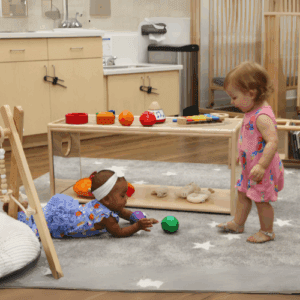
If you watch a group of toddlers at the park, you’ll likely see something called parallel play. This is when children play alongside each other, using similar toys, but not directly interacting. It might look like they’re ignoring one another, but they are actually learning a great deal by observing. Parallel play is a critical bridge to more cooperative, interactive play later on. It allows them to feel comfortable in a social setting without the pressure of complex social rules. It’s during this stage that you’ll also see the first glimmers of empathy, as they start to notice and react to the feelings of the children around them.
Activities for Physical and Motor Skill Development
A toddler with pent-up energy is often a toddler on the verge of a meltdown. Physical activity isn’t just about building strong bodies; it’s a powerful tool for emotional regulation. When your child runs, climbs, and jumps, they’re not just burning off steam—they’re learning how their body works, building confidence, and finding healthy outlets for their big feelings. Developing both large and small muscle skills gives them a sense of capability that translates directly into social confidence. A child who feels steady on their feet is often more willing to approach a new friend on the playground. These simple activities help them master their physical world, one small step at a time.
Building Gross Motor Skills
Gross motor skills involve the large muscles in the arms, legs, and torso. Think running, jumping, and throwing. These are the movements that help your child explore their environment with confidence and joy. You don’t need a fancy playground to work on these skills. An impromptu dance party in the living room, a game of “Red Light, Green Light” in the backyard, or building a pillow fort are all fantastic ways to get those big muscles moving. Outdoor play is especially beneficial, as it gives them the space to move freely and test their physical limits in a safe way. This focus on joyful movement is a core part of our enrichment programs, where we encourage children to build strength and coordination through play.
Developing Fine Motor Skills
While gross motor skills are about big movements, fine motor skills are about the small, precise actions of the hands and fingers. These are the skills that will eventually help your child write their name, tie their shoes, and button a coat. Simple, everyday activities are perfect for this. Offer them chunky crayons, washable paints, and plenty of paper to scribble and create. Playing with playdough—squishing, rolling, and pinching it—is an excellent workout for little hands. Stacking blocks, threading large wooden beads onto a shoelace, or tearing paper for a collage all help refine their hand-eye coordination and prepare them for more complex tasks later on.
Encouraging Self-Care Skills
As your toddler’s fine motor skills improve, they can start taking on small self-care tasks, which is a huge step toward independence. Letting them “help” is the key. Encourage them to try pulling up their own pants or putting on their shoes (even if they end up on the wrong feet). In the kitchen, let them help wash vegetables or stir ingredients with a big spoon. You can even give them a kid-safe knife to practice cutting soft foods like a banana. These small moments of responsibility make them feel capable and proud, showing them that they are a contributing member of the family.
Activities for Cognitive and Sensory Growth
A toddler’s brain is like a sponge, and they learn best by doing, touching, and experiencing the world with all five senses. Cognitive and sensory activities aren’t about flashcards or drills; they’re about playful exploration that builds critical thinking skills. When your child sorts colorful blocks or scoops rice in a sensory bin, they’re making important neural connections related to logic, problem-solving, and categorization. This hands-on, discovery-based approach is central to our philosophy at Strong Start, where we see children as active participants in their own learning. These activities help them make sense of their world and lay the groundwork for a lifetime of curiosity.
Engaging the Senses Through Play
Sensory play is any activity that stimulates your child’s sense of touch, smell, taste, sight, or hearing. It’s often messy but incredibly valuable for development. A simple sensory bin is a great place to start. Fill a shallow container with dry rice, pasta, or sand, then add scoops, cups, and small toys for them to find. Water play in the sink or bathtub with bubbles and cups is another classic. This type of open-ended play allows children to explore textures and materials at their own pace, which is a key element of a Reggio Emilia-inspired approach to learning.
Building Thinking Skills
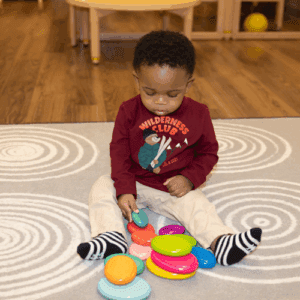
You can help your toddler develop early problem-solving skills through simple games and daily routines. Sorting is a fantastic activity for this. Ask them to help you sort laundry into piles of lights and darks, or have them sort their toys by color, size, or type (all the cars go in this bin, all the blocks go in that one). Simple puzzles with large knobs are also great for developing spatial awareness and logic. These activities teach them to recognize patterns and make connections, which are the building blocks of more complex thinking.
Introducing Early Math Concepts
Math is all around us, and you can introduce basic concepts in a fun, pressure-free way. Baking together is a perfect opportunity. Let your toddler help you measure flour or pour milk while you count the scoops out loud. During playtime, you can talk about sizes by comparing a big ball and a small ball. Count the steps as you walk up the stairs or the number of apple slices on their plate. This approach integrates learning into everyday life, which is fundamental to our STEM Learning program, making abstract concepts tangible and fun.
Creative and Language-Building Activities
For a toddler, art and language are powerful tools for self-expression. When they can’t find the words for their big feelings, they can often show them by scribbling with a crayon or singing a song. Creative activities aren’t about making a perfect product; they’re about the process of exploring materials and ideas. At the same time, surrounding them with language—through books, songs, and conversation—gives them the vocabulary they need to eventually name their emotions and navigate their social world. These activities build their confidence and give them healthy, constructive ways to share what’s on their mind and in their heart.
Simple Art Projects for Toddlers
The best art projects for toddlers are open-ended and focus on the experience. Forget complicated crafts and embrace the mess. Finger painting is a classic for a reason—it’s a wonderful sensory experience. For an easier cleanup, try painting with water on dark construction paper or a chalkboard. You can also take art outside with sidewalk chalk or by using sponges and buckets of water to “paint” the fence. This focus on creative exploration is a cornerstone of our Exploration Through The Arts program, where we celebrate the process of discovery over the final product.
Fun with Language, Books, and Music
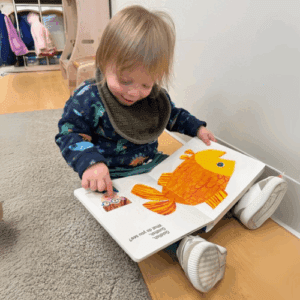
Building a rich language environment is one of the most important things you can do for your toddler. Make reading a cozy, daily ritual. Let them turn the pages, point to pictures, and repeat familiar words from their favorite stories. You don’t need to finish the book every time; just enjoying it together is what matters. Sing songs with hand motions, like “Itsy Bitsy Spider” or “Twinkle, Twinkle, Little Star.” Talk to them throughout the day, narrating what you’re doing. This constant exposure to words helps them build their vocabulary and understand the rhythm of conversation.
The Importance of Outdoor Play
Spending time outside is more than just a way to burn off energy; it’s essential for a toddler’s well-being. Nature has a calming effect and provides a rich, multi-sensory environment that you just can’t replicate indoors. The fresh air, the feeling of grass under their feet, and the vast open space can work wonders for a fussy or overwhelmed child. Outdoor play encourages curiosity, resilience, and a deep appreciation for the natural world. It’s a free, accessible tool that supports every area of your child’s development, from their physical strength to their emotional health. It’s a simple reset button for you and your little one.
Exploring Nature Together
You don’t have to go on a big hike to connect with nature. A simple walk around your neighborhood can be a grand adventure for a toddler. Go on a nature scavenger hunt and look for interesting leaves, smooth rocks, or fluffy dandelions. Lie in the grass together and watch the clouds drift by, making up stories about the shapes you see. Watch a trail of ants march across the sidewalk or listen for birds singing in the trees. These quiet moments of observation help your child build a deeper connection to the world around them and foster a sense of wonder.
Classic Outdoor Fun
Sometimes the simplest activities are the most joyful. Blowing bubbles and letting your toddler chase and pop them is a guaranteed way to bring on the giggles. Drawing with sidewalk chalk gives them a huge canvas for their creativity. Kicking or rolling a ball back and forth is a wonderful way to practice turn-taking and coordination. On a warm day, running through a sprinkler or splashing in a small pool provides endless entertainment. These timeless activities don’t require much planning or equipment, but they create lasting memories and support healthy development.
Fun Social Activities for 2- and 3-Year-Olds
Helping your toddler build social skills doesn’t require complicated lesson plans or special equipment. It happens in the small, playful moments you share every day. These skills, like sharing, taking turns, and understanding others’ feelings, are learned through practice in a safe and loving environment. The key is to turn everyday interactions into gentle learning opportunities that feel like fun, not work.
At Strong Start, our entire approach is built on the idea that children learn best through discovery and play. The activities we do in our toddler classrooms are designed to nurture this natural curiosity while building a strong social and emotional foundation. You can use these same simple, powerful strategies at home to help your child connect with others, learn to cooperate, and build the confidence to make friends. Think of these activities as a way to fill your child’s emotional toolkit, giving them the skills they’ll need for preschool and beyond.
Play Turn-Taking Games
The concept of “your turn, my turn” is a cornerstone of social interaction, and games are the perfect way to practice it. Start with something simple where the back-and-forth is clear and quick. You can roll a ball to each other, take turns adding a block to a tower, or push a toy car down a ramp. The goal is to make waiting for their turn a positive and predictable experience. As one expert suggests, you can even “play games like jumping off a step, kicking a ball, or blowing bubbles, focusing on taking turns.” This simple practice helps toddlers begin to manage their impulses and understand the rhythm of cooperative play.
Sing Interactive Songs
Music is a fantastic tool for social connection. Songs with hand motions, call-and-response elements, or parts that require a partner invite your toddler to participate and interact with you. Think of classics like “Row, Row, Row Your Boat” or “The Wheels on the Bus.” These songs encourage eye contact, imitation, and shared enjoyment. Don’t be afraid of repetition—in fact, you should embrace it. Toddlers thrive on predictability, and as Help Me Grow MN notes, you should “sing favorite songs many times because toddlers love repetition.” Each time you sing, you’re strengthening your bond and their social awareness.
Use Collaborative Toys for Group Play
The right toys can naturally encourage children to play together instead of just side-by-side. Think about items that are more fun with a partner, like a large set of building blocks, a play kitchen, or dress-up clothes. Having multiples of popular toys can also reduce squabbles and create opportunities for sharing. When setting up a playdate, try to “provide toys that encourage playing together (like dress-up clothes, blocks, balls, board games).” Creating a play space that allows several children to engage in an activity at once is a simple way to foster teamwork and communication from a very early age.
Create Make-Believe Scenarios
Pretend play is one of the most powerful ways for toddlers to explore social situations and emotions. It’s a safe space where they can try on different roles and practice interacting with others. You can “play make-believe: Use stuffed animals or toys to tell simple stories together.” For example, have a teddy bear feel sad and let your child comfort it, or pretend to be a doctor taking care of a sick doll. This kind of imaginative play helps build empathy and early communication skills. It’s a core part of our Project Approach, where children use their creativity to understand the world around them.
Emotional Activities to Help Your Toddler with Big Feelings
Toddlers have big, intense feelings that can bubble up and overflow without warning. One minute they’re giggling, and the next they’re crumpled on the floor in a puddle of tears because their banana broke in half. It can be overwhelming for them and for you. The goal isn’t to stop these feelings but to give your child the tools to understand and express them in healthy ways. Helping your toddler make sense of their inner world is one of the most important things you can do for their development, laying the groundwork for self-awareness, empathy, and strong relationships for years to come. When children learn that their feelings are valid and that they have the words to share them, they build confidence and resilience.
At Strong Start, our Reggio Emilia-inspired approach honors a child’s emotions as a valid and important form of communication. We see these moments not as challenges to be managed, but as opportunities to connect and teach. These simple, everyday strategies can help you guide your toddler through their emotional storms and build a powerful, trusting connection along the way.
Name Emotions in Daily Moments
One of the simplest yet most effective things you can do is act as your child’s emotional translator. When you see them struggling, give their feeling a name. You can say, “You seem so frustrated that your blocks keep falling,” or “It looks like you’re feeling sad that our playtime is over.” According to child development experts at ZERO TO THREE, using words to describe emotions helps toddlers understand what’s happening inside them. This practice builds their emotional vocabulary and shows them that you see and understand their experience, which is deeply reassuring for a little one.
Use Emotion Cards and Pictures
Sometimes, words aren’t enough. Visuals can be a fantastic tool for teaching toddlers about feelings. You can use flashcards with different facial expressions to help your child identify and name emotions like happy, sad, angry, and surprised. Look at characters in their favorite books and ask, “How do you think they’re feeling right now?” This turns learning into a fun game and helps your toddler connect facial cues to specific feelings. It’s a simple activity that builds their ability to recognize emotions not just in themselves, but in others, too—a key step toward developing empathy.
Model Healthy Emotional Responses
Your toddler is always watching you to learn how to act in the world, and that includes how to handle emotions. When you express your own feelings in a healthy way, you provide a powerful example for them to follow. Try to talk about your feelings out loud throughout the day. You could say, “I’m feeling so happy because the sun is shining!” or “I’m a little disappointed that it’s raining and we can’t go to the park.” This modeling shows your child that everyone has feelings, that it’s okay to talk about them, and that there are constructive ways to manage them.
Create a Safe Space for All Feelings
It’s crucial to let your toddler know that all their feelings are welcome, even the messy, uncomfortable ones. When you create an environment where every emotion is accepted, you give your child the security to express themselves honestly. This doesn’t mean all behaviors are acceptable. You can set a boundary while still validating the feeling: “I know you’re angry, and it’s okay to be angry, but it’s not okay to hit.” By talking openly about all emotions, you help your child understand them without shame or fear. This approach is central to how we nurture children in our toddler classrooms, ensuring they feel safe and supported.
Why Pretend Play Is a Game-Changer for Toddlers
When you see your toddler chatting with their stuffed animals or flying around the room like a superhero, you’re witnessing more than just a fun game. You’re seeing a powerful learning tool in action. Pretend play is how young children process the world around them, make sense of complex social situations, and practice the skills they need to build relationships. It’s a dress rehearsal for life, and it plays a huge role in their social and emotional growth. By creating imaginary worlds, they learn to understand the very real one they live in.
Build Empathy Through Imagination
Pretend play gives toddlers a unique chance to step into someone else’s shoes. When your child pretends to be a doctor caring for a sick teddy bear or a parent comforting a baby doll, they are experimenting with compassion. Through this imaginative play, they can begin to understand and express emotions, which helps them connect with others. This is the foundation of empathy. You can encourage this by joining in. If their stuffed bunny is sad, ask your child, “What can we do to help Bunny feel better?” This simple act reinforces the idea of considering another’s feelings, a core part of our Reggio Emilia-inspired approach.
Use Puppets to Tell Stories
Puppets are fantastic tools for communication. Sometimes, it’s easier for a toddler to express a big feeling through a puppet than to say it themselves. Using puppets or other toys to tell simple stories allows children to explore different perspectives in a safe and playful way. A shy puppet might help your child talk about feeling nervous, or a brave puppet can help them act out a new experience. You can use a puppet to ask about their day or work through a common challenge, like sharing. This kind of storytelling is a wonderful part of our Exploration Through The Arts program, as it builds both language and emotional intelligence.
Explore Different Social Roles
Setting up a pretend grocery store or a veterinarian’s office does more than just keep your toddler busy. These games allow them to explore various social roles and learn the rules that go along with them. In a pretend store, they learn about being a customer who waits in line and a cashier who helps people. This kind of play is central to The Project Approach, where children investigate real-world topics. By acting out these scenarios, toddlers begin to understand the dynamics of different relationships and how communities work together. It’s a hands-on lesson in cooperation, patience, and social expectations.
Practice Social Skills in a Safe Space
Pretend play is the ultimate safe space for practicing social skills. When children build a block tower together or decide who gets to wear the firefighter helmet, they are learning to negotiate, share, and solve problems. Because the stakes are low, it’s the perfect environment to work through disagreements with gentle guidance. Providing toys that encourage this kind of interaction, like dress-up clothes or a play kitchen, sets the stage for cooperation. In our toddler classrooms, we see how this play builds a foundation for real friendships and helps children learn to interact with their peers in positive and respectful ways.
How Daily Routines Build Emotional Skills
You don’t need to set aside special time to teach social and emotional skills. Your daily routines are packed with opportunities to connect with your toddler and help them understand their world. Predictability helps children feel safe, which gives them the confidence to explore new feelings and social situations. When a child knows what to expect during their day, they have more energy to learn.
From getting dressed to winding down at night, these repeated moments are the building blocks of emotional regulation. By being intentional during these everyday activities, you create a consistent, nurturing environment where your toddler can practice important life skills.
Connect During Family Mealtimes
Sitting down for a meal together is more than just a chance to refuel—it’s a prime opportunity for social learning. Family mealtimes create a natural space for your toddler to practice conversation, sharing, and patience. This consistent time together strengthens family bonds and helps your child feel like a valued member of the group. To make the most of it, ask simple questions like, “What did we see at the park today?” This encourages them to share their thoughts and listen to others. These small interactions help your toddler practice social skills that will serve them well as they begin to form friendships.
Build Security with Bedtime Rituals
A consistent bedtime routine is one of the most powerful tools for helping your toddler feel safe and loved. The predictability of a bath, pajamas, and a story signals that it’s time to wind down. This ritual is a moment for quiet connection that reinforces your bond. As your toddler grows and begins transitioning away from naps, an earlier bedtime can become even more important and is the foundation for healthy social-emotional development. During this calm time, you can gently introduce emotional language. As you cuddle, try using “I” statements like, “I feel so happy reading with you.” This helps your child connect words to emotions. This consistency between home and school is a key part of our philosophy of partnering with parents.
Turn Household Chores into Teamwork
Inviting your toddler to help with simple household tasks builds their sense of competence and belonging. Chores for a two- or three-year-old aren’t about perfection; they’re about practicing responsibility and learning to work together. When you frame tasks as “helper jobs,” you empower your child and show them their contribution is valuable. Start with small, age-appropriate tasks like putting toys in a basket or wiping up a spill. Celebrate their effort with specific praise: “Thank you for helping! We make a great team.” These moments teach cooperation and show your child that working together is fun and helpful.
How to Respond to Challenging Toddler Behaviors
When your two-year-old throws their food on the floor or your three-year-old has a full-blown meltdown in the grocery aisle, it’s easy to feel overwhelmed and frustrated. But these challenging moments are a completely normal part of toddlerhood. Your child isn’t trying to be difficult; they’re trying to communicate big feelings with a still-developing brain and limited vocabulary. Hitting, biting, and tantrums are often just the outward expression of internal struggles they can’t yet put into words.
The key is to shift your perspective. Instead of seeing these behaviors as something to punish or stop, view them as opportunities to teach. Your calm, consistent response is one of the most powerful tools you have. It models self-regulation and shows your child that you’re there to help them understand their emotions, not judge them for having them. This approach is central to how we partner with parents to create a supportive network for every child. By working together, we can guide toddlers through these tough moments with empathy and patience, building a strong foundation for emotional intelligence.
See Tantrums as a Chance to Learn
It’s tempting to see a tantrum as a battle of wills, but it’s more helpful to view it as a cry for help. Toddlers experience intense emotions but don’t yet have the skills to manage them. Instead of focusing on the outburst itself, try to see it as a chance to teach self-control. When your child is overwhelmed, get down on their level and calmly acknowledge their feelings. Saying, “You are so mad that we have to leave the park,” doesn’t mean you’re giving in. It means you see them and you understand. This simple act of validation can help them feel safe enough to move through the emotion, and it teaches them the words to use next time.
Set Loving and Firm Boundaries
Boundaries help toddlers feel secure. When they know what to expect, the world feels less chaotic and overwhelming. Setting loving and firm boundaries isn’t about being strict; it’s about being clear and consistent. The goal is to validate the feeling while redirecting the behavior. For example, you can say, “It’s okay to feel angry, but it’s not okay to hit. We use gentle hands with people.” Then, you can offer an alternative, like hitting a pillow or stomping their feet. Our exceptional educators use this approach to guide children respectfully, ensuring they understand that while all feelings are welcome, not all actions are acceptable.
Teach Simple Ways to Cool Down
You can’t teach a child to swim during a storm, and you can’t teach calming strategies in the middle of a meltdown. The best time to practice these skills is when your toddler is happy and relaxed. You can introduce simple, playful techniques that they can draw on when big feelings start to bubble up. Try teaching them to “smell the flower, then blow out the candle” to practice deep breathing. You could also create a cozy, quiet space in your home with soft pillows and books where they can go to feel calm. By giving them these tools, you’re empowering them to manage their emotions on their own as they grow.
A Balanced Approach to Toddler Activities
It’s easy to get caught up in the idea that a busy toddler is a learning toddler. Between music class, tiny tots soccer, and story time at the library, our calendars can fill up fast. We want to give our kids every advantage, and it can feel like signing them up for structured activities is the best way to do that. But what if the most important developmental work happens not in a class, but on the living room floor with a pile of blocks and no agenda? Finding the right balance between organized classes and simple, unstructured playtime is key to nurturing a well-rounded, emotionally healthy child. It’s about creating space for them to be bored, to be creative, and to simply be.
Structured Classes vs. Unstructured Play
Structured classes absolutely have their place. They teach toddlers how to listen to a teacher, follow directions, and be part of a group. But the real magic for social and emotional growth often happens during unstructured play. This is when children learn to negotiate with a friend over who gets the red car, solve the problem of a wobbly tower, and entertain themselves without an adult directing the action. It’s in these moments of freedom that they build resilience, creativity, and self-reliance. At Strong Start, our curriculum is built on this balance. Our enrichment programs offer guided experiences, but the heart of our day is dedicated to child-led discovery, where children can explore their own ideas and learn to play together.
Setting Up Your Home for Social-Emotional Success
The activities you do with your toddler are important, but the environment you create at home is the foundation for their social and emotional learning. A supportive space helps your child feel safe, understood, and ready to practice their new skills. This doesn’t mean you need a perfect, Pinterest-worthy playroom. It’s about making small, intentional choices in how you arrange your space, the stories you share, and the rhythms of your day. These simple adjustments can make a world of difference in nurturing a confident and emotionally aware child.
Arrange Spaces for Solo and Group Play
Your home’s layout can naturally encourage different kinds of play. Think about creating zones: a cozy corner with pillows for quiet reading, and a more open area for building and active fun. Provide toys that invite collaboration, like dress-up clothes, blocks, or a play kitchen. When you set up play areas where more than one child can comfortably play, you’re creating opportunities for sharing and teamwork. At the same time, respecting your child’s need for solo play is just as important. Having a space for both group fun and individual exploration helps them learn to enjoy the company of others while also being comfortable on their own, much like the balance we create in our toddler classrooms.
Choose Books That Teach About Feelings
Storytime is one of the best ways to introduce your toddler to the complex world of emotions. Choose books that feature characters who experience a range of feelings, from happiness and excitement to frustration and sadness. As you read, you can point out the characters’ emotions and talk about them. Ask simple questions like, “Look, the bunny is crying. How do you think he feels?” or “What made the puppy so excited?” This practice helps your child build an emotional vocabulary and develop empathy by connecting feelings to specific situations. It turns a simple story into a meaningful conversation about understanding themselves and others.
Build Consistent, Comforting Routines
For a toddler, the world can feel big and unpredictable. Consistent daily routines provide a sense of security that helps them feel safe and ready to try new things. When your child knows what to expect—from a simple morning sequence of getting dressed and eating breakfast to a calming bedtime ritual—they feel more in control. This predictability reduces anxiety and can even lessen power struggles. Routines help toddlers feel safe and create natural moments for connection and teaching. A predictable structure to your child’s day gives them the confidence they need to explore their social world and handle the big feelings that come with it.
Related Articles
- 15 Month Old Temper Tantrums: Why They Happen & What to Do
- Toddler Regression: Why It Happens & How to Help
Frequently Asked Questions
My toddler refuses to share anything. What should I do? First, know that this is completely normal. Toddlers are just beginning to understand the concept of ownership, so the idea of giving something away, even temporarily, can feel like a huge loss. Instead of forcing them to share, which can create more resistance, try focusing on turn-taking. Use a timer to make it concrete, and practice with low-stakes items when everyone is calm. You can also model generosity yourself, sharing your snack or letting your partner have a turn with the remote. This shows them how sharing works in a positive, everyday context.
How can I tell the difference between a normal tantrum and a sign of a bigger problem? Tantrums are a standard part of the toddler job description. They happen because your child’s big feelings are overwhelming their still-developing ability to manage them. A typical tantrum is a reaction to frustration, disappointment, or tiredness. The best response is to stay calm and validate their feeling while holding a firm boundary. However, if you notice that tantrums are becoming extremely frequent and intense, last for a very long time, or regularly involve your child trying to hurt themselves or others, it’s always a good idea to chat with your pediatrician or a child development expert for guidance.
What if my toddler seems more interested in playing by themselves than with other kids? This is a very common and important stage of social development called parallel play. It’s when a child plays alongside their peers, maybe using the same toys, but doesn’t directly interact with them. It might look like they’re ignoring each other, but they are actually learning a ton by observing. This is the bridge to more cooperative play later on. It allows them to get comfortable in a social setting without the pressure of complex rules like sharing and negotiating.
Is it okay to talk about my own feelings, like sadness or frustration, in front of my toddler? Absolutely. In fact, it’s one of the best things you can do. When you calmly say something like, “I’m feeling a little frustrated because I can’t find my keys,” you’re showing your child two things. First, you’re teaching them that all feelings are normal and that even adults have them. Second, you’re modeling a healthy way to express that feeling with words instead of actions. This gives them a script they can use when they experience similar emotions themselves.
Besides playing games, what’s a simple way to build these skills into our busy schedule? Your daily routines are your secret weapon. Mealtimes are a perfect opportunity to practice taking turns talking and listening. The bedtime routine, with its predictable sequence of bath, books, and cuddles, is a powerful way to build emotional security and connect after a long day. Even simple chores, like putting toys away together, teach teamwork and responsibility. These small, consistent moments are often more impactful than any single planned activity.
Written By
Marc Hoffman
Founder, Strong Start Early Care & Education
Marc founded Strong Start in 2014, inspired by his studies at Williams College, Yeshiva University, and research at Yale University. His child-centered, inquiry-based approach to early education has helped hundreds of families in the Trumbull and Bridgeport communities. As a parent himself, Marc understands the importance of finding a nurturing environment where every child can learn, grow, and flourish.