As your child approaches their fifth birthday, you may be wondering: are they truly ready for kindergarten? The transition from preschool to kindergarten is one of the biggest milestones in early childhood, and every parent wants to feel confident their child is prepared.
Kindergarten readiness is not about perfection. It is about whether your child is developing the foundational skills they need to thrive in a classroom setting. This checklist covers the academic, social-emotional, physical, and self-care skills that kindergarten teachers look for, along with practical ways you can support your child’s growth.
What Does Kindergarten Readiness Mean in 2026?
Kindergarten readiness has evolved over the past decade. Today’s kindergarten classrooms focus on the whole child, not just academics. Teachers expect children to arrive with emerging skills across multiple developmental areas, including social interactions, emotional regulation, physical coordination, and early literacy and math concepts.
The National Association for the Education of Young Children (NAEYC) emphasizes that readiness is a shared responsibility between families, early education programs, and schools. Children do not need to master every skill before their first day. Instead, they should show consistent growth and curiosity.
At Strong Start Early Care and Education, we see kindergarten readiness as a journey that begins in infancy and builds through every stage of early childhood. Our preschool programs are designed to nurture exactly these developmental milestones.
Academic Readiness Skills
Academic readiness does not mean your child needs to read chapter books or solve math equations. It means they are building a foundation of early literacy and numeracy skills that will support formal learning.
Early Literacy Skills
Your child is on track if they can:
- Recognize their first name in print and attempt to write it
- Identify most uppercase letters and some lowercase letters
- Understand that print carries meaning, such as recognizing signs or labels
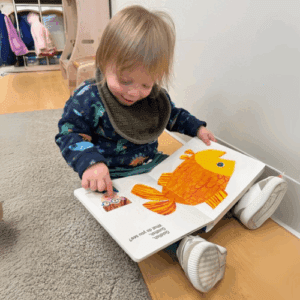
- Hold a book correctly and turn pages from front to back
- Retell simple stories in their own words after hearing them
- Rhyme simple words and recognize beginning sounds in words
- Listen to a short story without losing focus
Early Math Skills
Look for these developing abilities:
- Count to 10 or higher with one-to-one correspondence (pointing to each object while counting)
- Recognize basic shapes like circles, squares, triangles, and rectangles
- Understand size comparisons such as bigger, smaller, taller, and shorter
- Sort objects by color, shape, or size
- Identify and create simple patterns (red, blue, red, blue)
- Understand basic positional words like above, below, beside, and behind
If your child is building these skills through daily play and exploration, they are developing the academic foundation they need. Programs that use inquiry-based learning and the Project Approach naturally develop these abilities through hands-on experiences rather than worksheets.
Social and Emotional Readiness
Social-emotional readiness is often the most important factor in a successful kindergarten transition. Children who can manage their emotions, communicate their needs, and interact positively with peers tend to adjust more quickly to the classroom environment.
Social Skills Checklist
Your child is building social readiness if they can:
- Take turns and share materials during group activities
- Play cooperatively with other children, including those they have just met
- Follow simple group rules and routines, such as lining up or sitting in a circle
- Use words to resolve conflicts instead of hitting, biting, or grabbing
- Show empathy, such as comforting a friend who is upset
- Listen when others are speaking and wait for their turn to talk
Emotional Readiness
Emotional regulation is a developing skill, and most five-year-olds are still learning. Watch for growth in these areas:
- Separate from a parent or caregiver without prolonged distress
- Express feelings with words rather than through tantrums or aggression
- Recover from disappointment or frustration within a reasonable time
- Adapt to changes in routine without becoming overwhelmed
- Show confidence in trying new activities, even when they feel uncertain
- Follow two- or three-step directions from an adult
A strong social-emotional curriculum during the preschool years makes a significant difference. Research consistently shows that children who develop emotional regulation and social skills early are better prepared for both academic success and healthy relationships throughout their school years.
Physical and Motor Skills Readiness
Physical development plays a vital role in kindergarten success. Children need both gross motor skills (large movements) and fine motor skills (small, precise movements) to participate fully in classroom activities.
Gross Motor Skills
Your child should be developing the ability to:
- Run, jump, hop, and skip with coordination
- Climb playground equipment safely
- Throw and catch a ball with some accuracy
- Balance on one foot for several seconds
- Walk up and down stairs using alternating feet
Fine Motor Skills
Fine motor skills are essential for writing, cutting, and other classroom tasks:
- Hold a pencil or crayon with a proper grip (not a fist)
- Use scissors to cut along a line with reasonable accuracy
- Draw recognizable shapes and simple figures
- String beads or manipulate small objects with control
- Trace letters or simple patterns
- Use glue and tape independently
Children who participate in hands-on enrichment programs that include art projects, cooking activities, and physical movement naturally develop both fine and gross motor skills through engaging daily experiences.
Self-Care and Independence Skills
Kindergarten classrooms have more children and fewer adults than most preschool settings. Your child’s ability to handle basic self-care tasks independently will help them feel confident and reduce frustration during the school day.
Daily Living Skills Checklist
- Use the bathroom independently, including wiping, flushing, and washing hands
- Dress themselves, including managing zippers, buttons, and putting on shoes
- Open their own lunch containers and snack packages
- Blow their nose and cover their mouth when coughing or sneezing
- Clean up after themselves, such as putting away materials and throwing away trash
- Manage their belongings, including hanging up a backpack and finding their coat
Classroom Independence
- Follow a daily routine with minimal adult prompting
- Transition between activities without significant difficulty
- Sit and attend to a task for 10 to 15 minutes
- Ask for help when they need it, rather than giving up or melting down
- Follow multi-step instructions from a teacher
These self-care skills develop gradually through consistent practice at home and in quality early care environments. Encouraging your child to do things for themselves, even when it takes longer, builds the independence kindergarten teachers value.
How to Support Your Child’s Readiness at Home
You do not need expensive programs or flashcards to prepare your child for kindergarten. Many of the most effective readiness activities happen naturally during your daily routine.
Everyday Activities That Build Readiness
- Read together every day. Even 15 minutes of shared reading builds vocabulary, comprehension, and a love of learning.
- Practice counting during daily tasks. Count steps as you walk, silverware as you set the table, or toys as you clean up.
- Encourage independence. Let your child dress themselves, pour their own cereal, and put their shoes on, even if it takes extra time.
- Play board games and puzzles. These build turn-taking, patience, problem-solving, and fine motor skills.
- Have conversations. Ask open-ended questions about their day, their drawings, or what they notice in the world around them.
- Establish a consistent routine. A predictable schedule helps children feel secure and teaches them to manage transitions.
- Arrange playdates. Unstructured play with peers is one of the best ways to develop social skills.
- Visit the school. If possible, walk through the kindergarten building together before the first day to reduce anxiety.
What to Avoid
- Do not drill your child with worksheets or flash cards if it causes stress. Learning should feel like play at this age.
- Do not compare your child to other children. Every child develops at their own pace.
- Do not pressure academic milestones. A child who enters kindergarten curious and confident will catch up on any specific skills they have not yet mastered.
What If Your Child Is Not Quite Ready?
If you feel your child is not yet ready for kindergarten, you are not alone. Many parents face this decision each year, and there is no single right answer.
Some families choose to give their child an extra year in preschool, sometimes called “academic redshirting.” This can be especially beneficial for children with late birthdays, those who are still developing social-emotional skills, or children who would benefit from more time in a child-centered learning environment.
Before making a decision, consider:
- Talk to your child’s preschool teachers. They observe your child daily and can offer valuable perspective on their readiness.
- Request a kindergarten screening. Many school districts offer assessments to help identify strengths and areas for growth.
- Consult your pediatrician. If you have concerns about developmental delays, a professional evaluation can provide clarity and connect you with support.
- Focus on the whole child. Academic readiness alone is not enough. Social, emotional, and physical development matter just as much.
The goal is not to wait until your child is “perfect.” It is to ensure they have a solid enough foundation to benefit from the kindergarten experience.
How Quality Preschool Programs Build Kindergarten Readiness
Research from the National Institute for Early Education Research shows that children who attend high-quality preschool programs enter kindergarten with stronger academic, social, and behavioral skills compared to peers who did not attend preschool.
What makes a preschool program effective at building readiness?
- A curriculum grounded in child development research, such as the Reggio Emilia approach, which supports learning through exploration and discovery
- Low teacher-to-child ratios that allow for individualized attention
- A focus on social-emotional development alongside academics, including programs that integrate social-emotional learning into every part of the day
- Hands-on, play-based learning that keeps children engaged and builds critical thinking skills
- Strong partnerships between educators and families, ensuring consistency between home and school
- NAEYC accreditation, which signals that a program meets rigorous national standards for quality
At Strong Start, our programs for infants, toddlers, bridge-age children, and preschoolers are all designed with kindergarten readiness in mind. Every activity, from circle time to outdoor exploration, builds the skills your child needs for a successful transition.
Frequently Asked Questions About Kindergarten Readiness
At what age should my child start kindergarten?
Most states require children to turn five by a specific cutoff date, often September 1 or December 1, to enroll in kindergarten for that school year. Check with your local school district for the exact requirements in your area.
What is the most important skill for kindergarten readiness?
Social-emotional development is consistently identified by kindergarten teachers as the most important readiness skill. A child who can manage their emotions, follow routines, and interact with peers will have a smoother transition, even if their academic skills are still developing.
Should I hold my child back a year if they are not ready?
This depends on your child’s individual needs. Some children benefit from an extra year of high-quality preschool, while others are ready to move forward even if they have not mastered every skill. Talk to your child’s teachers and pediatrician before making this decision.
How can I tell if my child has a developmental delay?
If your child is significantly behind in multiple areas of the checklist, or if you notice regression in skills they previously had, talk to your pediatrician. Early identification and intervention lead to the best outcomes.
Do children need to know how to read before kindergarten?
No. Kindergarten is where formal reading instruction begins. Children should recognize some letters, understand that print has meaning, and show interest in books, but they do not need to read independently.
What role does play have in kindergarten readiness?
Play is one of the most powerful tools for building readiness skills. Through play, children develop language, social skills, problem-solving abilities, motor skills, and emotional regulation. A play-based learning curriculum is one of the most effective approaches to preparing children for school.
Your Next Steps
Preparing your child for kindergarten is not about checking every box on a list. It is about nurturing their curiosity, building their confidence, and giving them the skills they need to thrive in a new environment.
If you are looking for a supportive early education program that prepares children for kindergarten and beyond, we invite you to learn more about our approach. Visit one of our locations in Trumbull, Shelton, or Wilton to see how we nurture kindergarten readiness every day.
Ready to give your child a strong start? Schedule a tour or call us at 203-307-5500 to learn more about our programs.
Written By
Marc Hoffman
Founder, Strong Start Early Care & Education
Marc founded Strong Start in 2014, inspired by his studies at Williams College, Yeshiva University, and research at Yale University. His child-centered, inquiry-based approach to early education has helped hundreds of families in the Trumbull and Bridgeport communities. As a parent himself, Marc understands the importance of finding a nurturing environment where every child can learn, grow, and flourish.