The sound of your toddler crying at daycare drop-off can follow you all day. It’s a gut-wrenching experience that leaves you questioning everything, especially if you have a child who cries easily. We spend so much time preparing our kids for this big step, we often forget to prepare ourselves for the heartache. When the guilt feels this heavy and the worry is constant, the real question is, how to deal with it? This guide is for you. We’ll walk through real strategies for handling daycare drop-off tears so you can find your calm and confidence in the chaos.
Looking for a childcare program where educators truly understand this transition? Schedule a visit to see how Strong Start supports families through every stage.
The Real Reasons Your Toddler Cries at Daycare Drop-Off
Watching your toddler cry when you leave them at daycare is one of the hardest moments in early parenthood. Your heart tells you to scoop them up and take them home. Your mind knows they need this experience. The tension between those two feelings is real, and nearly every parent goes through it.
Here is what helps to understand: those tears are not a sign that something is wrong. They are a sign that your child has a secure attachment to you, which is exactly what healthy development looks like. Your toddler cries because they love you, they feel safe with you, and being apart from that safety feels overwhelming. That response is completely age-appropriate and, in most cases, temporary.
Separation anxiety typically peaks between 10 and 18 months, though it can reappear around age two or three, especially during major transitions like starting daycare or welcoming a new sibling. Understanding the developmental reason behind the tears can help you respond with patience rather than panic.
When Will the Daycare Drop-Off Crying Stop?
This is the question every parent asks first, and the answer is more reassuring than most people expect.
In the moment: Most children stop crying within 5 to 15 minutes of a parent leaving. Teachers and caregivers consistently report that the transition from tears to play happens quickly once the child becomes engaged in the classroom environment. If you have ever asked your daycare for a check-in text shortly after drop-off, you likely received a photo of your child happily building blocks or sitting at the art table.
Over time: The adjustment period typically follows this pattern:
- Week 1: Crying is common and may be intense. This is expected.
- Weeks 2 to 3: Tears may still appear but tend to be shorter and less intense.
- Weeks 3 to 4: Most toddlers begin separating with minimal or no tears.
- After one month: The majority of children have adjusted and may even look forward to going.
Every child is different. Some adjust within days. Others need a full month or more. The timeline depends on your child’s temperament, their prior experience with separation, and how consistently the drop-off routine is maintained.
What Really Happens After You Say Goodbye?
One of the biggest sources of parent anxiety is not knowing what happens in those minutes right after you walk out the door. At quality early care programs, teachers are trained to handle these transitions with skill and warmth.
Here is what typically happens:
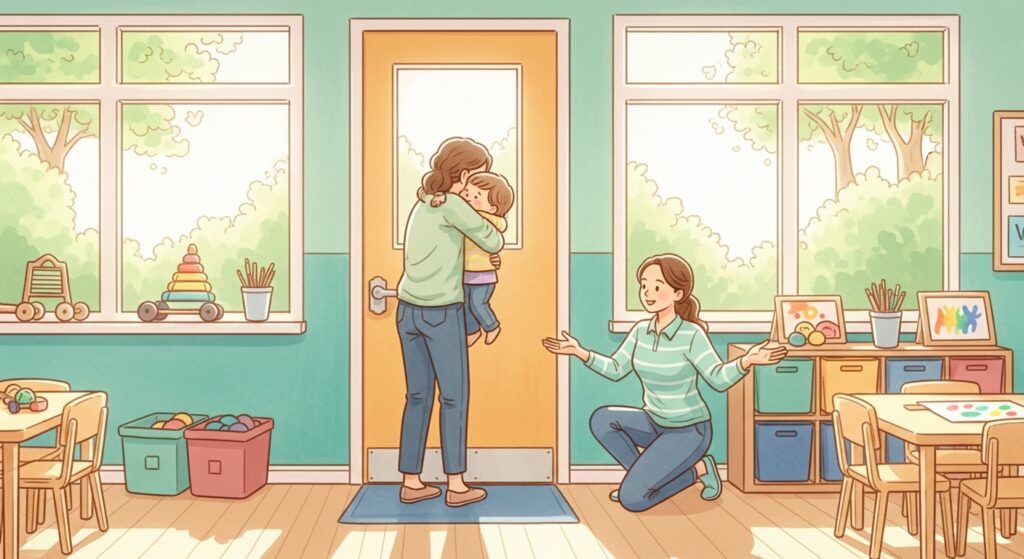
- Immediate comfort: A teacher picks up or sits with your child, offering physical reassurance and a calm voice.
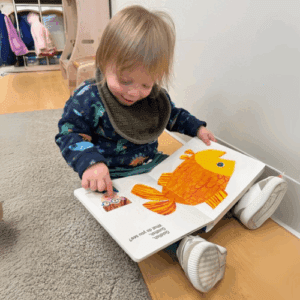
- Gentle redirection: Within a few minutes, the teacher introduces an activity your child enjoys, whether it is sensory play, a favorite book, or joining friends at a play station.
- Routine anchoring: The structured rhythm of the classroom, including circle time, snack time, and outdoor play, gives your child predictability that builds security throughout the day.
- Emotional validation: Good teachers acknowledge your child’s feelings rather than dismissing them. Phrases like “I know you miss Mommy. She will be back after nap time” help your child feel heard.
At Strong Start, our experienced educators are specifically trained to support children through separation. Our low teacher-to-child ratios mean your toddler gets individual attention during those first critical minutes. You can learn more about what a typical day looks like in our Your Child’s Day overview.

The Role of Exceptional Educators
The person who greets your child at the door makes all the difference. A skilled teacher doesn’t just watch your child cry; they actively soothe them. This starts with immediate comfort—a warm hug, a calm voice, and getting down on their level. From there, they gently redirect your toddler’s attention to a favorite activity, like the sensory table or a puzzle. But most importantly, they validate your child’s feelings with phrases like, “I know you miss Daddy. He’ll be back soon.” This approach shows your child they are seen and understood, building a trusting bond that makes each morning a little easier. This is why we believe in hiring and supporting exceptional educators who are trained to handle these delicate moments with both expertise and heart.
Your Age-by-Age Guide to Tear-Free Drop-Offs
The strategies that help most depend on your child’s age and developmental stage.
Soothing Your Infant (6-12 Months) at Drop-Off
Babies at this age are forming their primary attachments. Separation anxiety often starts around 8 to 10 months when object permanence develops. They now understand that you still exist when you are gone, but they cannot yet grasp that you will come back.
- Bring a comfort item that carries your scent, such as a small blanket or a soft cloth you have worn.
- Keep your goodbye brief and warm. A kiss and a clear “I love you, I will be back” is enough.
- Ask teachers to hold your baby right away during the handoff rather than placing them in a crib.
Helping Your Toddler (1-2 Years) Adjust
This is the peak age for separation anxiety at preschool. Toddlers understand more than they can express verbally, which adds to their frustration. They want to tell you how they feel, but the words are not there yet.
- Create a goodbye ritual that stays the same every day: a special handshake, two big hugs, or a specific phrase like “See you after snack time.”
- Talk about daycare casually the night before. Keep it low-key and positive without overselling.
- Never sneak away. It may seem easier in the moment, but it erodes trust and makes future drop-offs harder.
Prepping Your Preschooler (2-4 Years) for Drop-Off
By this age, children have the language to express their feelings and the cognitive ability to understand time concepts. They can be reasoned with, and they respond well to preparation and autonomy.
- Give them a small job at drop-off, like putting their lunchbox in the cubby or hanging up their bag.
- Use time anchors they understand: “I will pick you up after outdoor play” is more meaningful than “I will be back at 3:00.”
- Read books about going to school together. Stories help children rehearse new experiences emotionally before they happen.
Your Step-by-Step Guide to a Calm Drop-Off Routine
Consistency is the single most powerful tool for reducing daycare drop-off tears. When your toddler knows exactly what to expect, their brain registers the routine as safe. Here is a framework that works for many families:
- Arrive at the same time each day. Predictability starts before you walk through the door.
- Follow a set sequence. Put away belongings, say hello to the teacher, give your goodbye ritual.
- Keep the goodbye short. Aim for under one minute. Long, drawn-out goodbyes signal to your child that there is something to worry about.
- Use a confident tone. Your child reads your energy. If you seem unsure or upset, they will mirror that emotion.
- Leave when you say you will. If you say “one more hug,” give one more hug and go. Coming back after you have said goodbye resets the entire process.
A predictable routine does not mean a rigid one. If your child needs a slightly different goodbye on a hard morning, adjust. The goal is a pattern your child can count on, not a script that ignores their feelings.

Is It Normal? When to Worry About Daycare Tears
While drop-off tears are normal, there are situations where the crying may signal something that needs closer attention.
Talk to your child’s teacher or pediatrician if:
- Crying at drop-off has not improved after four to six weeks of consistent attendance.
- Your child remains upset for most of the day, not just at the transition.
- You notice new behaviors at home such as frequent nightmares, regression in toileting, loss of appetite, or clinginess that did not exist before.
- Your child was previously well-adjusted and suddenly begins having intense drop-off distress, which could indicate a change in the classroom environment or a developmental shift.
- Physical symptoms such as stomachaches or headaches appear regularly on daycare mornings.
These signs do not automatically mean something is wrong. Children go through phases, and setbacks are normal, especially after weekends, holidays, or illness. However, persistent distress deserves a conversation with your care team. At Strong Start, we partner closely with families to monitor each child’s adjustment. Our parent partnership approach means you always have a direct line to your child’s teacher.
How to Deal With It: Managing Your Own Drop-Off Anxiety
No one talks enough about the parent side of drop-off. Hearing your child cry as you walk away can leave you feeling guilty, anxious, and distracted for the rest of the morning. Those feelings are valid, and they do not make you a bad parent.
- Remind yourself why you chose this program. You researched, toured, and selected a place that aligns with your values. Trust that decision. If you are still exploring options, our guide on how to choose a daycare can help.
- Ask for a check-in. Most daycare programs are happy to send a quick text or photo 15 minutes after drop-off. That photo of your child playing is often all you need to exhale.
- Connect with other parents. Nearly every family goes through this. Sharing the experience normalizes it and reduces the isolation.
- Give it time. The first two weeks are the hardest. Set a mental checkpoint at the one-month mark before deciding the arrangement is not working.
Acknowledge Your Feelings and Practice Acceptance
The first step in managing your own drop-off anxiety is to stop fighting it. Your feelings are a normal, valid response to a significant life change for both you and your child. Giving yourself the space to feel sad or worried is not a sign of weakness; it is a necessary part of processing the experience. When you try to ignore or suppress these emotions, they often come back stronger. Acknowledging your feelings allows you to move through them instead of getting stuck in them. This is about giving yourself the same grace and understanding you so readily give your child.
Give Yourself Permission to Feel Anxious or Sad
It is completely okay to feel sad when you leave your child. You are their primary source of comfort and safety, and separating from them is a real, emotional event. The Albert Ellis Institute notes that when life is hard, you need to allow yourself to feel the corresponding emotions to get through them. Trying to be a superhero who feels nothing will only lead to burnout. So, let yourself feel the lump in your throat. Acknowledge the worry that creeps in. Giving these feelings a name and accepting their presence is the first step toward letting them go.
Understand the Difference Between Pain and Suffering
There is a useful distinction between pain and suffering. The pain of missing your child during the day is a natural part of the human experience of love and attachment. It is unavoidable. Suffering, on the other hand, often happens when we resist that pain. It is the story we tell ourselves about the pain: “I shouldn’t be feeling this,” “A good mother wouldn’t be this upset,” or “This means I made the wrong choice.” As one therapist explains, this resistance is what leads to more suffering. The pain is the initial sting of goodbye; the suffering is the hours of guilt that follow.
Practice Radical Acceptance of the Situation
Radical acceptance is a powerful tool for reducing that self-inflicted suffering. It does not mean you have to like the situation. It simply means you stop fighting the reality of it. You accept that drop-off is hard right now. You accept that you feel anxious. You accept that your child is crying. By accepting the facts of the moment without judgment, you free up the mental energy you were spending on resistance. Instead of battling reality, you can use that energy to focus on what you can actually control, which is how you respond to the situation and support yourself through it.
Reframe Your Thoughts with Cognitive Techniques
Once you have acknowledged your feelings, you can begin to work with the thoughts that fuel them. Your brain is a powerful storyteller, and during stressful times, it can spin tales of worst-case scenarios. Using simple cognitive techniques can help you challenge those narratives and reframe your perspective. This is not about ignoring your worries, but about managing them so they do not manage you. These mental exercises can help you regain a sense of calm and control during your morning routine and throughout your day.
Focus on What You Can Control
When you feel overwhelmed, it helps to draw a line between what you can and cannot control. You cannot control whether your toddler decides to have a meltdown over their socks. You cannot control the pang of sadness you feel as you walk away. However, you can focus on what you can influence: your own reactions, the consistency of your goodbye ritual, and your confident tone. You can control how you prepare the night before to make the morning smoother. Focusing on your own actions empowers you and shifts your mindset from passive victim of circumstance to active participant in a successful transition.
Set Aside a Designated “Worry Time”
If you find that anxiety about drop-off is bleeding into your entire morning or workday, try containing it. Mental Health America suggests a technique where you set aside a specific “worry time” each day. This could be 10 minutes on your commute home or while you make dinner. When a worried thought pops up at 10 a.m., gently tell yourself, “I will think about that during my worry time.” This practice acknowledges the worry without letting it derail your focus, giving you permission to put it on a shelf until a designated time.
Use Mantras to Re-center Yourself
A mantra is a simple, positive phrase you can repeat to yourself to ground you in a moment of stress. It is a way to interrupt a negative thought spiral and replace it with a calming one. As you walk back to your car after drop-off, instead of replaying your child’s cries in your head, try repeating a phrase that feels true to you. Simple mantras like, “They are safe and cared for,” “I am making a good choice for my family,” or “This feeling is temporary,” can be incredibly effective at re-centering your mind and reinforcing your confidence.
Incorporate Physical and Lifestyle-Based Stress Relief
Your mental and emotional state is deeply connected to your physical well-being. When you are running on empty, your ability to cope with stress plummets. Integrating simple, body-based strategies into your life can make a huge difference in how you handle the emotional challenge of daycare drop-offs. These are not huge, time-consuming changes, but small, consistent habits that help regulate your nervous system and build resilience from the inside out. Think of it as putting on your own oxygen mask first.
Move Your Body to Manage Anxiety
Physical activity is one of the fastest and most effective ways to reduce stress. According to the Mayo Clinic, exercise helps your brain release feel-good chemicals and provides a healthy distraction from your worries. This does not mean you need to run a marathon. It can be as simple as doing a few stretches when you get to your office, taking the stairs instead of the elevator, or putting on your favorite song and having a two-minute dance party in your kitchen before you leave. A short, brisk walk after drop-off can also work wonders to clear your head.
Prioritize Sleep and Nutrition
As a parent of a young child, getting enough sleep can feel like an impossible dream. But a lack of sleep can amplify stress and make you more emotionally reactive. Even an extra 20-30 minutes a night can make a difference. Similarly, what you eat affects your mood. When you are stressed, it is easy to reach for sugar or caffeine, which can lead to an energy crash later. Focusing on balanced meals with protein and complex carbs can help stabilize your blood sugar and, by extension, your mood throughout the day.
Find Joy in Hobbies and Laughter
It is crucial to have parts of your identity that exist outside of being a parent and an employee. Carving out even small pockets of time for things that bring you joy is not an indulgence; it is a necessity for mental health. Whether it is listening to a comedy podcast on your commute, spending ten minutes reading a novel, or calling a friend who makes you laugh, these moments of joy can lighten your mental load. Laughter itself is a powerful stress reliever, causing positive physical changes in your body that help you feel more relaxed and capable.
Set Boundaries and Seek Support
You do not have to go through this alone. Building a strong support system and setting healthy boundaries are key to managing your own anxiety and ensuring a positive experience for your family. This means being selective about the advice you take, leaning on your trusted community, and knowing when and how to ask for help. Your support network includes your partner, friends, family, and, crucially, your child’s educators. They are all part of the team dedicated to your child’s well-being.
Manage Your Information Intake
In an effort to find solutions, it is easy to fall down an internet rabbit hole of parenting forums and social media groups. While sometimes helpful, these spaces can also amplify anxiety with conflicting advice and horror stories. Instead of crowd-sourcing opinions from strangers, focus on trusted sources. Limit your information intake to your pediatrician, a few evidence-based parenting websites, and direct communication with your child’s school. If you feel overwhelmed, it is okay to step away from the noise and trust your own intuition and the professionals you have chosen.
Partner With Your Child’s Educators
Your child’s teachers are your greatest allies. They have helped countless families through this exact transition and have a wealth of knowledge and experience. At Strong Start, we view this as a core part of our mission. Our commitment to partnering with parents means we are here to support you, not just your child. Do not hesitate to ask for a quick check-in text or photo a few minutes after you leave. Sharing your concerns and working together on a consistent strategy creates a circle of support that makes your child—and you—feel more secure.
Know When to Seek Professional Help
While drop-off anxiety is normal, if it becomes debilitating or does not improve with time and self-care strategies, it might be time to seek professional support. If your stress is making it hard to function at work or at home, or if you are experiencing symptoms of anxiety or depression, talking to a therapist can provide you with tools and support tailored to your specific needs. Reaching out for professional help is a sign of strength and an act of self-care that benefits not only you but your entire family.
Frequently Asked Questions
Is it normal for a toddler to cry every day at daycare drop-off?
Yes, especially during the first two to four weeks. Daily crying at drop-off is a normal response to separation and typically decreases as your child becomes familiar with the routine and builds relationships with their teachers.
Should I stay longer at drop-off if my toddler is crying?
In most cases, lingering makes the transition harder for your child. A warm, confident, and brief goodbye followed by a clear departure gives your toddler the signal that everything is okay. If you stay, your child continues to hope you will take them with you, which prolongs the distress.
My toddler was fine at drop-off for weeks and suddenly started crying again. Why?
Regression is common and usually triggered by a disruption in routine, such as a holiday break, illness, a new sibling, or even a growth spurt. Return to your established drop-off routine consistently, and the adjustment period is usually much shorter the second time around.
Does crying at daycare mean my child is unhappy there?
Not at all. Crying at drop-off is about the moment of separation, not about the daycare experience itself. Most children transition from tears to engaged play within minutes. Ask your teachers how your child does throughout the rest of the day for a more complete picture.
When should I talk to a doctor about daycare drop-off crying?
Consider speaking with your pediatrician if the crying has not improved after six weeks of consistent attendance, if your child is distressed for most of the day (not just at drop-off), or if you notice significant behavioral changes at home such as sleep disruption, appetite changes, or regression in developmental milestones.
You Are Not Alone in This
Every family who walks through the door of a daycare for the first time shares this experience. The tears are temporary. The growth that comes from learning to separate, building new relationships, and gaining independence in a supportive environment lasts a lifetime.
At Strong Start Early Care and Education, we understand what families go through during this transition because we see it every day. Our toddler classrooms are designed to help children feel safe, engaged, and cared for from the moment they arrive. If you are considering childcare for your family, we invite you to see our classrooms in person.
Key Takeaways
- View tears as a sign of healthy attachment: Crying at drop-off is a normal developmental stage that shows your child feels secure with you. This phase is temporary, and most children settle into play shortly after you depart.
- Master the quick, confident goodbye: A consistent and brief goodbye ritual is your most powerful tool. A special handshake or phrase followed by a swift exit helps your child feel secure, while lingering can make separation harder.
- Manage your own anxiety to help your child: Your child takes cues from your emotions, so staying calm is crucial. Acknowledge your own feelings, trust the educators you have chosen, and ask for a check-in photo for peace of mind.
Related Articles
- Toddler Crying at Daycare Drop-Off: Tips That Help
- Easing Preschool Separation Anxiety for Your 2-Year-Old
- Easing Preschool Separation Anxiety for Your 2-Year-Old
Written By
Marc Hoffman
Founder, Strong Start Early Care & Education
Marc founded Strong Start in 2014, inspired by his studies at Williams College, Yeshiva University, and research at Yale University. His child-centered, inquiry-based approach to early education has helped hundreds of families in the Trumbull and Bridgeport communities. As a parent himself, Marc understands the importance of finding a nurturing environment where every child can learn, grow, and flourish.