Your child has their own unique way of seeing the world. A great private preschool doesn’t just acknowledge that—it builds the entire curriculum around it. They see learning through a child’s eyes, turning natural curiosity into hands-on discovery. With smaller class sizes, teachers can offer the personalized attention needed to truly flourish. This isn’t just a philosophy; it’s a standard championed by organizations like NAEYC. This tailored approach is one of the key benefits of private preschool for child development, creating a space where your child feels seen, heard, and ready to explore.
Key Takeaways
- Develops the whole child, not just academics: Private preschools provide a nurturing space for children to build crucial social and emotional skills, like managing feelings and making friends, which are just as important as learning letters and numbers.
- Tailors learning to your child’s curiosity: Smaller classes and flexible curricula allow teachers to personalize activities based on your child’s unique interests, turning learning into a joyful process of discovery rather than a one-size-fits-all plan.
- Creates a strong partnership with your family: A quality program values your role as a parent, creating a team approach through open communication and involvement that ensures your child feels consistently supported between home and school.
How Does Private Preschool Support Your Child’s Growth?
Choosing the right preschool is one of the first big educational decisions you’ll make for your child. It’s about more than just finding a place for them to spend their day; it’s about finding an environment that will help them grow into confident, curious, and kind individuals. Private preschools are uniquely designed to nurture this all-around development, laying a strong foundation for social, emotional, and cognitive skills that will last a lifetime. It’s a place where your child can truly begin to discover who they are and what they can do.
One of the most significant changes for a child entering preschool is getting used to a classroom routine. At home, days can be flexible, but the predictable structure of a school day helps children feel safe and secure. Knowing what comes next, from circle time to outdoor play, allows them to relax and focus on learning. This gentle introduction to a structured schedule is a key part of what makes your child’s day at preschool so beneficial, building their attention span and preparing them for the rhythms of kindergarten.
Beyond the daily schedule, private preschool is a vibrant social world. It’s often the first time children have the chance to interact with a group of peers, learning essential skills like sharing, taking turns, and solving disagreements. Guided by caring teachers, they practice expressing their feelings, listening to others, and working together. These early friendships and interactions are where your child will build the confidence and empathy needed to form positive relationships throughout their life.
Private preschools also offer a rich learning environment that goes beyond the basics. With smaller class sizes, teachers can provide more individualized attention, tailoring activities to your child’s unique interests and learning style. This flexibility often allows for innovative teaching methods and special enrichment programs that explore art, science, and movement. Through hands-on discovery and play, children develop critical thinking skills and, most importantly, a genuine love for learning.
Growing Socially and Emotionally in Private Preschool
One of the most significant transformations you’ll see in your child during their preschool years is their social and emotional development. This is the time when they learn to understand their own feelings, connect with others, and build the foundations for healthy relationships. A private preschool provides a safe, supportive environment specifically designed to foster these crucial skills. In a classroom filled with peers and guided by caring teachers, children get to practice navigating social situations every single day, from asking for a turn with a toy to joining a new group for imaginative play.
This isn’t just about learning to “play nice.” It’s about developing emotional intelligence, resilience, and empathy. Through guided play, group projects, and gentle coaching from educators, children learn how to express their needs, listen to others, and work through disagreements. They discover the joy of friendship and the confidence that comes from being part of a community. Our preschool classrooms are intentionally designed to encourage this interaction, with cozy reading nooks for quiet connection and open spaces for collaborative building. It’s in these carefully planned settings that your child can truly blossom socially and emotionally, building skills that will support them long after they leave our school.
Making Friends and Building Self-Confidence
For many children, preschool is their first real opportunity to interact with a group of peers on their own. It’s a big step, and a quality program makes all the difference. In a private preschool, teachers intentionally create situations where children can practice essential social skills. During group activities and free play, your child will learn how to share toys, take turns in a game, and collaborate on building a block tower. These small moments are huge learning opportunities. Our exceptional educators are skilled at guiding these interactions, helping children communicate their ideas and listen to their friends. As they successfully navigate these social moments, their confidence grows, and they begin to form their very first friendships.
Learning to Handle Big Feelings and Solve Problems
Toddlers and preschoolers experience a whole spectrum of big emotions, but they don’t always have the words or skills to manage them. A private preschool provides a structured and predictable environment that helps children feel secure, which is the first step in learning emotional regulation. The consistent daily routine helps them know what to expect, reducing anxiety and frustration. When conflicts do arise (as they always will!), teachers are there to help. They model healthy ways to express feelings, offering words like, “I can see you’re feeling frustrated,” and guiding children toward positive solutions. This supportive coaching helps your child develop problem-solving skills and the emotional resilience they’ll need for years to come.
Learning to Share, Cooperate, and Communicate
Beyond sharing and taking turns, preschool is where children learn to be part of a team. Collaborative activities, like working on a group art project or tending to a classroom garden, teach them how to work toward a common goal. They learn that their contributions matter and that listening to others’ ideas can lead to amazing results. This is the beginning of empathy, the ability to understand and share the feelings of another person. Teachers foster this by encouraging children to consider their friends’ perspectives. This focus on community is strengthened by a strong home-school connection, creating a network of support that helps your child feel valued and understood. We believe that partnering with parents is key to this process.
What Makes a Private Preschool Curriculum Different?
One of the biggest benefits of a private preschool is the freedom to build a curriculum that truly inspires a love of learning. Instead of being tied to a rigid, one-size-fits-all plan, these schools can adopt dynamic, research-backed educational philosophies that see children as curious, capable individuals. This means your child’s day is filled with more than just letters and numbers; it’s filled with exploration, collaboration, and meaningful discovery. This approach helps children develop critical thinking skills and a genuine excitement for school that lasts a lifetime.
Private preschools can tailor their curriculum to the unique needs and interests of the children in each classroom, creating a more personalized and engaging learning environment. This flexibility allows teachers to go deeper into topics that spark curiosity, turning a simple question from a child into a week-long investigation. It’s this ability to follow the child’s lead that makes the curriculum so powerful, fostering not just academic readiness but also a deep-seated passion for inquiry and learning. The curriculum isn’t just a set of activities; it’s a framework for thinking and exploring that honors each child’s unique perspective and pace. This creates a classroom culture where children feel seen, heard, and empowered to take ownership of their education from the very beginning.
Understanding Innovative Teaching Methods
Private preschools often lead the way in adopting thoughtful, child-centered teaching methods. Many, including Strong Start, draw from the world-renowned Reggio Emilia inspiration, which views children as active participants in their own education. Instead of passively receiving information, children are encouraged to ask questions, explore their interests, and express themselves in many ways. This philosophy is often paired with methods like The Project Approach, where learning happens through in-depth investigations of real-world topics. This allows your child to dig deep into subjects that fascinate them, whether it’s how gardens grow or how buildings are constructed, making learning feel relevant and exciting.
Why Learning Through Play is So Effective
In a high-quality private preschool, play is serious work. It’s the primary way young children learn about the world, solve problems, and practice social skills. The curriculum is built around carefully designed, play-based activities that invite hands-on discovery. Think of children working together to build a complex tower with blocks, experimenting with textures at a sensory table, or creating a story in the dramatic play area. These experiences are the building blocks for developing cognitive, social, and emotional skills. In our preschool classrooms, you’ll see children learning foundational concepts for math, science, and literacy through joyful, engaging play.
Choosing the Right Materials for Discovery
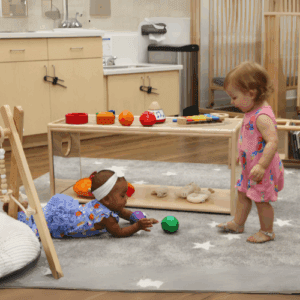
In a private preschool, the classroom is more than just a room—it’s a carefully curated space designed to inspire curiosity. Drawing from the Reggio Emilia inspiration, we see the environment as a “third teacher.” This means that every material is chosen with intention, from natural objects like shells and leaves to open-ended resources like clay, paint, and blocks. Unlike toys that do one thing, these materials can become anything a child imagines, supporting their unique pace of learning and exploration. For babies and toddlers especially, having the right play materials is essential for their growth and happiness, allowing them to test ideas, solve problems, and express their creativity in countless ways.
Using Floor Play and Outdoor Time to Connect
Meaningful connection happens when we get down on a child’s level, and that’s why floor play is such a vital part of the day. It’s a time for teachers to observe, listen, and join in on the children’s imaginative worlds, following their interests and encouraging shared learning. This same spirit of discovery extends to our time outdoors. Far more than just a break, outdoor play is an essential part of the curriculum. It’s where children can run, climb, and develop their physical skills while also learning to negotiate games with friends and manage their energy in a healthy way. Our enrichment programs often take learning outside, recognizing that fresh air and open space provide a unique environment for both social and emotional growth.
Exploring Enrichment Programs and Specialized Activities
Private preschools often offer a richer daily experience by weaving specialized activities right into the curriculum. These programs go beyond the basics to support your child’s holistic development. An engaging enrichment program can introduce children to new passions and talents through activities like art, music, cooking, and physical education. These aren’t just fun extras; they are essential for developing creativity, coordination, and self-expression. Whether your child is learning new yoga poses in a Fit Kids class or measuring ingredients as a Budding Baker, these activities help them grow into well-rounded, confident learners with a wide range of interests.
Balancing Child-Led Play with Teacher-Guided Instruction
It’s a common question: if children are “just playing,” are they really learning? The answer is a resounding yes, but the magic lies in how that play is supported. The best preschool environments don’t force a choice between free play and structured lessons. Instead, they masterfully blend the two. This “both/and” approach means that while your child has the freedom to explore their own interests, our skilled educators are always observing, listening, and looking for opportunities to introduce new concepts and vocabulary. They might add new materials to the block area to challenge budding architects or ask thoughtful questions that encourage deeper thinking during a pretend play scenario. This balance ensures that learning is always child-driven but also intentional and purposeful, making it both joyful and incredibly effective.
Why Individual Attention Helps Your Child Thrive
One of the most significant advantages of a private preschool is the focus on individualized attention. When your child is in a smaller, more intimate setting, they aren’t just another face in the crowd. Instead, they are seen, heard, and understood as a unique person with their own personality, interests, and pace of learning. This personal connection is the foundation for a positive and effective early education experience.
Individualized attention means that teachers have the time and space to truly get to know your child. They can observe what sparks their curiosity, notice where they might need a little extra encouragement, and celebrate their personal victories, big and small. This creates a nurturing environment where children feel safe to explore, ask questions, and take on new challenges. It’s not about pushing academics; it’s about meeting your child exactly where they are and providing the right support to help them grow with confidence. This tailored approach ensures that learning is always relevant, engaging, and joyful.
Why Smaller Classes Mean More One-on-One Time
Smaller class sizes are a cornerstone of private preschools, and for good reason. With fewer children in the room, teachers can dedicate more meaningful one-on-one time to each child throughout the day. This isn’t just about managing the classroom; it’s about building genuine relationships. When your child has a strong, trusting bond with their teacher, they feel more secure and confident.
This dynamic allows our exceptional educators to give personal attention that helps children feel valued. Whether it’s sitting down to work on a puzzle together, listening intently to a story your child made up, or offering a comforting hug, these moments make a huge difference. This consistent, positive interaction helps your child build social skills and feel comfortable expressing themselves in a group setting.
What Personalized Learning Looks Like in Preschool
With more personal attention, teachers can easily see what your child is good at and where they might need a little help. This allows them to tailor activities and support to fit your child’s specific needs. If your little one is fascinated by bugs, a teacher can introduce books and projects about insects. If they’re struggling with sharing, a teacher can provide gentle guidance during playtime.
This personalized approach means learning is never one-size-fits-all. At Strong Start, we use methods like The Project Approach to follow children’s interests, allowing them to explore topics that genuinely excite them. This keeps them engaged and motivated, turning learning into a fun adventure rather than a chore. It ensures every child gets the right level of challenge and support to keep moving forward.
Supporting Every Child’s Unique Learning Style
Every child learns differently. Some are hands-on explorers who need to touch and build, while others are quiet observers who absorb everything around them. Private preschools can adapt to the unique interests and developmental needs of the children in each classroom. Teachers have the flexibility to provide different materials and activities that appeal to various learning styles.
This adaptability creates a more inclusive and effective learning environment. Inspired by philosophies like Reggio Emilia, our classrooms are designed to be responsive to the children within them. A warm, attentive teacher can create a safe and predictable space where every child, regardless of their temperament or learning preference, feels supported. This fosters a true love of learning that will stay with them for years to come.
Fostering Equity and Belonging for Every Child
A truly great preschool experience is one where every child feels a deep sense of belonging. This means creating a classroom community where each child is celebrated for who they are, including their unique family, culture, and background. With smaller class sizes, teachers have the time to build genuine relationships and understand what makes your child special. This individualized attention ensures the environment is not just welcoming but also fair and supportive for all children. It’s about more than just being nice; it’s about intentionally building a space where differences are honored and every child feels safe, seen, and ready to learn. This strong foundation is reinforced by actively partnering with parents to create a consistent circle of support between home and school.
Creating an Inspiring Learning Environment
Have you ever walked into a room and just felt a sense of calm and possibility? That’s the goal of a well-designed preschool classroom. The physical environment is more than just a backdrop for learning; it’s often called the “third teacher.” How a room is arranged, the materials on the shelves, and the light coming through the windows all play a crucial role in sparking curiosity and encouraging exploration. A private preschool has the flexibility to create spaces that are not only safe and functional but also beautiful and inspiring. The classroom is thoughtfully organized to invite children into different kinds of play, from collaborative building projects in an open area to quiet reflection in a cozy reading nook.
This intentional design is rooted in the understanding that children learn best through hands-on discovery and play. Instead of being filled with overstimulating plastic toys, the classroom is equipped with open-ended materials that encourage creativity and problem-solving. Think natural wood blocks, clay, paint, and interesting items from nature. This approach, central to our Reggio Emilia inspiration, empowers children to become architects of their own learning. The environment is carefully curated to be engaging and responsive, evolving with the children’s interests and turning the entire classroom into a landscape for adventure and wonder.
Designing the Classroom Through a Child’s Eyes
When designing a classroom, the most important perspective is that of a child. Everything from the height of the shelves to the placement of the artwork is considered from their point of view. Materials are stored in low, open containers, making them accessible so children can make their own choices and practice independence. This simple act of empowerment builds confidence and ownership over their learning space. You’ll also notice that the classroom feels calm and homelike, with natural light, soft colors, and comfortable spaces that allow for both active group play and quiet, individual focus. This thoughtful design minimizes distractions and helps children feel secure and ready to engage with the world around them.
How Preschool Sharpens Thinking and Learning Skills
Cognitive development is all about how your child learns to think, explore, and figure things out. It’s the foundation for understanding the world, from recognizing shapes and colors to solving complex problems later in life. A high-quality private preschool provides a thoughtfully designed environment that encourages this growth every single day. Instead of just memorizing facts, children are given the space and materials to ask questions, test their theories, and make exciting new connections.
This approach sees children as capable, curious learners. The classroom becomes a laboratory where they can build, create, and investigate topics that genuinely capture their imagination. Teachers act as guides, helping children organize their thoughts and dig deeper into their interests. This method of learning, inspired by philosophies like Reggio Emilia, helps children build the mental framework they need to become confident, resourceful thinkers. It’s not about giving them all the answers; it’s about giving them the tools and encouragement to find the answers for themselves.
Growing Your Child’s Language and Vocabulary
A private preschool classroom is a wonderfully language-rich environment. Through daily activities like circle time stories, sing-alongs, and conversations with teachers and friends, your child is constantly hearing and practicing new words. This isn’t just about building a bigger vocabulary. It’s about learning how to communicate ideas, express feelings, and ask thoughtful questions. Our exceptional educators are trained to model rich language and engage children in meaningful back-and-forth conversations, turning a simple chat about the weather or a storybook character into a powerful learning moment.
Learning to Think Critically and Solve Problems
True problem-solving skills are built through hands-on experience, not worksheets. In a private preschool, your child will face fun, age-appropriate challenges every day. How can we build a block tower that doesn’t fall over? What happens if we mix these two colors? How can we work together to put this big puzzle together? Through The Project Approach, children dive deep into topics that interest them, conducting their own research and experiments. This process teaches them to observe, predict, and think critically as they work toward a goal, building resilience and confidence along the way.
Fostering Creativity and a Love for Learning
Creativity is so much more than arts and crafts. It’s about thinking outside the box, imagining new possibilities, and finding unique ways to express ideas. Private preschools nurture this by giving children the freedom to explore materials and follow their curiosity. When learning is driven by a child’s own interests, it feels like play, not work. This positive, joyful experience helps foster a genuine love for learning that will stay with them long after they leave preschool. Our enrichment programs offer even more avenues for creative exploration, from cooking to STEM, ensuring every child finds something that sparks their passion.
Why Do Exceptional Teachers Make Such a Difference?
The person leading the classroom is just as important as the curriculum itself. A great teacher does more than just follow a lesson plan; they create a warm, engaging, and supportive world for your child to step into each day. They are the ones who notice the little things, celebrate the small victories, and guide your child through challenges with patience and understanding. When you find an educator who is truly passionate about early childhood development, you can feel the positive energy they bring to their work. This passion is what transforms a good preschool experience into a great one.
Exceptional educators are experts at seeing the world through a child’s eyes. They understand that a simple question can be the start of a big investigation and that a disagreement over a toy is a chance to practice empathy. They foster a sense of belonging where every child feels seen, heard, and valued. This supportive environment encourages children to take healthy risks, whether it’s speaking up in a group or trying a new art project. A teacher’s consistent, caring presence helps build a foundation of curiosity and confidence that will last a lifetime.
Why Teacher Qualifications and Training Matter
When teachers have specialized training in early childhood education, they bring a deep understanding of how young children think, learn, and grow. They aren’t just guessing what works; they are using proven methods to help your child reach developmental milestones. These exceptional early childhood professionals know how to design activities that are both fun and purposeful, whether it’s building a block tower to learn about physics or telling a story to expand vocabulary. Their expertise means they can identify your child’s unique learning style and adapt their approach to meet their needs, ensuring every child feels successful and engaged in the classroom.
The Importance of a Strong Teacher-Child Bond
A private preschool classroom should feel like a second home, and that starts with a caring teacher. Instead of relying on punishments like “time out,” skilled educators focus on positive guidance. They help children understand their big feelings and work through conflicts in a constructive way. This approach builds trust and makes your child feel safe and respected. When children have a positive, nurturing relationship with their teacher, they are more confident to ask questions, try new things, and interact with their peers. This secure bond is the bedrock for social and emotional growth, teaching children that school is a place where they are supported and valued.
Learning from Experts in Early Child Development
A high-quality preschool is guided by educators who are experts in child development. They know that learning is about more than just academics; it’s about developing the whole child. These teachers intentionally create opportunities for children to practice social skills, solve problems, and work together as a team. They observe each child closely, understand their individual progress, and provide the right support at the right time. This level of expertise is often reflected in a school’s NAEYC accreditation, which signifies a commitment to the highest standards in early education. With an expert guide, your child learns how to become a capable, kind, and curious member of their community.
Following NAEYC’s Guidelines for Developmentally Appropriate Practice
A commitment to the highest standards in early education is often demonstrated through a school’s professional affiliations. The National Association for the Education of Young Children (NAEYC) provides crucial guidelines for what they call “Developmentally Appropriate Practice.” This simply means that all teaching decisions—from the daily schedule to the activities planned—are based on a deep understanding of how children grow and learn at each stage. It ensures that the curriculum is engaging and meaningful, not just a set of academic goals. Following these guidelines means creating a caring community where learning is joyful and every child is supported, which is a hallmark of NAEYC accreditation and a key benefit of a high-quality private preschool program.
The Teacher’s Role as a Guide, Partner, and Advocate
In a private preschool setting, the teacher’s role extends far beyond instruction. They are a guide who sees the world through your child’s eyes, recognizing that a question about a puddle can spark a week-long investigation into weather. They are a partner in discovery, working alongside children as they build, create, and solve problems. Most importantly, they are an advocate for your child’s unique needs and interests. This nurturing, responsive relationship is what helps build a lifelong love of learning. Our exceptional educators are experts at creating this supportive environment, where a disagreement over a toy becomes a lesson in empathy and every child feels confident enough to share their ideas.
Preparing Your Child for Kindergarten and Beyond
As parents, we all want to give our children the best possible start in life. We think about their first day of kindergarten, their high school graduation, and everything in between. A high-quality private preschool experience is one of the most meaningful ways to prepare them for that journey. It’s about so much more than learning letters and numbers; it’s about building a comprehensive toolkit of skills that will serve them for years to come.
This preparation happens in a few key ways. First, it lays a solid academic and social foundation, making the transition to kindergarten smoother and more successful. Second, it fosters a sense of independence and self-reliance, empowering children to take on new challenges with confidence. Finally, the cognitive and emotional skills they develop have a lasting impact, shaping how they learn and interact with the world long after they’ve left the preschool classroom. By choosing a program that focuses on the whole child, you’re not just preparing them for the next school year, you’re setting them on a path for lifelong success.
Creating a Strong Foundation for Kindergarten
A great preschool program does more than just prepare your child for kindergarten; it sets the stage for their entire academic career. Research shows that children in high-quality programs are more likely to graduate from high school and find success in their careers. This incredible long-term impact starts with a curriculum that builds essential skills through play.
Through carefully designed activities, children develop the cognitive, social, and emotional abilities they need for school readiness. They learn to follow directions, work with others, and develop a genuine love for learning in a supportive environment. This positive introduction to school helps them walk into their kindergarten classroom feeling capable, curious, and ready to learn.
Encouraging Independence and Self-Help Skills
One of the most visible transformations you’ll see in your child during their preschool years is a growing sense of independence. In a private preschool setting, children are given countless opportunities to practice essential self-help skills in a safe and encouraging environment. From putting on their own jackets and managing their backpacks to pouring their own water at snack time, these small moments of autonomy add up to a big boost in confidence.
Because private preschools often have smaller class sizes, teachers can provide more individualized attention and support as children work on these skills. This flexibility allows educators to meet children where they are, gently guiding them as they learn to handle tasks on their own and celebrate their growing capabilities.
What Are the Long-Term Academic Benefits?
The academic advantages of a high-quality preschool program extend far beyond kindergarten. The positive effects are more likely to be sustained when a program is truly excellent. In these environments, children don’t just memorize facts; they learn how to think critically, solve problems, and explore their own ideas. This happens when teachers are trained to observe and assess learning in authentic ways.
Instead of rushing through a checklist of skills, educators in top-tier programs give children the time and space to get deeply involved in their learning. This approach, which is central to our NAEYC accreditation, nurtures a child’s natural curiosity and builds a strong cognitive framework. It helps them become active, engaged learners who are prepared for the academic challenges ahead.
The Impact of High-Quality Early Education by the Numbers
While we can see the day-to-day joy and growth, the long-term impact of a high-quality preschool is also backed by compelling research. Studies consistently show that children who attend excellent early education programs are not only better prepared for kindergarten but are also more likely to graduate from high school and find success in their careers. The data is specific: one study found that children from a quality program continued to perform in the top 20% of their class through middle school, with most in the top 10%. This powerful head start continues to open doors, making these children more likely to attend four-year colleges. It’s a clear indicator that an environment that fosters deep, meaningful learning through methods like The Project Approach doesn’t just prepare a child for the next grade—it builds a foundation for life.
What Growth Will You See in Your Child?
One of the most rewarding parts of being a parent is watching your child grow and change. In a private preschool setting, this growth happens in leaps and bounds. The environment is designed to support children as they reach key developmental milestones, not just academically, but socially and emotionally, too. You’ll see new skills emerge as they interact with their peers and teachers, building a strong foundation for everything that comes next.
These milestones are more than just items on a checklist; they are the visible signs of your child becoming a more confident, capable, and curious person. From learning to cooperate with friends to getting ready for the structure of kindergarten, preschool provides the experiences that help your child flourish. It’s a special time where you can witness their personality and abilities take shape in exciting new ways.
Seeing Social Skills and Friendships Grow
There’s nothing quite like seeing your child make their first real friend. A private preschool is often where these foundational social skills begin to click. Through daily interactions, children learn how to share toys, take turns in a game, and work through small disagreements with a little help from their teachers. These moments are so important because they teach children how to build friendships and understand the perspectives of others.
In our preschool classrooms, group activities and collaborative play are a core part of the day. This gives children constant opportunities to practice communication, teamwork, and empathy. They learn to express their own ideas and listen to their classmates, laying the groundwork for positive social relationships throughout their lives.
Spotting the Signs of School Readiness
As your child approaches kindergarten, you might wonder if they’re truly ready. A high-quality preschool program is designed to make that transition feel seamless. School readiness isn’t just about knowing letters and numbers; it’s about learning how to be a student. This means developing the ability to follow multi-step directions, participate in group activities, and focus on a task for a short period.
These skills are woven into every part of the preschool day, from circle time to hands-on projects. Children who attend preschool are often better prepared for the structure of a formal school setting, which sets them up for long-term academic success. This preparation helps them walk into their kindergarten classroom feeling confident and excited to continue their learning journey.
Signs of Growing Independence and Emotional Control
A nurturing preschool environment gives children the safety they need to explore their feelings and develop independence. When children are surrounded by warm, responsive adults, they feel secure enough to express themselves and learn how to manage big emotions in healthy ways. Our exceptional educators guide children through this process, helping them name their feelings and find solutions to problems.
You’ll also see a wonderful growth in their independence. This might start with simple self-help skills, like zipping up a coat or pouring their own water, but it quickly expands. They begin making choices about their activities, taking responsibility for classroom jobs, and feeling a sense of pride in their accomplishments. This growing self-reliance is a huge step in their development.
How Can You Find the Right Private Preschool?
Choosing a preschool is a big decision, but it can also be an exciting one. It’s your chance to find a community that will support your child’s growth and curiosity. The key is to know what to look for. Beyond the colorful classrooms and inviting playgrounds, you’ll want to understand the school’s core philosophy, get to know the educators, and see how they’ll partner with your family. By focusing on these key areas, you can find a place where your child will truly feel at home and ready to learn.
What to Ask on Your Preschool Tour
When you tour a preschool, think of yourself as a detective looking for clues about the school’s environment. Pay attention to how teachers interact with children. Do they get down on the child’s level? Are their conversations warm and engaging? A strong parent-school partnership is essential, so ask how the school keeps families informed and involved. You might ask questions like, “How do you share updates about my child’s day?” or “What opportunities are there for parents to participate in school activities?” Look for a school that sees you as a vital part of your child’s education and makes communication a priority.
Does the School’s Philosophy Fit Your Family?
A school’s educational philosophy is more than just a statement on its website; it’s the guiding principle behind every activity and interaction. Some schools follow specific approaches, like Reggio Emilia or the Project Approach, which center on child-led discovery. As you explore different schools, look for consistency between their stated philosophy and what you see in the classroom. The real quality of a school shines through its people and its proof. Passionate, qualified teachers and official accreditations are strong indicators that a school is committed to excellence. Ask the director to explain their approach in simple terms and how it benefits children’s development.
What to Look for in Teachers and Progress Reports
Great teachers are the heart of any high-quality preschool. During your search, ask about the qualifications and ongoing training the educators receive. A school that invests in its staff is investing in your child. These qualified teachers are experts at building nurturing relationships that help children feel safe and confident. It’s also important to understand how they observe and support your child’s progress. Ask how they track developmental milestones. Thoughtful assessments aren’t about testing; they’re about understanding each child’s unique journey and providing tailored support to help them flourish in every area of development.
How Preschools and Families Work Together
When you choose a preschool, you’re not just picking a place for your child to spend their days. You’re choosing a partner to help you raise a curious, confident, and kind human being. One of the most significant benefits of a private preschool is the deep commitment to building a strong connection between school and home. This isn’t just a nice-to-have feature; it’s a core part of the educational philosophy. A true partnership ensures your child feels supported, understood, and secure as they move between their two most important worlds: home and school.
This collaboration is built on a foundation of trust and mutual respect. It means educators see you as the expert on your child, and you see them as trusted guides in early childhood development. High-quality programs actively foster this relationship through consistent communication, meaningful opportunities for involvement, and a shared commitment to your child’s growth. When your family and your child’s school work together as a team, it creates a seamless and nurturing experience that helps your little one thrive. This collaborative environment is where the magic happens, turning everyday learning moments into a strong foundation for life.
How Teachers Keep You in the Loop
Open and consistent communication is the bedrock of a strong home-school partnership. You deserve to know not just what your child did all day, but how they are growing, what sparks their curiosity, and where they might need a little extra support. Private preschools prioritize keeping you in the loop with regular updates through daily reports, classroom newsletters, and photos that give you a window into their world. You can also expect scheduled parent-teacher conferences to discuss your child’s progress in detail. This open line of communication is a two-way street, creating a space where you can share insights from home, ensuring your child’s teachers have a complete picture of who they are.
How You Can Get Involved at School
Great preschools don’t just welcome families; they invite them to be an active part of the community. They understand that when children see their parents involved in their school, it reinforces the value of learning and strengthens their sense of belonging. These opportunities can take many forms, from volunteering in the classroom or chaperoning a field trip to sharing a special talent or family tradition with the class. Many schools also have a Family Council where you can contribute to the school’s direction. Getting involved allows you to connect with other families and see your child’s social world in action, making the school feel like an extension of your own family.
Working Together for Your Child’s Success
Beyond daily updates and volunteer opportunities, a true partnership is about working together as a team with a shared goal: helping your child flourish. This means educators and parents collaborate, sharing observations and strategies to support development both in the classroom and at home. Your child’s teachers are experts in child development, and they can offer valuable guidance and resources. At the same time, you are the expert on your child. This mutual respect allows for a powerful alliance. When exceptional educators and engaged families work together, they create a consistent and supportive environment that nurtures every aspect of a child’s growth, from their social skills to their academic readiness.
Related Articles
Frequently Asked Questions
My child just plays all day at preschool. How is that preparing them for kindergarten? That’s a great question, and it gets to the heart of how young children learn best. In a high-quality preschool, play is the most important work your child can do. When they are building with blocks, they are learning about gravity and balance. When they are in the dramatic play area, they are practicing communication and problem-solving. This type of intentional, play-based learning is carefully designed by our educators to build the foundational skills for kindergarten, like critical thinking and collaboration, in a way that feels joyful and natural to a child.
What if my child is shy? How will a private preschool help them make friends? It’s completely normal for children to feel shy in new situations. Private preschools, with their smaller class sizes, create a perfect environment for reserved children to feel comfortable. Teachers have more time to build a trusting relationship with each child, helping them feel secure. They can then gently guide your child into group activities, helping them practice the skills needed to connect with peers. It’s not about pushing them into the spotlight, but about creating a warm, supportive space where they can build confidence at their own pace and let friendships blossom naturally.
What does a curriculum inspired by Reggio Emilia or The Project Approach actually mean for my child’s day? Think of it as learning that’s driven by your child’s own curiosity. Instead of following a rigid lesson plan, teachers listen to the children’s questions and observe their interests. If a few children become fascinated by the worms they found on the playground, the class might start a project to learn all about them. This approach makes learning meaningful and exciting because it connects directly to your child’s world. Their day is filled with hands-on investigation, collaboration with friends, and creative ways to express what they’ve discovered.
How will I know what’s happening in my child’s day and how they’re progressing? A strong partnership with families is essential, and that starts with great communication. You can expect to receive regular updates that give you a window into your child’s experiences, from photos of their activities to notes about their social interactions and learning discoveries. We also schedule dedicated time for parent-teacher conferences to discuss your child’s development in a more detailed way. This creates an open, two-way conversation, ensuring we are working together as a team to support your child.
Besides academics, what are the most important skills my child will learn for their future? While academic readiness is important, the social and emotional skills your child develops in preschool are truly foundational for life. They will learn how to share their ideas with a group, listen to a friend’s perspective, and work through disagreements respectfully. They will also build resilience by trying new things and learning to manage their big feelings in a healthy way. These skills, like empathy, teamwork, and self-regulation, are what help children grow into confident, kind, and capable people.
Written By
Marc Hoffman
Founder, Strong Start Early Care & Education
Marc founded Strong Start in 2014, inspired by his studies at Williams College, Yeshiva University, and research at Yale University. His child-centered, inquiry-based approach to early education has helped hundreds of families in the Trumbull and Bridgeport communities. As a parent himself, Marc understands the importance of finding a nurturing environment where every child can learn, grow, and flourish.