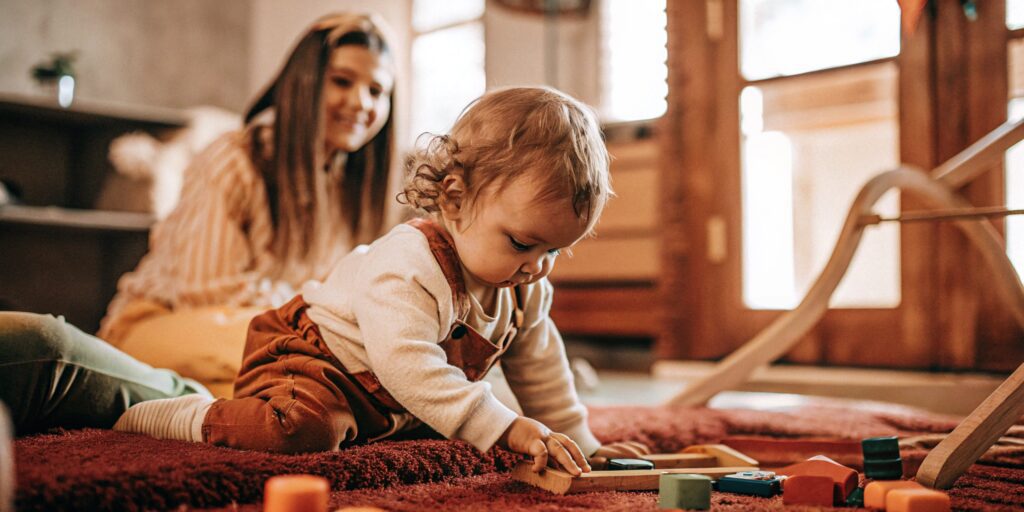
Finding the right child care program can feel like a full-time job. You’re juggling schedules, comparing costs, and trying to size up a center in one short tour. It’s easy to be impressed by a new playground, but the most important qualities aren’t always obvious. This guide explains how to find daycare with a good curriculum that supports your child’s growth. We’ll cover what to look for in a play school, focusing on non-negotiables like safety and warm teacher interactions, so you can confidently make a choice that feels right for your family.
Key Takeaways
- Understand the “Why” Behind the Day: A true early learning center is defined by its educational philosophy. Prioritize programs with an intentional curriculum that supports whole-child development, turning daily activities into meaningful learning experiences rather than just filling time.
- Focus on the Educators and the Environment: The quality of a program depends on its teachers and the classroom itself. Look for qualified, passionate educators, low teacher-to-child ratios, and a physical space that is thoughtfully designed to inspire curiosity and exploration.
- Seek a Partnership and Proof of Quality: The right program will feel like a team effort between you and the school. Look for centers that emphasize open communication and parent involvement, and use markers like NAEYC accreditation to confirm a commitment to the highest standards.
Daycare vs. Early Learning Center: What’s the Real Difference?
When you start looking for childcare, you’ll likely hear the terms “daycare” and “early learning center” used almost interchangeably. While both provide a safe place for your child while you’re at work, their core philosophies and goals can be quite different. Understanding this distinction is the first step in finding a program that truly aligns with what you want for your child’s first school experience.
A daycare’s primary role is often custodial—to keep children safe, fed, and supervised. An early learning center does all of that, but its mission is rooted in education. It’s a place built on a deep understanding of child development, where every activity and interaction is an opportunity for learning. Think of it as the difference between babysitting and teaching. Both are valuable, but one is intentionally designed to prepare your child for kindergarten and a lifetime of curiosity. This approach shapes everything from the classroom design to the daily schedule, creating a rich environment where children don’t just spend their day; they invest it in growth.
More Than Just Childcare
The most significant difference lies in the program’s purpose. Daycare centers focus primarily on keeping children safe and busy, while early childhood education centers are built on teaching, child development, and helping children learn new skills. At an early learning center, the goal isn’t just to fill the hours of the day; it’s to fill those hours with meaningful experiences that spark curiosity and build confidence.
This shift in focus changes everything, from the daily schedule to the way educators interact with children. Instead of simply supervising play, our exceptional educators are active participants, guiding discovery and asking questions that encourage deeper thinking. They are trained professionals who understand the milestones of early childhood and know how to create activities that support them.
How They Support the Whole Child
An early learning center sees your child as a whole person, not just a mind to be filled with facts. Early Childhood Education Centers have set lesson plans (a curriculum) that help children grow in thinking, social skills, feelings, and physical abilities. This comprehensive approach ensures that children are not only academically prepared for kindergarten but are also socially and emotionally ready for the classroom environment.
This focus on whole-child development means we pay just as much attention to learning how to share and express feelings as we do to recognizing letters and numbers. The curriculum is woven into every part of your child’s day, from circle time to outdoor play. It’s a balanced approach that nurtures every aspect of your child’s growth, helping them become capable, well-rounded little learners.
An Environment Built for Curiosity
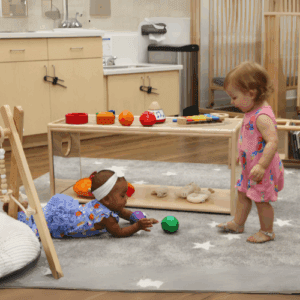
Walk into an early learning center, and you’ll notice that the environment itself feels different. The space is intentionally designed to be a “third teacher,” inviting exploration and discovery at every turn. Educational philosophies like Reggio Emilia emphasize inquiry and child-led learning, creating environments that are nurturing, stimulating, and developmentally appropriate for each age group.
From the layout of the preschool classrooms to the materials on the shelves, everything is chosen with a purpose. You’ll see natural materials, open-ended toys that encourage imagination, and displays of the children’s own work, showing them that their ideas are valued. This creates a vibrant, engaging atmosphere where children feel empowered to ask questions, solve problems, and take the lead in their own learning journey.
What Does a Good Curriculum Look Like?
When you peek into a high-quality early learning center, you’ll see more than just playtime. You’ll see a carefully crafted environment where every activity, from building with blocks to digging in a sensory bin, is an opportunity for growth. This is guided by an educational philosophy—a center’s core beliefs about how children learn best. While some schools stick to one specific method, many of the best programs, including ours, draw inspiration from several proven approaches to create a rich, well-rounded experience for every child.
Understanding these philosophies can help you find a program that feels right for your family and your child’s unique personality. It’s not about finding the one “perfect” curriculum, but about recognizing the thoughtful intention behind the daily schedule. You’ll want to see a classroom that encourages curiosity, supports different learning styles, and helps children develop socially and emotionally, not just academically. When you see educators who are passionate about their approach and can explain why they do what they do, you know your child is in a place where their development is the top priority. Let’s look at a few of the most respected and effective approaches you’ll find in today’s early learning centers.
The Child-Led Reggio Emilia Approach
The Reggio Emilia approach views children as strong, capable, and full of potential. Instead of seeing them as empty vessels to be filled with information, this philosophy honors their innate curiosity and intelligence. In a Reggio-inspired classroom, learning is a collaborative adventure between children and teachers. The curriculum isn’t set in stone; it emerges from the children’s own interests. If a child is fascinated by shadows, the teacher will facilitate activities that let them explore light, shape, and reflection. The classroom itself is considered the “third teacher,” intentionally designed with natural light and beautiful materials to provoke wonder and encourage exploration. This is a core part of our Reggio Emilia inspiration at Strong Start.
How Kids Learn Through Projects
Imagine your child and their classmates spending weeks investigating a topic they’re genuinely excited about, like how gardens grow or what happens on a construction site. That’s the heart of the Project Approach. This method turns learning into an in-depth investigation where children’s questions guide the journey. They don’t just learn facts; they become researchers, problem-solvers, and collaborators. Teachers facilitate this process by helping children find answers through hands-on experiments, field trips, and conversations with experts. The Project Approach helps children develop critical thinking skills and a deep, meaningful understanding of the world around them, all while working together with their peers.
Why Learning Through Play is So Effective
Play is the natural language of childhood, and a play-based curriculum uses it to build a powerful foundation for lifelong learning. This isn’t just unstructured free time. It’s purposeful play, where every station in the classroom—from the dramatic play corner to the block area—is designed to help children develop crucial skills. While they’re pretending to be chefs, they’re building vocabulary and learning to cooperate. When they’re figuring out how to build a tall tower, they’re exploring physics and persistence. This approach fosters a genuine love of learning by allowing children to explore, experiment, and discover at their own pace, making school a place of joy and curiosity.
Other Common Learning Philosophies
While we are deeply inspired by the Reggio Emilia and Project-Based philosophies, many other wonderful approaches shape early childhood education. Understanding the landscape of these different methods can help you clarify what you value most in a learning environment. Each has a unique perspective on how children learn, the role of the teacher, and the ideal classroom setup. As you explore these, think about your child’s personality and what kind of atmosphere would help them thrive. Here are a few other well-regarded philosophies you might encounter during your search.
Montessori
The Montessori method is centered on fostering independence and self-directed learning. In a Montessori classroom, you’ll find a carefully prepared environment with specific learning materials, and children are free to choose activities that capture their interest. The philosophy is built on the idea that kids are natural learners who thrive when given the freedom to explore at their own pace. As Open Doors Preschool notes, “The Montessori Method focuses on the child. Kids learn on their own and become independent.” Teachers act as guides, observing and introducing new challenges when a child is ready, rather than leading the whole group in the same lesson.
HighScope
If you believe children learn best by being active participants in their education, the HighScope curriculum might resonate with you. This approach is all about active learning through direct, hands-on experiences. The core of the daily routine is the “plan-do-review” sequence, where children are encouraged to first plan what they want to do, then carry out their plan, and finally reflect on their experience with teachers and peers. This process helps children develop critical thinking, problem-solving skills, and a sense of ownership over their learning. It’s a dynamic approach where children are encouraged to “plan, do, and then think about their activities.”
Waldorf
A Waldorf education emphasizes creativity, imagination, and a predictable rhythm to the day. This philosophy aims to educate the whole child—head, heart, and hands. Classrooms often have a warm, homelike feel and use natural materials for toys to encourage imaginative play. The curriculum is designed to be developmentally appropriate, with a strong focus on storytelling, music, art, and practical activities like baking or gardening. As noted by the early education platform Lillio, “Waldorf education uses predictable routines, practical work (like cooking), and believes young children learn by copying others,” which fosters a secure and nurturing environment for learning.
Academic or Teacher-Led
In contrast to more child-led philosophies, an academic or teacher-led curriculum is highly structured and focuses on preparing children for the specific academic skills needed in kindergarten. The teacher typically directs the lessons, guiding the entire class through activities centered on letters, numbers, shapes, and colors. The goal is often to achieve specific learning outcomes and milestones within a set timeframe. This approach is “very structured, teacher-led, and focuses on letters, numbers, and preparing for kindergarten,” with an emphasis on results rather than the learning process itself. This can be a good fit for families who prioritize a traditional, goal-oriented school structure.
Emergent Curriculum
An emergent curriculum is a flexible, responsive approach that is built around the interests and passions of the children in the classroom. Rather than following a pre-set plan for the year, teachers carefully observe the children’s play and conversations to identify topics for exploration. If a group of children becomes fascinated with insects they found on the playground, the teacher will build activities, projects, and reading around that interest. This method requires teachers to be highly adaptable and observant, as the curriculum “plans activities based on what a specific group of children is interested in and needs.” This approach shares many values with The Project Approach, ensuring learning is always relevant and engaging.
Blending Science, Tech, and Creativity
The best early education programs understand that learning isn’t divided into neat little boxes. That’s why you’ll often see a seamless blend of STEM (Science, Technology, Engineering, and Math) and the arts. This integrated approach fosters both creativity and critical thinking. A single activity can touch on multiple subjects: building a ramp for a toy car involves engineering and physics, while charting how far the car travels introduces math concepts. Afterward, children might paint with the car’s wheels, turning a science experiment into an art project. Our Enrichment Program is built on this idea, ensuring children develop skills across all domains in a fun, hands-on way.
The Role of Technology in the Classroom
It’s natural to have questions about screen time, especially in an early learning environment. The key is to view technology not as a digital babysitter, but as one of many tools in the toolbox. In a high-quality program, technology is used purposefully to make learning more interactive and to support hands-on discovery, never to replace it. For instance, after a nature walk, children might use a tablet to identify a specific leaf they found or watch a short video about how caterpillars transform. This approach turns technology into a resource that deepens their real-world explorations, fitting seamlessly into a curriculum that blends science and creativity. This is a core part of how our Enrichment Program helps children connect ideas and build a broader understanding of their world.
What to Look for in an Early Childhood Educator
The classroom environment and curriculum are incredibly important, but the heart of any great early learning center is its teachers. These are the people who will guide your child’s daily discoveries, comfort them when they’re sad, and celebrate their every milestone. An educator does so much more than supervise; they create a warm, engaging, and secure atmosphere where your child can truly thrive. When you’re touring a center, pay close attention to the interactions between teachers and children.
Finding the right educator means looking for a unique combination of professional qualifications, a genuine passion for teaching young children, and a commitment to their own growth. A great teacher understands the science behind child development but also knows that every child is an individual with their own personality and pace. As you evaluate different programs, ask about their hiring standards and what they look for in their teaching staff. The best centers are proud to talk about their exceptional educators and what makes them special.
Why Degrees and Certifications Matter
When you entrust your child to an educator, you want to know they are a trained professional. Look for teachers with degrees or certifications specifically in early childhood education or a related field. This formal training means they have a deep understanding of child development, learning theories, and how to create a safe and stimulating classroom.
These credentials show that an educator has a professional foundation for their work. They aren’t just passionate about children—they’ve dedicated themselves to learning the best ways to support their growth. This expertise allows them to design thoughtful activities that are not only fun but also build critical cognitive, social, and emotional skills for your child.
Are the Teachers Always Learning?
The field of early childhood education is always evolving as new research gives us a better understanding of how children learn. Because of this, a great educator’s learning journey doesn’t stop after they get their degree. The best teachers are lifelong learners who are committed to staying current on the latest practices in child development, health, and safety.
Ask the center’s director about their requirements for ongoing professional development. At Strong Start, our educators receive regular training to refine their skills and learn new strategies for supporting the children in their care. This commitment ensures that your child is benefiting from the most up-to-date, effective, and caring teaching methods available. This dedication to growth is a key part of our NAEYC accreditation.
The Right Experience for the Right Age
The needs of an infant are vastly different from the needs of a four-year-old. An educator who is a master at guiding toddler explorations might use a completely different set of skills than one who excels at preparing preschoolers for kindergarten. That’s why it’s so important to find a teacher with specific, hands-on experience with your child’s age group.
An experienced teacher understands the specific developmental milestones and challenges for that stage. They know how to set up an environment that is both safe and appropriately challenging, whether it’s for a baby learning to crawl in our infant classrooms or a curious preschooler asking complex questions. This specialized experience ensures your child gets the right kind of support at the right time.
What Does Quality Early Education Cost?
Thinking about the cost of child care is a big part of choosing the right program for your family. It’s more than just a monthly expense; it’s an investment in your child’s future. High-quality early learning centers put tuition toward creating a safe, nurturing, and stimulating environment where children can thrive. This includes everything from hiring and retaining exceptional educators with degrees in the field to maintaining low teacher-to-child ratios and providing high-quality learning materials. While the price tag can seem high, studies show that every dollar invested in high-quality early learning can yield significant returns in a child’s long-term development and success.
What Influences the Cost?
Several key factors determine the tuition at an early learning center. The age of your child is a primary one, as infant and toddler programs require more one-on-one attention and lower staff-to-child ratios, making them more expensive. The qualifications and experience of the teachers also play a significant role; centers that invest in degreed educators and ongoing professional development will reflect that in their pricing. The curriculum, enrichment programs, and the quality of the facility itself—including safety features and learning materials—all contribute to the overall cost. It’s helpful to see tuition not just as paying for supervision, but for a comprehensive educational experience.
Full-Time vs. Part-Time Care
One of the first decisions you’ll make is how many hours of care your family needs. Full-time programs typically mean your child attends five days a week, while part-time options can range from a few full days to shorter half-day schedules. While part-time care can seem like a great flexible solution, it’s not always available, especially in high-quality learning centers. Premier programs often prioritize consistency for children, which is why you’ll find that many have limited or no part-time spots. This is because a stable routine helps children feel secure and build strong bonds with their teachers and friends, which is a cornerstone of a great early learning experience. You can often find a center’s policy on scheduling in their Frequently Asked Questions.
A consistent, full-time schedule allows your child to fully engage with the curriculum and classroom community. When children are present every day, they don’t miss out on the progression of a learning theme or the development of a group project. This is especially true in programs that use approaches like The Project Approach, where investigations can span several weeks. Full-time attendance helps children build deeper friendships and a stronger sense of belonging. It’s also important to plan ahead, as waitlists for full-time care, particularly for infants, can be quite long. Many experts recommend starting your search three to six months before you need care to secure a spot.
Understanding Your Payment Options
When you start looking at numbers, it’s important to have a clear picture of what’s included. The true cost of high-quality child care can be a significant part of a family’s budget. Many centers offer different payment schedules, and some may have options for families who need support. It’s always a good idea to ask about any available tuition benefits or assistance programs. Don’t hesitate to have an open conversation with the center’s director about tuition, billing cycles, and any potential fees. They can walk you through the specifics and help you understand exactly what your investment covers, ensuring there are no surprises down the road.
Financial Aid and Subsidy Programs
Making high-quality early education work for your family’s budget is a common goal, and thankfully, there are resources available to help. Many states offer child care subsidy programs designed to assist eligible families with tuition costs. It’s worth taking the time to research your state’s specific program to see if you qualify. Additionally, some employers offer dependent care flexible spending accounts (FSAs) or other benefits that can make a real difference. The best first step is to ask the director at any center you’re considering what programs they accept. They can often point you in the right direction and explain how these tuition benefits work with their billing process.
More Than a Cost: An Investment in Their Future
Choosing an early learning center is one of the first major decisions you’ll make for your child’s education. While the financial commitment is real, the long-term benefits are immeasurable. A quality program provides a foundation for social, emotional, and cognitive development that prepares children for kindergarten and beyond. Hearing from other parents can also provide valuable insight. When you read testimonials from families who have seen their children blossom in a particular environment, it helps put the cost into perspective. Seeing what families are saying can affirm that you’re not just paying for a service, but investing in a community and a strong start for your child.
The Search and Tour Process
Once you have a shortlist of potential early learning centers, it’s time to see them in person. A tour is your best opportunity to get a true sense of a program’s culture, environment, and the people who will be caring for your child. This is where you move beyond the website and see the philosophy in action. It’s easy to feel overwhelmed, but going in with a plan can help you focus on what truly matters. Think of it as an investigation where your goal is to gather clues about the daily life of the center and see if it aligns with your family’s values and your child’s needs.
When to Start Looking for Care
Timing is everything when it comes to finding the right child care. It’s best to start your search about three to six months before you need a spot. This gives you plenty of time to research, tour different centers, and make a decision without feeling rushed. If you’re looking for infant care, you’ll want to begin even earlier, ideally during your second trimester of pregnancy. Waitlists for high-quality infant classrooms can be anywhere from three to twelve months long, so getting on a list early is crucial. Planning ahead removes the pressure and allows you to be more intentional in your choice, ensuring you find a place where you feel completely comfortable.
How Many Schools Should You Visit?
While it might be tempting to visit every school in a ten-mile radius, that can quickly lead to burnout. A good rule of thumb is to tour four to six different programs. This number is manageable and gives you a solid basis for comparison. You’ll start to see what you like, what you don’t, and what makes each center unique. Even if you fall in love with the first school you see, visiting a few others can confirm your initial feelings or reveal other great options you hadn’t considered. The goal is to get a feel for the different environments and teaching styles available so you can make a confident and well-informed decision for your child.
Making the Most of Your Tour
A tour is your chance to be an observer. While the director will give you a formal presentation, the most valuable information often comes from watching the unscripted moments. Pay close attention to how the teachers talk to and engage with the children. Are they warm and responsive? Do they get down on the children’s level? These interactions are far more telling than any sales pitch. You want to see a community in action, not just a facility. Look for signs of a positive and nurturing atmosphere where children seem happy, engaged, and comfortable with their caregivers. This is the true test of a program’s quality.
A Framework for Your Visit: The 3 T’s
To keep your observations focused, you can use a simple framework: the “3 T’s.” First, look at the Teachers. Observe how they interact with the children and each other. Do they seem happy and engaged? Second, consider Time. Look at the daily schedule. Is it structured but flexible, with a good balance of active play, quiet time, and learning activities? You can learn a lot about your child’s day by seeing the flow of the classroom. Finally, think about Talking. How does the center communicate with families? Strong communication is the foundation of partnering with parents, so look for evidence of open, frequent, and respectful dialogue.
Important Questions to Ask
Come to your tour prepared with a list of questions that go beyond the basics. Ask about the specific curriculum they follow and how they track each child’s developmental progress. For example, you might ask how they incorporate philosophies like Reggio Emilia into their daily activities. It’s also important to inquire about their policy on screen time, as the American Academy of Pediatrics recommends minimal exposure for young children. Don’t be shy about asking about teacher-to-child ratios, staff turnover rates, and their approach to discipline. The answers to these questions will give you a much clearer picture of the center’s values and day-to-day operations.
Making a Surprise Visit
While most tours are scheduled, some centers are open to a brief, unannounced visit. This isn’t about trying to catch them doing something wrong; it’s about seeing the program in its most authentic state. If the center’s policy allows, stop by with your child for a few minutes during a typical part of the day. Observe how the staff interacts with the children and how your own child responds to the environment. Does it feel calm and organized? Do the children seem happy and engaged? A quick, candid look can provide valuable reassurance and help you confirm that the positive atmosphere you felt on your official tour is present every day.
What to Look For in a Play School: A Checklist
Walking into a potential early learning center for the first time can feel overwhelming. You’re not just looking for a place for your child to spend their days; you’re searching for a community that will nurture their curiosity, keep them safe, and partner with you in their growth. To help you feel confident and prepared, think of your search as a checklist. By focusing on a few key areas, you can cut through the noise and find a program that truly aligns with your family’s values and your child’s needs.
This checklist covers the non-negotiables—the foundational elements that separate a good program from a great one. We’ll touch on everything from the tangible aspects, like the physical environment and safety protocols, to the relational components, like the partnership between parents and teachers. It’s also important to look for external markers of quality that show a center is committed to the highest standards. Use these points as a guide during your tours and conversations. They’ll help you ask the right questions and observe the details that matter most, ensuring you find a place where your child will not just be cared for, but will truly thrive.
How Do They Keep Your Child Safe?
Before you look at any curriculum or classroom setup, your first priority should always be your child’s well-being. A top-tier program will have clear and comprehensive health and safety protocols that are visible from the moment you walk in. Ask about their policies for illness prevention, cleanliness, and emergency preparedness. Look for secure entrances, clean play areas, and staff who are attentive to the children’s needs. This focus on safety creates the secure environment your child needs to feel comfortable enough to explore, learn, and grow with confidence. It’s the foundation upon which all great learning experiences are built.
How to Check a Daycare’s License and History
Before you even schedule a tour, you can do some important homework right from your couch. Every state has an online database for licensed child care providers, which is your first stop for verifying that a center meets basic health and safety standards. For families in Connecticut, the Office of Early Childhood has a searchable database where you can find state-regulated providers, review their status, and see the results of their inspection reports. These reports are public records and offer a transparent look into a center’s history. Pay attention to the types of violations and whether they are repeat issues. A history of minor, quickly corrected infractions is very different from a pattern of serious concerns. This initial check gives you a baseline of safety and compliance before you invest more time in a visit.
Understanding Your Rights as a Parent
You are your child’s biggest advocate, and you have rights that support you in that role. A high-quality early learning center will not only respect these rights but will welcome them as part of a true partnership. You have the right to visit the center at any time during operating hours without giving advance notice. An open-door policy is a sign of transparency and confidence. You also have the right to review public records, including inspection reports, and to see documentation related to staff training and qualifications. Of course, you can always review records pertaining to your own child. Knowing your rights empowers you to be an active participant in your child’s care and education, ensuring the environment is everything you expect it to be.
Red Flags to Watch For
While touring a center, it’s easy to be charmed by a colorful classroom or a new playground, but it’s important to look deeper. Trust your intuition—if something feels off, it probably is. Be aware of specific red flags, such as a director who is hesitant to let you see classrooms while children are present or who can’t provide a clear answer about teacher turnover. A high turnover rate can disrupt the stable, nurturing bonds that are so crucial for young children. Also, observe the educators. Are they on the floor, engaged with the children at eye level, or do they seem distracted and disengaged? A program is only as good as its teachers, and you want to see passionate, engaged educators who clearly love what they do.
How to Report Concerns
While we hope you never need this information, knowing how to act on a serious concern is crucial for protecting all children. If you have a minor issue, the first step is always to speak with the center’s director. However, if you witness something that makes you suspect child abuse or neglect, or if you believe a facility is operating without a license, you should report it immediately to the state’s child protection agency. In Connecticut, you can make a report by calling the DCF Careline at 1-800-842-2288. For any situation where a child is in immediate danger, your first call should always be to 911. Knowing these steps ensures you are prepared to act decisively if you ever encounter a situation that puts a child’s safety at risk.
Why Low Teacher-to-Child Ratios Matter
A low teacher-to-child ratio is one of the most critical indicators of a high-quality program. When educators are responsible for fewer children, they can provide more individualized attention, form stronger bonds, and respond more thoughtfully to each child’s unique needs and cues. This is especially vital in infant classrooms, where responsive caregiving is essential for development. Ask about the specific ratios for your child’s age group and observe the interactions in the classroom. Smaller group sizes foster a calmer, more engaging atmosphere where children receive the personal support they need to feel seen and understood.
State Regulations and Safety Checks
Think of state licensing as the official background check for any potential child care center. It’s the absolute baseline for safety and a non-negotiable first step in your search. Before you even schedule a tour, take a moment to visit your state’s child care licensing website and look up the center’s record. This public database will show you their license status, recent inspection results, and any reported violations. A great program will have a clean record, but an exceptional one will be transparent about how they exceed these minimum requirements. This commitment to well-being is a clear sign of a center that prioritizes a secure environment, supported by comprehensive safety protocols that go far beyond the basics.
A Classroom That Invites Exploration
Take a close look at the physical environment. Is it just a room with toys, or is it a space intentionally designed for learning? A great classroom should be nurturing, stimulating, and developmentally appropriate. Look for well-organized learning centers, materials that are easily accessible to children, and displays of the children’s own artwork and project work. The environment should act as a “third teacher,” thoughtfully arranged to encourage exploration, independence, and collaboration. The setup of the preschool classrooms, for example, should reflect a balance of child-led discovery and teacher-guided activities.
How Will They Communicate With You?
You are your child’s first and most important teacher, and the right program will honor that. Look for a school that values partnering with parents and prioritizes open, consistent communication. How do they share updates about your child’s day? Are there opportunities for you to get involved and connect with educators? A true partnership means you work together as a team to support your child’s development. This collaborative relationship ensures consistency between home and school, creating a strong support system that helps your child feel secure and understood in every aspect of their life.
The Gold Standard: NAEYC Accreditation
When you’re comparing programs, look for a key marker of excellence: accreditation from the National Association for the Education of Young Children (NAEYC). This isn’t just a certificate on the wall; it’s proof that a center has voluntarily undergone a rigorous process to meet the highest national standards for early childhood education. NAEYC Accreditation means the program excels in areas like curriculum, teacher qualifications, health and safety, and family partnerships. Choosing an accredited school gives you peace of mind, knowing it is committed to providing an exceptional and research-based educational experience for your child.
Other Accreditations to Look For
While NAEYC is widely considered the gold standard, it’s not the only sign of a high-quality program. Other respected organizations, such as the National Early Childhood Program Accreditation (NECPA) and Cognia, also offer rigorous accreditation processes. Like NAEYC, these groups evaluate a center on its commitment to best practices across the board—from its curriculum and classroom environment to its health standards and the qualifications of its teachers. Seeing any of these accreditations is a strong signal that a school is dedicated to excellence and is willing to be held accountable to high national standards. It shows they’ve voluntarily put in the extra work to ensure they are providing a top-tier educational experience, supported by qualified teachers and a well-rounded approach to child development.
The Difference Parents Notice
While tours and curriculum guides are essential, nothing speaks louder than the experiences of other families. Hearing directly from parents whose children have attended a program gives you a real-world glimpse into its impact. It’s how you learn about the small moments of connection and the big leaps in development that don’t always show up in a brochure. This feedback is one of the most powerful tools you have for finding a place that will truly feel like a second home for your child.
What Parents Value Most
When you read through reviews, you’ll notice that parents often focus on the feeling of trust and partnership. They value educators who are loving, attentive, and genuinely invested in their child’s well-being. For many parents, online reviews are just as influential as personal recommendations from friends. Seeing consistent praise for a school’s warm environment and dedicated staff provides powerful reassurance. It shows that a center doesn’t just care for children, but that it also supports and partners with families. You can see what our families are saying to get a better sense of the community we’ve built together.
Modern Features Parents Want
Beyond the curriculum and the classroom environment, parents today are looking for a child care program that understands the realities of modern family life. Your work schedule might not be a traditional nine-to-five, and your budget needs predictability. The best early learning centers recognize this and offer practical features that make your life easier. When a school demonstrates flexibility and transparency, it’s a clear sign that they see you as a partner. These features show a deep respect for your family’s unique needs and are often just as important as the educational philosophy itself.
Flexible Care Options
The one-size-fits-all model of child care is quickly becoming a thing of the past. With more parents working hybrid schedules, freelancing, or holding jobs with non-traditional hours, the demand for flexible care options has grown significantly. Families are looking for programs that offer part-time schedules, whether it’s for two or three set days a week or consistent half-days. This adaptability allows you to pay for the care you actually need and create a schedule that supports a healthy work-life balance. A center that is willing to discuss different enrollment possibilities is one that truly values partnering with parents and is committed to meeting families where they are.
Transparent Pricing
Financial surprises are the last thing any parent needs. That’s why clear and transparent pricing is a non-negotiable for so many families. You should be able to easily understand what tuition covers and what, if any, additional fees you can expect for things like meals, supplies, or special activities. A center that provides a straightforward breakdown of costs from the start is one that operates with integrity and respects your role in making informed decisions for your family. This transparency builds trust and ensures you can plan your budget with confidence, knowing exactly what your investment in your child’s education entails when you review the tuition benefits.
Watching Their Social Skills Blossom
One of the most rewarding parts of finding the right early learning center is seeing the positive changes in your child. Parents often share stories of their once-shy toddler blossoming into a confident friend-maker, or their preschooler suddenly explaining complex ideas they explored in class. This growth happens when children are in an environment where they feel safe, seen, and encouraged to be curious. When you hear parents talk about teachers who “just get” their child’s unique personality, you know you’ve found a place with exceptional educators who are skilled at nurturing individual potential and sparking a genuine love for learning.
Setting Your Child Up for Kindergarten Success
Choosing a high-quality early education program is one of the best investments you can make in your child’s future. The benefits extend far beyond kindergarten readiness. A curriculum inspired by proven philosophies like the Reggio Emilia approach is designed to teach children how to learn. It builds critical thinking skills, creativity, and a sense of curiosity that will serve them throughout their lives. This strong foundation is why experts emphasize the incredible long-term value of early learning, noting that it prepares children for academic success and helps them develop into capable, well-rounded individuals.
Related Articles
- daycare center – Strong Start Early Care and Education
- preschool & day care center – Strong Start Early Care and Education
- A Parent’s Guide to an Early Childhood Education Center – Strong Start
Frequently Asked Questions
Is an “early learning center” just a fancier name for daycare? Not at all. While both provide care, the core purpose is different. Think of it this way: a traditional daycare focuses on keeping your child safe and supervised while you’re away. An early learning center does that too, but its primary goal is education. Every part of the day, from playtime to snacks, is intentionally designed by trained educators to help your child develop specific social, emotional, and cognitive skills.
My child is very shy. How does a play-based or project-based approach work for quieter kids? These approaches are wonderful for children with all types of personalities, especially those who are more reserved. Instead of forcing participation in large group activities, these methods allow children to engage at their own comfort level. A quieter child can contribute to a project by observing, drawing, or building, finding their voice in a small group setting. The focus is on following their interests, which helps build their confidence naturally.
What’s the most important thing to pay attention to when I tour a school? Look past the shiny toys and colorful bulletin boards and focus on the interactions. How do the teachers speak to the children? Do they kneel to get on their level and listen with genuine interest? Do the children seem happy, relaxed, and comfortable approaching the adults? The warmth and quality of those relationships between educators and children will tell you more about a program than anything else.
Why is care for infants and toddlers often more expensive than for preschoolers? It really comes down to providing the safest and most responsive care. Babies and toddlers require much more one-on-one attention to thrive. To ensure this, high-quality centers maintain very low teacher-to-child ratios, which means more staff are needed for fewer children. This specialized, attentive care is essential for their development and is the biggest factor in the cost difference.
How will I know what my child is actually doing and learning all day? A great program will make communication a top priority because they see you as a partner. You should expect to receive consistent updates about your child’s day, whether it’s through a parent communication app with photos and notes, daily reports, or simply having teachers who are available for a quick chat at pickup. You should never feel like you’re in the dark about your child’s experiences.
Written By
Marc Hoffman
Founder, Strong Start Early Care & Education
Marc founded Strong Start in 2014, inspired by his studies at Williams College, Yeshiva University, and research at Yale University. His child-centered, inquiry-based approach to early education has helped hundreds of families in the Trumbull and Bridgeport communities. As a parent himself, Marc understands the importance of finding a nurturing environment where every child can learn, grow, and flourish.