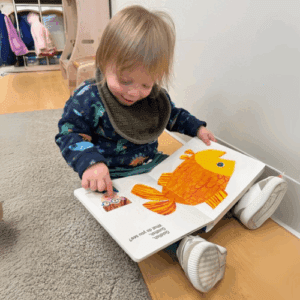

Going back to work after having a baby is one of the most emotionally complex transitions a parent can face. You want to be present at work, but your heart is at home—especially when drop-offs are tough. And after a break or vacation, that adjustment period can feel like starting all over again. It can make you question everything. But finding the right daycare for children who struggle with transitions means you don’t have to do it alone. It means finding loving, capable hands to partner with, turning tearful goodbyes into confident handoffs.
The good news is that with the right preparation, a thoughtful daycare transition is not only possible — it can actually support your child’s development in meaningful ways. Research consistently shows that high-quality early childcare fosters social skills, language development, and emotional resilience when children have secure, consistent caregiving relationships.
This guide walks you through every stage of the process: choosing the right program, timing the start date, getting your baby used to the new routine, and taking care of yourself along the way.
Why a Gentle Daycare Transition Matters for Your Baby
Babies and young children thrive on predictability and secure attachments. When you return to work, your baby is not just adapting to new caregivers — they are learning a fundamental lesson: the people who love them come back. Every successful pickup at the end of the day reinforces that trust.
A 2018 review published in Child Development Perspectives found that high-quality childcare is associated with better cognitive outcomes, stronger language skills, and positive social behaviors in toddlers — particularly when teachers are warm, responsive, and consistent. The key phrase there is “high-quality.” Not all childcare is equal, and the quality of the environment your baby enters matters enormously.
What makes a daycare high-quality for infants and young toddlers?
- Low infant-to-caregiver ratios (ideally 3:1 or better for infants under 12 months)
- Primary caregiver assignment so your baby bonds with one consistent teacher
- Low staff turnover — disrupted attachments set back development
- Warm, responsive interactions (talking, narrating, making eye contact during care routines)
- A safe, stimulating physical environment
When these elements are in place, daycare can genuinely support your baby’s growth. And when you return to work knowing your child is in capable, caring hands, you become a more focused, less anxious employee and a more present parent during the hours you are home.
When Should Your Baby Start Daycare?
In the United States, most parents return to work between 6 and 16 weeks after birth, with 12 weeks being the most common benchmark (aligned with FMLA protections). The timing of daycare start is therefore largely driven by your leave policy — but there are ways to build in a smoother runway even within that constraint.
Start Your Search Sooner Than You Think
Quality infant care programs in Connecticut, particularly in Fairfield County, often have waitlists of 6 to 12 months. If you are currently pregnant, start touring programs now. Do not wait until your baby arrives. The best programs fill their infant spots quickly, and the process of touring, evaluating, and enrolling takes longer than most parents expect.
Key questions to ask during tours:
- What is the infant-to-teacher ratio in the baby room?
- How do you handle primary caregiver assignments?
- What is your staff turnover rate?
- How do you communicate with parents throughout the day?
- What does a typical day look like for a 3-month-old or 6-month-old?
- How do you handle feeding, sleeping, and soothing — and do you follow the baby’s schedule or a set program schedule?
Schedule a Transition Week Before You Return to Work
Whenever possible, plan your baby’s first day of daycare at least one week before your first day back at work. This gives you time to:
- Stay nearby during the first drop-offs in case you need to return
- Get feedback from teachers on how your baby is doing
- Adjust the routine if something is not working
- Process your own emotions without work pressure layered on top
Most infant programs offer or encourage a gradual start, beginning with 2-hour visits and building up to a full day over 4 to 5 days. Take them up on it. The extra week of buffer is worth it.
Or, Consider a “Rip the Band-Aid” Approach
While a slow, gradual start works for many families, it’s not the only path. Some parents and daycare providers find that a “rip the band-aid” approach—jumping straight into a full-day, full-week schedule—can actually shorten the adjustment period. This method avoids drawing out the goodbyes and establishes the new routine quickly and decisively. The key to making this work is your own confidence. Children are incredibly perceptive; they will sense your hesitation or worry. Projecting calm assurance at drop-off shows your baby that this new place is safe and that you trust their caregivers. Tears are a normal part of this process, but remember that you’ve chosen a high-quality program with professionals who are experts at comforting and engaging little ones. For some families, a swift and consistent start is the kindest way to begin this new chapter.
How to Prepare Your Baby for Daycare
Babies cannot understand verbal explanations of what is about to happen, but they are remarkably attuned to routine, consistency, and the emotional states of their caregivers. Here is how to set your baby up for success before the first day.
Sync Your Home Routine with the Daycare’s Schedule
If your home life has been flexible around naps and feeding, start shifting toward a more predictable schedule about 2 to 3 weeks before daycare begins. Most infant programs structure care routines around each baby’s individual schedule, but a baby who already expects breakfast at a consistent time, nap windows at predictable intervals, and a bedtime routine will adapt more easily to any structured environment.
Ease into Separations with Practice Runs
If your baby has been with you (or one primary caregiver) 24 hours a day, introduce short separations before the daycare start. Leave your baby with a trusted family member or friend for an hour or two. These practice runs help your baby build the neural understanding that separation is temporary — you always return.
According to the American Academy of Pediatrics, separation anxiety typically peaks between 9 and 18 months. If your baby is in this window, know that it is developmentally normal and not a sign that they are not ready. It actually reflects healthy attachment.
Arrange Meet-and-Greets with the Caregivers
Schedule a visit to the daycare before the official start where you stay with your baby and interact with the teachers in front of them. Let the teachers make friendly contact — hold your baby if they are comfortable, make eye contact, talk to them. Babies read social cues from their trusted adults. When they see you interacting warmly with a teacher, they begin to build an implicit association that this person is safe.
Pack a Piece of Home: Comfort Items and Scents
A small stuffed animal or blanket with your scent can provide genuine comfort during settling-in periods. Many infant programs welcome comfort objects and will incorporate them into soothing routines. Ask your program what their policy is and what has worked well for other babies.
The Daycare Adjustment Period: What’s Normal?
Even with the best preparation, the first weeks of daycare are rarely seamless. Here is an honest picture of what is normal and what deserves closer attention.
Crying, Clinginess, and Other Normal Reactions
- Crying at drop-off: Normal and extremely common, especially in the 9-18 month window. Most babies settle within minutes of a parent leaving. Ask teachers to send a quick update photo or message once your baby is calm — most infant programs are happy to do this.
- Increased clinginess at home: Your baby may want more physical contact in the evenings during adjustment. This is healthy — they are refilling their attachment reserves after a day of adapting.
- Disrupted sleep: New stimulation, smells, and experiences can temporarily affect nap and nighttime sleep patterns. This usually resolves within 2 to 4 weeks.
- Changes in appetite: Some babies eat less during the first days at daycare, then make up for it at home. Share feeding information with teachers daily so they can adjust.
- More frequent illnesses: Exposure to new germs is real, and most babies go through an illness adjustment period in the first 2 to 3 months. Building immunity takes time. See our guide on boosting your toddler’s immune system for daycare for practical strategies.
Understanding Separation Anxiety as a Healthy Sign
It can be heart-wrenching to see your baby cry for you, but it’s helpful to reframe this as a positive sign. The American Academy of Pediatrics notes that separation anxiety often peaks between 9 and 18 months. Far from being a red flag, this behavior shows that your baby has formed a strong, secure attachment to you. They know you are their safe person, and they protest when you leave—which is a healthy, normal developmental stage. It’s a testament to the incredible bond you’ve built. This understanding is a cornerstone of how we approach care, and we believe in partnering with parents to navigate these milestones together. Your baby isn’t telling you they’re not ready; they’re telling you that you are their world.
How to Handle a Meltdown During Transitions
The morning drop-off can feel like the ultimate test. Your baby is clinging to you, tears are flowing, and every instinct tells you to stay and comfort them. The best thing you can do is establish a quick, loving, and predictable goodbye routine. A hug, a kiss, a cheerful “I love you, I’ll be back after your nap!” and then a confident exit. Lingering often prolongs the distress for both of you. Trust that your child is in capable hands. Our exceptional educators are experienced in soothing children through this transition. Most babies calm down within minutes of a parent leaving. Don’t hesitate to ask for a quick photo or message once your child is settled and playing—we are always happy to provide that reassurance.
It Might Get Worse Before It Gets Better
Let’s be honest: leaving your crying baby at drop-off feels like a punch to the gut. It’s easy to interpret those tears as a sign that you’re making a terrible mistake. But please hear this: crying at drop-off is normal, expected, and extremely common. Most babies settle within minutes of a parent leaving, their attention quickly captured by a new toy or a friendly face. Your baby’s teachers understand this dynamic well. A key part of partnering with parents is open communication, so don’t hesitate to ask them for a quick text or photo once your little one is calm. Seeing them happily engaged can make all the difference in your own day.
You might also notice that your baby wants more physical contact in the evenings. They may seem extra clingy, wanting to be held constantly from the moment you pick them up until bedtime. This isn’t a sign of a bad day; it’s a healthy and beautiful sign of attachment. After a day of adapting to new people and experiences, your baby is simply turning to their most trusted source of comfort—you—to refill their emotional cup. Lean into the extra snuggles. They are a powerful reminder that you are, and always will be, their home base.
Be Prepared for “Regression”
The first few weeks of daycare can feel like one step forward, two steps back. The new stimulation, sounds, and experiences can temporarily disrupt established routines, especially around sleep and eating. It’s common for a baby’s nap and nighttime sleep patterns to get a little rocky; this usually resolves within two to four weeks as they adjust. Similarly, some babies eat less during their first days at daycare and then seem ravenous at home. Keep the lines of communication open with your teachers, sharing daily updates on feeding and sleep so you can work together to find a rhythm that works.
And then there’s the inevitable: the daycare germs. Exposure to new germs is a real and unavoidable part of group care. Most babies experience an adjustment period with more frequent illnesses during the first two to three months. While it can be stressful, try to view it as a long-term investment in their health. Each cold helps their small bodies build a more robust immune system over time. A high-quality center will have rigorous health and safety protocols in place to minimize transmission, but building immunity is a process that simply takes time.
Red Flags: When to Talk to Your Daycare Provider
Distinguish normal adjustment from concerns that warrant a conversation with teachers or your pediatrician:
- Persistent, inconsolable crying for more than 20-30 minutes after drop-off (ask teachers honestly)
- Significant weight loss or consistent refusal to eat over multiple days
- Regression in skills that were previously well-established
- Your baby seeming lethargic, unengaged, or flat in affect consistently
- Red flags in the environment: high staff turnover, inconsistent information from teachers, dismissiveness about your concerns
Trust your instincts. You know your baby. A quality program will welcome your questions and concerns — not deflect them.
When to Consider Underlying Conditions
While most transition struggles are a normal part of your baby adjusting to a new environment, some children have a more difficult time due to their unique temperament or sensory needs. Many children struggle when they have to switch from one activity to another, and this can be especially true for little ones with heightened sensitivity, anxiety, or sensory processing differences. If your baby seems consistently overwhelmed by the noise, activity, or social demands of the daycare setting beyond the initial adjustment period, it’s worth considering. This doesn’t mean something is wrong; it simply means they may need more specific support. A high-quality program with experienced teachers will know how to handle these changes more smoothly, offering a quieter space, more one-on-one time, or specific soothing techniques to help your child feel secure.
Know When to Seek Professional Help
Your intuition as a parent is your most powerful tool. If you feel deep down that your child’s distress is more than just a typical adjustment, listen to that feeling. While some crying is normal, persistent and inconsolable crying that lasts for more than 20-30 minutes after you’ve left, day after day, is a sign to investigate further. Other signals that warrant a professional conversation include a significant refusal to eat or drink at daycare over multiple days, a noticeable regression in skills like sleeping or babbling, or a general listlessness that doesn’t seem to lift. If your child’s distress is very strong and doesn’t improve, it’s time to talk to a doctor or a child development specialist. Start by partnering with your daycare director and your pediatrician to share observations and create a supportive plan together.
Making Drop-Off Less Painful (for Everyone)

Drop-off is often the hardest moment of the day. The cry as you hand your baby to the teacher and walk out the door is hard to leave behind. Here is what child development research — and experienced infant teachers — consistently recommend.
Master the Quick, Confident Goodbye
Prolonged goodbyes increase anxiety for both you and your baby. Develop a short, consistent goodbye ritual: a specific phrase, a kiss, a wave. Then leave. Do not sneak out (babies notice and it damages trust), but do not linger. Confident, warm, and brief is the goal.
Don’t Rush: Arrive a Few Minutes Early
Rushing into drop-off adds stress. Give yourself enough time to get settled, hand off the diaper bag, exchange information with the teacher, and say a calm goodbye without watching the clock.
Keep Teachers in the Loop with Daily Updates
How did your baby sleep last night? Did they eat well? Is anything happening at home — a new tooth coming in, a grandparent visiting, a disrupted weekend? Daycare teachers use this context to better interpret your baby’s behavior and provide more responsive care. Communication is partnership.
Build a Real Relationship with Your Child’s Teachers
The parents who have the smoothest transitions are usually the ones who invest in knowing their child’s teachers as people. Learn their names. Ask how their day is going. Share small moments from home. When teachers feel like genuine partners — not hired staff — they invest more deeply. And that depth of relationship flows directly to your child.
Beyond Drop-Off: Managing Daily Transitions in the Classroom
The morning goodbye is often the most emotionally charged transition of the day, but it’s just the first of many. A young child’s day in a classroom is a series of small shifts: from free play to circle time, from the art easel to the snack table, from outdoor play to naptime. For a toddler or preschooler deeply absorbed in building a block tower or finishing a painting, being asked to stop and switch gears can feel jarring. Their “work” is play, and these interruptions can be a major source of frustration and meltdowns. This is where the skill of an experienced educator truly shines. A high-quality program doesn’t just move children from one activity to the next; it thoughtfully guides them, teaching them the crucial life skill of how to handle changes smoothly and confidently.
At Strong Start, our approach is grounded in a deep respect for the child’s focus and engagement. Inspired by the Reggio Emilia philosophy, we see children as capable protagonists in their own learning journey. This means we don’t just enforce a schedule; we create a rhythm for the day that helps children feel secure and prepared for what’s coming next. Our teachers are experts at creating gentle “bridges” between activities, ensuring that transitions feel like a natural flow rather than an abrupt command. This intentional approach helps minimize stress and empowers children to move through their day with a sense of competence and cooperation, turning potential moments of conflict into opportunities for connection and learning.
The Power of Predictable Routines and Visual Schedules
Children thrive on knowing what to expect. Predictable routines create a powerful sense of security, which is the foundation for all learning and exploration. When a child understands the daily rhythm—first we play, then we have a snack, then we go outside—they feel more in control and less anxious about what’s coming next. For children who aren’t yet reading, visual schedules are an incredibly effective tool. These are simple charts with pictures or symbols representing each part of the day. By looking at the schedule, a child can see that after they clean up the blocks (picture of blocks), they will wash their hands (picture of a sink) and then eat a snack (picture of an apple). This makes the abstract concept of time concrete and helps them prepare for the next step independently.
Using Songs and Games as “Bridges” Between Activities
One of the most effective ways to signal a change is to make it fun. Instead of a verbal command to stop one thing and start another, teachers can use a song, a rhyme, or a simple game as a transition cue. The classic “clean up” song is a perfect example; it’s a cheerful, non-confrontational signal that playtime is ending. The same strategy works for almost any transition. A special clapping pattern can mean it’s time to line up at the door, a silly “listening ears” rhyme can gather focus for story time, or a “follow the leader” game can guide children from the classroom to the playground. These playful bridges between activities turn a potentially stressful moment into a cooperative and enjoyable experience, inviting participation rather than demanding compliance.
Framing the Next Activity in a Positive Light
The language we use matters immensely. It’s easy to fall into the trap of using negative commands like, “Stop playing now,” or “No more blocks.” This language can feel like a rejection of what the child is enjoying and often leads to resistance. A more effective approach is to frame the next activity in a positive and inviting way. Instead of telling a child to stop, give them a forward-looking statement: “In five minutes, we’re going to put the puzzles away so we can go outside and play on the swings!” This simple shift in language validates their current activity while building positive anticipation for what’s to come. It respects their engagement and gives them a clear, appealing reason to cooperate with the transition, making them a willing partner in the flow of the day.
Taking Care of Yourself During the Transition
The emotional weight of going back to work after baby is real and often underestimated. Guilt, grief, anxiety, and relief can coexist in the same morning. All of it is valid.
It’s Okay to Have Mixed Feelings
You may feel relieved to be back among adults and engaged in work you love — and then feel guilty about the relief. You may miss your baby intensely all day — and then feel guilty about how quickly you got absorbed in a work problem. The mixture of feelings is nearly universal. It does not make you a bad parent. It makes you human.
Remember, Your Anxiety Can Affect Your Child
Your baby is a tiny emotional sponge. They might not understand your words, but they are experts at reading your tone, body language, and energy. Children can sense if their parents are sad or unsure, which can make their own separation anxiety worse. When you approach drop-off with a calm and confident attitude, you send a powerful non-verbal message: “This is a safe and happy place, and I trust these people to care for you.” This sense of security is the foundation of a smooth transition, helping your child understand that the people who love them always come back.
This is why managing your own feelings is one of the most practical things you can do. Your anxiety can manifest in behaviors like prolonged goodbyes, which only increase stress for everyone. Instead, focus on building a relationship with your child’s teachers. When you feel you can truly partner with your child’s educators, it builds your own confidence, which in turn helps your child feel more secure. Remember, you are not just dropping your child off; you are handing them over to a team of caring professionals who are there to support your whole family through this change.
Give Yourself (and Them) Some Space to Adjust
Calling or texting the daycare every hour prolongs anxiety rather than resolving it. Trust the program you chose, give them time to settle your baby, and check in once around midday if you need reassurance. As the weeks pass and your baby settles in, the need to check in will naturally decrease.
Make Your Time Together Count
When you are home, be home. Put the phone away during dinner. Get on the floor. Read books. The quality of your time together matters more than the quantity — and your baby needs your presence, not your performance. As noted in our article on toddler crying at daycare drop-off, consistent, loving reunions at the end of the day are what help children build resilience and secure attachment over time.
Try the “9-Minute Rule” to Strengthen Your Connection
One powerful way to make your time together count is by using the “9-Minute Rule.” This simple framework focuses on creating intentional connection during three key moments of your day: the first three minutes at pickup, the first three minutes after you get home, and the last three minutes before bed. During these brief windows, put your phone away, get down on your baby’s level, and offer your undivided attention. This isn’t about doing anything special; it’s about being fully present. A warm hug at the classroom door, a quiet cuddle on the living room floor, or a soft song before sleep—these moments of focused reunion help your child feel seen and secure. This practice reinforces the bond that is so crucial for their development and is a small way to strengthen your connection after a day apart.
Lean on Your Support System
Connect with other working parents — through your daycare community, workplace groups, or online forums. Normalizing the experience and sharing strategies makes an enormous difference. Many of the parents in our program at Strong Start have built meaningful friendships simply by going through the same transition at the same time.
Strategies to Support Your Child at Home
The support you provide at home is just as important as the care your child receives at school. Creating consistency and predictability in your own routines can make the entire daycare experience feel safer and more manageable for your little one. While you can’t be there with them during the day, you can build a strong foundation of trust and security before they leave and reconnect meaningfully when they return. These simple, actionable strategies can help you reinforce positive behaviors and ease the friction of daily transitions, making mornings smoother and evenings calmer for the whole family.
Get Their Full Attention Before Announcing a Change
It’s easy to call out “Time to put your shoes on!” from across the room, but a child who is absorbed in play may not even register your words. Before announcing a transition, take a moment to connect. According to the Child Mind Institute, you should first make sure they are actually listening. This might mean getting down on their level to make eye contact, sitting beside them and gently touching their shoulder, or simply asking them to look at you for a second. This small step shows respect for their focus and ensures your message is received, preventing the frustration of having to repeat yourself five times.
Offer Small Choices to Encourage Independence
Transitions can make a child feel like they have no control over their world. You can give some of that power back by offering small, manageable choices. Instead of asking, “What do you want to wear?” which can be overwhelming, try, “Do you want to wear the red shirt or the blue shirt today?” Letting your child make small choices, like picking their daycare outfit or which snack to pack, gives them a sense of agency. This practice aligns with our Reggio Emilia-inspired philosophy, which views children as capable and competent individuals. Fostering this independence at home helps build the confidence they need to handle new situations at school.
Reinforce Good Transitions with Specific Praise
When your child handles a transition well, notice it! But instead of a generic “Good job,” try being specific about what you saw. For example, you might say, “I love how you put your toys away right when I asked so we could get ready for school!” This kind of concrete praise helps your child understand exactly what they did right and makes them more likely to repeat the behavior. It shifts the focus from simply obeying to being a helpful part of the family routine. Acknowledging their effort shows them that you see their cooperation and appreciate it, which is a powerful motivator for young children.
Address Nighttime Worries and Separation Anxiety at Bedtime
Don’t be surprised if the anxieties of a new daycare routine surface at bedtime. Your child has spent the day navigating a new environment, and the quiet moments before sleep are often when their worries come to the surface. If separation anxiety seems to spike at night, the best response is connection. Stick to a calm and predictable bedtime routine, but feel free to add in extra hugs and snuggles. This is their time to refuel on security and attachment with you. Acknowledging their feelings and offering comfort reinforces that you are their safe space, which can help them feel more confident during daytime separations.
When to Use a Reward System (and How)
For particularly tough transitions, a simple reward system can sometimes provide the extra nudge your child needs. This doesn’t have to be complicated. It could be a sticker chart where they earn a sticker for a smooth morning drop-off or points toward a small toy for getting ready on time all week. The key is to keep the rewards small and the focus on the positive behavior. Think of it as a temporary scaffold to help them over a hump. The goal isn’t to bribe them forever, but to create positive momentum until the new routine becomes second nature and the intrinsic reward—feeling proud and capable—takes over.
How to Know They’ve Settled In: Positive Signs to Look For
Most families turn a corner somewhere between 4 and 8 weeks after starting daycare. Here is what the settled phase looks like:
- Drop-offs become faster and calmer (sometimes even cheerful)
- Your baby shows signs of recognition and excitement when they see their teachers
- You get consistent, positive updates throughout the day
- Your baby is eating and sleeping reasonably well at daycare
- Evenings at home feel easier — less fussy, more connected
- You arrive at work feeling like you left your baby somewhere good
That last one is significant. When you genuinely trust your child’s care environment, you become more effective at work and more present at home. The transition has a payoff for the whole family.
How to Choose a Daycare for Children Who Struggle with Transitions
Not all programs approach the infant and toddler transition with the same intentionality. When you are evaluating options, look beyond the physical space (though that matters too) to the philosophy and practices around attachment and adjustment.
Questions worth asking any program:
- Do you assign a primary teacher to each infant? How does that relationship get built?
- How do you handle a baby who is struggling to settle in? What does your support look like?
- What is your communication policy during the day for new families?
- What is your average staff tenure in the infant room?
- Do you encourage visits or observation during the adjustment period?
- How do you incorporate each baby’s individual home schedule into your daily care?
Programs rooted in relationship-centered philosophy — like the Reggio Emilia approach used at Strong Start — treat the transition as a partnership between teachers, parents, and children. The environment is designed to feel warm, the schedule is responsive rather than rigid, and teachers see their relationship with your family as part of their professional practice. This is very different from a childcare setting where drop-off is processed quickly and parents are kept at a distance.
For more on what to look for in a childcare program, see our guide on how to choose the right daycare for your toddler and our overview of why teacher-to-child ratios matter.
Frequently Asked Questions
How long does it take for a baby to adjust to daycare?
Most babies show meaningful improvement in their adjustment within 2 to 4 weeks, with full settling typically happening between 4 and 8 weeks. Toddlers in the peak separation anxiety window (9-18 months) may take a bit longer but almost always get there. Consistent routines, warm teachers, and parent confidence all speed the process.
Is it bad to put a baby in daycare at 3 months?
Many families have no choice due to leave policies, and babies absolutely can thrive in high-quality infant care at 3 months. The quality of the program — particularly the warmth and responsiveness of caregivers and the ratio of adults to babies — matters far more than the age of entry. See our in-depth guide on sending your baby to daycare at 3 months.
What do I do if my baby cries every day at drop-off?
Daily crying at drop-off is normal in the early weeks, especially for babies between 9 and 18 months. Keep goodbyes brief and consistent, trust teachers to settle your baby, and ask for a check-in update 10 minutes after you leave. If crying is prolonged and persistent after 6 to 8 weeks, it is worth a longer conversation with your program director.
Should I stay home a day if my baby has a hard drop-off?
Occasional sick days are one thing, but staying home because of a difficult drop-off usually prolongs the adjustment. Unless your baby is genuinely unwell, consistency helps. Each day your baby navigates the separation and experiences a happy reunion reinforces the security they need to settle in.
How do I choose between a daycare center and a family childcare home?
Both can be excellent options. Centers typically offer more structured programs, dedicated infant rooms, backup coverage for teacher absences, and more regulatory oversight. Family childcare homes offer a smaller, home-like environment with often very consistent caregiving. Evaluate quality indicators — ratios, staff experience, warmth, environment — rather than choosing based on type alone.
How can I help my baby bond with daycare teachers?
Visit before the start date so your baby sees you interacting warmly with teachers. Share detailed information about your baby’s personality, preferences, and cues. Show genuine interest in the teachers as people. When you communicate trust and warmth toward the teachers, your baby picks up on those cues.
Ready for a Smoother Daycare Transition?
Going back to work after baby is genuinely hard. The mix of love, guilt, exhaustion, and hope you feel during this transition is one of the most universal experiences in parenting — and one of the least talked about honestly. You are not doing something wrong by returning to work. You are not failing your baby by choosing daycare.
What your baby needs is consistent, warm, responsive care — at home with you and in the childcare setting you choose. When both environments offer that, children thrive. They build secure attachment, develop language and social skills at an accelerated pace, and gain the resilience to navigate the transitions that come throughout childhood.
Choose your program carefully, prepare thoughtfully, communicate openly, and give yourself (and your baby) grace during the adjustment. You will both get through it — and you may be surprised at how well you both do on the other side.
Marc Hoffman is the founder of Strong Start Early Care & Education and holds a Master’s in Child Clinical Psychology. He began his career as a classroom teacher and conducted research at Yale University focused on emotional intelligence. Strong Start serves families in Bridgeport and Trumbull, Connecticut.
Key Takeaways
- Prepare Early and Intentionally: A smooth transition starts months before the first day. Begin your daycare search early, schedule a gradual start-up week before you return to work, and align your home routine with the daycare’s schedule to build predictability for your baby.
- Master the Quick, Confident Goodbye: Your calm confidence is the most reassuring signal for your child. Create a short, loving, and predictable drop-off routine, and then leave without hesitation; this consistency teaches your child that you trust their caregivers and that you will always come back.
- Partner with Your Child’s Teachers: Think of your child’s educators as your teammates. Share daily insights about your baby’s nights and moods, ask for updates to ease your own mind, and build a genuine relationship; this collaborative approach creates a circle of trust that helps your child feel secure.
Related Articles
- How to Choose Daycare for an Infant: A Simple Guide
- Best Age to Start Daycare: Expert Guide for Parents
Written By
Marc Hoffman
Founder, Strong Start Early Care & Education
Marc founded Strong Start in 2014, inspired by his studies at Williams College, Yeshiva University, and research at Yale University. His child-centered, inquiry-based approach to early education has helped hundreds of families in the Trumbull and Bridgeport communities. As a parent himself, Marc understands the importance of finding a nurturing environment where every child can learn, grow, and flourish.