Your toddler is walking, talking, and testing every boundary they can find. This new stage of independence means their childcare needs have changed dramatically from infancy. Choosing the right daycare for your toddler in 2026 means finding a program that channels all that energy into meaningful learning and social development.
This guide covers everything parents need to know about selecting a toddler daycare program, from what to look for in the classroom to questions you should ask during your tour. Whether your child is transitioning from an infant program or starting daycare for the first time, these tips will help you make a confident choice.
What Makes Toddler Daycare Different From Infant Care?
Toddlers (ages 1 to 3) have fundamentally different needs than infants. While infant care daycare centers on responsive caregiving, feeding schedules, and safe sleep, toddler programs shift toward active learning, social skill building, and increasing independence.
Here’s what changes in the toddler classroom:
- More structured activities: Toddlers benefit from short, engaging activities like circle time, art projects, and sensory bins
- Social learning becomes central: Sharing, turn-taking, and parallel play are daily skills toddlers practice
- Language explosion: Quality programs provide rich language environments with songs, stories, and conversation
- Potty training support: Many toddler classrooms begin introducing potty routines in partnership with families
- Greater independence: Self-feeding, choosing activities, and helping with clean-up build confidence
Understanding these differences helps you evaluate whether a daycare program is genuinely designed for toddlers or simply applying an infant care model to older children.
Key Qualities to Look for in a Toddler Daycare Program
Not all daycare programs handle the toddler stage equally well. Here are the qualities that distinguish an excellent toddler program from an average one:
Age-Appropriate Curriculum
The best toddler programs use a research-backed curriculum designed specifically for this age group. Look for programs that incorporate play-based learning, where children learn through hands-on exploration rather than worksheets or screen time. Approaches like Reggio Emilia, Montessori, or emergent curriculum all emphasize following the child’s interests and natural curiosity. Our guide to choosing the right early childhood education program breaks down each philosophy in detail.
At Strong Start Early Care & Education, our toddler classrooms use a project-based approach inspired by the Reggio Emilia philosophy, where educators observe children’s interests and build learning experiences around them. Learn more about how daycare supports different developmental stages.
Low Teacher-to-Child Ratios
Toddlers need attentive supervision and frequent one-on-one interactions. In Connecticut, the required ratio for toddlers is 1:4 (one teacher for every four toddlers). To understand what these numbers mean and how they affect your child, read our complete guide to daycare teacher to child ratios. Quality programs often exceed this requirement by staffing at even lower ratios, especially during transitions and outdoor time.
Lower ratios mean your toddler gets more individualized attention, faster response to their needs, and stronger relationships with their caregivers, all of which support healthy social-emotional development.
Safe, Stimulating Environment
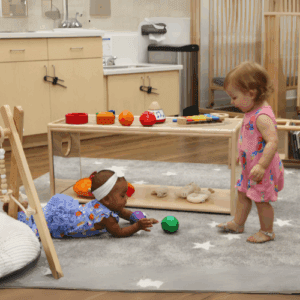
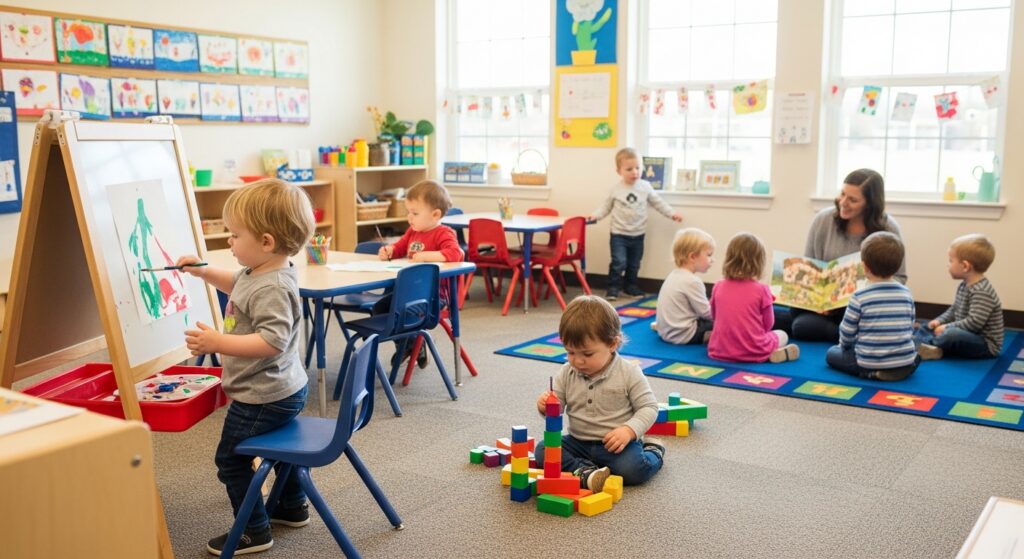
A toddler classroom should look different from an infant room. Look for:
- Child-sized furniture (tables, chairs, shelves at toddler height)
- Clearly defined activity areas (reading corner, art station, dramatic play, sensory table)
- Open floor space for movement and gross motor play
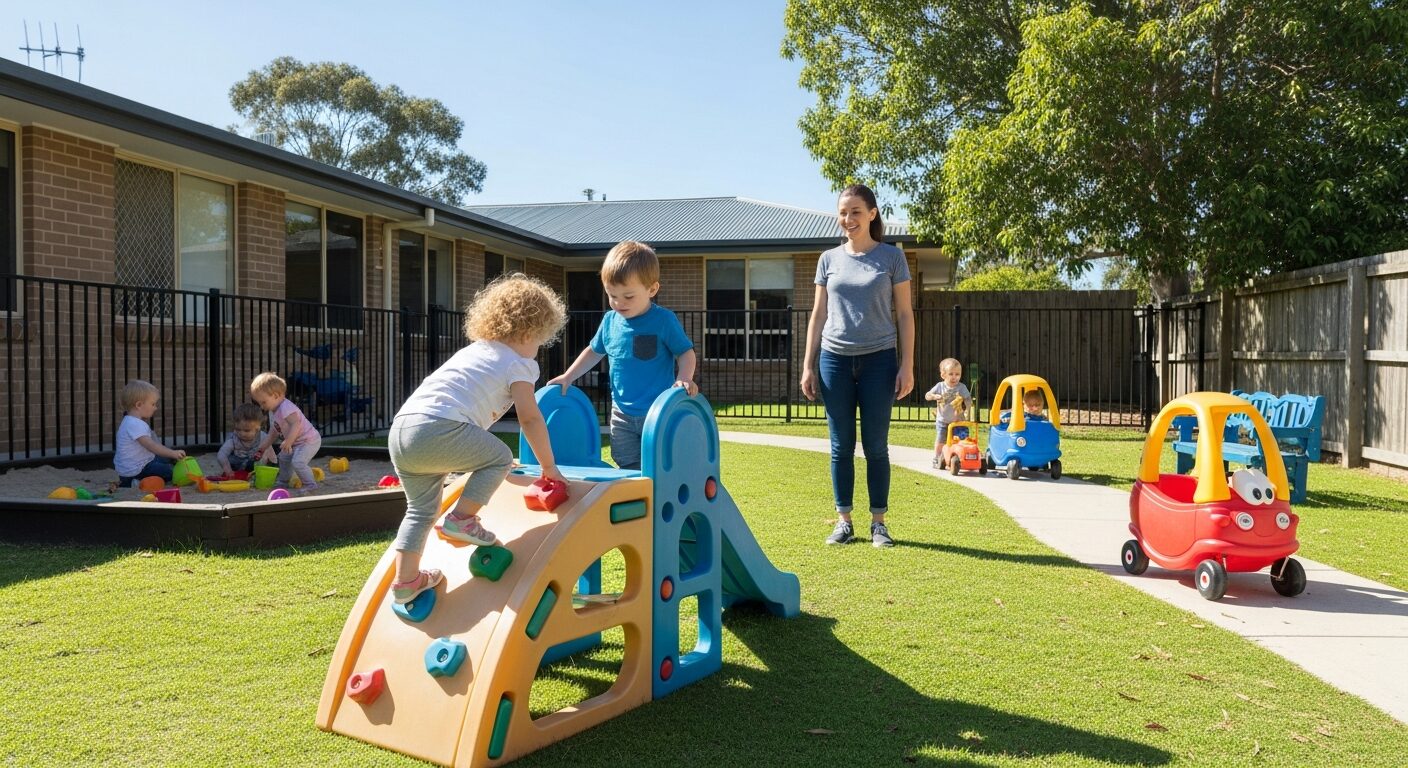
- Outdoor play area with age-appropriate equipment
- Art displayed at children’s eye level
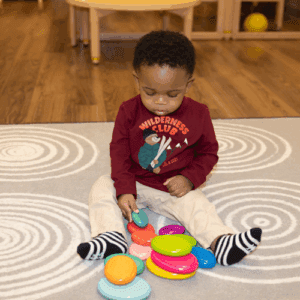
- Natural materials and open-ended toys rather than battery-operated gadgets
Consistent Caregivers
Toddlers thrive on consistency. Programs with low staff turnover allow children to form secure attachments with their teachers, which directly supports emotional regulation and willingness to explore. Ask about staff retention rates and how long the lead teachers have been in the toddler room.
What a Typical Day Looks Like for Toddlers in Daycare
Understanding the daily rhythm helps you evaluate whether a program balances structure with flexibility. Here’s what a quality toddler daycare day typically includes:
Morning arrival and free play (7:00–8:30 AM): Children arrive and ease into the day with open-ended play. Teachers greet each family and check in about the child’s morning.
Circle time and morning meeting (8:30–9:00 AM): A short group gathering with songs, a story, and a preview of the day’s activities helps toddlers feel connected to their classroom community.
Structured learning activities (9:00–10:30 AM): Small-group activities like art, sensory play, or simple science experiments. Toddlers rotate between activities at their own pace.
Snack and outdoor time (10:30 AM–12:00 PM): Healthy snack followed by outdoor play. Fresh air and physical activity are essential for toddlers’ physical development and mood regulation.
Lunch and rest time (12:00–2:30 PM): Family-style lunch where toddlers practice self-feeding, followed by nap or quiet rest time. Not all toddlers nap, and good programs offer quiet activities for non-sleepers.
Afternoon activities and pick-up (2:30–5:30 PM): More exploration, free play, and creative activities. Teachers share daily reports with families at pick-up.
Questions to Ask When Touring a Toddler Daycare
A tour is your chance to see the program in action and ask the questions that matter most. Here are the essential questions for evaluating a toddler program:
About the program:
- What curriculum or educational philosophy does the toddler program follow?
- How do you handle the transition from the infant room to the toddler room?
- What is the teacher-to-child ratio, and does it change throughout the day?
- How do you support children who are learning to use the potty?
About the staff:
- What training and certifications do toddler room teachers have?
- How long have the lead teachers been working in your toddler classroom?
- How do teachers handle challenging behaviors like biting or hitting?
About communication:
- How will I receive updates about my child’s day?
- How often are parent-teacher conferences held?
- Can I visit or observe the classroom without an appointment?
For more guidance on what to ask during your visit, check out our tips on questions to ask when touring a daycare.
How to Handle the Transition to Toddler Daycare
Whether your child is starting daycare for the first time or moving up from an infant room, the transition can bring big emotions for everyone. Here’s how to make it smoother:
Before the first day:
- Visit the classroom together so your toddler can explore the space
- Talk positively about their new teachers and friends
- Start practicing the morning routine a week before
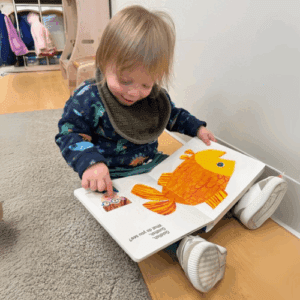
- Read books about going to school or daycare
During the first weeks:
- Keep drop-offs brief and confident, even if your child cries
- Bring a comfort item from home (a stuffed animal, blanket, or family photo)
- Ask for photos or updates during the day to ease your own anxiety
- Be patient; most toddlers adjust within two to three weeks
If your toddler is experiencing separation anxiety, know that this is completely normal and usually resolves as they build trust with their new caregivers.
Understanding Toddler Daycare Costs in 2026
Daycare costs vary significantly by location, program type, and schedule. In Connecticut, toddler daycare generally costs slightly less than infant care due to higher teacher-to-child ratios, but it remains a significant family expense.
Factors that influence toddler daycare costs:
- Full-time vs. part-time: Many programs offer 3-day or 5-day schedules with different pricing
- Location: Programs in Fairfield County, CT tend to have higher rates than other areas
- Accreditation: NAEYC-accredited programs may cost more but meet rigorous quality standards
- Included services: Some programs include meals, diapers, and enrichment activities in the tuition
Financial assistance options include Connecticut’s Care 4 Kids subsidy program, employer-sponsored dependent care FSAs, and the federal Child and Dependent Care Tax Credit. For more on childcare costs and assistance, see our guide on how to enroll in full-time childcare and get help paying.
Red Flags to Watch For When Choosing a Toddler Daycare
Trust your instincts during tours and visits. These warning signs suggest a program may not provide the quality care your toddler deserves:
- Toddlers sitting for long periods with nothing to do
- Excessive screen time or TV in the classroom
- Teachers yelling at or shaming children for behavior
- Dirty or disorganized spaces that feel chaotic
- No outdoor play area or limited time outside
- Reluctance to share information about staff qualifications or ratios
- No clear communication system for daily updates to parents
- High staff turnover that leaves children without consistent caregivers
A quality program will welcome your questions and encourage you to observe the classroom. If a program discourages unannounced visits, consider it a significant red flag.
Frequently Asked Questions About Toddler Daycare
What is the best age to start daycare for a toddler?
There is no single “best” age. Many toddlers start daycare between 12 and 18 months, while others begin at age 2 or later. What matters most is the quality of the program and your family’s readiness. Research shows that high-quality early childhood programs benefit children’s cognitive and social development regardless of when they start.
How do I know if my toddler is ready for daycare?
Signs of readiness include curiosity about other children, increasing independence (wanting to feed themselves, explore on their own), and the ability to be comforted by other adults. However, “readiness” is less about your child’s abilities and more about finding a program equipped to meet them where they are developmentally.
Should my toddler attend daycare full-time or part-time?
Both options work well depending on your family’s needs. Full-time attendance (5 days per week) provides more consistency and routine, which many toddlers prefer. Part-time (2-3 days) can be a gentler introduction. Consider your child’s temperament, your work schedule, and your budget when deciding.
How do daycare programs handle biting and hitting in toddlers?
Biting and hitting are developmentally normal for toddlers who are still learning to communicate and regulate emotions. Quality programs address these behaviors with calm redirection, teaching emotional vocabulary, and close supervision. They should never use punishment, shaming, or isolation. Ask about the program’s behavior guidance philosophy during your tour.
What should I pack for my toddler’s daycare bag?
A typical toddler daycare bag includes a change of clothes, diapers or pull-ups (if still needed), a water bottle, any comfort items for nap time, and sunscreen for outdoor play. Your daycare will provide a specific list. Label everything with your child’s name to prevent mix-ups.
Find the Right Toddler Daycare for Your Family
Choosing a toddler daycare is about finding a program where your child feels safe, engaged, and excited to learn. The right environment nurtures their growing independence while providing the structure and warmth they need during this remarkable stage of development.
At Strong Start Early Care & Education, our toddler programs in Trumbull, Shelton, and Wilton are built around active exploration, responsive teaching, and a deep respect for each child’s unique developmental journey. Our educators create rich learning environments where toddlers build friendships, develop language skills, and discover the joy of learning.
Schedule Your Visit to tour our toddler classrooms and see how we support your child’s growth every day.