
Choosing a childcare program means inviting a new team of people into your family’s life. You’re looking for more than just caregivers—you’re looking for partners. People who will communicate openly, celebrate your child’s wins, and work with you to support their growth. This partnership is built on trust and a shared commitment to your child’s well-being. Finding a center that truly prioritizes this relationship is everything. This guide will help you spot the signs of a strong parent-teacher partnership, so you can choose a Bridgeport CT childcare center that feels like a true extension of your family.
Key Takeaways
- Verify the essentials first: Confirm that any center you consider is licensed by the state. For an extra layer of assurance, look for top-tier accreditations like NAEYC, which show a deep commitment to excellence in everything from safety to curriculum.
- Observe the people and the environment: During your tour, pay close attention to how educators interact with children. A warm, engaging staff and a strong, open line of communication with parents are the foundation of a supportive childcare community.
- Match the program to your child: Look for a learning philosophy that aligns with your family’s values and your child’s unique personality. The best choice is a place where the daily routine and curriculum will help your child feel happy, confident, and excited to learn.
What Makes a Bridgeport Childcare Center Great?
Choosing a childcare center can feel like one of the biggest decisions you’ll make as a parent. You’re not just looking for a place to watch your child; you’re searching for a second home where they will be safe, happy, and encouraged to grow. While every family has a unique checklist, there are a few universal hallmarks of a high-quality program that you can look for right here in Bridgeport.
When you start your search, it helps to focus on three core pillars: the center’s official credentials, the people who will be caring for your child, and the approach they take to learning. A great childcare center excels in all of these areas, creating an environment that is not only safe and compliant but also warm, engaging, and inspiring. Thinking about these elements will help you move past the surface-level details and get to the heart of what makes a program truly special. It gives you a clear framework for asking questions, observing classrooms, and ultimately, finding a place where your child will thrive.
Why Licensing and Accreditation Matter
First things first, let’s talk about the basics. Any legitimate childcare center in Bridgeport must be licensed. According to the City of Bridgeport, this license confirms that a program meets essential state standards for health, safety, and care. Think of it as the foundational requirement, a non-negotiable starting point in your search.
Beyond licensing, look for accreditation. This is a voluntary, intensive review process that signals a center’s commitment to the highest standards in early childhood education. For example, NAEYC accreditation is considered the gold standard, demonstrating excellence in everything from teacher qualifications to curriculum and family partnerships. A center that pursues accreditation is showing you they are dedicated to going above and beyond for your child.
The Role of the Connecticut Office of Early Childhood (OEC)
In Connecticut, the Office of Early Childhood (OEC) is the state agency responsible for ensuring childcare programs are safe and healthy environments for children. Think of them as the official oversight body that sets the rules and standards for all licensed centers. The OEC provides resources and support to help programs meet the needs of families and children across the state. When you see that a center is licensed, it means it’s on the OEC’s radar and is held accountable to these important state-level guidelines. This provides a crucial layer of assurance for parents, knowing that an official organization is dedicated to upholding the quality and safety of early childhood education.
Benefits of Choosing a Licensed Program
Opting for a licensed program gives you confidence that essential safety measures are in place. Licensed centers are inspected regularly, and their staff must pass background checks and health screenings to ensure they are fit to care for children. These programs also have to meet specific training requirements, like First Aid certification, and follow strict child-to-provider ratios that allow for more individualized attention and quality care. At Strong Start, our commitment to health and safety aligns with these high standards to create a secure and nurturing environment. Furthermore, if you ever have a serious concern with a licensed program, the OEC serves as a resource you can contact for support, giving you an official channel for assistance and accountability.
The Difference Caring, Experienced Educators Make
The heart of any childcare program is its teachers. These are the people who will be comforting, guiding, and inspiring your child every day. As you tour different centers, pay close attention to the educators. Do they seem genuinely happy to be there? Are they warm, patient, and engaged with the children? The quality of the staff is a crucial factor in creating a nurturing environment for your child.
Look for educators who get down on the children’s level to talk and play. A great teacher knows how to listen to a child’s ideas and turn a simple moment into a learning opportunity. Don’t be shy about asking about their experience and qualifications. Strong programs invest in their staff, providing ongoing training and support for their exceptional educators.
Does the Curriculum Encourage Curiosity?
A quality curriculum for young children isn’t about flashcards or rigid lesson plans. It’s about creating a rich, stimulating environment where children learn through play, exploration, and discovery. The program should have a clear educational philosophy that guides its activities and classroom setup. The goal is to create a space that is safe, supportive, and nurturing, allowing children to follow their natural curiosity.
Look for a program that values hands-on learning and encourages children to ask questions. A Reggio Emilia inspired approach, for example, views children as capable and competent learners, using their interests to guide long-term projects and investigations. This kind of curriculum builds a love of learning from the very beginning, setting the stage for future academic success.
How We Define Quality Childcare at Strong Start
When you’re looking for childcare, you’re looking for more than just a safe place for your child to spend their day. You’re looking for a partner in their growth, a community that shares your values, and a program that will inspire a lifelong love of learning. At Strong Start, we’ve built our entire approach around this idea. Our commitment to quality isn’t just a talking point; it’s woven into everything we do, from the standards we uphold to the curriculum we embrace. Here’s a closer look at what makes our approach different and how we create an environment where your child can truly thrive.
What NAEYC Accreditation Means for Your Child
Think of NAEYC Accreditation as the gold standard for early childhood education. While all licensed childcare centers must meet state requirements, NAEYC accreditation is a voluntary and rigorous process that signals a program’s commitment to the highest level of quality. To earn this mark of excellence, centers are evaluated on ten key standards, including curriculum, teacher qualifications, family partnerships, and health and safety. For parents, this accreditation provides incredible peace of mind. It’s an assurance that we go above and beyond to create a nurturing and effective learning environment, holding ourselves accountable to the best practices in the field. It’s one of the most important ways we demonstrate our dedication to your child’s well-being and development.
Learning Through Exploration: Our Reggio Emilia Philosophy
We believe children are born curious, capable, and full of potential. Our curriculum is built on this belief, drawing inspiration from the world-renowned Reggio Emilia philosophy. This isn’t a rigid set of instructions, but rather a way of honoring your child’s natural desire to explore and learn. We see the classroom environment as a “third teacher,” intentionally designed to provoke curiosity and encourage discovery. Our educators act as guides, observing your child’s interests and developing long-term projects that allow them to ask questions, solve problems, and make meaningful connections. This approach helps children become confident, creative thinkers who are truly engaged in their own learning journey.
Supporting Your Child from Infancy to Preschool
Children grow and change so quickly in the first few years, and their needs evolve right along with them. That’s why we offer distinct programs carefully designed for every stage of early development, from our nurturing Infant Classrooms to our engaging Preschool program. This continuum of care provides a consistent, stable, and familiar environment for your child as they grow. You won’t have to search for a new center every year. Instead, your child can build lasting relationships with educators and friends within a community they know and trust. Each of our classrooms is tailored to the unique developmental milestones of its age group, ensuring your child always receives the right balance of care, challenge, and support.
What to Expect at Each Childcare Stage
As you tour different centers, you’ll notice that classrooms are typically divided by age. This isn’t just for logistics; it’s because a six-month-old has vastly different developmental needs than a four-year-old. A quality program recognizes these differences and creates specific environments and learning goals for each stage. Understanding what to look for in each age group will help you find a center that can support your child as they grow from a curious infant into a confident preschooler.
Infant Program: A Safe and Nurturing First Step
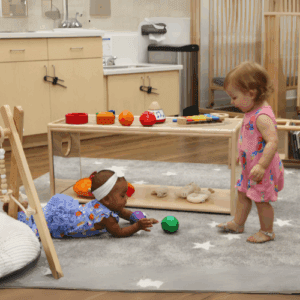
The best infant programs feel like a warm, safe, and loving extension of home. For your baby, the world is brand new, so the focus should be on building trust and secure attachments with caregivers. Look for educators who are responsive, making plenty of eye contact, talking, and cuddling. The environment should be clean and safe, with age-appropriate toys that encourage sensory exploration. A quality center will work with you to maintain your baby’s individual schedule for feeding and sleeping. The goal is to create a responsive and nurturing environment where your little one feels secure enough to start exploring the world around them.
Toddler Program: Encouraging Independence and Discovery
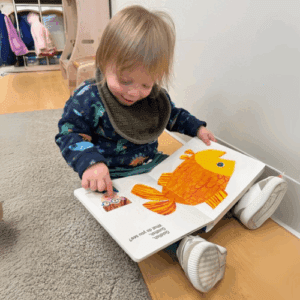
Toddlers are full of energy and an insatiable curiosity. Their main job is to explore, and a great toddler program gives them a safe space to do just that. Classrooms should be designed for movement, with plenty of opportunities for hands-on learning through art, music, and sensory play. This is also when social skills begin to blossom. Educators should gently guide toddlers as they learn to share, communicate their needs, and interact with their peers. A structured yet flexible daily routine helps toddlers feel secure while giving them the freedom to test their growing independence and learn through doing.
Preschool Program: Building Skills for Kindergarten and Beyond
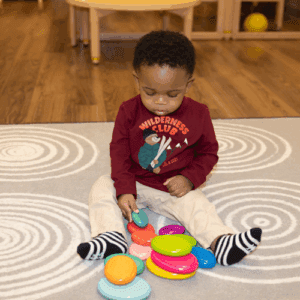
Preschool is all about channeling that toddler energy into more structured, play-based learning that will prepare them for kindergarten and beyond. A strong preschool curriculum builds foundational skills in literacy, math, and science through engaging activities and hands-on projects. Children should be encouraged to ask questions, solve problems, and work together. Beyond academics, preschool is a crucial time for developing social-emotional skills like following directions, managing emotions, and building friendships. Look for a program that fosters independence and confidence, helping your child see themselves as a capable and curious learner ready for the next big step.
What Should a Great CT Childcare Center Offer?
When you’re looking for the right childcare center, you’ll find that the best programs share a few core qualities. Beyond a safe space and a solid curriculum, these centers create an environment where children are excited to learn and families feel supported. They blend structured learning with creative play, maintain the highest standards for safety, and view parents as essential partners in a child’s education. These features are the building blocks of a place where your child won’t just be cared for, but will truly thrive.
More Than Just Play: A Strong Educational Core
A great childcare program is built on more than just supervision. It’s about creating an environment where learning happens through play, exploration, and gentle guidance. Quality childcare helps children develop crucial social, emotional, and cognitive skills that prepare them for kindergarten and beyond. Look for a center with a clear educational philosophy that encourages curiosity and a love of learning from day one. The curriculum should be intentional and thoughtfully planned, yet flexible enough to follow your child’s unique interests. This approach ensures that children are active participants in their own education, building a strong foundation for a lifetime of discovery.
Going Beyond the Basics with Enrichment and STEM
The best learning often feels like play. Top-tier childcare programs understand this and offer a variety of engaging activities that go beyond the standard daily routine. These enrichment opportunities help children discover new passions and develop important life skills in a fun, low-pressure setting. Programs like cooking, art, music, and movement help children express their creativity and build confidence. Early STEM learning activities introduce foundational concepts in science and math through hands-on experiments and projects. These experiences provide a safe and nurturing environment for children to explore their interests, collaborate with friends, and grow into capable, well-rounded individuals.
A Safe, Healthy, and Secure Environment
Your child’s well-being is the number one priority, and a great childcare center makes this clear in everything they do. While all licensed centers must meet state health and safety standards, the best programs go above and beyond the basic requirements. This includes having secure building access, maintaining impeccably clean classrooms and play areas, and enforcing clear wellness policies to keep everyone healthy. Staff should be well-trained in first aid, CPR, and emergency procedures. When you tour a center, you should feel a sense of order and see that health and safety are woven into the daily culture of the school.
Open Communication and Strong Parent Partnerships
You are your child’s first and most important teacher, and a great childcare program will honor and support that role. Open, frequent communication is the key to a strong parent-teacher partnership. Look for a center that provides regular updates on your child’s day, progress, and milestones. The best programs offer formal and informal opportunities to connect, from daily chats at drop-off to scheduled parent-teacher conferences. They welcome your input and see you as a vital member of the team. This collaborative approach ensures consistency between home and school, creating a supportive network that helps your child feel secure and understood as they partner with parents.
Understanding the Different Types of CT Childcare
As you begin your search, you’ll quickly realize that “childcare” isn’t a one-size-fits-all term. In Connecticut, you’ll find a variety of program types, each with its own structure, oversight, and philosophy. Understanding these differences is the first step toward finding the right fit for your family. From licensed centers with robust educational programs to smaller, home-based settings, each option offers a unique environment. This breakdown will help you get familiar with the main categories of childcare available, so you can know what to look for and what questions to ask as you explore your options.
Licensed Childcare Centers
Licensed childcare centers are what most people picture when they think of daycare or preschool. These programs are regulated by the state and must meet specific requirements to operate. According to the Connecticut Office of Early Childhood, “Licensed programs are inspected, and providers get background checks and health check-ups. Licensed providers must meet training rules (like First Aid) and have limits on how many children they care for.” This licensing is your baseline assurance of safety and accountability. Centers like these often provide structured educational curricula and are designed to support larger groups of children, typically separated into age-specific classrooms. For families seeking the highest standards, some centers voluntarily pursue additional credentials like NAEYC accreditation, which signifies a deep commitment to excellence.
Family and Group Childcare Homes
Family and group childcare homes offer a more intimate, home-like setting. These programs are also licensed by the state but operate out of a provider’s residence. The Connecticut Office of Early Childhood defines them as, “Smaller programs in someone’s home, usually for 6 to 9 children,” with group homes accommodating up to 12 children. This smaller scale can be appealing for families who want a mixed-age group environment that feels less like a school and more like a large family. The provider is often a single individual with an assistant. This can be a wonderful option, but it’s important to ask about their educational philosophy, daily routines, and how they handle things like provider sick days to ensure it aligns with your family’s needs for structure and reliability.
Unlicensed Programs
It’s important for parents to know that not all programs are required to be licensed. The state notes that, “Some child care programs, like those run by schools, don’t need a license and don’t have to follow the same health and safety rules as licensed programs.” These are often part-day programs, camps, or those operated by public or private schools. While many of these programs are excellent, the lack of state oversight means the responsibility falls on you as a parent to thoroughly investigate their policies and procedures. You’ll want to ask specific questions about staff background checks, emergency plans, and staff-to-child ratios to ensure they meet the health and safety standards you expect for your child.
College and University-Based Programs
Another option you might encounter are childcare programs located on college campuses. As Connecticut State Community College explains, “Many of these centers are ‘Laboratory Schools.’ This means they also serve as training sites where college students studying Early Childhood Education can observe and practice teaching skills.” These programs are often at the forefront of educational research and can offer innovative, high-quality curriculums. They are typically open to the public, not just to students and faculty. The presence of student teachers can mean more adults in the classroom and fresh energy, but it’s a good idea to ask how the center ensures consistency of care and mentorship for the students involved in your child’s day.
Your Top Childcare Questions, Answered
It’s completely normal to have a long list of questions and worries when you’re looking for the right childcare. You’re entrusting someone with your most precious person, after all. Thinking through these common concerns ahead of time can help you feel more confident as you tour different centers and make your final decision. From safety protocols to teacher qualifications, knowing what to look for helps you find a place where your child will not only be safe and cared for but will also truly thrive. Let’s walk through some of the biggest questions parents have.
How Do You Ensure the Center is Safe and Clean?
This is usually at the top of every parent’s list, and for good reason. A childcare center should feel like a safe haven. When you visit, notice the details. Are the entrances secure? Are the toys and surfaces clean? Is there a clear policy for sick children to help keep everyone healthy? Since little ones are great at sharing everything, including germs, a center’s commitment to health and safety is a clear indicator of its quality. Look for well-maintained indoor and outdoor spaces where children can play and explore without unnecessary risks. A proactive approach to safety and hygiene shows a deep respect for the children and families they serve.
Teacher Credentials and Parent Communication
The people who will spend their days with your child are incredibly important. You want educators who are not just warm and caring, but also knowledgeable about child development. Ask about their qualifications and ongoing professional training. Great teachers are lifelong learners. Just as important is how they communicate with you. Will you get daily updates? How can you reach them with a question? A strong partnership between parents and teachers is built on clear, consistent communication. When you feel connected and informed, you can be confident that you and your child’s exceptional educators are working together as a team.
Will My Child Get Enough Individual Attention?
Every child deserves to feel seen and heard. One of the best ways to ensure this happens is by maintaining low staff-to-child ratios. Smaller class sizes allow teachers to form meaningful bonds with each child, understand their unique personality, and tailor activities to their interests and needs. This individual attention is especially critical for the youngest learners. When you’re researching centers, ask about their ratios for each age group. This number tells you a lot about the quality of care and the personal experience your child will have each day. In a nurturing environment like our infant classrooms, close connections are the foundation for learning and growth.
A Quick Guide to Availability and Waitlists
It can be disheartening to find a center you love, only to learn there’s a waitlist. The reality is that high-quality programs are often in high demand, so it’s wise to start your search early. If you encounter a waitlist, don’t be discouraged. Ask questions to understand the process. Find out the average wait time and how the center will contact you when a spot opens up. Getting on a waitlist can be a great first step. It gives you time to continue exploring other options while keeping your preferred choice in the running. You can often find answers to these kinds of practical questions on a center’s FAQ page.
How Much Does Childcare Cost in Bridgeport?
Let’s talk about one of the biggest questions on every parent’s mind: the cost. Childcare is a significant investment in your child’s future, and understanding the factors that shape tuition fees can help you budget and make an informed decision for your family. While the price tag is important, it’s just one piece of the puzzle when choosing the right environment for your little one.
Breaking Down the Cost of Quality Childcare
Finding quality and affordable child care is a top priority for many families, and several factors determine the final cost. Generally, care for infants is the most expensive due to the need for smaller group sizes and more one-on-one attention. The type of program, whether it’s a large center or a smaller in-home daycare, also plays a role. Other variables include the length of the day (full-time vs. part-time), the credentials of the educators, and any special enrichment programs offered. Understanding these components can help you compare different options more effectively.
Understanding CT’s Care 4 Kids Program
For many families in our state, affording childcare is easier with a little help. The Care 4 Kids program is Connecticut’s primary resource for helping low to moderate-income families pay for childcare costs. This program can make a huge difference, significantly reducing your out-of-pocket expenses and making high-quality care more accessible. If you think you might qualify, it’s definitely worth looking into the eligibility requirements and application process on their website. It’s a fantastic resource designed to support working parents and ensure more children get a great start.
Application Status and Waitlists
After you submit your application for Care 4 Kids, it’s natural to feel anxious while you wait for a response. It’s helpful to know that due to high demand, many new families who are working, attending college, or in job training may be placed on an enrollment list. This means there might be a waiting period before your benefits are approved. While this can be frustrating, it’s a standard part of the process. Understanding this ahead of time can help manage expectations and give you a clearer picture of the timeline. The best thing you can do is ensure your application is complete and accurate to avoid any unnecessary delays once your name comes up.
Using the Parent Portal
To help you stay informed, Care 4 Kids offers a convenient online tool. Once you’ve applied, you can use the Parent Portal to keep track of everything in one place. This online hub is your go-to resource for checking the status of your application, so you’ll know exactly where you are in the process. It’s also where you can renew your benefits when the time comes, report any changes to your income or family situation, and view important documents related to your account. Getting familiar with the portal is a great way to feel more in control and stay on top of your childcare benefits.
Support for Parents in Education or Job Training
The Care 4 Kids program recognizes that when parents have the opportunity to grow, the whole family benefits. That’s why, for a limited time, the program offers assistance to parents who are actively working to further their own education or career skills. If you are pursuing your GED, enrolled in college courses, or participating in a job training program, you may be eligible for help with your childcare costs. This support is designed to make it easier for you to invest in your future without having to worry about finding and affording quality care for your child. It’s a valuable resource that empowers parents to achieve their goals.
Why Quality Care is an Investment in Your Child’s Future
While your budget is a practical reality, it’s so important to look beyond the numbers. The real value lies in finding a program that feels right for your child. You want an environment that is safe, supportive, and nurturing, where your child will be happy and engaged. When you tour a center, pay attention to the details. A clean and well-maintained facility is essential for keeping little ones healthy. Do the educators seem warm, experienced, and genuinely happy to be there? A quality program invests in its staff, its curriculum, and its environment to create a space where children can truly thrive.
What to Ask on Your Childcare Center Tour
Once you’ve narrowed down your options, the tour is your chance to see a childcare center in action. This is the time to observe the environment, meet the staff, and ask plenty of questions. Going in with a prepared list helps you gather the information you need to compare centers and make a confident choice for your family. Think of it as an interview where you’re deciding if the center is the right fit for your child’s needs and your family’s values.
Questions About the Teaching Staff
The educators are the heart of any childcare program, so you’ll want to get a sense of who will be caring for your child each day. Ask about teacher qualifications, their experience in early childhood education, and the staff-to-child ratios in the classroom. It’s also helpful to inquire about staff turnover, as a low rate often points to a happy, stable environment for children and teachers alike. You can learn more about the center’s commitment to hiring and supporting exceptional educators and how they invest in ongoing professional development. A passionate and well-supported teaching team makes all the difference in your child’s daily experience.
Questions About the Curriculum and Daily Schedule
Understanding the daily flow and educational philosophy will help you picture your child thriving in the new environment. Ask the director to walk you through what a typical day looks like for your child’s age group, from meals and naptime to learning activities. Inquire about their curriculum and approach to learning. Do they follow a specific philosophy, like the Reggio Emilia inspired approach? How do they balance structured lessons with child-led exploration and play? A quality program will have a clear yet flexible routine that supports learning and discovery while also meeting the individual needs of each child in their care.
Questions About Parent Communication
A strong partnership between parents and caregivers is essential for your child’s success. Ask about how the center keeps families informed. Do they use an app for real-time updates, photos, and daily reports? How often do they schedule parent-teacher conferences to discuss your child’s progress and development? It’s also important to know how they handle feedback and concerns. A great center will have an open-door policy and view parents as true partners in their child’s education. Look for signs that they are committed to partnering with parents and creating a strong, supportive community for every family.
Questions About Health and Safety Protocols
Your child’s well-being is the top priority, so don’t hesitate to ask detailed questions about safety protocols. Inquire about their illness policies, procedures for administering medication, and how they maintain a clean and sanitary environment. Ask about security measures, such as who is authorized for pick-up and what their visitor policies are. You should also confirm that all staff members are trained in first aid and CPR. A well-prepared center will have clear and established health and safety guidelines and be able to confidently walk you through their emergency plans for situations like fires or severe weather, giving you peace of mind.
How to Research and Compare Bridgeport Childcare
Finding the right childcare can feel like a huge project, but you don’t have to do it all at once. Breaking your research into a few key steps can make the process feel much more manageable. By combining official information with real-world feedback from other families, you can get a complete picture of your options and feel confident in your final decision. Think of it as gathering clues: you’ll start with the official state records, then move on to what parents are saying online, and finally, get the inside scoop from your local community. Each step gives you a different piece of the puzzle, helping you find a center that’s the perfect fit for your family.
Use the CT Office of Early Childhood Website
Your first stop should always be to check for a license. In Connecticut, licensed childcare centers are held to high standards for health, safety, and staff qualifications. This is your baseline for quality and safety. The state’s official database is the most reliable way to confirm a program is in good standing.
You can easily find licensed providers through the 2-1-1 Child Care portal. A license means the center undergoes regular inspections and that staff have passed background checks. It’s a non-negotiable first step that provides peace of mind, ensuring any center you consider meets essential requirements for caring for your child in a responsible and regulated environment.
How to Check Inspection Reports and Program History
Once you’ve confirmed a center is licensed, you can take your research a step further by looking into its history. The 2-1-1 Child Care website is an invaluable resource for this. It’s not just a directory; it’s a transparent look into a program’s track record. Here, you can access past inspection reports, which detail how a center has performed over time in meeting state health and safety standards. This information gives you a clearer picture of a center’s consistency and commitment to maintaining a safe environment. Reviewing these reports helps you move beyond a first impression, giving you concrete evidence of a program’s operational quality and dedication to best practices.
Understanding the “Elevate” Quality Rating System
As you browse the 2-1-1 website, you might see a program’s “Elevate” status. This is Connecticut’s quality rating system, designed to show how committed a provider is to going beyond the basic requirements. The levels are straightforward: “Member” means the program meets all health and safety rules. “Member+” indicates they’ve taken additional steps to improve their services. The highest level, “Member Accredited,” signifies that a center meets top national standards for early learning. This is where you’ll find programs with credentials like NAEYC Accreditation. This system gives you a quick, at-a-glance way to understand a center’s dedication to excellence and continuous improvement.
See What Other Parents Are Saying Online
Once you have a list of licensed centers, it’s time to see what other parents are saying. Online reviews on sites like Google can give you a feel for a center’s reputation and day-to-day atmosphere. Look for patterns in the comments. Are parents consistently praising the teachers’ warmth? Do they mention great communication? These details offer a glimpse into the parent experience.
Also, check the childcare center’s website for testimonials. Many schools, including Strong Start, share feedback from current and former families. Reading about what families are saying can highlight a program’s strengths and help you see if its values align with what you’re looking for in a partner for your child’s early education.
Get the Inside Scoop from Local Parents
For the most candid feedback, turn to your local community. Bridgeport-area parent groups on social media, neighborhood apps, or even friends and colleagues can be incredible resources. This is where you can ask specific questions and get honest, unfiltered answers from parents who have firsthand experience with the centers you’re considering.
Don’t be shy about asking for recommendations. People are usually happy to share their thoughts on everything from teacher communication to how a center handles sick days. This word-of-mouth information is invaluable for understanding a school’s reputation within the community and learning about the strong partnerships with parents that great centers build.
Utilize the 2-1-1 Child Care Phone Service
Beyond online searches, Connecticut offers a fantastic free resource that can feel a bit more personal: the 2-1-1 Child Care phone service. If you prefer talking to a person over scrolling through websites, this is a great option. By simply dialing 2-1-1, you can speak directly with a specialist who will help you find licensed childcare options in your area. This service, also available online at 211childcare.org, is a direct line to the state’s official database of providers, making it one of the most reliable starting points for your search. It cuts through the noise and gives you access to verified information right away.
This is an incredibly helpful tool for getting the facts straight from the source. The specialists can give you details on a program’s hours, costs, the ages they serve, and even their inspection history. This objective information is invaluable because it allows you to verify the basics before you get emotionally invested in a tour. Using this service is a great way to confirm that any center you’re considering meets the state’s essential health and safety standards. It provides a solid foundation for your search, giving you the peace of mind that comes from knowing you’re starting with a list of properly vetted and licensed programs.
How to Choose the Right Childcare Center
After all the research, reviews, and phone calls, the final step is about making a connection. This is where you move from checklists to feelings, ensuring the center you choose is not just great on paper, but the perfect fit for your child and your family. It’s about finding a place that feels like a second home, where your child will be safe, happy, and inspired to learn every day. This decision comes down to a combination of in-person observation, aligning the center’s philosophy with your family’s needs, and preparing for a positive start.
Schedule a Tour and Trust Your Instincts
You can learn a lot from a website, but nothing compares to seeing a childcare center in person. It’s essential to personally visit and tour any potential program to make sure it meshes with your family’s lifestyle and philosophies. During your visit, pay attention to the details. Do the children seem happy and engaged? How do the educators interact with them? Is the environment clean, organized, and filled with interesting materials? A tour is your chance to ask lingering questions and get a real sense of the daily atmosphere. Most importantly, trust your intuition. You know your child best, and your gut feeling about a place is often the most reliable indicator of a good fit.
Is It the Right Fit for Your Child?
Every child is unique, and the right environment for one might not be the best for another. Think about your child’s personality. Are they active and adventurous, or more quiet and observant? Consider a center’s approach to learning and daily structure. A program with a strong focus on outdoor play and hands-on projects might be perfect for a high-energy toddler. It’s also crucial to find a program that aligns with your family’s values. At Strong Start, we believe in partnering with parents to understand each child’s individual needs and create a supportive experience that helps them thrive.
How to Prepare Your Child for a Smooth Transition
Starting childcare is a big milestone for both you and your little one. Finding an environment that will be safe, supportive, and nurturing is the first step. Once you’ve made your choice, you can focus on making the transition as smooth as possible. Talk to the center’s director about their process for welcoming new children. You can help your child prepare by talking positively about their new school, teachers, and friends. Reading books about starting school can also be helpful. Establishing a predictable and loving goodbye routine from the first day will provide comfort and security. Knowing what to expect during your child’s day can also ease your own mind.
Related Articles
Frequently Asked Questions
What’s the real difference between a licensed center and an accredited one? Think of licensing as the mandatory baseline. Every legal childcare center in the state must be licensed, which confirms they meet essential health and safety standards. Accreditation, on the other hand, is a voluntary and much more rigorous process. A center that earns accreditation, especially from an organization like NAEYC, has proven it meets the highest national standards for curriculum, teacher qualifications, and family partnerships. It signals a deep commitment to excellence.
What should I look for in a classroom for my toddler versus a preschooler? The environments should feel quite different because their developmental needs are distinct. For a toddler, look for a classroom designed for safe exploration and movement, with lots of sensory activities and opportunities to practice new physical skills. The focus is on learning through doing. For a preschooler, you should see more structure and activities that prepare them for kindergarten. Look for evidence of group projects, problem-solving, and early literacy and math concepts being introduced through engaging, hands-on play.
The blog mentions a “Reggio Emilia inspired approach.” What does that actually mean for my child’s day? In simple terms, it means learning is driven by your child’s own curiosity. Instead of following a strict, pre-planned curriculum, educators observe what children are interested in and then build long-term projects around those topics. The classroom is intentionally designed to invite questions and discovery, and your child is viewed as a capable, creative thinker who helps guide their own educational journey.
How can I really get a sense of the teachers and staff during a brief tour? Pay close attention to how the educators interact with the children currently in their care. Do they get down on the child’s level to talk? Do they seem patient, warm, and genuinely engaged, or are they just supervising from a distance? You can also ask the director about staff turnover. A low turnover rate is often a great sign of a happy, stable, and supportive environment for everyone.
Besides safety and curriculum, what’s one key thing that makes a childcare program truly great? A truly great program sees you, the parent, as a genuine partner. This goes far beyond a simple daily report. It means open, two-way communication where your insights about your child are valued and you feel like part of a team. When a center is committed to building a strong relationship with your family, it creates a consistent and supportive world for your child, which helps them feel secure and confident.
Written By
Marc Hoffman
Founder, Strong Start Early Care & Education
Marc founded Strong Start in 2014, inspired by his studies at Williams College, Yeshiva University, and research at Yale University. His child-centered, inquiry-based approach to early education has helped hundreds of families in the Trumbull and Bridgeport communities. As a parent himself, Marc understands the importance of finding a nurturing environment where every child can learn, grow, and flourish.