The toddler years are an incredible whirlwind of development. One day they’re taking their first wobbly steps, and the next they’re asking a million questions. This is a time of explosive growth, and finding the right environment to support it is key. A quality early learning center is designed for this exact stage, where your child’s natural curiosity leads the way. The true benefits of educational daycare for toddlers come from its ability to be a supportive daycare for children with different developmental stages, nurturing the whole child and helping them build foundational skills for learning and making friends.
Key Takeaways
- Play is the work of toddlers: An educational daycare uses purposeful play, not flashcards, to help your child learn. Every activity, from building with blocks to painting, is a chance to develop critical thinking, social skills, and coordination.
- Social and emotional skills are key: Beyond academics, a supportive daycare helps toddlers understand their big feelings and learn to play with others. This focus on kindness, sharing, and making friends builds a strong foundation for life.
- A strong home-school connection matters: Your role as a parent is crucial, so choose a program that prioritizes open communication. When teachers and parents work as a team, your child feels consistently supported and confident.
So, What Exactly Is Educational Daycare?
When you hear the term “educational daycare,” it’s easy to picture tiny desks and flashcards. But for toddlers, that’s not what it’s about at all. Educational daycare is a warm, nurturing environment where learning happens through exploration, play, and gentle guidance. It’s the sweet spot between a traditional daycare focused solely on supervision and a rigid academic preschool. Think of it as a place designed specifically to spark your child’s natural curiosity and help them make sense of the world around them.
At its core, this approach is built on the understanding that children learn best when they are actively engaged and having fun. Every activity, from building with blocks to singing songs, is an opportunity for growth. It’s a space where your child is seen as a capable, curious individual, and the environment is intentionally designed to support their development. This philosophy is a team effort, requiring a strong commitment to partnering with parents to ensure a seamless and supportive experience for your child, both at school and at home. It’s about creating a community that nurtures your toddler’s potential every single day.
Where Play Has a Purpose
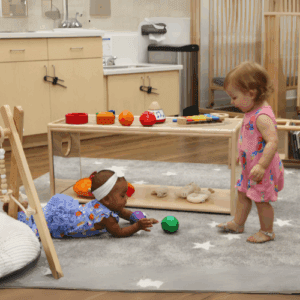
So, what does “purposeful play” look like for a toddler? It means we create a structured environment where children can engage in play that is essential for their cognitive and social development. Instead of a room full of random toys, our classrooms are thoughtfully arranged with learning centers that invite exploration. The block area might have pictures of local buildings to inspire new creations, while the sensory table could be filled with water and different objects to test what sinks and what floats. This approach allows children to learn important skills while simply having fun, guiding their own discovery within a safe and supportive framework.
When Learning Feels Like Play
In our classrooms, learning is seamlessly integrated into every part of the day. We believe that the most meaningful education happens when it doesn’t feel like a lesson at all. Your toddler is practicing early math concepts while sorting colorful beads, developing fine motor skills while painting at an easel, and building language skills during story time. Our enrichment programs are another great example of this philosophy in action. Whether they’re baking, creating art, or exploring STEM concepts, children are developing key skills for school readiness without even realizing it. It’s all about nurturing a genuine love for learning that will last a lifetime.
The Difference a Passionate Educator Makes
The heart of any great educational daycare is its teachers. Our team is made up of exceptional early childhood professionals who are not just caregivers, but facilitators of learning. Guidance from these passionate educators is a cornerstone of our approach. They are experts at observing each child to understand their unique interests, strengths, and needs. This ongoing observation allows our educators to tailor learning experiences specifically for your child, fostering a supportive and enriching environment where they feel seen and valued. This responsive teaching ensures every toddler gets the right balance of challenge and support to thrive.
Understanding the Spectrum of Early Childhood Development
As a parent, you get a front-row seat to your child’s incredible growth. From their first smile to their first steps, every day brings something new. Early childhood development is the amazing process of how children grow and learn during these foundational years. It’s not just about hitting specific milestones on a chart; it’s a holistic journey that builds the skills they’ll use for the rest of their lives. Understanding the different areas of this journey can help you appreciate every little step your child takes and know how to best support them along the way.
The Five Key Domains of Development
To make sense of this rapid growth, experts often break it down into five key areas, or domains. Think of these as different, interconnected pieces of the same puzzle. A child’s progress in one area often influences their growth in another. These domains are Physical, Cognitive, Communicative, Socioemotional, and Adaptive. Watching your child develop across all five areas gives you a complete picture of their progress. At Strong Start, our entire curriculum is designed to nurture growth in each of these domains, ensuring a well-rounded and supportive learning experience for every child.
Physical, Cognitive, and Communicative Growth
The first three domains cover how children move, think, and talk. Physical development includes everything from big movements like running and jumping (gross motor skills) to small, precise actions like holding a spoon or drawing a line (fine motor skills). Cognitive development is all about how your child’s brain works—how they learn, solve problems, and make sense of their surroundings. Finally, communicative development focuses on how they understand and use language, from their first babbles to full sentences. Our enrichment programs provide countless opportunities for children to build these skills through hands-on activities like art, cooking, and STEM exploration.
Socioemotional and Adaptive Skills
The final two domains are just as crucial for a child’s well-being. Socioemotional development is about learning to understand and manage big feelings, empathize with others, and build friendships. It’s how your child learns to share, take turns, and become a kind and caring person. Adaptive development is all about self-care and independence. These are the skills that lead to those proud “I did it myself!” moments, like putting on their own shoes, washing their hands, or drinking from a cup without help. These skills build confidence and a sense of capability that is essential for their future.
Every Child Follows a Unique Timeline
It’s so important to remember that every child develops at their own unique pace. While developmental milestones provide a helpful guide, they are not a strict timetable. Some children may talk early but walk later, while others might be climbing everything in sight before they can string two words together. This variation is completely normal. The journey of development is a marathon, not a sprint. Our exceptional educators are trained to recognize and support each child’s individual timeline, creating a personalized learning path that meets them exactly where they are and gently encourages their next steps.
What Are Developmental Delays?
So, when should you be concerned? A developmental delay is when a child consistently does not reach milestones in one or more of the five domains within the expected age range. It’s more than just being a little behind in one area. For example, it might be a toddler who isn’t using any words by a certain age or a preschooler who struggles to interact with peers. The most important thing is not to panic. Recognizing a potential delay is simply the first step toward getting your child the support they need to thrive. Open communication with your child’s teachers and pediatrician is key.
Accessing Early Intervention Services
If you or your child’s doctor suspect a delay, early intervention services can provide incredible support. These programs are designed to help children with special needs learn and grow, often in familiar settings like their own home or childcare center. Best of all, these services are typically free for families. Getting support early can make a world of difference, often preventing or lessening future challenges in school or social situations. We believe in partnering with parents every step of the way, and we are here to help you find the resources and support your family needs for a successful developmental journey.
Key Benefits of Educational Daycare for Your Toddler
The toddler years are a whirlwind of growth, and an educational daycare environment is designed to support every part of that journey. It’s more than just a place for your child to be while you work; it’s a community where they build the foundational skills for learning and for life. From figuring out how to stack one more block to learning how to ask a friend for a turn, every moment is an opportunity. Here, your child is encouraged to explore, communicate, and move, all under the guidance of educators who understand exactly what they need at this incredible stage of development.
Encouraging a Curious, Problem-Solving Mind
Toddlers are natural scientists, constantly testing theories about how the world works. An educational daycare gives them the space and materials to conduct their experiments safely. Through hands-on play, storytelling, and interactive games, they build critical thinking skills. Activities are designed to encourage curiosity and exploration, helping them solve simple problems and think out loud. Whether they’re figuring out which shape fits into a puzzle or discovering what happens when they mix two colors of paint, they are learning to think creatively. Our curriculum is inspired by The Project Approach, which follows your child’s interests and turns their questions into exciting, in-depth investigations.
Helping Your Toddler Find Their Voice
There’s nothing quite like hearing your toddler’s vocabulary explode. In a classroom full of stories, songs, and conversation, children are immersed in a language-rich environment that helps them connect words with ideas. Educators model clear communication and gently guide toddlers in expressing their wants and needs. This is also where we begin to observe and understand your child’s unique developmental path. Through ongoing observation, we can see how your child is growing and share these insights with you. This process isn’t about testing; it’s a way to start a conversation and ensure we are partnering with you to best support your child’s communication journey.
From First Steps to Big Leaps: Physical Development
From the determined wobble of their first steps to the focused pinch of their fingers picking up a crayon, toddlers are mastering control over their bodies. Educational daycare provides daily opportunities to develop both large and small motor skills. Running, jumping, and climbing on the playground build strength and coordination in their large muscles. Inside, activities like stacking blocks, working with playdough, and painting help refine the small muscle movements in their hands and fingers. These aren’t just fun and games; these activities are the building blocks for future skills like writing their name and tying their shoes. Our toddler classrooms are intentionally designed to challenge their motor skills in playful, engaging ways.
Learning to Share, Play, and Make Friends
For many toddlers, educational daycare is their first real opportunity to be part of a community of their peers. It’s where they move from playing alongside others to truly playing with them. This is a huge step, and it’s where some of the most important life lessons begin. In a supportive classroom setting, your child will learn how to communicate their needs, listen to others, and build their very first friendships. It’s a beautiful process to watch, and it lays the groundwork for a lifetime of healthy relationships.
Watching your toddler learn to make friends is one of the most rewarding parts of their development. They start to see themselves as part of a group, learning that other people have thoughts and feelings, too. This social-emotional growth is just as important as learning letters and numbers. It’s what helps them become kind, empathetic, and confident individuals. Our toddler classrooms are designed to be a safe and encouraging space for these first social adventures, with plenty of opportunities for both group activities and individual play. Our educators are always there to guide interactions, celebrate successes, and help little ones understand the world around them.
Mastering the Art of Sharing and Taking Turns
The concept of sharing can be a tough one for toddlers, and that’s completely normal. At this age, they’re just starting to understand the idea of ownership. A structured daycare environment provides daily opportunities to practice these skills in a gentle, guided way. When a friend has the toy truck your child wants, our exceptional educators are right there to help them work through it. They learn to use their words, wait for their turn, and even collaborate on building a block tower together. These small, everyday interactions teach them how to be patient, cooperative, and considerate of others.
Watching Their First Friendships Blossom
Friendship at the toddler stage is all about connection and trust. For your child to feel comfortable enough to reach out to a peer, they first need to feel safe and secure in their surroundings. A warm, nurturing environment with caring adults helps them build that confidence. In our classrooms, children learn to connect with others and form their first social bonds. These early friendships might start with a shared giggle over a book or simply enjoying sitting next to a familiar face during snack time. These moments are the building blocks of true friendship, teaching your child the joy of companionship.
Helping Them Work Through Disagreements
Disagreements are an inevitable and important part of learning to play together. Instead of seeing them as problems, we see them as teachable moments. Through these daily interactions, children learn to understand and manage their own big feelings, like frustration or disappointment. Our approach, inspired by Reggio Emilia, helps children develop empathy by recognizing how their friends are feeling, too. An educator might help by saying, “I see you’re sad that Leo took the blue crayon. Leo, look at your friend’s face. How do you think she’s feeling?” This helps toddlers learn to resolve conflicts in a way that respects everyone’s feelings.
Supporting Your Toddler’s Emotional Growth
Beyond learning letters and numbers, one of the most significant areas of growth for your toddler is their emotional development. Toddlers experience a whole world of big, intense feelings, but they don’t yet have the words or skills to manage them. An educational daycare provides a safe, supportive environment where your child can begin to understand their emotions and the feelings of others. It’s a place where they learn to be part of a community, practice empathy, and build their very first friendships.
With the gentle guidance of exceptional educators, children learn to express their needs, work through frustration, and feel a sense of belonging. This emotional foundation is just as critical as any academic skill. It helps your child build resilience, empathy, and self-awareness that will support them long after they leave our classrooms. When children feel emotionally secure, they are more open to exploring, learning, and building relationships with confidence. This nurturing approach helps them grow into compassionate and well-adjusted individuals, ready to take on new challenges and form meaningful connections with their peers.
Learning to Name and Manage Big Emotions
In a classroom full of friends, your toddler will have plenty of opportunities to practice important social skills. They’ll learn how to share, take turns, and communicate their wants and needs. When a disagreement happens, like two children wanting the same toy, it becomes a valuable learning moment. Our teachers help children put words to their feelings, saying things like, “I see you’re feeling frustrated that your friend has the truck you want to play with.” By naming the emotion, we help them understand it. Then, we guide them toward finding a solution together, like setting a timer or finding another truck. These daily interactions in our toddler classrooms are the building blocks of emotional intelligence.
Encouraging an “I Can Do It!” Attitude
A key part of growing up is learning to do things for yourself, and an educational daycare is the perfect place to practice. The environment is designed to empower toddlers to explore their own interests and develop a sense of independence. Whether it’s pouring their own milk at snack time, choosing a puzzle from the shelf, or putting on their own coat to go outside, every small accomplishment builds their confidence. This belief in their own abilities is a cornerstone of The Project Approach, where children are encouraged to make choices and take ownership of their learning. This growing independence helps them see themselves as capable and competent, which is a wonderful feeling for a young child.
Making Drop-Offs a Little Easier
We know that saying goodbye at drop-off can be tough for both you and your child. A predictable and consistent routine is one of the best ways to help your toddler feel secure and calm. When children know what to expect each day, from morning circle time to afternoon story time, it creates a sense of stability that makes separating from a parent much easier. Over time, your child learns that this is a safe and fun place and that you will always come back. We believe in partnering with parents to make this transition as smooth as possible, and we can work with you to create a simple, loving goodbye ritual that helps your child start their day with confidence.
A Day in the Life: What Will My Toddler Do?
It’s natural to wonder what your toddler’s day will look like when they’re away from you. Will they be happy? Engaged? Learning? At an educational daycare, the answer is a resounding yes. The daily rhythm is a carefully crafted blend of structured activities, free play, quiet time, and outdoor fun, all designed to meet the unique energy levels and developmental needs of toddlers. This balance is key; it ensures they have opportunities for focused learning with educators, as well as the freedom to explore their own interests and build social skills with peers.
From the moment they arrive, your child is welcomed into a vibrant environment where every corner holds a new possibility for discovery. The schedule provides a comforting sense of routine, which helps toddlers feel secure, while the activities themselves are dynamic and exciting. Forget the idea of kids just running around aimlessly; this is purposeful play. Your child’s day is filled with moments of joy, connection, and learning that lay a strong foundation for the years ahead. Let’s walk through some of the specific experiences that will fill your toddler’s day, from creative arts to early science explorations.
Circle Time, Stories, and Early Literacy
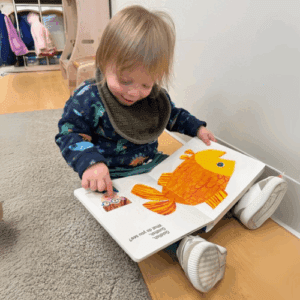
Group storytime is a cornerstone of the toddler day, a chance for everyone to gather, listen, and get lost in a good book. But the literary love doesn’t stop there. Cozy reading nooks with picture books invite children to explore on their own or with a friend. Educators use puppets, songs, and expressive voices to make tales come alive. Engaging children in storytelling not only enhances their language skills but also fosters a love for reading that can last a lifetime. These moments build vocabulary, improve listening skills, and spark your child’s imagination, turning them into lifelong readers.
Exploring Creativity with Arts and Crafts
Toddlers learn best when they can get their hands messy. Our toddler classrooms are filled with opportunities for creative expression, from painting at an easel to squishing dough and building with recycled materials. These aren’t just fun distractions; they are powerful learning tools. Hands-on play, storytelling, and creative activities contribute to cognitive development, allowing toddlers to express themselves and develop fine motor skills. As they grip a crayon or glue a feather, they’re building the small muscle control they’ll one day need for writing, all while discovering the joy of making something that is uniquely theirs.
Music, Movement, and Getting the Wiggles Out
Toddlers have a lot of energy, and we channel it into productive, joyful movement. Music and dance parties are a regular occurrence, helping children learn rhythm, follow directions, and express emotions. Our enrichment programs and outdoor play spaces give them plenty of room to run, jump, climb, and explore with their whole bodies. Activities that promote movement, such as singing and dancing, not only enhance physical development but also improve memory and language skills. This active play is crucial for developing gross motor skills, coordination, and a healthy appreciation for being active.
Discovering the World with Early STEM Activities
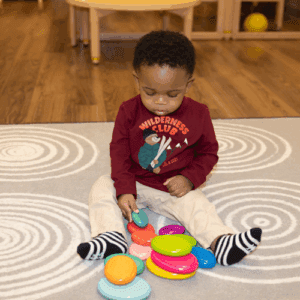
You might be surprised to learn that your toddler is already a budding scientist and engineer. Early STEM (Science, Technology, Engineering, and Math) learning happens naturally through play. When a child stacks blocks to see how high they can go before they tumble, that’s engineering. When they pour water from one container to another at the water table, they’re exploring physics. Engaging toddlers in early STEM activities helps them explore their environment, develop critical thinking skills, and understand basic scientific concepts. We nurture this innate curiosity by asking questions, encouraging experimentation, and celebrating the process of discovery.
How We Track and Support Your Child’s Development
Understanding your toddler’s development is about more than just checking boxes on a list. It’s about seeing them as the unique, capable person they are and celebrating every step of their journey. At Strong Start, we see growth as a continuous story, and we’re here to read it with you. We don’t rely on a single method; instead, we combine thoughtful, in-the-moment observation with established developmental milestones to create a complete picture of your child’s progress. This holistic view ensures they have the support they need to flourish, both academically and emotionally.
This approach allows us to tailor our curriculum to their specific interests and needs, making learning a personal and joyful experience rather than a one-size-fits-all program. When a child feels seen and understood, their confidence blossoms. They become more willing to try new things, ask questions, and engage with their peers. For parents, this process builds a foundation of trust and open communication. You’ll always know how your child is doing and, more importantly, why we’re focusing on certain activities or skills. It’s a collaborative effort designed to give your child the strongest possible start.
Getting to Know Your Child as a Learner
When we talk about assessment, we aren’t talking about tests or grades. For toddlers, learning happens in moments of play, curiosity, and interaction. Our Exceptional Educators are trained to observe your child in their natural environment, whether they’re building a block tower, sharing a toy, or asking a question. These informal observations give us incredible insight into how your child thinks, solves problems, and connects with others. We document these moments not to judge, but to understand their individual skills and interests. This helps us plan activities that will capture their imagination and gently challenge them to grow.
Keeping an Eye on Developmental Milestones
While we celebrate each child’s unique pace, we also know that developmental milestones provide a helpful guide for their growth journey. These markers, which cover everything from language to motor skills, help us ensure your child is progressing in a healthy way. Tracking milestones allows us to be proactive. If we notice a child might need a little extra support in one area, we can adjust our approach in the classroom and start a conversation with you. Think of it as a roadmap that helps us make sure every child has what they need to reach their destination confidently.
Why a Strong Parent-Teacher Partnership Matters
You are your child’s first and most important teacher, and we believe in a true partnership between home and school. Consistent, two-way communication is the foundation of this relationship. We keep you connected to your child’s day through regular updates, photos, and notes about their discoveries and achievements. Our goal is to create a seamless experience for your child, where the learning and values from school are echoed at home, and vice versa. This collaborative approach is central to our philosophy of Partnering with Parents, ensuring we work together as a team to support your child’s amazing growth.
How Quality Daycare Supports Children with Different Needs
Every child is on their own unique developmental timeline, and that’s something to be celebrated. A high-quality educational daycare understands this deeply. It’s an environment designed to meet children exactly where they are, providing the right blend of support and challenge to help them thrive. For children who may have developmental delays or different learning needs, the right program can be transformative. It’s a place where they can build confidence, make friends, and learn essential skills in a setting that feels safe and encouraging. The goal is to create a community where every child feels like they belong and has the tools they need to succeed.
This supportive atmosphere is built on a foundation of close observation and strong communication. When educators truly see each child as an individual, they can tailor their approach to fit their specific needs. This might mean adapting a group activity, providing a quiet space for a child who feels overwhelmed, or working closely with outside therapists. It’s all part of a holistic approach that recognizes that learning isn’t one-size-fits-all. By partnering with parents every step of the way, a great daycare ensures that your child is surrounded by a consistent and caring team, both at school and at home.
Creating an Inclusive Classroom for Everyone
An inclusive classroom is one where every single child feels seen, valued, and supported. It’s more than just a policy; it’s a feeling that’s woven into the fabric of the entire day. Our exceptional educators are skilled at creating a warm and welcoming environment where differences are celebrated and children learn to be kind and empathetic friends. They model respectful communication and guide children in understanding that everyone has unique strengths. This sense of belonging is crucial for a child’s social and emotional development, giving them the confidence to participate, explore, and build meaningful relationships with their peers and teachers.
Adapting Activities and Using Sensory-Friendly Spaces
In practice, inclusivity means being flexible and responsive. If a child is struggling with the fine motor skills needed for a beading activity, a teacher might offer larger beads or a different material, like playdough. The goal is for every child to experience success and feel capable. Our classrooms are also designed with sensory needs in mind. We understand that a busy classroom can sometimes be overwhelming, so we create cozy, quiet corners where a child can retreat with a book or a soft pillow if they need a moment to themselves. This thoughtful approach ensures the environment works for every learner.
Integrating Specialized Therapies
For children receiving services like speech or occupational therapy, consistency is key. A quality daycare can play a vital role by serving as a bridge between therapy sessions and daily life. We welcome collaboration with your child’s therapists and can help integrate their strategies and goals into the classroom routine. This creates a seamless support system for your child, where the skills they are learning in therapy are reinforced throughout the day during playtime, snack time, and group activities. This team-based approach ensures that everyone is working together to help your child make meaningful progress in a natural, supportive setting.
Occupational, Speech, and Physical Therapy
These specialized therapies can make a world of difference for a child’s development. Occupational therapy helps children master daily tasks and motor skills, like holding a crayon or using a fork. Speech therapy focuses on all aspects of communication, from articulating words to understanding social cues. Physical therapy supports gross motor development, helping children with balance, strength, and coordination. When educators are aware of a child’s therapy goals, they can intentionally create opportunities for them to practice these new skills during everyday activities in our toddler classrooms, making learning feel like play.
The Role of an Individualized Education Program (IEP)
For children who qualify for early intervention services, an Individualized Education Program (IEP) or a similar plan is an incredibly valuable tool. Think of it as a personalized roadmap that outlines your child’s specific learning goals and the support system that will be put in place to help them achieve them. This plan is created by a team that includes you, your child’s teachers, and any specialists they work with. It ensures that everyone is on the same page and provides a clear, consistent approach to supporting your child’s unique learning style and pace, making sure their educational journey is tailored just for them.
How You Can Support Your Child’s Learning at Home
Your child’s education is a partnership, and you are the most important partner we have. While our educators are experts in early childhood development, you are the expert on your child. When we work together, we create a circle of support that helps your toddler feel secure, confident, and ready to learn. This connection between home and school is where so much of the magic happens. It ensures the lessons they learn in the classroom are carried into their world at home, and the unique insights you have about your child help us tailor their experience at school. A shared understanding of your child’s personality, interests, and needs allows us to create a consistent and nurturing environment for them, both here and at home.
At Strong Start, we are deeply committed to partnering with parents. We believe that open, consistent communication is the foundation of a great early learning experience. From daily updates and photos that give you a window into their world to more formal conversations about their progress, we make sure you are always connected to your child’s journey. Your involvement, questions, and observations are not just welcome; they are essential. Together, we can celebrate every small victory and support your child through every new challenge, making their first school experience a truly positive and collaborative one.
Simple Ways to Bring Learning into Your Home
One of the best ways to support your toddler’s growth is by connecting their school experiences to life at home. When we share what your child is exploring in the classroom, you can continue that discovery together. If they’re learning about seasons, you can point out the changing leaves on a walk. If their class is fascinated by construction, you can build a tower with blocks at home. We use methods like The Project Approach, where children take a deep dive into topics that spark their curiosity. By staying informed and engaged, you can ask specific questions about their day and show them that their learning is important and exciting to you, too.
How to Build a Great Relationship with Your Child’s Teacher
Think of your child’s teacher as your teammate. We build a strong relationship with you through regular communication, sharing observations, photos, and notes about your child’s day. This helps you feel connected and gives you a clear picture of their experiences. This partnership is a two-way street. Sharing what’s happening in your child’s life outside of school, like a visit from a grandparent or a new favorite book, gives our educators valuable context. This open dialogue helps us understand your child as a whole person and allows us to support them in the most thoughtful and effective way possible.
Celebrating Every Milestone, Big and Small
From learning to take turns with a friend to recognizing the first letter of their name, your toddler’s time in educational daycare is full of exciting milestones. Our teachers are trained to observe and document these important steps in development, not as a test, but as a way to understand and support your child’s individual pace of growth. Knowing about these developmental milestones helps us ensure every child is on the right track and allows us to provide extra support if needed. We share these observations with you, so we can celebrate every new achievement together as a team, reinforcing your child’s confidence and love for learning.
How Daycare Prepares Your Child for What’s Next
The toddler years are so much more than just a phase of adorable chaos. Every block they stack, every story they hear, and every friend they make is a building block for the person they will become. An educational daycare program isn’t just about preparing your child for the next classroom; it’s about giving them the tools, confidence, and curiosity to thrive in school and in life. By providing a supportive and stimulating environment, we help toddlers build a strong foundation that will support them for years to come, turning their natural wonder into a lifelong love of discovery.
Building a Strong Foundation for Kindergarten
Imagine your child walking into their kindergarten classroom for the first time, feeling excited and prepared. That confidence starts now. In an educational daycare setting, toddlers get a gentle introduction to the rhythms of a school day, from following directions to participating in group activities. They learn to listen during story time, wait their turn to speak, and work on projects with their peers. Studies show that quality daycare attendance positively impacts cognitive growth and school readiness, giving children a head start on the academic and social skills they’ll need. It’s about making that big transition to kindergarten feel like a natural, exciting next step.
Learning Social Skills for Life
For many toddlers, daycare is their first real opportunity to explore a social world filled with peers. It’s where they learn the delicate art of sharing a favorite toy, the importance of saying “please,” and the magic of making a friend laugh. These early interactions are incredibly valuable. In a guided environment, children practice important skills like talking about their feelings, solving small disagreements, and learning to see things from another person’s perspective. These aren’t just playground politics; they are the fundamental skills that help children build healthy, supportive friendships that can last a lifetime.
Fostering a Lifelong Love of Learning
The most important lesson a toddler can learn is that learning itself is fun. A great early education program sparks curiosity rather than just teaching facts. When children are encouraged to ask questions, explore their own ideas, and get their hands messy, they discover the joy of finding things out for themselves. This approach helps children develop crucial skills for school and life, from early math concepts to self-control. By nurturing their innate desire to explore, we help them become active, engaged learners who see the world as a place full of exciting things to discover.
How to Choose the Right Early Learning Center
Choosing the right educational daycare is one of the most important decisions you’ll make as a parent. It’s about finding a place where your child will not only be safe and cared for but also truly happy and engaged. When you’re looking at different centers, it can be helpful to have a mental checklist of what matters most. Focusing on the people, the philosophy, and the environment will help you find a program that feels like a true partner in your child’s growth.
What to Look for in a Great Teacher
The heart of any great program is its teachers. Look for educators who are not just qualified, but also warm, patient, and genuinely delighted by the children in their care. Research shows that high-quality programs often have teachers with college degrees and low child-to-teacher ratios, which allow for more one-on-one attention. When you visit, watch how the teachers interact with the children. Do they get down on their level? Do they listen with interest? These relationships are the foundation of your child’s learning experience. We believe in hiring exceptional educators who are passionate about creating a nurturing environment for every child.
Does the Curriculum Encourage Curiosity?
A toddler’s work is play, and their curriculum should reflect that. The best programs don’t focus on flashcards and drills. Instead, they create an environment rich with opportunities for discovery. Look for a curriculum that uses hands-on play, storytelling, and engaging activities to support your child’s development. Our approach is inspired by Reggio Emilia, where learning is driven by your child’s own curiosity. We use The Project Approach to explore topics that capture their interest, turning learning into a joyful adventure. This kind of purposeful play, filled with problem-solving and exploration, is highly effective for cognitive development.
Don’t Forget Health, Safety, and Accreditation
Above all, you need peace of mind that your child is in a safe and healthy space. When you tour a center, pay attention to the details. Are the classrooms clean and well-organized? Is there a secure check-in process? Ask about their specific health and safety policies. Another key indicator of quality is accreditation. Programs with NAEYC Accreditation have met rigorous national standards for excellence. It’s also helpful to ask how they communicate with parents about a child’s day. Modern school tracking systems can help teachers and parents team up to support a child’s growth and prepare them for success.
Finding a Center for a Child with Developmental Delays
If your child has developmental delays, finding the right early learning center can feel like an even bigger decision. You want a place that not only understands your child’s unique needs but also celebrates their strengths. The goal is to find an inclusive program where every child is welcomed and supported. This means looking for a center that sees your child first and is ready to work with you and any early intervention specialists to create a plan for their success. It’s about finding a community that will be a true partner in your child’s journey, providing a nurturing environment where they can thrive alongside their peers.
Why a Center’s Willingness to Learn Matters Most
While previous experience with special needs is a plus, what’s even more critical is a center’s attitude. Look for a program that shows a genuine willingness to learn about your child and adapt to their needs. A truly inclusive environment is one where educators are open, curious, and committed to understanding what makes your child tick. They should be eager to collaborate with you and any therapists to ensure your child has the best possible experience. This spirit of partnership is far more valuable than a long resume, as it ensures your child will be seen as an individual with limitless potential.
Working with Teachers After Enrollment
Once you’ve chosen a center, your role as your child’s best advocate continues. The key to a successful experience is building a strong, collaborative relationship with their teachers. You are the expert on your child, and sharing your insights is incredibly valuable. Consider putting together a simple guide for the educators with notes about your child’s strengths, what they enjoy, their specific needs, and how they learn best. This helps the teaching team partner with you from day one. Consistent communication ensures that everyone is on the same page, creating a circle of support that helps your child feel confident and understood.
Finding Financial and Community Support
Navigating the world of support services for a child with developmental delays can feel overwhelming, but you don’t have to do it alone. There is a network of financial, legal, and community resources designed to help your family access the care and education your child deserves. Understanding your rights and knowing where to turn for help can make a world of difference. These systems are in place to ensure that every child has the opportunity to reach their full potential, and connecting with them is a powerful step in advocating for your child. From federal laws that protect your child’s right to education to local support groups that offer a sense of community, help is available. Let’s explore some of the key resources that can support your family on this journey.
Understanding Your Rights Under the IDEA Act
One of the most important resources for your family is the Individuals with Disabilities Education Act (IDEA). This federal law is designed to protect the rights of children with disabilities and ensure they have access to the support they need. A key part of IDEA is the guarantee of a “free appropriate public education” for every child. For toddlers and preschoolers, this often translates into early intervention services that can be provided in various settings, including at an educational daycare. Understanding this law empowers you to advocate for your child and ensure they receive the services they are entitled to, setting a strong foundation for their educational future.
Financial Aid and Government Programs
The cost of specialized care and services can be a concern for many families, but there are several avenues for financial assistance. Publicly funded programs, such as Supplemental Security Income (SSI), may be available to help offset costs for eligible families. Many health insurance plans also cover therapies and other support services. Additionally, it’s worth researching local and national grants specifically for children with disabilities. Don’t hesitate to ask potential daycare centers or therapy providers if they have information on financial aid or can point you toward organizations that can help you explore your options. Every bit of support can help ease the financial burden.
Connecting with Local Resources and Support Groups
Sometimes, the most valuable support comes from connecting with others who understand what you’re going through. Joining a local parent support group can provide a space to share experiences, ask questions, and learn about community resources you might not have known about. These groups can be a lifeline, offering both emotional support and practical advice. Additionally, many states have organizations with specialists who can help you find services and navigate the system. For example, our Family Council provides a wonderful opportunity for parents to connect and support one another, building a strong community right here at our school.
The Transition to Public School Services at Age 3
It’s helpful to know that a significant transition often happens when a child turns three. At this age, the responsibility for providing support services typically shifts from early intervention programs to the local public school system. This is a key milestone in your child’s educational journey. Being aware of this change ahead of time allows you to prepare for the transition, understand what services the school district will offer, and ensure there is no gap in support. Your daycare provider can be a great partner in helping to make this transition as smooth as possible for your child and your family.
Related Articles
- What to Look For in a Learning and Educational Daycare
- What Is an Educational Daycare? A Parent’s Guide
Frequently Asked Questions
How is “educational daycare” different from a regular daycare? Think of it as the difference between simple supervision and purposeful engagement. While a traditional daycare focuses on keeping your child safe and cared for, which is incredibly important, an educational daycare does that and more. Every activity, from sensory play to story time, is intentionally designed by trained educators to support your toddler’s cognitive, social, and emotional growth. It’s a place where play has a purpose.
My toddler has so much energy. Will a structured day be too restrictive? Not at all. When we talk about structure for toddlers, we don’t mean sitting at desks or following rigid rules. It’s about creating a predictable rhythm for the day (play, snack, outdoor time, rest) that helps young children feel safe and secure. Within that gentle framework, there is plenty of freedom for your child to explore, make choices, and direct their own play. The routine provides comfort, not confinement.
How will I know what my child is doing all day and how they’re adjusting? We see you as our partner, and open communication is key to that relationship. You can expect regular updates from our educators, including photos and notes about your child’s activities, friendships, and discoveries. This helps you feel connected to their day and gives you a chance to continue the learning at home. We believe in a strong home-school connection to best support your child.
What if my child has a hard time with drop-offs in the morning? It is completely normal for toddlers to feel a little anxious when saying goodbye. Our experienced teachers are experts at helping children through this transition. A consistent routine, a warm and welcoming classroom, and a loving goodbye ritual that we can create with you all work together to help your child feel secure. Over time, they learn that school is a fun, safe place and that you will always be back.
Is the main goal just to get my child ready for kindergarten? While kindergarten readiness is a wonderful result of our program, it isn’t our only focus. Our goal is to nurture the whole child. We help toddlers develop social skills, emotional intelligence, and a deep sense of curiosity. We want them to learn how to make friends, solve problems, and see themselves as capable learners. These are the foundational skills that will help them succeed not just in kindergarten, but in life.
Written By
Marc Hoffman
Founder, Strong Start Early Care & Education
Marc founded Strong Start in 2014, inspired by his studies at Williams College, Yeshiva University, and research at Yale University. His child-centered, inquiry-based approach to early education has helped hundreds of families in the Trumbull and Bridgeport communities. As a parent himself, Marc understands the importance of finding a nurturing environment where every child can learn, grow, and flourish.