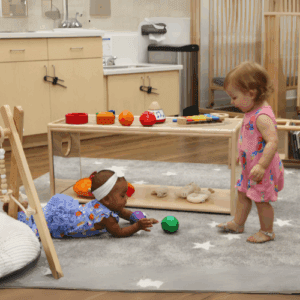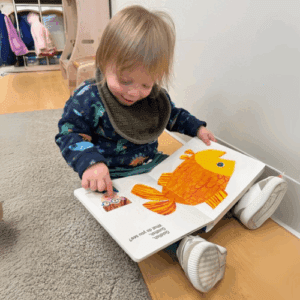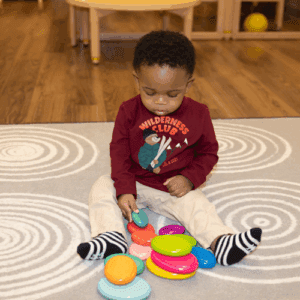
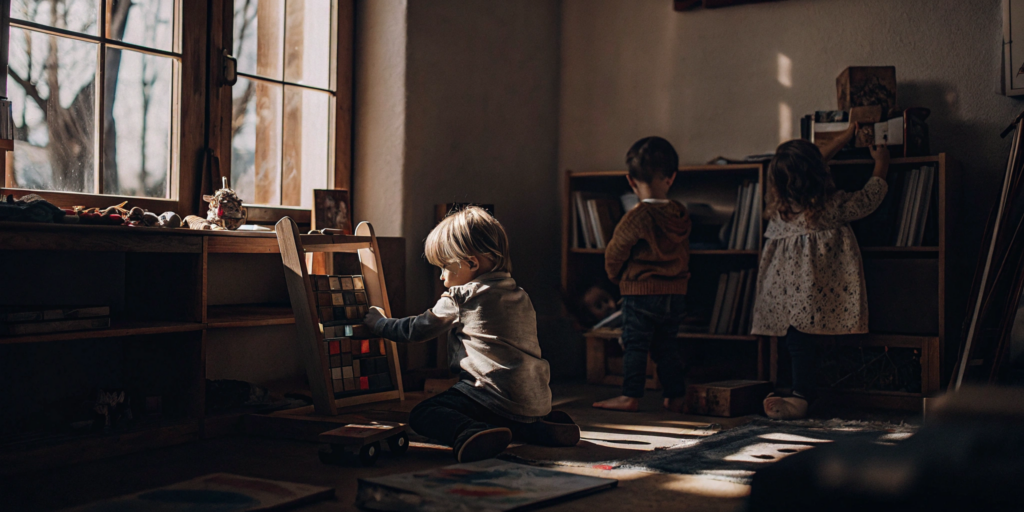
You’ve probably noticed that your child is a natural scientist and storyteller, constantly experimenting with the world around them. This innate curiosity is their greatest learning asset. Our role as parents and educators isn’t to replace that instinct with rigid instruction, but to nurture it. Play-based learning does exactly that. It honors the way children naturally make sense of their environment, turning everyday moments into powerful learning opportunities. By providing the right materials and encouragement, you can help them build a solid foundation for school. Here, we’ll share some of our favorite play based learning activities for kindergarten that spark creativity, critical thinking, and a lifelong love of discovery.
Key Takeaways
- Recognize play as powerful learning: Every time your child builds, pretends, or gets messy, they are developing critical skills in problem-solving, communication, and emotional regulation.
- Focus on open-ended materials: The most effective learning tools are often the simplest. Stock your space with versatile items like blocks, art supplies, and recycled materials that invite imagination rather than dictating a single way to play.
- Act as a supportive guide, not a director: Your role is to create an inviting environment and observe your child’s interests. You can then support their learning by asking thoughtful questions and introducing new materials that build on their natural curiosity.
What is Play-Based Learning?
When you hear “play-based learning,” you might picture a classroom of happy kids simply having fun. And you’re right—it is fun! But it’s also so much more. Play-based learning is an intentional approach where children explore, experiment, and solve problems in imaginative and joyful ways. It recognizes that children learn content while playing freely, whether that’s through building a block tower, pretending to be a chef, or splashing in a water table. At Strong Start, we see this as the most natural and effective way for children to understand the world. It’s not about choosing between play and learning; it’s about understanding that play is learning.
How Kids Learn Naturally
Think about how a baby learns to grasp a toy or how a toddler figures out how to stack blocks. It’s all through trial, error, and play. This is the way children are wired to learn. Research shows that for young kids, a play-based approach can be more effective than direct instruction for building a strong foundation. When children lead their own play, they develop not just academic skills but also creativity, critical thinking, and confidence. It’s how they build a genuine love for discovery that lasts a lifetime, turning curiosity into knowledge in the most organic way possible.
Developing Essential Skills Through Play
Every time your child engages in play, they are hard at work developing crucial life skills. Building with blocks teaches them about gravity and balance while also honing problem-solving abilities. A game of make-believe with friends is a masterclass in negotiation, communication, and empathy. Through these joyful explorations, children develop essential cognitive skills like memory and decision-making. This holistic development is at the heart of play-based learning, ensuring that kids grow not just as students, but as well-rounded, capable individuals ready to take on new challenges.
Answering Your Top Questions
It’s completely normal for parents to wonder if a play-based program is rigorous enough. The word “play” can sometimes sound like the opposite of serious learning. But a quality play-based classroom isn’t a free-for-all. Our exceptional educators are experts at creating activities and environments that are rich with learning opportunities. We guide, prompt, and challenge children within their play to help them make new connections. By fostering this love of learning in a nurturing environment, we’re setting them up for future academic success while honoring their natural desire to explore and discover.
How Play Supports Kindergarten Development
When we think about kindergarten readiness, it’s easy to picture flashcards and worksheets. But what if I told you the most powerful learning tool is something your child already loves to do? It’s play. Play is the natural work of children, and it’s how they make sense of the world around them. It’s far more than just a way to pass the time; it’s a dynamic and essential process that builds the foundation for academic and social success.
Play-based learning recognizes that children learn best when they are actively engaged and exploring on their own terms. Whether they’re building a tower, pretending to be a chef, or digging in a sandbox, they are constantly experimenting, problem-solving, and developing critical skills. At Strong Start, our curriculum is built on this understanding, using The Project Approach to turn children’s natural curiosity into deep, meaningful learning experiences. This approach allows children to develop not just foundational academic skills but also creativity, critical thinking, and emotional intelligence—all through the joy of play.
Sparking Cognitive Growth
Through play, children develop essential cognitive skills like problem-solving, memory, and decision-making. When a child figures out how to keep a block tower from falling, they’re learning about cause and effect. When they sort objects by color or size, they’re building early math skills. This kind of hands-on learning is incredibly effective because it’s driven by curiosity. Play-based learning has become a pivotal model in early childhood education because it supports this holistic development. It’s not about memorizing facts; it’s about building the mental flexibility and confidence to tackle new challenges, which is exactly what we foster in our preschool classrooms.
Nurturing Social and Emotional Skills
Play is the primary way young children learn to interact with others. During imaginative play, they practice taking turns, sharing materials, and negotiating roles. These interactions are crucial for developing empathy, communication, and self-regulation. A child learns to understand another person’s perspective when they have to work together to build a fort or decide on the rules of a game. Our exceptional educators guide these interactions, helping children navigate conflicts and build positive relationships. This focus on social-emotional competence is just as important as any academic lesson, as it prepares them to be kind and collaborative members of a classroom community.
Improving Motor Skills and Physical Health
From running on the playground to carefully placing a bead on a string, play is fundamental for physical development. Active play helps children build gross motor skills like balance, coordination, and strength. At the same time, activities like drawing, cutting with scissors, or playing with clay develop the fine motor skills necessary for writing and other detailed tasks. Play makes learning fun and motivating, encouraging children to move their bodies and test their physical limits in a safe environment. Our Enrichment Program, including activities like Fit Kids, integrates movement and play to support all areas of a child’s development and well-being.
Gathering Your Play-Based Learning Materials
Getting started with play-based learning at home doesn’t require a trip to a specialty toy store or a huge budget. The best materials are often the simplest because they invite children to use their imaginations. When you focus on gathering versatile, open-ended items, you give your child the tools they need to build, create, and explore in countless ways.
Think of it as curating a collection of “loose parts” and creative staples that can be combined and used for anything your child dreams up. Many of these items might already be hiding in your cupboards or your backyard. The goal is to provide materials that spark curiosity and support your child as they develop essential skills through joyful, hands-on discovery.
The Must-Have Supplies
Every great play-based environment starts with a solid foundation of core supplies. These are the items your child will return to again and again. Think classic building blocks for engineering towers and towns, and basic art supplies like chunky crayons, washable paint, and plenty of paper for bringing ideas to life. A collection of age-appropriate books is also key for sparking new interests.
Don’t forget materials for sensory play, like play dough, as well as dress-up clothes and props to encourage storytelling. These staples support everything from fine motor skills to creative expression. Our enrichment programs use similar foundational materials to help children explore art, cooking, and STEM in a hands-on way.
Great Ideas on a Budget
You can create an incredible environment for play without spending much money. The secret is to look at everyday objects with a creative eye. Cardboard boxes can become forts or race cars, while old blankets and pillows are perfect for building cozy dens. Your kitchen is another treasure trove—measuring cups, spoons, and plastic containers make fantastic additions to a water table or sand bin.
Collect natural materials from your yard, like leaves, pinecones, and smooth stones. A large, shallow plastic bin can serve as a “tuff tray” for all kinds of messy play, from mud pies to bubble foam. This approach mirrors The Project Approach, where children use familiar materials to conduct deep, meaningful investigations into topics that fascinate them.
The Power of Open-Ended Materials
Open-ended materials are the true superstars of play-based learning. These are items that don’t have a single, defined purpose, leaving their use entirely up to your child’s imagination. A stick, for example, can be a magic wand, a fishing pole, or a tool for drawing in the dirt. This is different from a toy that makes a specific sound when a button is pushed, which has a much more limited function.
Materials like clay, scarves, loose parts (buttons, beads, wood scraps), and water encourage children to problem-solve and think creatively. As our own philosophy is guided by Reggio Emilia inspiration, we see how these simple, flexible materials empower children to direct their own learning, test their theories, and express their unique ideas.
Try These Sensory and Discovery Activities
Sensory play is one of the most powerful ways for children to learn. It’s all about engaging their senses—touch, sight, sound, smell, and even taste—to explore and make sense of the world around them. These hands-on activities are not just about making a mess (though that can be part of the fun!); they’re about building neural connections in the brain that support language development, motor skills, and problem-solving. Think about how a toddler learns about an apple: they hold it (touch), see its color (sight), hear the crunch when they bite it (sound), and experience its sweetness (taste and smell). This multi-sensory experience creates a much richer, more memorable understanding than just looking at a picture of an apple.
When children are encouraged to investigate their environment with curiosity, they become active participants in their own learning. This approach is a cornerstone of our Reggio Emilia inspiration, where we see the child as a capable and inquisitive explorer. Instead of just telling them facts, we provide the tools and environment for them to discover things for themselves. By providing simple materials for discovery, you can create rich learning experiences right in your own home that lay the groundwork for a lifetime of learning. The activities that follow are simple to set up but packed with developmental benefits.
Explore with Sand and Water
A sand and water table is a classic for a reason. These simple materials offer endless opportunities for discovery and are fantastic for developing fine motor skills. As your child scoops, pours, sifts, and splashes, they are conducting their own mini-experiments in physics. They’re learning about cause and effect, volume, and texture without even realizing it. You can add small toys, cups, and funnels to extend the play. This type of hands-on exploration is a daily activity in our toddler classrooms, helping little ones build coordination and an understanding of the world.
Create Fun Texture Bins
A texture bin is an easy and versatile way to engage your child’s sense of touch. Simply fill a shallow container with a safe material like dry rice, pasta, beans, or even cotton balls. Then, add scoops, small toys, or letters for them to find and explore. You can create themed bins to spark their imagination—think blue-dyed rice with sea creatures for an ocean theme. These bins not only provide a calming sensory experience but also help children refine their fine motor skills as they manipulate the small objects within the bin.
Try Simple Science Experiments
You don’t need a lab coat to introduce your child to science. Simple experiments can spark incredible curiosity and teach foundational concepts. Try a classic “sink or float” game in the bathtub or a bowl of water, letting your child predict which toys will sink and which will float. Another great activity is mixing primary colors with paint or food coloring to see what new colors they can create. These activities encourage children to ask questions, make predictions, and observe outcomes—the very heart of our STEM Learning program. It’s all about fostering that natural sense of wonder.
Encourage Creativity and Expression
Giving children outlets for creativity is about so much more than making something pretty to hang on the fridge. It’s about giving them a voice. Through art, music, and storytelling, kids learn to process their feelings, share their unique perspectives, and build confidence in their own ideas. When we encourage creative expression, we’re telling them that their thoughts and emotions matter. This is a core part of how children develop a strong sense of self and learn to connect with the world around them.
At Strong Start, our curriculum is filled with opportunities for children to explore their creative side. Our Exploration Through The Arts program is a perfect example of how we weave these experiences into the day. The goal isn’t to create a perfect product, but to celebrate the process of discovery. Whether they’re mixing paint, dancing to a beat, or inventing a character in a story, children are developing critical thinking skills, solving problems, and learning to express themselves in healthy, constructive ways. It’s through this creative play that they build the foundation for a lifetime of innovative thinking and emotional intelligence.
Start an Open-Ended Art Project
Forget step-by-step crafts for a moment and embrace the beautiful chaos of open-ended art. This is all about providing materials and letting your child’s imagination lead the way. An activity like finger painting is fantastic for strengthening small hand muscles and letting kids express their feelings without words. Another great option is creating a collage. Setting out paper, child-safe scissors, glue, and scraps of fabric or old magazines helps build hand strength and coordination. As they arrange the pieces, they’re also learning about shapes and might even start telling stories about their creations. This approach aligns with our Reggio Emilia inspiration, which views every child as a capable and creative individual.
Get Moving with Music
Music and movement are a powerful duo for development. Putting on some music and encouraging your child to dance isn’t just a fun way to burn off energy; it helps them express themselves and develop rhythm, coordination, and listening skills. You don’t need formal lessons or fancy instruments. Try a game of freeze dance, make shakers out of plastic bottles and rice, or simply dance together to different styles of music. These activities are wonderful for enhancing physical development and social skills as you share the experience. It’s a joyful way for children to connect their bodies to their emotions and learn to communicate in a whole new way.
Bring Stories to Life
Storytime is a cornerstone of early literacy, but it can also be a launchpad for incredible creativity. Using puppets is a simple way to make stories come alive, helping children improve their listening skills and build their vocabulary. As you read, use different voices for the characters and let your child join in with their own puppet. You can also take it a step further by pausing the story and asking, “What do you think happens next?” or acting out a favorite scene together. This kind of interactive play encourages children to engage deeply with narratives, understand story structure, and see themselves as active participants in the world of make-believe.
What Role-Playing Activities Work Best?
If you’ve ever watched a child turn a cardboard box into a spaceship or a pile of blankets into a secret fort, you’ve seen the magic of role-playing. This isn’t just simple make-believe; it’s one of the most important ways children learn about their world. Through pretend play, they can step into someone else’s shoes, experiment with social situations, and process complex emotions in a safe, controlled way. It’s a hands-on approach to understanding relationships, responsibilities, and how society works.
Role-playing gives children a platform to practice communication, solve problems, and collaborate with others. When they decide who gets to be the doctor and who is the patient, they are negotiating roles and learning to work together. This type of imaginative play is a cornerstone of our Project Approach, where children can deeply explore topics that capture their curiosity. The best role-playing activities are often the simplest, sparked by a child’s own interests and experiences. Whether they’re re-enacting a family dinner or pretending to be a superhero, they are building a foundation for critical thinking and emotional intelligence.
Set Up Dramatic Play Scenarios
Dramatic play is when children act out scenarios and take on different roles. You can support this by creating a dedicated space with a few simple props. Think about setting up a small “restaurant” with a toy kitchen, some plastic food, and a notepad for taking orders. Or, try a veterinarian’s office with stuffed animals and a toy doctor’s kit. These setups invite children to engage in role-playing that encourages them to use new vocabulary, express their feelings, and work through social challenges. The goal isn’t to direct their play but to provide an environment that sparks their imagination and lets them lead the way.
Explore Community Helper Roles
Pretending to be a community helper is a classic for a reason. It helps children understand the important jobs people do and how we all depend on one another. Gather a few props and encourage your child to be a firefighter with a red hat, a doctor with a stethoscope, or a teacher with a small chalkboard. As they play, you can talk about what these helpers do and why their work is valuable. This kind of play builds empathy and social awareness by showing children how different roles contribute to a community. It’s a wonderful way for them to see themselves as part of a bigger world.
Practice Real-World Skills
Role-playing is the perfect opportunity for children to practice real-world skills without any pressure. Setting up a pretend grocery store, for example, lets them sort items, handle play money, and practice saying “please” and “thank you.” They can also pretend to make a phone call to a grandparent, set the table for dinner, or pack a suitcase for a trip. These simple activities help them build confidence and competence in everyday situations. Our own Enrichment Program uses this same idea, letting children learn practical skills like cooking in a fun, hands-on way.
Introduce Math and STEM Through Play
When you hear “math” and “science,” you might picture worksheets and lab coats, but for a kindergartener, these concepts are all about exploration and discovery. You don’t need flashcards or formal lessons to give your child a great foundation in these subjects. In fact, the most powerful learning happens right on the playroom floor. Through play, children naturally experiment with cause and effect, practice logical thinking, and build an understanding of how the world works. It’s how they learn to solve problems, test theories, and make sense of complex ideas in a way that feels exciting, not intimidating.
At Strong Start, we see this every day. Our approach to STEM Learning is woven into our daily activities, turning simple curiosity into foundational knowledge. When a child wonders how tall they can stack their blocks before they tumble, they’re learning about physics. When they sort colorful beads, they’re exploring early math principles. These playful moments are packed with learning opportunities that build confidence and a love for inquiry. The best part is that you can easily create these experiences at home with simple materials and a little imagination. The following activities are designed to help you introduce math and STEM concepts in a way that feels like pure fun.
Play Counting and Number Games
One of the easiest ways to build number sense is to make counting a part of your daily routine. Instead of drilling numbers, turn it into a game. Count the steps as you walk up to your front door, count the number of red cars you see on your way to the store, or count the apple slices on their snack plate. Singing songs and reading rhymes that involve numbers, like “Five Little Monkeys,” also makes learning feel effortless.
Engaging children in playful counting games helps them connect numbers to the real world. Simple board games with dice are fantastic for this, as they teach one-to-one correspondence and basic addition. The goal is to show them that numbers are all around us and are a useful, fun part of everyday life.
Discover Patterns Together
Recognizing and creating patterns is a core mathematical skill that helps children understand order and make predictions. You can explore patterns everywhere, and it’s a wonderfully hands-on activity. Use colored blocks, beads, or even different shapes of pasta to start a simple pattern (red, blue, red, blue) and ask your child what comes next. You can also use stamps and ink pads to create repeating designs.
This kind of hands-on exploration is a key part of our Reggio Emilia inspiration, which values using beautiful materials to inspire learning. Take a walk outside and look for patterns in nature—on leaves, flowers, or butterfly wings. By pointing out these sequences, you’re training their brain to look for connections and understand logical sequencing, all while having a great time together.
Build with Blocks and More
A simple set of wooden blocks is one of the best STEM toys you can own. As children build, they are acting as little engineers, learning firsthand about balance, gravity, symmetry, and geometry. Building with blocks encourages them to test ideas and solve problems. What happens if they make the base wider? How high can they build a tower before it falls? This process of trial and error is essential for developing critical thinking skills.
This type of deep, hands-on investigation is central to The Project Approach, where children construct their own understanding. Don’t limit yourself to just blocks—cardboard boxes, recycled containers, and magnetic tiles are also fantastic building materials. The focus isn’t on creating a perfect structure, but on the process of experimenting, imagining, and bringing an idea to life.
Develop Language and Literacy Skills
Long before they can read a book on their own, children build the foundation for literacy through play. Every conversation, story, and silly rhyme helps their brains make connections between sounds, letters, and meaning. You don’t need flashcards or formal lessons to get your child ready for reading and writing. Instead, you can weave language and literacy practice into fun, everyday activities that feel like pure fun. These games help children develop listening skills, expand their vocabulary, and understand that written words carry exciting messages. By making language a playful part of their world, you give them a confident start on their journey to becoming strong readers and writers.
Tell Interactive Stories
Storytime is a powerful tool for building language skills, and you can make it even more effective by getting your child involved. Instead of just reading the words on the page, bring the narrative to life. Use puppets, stuffed animals, or even just funny voices to represent different characters. Pause and ask questions like, “What do you think will happen next?” or “How do you think the bear is feeling?” This turns passive listening into an active conversation, helping your child with comprehension and vocabulary. Encouraging them to tell their own stories is another fantastic step. This creative expression is a cornerstone of our Reggio Emilia-inspired curriculum, where we see every child as a natural storyteller.
Play with Letters and Sounds
Connecting letters to the sounds they make is a huge step toward reading, and games are the perfect way to practice. Try a “sound scavenger hunt” around your house or on a walk. Say, “I’m looking for something that starts with the ‘ssss’ sound,” and see if your child can find a sock, a spoon, or the sun. You can also sing alphabet songs, play “I Spy” with letter sounds instead of colors, or use magnetic letters on the fridge to spell simple words. These activities help make the abstract concept of phonics concrete and fun. In our preschool classrooms, we find that these playful, hands-on experiences are what make learning stick.
Set Up a Writing Center
Create an inviting space where your child can explore writing without pressure. This doesn’t have to be a formal desk—a small table or even a special box of supplies will do. Stock it with engaging materials like colorful paper, chunky crayons, markers, chalk, and maybe a small whiteboard. You can create a simple “word wall” by writing familiar words like family members’ names or favorite toys on a piece of poster board with a simple picture next to each one. Encourage your child to “write” letters, make grocery lists, or draw and label their creations. This approach, central to The Project Approach, shows children that writing is a useful tool for expressing their ideas and documenting their discoveries.
How to See Learning in Action
It can be easy to look at a room full of children playing and just see fun and games. But when you know what to look for, you can see that play is serious learning. Every block tower, make-believe story, and mud pie is a window into your child’s developing mind. It’s about recognizing the problem-solving, social negotiation, and creative thinking happening in every moment.
At Strong Start, our exceptional educators are trained to see this learning as it unfolds. We don’t just supervise play; we actively observe and support the incredible growth that’s taking place. By understanding how to spot these learning moments, you can gain a deeper appreciation for the power of play and feel more connected to your child’s development. It’s not about testing or quizzing them, but about being a curious observer of their natural learning process.
Observe and Take Notes
The first step to seeing the learning in play is to simply watch and listen. Think of yourself as a curious researcher trying to understand your child’s world. What problems are they trying to solve? How are they using their words and bodies to communicate with friends? What materials are they drawn to, and what are they creating? Taking a moment to quietly observe gives us incredible insight into their thought processes. Our approach is inspired by Reggio Emilia, where careful observation helps us understand each child’s unique interests and abilities, allowing us to guide their learning journey in a meaningful way.
Document Their Progress
Observing is powerful, but documenting makes that learning visible and lasting. This doesn’t have to be complicated. It can be as simple as snapping a photo of a complex block structure, writing down a funny or insightful quote, or saving a piece of artwork. This collection of moments creates a story of your child’s growth over time. At our schools, we use documentation as a key part of The Project Approach, helping us track how children’s ideas evolve. It allows us to see their progress in cognitive, social, and emotional skills in a way that feels natural and authentic to their experience.
Share Progress with Parents
The final piece is sharing these observations. When we share a photo or a story about a breakthrough moment, it builds a bridge between home and school. It helps you see exactly how your child is learning to solve problems, collaborate, and think creatively through their play. This communication is central to our philosophy of partnering with parents. By making learning visible, we can work together to celebrate your child’s successes and support their ongoing development. It transforms the conversation from “What did you do today?” to “I saw you built an amazing ramp for your cars!”
Create Your Play-Based Environment
Creating a space where your child feels inspired to play and explore is one of the most powerful things you can do to support their learning. You don’t need a huge room or expensive toys; what matters is a thoughtful setup that encourages curiosity, independence, and creativity. Think of the environment as a partner in your child’s education. When a space is organized, inviting, and filled with interesting materials, it naturally prompts children to ask questions, solve problems, and direct their own learning.
A great play-based environment is both structured and flexible. It provides a sense of predictability that helps children feel safe, while also offering the freedom to follow their interests. By intentionally arranging different areas for play and making materials accessible, you’re sending a clear message to your child: this is your space to discover, create, and learn. At Strong Start, we view the classroom environment as the “third teacher,” a core principle of our Reggio Emilia inspiration that shapes how we design our learning spaces to be responsive to children’s needs and curiosities. This approach helps transform any room into a dynamic workshop for learning.
Set Up Learning Centers
Designating specific areas for different types of play, often called learning centers, is a fantastic way to organize a room and guide your child’s exploration. These don’t have to be elaborate. A cozy corner with pillows and books becomes a reading nook. A small table with paper, crayons, and clay becomes an art station. You can also create areas for building with blocks, engaging in dramatic play with costumes and props, or exploring science with magnifying glasses and natural objects. The goal is to provide a variety of hands-on activities that allow children to dive into subjects that interest them. These centers empower kids to make choices, manage their time, and practice social skills as they play alongside others.
Fit Play into Your Daily Schedule
A predictable daily rhythm helps children feel secure and ready to learn. Integrating play into your schedule shows that you value it as an essential part of the day. You can balance quieter activities with more active ones and structured time with free exploration. For example, you might start the day with a morning meeting, followed by time to explore learning centers, and then come together for a story before lunch. Having a consistent flow helps children anticipate what’s next and transition smoothly between activities. This structure provides a comforting framework, giving them the confidence to fully immerse themselves in play. You can see an example of how we blend activities in our guide to your child’s day at our centers.
Adapt Activities for Every Child
One of the best things about play-based learning is how easily it can be tailored to each child’s unique interests and developmental stage. The key is observation. By watching what your child is drawn to, you can introduce new materials or challenges that build on their curiosity. If they love building with blocks, you might add different shapes or pictures of famous buildings for inspiration. If they’re fascinated by bugs, you could add books about insects to the reading nook. This responsive approach is central to The Project Approach, where learning is guided by the children’s own questions. This ensures that learning is always meaningful, engaging, and perfectly suited to them.
Related Articles
Frequently Asked Questions
How can I be sure my child is actually learning and not just making a mess? This is such a common question, and it gets to the heart of shifting our perspective on learning. Try to see the “mess” as evidence of an experiment in progress. When your child is covered in finger paint, they’re not just getting dirty; they’re exploring color mixing and cause and effect. A floor covered in blocks isn’t just clutter; it’s the result of a deep investigation into balance and engineering. The learning is in the process, not the final, tidy product.
Will a play-based approach really prepare my child for the structure of kindergarten? Yes, absolutely. While it may look different from a desk-and-worksheet model, play is building the essential foundation your child needs to thrive in a more structured school setting. Through play, they develop self-regulation by taking turns, problem-solving skills by figuring out how to build a tower that won’t fall, and social competence by negotiating roles with friends. These are the core skills that make a child truly ready to learn, listen, and participate in a kindergarten classroom.
What is my role during this kind of play? Should I be directing them or just letting them do their own thing? Think of your role as a supportive co-explorer, not a director. Your main job is to create an inviting environment and then step back and observe. See what your child is curious about and let them lead. You can support their play by asking open-ended questions like, “I wonder what would happen if you added water to the sand?” or by introducing a new material that relates to their interests. It’s a balance of being present and available without taking over their discovery process.
I set up an activity, but my child wasn’t interested. What should I do? First, know that this is completely normal! Children are driven by their own internal curiosities, which don’t always align with our plans. Instead of feeling discouraged, try leaving the materials out for them to discover on their own time. You can also observe what they are interested in and try to connect the activity to that. If they ignored the pattern blocks but are lining up their toy cars, you can join their play and start making patterns with the cars instead.
Do I need to buy a lot of special “educational” toys for this to work? Not at all. In fact, the most powerful learning often happens with the simplest, most open-ended materials. Things like cardboard boxes, blankets, sticks, stones, and kitchen utensils invite far more creativity than a toy that only does one thing. These items can become anything your child imagines, which encourages them to think flexibly and solve problems. Your home and backyard are likely already full of fantastic materials.