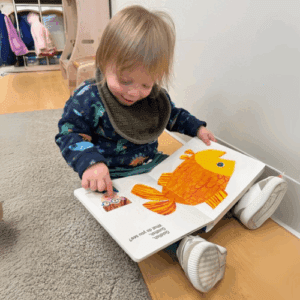

Think of your child’s brain as a bustling workshop. While active play and focused learning are important tools, the workshop also needs quiet moments for ideas to be sorted, polished, and assembled. That quiet time is daydreaming. It’s when the brain takes a break from outside input to organize information, explore possibilities, and strengthen its own internal networks. This process is crucial for developing everything from emotional regulation to future planning. By creating space for this natural mental activity, we help our children build a stronger, more flexible, and more imaginative mind for whatever comes next.
Here at Strong Start, we like to stay up to date on the latest thought and research about education and educational psychology, so we can better assist your children on a day-to-day basis with learning in the most effective ways. A recent article on KQED News entitled Why Daydreaming is Critical to Effective Learning, got us thinking about how toddlers and preschool children develop cognitively, and made us wonder if our curriculum helps them do just that. We are happy to say yes; we believe that our curriculum and environment does. To learn about this article and how we fulfill many needs of a child’s development, keep reading.
What is Daydreaming, Really?
You’ve probably seen it happen. Your child is in the middle of playing, and then suddenly, their eyes glaze over as they stare off into the distance, completely still and lost in their own world. This is daydreaming, and it’s so much more than just “zoning out.” Often called mind-wandering, daydreaming is a completely natural mental state where our focus shifts from the world around us to our own inner landscape of thoughts, memories, and ideas. It’s a fundamental part of how our brains work, allowing us to process experiences, make creative connections, and explore possibilities without any external pressure. For young children, it’s an especially critical space for cognitive and emotional growth, where they can quietly make sense of their rapidly expanding world.
A Shift From the Outside World to Inner Thoughts
This inward turn is where a child’s imagination truly comes to life and gets to work. When a child daydreams, they might be replaying a happy memory from the playground, mentally planning their next magnificent block tower, or creating an elaborate backstory for their favorite stuffed animal. This internal world is a vibrant and necessary space for them to process complex feelings and new experiences on their own terms. At Strong Start, we see this as a vital part of development. Our Reggio Emilia-inspired philosophy is built on honoring a child’s internal thoughts and creative expressions, recognizing them as powerful tools for learning and self-discovery that deserve to be nurtured.
The Three Main Styles of Daydreaming
Just as there are different ways to play, not all mind-wandering is the same. Psychologists generally point to three main styles of daydreaming, and understanding them can help us appreciate what’s happening when our child seems lost in thought. Each style serves a different purpose in a child’s cognitive and emotional life, from creative problem-solving to processing difficult feelings. Recognizing these styles can give you a clearer window into your child’s inner world and how they are growing as an individual thinker and feeler.
Positive-Constructive Daydreaming
This is the most beneficial and creative type of daydreaming, filled with pleasant, imaginative, and curious thoughts. It’s the brain’s natural engine for problem-solving, planning, and innovation. When a child engages in positive-constructive daydreaming, they are often thinking about future possibilities or exploring creative ideas. This is the kind of thinking we actively encourage with The Project Approach in our classrooms. By allowing children to follow their own curiosities and plan their investigations, we provide the perfect environment for this productive and imaginative mind-wandering to flourish and lead to real, tangible learning.
Guilty-Dysphoric Daydreaming
This style is less pleasant and often involves thoughts of worry, guilt, or sadness. A child might be replaying a moment when they felt they made a mistake or imagining an anxious scenario. While it sounds negative, this type of daydreaming is actually a normal way for the brain to process difficult emotions and work through social conflicts. It’s a sign that your child is developing a conscience and learning to understand complex feelings. Our exceptional educators are trained to create a safe and supportive atmosphere where children feel comfortable sharing their worries, helping them turn these challenging thoughts into learning opportunities for emotional resilience.
Poor Attentional Control
This style describes having trouble focusing, whether on an external task or even on a single internal thought. You might notice your child drifting off during story time or struggling to stick with one game for very long. It’s important to remember that for young children, this is completely normal. The ability to concentrate is a skill that develops over time, not an innate trait. A child’s brain is still learning how to regulate attention, so frequent mind-wandering is a natural part of that process. Our classrooms are designed to support this development with engaging, hands-on activities that capture a child’s interest and help them build their focus at their own pace.
This is Your Brain on Multi-Tasking
To learn effectively, people need to focus, and in this day and age, that often means tuning out a barrage of electronic stimuli. This runs counter to the idea that brains can multi-task. It simply isn’t true that brains can multi-task. Human activities rely on procedural memory and there are two types of tasks that fall under this category: associative tasks which are memory-based tasks such as singing the words to a song you know while driving, and cognitive tasks that are creative tasks such as reading a text or telling a story. Your brain can handle one cognitive task and one memory based task at time, but not two of the same kind. When we are doing what we call multi-tasking, we are actually task-switching and sharing the attention between tasks and so the attention devoted to a main activity is diluted. The term given to this is sequential tasking. According to the article, Daniel Levitin who did the research referred to in this article, the brain works best when it focuses on one task at a time.
This is Your Brain on Daydreaming
Levitan also says that brains work best when given regular breaks. Daydreaming is the perfect way to give your brain the break it needs. When a child sits all day doing paperwork, they are very liable to lose focus and have their mind drift into daydreams. This is the brain asking for a break. It is better to give the brain a break before it loses focus than to wait until time and energy has been expended trying to focus. By the time a child reaches kindergarten, their attention span is about 10 to 15 minutes long, so it’s very important to adjust expectations and schedule learning tasks that are shorter than 15 minutes as we work towards that level for kindergarten. For children, this comes down to not over scheduling them, or scheduling in free-thinking or daydreaming time. Another study showed that the executive network of the brain was stimulated during daydreaming. This network is “connected to improved critical thinking capabilities,” an invaluable characteristic in successful learners. According to an article by William Koch, daydreaming may actually be the mind’s natural state and focused tasking is a learned, cognitive activity. One study showed that during daydreaming, the areas experiencing stimulation are a default network, that are “associated with most higher level mental activity,” and that “those who suffer injuries to the region of the brain in which daydreaming occurs suffer from a lack of spontaneous speech and thought.” So, it would seem that daydreaming stimulates higher, creative thought processes and so should be encouraged in children.

The Surprising Functions of a Wandering Mind
While it might look like your child is just “spacing out,” a wandering mind is often hard at work. Far from being a waste of time, daydreaming serves several important developmental functions that help children process their world, understand others, and prepare for the future. It’s a mental playground where they can build and explore without the constraints of reality. This internal activity is crucial for developing higher-level thinking skills and emotional intelligence. At Strong Start, we create space for this kind of quiet reflection, understanding that it’s just as important as active, hands-on learning. By allowing for moments of unstructured thought, we help children integrate their experiences and strengthen their cognitive abilities in a natural, unforced way.
Planning and Setting Future Goals
When a child’s mind wanders, it often travels to the future. This can be as simple as imagining what they’ll build with their blocks or as complex as thinking about a birthday party weeks away. This type of mental forecasting is a foundational skill for planning and goal setting. Research suggests that “daydreaming helps you think about your goals and motivates you to work on difficult tasks.” For a young child, this might mean mentally rehearsing how they’ll ask a friend to play or figuring out the steps to create a drawing they’ve pictured in their head. This process of visualizing an outcome and the steps to get there is a powerful tool for building motivation and persistence, turning abstract wishes into concrete plans.
Practicing Social Skills and Building Empathy
Daydreaming is a safe space for children to practice social interactions. By imagining different scenarios, they can explore how to navigate friendships, share toys, or resolve conflicts without any real-world consequences. This mental rehearsal can “improve your social well-being, reduce loneliness, and make relationships better.” When a child imagines how a friend might feel if they take their toy, they are building empathy. Our Reggio Emilia-inspired approach emphasizes social collaboration, and we see how this internal practice translates into more thoughtful and cooperative play in the classroom. It’s in these quiet moments of thought that children often develop a deeper understanding of others’ perspectives.
Regulating Emotions and Relieving Boredom
A wandering mind can also be a powerful tool for emotional regulation. When feeling overwhelmed or sad, a child might retreat into a pleasant daydream to find comfort. This mental escape can “improve mood by processing past events or avoiding future problems.” It’s a healthy coping mechanism that allows them to manage their feelings independently. Daydreaming is also the perfect antidote to boredom. During a long car ride or a quiet afternoon, a child can entertain themselves for hours by creating fantastical stories and worlds inside their mind. This ability to generate internal stimulation is a key ingredient for creativity and resilience, teaching children that they have the power to change their emotional state through their own thoughts.
When Daydreaming Becomes a Concern
While daydreaming is a normal and healthy part of development, there are times when it can signal that something more is going on. The key is to look at the frequency, intensity, and impact of your child’s mind-wandering on their daily life. Is it preventing them from engaging with friends, completing tasks, or learning new things? Occasional “zoning out” is perfectly fine, but if it consistently interferes with their ability to function and connect with the world around them, it may be worth paying closer attention. Understanding the difference between productive mind-wandering and problematic patterns can help you support your child effectively. It’s about balance—ensuring they have time for imaginative thought without letting it overshadow their real-world experiences and responsibilities.
The Potential Downsides of Letting Thoughts Drift
When a child’s mind wanders too frequently, it can sometimes get in the way of their learning. Constant daydreaming can “make it harder to understand what you’re reading” and “reduce your ability to stay focused” on instructions from a teacher or parent. If a child is in their own world during story time, they miss out on key vocabulary and plot points. Similarly, if their thoughts drift while learning a new skill, they may miss crucial steps. The challenge isn’t to stop daydreaming altogether, but to help children learn when it’s time to focus their attention outward and when it’s okay to let their minds explore. This is a skill that develops over time with gentle guidance and practice.
Understanding Maladaptive Daydreaming
It’s important to distinguish typical daydreaming from a more serious condition known as maladaptive daydreaming. This isn’t just getting lost in thought; it’s a state where individuals engage in “very vivid and detailed daydreams for long periods,” which can lead them to neglect their real-life relationships and responsibilities. While more commonly identified in adolescents and adults, its roots can sometimes be traced to childhood. This form of daydreaming is often compulsive and can feel like an addiction. If you notice your child’s imaginative world seems to consistently take precedence over real-life interactions and basic activities to a distressing degree, it may be something to discuss with a pediatrician or child psychologist.
The Connection Between Daydreaming and ADHD
Frequent and intense daydreaming can sometimes be associated with Attention-Deficit/Hyperactivity Disorder (ADHD), particularly the inattentive presentation. For these children, the mind-wandering isn’t always a choice but a core feature of how their brain is wired. It’s noted that “disruptive daydreaming is common in people with ADHD.” They may struggle to filter out their own thoughts to focus on an external task. It’s crucial to remember that daydreaming alone is not a diagnosis. However, if your child’s persistent daydreaming is accompanied by other signs—like difficulty staying organized, forgetfulness, or trouble following multi-step directions—it could be a piece of a larger puzzle. Our exceptional educators are trained to observe these patterns and are always ready to partner with parents to discuss any concerns.
Actionable Tips for Parents
As a parent, you can play a significant role in helping your child harness the creative power of daydreaming while also learning how to focus when needed. The goal isn’t to eliminate mind-wandering but to guide it into a healthy and productive habit. This involves creating an environment that values imagination and providing your child with the tools to manage their attention. By taking a balanced and supportive approach, you can encourage the positive aspects of daydreaming—like creativity and problem-solving—while gently addressing any challenges that arise. These simple strategies can be woven into your daily routines, helping your child build a strong foundation for both imaginative thinking and focused learning.
How to Nurture Healthy Daydreaming Habits
Encourage productive daydreaming by providing the right environment. This means scheduling unstructured playtime where your child is free to explore their thoughts without a defined goal. Open-ended toys like blocks, clay, and art supplies are perfect for this, as they invite imagination. You can also spark creative thought by asking open-ended questions like, “What do you think that cloud looks like?” or “If our dog could talk, what would he say?” This validates their inner world and shows them that their ideas are valuable. Healthy daydreaming can help children “think creatively and find solutions by exploring possibilities,” turning a quiet moment into an opportunity for innovation and self-discovery. Our enrichment programs are designed to provide just these kinds of creative outlets.
Using Mindfulness to Guide Your Child’s Thoughts
Mindfulness is a wonderful tool for helping children learn to direct their attention. It’s not about stopping thoughts but about noticing where your mind is without judgment. You can practice this in simple ways. On a walk, ask your child to name five things they can see or three things they can hear. During snack time, encourage them to describe the taste and texture of their food. These small activities bring their focus to the present moment. “Practicing mindfulness by focusing on the ‘here and now’ helps you become more aware of what triggers your daydreams and gain control over them.” By teaching your child these simple grounding techniques, you empower them to gently guide their focus back when they need to, building self-awareness and attention skills that will last a lifetime.
This is Your Child’s Brain on Strong Start!
When you enroll you child at Strong Start Early Care and Education, you know you are getting the best in daycare services and the highest quality childhood development focused education for your children. We use a curriculum that aligns with Connecticut Early Learning and Development Standards. One aspect of this curriculum is imaginative play. This is time for the children to just play and be children. We also have a great indoor gym for them to have active bodies and relaxed minds. We have time blocks for creative expression through the arts, which uses different parts of the mind and is wonderful for cognitive development. The overall theme of our curriculum is that it is inquiry-based and encourages children to think of questions and seek answers. We also emphasize emotional intelligence and use positive behavior guidance that teaches self-regulation and confidence. Call today to learn more about what Strong Start Early Care & Education can offer your child, and you with our Flex Care program.
Frequently Asked Questions
Is it bad that my child seems to “zone out” all the time? Not at all! In fact, it’s usually a sign of a healthy, active mind. When your child stares off into space, their brain is often busy organizing memories, making creative connections, and processing emotions. Think of it as essential mental downtime that helps them make sense of their world, much like how sleep helps their body rest and grow.
How can I tell the difference between healthy daydreaming and a sign of a problem? The key is balance. Healthy daydreaming doesn’t get in the way of your child’s daily life. They can still engage with friends, participate in activities, and follow directions when needed. It might be time to pay closer attention if their inner world consistently pulls them away from real-life relationships and responsibilities, or if their daydreaming seems to cause them distress.
Should I stop my child when I see them daydreaming during an activity? It really depends on the context. If they’re in the middle of free, unstructured play, it’s best to let their mind wander—that’s where some of their best ideas will come from. If it’s during a structured task, like getting ready for school or during story time, you can gently guide their attention back to the present without making them feel bad for drifting off.
How can I encourage the creative, positive kind of daydreaming? You can nurture this by simply creating space for it. This means allowing for unstructured playtime without a specific goal, where your child can get lost in their own imagination. Providing open-ended toys like blocks, clay, or art supplies can also help. You can also spark their thoughts by asking imaginative questions like, “What do you think the squirrels are chatting about?” to show that you value their creative inner world.
My child has a hard time focusing. How can I help them without discouraging their imagination? The goal isn’t to stop their mind from wandering but to help them learn how to guide their attention when necessary. You can practice this together with simple mindfulness activities. For example, on a walk, ask your child to name three things they can hear. This gently pulls their focus to the “here and now” and builds their ability to direct their thoughts, a skill that will support both their imagination and their ability to concentrate.
Key Takeaways
- Recognize daydreaming as essential mental work: A wandering mind is your child’s brain organizing information, practicing social scenarios, and sparking new ideas. It’s a fundamental part of cognitive growth, not a lack of focus.
- Create space for a wandering mind: Protect unstructured playtime in your child’s schedule. Providing simple, open-ended materials, rather than over-scheduling activities, gives their brain the necessary room to imagine, plan, and innovate.
- Balance daydreaming with gentle focus techniques: Use simple mindfulness activities to help your child practice bringing their attention to the present moment. While most daydreaming is healthy, it’s also important to observe if it regularly gets in the way of their daily activities and connections.
Related Articles
- Daydreaming in Early Childhood: Benefits & Insights | Strong Start Early Care & Education
- Social Emotional Learning Preschool: A Parent’s Guide – Strong Start
Written By
Marc Hoffman
Founder, Strong Start Early Care & Education
Marc founded Strong Start in 2014, inspired by his studies at Williams College, Yeshiva University, and research at Yale University. His child-centered, inquiry-based approach to early education has helped hundreds of families in the Trumbull and Bridgeport communities. As a parent himself, Marc understands the importance of finding a nurturing environment where every child can learn, grow, and flourish.