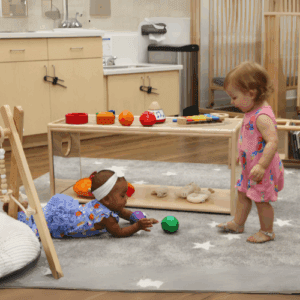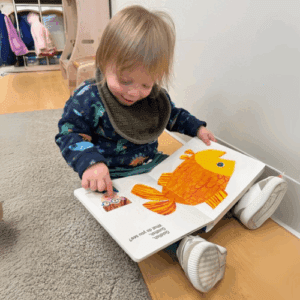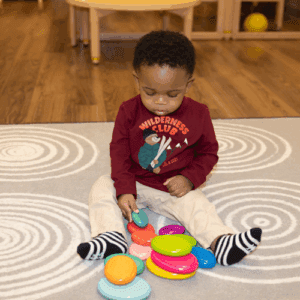
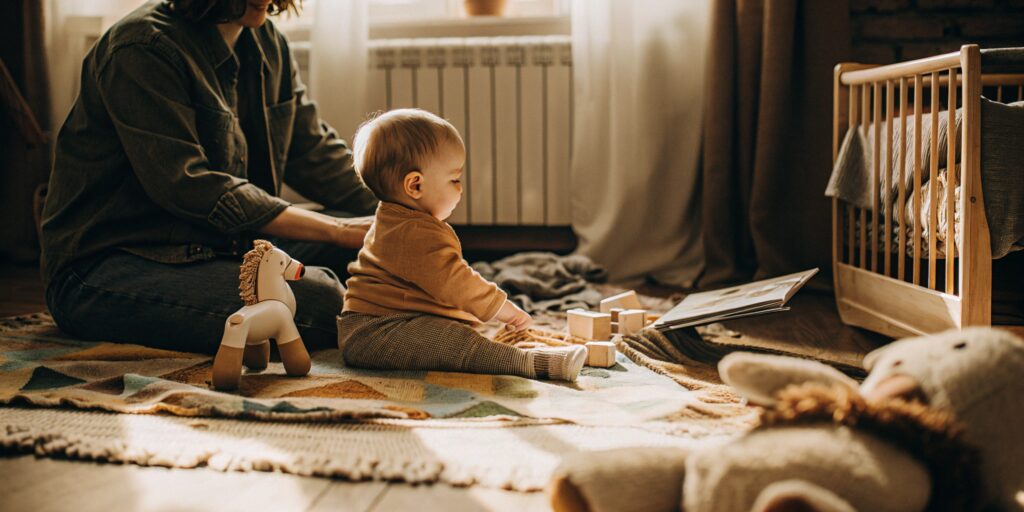
We believe that even the youngest babies are capable, curious individuals with their own unique interests. Our role isn’t to dictate what they should learn, but to carefully observe what they are naturally drawn to and create opportunities for them to explore it more deeply. This philosophy is the foundation of an infant learning project. It’s how we put our beliefs into practice every day. When we see a baby captivated by their own reflection, we don’t just see a cute moment; we see the beginning of a project about faces, identity, and connection. It’s a respectful, collaborative approach that empowers your child to be an active participant in their own learning journey from day one.
Key Takeaways
- Let your baby lead the way: True infant learning isn’t about a curriculum; it’s about noticing what captures your baby’s attention. By building simple activities around their interests, you show them their ideas matter and make learning a joyful, shared experience.
- Find learning in your daily routines: You don’t need special equipment to support development. The most powerful learning opportunities happen during everyday moments—narrating a diaper change, exploring the texture of a soft towel, or singing during mealtime builds crucial language and sensory skills.
- Prioritize responsive connection: A baby’s emotional security is the bedrock of all development. When you respond to their cues and interests, you build a trusting bond that gives them the confidence to explore their world, solve tiny problems, and learn with their whole body.
What Is an Infant Learning Project?
When you hear the word “project,” you might picture a science fair display or a detailed report. But in our infant classrooms, a learning project looks very different. It’s not about formal lessons or structured assignments; it’s about diving deep into the things that naturally capture your baby’s attention. Think of it as a shared investigation into the wonders of their world, guided by their own budding curiosity.
At its core, an infant learning project is a way for us to follow your baby’s lead. If they are fascinated by the way light filters through the window or the crinkling sound of a toy, we notice. We then build on that interest, creating simple, engaging experiences that allow them to explore it further. This method is a key part of our Project Approach, which nurtures a love of learning from the very beginning by honoring what each child finds interesting. It’s a gentle, responsive way to turn everyday moments into opportunities for discovery and connection.
How We Use Research to Guide Learning
Our approach to infant learning is thoughtfully designed and backed by research into how babies’ brains develop. Scientists are constantly learning more about how infants process speech, understand facial expressions, and form memories from their earliest experiences. We pay close attention to this research because it helps us understand the best ways to support your child’s growth. For example, studies show that babies are wired to learn from expressive faces and engaging “parentese” or baby talk.
This knowledge informs everything we do. It’s why our exceptional educators are so animated and responsive when they talk, sing, and play with your baby. We know that these warm, engaging interactions are actively building neural pathways and laying the foundation for language and emotional skills. By grounding our practices in solid research, we create an environment that is not only nurturing but also intentionally designed to support your baby’s incredible development.
What Project-Based Learning Looks Like for Babies
So, what does a project actually look like for a baby who can’t yet talk or walk? It’s all about hands-on, sensory exploration. A project begins when we observe an infant showing sustained interest in something. For instance, a baby might be captivated by their own reflection in a mirror. This simple fascination can spark a “project” all about faces and reflections.
We might introduce unbreakable, baby-safe mirrors of different shapes and sizes during tummy time. An educator might sit with them, pointing to their eyes, nose, and mouth while making silly faces. We could sing songs like “This Is the Way We Wash Our Face” during care routines. These activities, all centered around a single theme, help your baby make connections and learn in a way that feels like play. This child-led approach ensures that learning is always meaningful and joyful, turning our infant classrooms into vibrant spaces for discovery.
What Are the Goals of Infant Learning Projects?
When you hear the word “project,” you might picture a science fair volcano or a detailed diorama. For infants, a learning project looks very different, but the core idea is the same: diving deep into a topic of interest. The main goal isn’t to teach babies specific facts, but to support the incredible developmental work they’re already doing. It’s about creating an environment that encourages them to explore, make connections, and communicate in their own way.
Infant learning projects are guided by The Project Approach, which honors a child’s innate desire to learn. Instead of a rigid curriculum, we follow their lead. Is a baby fascinated by the way light reflects off a toy? That’s the start of a project about light and shadow. Are they captivated by the texture of a soft blanket? We can explore different fabrics together. These projects are designed to nurture their development across the board—from how they learn to communicate to how they build relationships and understand the world around them. It’s a holistic approach that celebrates every small discovery as a major milestone.
How Infants Learn Language
Long before they say their first word, babies are expert linguists. They learn language by watching our faces, listening to the rhythm of our voices, and connecting sounds with meaning. Research from the Infant Learning Project shows that babies are wired to process speech and facial expressions from the very beginning. That’s why one-on-one interaction is so powerful.
During a learning project, our educators talk, sing, and read to your baby, describing what they see and do. This constant stream of rich language, paired with warm, responsive interactions, builds the foundation for communication. We create countless opportunities for your baby to coo, babble, and engage in the back-and-forth “conversations” that are so crucial for their development in our infant classrooms.
Building Emotional and Thinking Skills
A baby’s emotional well-being is the bedrock for all other learning. Feeling safe, secure, and understood gives them the confidence to explore their world. Infant learning projects are a wonderful way to build this foundation. When an educator notices your baby’s interest in something and responds to it, it sends a powerful message: “You matter. What you’re interested in matters.”
This responsive caregiving strengthens the bond between your baby and their teacher, creating a secure attachment that is essential for healthy development. As they interact with different materials—shaking a rattle to hear the sound or dropping a block to see it fall—they are also building critical thinking skills. They’re learning cause and effect, solving tiny problems, and making sense of their surroundings, all within a safe and supportive relationship.
Nurturing Your Baby’s Natural Curiosity
Babies are born curious. They are natural scientists, driven to understand how everything works. Our goal is simply to protect and nurture that incredible instinct. Instead of deciding what a baby should learn, we pay close attention to what they are already interested in. This child-led approach makes learning feel joyful and engaging, not like a task to be completed.
If a baby is fascinated by their own reflection, we might explore mirrors. If they love the feeling of water during tummy time, we can introduce a water play activity. By following their cues, we validate their interests and empower them to be active participants in their own learning. This philosophy is at the heart of our Reggio Emilia-inspired approach, which sees every child as capable, creative, and full of potential.
How Do Learning Projects Support Early Development?
Infant learning projects are so much more than just playtime. They are carefully designed experiences that support your baby’s growth in every way—from how they think and communicate to how they move and connect with others. By tapping into their natural curiosity, these projects lay a strong foundation for a lifetime of learning. Each activity, whether it’s exploring a soft blanket or listening to a song, is an opportunity for discovery and development.
Developing Thinking Skills Through Play
Play is how babies make sense of their world, and it’s one of the most powerful tools for their development. From the very beginning, simple play helps them build critical thinking skills. When your baby reaches for a toy, they’re learning about cause and effect. When they play peek-a-boo, they’re starting to understand that objects exist even when they can’t see them. Our infant classrooms are filled with opportunities for this kind of purposeful play. Our educators guide these explorations, helping babies make new connections and solve little problems, which builds the framework for more complex thinking later on.
Learning Language in Everyday Moments
Long before your baby says their first word, they are absorbing language from the world around them. Every conversation, song, and story helps build their communication skills. That’s why we believe in creating a language-rich environment from day one. Our educators talk with your baby throughout the day, narrating activities like diaper changes and feedings. For example, they might say, “Now we’re putting on your clean diaper,” or “This bottle feels warm, doesn’t it?” This constant stream of words, tones, and rhythms helps your baby’s brain build the connections needed for language. It’s a simple but essential part of your child’s day with us.
Exploring the World with All Five Senses
Babies are natural scientists, and their primary tools for discovery are their five senses. They learn about the world by touching, tasting, smelling, seeing, and hearing everything within reach. This is why our Project Approach for infants is centered on sensory exploration. We provide a variety of safe materials and experiences that engage their senses—from feeling different textures in a discovery basket to listening to the sounds of soft bells. This type of sensorimotor play is crucial for developing body awareness, coordination, and early problem-solving skills as they begin to understand the properties of the objects around them.
Building Connections and Emotional Skills
A baby’s ability to learn and explore is built on a foundation of feeling safe, secure, and loved. The warm, responsive relationships they form with their caregivers are essential for their emotional well-being. Our learning projects are designed to strengthen these bonds. Through gentle interactions, eye contact, and shared smiles during an activity, our exceptional educators build a deep sense of trust with each child. This secure attachment gives your baby the confidence to explore their environment, express their feelings, and begin to understand the emotions of others. It’s the heart of healthy social and emotional development.
How We See and Support Your Baby’s Growth
At Strong Start, we believe that truly supporting your baby means seeing them as the unique individuals they are. It’s about more than just watching them play; it’s about paying close attention to their cues, celebrating their tiny victories, and understanding their personal path of discovery. We use careful observation and thoughtful documentation not just to track milestones, but to build a deep, responsive relationship with your child. This partnership between our educators, your child, and your family ensures that their growth is nurtured every step of the way.
Observing How Your Baby Learns
The first step in supporting your baby is to simply watch and listen. We pay close attention to how they interact with toys, their friends, and our educators. Does she stare intently at a new object? Does he babble with excitement when a familiar song comes on? These small moments are big clues into how your baby is thinking and feeling. Observing their play helps us understand their developmental needs and is key to building the foundation of young children’s ability to form secure relationships and explore their world with confidence. Our educators are trained to see these interactions as a window into your child’s mind, allowing us to respond in ways that are meaningful to them.
Capturing Milestones with Photos and Videos
We love sharing your baby’s special moments with you through photos and videos. But this documentation is more than just a cute update—it’s a powerful tool for reflection. Capturing the moment your baby first pulls themselves up or successfully stacks a block allows us to celebrate their progress and share it with you. These snapshots help us see patterns in their learning and interests over time. We know the impact of early learning environments is significant, and by documenting these milestones, we create a visual story of your child’s growth that we can all look back on to appreciate how far they’ve come.
Documenting Their Unique Journey
Every baby’s story is one-of-a-kind, and we honor that by documenting their unique journey. We create a portfolio of their experiences that includes photos, notes on their discoveries, and examples of their explorations. This documentation helps us track their individual progress and understand their emotional and social experiences, especially during big transitions like starting in a new classroom. It tells the story of their interests, their relationships, and their developing personality. By creating this detailed record, we can tailor our approach to fit your child’s specific needs and learning style, ensuring they feel seen, understood, and supported every single day.
Tracking Developmental Progress
Our observations and documentation all come together to help us track your baby’s developmental progress. This isn’t about checking boxes on a generic chart; it’s about creating a holistic picture of your child’s growth across all areas—from their physical skills to their social-emotional well-being. Research shows that high-quality early care can lead to improvements in short- and long-term health-related outcomes. By carefully tracking progress, we can identify your child’s strengths and notice any areas where they might need a little extra support. This allows us to partner with you to ensure your baby is building a strong foundation for a lifetime of happy, healthy learning.
What Are the Best Types of Infant Learning Projects?
When we talk about “learning projects” for babies, we aren’t talking about flashcards or complicated crafts. Instead, we mean simple, joyful explorations that follow your child’s natural curiosity. The best projects are open-ended, sensory-rich, and focus on the process, not a final product. For infants, learning happens in the little moments—splashing in the water, feeling a soft blanket, or listening to your voice.
These experiences are the building blocks for all future learning. They help your baby make sense of the world, build crucial brain connections, and develop a love for discovery. At Strong Start, our infant classrooms are designed to support this kind of exploration. We focus on four key areas that you can easily explore at home, too.
Engaging the Senses
From the moment they’re born, babies are sensory detectives, learning about their world through touch, sound, sight, taste, and smell. Play is incredibly powerful for their development, helping them grow physically and build thinking and communication skills. A learning project can be as simple as giving your baby a basket with different textured fabrics to feel or letting them safely explore the sounds of everyday objects, like the crinkle of paper or the gentle tap of a wooden spoon. These activities help your baby’s brain form new connections as they begin to understand concepts like soft, hard, loud, and quiet.
Discovering Rhythm with Music and Movement
You don’t need to be a musician to share the joy of music with your baby. Your baby learns language from you long before they can talk, and singing simple songs or reciting nursery rhymes with hand gestures is a wonderful way to connect and communicate. Bouncing your baby gently to a beat, dancing with them in your arms, or making sounds with a simple shaker helps them develop an internal sense of rhythm, body awareness, and listening skills. These shared moments are also deeply comforting, strengthening your emotional bond while laying a foundation for language.
Exploring the Wonders of Nature
Nature is a perfect classroom for a curious baby. The goal isn’t a long hike, but rather a few moments of focused observation. You can bring a smooth stone, a soft leaf, or a fragrant flower inside for your baby to safely touch and see. On a blanket outside, they can watch the leaves dance in the wind or feel the warmth of the sun. These experiences spark wonder and encourage new skills, like reaching out to grab a blade of grass. Our Reggio Emilia inspiration guides our belief that these natural encounters are rich with learning opportunities for even our youngest children.
Playing with Different Textures and Materials
Helping your baby explore different textures is a fantastic way to support their cognitive and motor development. Offer a few safe items with varied surfaces—like a bumpy ball, a silky scarf, or a soft-bristled brush—and let them explore with their hands and mouth. This kind of texture play encourages exploration and helps them learn to make comparisons. As they grasp, pat, and mouth these objects, they are building fine motor skills and gathering information about their environment. This hands-on investigation is central to The Project Approach, where children learn by interacting directly with interesting materials.
How Can Your Family Get Involved?
Your child’s learning journey is a partnership, and we believe the best discoveries happen when we work together. We encourage you to be an active participant in your baby’s experience, both in our classrooms and at home. Here are a few simple ways your family can get involved and extend the learning beyond our walls.
Joining Our Infant Program
When you enroll your child in our infant classrooms, you’re doing more than just finding care—you’re joining a community dedicated to understanding how babies learn. Our approach is guided by proven research in early childhood development. We focus on creating an environment where your baby can explore safely and build foundational skills. By sharing observations and working together, we create a consistent and supportive world for your child, helping them make sense of their experiences and build confidence from the very beginning.
What to Expect in Our Classrooms
You can expect a warm, nurturing space where your baby is seen and celebrated as a unique individual. Our educators are thoughtful observers who pay close attention to how infants process the world, from the way they respond to speech to how they interpret facial expressions. We document these moments to understand your child’s interests and developmental path. This allows us to tailor activities that are just right for them. We believe in creating a predictable yet engaging atmosphere where your baby feels secure enough to explore, connect, and learn about their surroundings. You can get a better sense of our daily rhythm by learning about your child’s day with us.
Bringing Learning Projects Home
You don’t need special toys or a rigid schedule to support your baby’s development. The most powerful learning happens during simple, everyday moments. Play is your infant’s most important work, and it can be as easy as singing a song during a diaper change or letting them touch a soft blanket. Talking to your baby about what you’re doing as you make dinner helps them build language skills. These small interactions are the building blocks of learning. Our commitment to partnering with parents means we’re always here to share ideas for turning daily routines into joyful discoveries.
How We Design Safe and Effective Learning Projects
At the heart of every infant learning project is a deep commitment to your child’s well-being and natural development. We don’t just pick activities at random; every experience is thoughtfully designed to be engaging, appropriate, and, above all, safe. Our approach is built on a foundation of trust, observation, and a genuine understanding of what makes your baby unique. We believe that the best learning happens when a child feels secure, seen, and free to explore at their own pace. This means creating an environment where curiosity can flourish safely and where our educators are attuned to the subtle cues that guide your baby’s journey of discovery.
Choosing the Right Activities for Every Stage
A three-month-old exploring their hands is on a completely different developmental path than a ten-month-old learning to pull themselves up. That’s why we never take a one-size-fits-all approach. Research highlights how crucial it is to select activities that are developmentally appropriate, and our educators are experts at this. They carefully observe each child to understand their individual needs and interests. For our youngest infants, a project might focus on sensory exploration during tummy time, while older babies might engage with simple stacking toys to develop motor skills. Our infant classrooms are designed to support these evolving stages, ensuring every activity meets your child exactly where they are.
Putting Safety First
Before any learning can happen, your baby needs to feel safe and secure. This is our top priority and the bedrock of our entire program. A safe environment is essential for fostering the emotional well-being that allows children to explore, learn, and form trusting relationships. We go to great lengths to ensure our spaces are not just physically safe—with baby-proofed corners, age-appropriate materials, and constant supervision—but emotionally secure as well. Our commitment to health and safety means you can feel confident that your child is in a nurturing space where they can relax and open themselves up to new experiences, knowing a caring adult is always right there with them.
Responding to Your Baby’s Cues
Have you ever noticed your baby become completely fascinated by the way light reflects off a spoon? Those moments are pure learning. Instead of sticking to a rigid schedule, our educators are trained to be responsive partners in your child’s discovery. We pay close attention to their cues—a pointed finger, a focused gaze, a happy babble—and follow their lead. If your baby is captivated by the texture of a soft blanket, we’ll explore it with them, describing how it feels. This responsive interaction shows your baby that their interests are important and builds a strong, trusting bond. Our exceptional educators understand that true learning is a dance, not a directive.
Using Simple, Everyday Objects for Play
You don’t need flashy, battery-operated toys to inspire a baby’s mind. In fact, some of the best learning tools are the simplest. We believe in the power of open-ended, everyday objects to spark curiosity and imagination. A wooden spoon can be a drumstick or something to stir with. A collection of smooth, safe-to-mouth stones offers a lesson in texture, weight, and temperature. This approach, inspired by our Reggio Emilia philosophy, encourages creative thinking and problem-solving. Using simple materials allows babies to be the drivers of their own play, discovering the endless possibilities that lie within an ordinary object and building a foundation for lifelong creativity.
How to Weave Learning into Your Daily Routines
You don’t need a classroom or special equipment to support your baby’s development. The most meaningful learning happens during the small, everyday moments you already share. By being intentional during your daily routines, you can create a rich environment that nurtures your child’s curiosity and builds a strong foundation for future learning.
Talk Through Your Day
One of the simplest and most powerful things you can do is narrate your day. As you change a diaper, prepare a bottle, or fold laundry, talk to your baby about what you’re doing. You can say, “Now we’re putting on your clean, soft sock,” or “I’m stirring the warm oatmeal for your breakfast.” This constant stream of language helps build their vocabulary and understanding of the world. It also strengthens your connection, making them feel seen and included. This is a core part of how we approach partnering with parents—by sharing simple strategies that make a big impact.
Create a Sensory-Rich Home
Babies learn about their world by touching, tasting, seeing, hearing, and smelling it. You can easily create a sensory-rich home without buying a single new toy. Let your baby feel the texture of a soft blanket versus a crinkly leaf from the yard. During bath time, let them splash and feel the warm water on their skin. Listen to different kinds of music together or simply open a window to hear the birds. These experiences help build neural connections in the brain, supporting everything from motor skills to emotional regulation. Our enrichment programs are built on this same idea of hands-on, sensory exploration.
Follow Your Baby’s Lead
Your baby is a natural explorer, and they’ll show you what they’re interested in. When you notice them staring intently at the way light reflects off a spoon or repeatedly dropping a toy to hear the sound it makes, they are learning. Your role is to support that curiosity. If they’re fascinated by the spoon, give them other safe, shiny objects to explore. This approach, which is central to our Reggio Emilia inspiration, respects your child as a capable and curious individual. By following their lead, you empower them to be active participants in their own learning journey.
Turn Care Routines into Learning Moments
Daily tasks like feeding, dressing, and bath time are perfect opportunities for connection and learning. These aren’t just chores to get through; they are valuable moments for one-on-one interaction. You can sing a special song every time you change their clothes or play peek-a-boo while getting them into their car seat. During feeding, talk about the colors and textures of their food. These simple interactions turn routine care into playful learning experiences, reinforcing language skills and strengthening your emotional bond. It’s how we structure your child’s day with us—by finding the learning in every moment.
Resources to Support Your Family’s Journey
Parenting is a big job, and you don’t have to do it alone. We see ourselves as your partners in this incredible journey, offering support and resources every step of the way. Whether you have questions about your baby’s development or want to learn more about our approach to learning, we’re here to help. Our community is built on a foundation of open communication and shared goals for every child.
We believe that a strong connection between home and school makes all the difference. That’s why we’re committed to partnering with parents to create a consistent and nurturing environment for your little one. From daily updates to family events, we provide many opportunities to connect and share in your child’s growth. Think of us as an extension of your family—a team dedicated to giving your child the best possible start.
Understanding the “Why” Behind Our Approach
Our curriculum isn’t just about activities; it’s about building a strong foundation for life. Research shows that a child’s earliest experiences shape their ability to form relationships, manage emotions, and explore their world with confidence. This focus on infant and early childhood mental health is the core of everything we do. By nurturing your baby’s emotional well-being from day one, we help them develop the security they need to become curious, capable learners.
Our methods, inspired by Reggio Emilia and The Project Approach, are designed to honor your child’s natural curiosity. We create a rich environment where they can ask questions, make discoveries, and express themselves, knowing they are seen, heard, and valued. This approach supports not just cognitive skills but the whole child.
How to Get in Touch
We know that choosing the right early care and education program is a huge decision, and we’re here to answer all of your questions. The best way to understand our community is to see it for yourself. We invite you to schedule a visit at one of our schools in Trumbull, Shelton, or Wilton to meet our educators and see our classrooms in action.
If you have specific questions about our programs, tuition, or enrollment process, our Frequently Asked Questions page is a great place to start. For anything else, please don’t hesitate to reach out directly. We look forward to starting a conversation and learning more about your family.
Helpful Guides and Developmental Resources
Your role in your child’s learning journey is irreplaceable, and we want to equip you with tools and information to feel confident and supported. Our blog is regularly updated with articles on child development, parenting tips, and ideas for at-home activities that align with what your child is learning at school. We aim to be a trusted resource you can turn to again and again.
A growing body of research confirms that high-quality early education has lasting benefits for a child’s long-term health and well-being. By investing in these early years, you are giving your child a powerful advantage. We are honored to be a part of that process and to share what we know with our community.
Related Articles
Frequently Asked Questions
“Project” sounds so formal. Is my baby really old enough for that? That’s a great question, and it’s a common one! Think of the word “project” less like a school assignment and more like a shared investigation. For an infant, a project is simply about us noticing what they’re fascinated by—whether it’s the crinkling sound of a toy or the feeling of a soft blanket—and then gently offering more ways for them to explore that interest. It’s a responsive, playful way to honor their natural curiosity, not a structured task they need to complete.
What if my baby doesn’t seem interested in a particular activity? That’s perfectly okay—in fact, it’s valuable information for us. If a baby turns away from an activity, it’s their way of communicating that something else has caught their attention. Our educators are trained to be keen observers, so instead of pushing an activity, they’ll simply follow your child’s lead to see what they’re drawn to next. The entire approach is built on responding to your baby’s individual cues, ensuring that learning is always driven by their own genuine interest.
Do I need to buy special “educational” toys to do these projects at home? Absolutely not. Some of the most powerful learning tools for your baby are simple, everyday objects you already have. A wooden spoon, a silky scarf, or a basket of different textured fabrics can spark far more creativity and exploration than a plastic toy that only does one thing. The goal is to offer open-ended materials that your baby can investigate in their own way, which helps them build problem-solving skills and imagination.
How will I know what my baby is learning if they can’t tell me? We believe in making your child’s learning visible. Through daily updates, photos, and thoughtful notes from our educators, we share the story of your baby’s day and their discoveries. You’ll see pictures of them deeply engaged in an activity and read about the new skills they’re practicing. This documentation helps you see the patterns in their interests and celebrate the small but significant milestones they reach along the way.
How do you ensure these explorations are safe for infants who put everything in their mouths? Your child’s safety is our absolute first priority and the foundation for everything we do. Every material introduced into our infant classrooms is carefully selected to be age-appropriate, non-toxic, and safe for mouthing. Our educators provide constant, close supervision during any sensory exploration. We create a secure environment where your baby is free to investigate their world with all their senses, because we know that true learning can only happen when they feel completely safe and cared for.
Written By
Marc Hoffman
Founder, Strong Start Early Care & Education
Marc founded Strong Start in 2014, inspired by his studies at Williams College, Yeshiva University, and research at Yale University. His child-centered, inquiry-based approach to early education has helped hundreds of families in the Trumbull and Bridgeport communities. As a parent himself, Marc understands the importance of finding a nurturing environment where every child can learn, grow, and flourish.