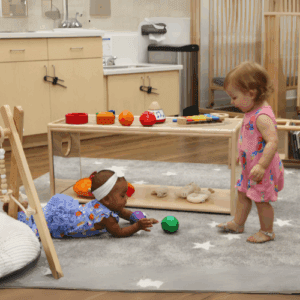
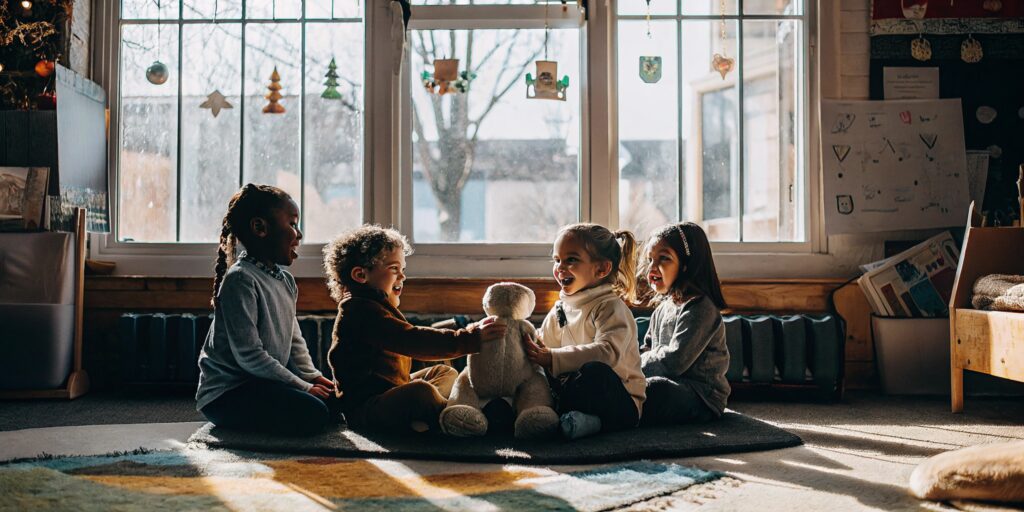
The skills your child learns on the playground are the ones they’ll use for life. When they learn to share a toy or take turns on the slide, it’s not just about being nice. It’s their first real lesson in negotiation and teamwork. These everyday moments are where they build essential social skills for preschoolers. Mastering these preschool social skills is the foundation for everything that comes next: making friends, thriving in the classroom, and growing into a kind, confident person. It’s about guiding them through the small interactions that matter most.
Key Takeaways
- Focus on emotional intelligence, not just manners: True social skills go beyond “please” and “thank you.” They are about helping your child understand their own feelings, recognize emotions in others, and develop empathy.
- Model and guide through everyday moments: Your child learns best by watching you. Use daily interactions to model kindness and patience, and gently coach them through challenges like sharing or disagreements, rather than simply solving the problem for them.
- Use play as the ultimate practice ground: Collaborative play, from building with blocks to simple board games, is the most effective way for children to practice taking turns, communicating ideas, and working together in a fun, low-pressure environment.
What Are Preschool Social Skills (And Why Are They So Important)?
When we talk about social skills, we’re talking about something much deeper than just learning to say “please” and “thank you.” Social skills are the tools your child uses to understand and connect with the people around them. It’s how they learn to express their own feelings, listen to others, make friends, and work through the little bumps and disagreements that are a natural part of life. For preschoolers, this is a huge area of growth. They are moving from a world that revolves mostly around their family to a bigger community of friends and teachers.
Developing these skills is a journey, and every child walks their own path at their own pace. In these early years, children learn so much through observation, practice, and gentle guidance. A supportive environment gives them the confidence to try new things, like joining a game on the playground or asking a friend to share a toy. At Strong Start, we see our classrooms as safe spaces for this exploration, where children can learn about themselves and others through play and collaboration. We believe that partnering with parents is key to helping every child build a strong social and emotional foundation.
Spotting Social Skills in Action
So, what does this actually look like on the playground or in the classroom? Social skills aren’t just one thing; they’re a collection of abilities that show up in everyday interactions. You might see your child learning to cooperate with a friend to build a tall block tower or taking turns with the most popular tricycle. It’s about learning to communicate their needs with words instead of tears and listening when a friend is telling a story.
Recognizing emotions is another big piece of the puzzle—both in themselves and in others. A child with developing social skills might notice a friend is sad and offer a hug, or they might be able to say, “I’m feeling frustrated because my tower fell down.” These are the small but mighty moments where social learning happens.
Why Early Social Skills Matter Most
The preschool years are a critical time for social development because the skills children learn now are the building blocks for their future. Think of it like building a house—you need a solid foundation to support everything else. Strong social skills help children build positive relationships, feel good about themselves, and manage their feelings in a healthy way. This foundation is essential for a smooth transition into kindergarten and beyond.
When children feel confident in their ability to make friends and solve problems, they are more available for learning. Research shows that these early social and emotional skills are directly linked to academic success, better emotional health, and stronger relationships throughout their lives. It’s not about perfection; it’s about giving them the tools they need to feel capable and connected in their world.
Key Social Milestones Around Age Three
Around age three, you’ll likely notice a big shift in how your child plays. The world starts to expand beyond just their own wants and needs, and they become more aware of the people around them. This is when they often move from parallel play—playing next to a friend—to true cooperative play, where they begin playing with them. Suddenly, that block tower becomes a team project. In our preschool classrooms, we see this beautiful transition as children learn that their friends have their own ideas and feelings. This is a foundational moment in their social journey, where they learn to negotiate, collaborate, and see the world from another point of view.
This newfound awareness opens the door for real friendships to form. As children begin to make friends, they also start developing empathy, learning to recognize when a playmate is happy, sad, or frustrated. You might see them offer a toy to a crying friend or celebrate a shared success. Of course, this is also when the classic preschool challenge of sharing comes into play. Learning to share is a process that takes time and practice, but it’s a critical skill for building relationships. They are also beginning to solve small problems on their own, like deciding who gets to go down the slide first, which builds incredible confidence and resilience.
How Preschool Social Skills Pave the Way for Success
When we think about preparing our kids for the future, we often jump to academics like reading and math. But the social skills they learn in preschool are just as critical—they are the foundation for everything else. Developing these abilities helps children build confidence, understand the world around them, and form healthy relationships. It’s not just about learning to share toys; it’s about learning how to be a good friend, a curious student, and a kind person. These early lessons in cooperation, communication, and empathy are what truly set your child up for a happy and successful life, both in and out of the classroom. At Strong Start, we see these skills as an essential part of our curriculum, woven into every project, game, and interaction.
How Social Skills Prepare Your Child for School
Being “ready for school” means more than knowing the alphabet. It means being able to listen to a teacher, follow directions, and work alongside classmates. Social skills are the key that opens the door to learning. When children know how to communicate their needs, take turns in a group activity, and handle small disagreements, they can participate more fully in the classroom. This early practice helps them feel more confident and less anxious in new social situations. A child with strong social-emotional skills is better equipped to make friends and adapt to the structure of a school day, which ultimately supports their academic progress and makes their transition to kindergarten a positive one. Our preschool classrooms are designed to be rich environments for this exact kind of growth.
Helping Your Child Manage Big Feelings
Social skills are deeply connected to a child’s emotional well-being. Learning to identify and manage their own feelings—and recognize them in others—is a huge step toward developing self-control and resilience. When a child can say, “I’m feeling sad because you took my block,” instead of hitting or crying, they are building a powerful tool for life. This ability to self-regulate helps them handle frustration and bounce back from challenges. Good social skills also contribute to positive mental health by helping children build supportive relationships and feel a sense of belonging. Our approach to early education focuses on the whole child, giving them the language and guidance to understand their big emotions.
Teaching Your Child How to Make and Keep Friends
For young children, friendships are a source of joy, comfort, and learning. The social skills they practice in preschool—like sharing, cooperating, and showing empathy—are the building blocks for these important relationships. Learning how to join a game on the playground, give a friend a turn with a favorite toy, or offer a hug when someone is upset are huge milestones. These interactions teach children how to see things from another person’s perspective and navigate the give-and-take of a healthy friendship. We believe that partnering with parents is the best way to support this journey, creating a consistent and caring environment where children can practice these skills and build connections that could last a lifetime.
Building Resilience for Social Setbacks
It’s tough to watch your child feel left out when a friend doesn’t want to play, or frustrated after a disagreement over a toy. But these social bumps are not just normal; they are essential learning moments. Instead of swooping in to fix the problem, your role is to be their coach. The goal isn’t to prevent hurt feelings but to teach your child how to manage them. You can start by validating their experience: “I can see you’re feeling sad that Leo wanted to play alone.” This helps them name their emotions and feel understood. From there, you can gently guide them toward finding a solution, building the confidence they need to handle future challenges. This kind of gentle coaching is how children learn to bounce back, turning setbacks into stepping stones for resilience.
The Building Blocks of Preschool Social Skills
As your child’s world expands, so does their need for a new set of tools to connect with others. Social skills are the building blocks of friendship, communication, and emotional intelligence. They aren’t things kids are just born with; they’re learned, practiced, and refined through every interaction. For preschoolers, this means moving from parallel play to truly collaborative experiences. Learning to share, listen, and care about others’ feelings helps them build confidence and form the positive relationships that will support them for years to come.
Learning to Talk *and* Listen
Effective communication is about more than just talking—it’s a two-way street that involves both expressing oneself and truly hearing others. For a preschooler, this means learning to use their words to ask for a turn instead of grabbing, or to say “I’m sad” instead of crying. Just as important is the skill of listening. This involves paying attention when a friend is sharing a story or when a teacher is giving instructions. At Strong Start, our curriculum, which includes The Project Approach, encourages children to share their ideas and listen to their peers’ perspectives as they work together on long-term investigations, building these essential skills through daily practice.
“My Turn, Your Turn”: The Sharing Game
The concept of sharing is one of the biggest social hurdles for young children to clear. To a preschooler, their favorite toy can feel like an extension of themselves, so letting someone else play with it is a huge deal. Learning to share and take turns is about more than just being polite; it’s an early lesson in fairness, patience, and managing disappointment. It teaches children that their needs are important, but so are the needs of others. In our preschool classrooms, we guide children through these moments, helping them find the words to ask for a turn and celebrate their success when they cooperate with a friend.
Developing Empathy: Seeing Through Others’ Eyes
Empathy is the ability to notice and understand what someone else is feeling. It’s seeing a friend fall down and asking, “Are you okay?” or noticing a classmate is sad and offering a hug. This skill is the foundation of kindness, compassion, and strong friendships. Developing empathy helps children think beyond their own immediate wants and consider the people around them. Our exceptional educators model this behavior every day, verbalizing feelings and encouraging children to recognize emotional cues in their peers. This creates a caring classroom community where every child feels seen and supported.
Understanding That Others Have Different Beliefs
This is a huge cognitive leap for a preschooler: the realization that what’s in their head isn’t the same as what’s in everyone else’s. It’s the moment they grasp that while they might love building with blue blocks, their friend might prefer the red ones—and that’s okay. This understanding is the next step after empathy; it’s not just about feeling what others feel, but recognizing that they can think and believe differently, too. Learning to see things from another person’s perspective is a foundational skill for teamwork, negotiation, and respect. In our classrooms, this happens naturally as children collaborate on projects. Our curriculum, inspired by the Reggio Emilia philosophy, encourages children to share their unique ideas and listen to their friends’ theories, creating a space where different viewpoints are valued and explored together.
Working Together to Solve Problems
Disagreements are a natural part of life, even on the playground. The goal isn’t to prevent conflict but to give children the tools to work through it constructively. This means helping them learn to see things from another person’s point of view, talk about the problem, and brainstorm a solution together. Instead of running to an adult for every issue, a child with problem-solving skills might say, “How about you use the red block for five minutes, and then I can have a turn?” This builds resilience and independence. We believe in partnering with parents to create a consistent approach, helping children practice these important negotiation skills both at school and at home.
Talking Openly About Fairness and Diversity
Conversations about fairness naturally grow from everyday moments, like taking turns with a favorite toy. These interactions teach children that their needs are important, but so are the needs of others. This simple concept is the first step toward understanding bigger ideas about fairness and diversity in the world. You can build on this by talking openly about differences in a positive way. When you notice people who look, speak, or celebrate differently from your family, you can frame it with curiosity and respect. These conversations help children appreciate that everyone is unique, building a foundation of inclusivity and kindness that will stay with them as they grow. Our Reggio Emilia-inspired philosophy honors each child as an individual, creating a community where every voice is valued.
Cultivating Gratitude and Kindness
Kindness begins with empathy—the ability to notice how someone else is feeling and offer comfort. When your child sees a friend who is sad and offers a hug, they are putting empathy into action. You can encourage this by modeling kindness in your own interactions and by creating simple family rituals, like sharing one thing you’re grateful for at the end of the day. This helps your child focus on the positive and appreciate the people and things in their life. These early lessons in gratitude and compassion are about more than just good manners; they contribute to positive mental health by helping children build supportive relationships and feel a sense of belonging. At Strong Start, our exceptional educators guide children in developing these skills, setting them up for a happy and successful life.
Common Challenges in Teaching Social Skills (And How to Handle Them)
Even with the best intentions, teaching social skills can feel like a bumpy ride. Every child is unique, and what works for one might not work for another. It’s completely normal to encounter challenges along the way, from boundless energy to overwhelming emotions. The key is to approach these moments with patience and a plan. Understanding some of the common hurdles can help you guide your child with confidence and compassion, turning tricky situations into valuable learning opportunities.
When Your Child Has Big Energy
Some children seem to have an endless supply of energy, which is wonderful but can be challenging in social settings. You might notice this energy shows up as hyperactivity, extra clinginess, or being overly friendly with strangers. While their enthusiasm is a gift, it can sometimes make it hard for them to slow down and connect with peers.
The goal isn’t to dim their light but to help them channel it. Creating structure can be a game-changer. Try engaging them in activities with clear, simple rules that guide their interactions. Outdoor play, collaborative building projects, or fun movement games in our enrichment programs can provide a positive outlet for that amazing energy while they practice taking turns and respecting personal space.
When Your Child Learns at Their Own Pace
Children develop at their own pace, and that includes their social skills. Sometimes, challenges in social situations can be related to other areas of development, like speech and language delays or sensory processing differences. If your child seems to struggle more than their peers with social cues or communication, it’s important to remember they’re on their own unique timeline.
The most powerful thing you can do is create a patient and supportive environment where they feel safe to try, even if they make mistakes. Celebrate small victories, like the first time they ask a friend to play or share a toy without prompting. Our exceptional educators are trained to recognize and support these individual differences, ensuring every child gets the encouragement they need to grow their social confidence.
Helping Your Child Through Big Feelings and Meltdowns
Preschoolers are just beginning to understand their complex inner worlds, and their feelings can be huge and overwhelming. Meltdowns are a normal part of this process—they’re not a sign of bad behavior but a signal that your child is struggling to manage a powerful emotion.
One of the best ways to help is by modeling active listening. When your child is upset, get down on their level, make eye contact, and reflect their feelings back to them: “I can see you’re feeling really sad that playtime is over.” This simple act of validation helps them feel seen and understood. It also teaches them the vocabulary for their emotions, which is the first step toward learning how to express them in healthier ways. We believe in partnering with parents to create a consistent approach, helping your child feel supported both at school and at home.
When to Talk with Your Child’s Pediatrician
Trust your gut. You know your child better than anyone, and while every child develops on their own unique timeline, sometimes you might feel that a little extra support is needed. If you notice your child consistently struggling to connect with peers, showing very little interest in social play, or having extreme difficulty with social cues long after their friends have moved past similar stages, it might be a good time to check in. This isn’t about looking for problems, but about gathering information. Your pediatrician is a fantastic resource who can help identify strengths, offer support, or connect you with other helpful tools. Think of them as another member of your support team, ready to offer reassurance and guidance on your child’s journey.
Easy Ways to Weave Social Skills into Your Day
Your home is the first place your child learns about the world, and it’s the perfect setting to introduce foundational social skills. You don’t need complicated lesson plans or special tools. By weaving simple practices into your daily routines, you can give your child the building blocks for making friends, communicating feelings, and working with others. These small, consistent efforts create a powerful learning environment where your child can practice and grow with confidence.
Lead by Example: You’re Their First Teacher
Children are incredible observers, and they learn more from what you do than what you say. When you model kindness, respect, and empathy, you give them a clear blueprint for their own interactions. Make a point to use “please” and “thank you,” apologize when you make a mistake, and show compassion for others. One of the most effective things you can do is practice active listening. By observing and listening to your child’s feelings and reflecting them back, they feel understood and learn how to express their own emotions. This daily modeling is a core part of how we partner with parents to support every child’s development.
Using “Inductive Discipline” to Explain the “Why”
It’s easy to fall into the trap of giving simple commands like, “Stop that,” or “Be nice.” But these instructions don’t teach your child the crucial lesson of why a certain behavior is important. This is where a technique called inductive discipline comes in. When your child misbehaves, calmly explain the reason their actions were hurtful or unhelpful. For example, instead of just saying, “Don’t grab that toy,” you could say, “When you grabbed the toy from your sister, it made her feel sad because she was still playing with it.” This approach helps your child understand the connection between their actions and another person’s feelings, which is the very foundation of empathy.
A Gentle Approach to Sharing and Apologies
Sharing is a huge concept for a preschooler, and forced apologies often miss the mark. Instead of demanding a reluctant “sorry,” focus on teaching repair and understanding. When a conflict happens, guide your child to notice the other person’s feelings: “Look, your friend is crying. They seem really upset that their tower was knocked down.” Then, empower them to help make it right by asking, “What can we do to help them feel better?” This might mean helping rebuild the tower or offering a different toy. This gentle process teaches that actions have consequences and that they have the power to fix their mistakes—a far more valuable lesson than simply reciting a word they don’t yet understand.
Use Role-Play to Practice Tricky Situations
Practicing social situations in a low-pressure way can make a huge difference. Use stuffed animals or puppets to act out common scenarios, like sharing a toy, asking to join a game, or saying sorry. This gives your child a chance to try out different responses in a safe space. When real-life challenges pop up, offer gentle guidance instead of jumping in with a solution. You can try saying, “I see you both want that truck. How can we solve this problem together?” This approach helps children learn valuable skills in problem-solving and collaboration that they will use for years to come.
Make Time and Space for Social Fun
Children need plenty of chances to interact with their peers to put their developing social skills to the test. Arranging playdates, visiting the local playground, or joining a community class are all great ways to facilitate this. Even simple family activities, like playing a board game, offer a fantastic opportunity to practice taking turns, sharing, and handling winning and losing gracefully. Providing opportunities for children to engage in social activities helps them build a strong foundation for social development. In our preschool classrooms, we create a rich social environment where children can learn from and with each other every day.
The Importance of Quality Sleep
It might not be the first thing that comes to mind when you think about social skills, but a good night’s sleep is one of the most powerful tools in your child’s emotional toolkit. When a child is well-rested, they have more patience, better focus, and a greater ability to manage their big feelings. A tired preschooler is much more likely to have a meltdown over a shared toy or struggle to listen during circle time. Research confirms that good sleep helps with social and emotional skills, making it easier for children to navigate the playground and make friends. Prioritizing a consistent and calming bedtime routine isn’t just about physical health; it’s about giving your child the emotional resources they need to be a kind and cooperative friend. At Strong Start, we support this with predictable daily schedules that help regulate your child’s internal clock, which you can see in our overview of your child’s day.
Choosing Positive and Educational Media
In many homes, screen time is a part of the daily rhythm, and it can be a great tool when used thoughtfully. The key is to focus on the quality of the content rather than just the quantity of time. Shows and apps that model positive social behaviors—like sharing, working together to solve a problem, and talking about feelings—can actually reinforce the skills you’re teaching at home. Look for non-violent, educational programs that can lead to better social skills and fewer behavior problems. You can make screen time even more impactful by watching with your child and talking about what’s happening. Asking questions like, “How do you think that character is feeling?” or “That was a kind thing to do, wasn’t it?” turns a passive activity into an active conversation about empathy and kindness.
Fun Social Skills Games for Preschoolers
Integrating social skill practice into your child’s daily routine doesn’t have to feel like a lesson. The best way for young children to learn is through play. By turning practice into a game, you create positive, low-pressure opportunities for them to explore sharing, communicating, and understanding others. These simple, fun activities can be woven into your day to help your child build a strong foundation for interacting with the world around them. Think of these as playful building blocks for developing kindness, cooperation, and confidence.
Tell Stories and Play Games with a Purpose
Games and stories are fantastic tools for teaching social cues in a way that feels natural and fun. Simple, classic games like “Simon Says” or “Red Light, Green Light” help children practice listening and self-control. You can also try collaborative storytelling, where you start a story with one sentence and let your child add the next. This back-and-forth teaches them about conversational turn-taking. Puppet shows are another wonderful activity; using puppets can help children act out different scenarios and explore big emotions from a safe distance. This kind of creative expression is a cornerstone of our Exploration Through The Arts program, where we see firsthand how make-believe helps children understand real-world feelings and interactions.
Activities for Emotional Expression
Helping your child understand and express their feelings is one of the most important parts of building their social skills. When children have the words to describe their emotions, they are less likely to resort to hitting, crying, or shutting down when things get overwhelming. These activities are designed to give your child a rich emotional vocabulary in a playful, supportive way. By making it a game, you create a safe space for them to explore the complex world of feelings, helping them learn that all emotions are okay and manageable. This foundation is key to developing empathy, resilience, and strong, healthy friendships.
Trying “Emotion Charades” or a “Feelings Chart”
Turn learning about feelings into a fun game with “Emotion Charades.” Take turns acting out different emotions—happy, sad, angry, surprised—and guess them together. This simple activity helps children connect a name to a feeling and recognize what those emotions look like on someone else. You can also create a “Feelings Chart” with pictures of different facial expressions. Throughout the day, you can point to the chart and ask, “How are you feeling right now?” Recognizing emotions is a huge step; it’s what allows a child to notice a friend is sad and offer a hug or say, “I’m frustrated because my tower fell.” This is a core part of teaching children emotional intelligence and giving them the tools to understand themselves and others.
Making Music Together to Encourage Cooperation
Making music is a fantastic way for children to practice cooperation and express themselves without needing a lot of words. Grab some simple instruments (or pots and pans!) and create a rhythm together, sing songs with hand motions, or just have a silly dance party. These activities encourage kids to listen to each other, take turns leading, and work as a team. Music also provides a powerful outlet for feelings. A loud, fast beat can be a great way to release frustration, while a soft, slow song can be calming. Learning to identify and manage their feelings is a huge step toward developing self-control and resilience, and sharing these joyful moments strengthens your connection and makes learning feel like play.
Building Teamwork with Puzzles and Crafts
Working together on a shared goal is a powerful way for children to learn cooperation and communication. Grab a floor puzzle with large pieces and work on it as a family, talking through where each piece might go. Building a block tower together is another great option that encourages turn-taking and shared decision-making. You can say things like, “It’s my turn to add a block, then it’s your turn.” This mirrors the collaborative work we do in The Project Approach, where children learn to contribute their ideas and work as a team to bring a vision to life. These small projects teach children the satisfaction of achieving something together.
Working Together on Household Chores
Turning everyday chores into a team activity is one of the most practical ways to nurture social skills at home. When you invite your child to help you sort laundry or set the table, you’re doing more than just getting a task done—you’re teaching them about cooperation and shared responsibility. Working together on a shared goal, even a small one, helps them practice communication and see themselves as a capable and important member of the family. These moments are a fantastic opportunity for them to learn how to follow directions, negotiate small problems (like who gets to put out the napkins), and feel the pride of contributing. This kind of teamwork builds the same confidence and problem-solving skills that are so important for making friends and thriving in a school environment.
Practice Turn-Taking During Play
Arranging time for your child to play with peers is one of the most effective ways for them to practice social skills. During these interactions, they get real-time experience with sharing, negotiating, and seeing things from another person’s perspective. You can help set them up for success by having some toys that are easy to share, like a big set of blocks or art supplies. If there’s a particularly popular toy, using a visual timer can make turn-taking feel more concrete and fair. Gently guide them through small disagreements by helping them use their words to express their feelings. These early friendships are so important, and they’re a huge part of the daily experience in our preschool classrooms.
Playing Group Games like “Duck Duck Goose”
Classic games like “Duck Duck Goose” are more than just a way to burn off energy—they are powerful lessons in social dynamics disguised as fun. The simple, repetitive structure provides a safe and predictable way for children to practice essential skills like listening and self-control. In one short round, a child learns to wait patiently for their turn, follow a set of rules, and manage the excitement of being chosen. This type of collaborative play is a fantastic, low-pressure environment for children to experience what it’s like to be part of a group working toward a common goal, even if that goal is just a fun chase around a circle.
Building Social Confidence at Strong Start
At Strong Start, we believe that learning how to be a good friend is just as important as learning letters and numbers. Social skills aren’t taught in a single lesson; they’re woven into the fabric of everything we do. From the moment your child walks into our classrooms, they are part of a caring community where they can practice interacting with others in a safe and supportive space. Our entire approach is built on the idea that children learn best through discovery, interaction, and play.
Our educators are experts at creating an environment that encourages positive social development. They gently guide children through the natural ups and downs of learning to share, communicate, and cooperate. We focus on helping your child build a strong foundation of self-awareness, empathy, and problem-solving skills that will serve them well in preschool and for years to come.
Where Play Becomes Social Practice
Children are natural collaborators, and we lean into that by structuring our days around shared experiences. Our curriculum, inspired by the Reggio Emilia philosophy and the Project Approach, allows children to work together on long-term investigations that spark their curiosity. Whether they’re building a block city or tending to a classroom garden, they are constantly communicating ideas, negotiating roles, and learning to value the contributions of their peers. This kind of hands-on, collaborative play is the most effective way for young children to practice essential skills like taking turns, sharing materials, and seeing things from another person’s point of view.
Gentle Guidance from Our Expert Teachers
Our exceptional educators are the heart of our social learning environment. They act as thoughtful observers and gentle guides, modeling kindness, respect, and active listening in all their interactions. When a disagreement happens—as it naturally will—our teachers step in not to solve the problem for the children, but to help them find the words to express their feelings and work toward a solution together. They might say, “I see you’re feeling frustrated. Can you tell your friend what you need?” This approach helps children develop self-control and learn how to manage their emotions in a healthy way.
Creating a Community of Friends
We intentionally design our classrooms to feel like a small, supportive community where every child feels a sense of belonging. Daily routines, like sharing meals together or gathering for circle time, create consistent opportunities for positive social interaction. Throughout your child’s day, they are encouraged to help one another, celebrate each other’s successes, and offer comfort when a friend is sad. This focus on community builds a strong sense of empathy and mutual respect. It creates a safe space where children feel confident enough to practice new social skills, make mistakes, and try again, knowing they are surrounded by friends and teachers who care.
Related Articles
Frequently Asked Questions
My child is very shy. How can I encourage them to be more social without being pushy? It’s completely normal for some children to be more reserved. The best approach is to create safe and comfortable opportunities for them to warm up at their own pace. Instead of large, overwhelming groups, try starting with a one-on-one playdate with a familiar friend. You can also act as their social bridge at first, playing alongside them and a friend until they feel more confident. Acknowledging their feelings by saying, “It can take a little while to feel ready to play, and that’s okay,” gives them the space they need without any pressure.
What’s the best way to handle it when my child is the one who grabs a toy or has a meltdown during a playdate? These moments are actually prime learning opportunities. The key is to stay calm and act as their emotional coach. First, get down on their level and gently intervene, stopping the behavior. Then, help them label their big feeling by saying something like, “I can see you are very frustrated because you wanted a turn.” After validating their emotion, you can state the boundary clearly and simply: “It’s not okay to grab.” From there, you can guide them toward a better solution, like asking for a turn or finding another toy to play with while they wait.
Is it okay that my three-year-old still plays next to other kids more than with them? Yes, that is perfectly normal and a very important stage of social development. This is called parallel play, and it’s how young children learn the rules of social interaction by observing others before they feel ready to jump in. They are listening, watching, and picking up on social cues even when it looks like they’re in their own world. Think of it as the step right before they start building block towers together. Soon enough, you’ll see them begin to share ideas and collaborate more directly.
How can I support my child’s social skills if we don’t have many opportunities for playdates? Your family is your child’s first and most important social group, so you have plenty of opportunities to practice right at home. Playing board games is a fantastic way to work on taking turns and being a gracious winner or loser. You can also work on collaborative projects together, like baking cookies or building a fort, where everyone has a role. Even just modeling good communication and problem-solving in your own relationships provides a powerful example for your child to follow every single day.
You talk about problem-solving. What does that actually look like for a preschooler? For a preschooler, problem-solving is about learning to think through a social challenge instead of immediately reacting with tears or frustration. It’s less about finding the “right” answer and more about practicing the process. For example, if two children want the same tricycle, instead of an adult deciding who gets it, you can guide them by asking, “We have a problem here. You both want the tricycle. What are some ideas for how we can solve this?” They might suggest taking turns, using a timer, or finding another fun activity to do together. Guiding them to brainstorm solutions empowers them to handle future disagreements on their own.
Written By
Marc Hoffman
Founder, Strong Start Early Care & Education
Marc founded Strong Start in 2014, inspired by his studies at Williams College, Yeshiva University, and research at Yale University. His child-centered, inquiry-based approach to early education has helped hundreds of families in the Trumbull and Bridgeport communities. As a parent himself, Marc understands the importance of finding a nurturing environment where every child can learn, grow, and flourish.