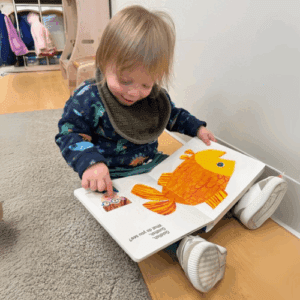

If you’ve ever found yourself saying the same thing four times before your toddler even looks up, you’re not alone. Learning how to get a toddler to listen is one of the most common challenges parents face during the toddler years. The good news? It’s not about volume or repetition. It’s about understanding how your child’s brain works and meeting them where they are.
At Strong Start Early Care & Education, our educators work with toddlers every day using research-backed communication strategies that actually work. Schedule a tour to see how we support your child’s development at every stage.
The strategies in this guide come from early childhood educators who understand toddler development from the inside out. They’re practical, doable, and grounded in how the toddler brain actually works.
Why Toddlers Don’t Listen (It’s Not What You Think)
Before diving into strategies, it helps to understand what’s happening in your toddler’s brain when they seem to ignore you. Toddlers aren’t being defiant on purpose. They’re wired differently, and their behavior makes a lot more sense once you understand the developmental picture.
Their Prefrontal Cortex Is Still Under Construction
The prefrontal cortex, the part of the brain responsible for impulse control, following instructions, and understanding cause and effect, doesn’t fully develop until a person’s mid-20s. In toddlers, it’s barely online. When your two-year-old runs toward the street after you’ve said “stop” a hundred times, it’s not defiance. It’s neuroscience.
They’re Wired for Independence
Between ages 18 months and 3 years, toddlers are in the thick of what developmental psychologists call the “autonomy vs. shame” stage. This means they have a powerful internal drive to do things their way. Telling them what to do activates that drive. That’s why a simple “put on your shoes” can turn into a negotiation, a meltdown, or both.
They’re Still Learning to Process Language
Toddlers hear a lot of words throughout the day, but processing language takes real cognitive effort. Long instructions, multi-step directions, or requests delivered from across the room often don’t fully register. It’s not selective hearing; it’s a brain that’s still building its language-processing pathways.
They Live in the Moment
Toddlers are deeply absorbed in whatever they’re doing right now. When they’re in the middle of building a block tower or pretending to make soup, transitioning to something else requires them to shift their entire mental focus. That transition is genuinely hard for their developing brains, even when they want to cooperate.
8 Educator Strategies to Help Your Toddler Listen
These are the strategies our early childhood educators use every day at Strong Start. None of them involve yelling. None require you to repeat yourself endlessly. All of them work with how your toddler is wired, not against it.
1. Get on Their Level (Literally)
When you want your toddler to hear you, get down to their eye level before you speak. Kneel, crouch, or sit on the floor beside them. Eye contact signals that you’re talking to them specifically, not just broadcasting into the room. It also shifts the interaction from top-down authority to genuine connection, and connection is where cooperation lives.
This sounds simple, but it’s a game-changer. When you approach your child’s physical level, you’re signaling respect and inviting engagement rather than demanding it.
2. Use Fewer Words
Short, clear, direct requests land better than long explanations. Instead of “We need to stop playing right now because it’s almost time for lunch and we have to wash hands first and then get to the table,” try “Lunch time. Let’s go wash hands.”
Toddlers process information best when it comes in short bursts. The simpler the language, the better the chance it registers. Save the explanation for after they’ve complied, or for a calm moment when they’re not in the middle of play.
3. Give a Two-Minute Warning
Abrupt transitions are one of the fastest routes to a meltdown. Toddlers are deeply absorbed in their activities, and being pulled out of them suddenly feels jarring, even threatening to their sense of control.
Giving a brief heads-up, “We’re leaving the park in two minutes,” helps your child’s brain begin to prepare for the change. It also shows respect for what they’re doing, even if what they’re doing is digging in the sandbox with a stick. At Strong Start, our teachers use consistent transition warnings throughout the day, and it dramatically reduces the friction around changes in routine.
4. Offer Choices Instead of Commands
Toddlers are in a developmental stage defined by the need for autonomy. When you offer a choice instead of a command, you give them some control within the boundary you’ve set. Both options lead to the same outcome; your toddler just gets to feel like they decided.
“Would you like to put on your shoes or your jacket first?” gets further than “Put on your shoes now.” “Do you want the red cup or the blue cup?” solves the water battle before it starts.
Keep choices simple: two options, both acceptable to you. More than two choices overwhelms a toddler and often makes things worse.
5. Name the Feeling Before You Give the Direction
When your toddler is already frustrated, upset, or emotionally activated, they can’t fully take in new information. The emotional brain is running the show. Before you redirect or instruct, try acknowledging what they’re feeling first.
“I see you’re really frustrated that we have to stop playing. That’s hard.” Then, once they feel heard, give the direction. This approach, rooted in emotional coaching, is a cornerstone of strong early childhood education practice.
It doesn’t mean giving in. It means connecting before correcting. And connection is what opens the door to cooperation. If tantrums are part of your daily landscape right now, our guide on how to handle temper tantrums goes deeper into managing big emotions with empathy and calm.
6. Follow Through Consistently
One of the most powerful things you can do to improve listening is to mean what you say, every time. If you tell your toddler that the TV goes off after one more show, it needs to go off after one more show. If you say there are no more cookies, no amount of negotiating should produce more cookies.
Toddlers are highly perceptive. They quickly learn what you actually mean versus what you say. When threats don’t follow through or boundaries shift depending on your energy level that day, they learn that your words are a starting point for negotiation, not a final answer.
Consistency is tiring. We know. But it’s also the fastest path to a toddler who takes your words seriously.
7. Catch Them Being Good
A lot of parenting advice focuses on what to do when toddlers don’t listen. This strategy flips it around: actively notice and name the moments when they do.
“I asked you to come to the table and you came right away. That made the morning so smooth. Thank you.” Specific, genuine praise reinforces the behavior you want to see more of. Toddlers want to please the people they love. When they know exactly what “doing a good job” looks like, they’re more likely to do it again.
Research on positive reinforcement in early childhood consistently shows that children respond better to attention for desired behaviors than to correction for unwanted ones. Make cooperation worth their while.
8. Build Routines They Can Predict
Toddlers who know what to expect are easier to redirect and more willing to cooperate. A predictable daily rhythm, morning, meals, nap, play, bedtime, removes a lot of the resistance that comes from uncertainty about what’s coming next.
At Strong Start, our classrooms run on consistent daily schedules that toddlers quickly internalize. They know that after outside time comes lunch, and after lunch comes rest. This predictability reduces anxiety and makes transitions smoother because children aren’t caught off guard by what comes next.
You don’t need a minute-by-minute schedule at home, but anchoring the day around predictable sequences (wake up, breakfast, getting dressed, outdoor time) gives toddlers a sense of safety that makes them more flexible when things do change.
Strong Start’s toddler program builds the routines, communication skills, and social-emotional foundation that make listening easier. Learn about our toddler classrooms in Bridgeport, Trumbull, and Wilton, CT.
What NOT to Do When Your Toddler Won’t Listen
Sometimes knowing what to avoid is just as useful as knowing what to do. Here are the approaches that tend to backfire with toddlers:
Repeating the Same Instruction Louder
If your toddler didn’t respond the first three times, saying it a fourth time at higher volume usually doesn’t work. It escalates the emotional temperature of the interaction and often triggers the power struggle you’re trying to avoid. If they didn’t respond, try moving closer, making eye contact, or changing your approach entirely.
Yelling
We all lose our cool sometimes, especially when we’re tired, stressed, or have asked three times already. But yelling tends to activate fear or defiance rather than cooperation. Toddlers in fight-or-flight mode can’t process instructions effectively. A calm, firm tone almost always gets further than a raised voice.
Threatening Consequences You Won’t Follow Through On
“If you don’t come right now, we’re not going to the birthday party” only works if you’re actually willing to skip the birthday party. Empty threats teach toddlers that your words don’t carry weight, which makes future instructions easier to ignore.
Expecting Immediate Compliance
Toddlers usually need a moment to wrap up what they’re doing and shift gears. Expecting instant, frictionless compliance sets both of you up for frustration. Give a warning, wait a beat, then follow up with warmth and firmness.
Turning It Into a Power Struggle
When you get pulled into a tug-of-war with a two-year-old, nobody wins. Toddlers have infinite stamina for conflict. Your goal isn’t to “win”; it’s to get cooperation. Staying calm, offering choices, and sidestepping the power struggle is almost always a faster path to the outcome you want.
A Note on Toddler Questions and Listening
Toddlers who are constantly asking “why?” are actually practicing an important cognitive skill. Answering their questions with patience builds the trust and connection that makes them more willing to listen to you. If you’re navigating an endless stream of “why?” from your child, our guide on how to answer your toddler’s why questions offers practical approaches that satisfy their curiosity without exhausting you.
When Listening Gets Easier
The toddler phase doesn’t last forever. As language skills grow, impulse control improves, and your child gains more experience with routines and expectations, the listening gets easier. The strategies above don’t just get you through today. They build the foundation of communication, trust, and connection that supports your relationship with your child long after the toddler years are over.
At Strong Start, we see this growth happen every day. Toddlers who enter our classrooms resistant to transitions become three-year-olds who help set the table without being asked. The development is real, and it’s happening even when it doesn’t feel like it.
Frequently Asked Questions
Is it normal for toddlers not to listen?
Yes, completely. Toddlers are in a developmental stage defined by a drive for independence and a brain that’s still learning to regulate impulses and process language. Difficulty following instructions is typical and expected at this age. It’s not a sign of a behavior problem or that you’re doing something wrong.
At what age do toddlers start listening better?
Most children begin to show meaningful improvement in listening and cooperation between ages 3 and 4, as language skills grow and impulse control develops. Every child is different, but consistent routines and communication strategies make a real difference in the timeline.
What do you do when a toddler completely ignores you?
Move closer to them physically, get to their eye level, and make gentle physical contact (a hand on the shoulder or back) before speaking. Avoid repeating the same instruction from across the room. Reduce your words, make the request clear and simple, and give them a moment to respond before following through.
Why does my toddler listen at daycare but not at home?
This is incredibly common, and it’s actually a sign that your child feels safe and secure with you. Toddlers save their biggest emotions and most resistant behavior for the people they trust most. Their daycare environment also offers consistent structure, clear routines, and a different social dynamic that can make cooperation easier. The strategies educators use can be adapted for home as well.
Should I use time-outs when my toddler won’t listen?
Time-outs are less effective with very young toddlers, whose brains aren’t developed enough to connect the consequence to the behavior after the fact. For toddlers under 3, natural consequences, redirection, and emotion coaching tend to be more effective. For older toddlers, brief, calm separation can be useful when paired with a brief explanation of why.
At Strong Start Early Care & Education, our educators partner with families to support toddler development through every stage. Reach out today to learn more about our programs in Bridgeport, Trumbull, and Wilton, Connecticut.
Written By
Marc Hoffman
Founder, Strong Start Early Care & Education
Marc founded Strong Start in 2014, inspired by his studies at Williams College, Yeshiva University, and research at Yale University. His child-centered, inquiry-based approach to early education has helped hundreds of families in the Trumbull and Bridgeport communities. As a parent himself, Marc understands the importance of finding a nurturing environment where every child can learn, grow, and flourish.