We all want to give our kids the best possible start for school. It’s tempting to focus on memorizing letters and numbers, but true readiness goes much deeper. It’s about building the skills that help a child thrive anywhere: curiosity, critical thinking, and problem-solving confidence. This is where a child led learning approach truly shines. By letting children explore topics that genuinely interest them, we teach them how to think, not just what to think. They learn to ask questions, test their own ideas, and work with others—the real benefits of child led learning. These are the skills that create engaged, resilient, and joyful learners for life.
Key Takeaways
- Honor your child’s natural curiosity: This approach uses their genuine interests as the foundation for learning, which helps them develop critical thinking skills, confidence, and a true love for discovery.
- Seek out intentional environments: A great child-led program provides freedom within a well-designed structure where teachers act as guides, and progress is thoughtfully documented through observation and portfolios.
- Bring the discovery home: You can support this philosophy by creating a safe space for exploration, asking open-ended questions instead of giving answers, and celebrating your child’s effort and process over the final result.
What Is Child-Led Learning?
Have you ever watched your child become completely absorbed in stacking blocks, figuring out how a new toy works, or following a trail of ants across the sidewalk? That intense focus is their natural curiosity in action, and it’s the very heart of child-led learning. Instead of following a rigid, one-size-fits-all curriculum, this approach allows children to explore what genuinely fascinates them. Our educators then thoughtfully build meaningful learning experiences around those passions. It’s a dynamic way of learning that honors your child as a capable, inquisitive individual who is an active participant in their own education. This philosophy doesn’t just make learning more fun; it helps children develop a true love for discovery that can last a lifetime. By starting with what they already care about, we help them build connections and understand the world in a way that feels relevant and exciting to them.
The Foundations of Child-Led Learning
At its foundation, child-led learning is built on the belief that children are born with a powerful desire to learn. Our goal is to nurture that innate curiosity, not replace it with strict instruction. In our classrooms, teachers act as guides and facilitators rather than lecturers. They carefully observe what sparks each child’s interest and then provide the resources, encouragement, and structure to help them explore those topics more deeply. While your child is in the driver’s seat of their learning journey, our exceptional educators are right there with them, asking thoughtful questions and creating a safe, supportive environment for discovery.
Learning That Starts at Birth
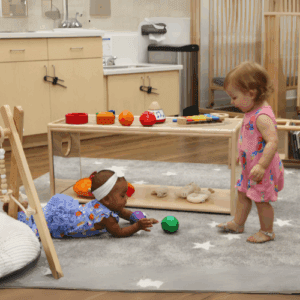
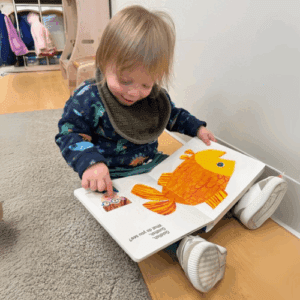
We often think of “learning” as something that begins with letters and numbers, but it actually starts from birth. From the very beginning, babies are natural learners, figuring out how to roll over, walk, and talk when they are ready. This is child-led learning at its most fundamental. By supporting this innate drive, we help children become more involved and learn more deeply from their experiences, whether it’s exploring the feel of a new texture or figuring out how to make a tower of blocks stand. This kind of hands-on discovery is what builds essential skills like problem-solving and creativity. Our infant classrooms are intentionally designed to nurture this journey, offering a safe and engaging environment where your child’s curiosity leads the way.
Child-Led Learning vs. Traditional Classrooms
Unlike a traditional model where every child might do the same worksheet at the same time, child-led learning is much more hands-on and personalized. It recognizes that real learning doesn’t just happen at a desk. When children are empowered to follow their interests, they become more engaged and absorb concepts in a deeper, more lasting way. This approach is tailored to your child’s unique developmental stage, needs, and learning style. It’s a philosophy that sees the classroom as a vibrant workshop for ideas, inspired by proven methods like the Reggio Emilia approach, where curiosity is the curriculum.
How Child-Led Learning Helps Your Child Thrive
When we let children take the lead in their own learning, something amazing happens. Instead of simply following a rigid lesson plan, they become active participants in their education, co-creating their journey alongside our teachers. This approach isn’t about a lack of structure; it’s about creating a flexible framework where a child’s natural curiosity becomes the curriculum’s driving force. By honoring their interests and questions, we help them build a strong foundation for a lifetime of learning. This method fosters not just academic skills but also the social and emotional intelligence they need to thrive, both in school and in life.
It’s about seeing children as capable and competent individuals from the very beginning. When a child’s idea is valued, whether it’s a question about where rain comes from or a desire to build the tallest tower, they learn that their voice matters. This sense of agency is incredibly powerful. It encourages them to take risks, try new things, and persist through challenges. The benefits extend far beyond the classroom walls, shaping them into confident, curious, and resourceful individuals who are prepared for whatever comes next. At Strong Start, our entire philosophy is built on this respect for the child as a capable learner, which is why our Reggio Emilia inspiration is so central to everything we do.
Fostering Engagement and Motivation
Have you ever noticed how a child can focus for ages on something they’re truly passionate about, whether it’s building a block tower or watching a line of ants? Child-led learning harnesses that incredible focus. When learning is built around their genuine interests, it doesn’t feel like work, it feels like play. Our educators act as keen observers, noticing what sparks each child’s curiosity and then weaving learning opportunities around that topic. This approach nurtures intrinsic motivation, teaching children that learning is an exciting and rewarding process of discovery, not just a list of tasks to complete.
Encouraging Persistence and Focus
We’ve all seen it: a child who can’t sit still for a story suddenly becomes laser-focused on building the perfect fort. That’s the magic of intrinsic motivation. When learning is built around their genuine interests, it doesn’t feel like work—it feels like play. This is why a child-led approach is so effective at building focus. It gives children a powerful sense of agency, encouraging them to take risks, try new things, and persist through challenges because the project is truly theirs. They learn to see a collapsed block tower not as a failure, but as a new engineering problem to solve. This is a core principle of our curriculum, especially in The Project Approach, where children engage in deep investigations over time, building resilience and focus along the way.
Building Strong Critical Thinking Skills
A child-led environment encourages children to do more than just memorize facts; it teaches them how to think. When a child asks, “Why is the sky blue?” or “How does a seed grow?” they are at the starting point of an investigation. Instead of just giving them the answer, our teachers guide them to find it themselves through experiments, books, and exploration. This process helps them develop crucial problem-solving and critical thinking skills. They learn to ask thoughtful questions, test their theories, and connect ideas, which are essential skills for their future academic and personal success.
Nurturing Confidence and Independence
When children have a say in their learning, they develop a powerful sense of ownership and capability. By choosing what to explore and how to do it, they learn to trust their own instincts and ideas. This process helps them understand their own strengths and interests, building a positive self-image from a very early age. Every time they successfully follow their curiosity to a new discovery, their confidence grows. This independence is a cornerstone of our partnership with parents, as we work together to celebrate each child’s unique journey and growing abilities.
Supporting Emotional Growth
Child-led learning is deeply connected to a child’s emotional well-being. When a child’s idea is truly valued—whether it’s a question about why spiders build webs or a plan to create a spaceship out of cardboard boxes—they learn that their voice matters. This powerful realization builds a strong sense of self-worth and agency. It gives them the confidence to express their feelings, take healthy risks, and work through frustration when things don’t go as planned. In an environment where their curiosity is respected, children feel emotionally secure and understood. This foundation of trust, central to The Project Approach we use, allows them to develop empathy and emotional intelligence.
Strengthening Relationships
This approach also does wonders for building strong, respectful relationships. When one of our exceptional educators gets down on the floor to join a child’s play or genuinely listens to their idea for a project, it sends a clear message: “I see you, and what you think is important.” This simple act of following their lead builds a deep sense of trust and connection, transforming the teacher-student dynamic into a collaborative partnership. The same is true for peer relationships. As children work together on projects born from their shared interests, they learn to listen to one another, share ideas, and navigate disagreements, building a foundation for positive social interactions.
Honoring Every Child’s Unique Learning Style
Every child is unique, and so is the way they learn. Some children are visual learners, others are hands-on, and some learn best through listening and talking. A child-led approach naturally accommodates these differences. It allows children to engage with concepts in the way that makes the most sense to them, whether that’s through art, building, movement, or quiet observation. Our exceptional educators are skilled at creating an environment rich with diverse materials and opportunities, ensuring that every child can find their own path to understanding and success.
Adapting for Different Needs and Contexts
One of the most powerful aspects of child-led learning is its inherent flexibility. This isn’t a one-size-fits-all system; it’s a responsive approach that honors each child’s unique personality, developmental stage, and learning preferences. For example, if a group of children becomes fascinated with building, our teachers don’t just provide one type of block. They might introduce blueprints for the planners, soft blocks for the younger builders, and recycled materials for the imaginative creators. This philosophy allows learning to be tailored in real-time, ensuring every child feels seen and supported. It’s a core principle of frameworks like The Project Approach, where a simple question can blossom into a multifaceted investigation that engages every type of learner in the classroom.
What Does Child-Led Learning Look Like?
It’s one thing to talk about the philosophy of child-led learning, but it’s another to see it in action. This approach isn’t about a lack of structure; it’s about a different kind of structure, one that’s built around your child’s natural curiosity. In our classrooms, learning is a dynamic and collaborative process where children are active participants in their own education. It’s a vibrant, engaging environment where discovery happens every single day.
The Teacher’s Role: Guide, Not Director
In a child-led classroom, the teacher’s role shifts from being a director to a thoughtful guide. Instead of delivering a rigid lesson plan to the whole group, our exceptional educators observe what fascinates each child and build learning opportunities around those interests. They form strong bonds with the children to understand their unique personalities and learning styles.
If a child is captivated by the way water moves, their teacher might introduce new materials for water play or ask open-ended questions to deepen their exploration. The teacher is a partner in the learning process, guiding discovery and providing resources, but always letting the child feel a sense of ownership over their education.
Avoiding Over-Direction
A key part of the child-led philosophy is trusting the child’s process. This means our educators resist the urge to step in and “correct” or redirect a child’s exploration. If a child decides to paint the sky green or build a lopsided tower, that’s a valuable part of their learning. The goal isn’t a perfect final product; it’s the thinking, experimenting, and problem-solving that happens along the way. By avoiding over-direction, we send a powerful message: your ideas are valid, and your way of exploring is important. This builds their confidence to take creative risks and trust their own instincts, knowing they are in a safe and supportive environment where their curiosity is celebrated.
Helping Children Break Down Tasks
When a child has a big idea, like building a city out of blocks or putting on a play, it can sometimes feel overwhelming. Instead of taking over, our teachers act as collaborators, helping them break the project into smaller, more manageable steps. They might ask questions like, “What do we need to build first?” or “Who should be in charge of the costumes?” This approach, central to methods like The Project Approach, teaches children essential planning and organizational skills. By guiding them through the process without giving them the answers, we empower them to tackle complex challenges on their own, building resilience and a deep sense of accomplishment when they bring their vision to life.
Creating an Environment for Discovery
We believe the classroom environment itself is the “third teacher.” Every corner is intentionally designed to invite exploration, encourage collaboration, and spark curiosity. You won’t find rows of desks facing a whiteboard. Instead, you’ll see our preschool classrooms filled with natural light, accessible materials, and flexible spaces that children can make their own.
This carefully arranged setting allows children to move freely, make choices, and work together on projects. We provide a rich variety of materials and opportunities for them to express their ideas, whether through building with blocks, painting at an easel, or telling a story with puppets. The room is their canvas for learning.
Allowing for Uninterrupted Time
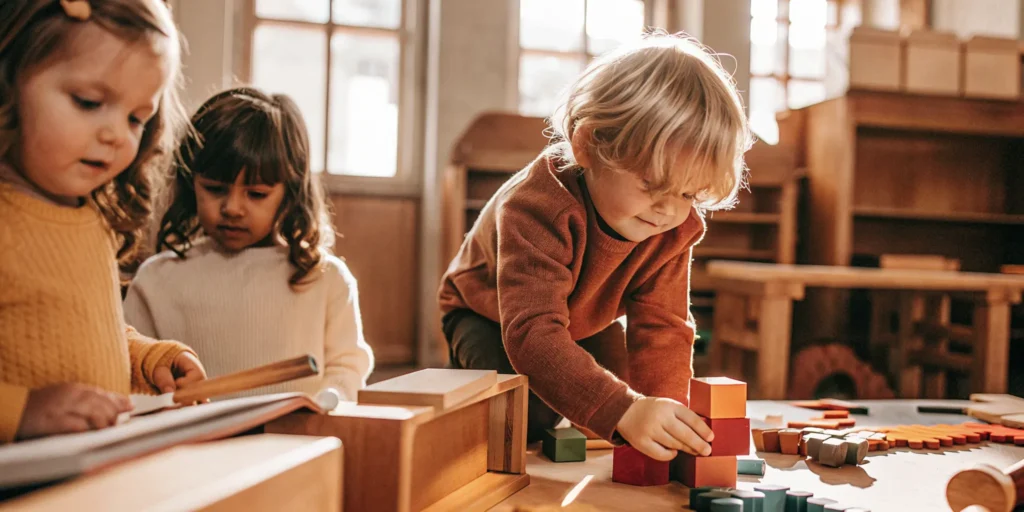
Imagine your child, completely absorbed in their work—carefully stacking blocks to build a towering castle or meticulously drawing a family portrait. This deep focus is where real learning happens, and one of the most important things we do is protect it. We support child-led learning by providing long stretches of uninterrupted time for this kind of play and exploration. Instead of a day chopped up by a rigid schedule, we allow children the space to become fully immersed in their projects. This helps them develop crucial skills like concentration, persistence, and problem-solving. By honoring their process, we show them their ideas are valued, which builds the confidence they need to see their work through from start to finish. This philosophy is woven into the fabric of your child’s day with us.
Playful Activities That Spark Curiosity
When children lead their own learning, they become deeply invested in what they’re doing. The activities that emerge are often more meaningful than anything a worksheet could provide. Instead of memorizing letters, a child might learn them by creating signs for a pretend store they built with their friends. Instead of a pre-planned craft, they might spend days working on a large-scale sculpture using recycled materials.
Our enrichment program is full of these hands-on experiences, from cooking to STEM projects. By following their interests, children don’t just learn facts; they learn how to ask questions, solve problems, and think creatively.
Sensory Bins and Mud Kitchens
A sensory bin filled with sand, water, or dried beans, or a simple mud kitchen in the backyard, are perfect examples of child-led learning in its purest form. There are no instructions or expected outcomes; the child is free to scoop, pour, mix, and imagine. This type of hands-on play is incredibly rich with learning. As they explore, they’re naturally engaging with concepts of volume, texture, and cause and effect. When children are this deeply invested in what they’re doing, the learning that happens is far more meaningful and memorable than what a worksheet could ever provide. In our toddler classrooms, we see how these simple, open-ended activities build foundational math and science skills while letting a child’s creativity run wild.
Busy Boards
Busy boards, which feature everyday items like zippers, latches, light switches, and knobs, are fantastic tools for self-directed discovery. Instead of a toy that does one specific thing, a busy board invites a child to explore at their own pace, figuring out how each component works through trial and error. This process is a powerful way to develop fine motor skills, hand-eye coordination, and practical life skills. It honors a child’s innate desire to understand the world around them by giving them safe, hands-on access to real-world mechanisms. This kind of focused, independent problem-solving builds concentration and confidence as they master each new challenge on the board.
Open-Ended Natural Materials
Some of the best learning tools aren’t toys at all. Materials like blocks, sticks, stones, clay, and water are considered “open-ended” because they can be used in countless ways. A stick can become a magic wand, a tool for drawing in the dirt, or part of a structure. This flexibility encourages children to think creatively and use their imagination to its fullest potential. At Strong Start, our Reggio Emilia-inspired approach values providing a rich variety of materials that allow children to express their ideas. When a child builds a tower with blocks or creates a sculpture from clay and twigs, they are not just playing; they are communicating their thoughts, testing their theories, and making their unique vision a reality.
Learning in Everyday Life
You don’t need a classroom to support child-led learning; opportunities are all around you, woven into your daily routines. Involving your child in simple household tasks can be a powerful learning experience. Sorting laundry becomes a game of matching colors and patterns. Helping in the kitchen introduces concepts of measurement and sequencing. A walk around the neighborhood is a chance to observe nature, count steps, and talk about community helpers. When learning is built around these genuine, shared experiences, it doesn’t feel like a lesson—it feels like connection and play. This is a core part of our philosophy in partnering with parents to create a seamless learning experience between home and school.
Is Child-Led Learning Right for Every Age?
Absolutely. One of the most powerful aspects of child-led learning is its flexibility. It’s not a rigid curriculum that treats all children the same; instead, it’s a philosophy that grows and adapts right alongside your child. The core idea of honoring a child’s natural curiosity remains constant, but how it looks in the classroom evolves as they move from infancy to their preschool years. Think of it as a supportive framework rather than a strict set of rules.
This approach allows us to meet children exactly where they are in their development. For a baby, learning is a sensory experience driven by sight, sound, and touch. For a toddler, it’s about movement, experimentation, and testing boundaries. For a preschooler, it’s about asking big questions and working with others to find the answers. By following their lead, we ensure that learning is always relevant, engaging, and joyful, no matter their age. Our educators are experts at observing each child’s unique cues and creating experiences that nurture their budding interests and skills at every stage.
For Infants, Toddlers, and Preschoolers
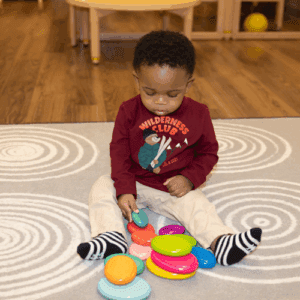
In our infant classrooms, child-led learning is all about sensory exploration. It might be an infant’s fascination with the crinkling sound of a toy or the texture of a soft blanket. Our teachers notice these moments of curiosity and provide more materials to explore. For toddlers, who are mastering new physical skills, it could mean an intense interest in stacking blocks as high as possible. We build on that by introducing different shapes and sizes to explore balance and gravity. By the time they reach our preschool classrooms, children’s interests become more complex, leading to deep-dive projects on everything from dinosaurs to gardening, guided by their own questions.
How to Adapt as Your Child Grows
The key to making child-led learning work for every age is personalization. Our exceptional educators form strong, trusting bonds with each child, allowing them to understand their unique learning styles, temperaments, and needs. This deep understanding means they can adapt any activity on the fly. If a child is sensitive to loud noises, a music activity can be adjusted with softer instruments. If another is passionate about painting, they’ll be given opportunities to explore different mediums. As children grow, they are given more autonomy, from choosing a toy as an infant to helping plan a week-long project as a preschooler, ensuring they always feel empowered in their own learning journey.
How It Aligns with Proven Philosophies
The idea of letting a child lead their own learning journey might sound new, but it’s actually grounded in some of the most respected and effective educational philosophies in the world. At Strong Start, we don’t just follow a single method. Instead, we thoughtfully blend the best elements of proven approaches to create a rich, dynamic, and supportive environment for every child. This isn’t about reinventing the wheel; it’s about using time-tested wisdom to nurture your child’s innate desire to learn and explore. Our curriculum is a carefully constructed framework that honors their individuality while preparing them for the road ahead.
This intentional blend ensures that while your child is following their passions, they are also developing the critical thinking, problem-solving, and social skills they need to thrive. By combining the child-centric focus of Reggio Emilia with the deep investigative nature of the Project Approach, we create a learning experience that is both empowering and effective. It’s a balanced approach that recognizes children as capable, intelligent, and creative individuals. We see our role as creating the right environment and providing the right tools, then stepping back to let their natural curiosity guide the way. This method helps children build confidence and independence, knowing their ideas are valued and their questions are the starting point for incredible discoveries.
Connecting with the Reggio Emilia Approach
The Reggio Emilia approach is a beautiful philosophy that views children as strong, capable, and full of potential. It’s built on the belief that children have a natural curiosity and an inherent right to lead their own learning. Instead of being passive recipients of information, children are seen as collaborators in their education. This aligns perfectly with child-led learning, as it emphasizes exploration, discovery, and hands-on experiences. In a Reggio-inspired classroom, you’ll see children working together, expressing their ideas through art and play, and building a deep understanding of the world around them, all guided by their own interests.
How We Use the Project Approach
A cornerstone of our curriculum is The Project Approach, which takes child-led learning a step further. This method involves in-depth investigations into real-world topics that capture the children’s interest. It could be anything from learning about the insects in our garden to exploring how buildings are constructed. Children are encouraged to ask questions, research answers, and work together on long-term projects. This process does more than just teach them facts; it helps them develop critical thinking, collaboration, and problem-solving skills. By giving them ownership of their projects, we help children see that their ideas have value and that learning is an exciting, rewarding adventure.
Drawing Inspiration from the Montessori Method
While we are not a Montessori school, we deeply admire and draw inspiration from its core principles, which align beautifully with a child-led philosophy. The Montessori method is built on a profound respect for the child as an individual and emphasizes hands-on, self-paced learning. It champions the idea that children are naturally eager for knowledge and capable of initiating their own learning in a thoughtfully prepared environment. We integrate key concepts from this approach because they are incredibly effective at nurturing the independence, confidence, and deep concentration that we want for every child at Strong Start.
The Prepared Environment
A cornerstone of the Montessori method is the idea of a “prepared environment.” This is a classroom that is intentionally designed to foster independence and exploration. Everything is child-sized and accessible, from low shelves with neatly arranged materials to small tables and chairs. This setup empowers children to make their own choices and take care of their space without needing constant adult help. It sends a powerful message: “This is your space, and you are capable.” This concept is very similar to our belief in the environment as the “third teacher,” where the physical space is carefully curated to invite curiosity and support self-directed discovery.
Self-Correcting Materials
Another brilliant Montessori concept we draw from is the use of self-correcting materials. These are learning tools designed so that a child can identify and fix their own mistakes without a teacher’s intervention. Think of a puzzle where each piece only fits in one specific spot—the child knows if they’ve made an error because the piece simply won’t fit. These materials allow children to learn through trial and error in a low-stakes way, building resilience and problem-solving skills. It shifts the focus from getting the “right” answer to understanding the process, which nurtures a healthy relationship with challenges and a strong sense of personal accomplishment.
Following Your Child’s Natural Curiosity
At its heart, child-led learning is about honoring a simple truth: children are born curious. They want to touch, taste, ask, and understand everything. Our role isn’t to dictate what they should learn, but to create an environment that nurtures this innate drive. When learning is tied to something a child is genuinely interested in, it doesn’t feel like work. It feels like play. By allowing them to explore their passions, we help them become active, engaged participants in their own education. This not only makes learning more effective in the moment but also fosters a positive attitude toward discovery that can last a lifetime.
What Parents Want to Know
It’s completely natural to have questions when exploring an educational philosophy that might be different from what you experienced as a child. Many parents wonder how a play-based, child-led approach translates to real-world skills and school readiness. Let’s walk through some of the most common questions we hear from families.
Will My Child Be Ready for School?
Absolutely. In fact, we believe this approach gives children an even stronger foundation for formal schooling. While a traditional program might focus on memorizing letters and numbers, a child-led environment builds the skills that make learning possible: curiosity, problem-solving, and a genuine love of discovery. Children learn to ask questions, test their theories, and work with others to find answers. They develop the confidence to try new things and the resilience to handle challenges. These are the core abilities that teachers look for in kindergarten, ensuring your child arrives not just knowing their ABCs, but ready and excited to learn. Our Preschool Classrooms are specifically designed to prepare children for this important transition.
Is There Enough Structure?
Yes, though it may look different from a traditional classroom. Child-led learning isn’t a free-for-all; it’s freedom within a thoughtfully designed framework. Our educators are experts at balancing child autonomy with clear learning objectives. They create an intentional environment where every material and activity is an opportunity for growth. The structure comes from a predictable daily rhythm of meals, group time, and outdoor play, which helps children feel secure. Within this routine, our teachers gently guide children toward developmental milestones, providing the support they need to explore their interests while still building essential skills. You can see an example of this balance on our page explaining your child’s day.
How Do Children Learn to Socialize?
A child-led environment is one of the best settings for developing strong social and emotional skills. Instead of sitting quietly at desks, children are constantly interacting, collaborating, and communicating. When they work together on a block structure, paint a mural, or create a make-believe world, they are learning to share, negotiate, listen to different perspectives, and solve conflicts. Our teachers are always nearby to model positive communication and help children put their feelings into words. This approach fosters authentic friendships and teaches children how to be caring and capable members of a community, a skill we reinforce by partnering with parents to support social growth at home and at school.
How We Track Your Child’s Progress
One of the most common questions we hear is, “If my child is leading the learning, how do you know they’re making progress?” It’s a great question. In a child-led environment, progress isn’t measured with tests or grades. Instead, we focus on a holistic, personalized approach that captures your child’s unique developmental journey. We track their growth through careful observation, detailed documentation, and most importantly, a strong partnership with you. This method allows us to see the whole child, celebrating their milestones and supporting them exactly where they are.
Observing and Documenting Their Journey
Our teachers are skilled observers. They spend their days actively listening to and watching the children, paying close attention to the questions they ask, the theories they test, and the social connections they build. As our founder shares, our teachers “observe and document children’s interests and learning, using this information to plan meaningful activities and projects.” This documentation isn’t just a checklist; it’s a rich collection of notes, photos, and videos that capture authentic moments of discovery and learning as they happen. This approach is a key part of our Reggio Emilia inspiration, which views the child as a capable and curious individual.
Creating a Portfolio of Their Discoveries
All of this careful observation comes together in your child’s personal portfolio. Think of it as a living storybook of their time with us, showcasing their growth in a way a report card never could. This portfolio contains tangible examples of their work, from early scribbles that evolve into detailed drawings to photos of complex block structures they’ve engineered. It also includes transcribed conversations and stories they’ve dictated. By collecting these pieces over time, we create a powerful visual narrative of their development. This helps our teachers connect your child’s unique interests to important learning goals, nurturing their progress in everything from fine motor skills to creative expression.
Sharing Their Growth with You
You are your child’s first and most important teacher, which is why we believe in partnering with parents every step of the way. Our exceptional educators are skilled in sharing insights about your child’s learning journey and ensuring that what happens at school connects with their experiences at home. We don’t wait for formal conference times to share a milestone. Through regular conversations, app updates, and access to their portfolio, you’ll have a clear window into your child’s day. This open dialogue allows us to work together, sharing observations and strategies to best support your child’s growth and celebrate their wonderful, one-of-a-kind journey.
Finding the Right Child-Led Program
When you’re looking for a program that embraces child-led learning, it helps to know what key features to look for. The right environment will feel both inspiring and intentional, giving your child the freedom to explore within a supportive framework. It’s about finding a place where their natural curiosity is the compass for their learning journey. As you tour different schools and speak with directors, keep an eye out for a few core elements that signal a high-quality, child-led approach. These pillars ensure your child isn’t just playing, but is actively building a strong foundation for a lifetime of learning.
Look for a Flexible, Yet Structured Curriculum
A great child-led program isn’t a free-for-all. Instead, it has a curriculum that is flexible and responsive to the children in the classroom. Teachers act as researchers, carefully observing what sparks your child’s interest, whether it’s a fascination with how shadows move or why raindrops slide down the window. They then use these observations to plan meaningful activities and projects. This approach, often inspired by philosophies like The Project Approach, allows learning to unfold organically. The structure comes from the teachers’ thoughtful planning and the well-designed environment, which is rich with materials that invite exploration and discovery.
Seek Out Passionate and Qualified Educators
The heart of any child-led classroom is its teachers. In this setting, educators are not just instructors; they are facilitators, guides, and co-learners. Look for teachers who are skilled at listening to and observing children, asking open-ended questions that deepen their thinking rather than just giving answers. They should be experts at creating strong, trusting bonds that help them understand each child’s unique personality and learning style. These exceptional educators know when to step in with a new material or a thought-provoking question and when to step back, allowing children the space to problem-solve and feel in charge of their own learning.
Building a Strong Partnership with Teachers
Learning doesn’t stop at the classroom door. A top-tier program sees parents as essential partners in their child’s education. The best schools create a strong connection between home and school, encouraging you to share what your child is excited about at home, like a recent family trip or a new favorite book. This information helps teachers make learning even more relevant and engaging. This collaborative relationship ensures everyone is working together to support your child’s development. When you find a school that prioritizes partnering with parents, you know you’ve found a community that truly values your family’s role in the learning process.
How to Support Child-Led Learning at Home
You don’t need a classroom to bring the benefits of child-led learning into your child’s life. Creating a supportive environment at home can make a huge difference in how they see the world and their place in it. By making a few simple shifts in your space and interactions, you can help nurture their natural curiosity and build a foundation for lifelong learning.
Create a Space for Discovery
One of the best ways to support your child’s independence is to set up a “yes” space. This is an area where they are free to touch, explore, and play without hearing “no.” It doesn’t have to be a whole room; a corner of the living room or their bedroom works perfectly. The key is to fill it with open-ended materials that invite exploration. Think baskets of blocks, safe art supplies on a low shelf, or containers with different textures. Just like our educators create rich environments for discovery, you can offer opportunities for your child to make choices, ask questions, and express their big ideas right at home.
Ask Questions That Spark Curiosity
When your child is deep in play, it’s tempting to jump in and teach. Instead, try taking on the role of a curious observer. You can guide their learning by asking open-ended questions that encourage them to think more deeply. Instead of asking, “Is that a blue block?” try, “I see you’re stacking those blocks. What do you think will happen if you add one more?” Questions like “What do you notice?” or “How did you do that?” invite your child to be the expert. This simple shift shows them that their thoughts and ideas are valuable, empowering them to take the lead in their own discovery process.
Say “Yes” More Often
It’s easy for “no” or “be careful” to become our default response, especially when our kids’ ideas seem messy or inconvenient. But what if we paused and tried to find a way to say “yes”? When your child wants to mix their own “potion” in the sink or build a fort with every cushion you own, they’re acting on a natural impulse to experiment and understand their world. Saying “yes” to these safe explorations sends a powerful message: your ideas are important, and your curiosity is something to be celebrated. When children have a say in their learning, they develop a powerful sense of ownership and capability. This simple shift doesn’t mean abandoning all rules; it just means creating a home environment where their genuine interests are seen as opportunities for learning, not interruptions.
Trust the Process and Encourage Their Journey
Child-led learning is all about the process, not just the final product. When we focus on our children’s effort and thinking, we help them build real confidence. A tower that tumbles down isn’t a failure; it’s a chance to learn about balance and gravity. Praising their persistence (“You tried so many ways to make that stand up!”) helps them develop problem-solving skills and a positive self-image. As active partners in their education, we can celebrate their unique interests and learning styles. This support helps them understand their own strengths and builds the resilience they need to take on new challenges with enthusiasm.
Related Articles
Frequently Asked Questions
Is child-led learning just another term for unstructured playtime? Not at all. While it may look like play, it’s actually a very intentional and purposeful approach. Think of it as freedom within a carefully designed framework. Our educators create a rich environment and a predictable daily rhythm that helps children feel secure. Within that structure, they observe each child’s interests and gently guide them toward meaningful discoveries. It’s a thoughtful balance of child autonomy and expert facilitation, ensuring that their play is always leading to real learning.
How will my child learn core skills like reading and math if they only focus on what interests them? This is a great question, and the answer is that we weave these essential skills directly into their passions. If a group of children is fascinated by building, they aren’t just stacking blocks; they’re learning about geometry, balance, and measurement. If they decide to open a pretend restaurant, they practice pre-writing skills by creating menus and taking orders. This method makes learning feel relevant and exciting, helping children understand not just what letters and numbers are, but why they are useful.
What if my child’s interests change quickly or they don’t seem interested in anything specific? It’s completely normal for a young child’s focus to shift. Our educators are experts at observing and finding the common threads in a child’s play, even when their interests seem fleeting. They might notice a recurring theme, like an interest in how things move or connect, and then offer materials and activities to explore that deeper curiosity. The goal isn’t to force a long-term project but to honor their process of discovery, knowing that every exploration builds new skills and understanding.
How do teachers manage a classroom where every child might be doing something different? This is where the skill of our exceptional educators truly shines. They are masters of observation and facilitation. Instead of leading one activity for the whole group, they move throughout the classroom, engaging with children individually or in small groups. They might ask a thoughtful question to deepen one child’s thinking, introduce a new material to another, and help a small group collaborate on an idea. This personalized attention ensures every child is supported and challenged right where they are.
Will this approach work for my shy or more reserved child? Absolutely. In fact, a child-led environment can be an ideal setting for a quieter child to thrive. Because there’s less pressure to perform in large-group settings, they have the space to explore at their own pace and in their own way. Our teachers focus on building strong, trusting one-on-one relationships, which helps reserved children feel safe and confident. They can express their big ideas through building, art, or quiet observation, allowing their unique personality and strengths to shine through.
Written By
Marc Hoffman
Founder, Strong Start Early Care & Education
Marc founded Strong Start in 2014, inspired by his studies at Williams College, Yeshiva University, and research at Yale University. His child-centered, inquiry-based approach to early education has helped hundreds of families in the Trumbull and Bridgeport communities. As a parent himself, Marc understands the importance of finding a nurturing environment where every child can learn, grow, and flourish.