Many schools describe themselves as “Reggio-inspired,” but what does that actually look like day-to-day? When you’re touring a preschool, it can be hard to know if the philosophy is truly at the heart of the program or just a buzzword on their website. An authentic Reggio Emilia environment is something you can see and feel—from the way the classroom is intentionally designed to the thoughtful questions teachers ask. This article is your guide to spotting the real thing. We’ll give you the tools to look beyond the surface, with specific things to observe and key questions to ask, so you can confidently identify the best reggio emilia preschools for your family.
Key Takeaways
- Your child’s curiosity leads the way: In a Reggio-inspired school, learning isn’t about following a strict lesson plan. Instead, teachers observe your child’s interests and build meaningful projects around them, fostering a genuine love for discovery and critical thinking.
- The environment is a partner in learning: The classroom is intentionally designed with natural light, open-ended materials, and organized spaces to inspire creativity and collaboration. This “third teacher” works alongside educators and families to create a rich learning experience.
- Learning is a visible journey: Instead of just sending home finished crafts, Reggio schools document the process of learning through photos, notes, and project displays. This gives you a meaningful window into your child’s thought process and celebrates their unique ideas.
What is the Reggio Emilia approach?
If you’re exploring preschool options, you’ve likely come across the term “Reggio Emilia.” It sounds fancy, but at its heart, it’s a beautifully simple and respectful way of looking at early childhood education. Originating in the villages around Reggio Emilia, Italy, after World War II, this approach is built on a foundation of community, collaboration, and a deep appreciation for a child’s natural curiosity. It’s a philosophy that truly honors childhood by recognizing that children are powerful learners from birth.
Unlike rigid, one-size-fits-all curriculums that tell children what to learn and when, the Reggio Emilia philosophy sees children as capable, creative, and full of potential. It’s less about teachers depositing information into children and more about creating a vibrant, supportive environment where kids can construct their own knowledge through hands-on experiences. This approach is a true partnership between children, teachers, and parents, all working together to create a rich learning experience. At Strong Start, our curriculum is deeply inspired by this child-centered philosophy, focusing on inquiry, discovery, and caring guidance to help children grow into confident, capable learners.
Its core philosophy
The core belief of the Reggio Emilia approach is that children are active participants in their own learning journey. They are viewed as strong, capable individuals with a natural desire to explore and understand the world around them. This philosophy emphasizes hands-on, experiential learning where children can touch, see, and interact with their environment. Learning isn’t a solitary activity; it’s a collaborative one. Teachers, parents, and peers are all seen as co-learners who support the child’s exploration. This creates a powerful sense of community and shared discovery within the classroom, which is a cornerstone of our Reggio-inspired curriculum.
The environment as the “third teacher”
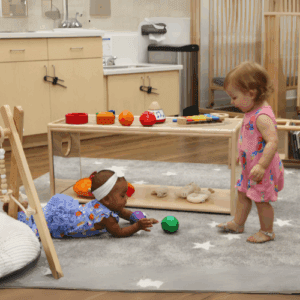
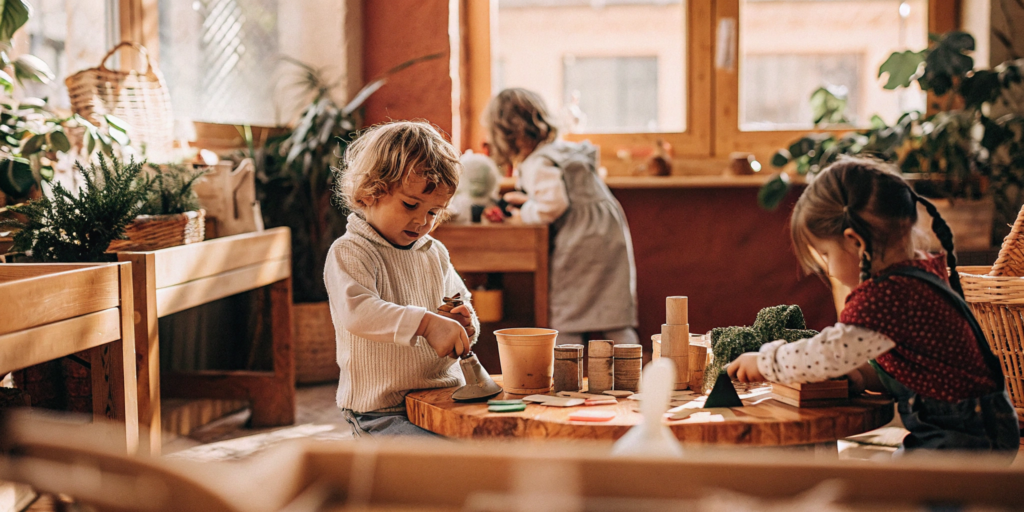
In a Reggio Emilia-inspired classroom, the environment itself is considered the “third teacher,” alongside the educators and parents. This means the classroom is intentionally designed to be beautiful, inviting, and rich with possibilities. You’ll see natural light, organized spaces, and open-ended materials like clay, paint, wire, and natural objects that invite children to explore and create. The space is thoughtfully arranged to encourage collaboration, communication, and discovery. This philosophy honors the “100 languages of children,” recognizing that kids express themselves in many ways beyond words—through drawing, sculpting, building, and dramatic play. The classroom becomes a living, breathing space that reflects the children’s interests and supports their ongoing projects.
How children lead their own learning
Instead of following a strict, pre-planned curriculum, learning in a Reggio Emilia setting emerges from the children’s own interests. Teachers are keen observers who listen to the children’s conversations and watch their play to identify topics for deeper exploration. If a group of toddlers becomes fascinated with the way shadows move, the teachers will facilitate a long-term project around light and shadow. They act as guides and partners, providing materials, asking thought-provoking questions, and documenting the children’s work. This child-led method, often called The Project Approach, helps children develop critical thinking and problem-solving skills while nurturing their intrinsic motivation to learn.
What makes a Reggio Emilia preschool great?
When you walk into a truly great Reggio Emilia-inspired preschool, you can feel the difference. It’s not just about the beautiful, light-filled spaces; it’s about the deep respect shown for children as capable, curious individuals. This philosophy comes to life through a few key practices that set these schools apart. It’s a place where your child is seen as a protagonist in their own learning story, full of ideas and theories worth exploring. Unlike more traditional settings, a great Reggio school doesn’t follow a rigid, pre-set curriculum. Instead, the curriculum emerges from the children’s own interests and inquiries. This approach is built on a few core pillars that you can see and feel in the classroom: making learning visible through thoughtful documentation, fostering a deeply collaborative classroom community, building a true partnership with families, and positioning the teacher as a guide and co-discoverer. These aren’t just items on a checklist; they are the living, breathing components of a program that honors childhood and fosters a genuine love of learning.
Documenting your child’s learning journey
In a Reggio Emilia classroom, learning is a story, and that story is told through documentation. Instead of just sending home finished art projects, teachers carefully capture the process of learning. You’ll see panels on the walls with photos of children working on a project, quotes from their conversations, and notes from the teacher explaining their thought process. Showing evidence of learning through this kind of documentation makes learning visible. It helps children see their ideas are valued and gives you a meaningful window into their world at school, going far beyond a simple daily report.
Creating collaborative classrooms
Collaboration is at the heart of the Reggio Emilia approach. The classroom is a community where children learn with and from one another. Rather than working on individual assignments in silence, you’ll see small groups of children exploring an idea together, negotiating roles, and solving problems as a team. In this setting, teachers act as co-learners and guides, supporting children as they investigate topics that spark their curiosity. This dynamic fosters important social skills like communication and empathy and teaches children that their collective ideas are powerful.
Involving community and family
A great Reggio Emilia school sees the powerful connection between home and school. The philosophy is built on the idea that teachers and parents are partners in a child’s education. This means your role as a parent is not only welcomed but considered essential. Schools create a strong sense of community by inviting families to share their skills, culture, and experiences, enriching the classroom for everyone. This partnership with parents ensures that your child feels a seamless sense of support and that you are an active participant in their educational journey.
The teacher as a guide and partner
The role of the teacher in a Reggio Emilia classroom is one of a researcher and a guide, not simply an instructor. These exceptional educators are expert observers who listen closely to children’s conversations and watch their play to discover what they are passionate about. They then use these interests to plan meaningful projects and explorations. Instead of providing all the answers, teachers ask thoughtful questions to provoke children’s thinking and encourage them to find solutions on their own. This approach empowers children to take ownership of their learning and builds a foundation for lifelong curiosity and critical thinking.
How Strong Start brings the Reggio Emilia philosophy to life
It’s one thing to read about a philosophy and another to see it in action. At Strong Start, the Reggio Emilia approach isn’t just a buzzword—it’s the foundation of everything we do. We believe that children are born curious and capable, and our role is to provide the environment, guidance, and opportunities they need to explore their world. From our classroom design to our teacher training, every detail is intentionally crafted to support your child’s natural desire to learn, ask questions, and make discoveries. We’ve built our schools around these core principles, creating a space where children are respected as active participants in their own education.
This means you’ll see children’s artwork and project documentation displayed thoughtfully on the walls, classrooms filled with natural materials that invite creativity, and teachers engaging in genuine conversations with children, listening to their theories about the world. It’s a living, breathing approach that shapes every interaction and learning experience within our schools. We don’t just teach subjects; we nurture thinkers, creators, and collaborators. By honoring each child’s unique perspective and interests, we help them build a strong sense of self and a lifelong love of learning. This partnership between child, teacher, and parent is central to how we bring the Reggio Emilia philosophy to life every single day.
Our progressive, Reggio-inspired curriculum
Our curriculum is built on the idea that learning should be joyful and driven by curiosity. Instead of a rigid, one-size-fits-all lesson plan, we follow your child’s lead. Our teachers are skilled observers who listen carefully to children’s questions and ideas, then build learning experiences around those interests. The classroom itself is designed to be a welcoming and beautiful space, filled with natural light and open-ended materials that invite exploration. Whether they’re building intricate structures with blocks, painting at an easel, or examining leaves from the garden, children are constantly engaged in hands-on, meaningful work that feels like play.
Our exceptional, NAEYC-accredited educators
A philosophy is only as strong as the people who bring it to life, which is why we are so committed to our team of exceptional early childhood professionals. Our educators are more than just teachers; they are co-learners, researchers, and guides who partner with your child on their learning journey. They are deeply passionate about child development and receive ongoing training in the Reggio Emilia approach and other best practices in early education. This commitment to excellence is reflected in our NAEYC accreditation, a mark of the highest quality standards. Our teachers document your child’s progress, making learning visible and celebrating every milestone along the way.
Our unique enrichment programs
We believe in nurturing the whole child, which is why our core curriculum is complemented by a variety of unique enrichment programs. These programs offer even more ways for children to express themselves and explore their interests. In Budding Bakers & Little Cooks, children learn about nutrition and science through hands-on cooking projects. Fit Kids gets them moving and develops gross motor skills, while Exploration Through The Arts provides opportunities for creative expression through music, drama, and visual arts. Our STEM Learning activities also encourage critical thinking and problem-solving, giving children a strong foundation for future learning in a fun, supportive setting.
How Reggio Emilia nurtures creativity and critical thinking
The Reggio Emilia approach is about so much more than just letting kids play. It’s a thoughtful, intentional way of guiding children to become curious, confident thinkers. This philosophy is built on a deep respect for children and their incredible potential. It sees them as natural researchers, full of ideas and theories about the world. The goal isn’t to fill their heads with facts, but to give them the tools and opportunities to explore their own questions, express their unique perspectives, and learn how to solve problems for themselves.
This process helps children develop skills that will serve them for a lifetime. When a child is encouraged to wonder, investigate, and create, they aren’t just learning about a specific topic; they’re learning how to learn. They build resilience when their first idea doesn’t work out, they learn to collaborate by sharing materials and ideas with friends, and they develop a genuine love for discovery. A Reggio-inspired curriculum is designed to cultivate these essential habits of mind, turning everyday moments into powerful learning experiences that lay the foundation for creative and critical thinking. It’s about seeing the world through their eyes and valuing their unique journey of making sense of it all, which ultimately helps them become more engaged and self-aware learners.
Encouraging multiple forms of expression
In the Reggio Emilia philosophy, there’s a beautiful concept called “the hundred languages of children.” This simply means that children have countless ways to express their thoughts and feelings beyond just words. They might communicate through drawing, painting, building with blocks, dancing, making music, or acting out a story. A Reggio-inspired classroom celebrates all these “languages” as valid and important. Instead of only asking a child to talk about an experience, a teacher might invite them to draw it, build it with clay, or create a song about it. This approach honors each child’s unique way of processing the world and gives them many avenues to share their brilliant ideas.
Learning through art, music, and hands-on projects
In a Reggio-inspired setting, art isn’t just a fun activity to pass the time—it’s a way of thinking and researching. Children are given access to a wide range of high-quality materials like clay, wire, paint, and natural objects, and are encouraged to explore them freely. Through these hands-on experiences, they learn about cause and effect, test their theories, and find creative solutions to challenges. A project might start with a simple question, like “How does a seed grow?” and evolve into weeks of drawing, sculpting, and storytelling as children document their discoveries. Our Enrichment Program builds on this by integrating art, STEM, and cooking into the daily learning journey.
Solving problems through inquiry
Instead of providing quick answers, teachers in a Reggio Emilia classroom act as co-researchers alongside the children. They listen carefully to the children’s questions and theories and then pose thoughtful questions to guide their thinking deeper. You might hear a teacher ask, “What do you think would happen if we added more water?” or “How can we work together to make this tower stronger?” This process of inquiry is at the heart of The Project Approach, where children engage in long-term investigations of topics that genuinely interest them. By tackling real problems, children learn to collaborate, negotiate, and think critically, building the confidence to face any challenge that comes their way.
Choosing the right Reggio Emilia preschool for your family
Finding the right preschool can feel like a huge decision, but knowing what to look for makes the process much easier. When you’re exploring schools with a Reggio Emilia philosophy, you want to see that the approach is more than just a label—it should be woven into every aspect of the school’s culture, from the classrooms to the curriculum.
Spotting authentic Reggio practices
Many schools describe themselves as “Reggio-inspired,” but it’s important to see what that looks like day-to-day. An authentic Reggio environment brings learning to life. Look for evidence of long-term projects that stem from the children’s own questions and curiosities. You should see documentation on the walls—photos, quotes from children, and artwork—that tells the story of their learning journey. This shows that the school values the children’s ideas and thought processes. A curriculum that is truly emergent will reflect the current interests of the students, rather than following a rigid, pre-planned schedule. This child-led exploration is central to The Project Approach and is a key sign of a genuine Reggio-inspired program.
What to look for in teachers and their training
In a Reggio Emilia classroom, teachers are not just instructors; they are co-learners and researchers alongside the children. When you tour a school, observe how the educators interact with the students. Do they ask open-ended questions that encourage deeper thinking? Do they listen intently to the children’s ideas? A great Reggio teacher acts as a guide, providing resources and support as children investigate their interests. This requires a flexible teaching style and a genuine passion for discovery. Don’t hesitate to ask about their training and how they partner with parents to support each child’s development. Their answers will reveal a lot about the school’s commitment to this collaborative philosophy.
Evaluating the learning environment
The classroom itself is considered the “third teacher” in the Reggio Emilia approach, and it should be designed to inspire curiosity and creativity. Look for a space that is welcoming, organized, and filled with natural light. The materials available should be open-ended and thoughtfully chosen—think clay, paint, natural objects like leaves and stones, and light tables, not just bins of plastic toys. The children’s own artwork and project documentation should be displayed beautifully, showing that their work is valued. The layout of the preschool classrooms should encourage collaboration, allowing children to work together in small groups. The environment should feel less like a traditional classroom and more like a creative studio for young learners.
Common myths about the Reggio Emilia approach
The Reggio Emilia approach is inspiring, but because it’s different from the traditional preschools many of us grew up with, it can also bring up some questions. You might wonder if it’s structured enough, if it prepares children for kindergarten, or if it will be the right fit for your child’s unique personality. Let’s clear up some of the most common myths so you can feel confident in your understanding of this child-centered philosophy.
Finding the balance between structure and freedom
One of the biggest misconceptions is that Reggio-inspired classrooms are a free-for-all. While it’s true that children have the freedom to explore their interests, this freedom happens within a thoughtfully designed framework. The structure isn’t found in rigid schedules or teacher-led drills, but in the intentional environment, the daily rhythm, and the deep dive into long-term projects. Teachers are active co-learners, carefully observing and guiding children to turn a simple curiosity—like why worms come out after it rains—into a rich investigation. This approach helps children become independent thinkers and creative problem-solvers, all while feeling respected and in control of their learning.
Addressing academic readiness
It’s natural for parents to worry if a play-based philosophy will properly prepare their child for the academic demands of kindergarten. The truth is, Reggio-inspired programs are deeply focused on school readiness. The difference is in the how. Instead of worksheets, children learn foundational literacy and math skills in ways that are meaningful to them. They might write a script for a puppet show, measure ingredients while baking, or count the windows on a building they constructed with blocks. This method doesn’t just teach them to recite letters and numbers; it helps them understand concepts and, most importantly, develops a genuine love for learning that will serve them well in kindergarten and beyond.
Is it right for every child?
You might wonder if this approach only suits outgoing, artistic children. In reality, the Reggio Emilia philosophy’s focus on the individual makes it wonderfully adaptable for all kinds of personalities and learning styles. Because learning is a collaborative process, children learn to appreciate different perspectives and skills. A quiet child who loves to draw can document a group project, while a natural leader might organize their peers. Our exceptional educators are trained to see and nurture each child’s unique strengths. The goal is to create a welcoming community where every child feels seen, heard, and valued for who they are, ensuring they have a secure base from which to grow.
Building a strong partnership with your child’s teacher
One of the most beautiful parts of the Reggio Emilia philosophy is the deep value it places on relationships. Your connection with your child’s teacher is more than just a series of quick drop-off chats; it’s a true partnership. When parents and teachers work together, they create a supportive and consistent world for a child to thrive in. This collaboration is central to your child’s happiness and growth, forming a strong foundation for their entire educational journey. At Strong Start, we believe that partnering with parents is essential to creating the best possible learning environment for every child.
Working together as a team
In a Reggio Emilia-inspired classroom, the teacher isn’t just an instructor at the front of the room. Instead, our exceptional educators act as co-learners and guides, supporting children as they investigate topics that capture their curiosity. You are a vital member of this team. Your insights from home provide the context that helps teachers connect with your child on a deeper level. By maintaining open lines of communication, you and the teacher can share observations and strategies that support your child both at school and at home. This teamwork ensures your child feels understood and secure, allowing them to explore and learn with confidence.
Sharing what makes your child unique
You are the world’s leading expert on your child. You know their little quirks, what makes them light up, and what they’re passionate about right now—whether it’s dinosaurs, building tall towers, or a particular song. Sharing these details with their teacher is incredibly valuable. Teachers understand that every child learns differently and at their own pace, so they watch children closely to create activities that fit each child’s needs. When you share what’s happening in your child’s world, you give their teacher the tools to make learning more personal and meaningful, connecting classroom projects to your child’s real-life interests and experiences.
Understanding how progress is shared
In a Reggio Emilia school, you won’t just see traditional report cards. Instead, learning is made visible through thoughtful documentation. This is a key part of the approach, where teachers carefully record the children’s work and conversations. You’ll see this evidence of learning displayed in project panels, photos, and portfolios that tell the story of your child’s process of discovery. This method shows not just the final product, but the thinking, problem-solving, and collaboration that happened along the way. It’s a wonderful way to get a detailed picture of your child’s day and provides a concrete starting point for conversations about their growth.
The pros and cons of a Reggio Emilia education
Like any educational philosophy, the Reggio Emilia approach has unique qualities that might be a perfect fit for one family and less so for another. It’s all about understanding what makes your child tick and what you value most in their early learning experiences. This approach is celebrated for its ability to foster creativity and independence, but its open-ended structure is also something to consider. Thinking through the benefits and potential challenges can help you decide if a Reggio-inspired preschool is the right place for your child to grow and thrive. It’s not about finding a flawless method, but about finding the right environment for your little one.
Benefits for your child’s development
A Reggio Emilia-inspired education is designed to support your child’s growth in every area—socially, emotionally, and intellectually. Because children are seen as active participants in their own learning, they develop a genuine love for discovery. This approach helps children become resourceful problem-solvers and creative thinkers. By working together on long-term investigations, they also learn invaluable teamwork and communication skills. Instead of just memorizing information, they learn how to ask questions, explore ideas, and construct their own understanding of the world. This is put into practice through methods like The Project Approach, where children’s interests guide their learning.
Building independence and confidence
In a Reggio Emilia classroom, children are trusted to follow their curiosity. This trust is fundamental to building their confidence and sense of self. They learn by doing—exploring materials, testing theories, and expressing their ideas through dozens of mediums, from painting and sculpting to music and storytelling. Teachers act as guides and co-learners, providing support and resources as children investigate topics that fascinate them. This dynamic empowers children to take ownership of their education and see themselves as capable and competent. Our own Reggio Emilia inspiration is rooted in this belief that every child is full of potential, ready to be discovered.
Things to consider for your child’s learning style
The fluid, child-led nature of the Reggio Emilia approach is one of its greatest strengths, but it may not be the ideal fit for every child’s personality. Some children feel more secure and learn best in a highly structured environment with predictable routines and teacher-led activities. The open-ended, project-based learning in a Reggio classroom can sometimes feel ambiguous for a child who prefers clear, step-by-step instructions. It’s also worth noting that progress is often documented through detailed observations and portfolios rather than traditional report cards, which requires a strong sense of partnering with parents to keep everyone on the same page about a child’s journey.
Touring a Reggio Emilia preschool: What to ask and observe
Once you’ve scheduled a tour, it’s time to put on your observation hat. A visit is your best opportunity to see a school’s philosophy in action and get a feel for whether it’s the right place for your family. The goal isn’t just to see the space, but to understand how the environment, the teachers, and the children interact.
Pay close attention to the atmosphere. Does it feel calm, engaging, and respectful? Do the children seem happy and absorbed in their activities? A true Reggio Emilia-inspired environment is rich with potential, filled with interesting materials, and thoughtfully arranged to provoke curiosity. It’s a living space that reflects the children who inhabit it. This tour is your chance to look beyond the brochure and see if the school’s daily practices align with its principles. Trust your instincts—the feeling you get while walking through the halls is just as important as the answers to your questions.
Key questions to ask on your tour
Asking the right questions can help you understand how deeply the Reggio Emilia approach is woven into the school’s fabric. Go beyond general inquiries and dig into the specifics. Instead of asking if they are “Reggio-inspired,” try asking, “Can you show me how you document the children’s learning and projects?” This will give you a direct look at their process. Also, ask, “How do teachers and children collaborate to decide what to explore next?” The answer will reveal how much value they place on child-led inquiry. A great school will be excited to share examples of how a child’s simple question evolved into an in-depth Project Approach investigation.
What to look for in the classroom
The classroom itself should tell a story. In the Reggio Emilia philosophy, the environment is considered the “third teacher,” and a tour is your chance to see what it’s saying. Look for spaces filled with natural light, authentic materials, and open-ended “loose parts” like stones, shells, fabrics, and wood, which invite creativity. You should see the children’s work displayed with care, not as cookie-cutter crafts, but as documentation of their ideas and discoveries. Notice if there are mirrors, light tables, and art materials readily accessible. The space should feel like a creative workshop that honors children as capable and full of potential, reflecting a deep commitment to Reggio Emilia Inspiration.
Potential red flags to notice
While you’re looking for positive signs, it’s also wise to be aware of things that might not align with a genuine Reggio Emilia approach. A major red flag is a classroom where every child’s artwork looks identical—this suggests a product-focused, teacher-directed activity rather than a process of individual expression. Be wary if the environment feels cluttered and chaotic instead of intentionally arranged, or if it’s overly sterile and lacking children’s personal touches. Also, observe the educators. Do they seem genuinely engaged and respectful in their interactions with the children, or are they simply supervising? A school’s commitment to its philosophy is best seen through its exceptional educators and their passion for co-learning alongside their students.
Related Articles
- Reggio Emilia Inspiration
- What is the Reggio Emilia Curriculum? A Guide
- What is a Reggio Emilia Preschool? A Parent’s Guide
Frequently Asked Questions
How is the Reggio Emilia approach different from Montessori? This is a great question, as both philosophies deeply respect children. The main difference is in the structure and materials. Montessori classrooms have specific, self-correcting materials that children use in a particular way to master skills. The Reggio Emilia approach, on the other hand, uses open-ended materials like clay, paint, and natural objects to encourage creative expression and problem-solving. While Montessori focuses on individual, self-directed work, Reggio Emilia emphasizes collaboration and learning in small groups through long-term, interest-based projects.
What does a typical day look like if the curriculum is child-led? While there isn’t a rigid, minute-by-minute schedule, a Reggio-inspired day has a predictable rhythm and flow that helps children feel secure. You’ll see a blend of small and large group activities, time for independent exploration, and outdoor play. The “child-led” part means that the content of these activities emerges from the children’s interests. For example, if children are fascinated by building, the teachers will intentionally provide new materials for construction and facilitate conversations about architecture and design during group time, rather than moving on to a pre-planned theme.
Will my child learn to read and write in a Reggio-inspired classroom? Absolutely. The approach to academics is just different from what you might see in a more traditional school. Instead of using worksheets and drills, literacy and math skills are woven into projects that are meaningful to the children. A child might practice writing by creating signs for a pretend store they built, or learn about measurement by following a recipe. This method helps children understand the real-world purpose of these skills and fosters a genuine excitement for learning that prepares them beautifully for kindergarten.
How much are parents expected to be involved? Parent involvement is seen as a partnership, not an obligation. The philosophy is built on the idea that you are your child’s first and most important teacher, so your insights are incredibly valuable. This can look different for every family. It might mean sharing your child’s current interests with their teacher, volunteering to share a special skill or cultural tradition with the class, or simply engaging in conversations about the learning stories your child’s teacher shares with you. The goal is to create a strong, supportive connection between home and school.
Is this approach suitable for a child who is shy or has a lot of energy? Because the Reggio Emilia philosophy focuses on the individual child, it’s wonderfully adaptable to all kinds of personalities. For a quieter child, the emphasis on expressing ideas through art, building, and other “languages” provides many ways to communicate beyond speaking. For a child with lots of energy, the hands-on, project-based work offers a productive outlet for their enthusiasm and curiosity. Teachers are skilled at observing and supporting each child’s unique temperament, ensuring everyone feels valued and has a place within the classroom community.