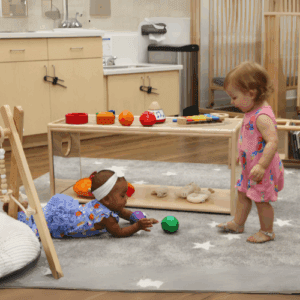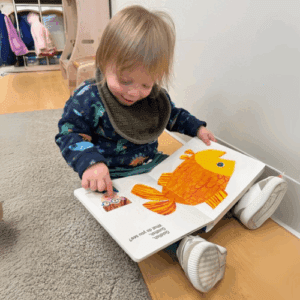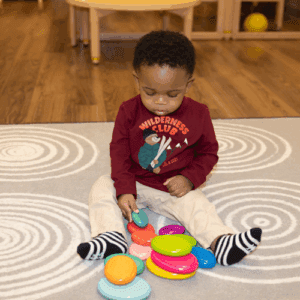
Your baby’s brain is forming more than a million new connections every single second. This is the critical window when the foundation for all future learning is built. High-quality early education for infants is designed to make the most of this incredible time. It’s not about pushing academics. It’s about creating a rich, responsive environment where your child can safely explore their world through their senses. By nurturing their natural curiosity with play, music, and gentle interaction, these programs help build a brain that is flexible, resilient, and ready for a lifetime of learning.
Key Takeaways
- Focus on whole-child development: Quality infant education is about more than just care; it’s designed to nurture your baby’s cognitive, social, and emotional skills all at once through intentional, play-based experiences.
- Prioritize secure relationships: The most important part of an infant program is the warm, responsive bond between your child and their educators, which builds the trust and confidence they need to explore and learn.
- Extend learning into your daily life: You are your child’s first teacher. Simple activities like narrating your day, reading books together, and establishing comforting routines at home powerfully support the development happening at school.
What Does Early Education Mean for Your Infant?
When we talk about early education for infants, we’re describing something much more intentional than just childcare. It refers to thoughtfully designed programs that support the incredible developmental journey a child takes from birth to age three. For toddler-specific guidance, see our guide on choosing the right daycare for your toddler. This is a time of explosive growth, and a quality infant care daycare program provides a safe, nurturing, and stimulating environment where your baby can explore the world around them. The focus is on fostering cognitive, social, and emotional growth during this critical period.
Think of it as building the foundation of a house. A strong, well-laid foundation supports the entire structure for years to come. Similarly, early education gives children a sturdy base for a lifetime of learning, helping them develop social skills and emotional resilience. It’s not about formal lessons or academic pressure; it’s about creating a warm, responsive setting where curiosity is encouraged and every small discovery is celebrated. At its heart, a great infant program is a partnership. It works alongside you to provide the best possible start for your child, ensuring they feel secure, loved, and ready to learn. This commitment to a safe and caring environment is the cornerstone of our approach to health and safety.
Defining Early Childhood Education (ECE)
Early Childhood Education, often shortened to ECE, refers to the intentional approach to learning and care designed for children from birth up to age eight. It’s a holistic framework that goes far beyond basic supervision. The goal of ECE is to nurture a child’s complete development—socially, emotionally, physically, and cognitively. This planned approach is vital because it builds the essential foundation for a child’s future success, both in school and in life. It recognizes that every interaction and experience is a learning opportunity. At Strong Start, our curriculum is built on this idea, drawing inspiration from philosophies like Reggio Emilia, which honors a child’s natural curiosity and capability from the very beginning.
Types of ECE Programs
As you explore your options, you’ll encounter several types of ECE programs, each with a unique focus. Daycare centers traditionally provide a safe, supervised environment for infants and young children, primarily to support working parents. Preschools are generally geared toward children aged three to five, with a curriculum designed to build the social and academic skills needed for kindergarten. You may also come across programs based on specific educational philosophies, like Montessori, which encourages child-led, hands-on learning. Many high-quality centers blend these models, offering the full-day support of daycare with the structured, play-based learning of a top-tier preschool. This integrated approach is what we practice in our toddler and preschool classrooms, ensuring a seamless and enriching educational journey.
Understanding Your Infant’s Developmental Milestones
The first three years of your child’s life are a period of truly amazing brain development. In fact, research shows that up to 90% of a child’s brain develops before they even start kindergarten. Every coo, giggle, and new movement is a sign of millions of neural connections forming. This is the time when the fundamental architecture of the brain is being built, creating the pathways for future learning, behavior, and health. Because this growth is so rapid and significant, the experiences your baby has during these early years matter immensely. A supportive and enriching environment helps ensure this development is strong, setting the stage for everything that follows.
Key Needs from Birth to 36 Months
During this incredible period of growth, your infant’s primary need is for strong, secure relationships. Building connections with the special people in their lives is key to helping them learn about the world and themselves. This is why the bond between your child and their caregivers is so important. A warm, responsive environment built on trust gives your baby the confidence to explore, play, and make new discoveries. Quality infant programs are designed to nurture your baby’s cognitive, social, and emotional skills all at once through intentional, play-based experiences. With caring guidance from exceptional educators, your child receives the consistent, nurturing interactions they need to build a strong foundation for learning and feel secure while doing it.
What Makes a Great Infant Program?
A high-quality infant program offers much more than a safe place for your baby to spend their day. It provides a structured yet flexible environment where infants can learn through play and exploration. The core of the program is its team of exceptional educators who are trained in early childhood development and understand how to respond to each baby’s individual needs and cues. In our infant classrooms, you’ll see this in action through sensory activities, story time, music, and gentle guidance that encourages movement and discovery. The goal is to create a holistic experience that nurtures every aspect of your child’s growth in a warm, loving atmosphere.
The Role of Developmentally Appropriate Practice (DAP)
Developmentally Appropriate Practice, or DAP, is a core principle in high-quality early education. It might sound a bit academic, but the idea behind it is beautifully simple: it’s all about meeting children exactly where they are. Instead of a one-size-fits-all approach, DAP focuses on what is appropriate for a child’s specific age, their individual personality and needs, and their family’s culture. For infants, this practice is built on the power of relationships. According to the National Association for the Education of Young Children (NAEYC), building strong connections with caregivers is key to how babies learn about themselves and the world. Our educators use this understanding to create a responsive environment where your child feels seen and secure, which is essential for them to explore confidently. This approach is central to our philosophy and a key reason we’ve earned NAEYC accreditation.
How Early Learning Shapes Your Infant’s Brain
An infant’s brain is growing at an incredible rate—in fact, about 90% of brain development happens before a child even starts kindergarten. Every new sight, sound, and texture helps build neural connections that form the architecture for all future learning. A high-quality early education program is designed to nurture this amazing period of growth. It’s not about flashcards or formal lessons; it’s about creating a rich, responsive, and stimulating environment where your baby can safely explore their world and make sense of it at their own pace.
Through thoughtful interactions and play-based activities, infants begin to understand cause and effect, develop memory, and build the earliest problem-solving skills. Our approach is inspired by philosophies like Reggio Emilia, which sees every child as a curious, capable learner from day one. Caring educators act as guides and partners in discovery, carefully observing your child’s interests and providing new materials and opportunities to extend their thinking. This intentional, respectful approach helps turn your baby’s natural curiosity into a genuine love of learning that will serve them for years to come. It’s about building a brain that is flexible, inquisitive, and ready for whatever comes next.
The Critical First Three Years
The first three years of your child’s life are a time of incredible growth. It’s hard to believe, but up to 90% of their brain develops before they even set foot in a kindergarten classroom. Every little interaction—every coo, giggle, and new discovery—is actually building millions of tiny connections in their brain. These connections form the foundation for all future learning, behavior, and even their overall health. The experiences your baby has during this time are so important because they are literally shaping the person they will become, creating a strong blueprint for the years ahead.
This is where a high-quality early education program makes a real difference. It’s designed specifically to support this rapid brain growth by creating a rich and responsive environment. In our infant classrooms, we focus on nurturing this development through intentional experiences. Every new sight, sound, and texture helps build those crucial neural pathways. This isn’t about academic pressure or formal lessons. Instead, it’s about fostering your child’s natural curiosity through sensory play, music, and gentle, supportive interactions. We create a space where they feel safe and encouraged to explore their world, turning everyday moments into powerful learning opportunities.
Beyond the activities and environment, the relationships your child forms are absolutely vital. The most important part of any infant program is the warm, secure bond between your child and their caregivers. This connection provides the trust and confidence your baby needs to feel safe enough to explore, experiment, and learn. Our exceptional educators are dedicated to building these nurturing relationships, responding to your child’s unique cues and needs. This supportive environment does more than just support brain development; it also builds a strong social and emotional foundation, setting the stage for a lifetime of healthy relationships and a genuine love for discovery.
Creating a Love for Learning from Day One
Think of your infant’s early experiences as the foundation of a house. A strong, well-built foundation can support a lifetime of learning and discovery. In a nurturing educational setting, infants are exposed to experiences that stimulate their senses and encourage exploration. This helps them develop critical thinking skills from the very beginning. When a baby is encouraged to reach for a toy, listen to a new sound, or feel a new texture, they are building pathways in their brain. Our infant classrooms are designed to be safe, engaging spaces that give your child the confidence to explore, laying the groundwork for future academic and personal success.
From Coos to Words: Supporting Early Communication
Long before they say their first word, babies are powerful communicators. They learn language by listening to the world around them—the rhythm of a song, the comfort of a story, and the warmth of a conversation. A language-rich environment is one of the greatest gifts an early education program can offer. Our educators engage with infants throughout the day, talking to them about what they’re seeing and doing, reading books with colorful pictures, and singing simple songs. This constant, responsive interaction not only builds vocabulary but also teaches the back-and-forth rhythm of conversation, helping your baby connect sounds with meaning and build essential communication skills.
Teaching Your Infant to Think and Solve
For an infant, the world is one big puzzle waiting to be solved. How do I make that rattle make a noise? How can I get that colorful block into my hand? Every interaction is a mini-experiment. A quality infant program provides endless opportunities for this kind of hands-on learning. By providing simple, age-appropriate toys and materials, educators encourage babies to experiment and discover how things work. This child-led, discovery-based approach, a core part of our philosophy, helps infants build resilience and confidence as they learn to solve simple problems on their own, setting the stage for more complex thinking later on.
Supporting Your Infant’s Social and Emotional Growth
Long before they can say their first words, infants are learning powerful lessons about the world and their place in it. Their earliest interactions shape their understanding of relationships, trust, and emotions. A high-quality early education program provides a warm, responsive environment where your baby can begin to build a strong social and emotional foundation, which is just as important as their cognitive and physical growth. It’s in these safe and caring spaces that infants learn they are valued, their needs will be met, and their feelings matter.
This early development is a partnership between our educators and your family. We believe that by partnering with parents, we can create a consistent and loving circle of support around your child. In our infant classrooms, every coo, cry, and giggle is seen as a form of communication. Our teachers are experts at tuning into these cues, responding with gentle care that helps your baby feel secure and understood. This responsive relationship is the bedrock upon which all future social and emotional learning is built, helping your child grow into a confident and empathetic person.
Building a Bond of Trust and Security
The most important thing an infant learns is trust. When a baby knows that a caring adult will be there to feed them when they’re hungry, comfort them when they’re upset, and delight in their discoveries, they develop a secure attachment. This bond is everything. It gives them the confidence to explore the world around them. Our infant classrooms are designed to be a home away from home, where dedicated educators provide consistent, loving care. This environment helps children understand and express their feelings in healthy ways, which builds emotional intelligence from the very start and makes them feel safe and supported.
Learning to Understand Big Feelings
Even the youngest babies experience a whole world of big feelings—joy, frustration, surprise, and discomfort. While they can’t name these emotions yet, they can certainly feel them. A key part of our approach is helping infants begin to navigate this inner world. Our educators act as “emotion coaches,” gently naming what a child might be feeling. Simple words like, “You seem sad that playtime is over,” help babies connect a word to a feeling. Through this process, children learn about their feelings and begin to understand their own needs, like when they are tired or hungry. This is the first step toward emotional regulation and resilience.
Taking the First Steps in Making Friends
Social skills begin to form long before children are ready for playdates. In an infant program, your baby learns simply by being around other children in a positive, supervised setting. They observe, they listen, and they begin to understand the back-and-forth of social interaction. Our Reggio Emilia-inspired philosophy views every child as a capable and curious individual, ready to connect with others. By being around other children and adults outside their family, kids learn how to listen and show their feelings. These early, gentle experiences in a group setting lay the groundwork for developing strong social skills and forming friendships later on.
Why Play Is Your Infant’s Most Important Work
For an infant, the world is a brand-new, fascinating place. And their job? To figure it all out. They do this through play. It might look like just shaking a rattle or splashing in water, but this is how your baby learns about cause and effect, explores textures, and builds connections in their rapidly developing brain. A high-quality infant program recognizes that play is the most important work a child can do. It’s not just about filling time; it’s about creating a rich, engaging environment where your child’s natural curiosity leads the way, inspired by philosophies like Reggio Emilia.
How Infants Learn Through Sensory Play
From the moment they’re born, babies use their five senses to gather information. That’s why sensory exploration is at the heart of infant learning. In a thoughtfully designed classroom, your baby will have access to a wide range of materials that invite them to touch, see, hear, and explore in a safe way. Think soft fabrics, interesting textures, grasping toys, and gentle sounds. These hands-on experiences are not random; they are carefully chosen to match your infant’s developmental stage. This kind of purposeful play in a secure environment helps your baby make sense of their world and builds a strong foundation for future learning. Our infant classrooms are designed to be safe, engaging spaces for this exact kind of discovery.
The Link Between Movement and Brain Growth
It might seem like your baby’s constant wiggling and kicking is just random, but it’s actually one of the most important things they do. Every time your infant reaches for a toy, pushes up during tummy time, or eventually learns to crawl, they are doing more than just strengthening their muscles—they are literally building their brain. These physical actions create and reinforce neural pathways that are essential for everything from coordination and balance to problem-solving. When your baby tries to grasp a block, their brain is hard at work coordinating what their eyes see with what their hands need to do. This is cognitive development in action, disguised as simple play. Providing a safe space for this exploration is crucial, as are structured movement activities that help your child gain confidence and master new physical skills, turning their natural curiosity into powerful learning.
Why Following Your Infant’s Curiosity Matters
Have you ever noticed how your baby can be completely captivated by something as simple as a shadow on the wall or their own reflection? That’s their curiosity in action. A child-led approach honors these moments of wonder. Instead of directing your baby’s play, our educators act as observers and facilitators. They pay close attention to what sparks your child’s interest and then provide materials and opportunities to explore it further. This approach respects your infant as a capable, competent learner who is an active participant in their own education. By following their lead, we help them build confidence and a genuine love for discovery. This philosophy is a cornerstone of The Project Approach, which encourages children to investigate topics that fascinate them.
Why Do Infants Thrive on Routine?
While discovery is exciting, infants thrive on predictability. A consistent routine for things like feeding, napping, and playtime creates a sense of safety and security. When your baby knows what to expect, they feel calm and confident, which frees up their mental energy to learn and explore. This loving and steady environment is essential for their emotional well-being. Our educators focus on building that trust by being responsive and attentive to each child’s individual needs and rhythms. A predictable daily flow helps your baby feel secure and understood, creating the perfect conditions for growth. You can see an example of this balance in what to expect from your child’s day with us.
How Early Education Sets Your Child Up for Life
Choosing an early education program is one of the first big decisions you’ll make for your child, and it’s about so much more than just childcare. You’re giving them a gift that will continue to unfold throughout their entire life. The experiences they have in these early years—the friendships they form, the problems they solve, and the confidence they build—create a powerful foundation for everything that comes next. It’s in these nurturing environments that children begin to see themselves as capable, curious learners, setting them on a path toward a bright and successful future.
Preparing Your Child for a Successful School Journey
A high-quality early education program does more than just prepare children for kindergarten; it helps them arrive excited, confident, and ready to learn. While early exposure to letters and numbers is part of the picture, true school readiness is built on a much broader set of skills. Studies show that children with strong social and emotional skills tend to perform better academically and have better mental health outcomes later on. In a supportive classroom, your child will practice listening, following directions, and working with others—all essential skills for a formal school setting. They learn how to manage their attention and persist through challenges, building the focus they’ll need in their preschool classrooms and beyond.
The Power of Early Intervention
One of the most significant benefits of a structured early learning environment is the power of early intervention. Trained educators are skilled observers who understand the nuances of infant development. They can often identify potential developmental delays or challenges early on, allowing for timely support. Research shows that getting this help sooner can make a world of difference, greatly improving a child’s cognitive and social skills down the road. This isn’t about looking for problems; it’s about providing a safety net of support. It’s a collaborative process where our teachers work closely with you, partnering with parents to ensure your child has every opportunity to thrive. This proactive and caring approach gives you peace of mind, knowing your child is in an environment designed to support their unique journey.
Introducing Early Math and Science Concepts
It might sound advanced, but your infant is already a tiny scientist and mathematician, and a quality program gives them the lab they need to experiment. Early math and science concepts aren’t taught with flashcards; they’re discovered through play. When a baby stacks blocks, they’re learning about gravity and balance. When they sort shapes, they’re exploring geometry. These hands-on activities are the building blocks for future academic success. Our enrichment programs are designed to foster this natural curiosity, engaging children in activities that involve counting, sorting, and exploring the world around them. By turning play into purposeful discovery, we help your child build a foundational understanding of how things work, sparking a lifelong love for inquiry and problem-solving.
Developing Social Skills That Last a Lifetime
For many infants and toddlers, an early care program is their first real community outside of the family. It’s a safe space where they can learn the delicate art of getting along with others. Guided by caring educators, children learn how to share toys, take turns, and express their big feelings in healthy ways. These daily interactions are the building blocks of empathy, cooperation, and communication. Learning to listen to a friend’s idea or offer comfort when someone is sad are profound lessons that shape how they will build relationships throughout their lives. These early social experiences help them grow into compassionate and collaborative friends, partners, and community members.
Building a Foundation for Lifelong Happiness
The positive effects of early childhood education extend far into adulthood. Research consistently shows that children who attend high-quality programs are more likely to graduate from high school, attend college, and have successful careers. This incredible long-term impact stems from the holistic development that happens in these crucial early years. When children are encouraged to be curious, creative, and resilient from the start, they develop a love of learning and a belief in their own abilities. Investing in a program with the highest standards, like one with NAEYC Accreditation, is an investment in your child’s future health, happiness, and overall well-being.
How to Support Your Infant’s Learning at Home
Your baby’s learning journey is happening all the time, not just within the walls of their classroom. As their parent, you are their very first teacher, and the moments you share at home are incredibly powerful. Supporting your infant’s development doesn’t require fancy toys or complicated lesson plans. It’s about weaving simple, intentional activities into your daily life to nurture their natural curiosity.
The wonderful thing is that many of these strategies are likely things you’re already doing. By understanding the “why” behind them, you can feel more confident in how you’re helping your little one build a strong foundation for a lifetime of learning. These tips are designed to complement the experiences your child has in their early education program, creating a seamless and supportive world for them to grow and thrive in. At Strong Start, we believe in a strong parent-teacher partnership, and sharing these ideas helps build that connection between school and home.
Create a Language-Rich Environment
From the moment they’re born, infants are absorbing language. Creating a language-rich environment is as simple as talking to your baby throughout the day. Narrate what you’re doing as you change their diaper, prepare a bottle, or go for a walk. When they coo or babble, respond as if you’re having a conversation. This back-and-forth exchange, called “serve and return,” is fundamental for brain development. According to research from Zero to Three, these early experiences with stories and conversation are directly linked to future reading skills. You’re not just talking at them; you’re teaching them the rhythm and flow of communication, making them feel heard and valued.
Read, Sing, and Play Together
Reading, singing, and playing are the cornerstones of infant learning. Cuddling up with a board book introduces your baby to new words, sounds, and pictures while creating a warm, positive association with reading. Singing songs, even simple ones like “Twinkle, Twinkle, Little Star,” helps them learn about rhythm and rhyme. Play is your infant’s most important work. Simple games like peek-a-boo teach object permanence, while hands-on activities with safe objects help them understand cause and effect. These shared activities do more than just build cognitive skills; they strengthen the emotional bond between you and your child, which is the most important foundation of all.
Encourage Safe Exploration
Babies are natural scientists, learning about the world by touching, tasting, and moving through it. Your role is to be their lead scientist, creating a safe space for them to conduct their experiments. This means baby-proofing an area of your home where they can freely move and explore without constant intervention. Provide a variety of safe, simple items for them to investigate—a soft blanket, a wooden spoon, or a crinkly toy. As noted by Head Start, infants learn best when they have access to materials that spark their curiosity. This kind of child-led discovery is a core part of our Reggio Emilia-inspired philosophy, empowering children to follow their own interests.
Establish Consistent, Comforting Routines
For an infant, the world can feel big and unpredictable. Consistent routines for things like feeding, naps, and bedtime provide a comforting rhythm to their day. When babies know what to expect, they feel safe and secure. This sense of security is crucial for their emotional well-being and frees up their mental energy to focus on learning and exploring. A predictable routine doesn’t have to be rigid, but it should follow a familiar pattern. For example, a bedtime routine might always be a bath, a book, a song, and then a cuddle. This predictability helps regulate their internal clock and makes transitions smoother, creating a calm and loving environment where they can truly flourish.
Why a Quality Program Makes All the Difference
When you’re looking for an early education program for your infant, you’ll quickly realize that not all centers are created equal. The environment, the people, and the philosophy behind the daily activities all play a huge role in your baby’s experience. A high-quality program goes far beyond just meeting basic needs; it’s a place designed to nurture every aspect of your child’s development. It’s where they feel safe enough to explore, secure enough to form trusting bonds, and engaged enough to build the foundations for a lifetime of learning. Choosing the right program means finding a place that invests in professional educators, follows a thoughtful curriculum, and sees you as a true partner in your child’s journey.
Overcoming Common Challenges in Early Education
The Importance of Developmental Screenings
One of the biggest challenges for new parents is knowing if their child’s development is on track. Developmental screenings are designed to offer that peace of mind, yet many children miss out on these crucial check-ins. These screenings are a proactive way to monitor your child’s progress and identify any potential delays in areas like communication, motor skills, or social interaction. Catching these things early is key, as it opens the door to support services that can have a profound impact on a child’s long-term success. It’s not about creating worry; it’s about creating a safety net that ensures every child gets the support they need to reach their milestones.
Navigating this journey can feel overwhelming, but you don’t have to do it alone. This is where a true partnership with your child’s educators becomes invaluable. Our exceptional educators are trained to observe children’s development as a natural part of their daily interactions and play. They understand the typical range for milestones and can gently flag any areas where a child might need extra support. This isn’t about diagnosing, but about being an extra set of caring, expert eyes. By partnering with parents, we create a supportive team around your child, ensuring that any concerns are shared and addressed together, early and effectively.
Why Caring, Expert Teachers Matter
Handing your baby over to someone else is a huge act of trust. In a quality program, that trust is placed in the hands of warm, knowledgeable professionals who understand the nuances of infant development. These aren’t just caregivers; they are exceptional educators trained to create a safe and caring environment where your child feels seen and valued. They are experts at reading your baby’s cues, responding to their needs with patience, and building the secure attachments that are so critical for emotional and social well-being. This consistent, loving care helps your infant build a strong sense of security, which gives them the confidence to explore the world around them.
The Need for Ongoing Professional Development
The field of early childhood development is always evolving, with new research constantly deepening our understanding of how little minds grow. That’s why an educator’s expertise isn’t a one-time certification; it’s a continuous commitment to learning. Ongoing professional development ensures that teachers stay current with the latest best practices in safety, learning, and emotional support. This dedication to growth is what separates a good program from a great one. It means educators are always refining their skills to better understand and implement thoughtful approaches like our Reggio Emilia-inspired philosophy. This commitment to continuous improvement is a core requirement for maintaining the highest standards of quality, including our NAEYC Accreditation, giving you peace of mind that your child is receiving the best care possible.
The Difference a Proven Curriculum Makes
An infant program should be much more than just a safe place for your baby to spend the day. A quality center is built on a thoughtful, proven curriculum designed specifically for the first years of life. Even at this early stage, learning happens through every interaction and experience. A well-structured program uses play-based, sensory activities to stimulate cognitive growth and encourage curiosity. The curriculum in our infant classrooms is intentional, ensuring that daily activities support key developmental milestones, from building motor skills during tummy time to fostering early language by talking, reading, and singing throughout the day.
Why Your Partnership with Teachers Is Key
You are your child’s first and most important teacher. A great early education program recognizes and respects this, working to build a strong partnership with you from day one. This collaboration is about more than just a quick update at drop-off or pick-up. It’s about open, consistent communication that keeps you connected to your child’s day and progress. When educators and parents work as a team, everyone benefits. We believe in partnering with parents to create a seamless experience for your child, ensuring that the care and learning they receive at school align with the love and support they get at home.
Related Articles
- How to Choose Daycare for an Infant: A Simple Guide
- Early Learning for Infants: How Your Baby Learns
Frequently Asked Questions
Is my baby too young for an education program? I worry about too much structure. That’s a completely valid concern, and it’s one many parents share. The idea of “education” for an infant isn’t about flashcards or a rigid schedule. It’s about creating a safe, loving, and interesting world where your baby’s natural curiosity can lead the way. A quality program provides a gentle, predictable rhythm to the day with plenty of flexibility for individual needs like napping and feeding. This routine helps your baby feel secure, which actually frees them up to learn and explore with confidence. The focus is on learning through connection, play, and discovery, not on academic pressure.
What does learning actually look like for a baby who can’t walk or talk yet? For an infant, learning is a full-body, sensory experience. It looks like a baby safely exploring a soft blanket with their hands and mouth, discovering the sound a rattle makes when they shake it, or watching a caregiver’s face as they sing a song. Our educators are experts at recognizing these moments of discovery and gently extending them. They might introduce a new texture or talk about the sounds your baby is hearing. Learning is built into every interaction—from the comforting conversations during a diaper change to the shared joy of looking at a colorful book together.
How will my infant learn social skills when they’re too young to really play with other kids? Social development at this age begins with trust. The most important social skill an infant learns is how to form a secure, loving bond with a caring adult. This relationship gives them the confidence to engage with the world. In a classroom setting, they also learn simply by being around other babies. They observe, listen, and begin to understand the back-and-forth of human interaction in a gentle, supervised environment. These early experiences of being part of a small, caring community are the very first steps toward building empathy and learning how to get along with others.
What’s the real difference between a high-quality infant program and standard daycare? While both provide a safe place for your child, a high-quality early education program is built on a foundation of intentionality. It starts with the people—educators who are not just caregivers but professionals trained in child development who know how to respond to your baby’s individual needs. It also involves a thoughtful, play-based approach where every activity and material is chosen to support your child’s growth. Finally, it’s about partnership. A great program sees you as the expert on your child and works to build a strong, communicative relationship between home and school.
How can I stay connected to what my baby is doing and learning all day? A strong partnership between parents and educators is essential, and that can only happen with great communication. A quality program will make it a priority to keep you connected to your child’s day. This goes beyond a simple report of when they ate and slept. It’s about sharing the small moments of joy and discovery—the new sound they made or the toy they were fascinated by. Through daily conversations, photos, and updates, you should feel like you are part of a team that is working together to support your child’s growth and well-being.
Written By
Marc Hoffman
Founder, Strong Start Early Care & Education
Marc founded Strong Start in 2014, inspired by his studies at Williams College, Yeshiva University, and research at Yale University. His child-centered, inquiry-based approach to early education has helped hundreds of families in the Trumbull and Bridgeport communities. As a parent himself, Marc understands the importance of finding a nurturing environment where every child can learn, grow, and flourish.