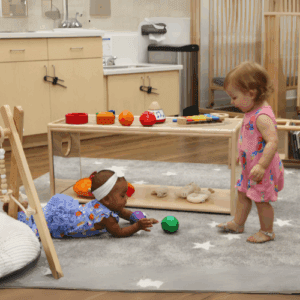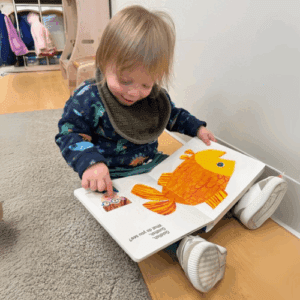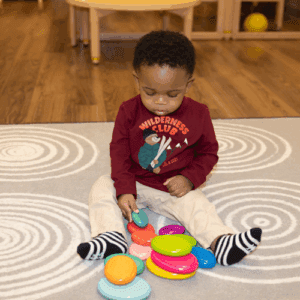

We all know the saying, “It takes a village to raise a child,” but many of us are raising our children far from family, having to build our village from scratch. This becomes even more important when you’re committed to a hands-on, responsive parenting style that requires so much of your energy. Finding the right support system isn’t just a luxury; it’s essential for your family’s well-being. In our attachment parenting blog, we’ll discuss how creating your community—including trusted partners in care—is a key part of the journey, allowing you to be the present, connected parent you want to be.
Our blog series on attachment parenting has focused on the baby, just as attachment parenting does, but parents are human beings too, with our own needs and desires. Surely there is room for balance in this technique. Strong Start Early Care and Education in Trumbull is more than a daycare. We like you to consider us an extension of the family who you can trust.
What is Attachment Parenting?
Attachment parenting is a philosophy centered on creating a strong, secure, and empathetic bond between you and your child. It’s not about following a rigid set of rules, but rather about being sensitive and responsive to your child’s needs. This approach encourages you to trust your instincts and build a relationship based on mutual respect and understanding from the very beginning. By focusing on connection, you help your child develop a secure base from which they can confidently explore the world. It’s a style that prioritizes the emotional well-being of the child, believing that a foundation of trust and security leads to greater independence and resilience later in life.
The Core Goal: A Secure and Loving Bond
At its heart, attachment parenting is about connection. The primary objective is to nurture a deep and trusting relationship that makes your child feel safe and valued. According to Dr. Sarah Buckley, a noted expert in the field, “The main goal is to help babies feel secure and loved by meeting their needs.” This isn’t about spoiling a child, but rather about teaching them that their needs are valid and that they can depend on their caregivers for comfort and support. This consistent, loving care helps shape their understanding of relationships and builds a strong emotional foundation that will serve them throughout their lives, fostering confidence and emotional intelligence.
Understanding the Origins and Key Practices
The principles of attachment parenting are rooted in both evolutionary biology and developmental psychology. The idea is that by following our natural caregiving instincts, we can create an environment where children thrive. This approach recognizes that babies have an innate need for physical closeness and emotional responsiveness. It’s less of a strict methodology and more of a mindset that guides your interactions, encouraging you to see the world from your child’s perspective and respond with empathy and warmth. This framework helps parents tune into their child’s cues, building a powerful, non-verbal line of communication from the earliest days.
The “Carrying Mammal” Concept
A core idea behind this philosophy is that, as Dr. Sarah Buckley explains, “Humans are ‘carrying mammals,’ meaning babies are naturally designed to be close to their mothers.” Unlike other mammals that leave their young in a nest, human babies are biologically wired to be held and carried. This constant physical contact helps regulate their temperature, heart rate, and breathing. It also provides a sense of security that is crucial for their developing nervous system. Understanding this biological imperative can help you see why your baby is often happiest and most content when held close to you.
Common Practices in Attachment Parenting
While there’s no official checklist, certain practices are commonly associated with this parenting style. As Dr. Buckley notes, “This parenting style often includes carrying babies a lot (often in slings), frequent and long-term breastfeeding, and mothers sleeping close to their babies (co-sleeping).” These practices are all tools to foster closeness and responsiveness. Babywearing keeps your child near while allowing you to be hands-free, co-sleeping can make nighttime feeding easier, and responsive feeding honors your baby’s hunger cues. The key is to find what works for your family to meet your child’s deep-seated need for connection.
The Science Supporting a Strong Parent-Child Connection
The principles of attachment parenting aren’t just based on intuition; they are increasingly supported by scientific research in child development and neuroscience. Studies show that a secure attachment bond in early childhood has a profound and lasting impact on a person’s emotional health, social skills, and ability to handle stress. When children feel consistently safe and cared for, their brains develop in ways that support emotional regulation and empathy. This strong foundation helps them build healthy relationships and face life’s challenges with greater resilience. The science confirms what many parents feel instinctively: a loving, responsive connection is one of the greatest gifts you can give your child.
Expert Perspectives on Secure Relationships
Leading child development organizations now recognize the critical importance of the parent-child bond. They emphasize that nurturing relationships are not just a “nice-to-have” but are essential for healthy development. Experts point to the power of these early connections in shaping a child’s brain architecture and their capacity for learning and forming relationships in the future. This growing consensus underscores the value of parenting practices that prioritize emotional availability and responsiveness, validating the core tenets of the attachment philosophy with evidence-based support from the medical and psychological communities.
The American Academy of Pediatrics on Nurturing Care
The medical community has formally acknowledged the importance of these early bonds. According to Attachment Parenting International, “The American Academy of Pediatrics (AAP) now officially recognizes that safe, stable, and caring relationships protect children from stress and help them become strong adults.” This endorsement highlights a major shift in understanding, moving beyond just physical health to include the critical role of emotional well-being. It confirms that the loving, responsive care at the heart of attachment parenting is a key ingredient in raising healthy, well-adjusted children who are prepared to thrive.
Preventing “Toxic Stress” Through Strong Bonds
A secure parent-child relationship acts as a powerful buffer against the negative effects of stress. When children experience challenges, the presence of a trusted caregiver helps them co-regulate their emotions and feel safe. Attachment Parenting International points out that “Toxic stress is a serious public health threat that can be prevented by strong relationships.” By consistently responding to your child’s needs, you are not just comforting them in the moment; you are actively building a resilient brain and nervous system, protecting them from the long-term damage that prolonged stress can cause.
Research on Responding to Your Child’s Needs
Decades of research have explored the long-term outcomes of responsive parenting, and the findings are compelling. Studies consistently show that children whose caregivers are attuned to their cues grow up to be more secure, empathetic, and independent. This body of research challenges outdated beliefs that responding to a baby’s cries will “spoil” them. Instead, it reveals that meeting a child’s need for comfort and connection actually fosters self-reliance and emotional maturity. The evidence suggests that the emotional security built in infancy pays dividends throughout a person’s life, influencing everything from academic success to the quality of their adult relationships.
The Long-Term Benefits of Responsiveness
You might worry that picking up your crying baby every time will create a dependent child, but research suggests the opposite is true. As Dr. Sarah Buckley notes, “Research shows that babies whose cries are quickly answered become more content and cry less as they get older.” This responsiveness teaches your baby that they are effective communicators and that the world is a safe, predictable place. This foundational trust allows them to feel secure enough to eventually self-soothe and explore their environment with confidence, knowing you are their safe base to return to.
How Early Bonds Foster Empathy in Teens
The benefits of a secure attachment extend far beyond infancy. The emotional lessons learned in early childhood shape how we interact with others for years to come. Attachment Parenting International highlights that “Secure family relationships are a powerful predictor of a teen’s ability to show empathy and build strong friendships.” When children experience empathy from their parents, they learn how to offer it to others. This early modeling of compassion and understanding provides a blueprint for healthy, reciprocal relationships throughout adolescence and into adulthood.
Putting Attachment Principles into Practice
Adopting attachment principles is less about following a strict manual and more about cultivating a mindset of connection and empathy in your daily life. It means making a conscious effort to see things from your child’s perspective and responding to their emotional and physical needs with warmth and respect. This can look different for every family, and the key is to find a rhythm that feels authentic to you. It involves being present, listening to both verbal and non-verbal cues, and prioritizing the relationship above all else. It’s a journey of learning and growing alongside your child, building a bond of trust one interaction at a time.
Creating an Emotionally Safe Home
One of the most important things you can do for your child is to create a home environment where they feel emotionally safe to be themselves. This means accepting their feelings—even the big, messy ones—without judgment and offering comfort and guidance. According to Attachment Parenting International, “Creating a feeling of emotional safety at home is very important for children to learn family values.” When children feel secure, they are more open to learning and internalizing the values you want to teach them, such as kindness, respect, and compassion. This emotional safety net gives them the confidence to take risks, make mistakes, and grow.
Focus on Progress, Not Perfection
It’s easy to get caught up in trying to be the “perfect” parent, but it’s an impossible standard. The goal of attachment parenting is connection, not perfection. Attachment Parenting International wisely advises parents to focus on “Making progress, not aiming for perfection.” There will be days when you feel tired and overwhelmed, and you won’t always respond perfectly. That’s okay. What matters most is the overall pattern of your relationship and your willingness to repair any disconnects. Apologizing to your child when you make a mistake is a powerful way to model humility and strengthen your bond.
Managing Your Own Emotions
Children learn how to manage their emotions by watching how you manage yours. This is why it’s so important for parents to develop their own emotional awareness and regulation skills. As Attachment Parenting International suggests, “Parents should learn to manage their own strong emotions to model this for their children.” Taking a deep breath before you respond, naming your own feelings, and finding healthy outlets for stress are all crucial practices. When you model emotional maturity, you give your child a valuable toolkit for handling their own feelings in a healthy way.
Finding Your Support System
Parenting is not meant to be a solo journey. The demands of responsive caregiving can be intense, and having a strong support system is essential for your well-being. This might include your partner, family, friends, or a community of like-minded parents. As we often say at Strong Start, “it takes a village to raise a child.” Sometimes you need to create your own support system or ‘village.'” A high-quality early care and education center can be a vital part of that village, offering a nurturing environment for your child while providing you with a community of caring educators and other families. Actively partnering with parents is a cornerstone of our philosophy, ensuring you feel supported every step of the way.
The Needs of Parents
- We parents need time to recharge from caring for young children, which as well all know can be mentally and physically exhausting.
- We need time reinforce the bond between us so that we don’t grow apart.
- We need time to work and to recharge from our work.
- If you work at home, you need time to concentrate on your work to be fulfilled and to make money.
- And last, but not least, we need time and freedom to sleep- deep uninterrupted sleep. I must be joking, right?
Help for Parents
- Remember the saying, it takes a village to raise a child? We’ll cover this more in our next blog but for now, let it suffice that sometimes you need to create your village.
- Strong Start Early Care and Education can be an integral part of your village.
- We are here to support your needs as well as your child’s needs.
- We care for infants from the age of six weeks on and can help!
- You will know that when you entrust your baby to us, that he or she will be getting the best in childcare.
- We care for the emotional, physical and intellectual needs of all the children in our care.
Call Strong Start Early Care and Education Center today.
Extending Nurturing Care Beyond the Home
Entrusting your child to someone else’s care is a huge step, especially when you’re committed to a specific parenting philosophy. The good news is that you don’t have to do it all alone. Finding the right support system allows you to meet your own needs—for work, rest, and connection—while ensuring your child continues to receive warm, responsive care. The key is to find partners who share your values and will work with you to create a consistent, loving environment for your child, whether at home or away.
Choosing a Childcare Environment that Supports Your Values
When you’re looking for childcare, you’re not just looking for a service; you’re looking for a community. The ideal environment is one that feels like an extension of your home, where your child’s emotional, physical, and intellectual needs are met with genuine warmth. Look for a center that prioritizes open communication and sees you as a vital partner in your child’s development. At Strong Start, we believe that supporting the family is just as important as caring for the child. This is why we focus on actively partnering with parents to create a seamless circle of care, giving you peace of mind and confidence that your child is thriving.
Partnering with Educators for Consistent Care
A strong, trusting relationship with your child’s caregivers is the foundation of a positive childcare experience. When parents and educators work together, it creates a feeling of emotional safety that helps children feel secure and understood. This consistency between home and school is crucial for their development. Our team of exceptional educators is dedicated to understanding your family’s unique needs and parenting style. Through daily updates, regular check-ins, and a collaborative spirit, we ensure that the nurturing care you provide at home is mirrored in our classrooms, making the transition smooth for both you and your child.
The Role of Broader Community and Policy Support
The old saying “it takes a village to raise a child” has never been more true. Beyond your immediate family and childcare providers, a wider network of support can make a world of difference. This includes community programs, parent groups, and local resources that help families connect and feel less isolated. It also involves broader societal support through family-friendly policies. Organizations like Attachment Parenting International advocate for these systems, recognizing that strong families are the bedrock of healthy communities. When communities invest in families, everyone benefits, creating an environment where children and parents can flourish together.
The Importance of Family-Supportive Policies
Policies like paid family leave and affordable, high-quality childcare are not just political talking points; they are essential tools for reducing family stress. When parents have the time and resources they need, they are better equipped to form the strong, secure attachments that protect children from the effects of toxic stress. According to the Center on the Developing Child at Harvard University, these supportive relationships are a powerful buffer against adversity. Investing in policies that strengthen families is a direct investment in public health and the well-being of the next generation, creating a more stable and nurturing society for all.
Health and Nutrition as a Foundation
Nurturing care starts with the basics: a healthy body and a full belly. Good nutrition and a safe environment are fundamental to a child’s ability to learn, grow, and form secure emotional bonds. When a child’s physical needs are consistently met, they can focus their energy on exploration and connection. That’s why our commitment to health and safety is at the core of everything we do. From nutritious meals planned to support growing bodies and minds to rigorous safety protocols, we provide a healthy foundation that allows every child in our care to feel their best and engage fully with the world around them.
Frequently Asked Questions
Will responding to my baby every time they cry make them dependent? It’s a common worry, but the research actually points in the opposite direction. Responding consistently to your baby’s needs for comfort and connection doesn’t create dependency; it builds trust. When your child learns that you are a reliable source of comfort, they develop a secure foundation. This security is what gives them the confidence to explore the world, knowing they have a safe base to return to. In the long run, this fosters greater independence and emotional resilience.
Do I have to follow a strict checklist of practices like co-sleeping and babywearing? Not at all. It’s easy to get caught up in the “how-to” of it all, but attachment parenting is a philosophy, not a rigid set of rules. Practices like babywearing or co-sleeping are simply tools that can help you stay connected and responsive. The real goal is to nurture a strong bond by being sensitive to your child’s unique cues. The most important thing is to find a rhythm and a set of practices that feel right for you and your family.
Is attachment parenting the same as permissive parenting? This is a great question, and the answer is no. Being a responsive parent is very different from being a permissive one. Attachment parenting is about tuning into your child’s legitimate needs for connection, comfort, and security. It also involves setting gentle, respectful boundaries, which is a key part of creating an emotionally safe environment. Permissive parenting, on the other hand, often involves a lack of boundaries and guidance. The focus here is on connection and mutual respect, not a free-for-all.
How can I be a responsive parent without getting completely burned out? This is the most important part of the equation. You can’t pour from an empty cup, and the demands of responsive parenting are real. The key is to build your “village.” This means actively seeking and accepting help from your partner, friends, family, and other trusted sources of support. A high-quality childcare center that shares your values can be a vital part of this support system, giving you the time you need to work, rest, and recharge so you can be the present, connected parent you want to be.
Can I still practice attachment parenting if my child is in daycare? Absolutely. Using childcare doesn’t mean you have to compromise your parenting values. It’s all about finding partners in care who understand and support your approach. When you choose a center that prioritizes open communication and works with you, they become an extension of your family. This creates a consistent circle of nurturing care for your child, ensuring they feel secure and understood whether they are with you or with their trusted educators.
Key Takeaways
- Prioritize Responsiveness Over Rules: Attachment parenting is less about a specific method and more about creating a strong emotional bond by consistently and sensitively responding to your child’s unique needs.
- Secure Bonds Build Resilient Kids: The science is clear—a foundation of trust and safety in early childhood helps children develop empathy, manage stress, and grow into confident, independent individuals.
- Your Support System is Non-Negotiable: Responsive parenting requires a lot of energy, which makes building your “village” essential. Finding trusted partners, including high-quality childcare, allows you to recharge while ensuring your child receives consistent, nurturing care.
Related Articles
- Balancing Attachment Parenting with Your Own Needs – Strong Start
- A Parent’s Guide to Separation Anxiety & Attachment Style – Strong Start
- When to Start Looking for a Daycare – Strong Start
Written By
Marc Hoffman
Founder, Strong Start Early Care & Education
Marc founded Strong Start in 2014, inspired by his studies at Williams College, Yeshiva University, and research at Yale University. His child-centered, inquiry-based approach to early education has helped hundreds of families in the Trumbull and Bridgeport communities. As a parent himself, Marc understands the importance of finding a nurturing environment where every child can learn, grow, and flourish.