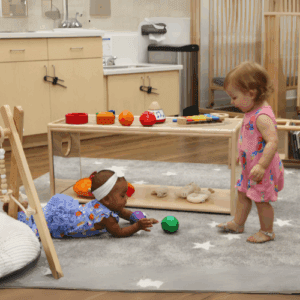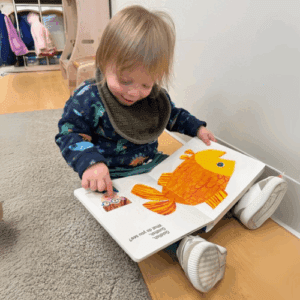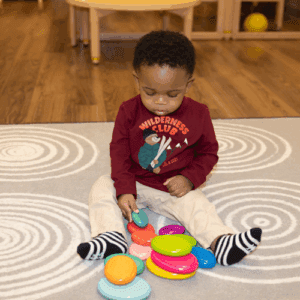

As a new parent, it’s easy to feel overwhelmed by the pressure to do everything “right.” The market is full of products promising to make your baby smarter. But what if the most powerful tool for your baby’s development is already in your hands? True learning for infants isn’t about a specific toy or app; it’s about connection. It happens in the quiet moments you sing a lullaby or simply respond to their coos with a smile. These back-and-forth interactions are what truly drive baby developmental milestones, building the very architecture of your baby’s brain for a lifetime of learning.
Key Takeaways
- Focus on Responsive Connection: The most powerful way you support your baby’s development is by tuning into their signals—a cry, a smile, a reach—and responding warmly. This back-and-forth interaction builds the essential foundation of trust and security their brain needs to learn.
- Turn Daily Routines into Learning Moments: You don’t need a separate “learning time.” The best opportunities happen during everyday activities like feedings, bath time, and diaper changes when you talk, sing, and share observations with your baby.
- Create a Safe Environment for Discovery: Nurture your infant’s natural curiosity by providing a baby-proofed space and simple, safe objects for them to explore with their senses. This freedom to touch, see, and move builds their confidence and problem-solving skills.
What Is Infant Learning? (And Why It Matters So Much)
When we talk about “infant learning,” it’s easy to picture flashcards or structured lessons. But for babies, learning is something much more natural and integrated into every moment of their day. It’s about how they make sense of the world through their senses, their movements, and most importantly, their relationships with the people who care for them. Every coo, every messy meal, and every game of peek-a-boo is a building block for their developing brain.
Understanding what infant learning looks like helps you see the incredible work your baby is doing every single day. It’s not about pushing them to be the “smartest” baby, but about nurturing their innate curiosity and providing the warm, responsive support they need to thrive. These early experiences are powerful, shaping the way they’ll learn, connect with others, and see the world for years to come.
Your Baby’s Brain: Why the First Year Is So Critical
From the moment they’re born, your baby’s brain is growing at an astonishing rate, forming more than a million new neural connections every second. This incredible period of development is why the first few years are so important for building the foundation for all future learning. Babies are natural explorers, hardwired with a curiosity that drives them to touch, taste, and see everything around them. They aren’t waiting for us to teach them; they are actively learning all the time.
This is where responsive care becomes so vital. When you respond to your baby’s cues—their cries, babbles, and gestures—you’re doing more than just meeting a need. You’re engaging in a conversation that builds trust, security, and the very framework for communication and social-emotional health.
Building a Strong Foundation for a Lifetime of Learning
The learning that happens in infancy isn’t just about hitting developmental milestones; it’s about building a strong foundation for future success in school and in life. Through their daily interactions and explorations, babies are developing a whole range of essential skills. They’re learning how to manage their feelings, communicate their needs, and build trusting relationships with others. Even simple play, like stacking blocks or splashing in the water, introduces early concepts of cause-and-effect, problem-solving, and physics.
Investing in high-quality early care and education is one of the best ways to support this crucial development. When infants are cared for by Exceptional Educators who understand their unique needs, they are given the security and encouragement to explore freely, building confidence and a lifelong love of learning.
How Do Infants Actually Learn and Grow?
From the moment they’re born, babies are incredible learners, constantly absorbing information about the world around them. They aren’t just tiny beings waiting to be taught; they are active explorers, using their senses and relationships to make sense of everything. Understanding how your infant’s brain is wired for learning can help you see the magic in your everyday interactions and feel more confident in supporting their amazing journey of discovery. Every coo, cuddle, and curious glance is a sign of a brilliant mind at work, building the foundation for a lifetime of learning.
Key Baby Developmental Milestones to Watch For
It’s amazing to realize that your baby is an active learner right from birth. They are naturally driven to explore, and you can see this in action as their communication becomes more specific. In the first month, a general cry for “unpleasure” slowly transforms into more distinct signals for displeasure (like disliking a loud noise) or distress (like feeling hungry). By about four months, you’ll notice them sending clearer messages. They might become quiet and still when they expect you to pick them up, or they’ll use big smiles and happy gurgles to get your attention. Our infant classrooms are designed to nurture these milestones in a safe and engaging space.
1-3 Months: Early Reflexes and Social Smiles
In these first few months, your baby is a sensory explorer, using their eyes, ears, hands, and mouth as their primary tools for understanding the world. Much of what you see are reflexes—the tight grasp of your finger, the rooting for a nipple—but these are the very first ways they interact with their environment. The most heartwarming milestone of this stage is the social smile, which usually appears around two months. This isn’t just a reflex; it’s a genuine response to you. When you smile and your baby smiles back, you’re having one of your first real conversations, building a powerful connection that tells them they are safe, seen, and loved. These early interactions are the simple, beautiful beginnings of learning through play.
4-7 Months: Reaching, Rolling, and Babbling
Get ready for more movement! Around this time, your baby’s world expands as they gain more control over their body. They’ll start reaching for toys, rolling over, and maybe even sitting up with support. This is also when they begin to grasp the concept of cause and effect—realizing that when they shake a rattle, it makes a sound. You’ll hear more babbling as they experiment with sounds, laying the groundwork for language. They are also starting to understand that things still exist even when they can’t see them, which is why a game of peek-a-boo suddenly becomes so fascinating. At Strong Start, our daily activities are designed to support this budding curiosity in a safe and nurturing environment.
8-12 Months: Crawling, Pulling Up, and Playing Games
Your little one is on the move! This stage is often defined by major motor milestones like crawling, scooting, and pulling up to stand. With this newfound mobility comes a new level of exploration and independence. Communication also takes a leap forward. By their first birthday, many babies are skilled at using gestures, facial expressions, and sounds to tell you what they want. They might wave “bye-bye,” point to a toy they want, or even say their first words. This is a wonderful time to engage in interactive games like patty-cake, which helps them learn about rhythm, imitation, and social turn-taking. These playful moments are powerful opportunities for partnering with your child in their learning journey.
How Babies Use Their Senses to Explore the World
Infants are the ultimate sensory learners. They build knowledge by connecting what they see, hear, and touch with how they move their bodies. Vision is a powerful tool for them; babies love to watch faces and make eye contact. That shared gaze isn’t just heartwarming—it helps your baby feel connected and calm, which is fantastic for their brain development and helps them learn to self-soothe. At the same time, their hearing is becoming finely tuned. They quickly become more sensitive to the specific sounds and rhythms of the language you speak at home, laying the groundwork for future communication. These sensory experiences are a key part of your child’s day with us.
Understanding Key Cognitive Concepts
Beyond the physical milestones of rolling over and sitting up, your baby’s mind is working hard to understand how the world operates. They are like tiny scientists, constantly testing theories and figuring out the fundamental rules of their environment. You can see this incredible cognitive growth in action as they begin to grasp complex ideas long before they can say their first word. Two of the biggest concepts they master in the first year are cause and effect and object permanence. Understanding these cognitive leaps helps you see just how much learning is happening during simple, everyday play and why it’s so foundational for their future.
Cause and Effect
Have you ever noticed your baby repeatedly dropping a spoon from their high chair, just to watch you pick it up? That’s not just a game to test your patience—it’s a science experiment! Around nine months, babies begin to understand “cause and effect,” the idea that their actions can make something happen. Pushing a button makes a toy light up; shaking a rattle creates a sound. This discovery is a huge step in their cognitive development, as it forms the basis for problem-solving and intentionality. They learn they can influence their world, which is an incredibly empowering realization for a little one.
Object Permanence
The game of peek-a-boo is a classic for a reason. That look of pure delight when you reappear isn’t just because you’re fun—it’s because your baby is mastering a major cognitive skill: object permanence. This is the understanding that people and things still exist even when they can’t be seen. This concept typically clicks into place between 8 and 12 months and is a game-changer for their understanding of the world. It helps your baby build a more stable and predictable mental map of their surroundings. While it can sometimes lead to separation anxiety (they now know you’re somewhere else when you leave!), it’s a crucial step toward developing memory and abstract thought.
Why Your Bond Is Key to Their Development
More than anything, babies learn and grow through their relationships with caring adults. This is where responsive care comes in. When you pay attention to your baby’s cues—a fuss, a smile, a reach—and respond warmly, you’re doing more than just meeting a need. You’re building trust and showing them they are important, which is essential for their emotional security and brain development. These back-and-forth interactions are the building blocks for strong relationships and give your baby the confidence to explore the world. It’s a principle our exceptional educators practice every single day, creating a circle of trust where every child can thrive.
Building Self-Worth Through Play and Attention
It’s in those simple, joyful moments of play that your baby learns one of life’s most important lessons: they matter. When you get down on the floor and delight in a game of peek-a-boo or a silly song, you’re sending a powerful message. Your focused attention tells your baby that they are seen, heard, and cherished, which is the very foundation of self-worth. Every back-and-forth interaction, from a shared smile to a cooing “conversation,” teaches them the rhythm of communication and shows them that what they do gets a response. This is why our enrichment programs are built around joyful, interactive discovery, helping every child feel important and capable as they learn and grow.
Why You Can’t Spoil a Baby
Let’s clear up a common myth right away: you cannot spoil a baby by giving them too much attention. In fact, the opposite is true. When you respond to your infant’s cries, cuddles, and cues, you aren’t creating bad habits; you’re building a foundation of trust and security. You are teaching them that the world is a safe, reliable place and that their needs will be met by people who love them. This consistent, loving response is essential for their emotional well-being and brain development, giving them the confidence to explore their surroundings. This philosophy of responsive care is at the very heart of our infant classrooms, where every child’s needs are met with warmth and respect.
Creating a Safe and Healthy Environment for Learning
A baby’s brain is wired for exploration, but that curiosity can only flourish when they feel safe and secure. Think of it this way: when a baby isn’t worried about bumps, loud noises, or feeling unwell, their mind is free to focus on the important work of learning—like figuring out how a block feels in their hands or what your voice sounds like when you sing. Creating a safe environment is more than just baby-proofing; it’s about building a foundation of trust and well-being that allows your little one to confidently explore their world. At Strong Start, our commitment to health and safety is at the heart of everything we do, because we know that a secure child is a curious child, ready to learn and grow.
Essential Health and Safety Practices
While nurturing your baby’s mind is a top priority, their physical safety is the bedrock of it all. Establishing consistent health and safety routines not only protects your child but also gives you the peace of mind to relax and enjoy these precious early months. These practices aren’t about being fearful; they’re about being prepared so you can focus on connection and play. From safe sleep habits to mindful meal times, these simple but critical steps create a secure space where your baby can thrive. These are the same non-negotiable standards our Exceptional Educators follow every day to ensure every child is cared for.
Safe Sleep to Prevent SIDS
One of the most important safety rules for infants is practicing safe sleep. The American Academy of Pediatrics recommends always placing your baby on their back for naps and at night to reduce the risk of Sudden Infant Death Syndrome (SIDS). It’s also crucial to keep their sleep space completely clear of soft objects like blankets, pillows, bumper pads, and toys, which can pose a suffocation risk. A firm mattress with a fitted sheet is all they need for safe rest. Following these simple safe sleep practices is a powerful way to protect your baby while they rest and recharge for another day of learning.
Car Seat and Travel Safety
Whether you’re running a quick errand or heading out on a family adventure, proper car seat safety is non-negotiable. Your baby should always ride in a rear-facing car seat installed in the back seat of your vehicle, as this position offers the best protection for their delicate head, neck, and spine. Make sure the harness is snug against their chest and the chest clip is positioned at armpit level. It’s also important to remember that car seats are for travel, not for sleeping outside of the car. Following these guidelines on every single trip ensures your little one is as safe as possible while on the move.
Nutrition and Preventing Choking
As your baby starts exploring solid foods, mealtimes become a new adventure in learning about tastes and textures. It’s also a time to be extra vigilant about choking hazards. Always cut your baby’s food into small, manageable pieces—think pea-sized bites for finger foods. Be sure to supervise them during meals and encourage them to sit down while eating. This vigilance extends beyond food; keep small toys, coins, and other tiny objects out of reach, as curious babies love to put everything in their mouths. Creating a safe eating environment helps make mealtime a positive and stress-free experience for everyone.
Protecting Your Baby from Household Dangers
Once your baby becomes mobile, your home transforms into a giant playground for them to explore. Baby-proofing is essential for creating a safe space for their curiosity to thrive. Cover electrical outlets, lock cabinets with cleaning supplies, and secure heavy furniture to the wall. But safety isn’t just about barriers; it’s also about redirection. If your baby is heading toward something unsafe, the CDC suggests distracting them with a favorite toy or a fun sound. This gentle guidance helps them learn boundaries without constant “no’s,” fostering a positive environment for discovery in your home and in our infant classrooms.
Understanding Your Baby’s Needs
Beyond physical safety, creating a healthy environment means tuning into your baby’s fundamental needs for rest, connection, and appropriate stimulation. A well-rested baby is a happier and more engaged learner, and a baby who has plenty of face-to-face interaction is building crucial social and emotional skills. Understanding their developmental needs helps you create predictable routines that make your baby feel secure. This rhythm of care, rest, and play is what allows their brains to process all the new information they’re taking in each day, setting them up for healthy growth and a strong start in life.
Recommended Sleep Schedules
Sleep is not just downtime for your baby; it’s when their brain gets to work consolidating memories and processing the day’s learning. It’s absolutely essential for healthy development. According to the CDC, babies between 4 and 12 months old typically need 12 to 16 hours of sleep in a 24-hour period, which includes their naps. Establishing a consistent and calming bedtime routine—like a warm bath, a quiet story, or a soft lullaby—can help signal to your baby that it’s time to wind down. A predictable schedule helps regulate their internal clock, leading to better sleep for them and, hopefully, for you too.
Guidelines for Screen Time
In a world full of screens, it’s natural to wonder about the right approach for your baby. The American Academy of Pediatrics and the CDC recommend avoiding screen time for children younger than 18 months, with the sole exception of video chatting with family. This is because babies learn best through hands-on exploration and real-life, back-and-forth interactions with the people who love them. Engaging with you—seeing your facial expressions, hearing your voice, and feeling your touch—is far more valuable for their developing brain than any passive screen. Prioritizing unplugged playtime gives them the rich, sensory experiences they need to thrive.
How You Can Support Your Baby’s Learning Journey
You are your baby’s first and most important teacher. It might sound like a big responsibility, but the good news is that you don’t need special training or fancy toys. The most powerful learning happens through the simple, loving interactions you share every day. By tuning into your baby and responding to their needs, you’re building the foundation for a lifetime of learning. Your role is to be a loving, responsive guide as they begin to make sense of the world around them.
What Is Responsive Care and Why Does It Work?
Responsive care is all about paying attention and reacting to your baby’s signals. When you comfort them when they cry, smile back when they coo, or make eye contact during a feeding, you’re doing more than just meeting their immediate needs. You’re sending a powerful message: “You are safe, you are important, and I am here for you.” This sense of security is essential for healthy brain development. Research shows that when adults pay attention and respond to babies’ signals, it greatly helps their development and learning. This back-and-forth interaction builds trust and gives your baby the confidence to explore and learn. It’s a core part of our philosophy in our Infant Classrooms.
Simple Ways to Create a Language-Rich Environment
Long before your baby says their first word, they are absorbing language from the world around them. You can create a language-rich environment simply by talking, singing, and reading to your child. Narrate your day as you make lunch, describe the colors of the leaves on a walk, or sing silly songs during bath time. While it may feel like a one-sided conversation at first, your baby is listening and making connections. A language-rich environment is essential for fostering early literacy and communication. This approach, inspired by philosophies like Reggio Emilia, helps children see language as a tool for connection and expression from the very beginning.
How to Read and Respond to Your Baby’s Cues
Your baby communicates with you from the moment they’re born, just not with words. Crying, smiling, cooing, and even turning their head away are all forms of communication. Learning to read these cues is one of the most important things you can do to support their development. Adults need to learn to understand a baby’s early behaviors like sucking, clinging, body positions, smiling, crying, and gazes. A frantic cry might mean “I’m hungry,” while a fussy whimper could mean “I’m tired.” Averted eyes might signal they’re feeling overstimulated. By watching and listening closely, you’ll start to understand your baby’s unique language, which strengthens your bond and helps you meet their needs more effectively.
Trusting Your Instincts and Seeking Support
In a world full of parenting books and online advice, it’s easy to second-guess yourself, but your intuition is one of your most powerful tools. You are the expert on your child. When you respond to your baby’s cues—their cries, babbles, and gestures—you’re engaging in a conversation that builds trust and security. This responsive connection is the foundation of their social and emotional health. Trusting that instinct to comfort your baby isn’t spoiling them; it’s teaching them that their needs matter. At the same time, knowing when to ask for help is a sign of strength. Building a support system is essential, which is why we believe in actively partnering with parents. When families feel supported, children thrive.
The Importance of Parental Self-Care
It’s the classic airplane safety rule: put on your own oxygen mask before helping others. This couldn’t be more true for parenting. Taking care of yourself isn’t a luxury; it’s a necessity. It is much easier to be a patient, loving, and responsive parent when you feel good physically, mentally, and emotionally. Your well-being directly impacts the environment you create for your child, making self-care one of the most important things you can do for their development. It doesn’t have to be a spa day—it can be a quiet cup of coffee, a 10-minute walk, or a call with a friend. Prioritizing these small moments without guilt is a core parenting strategy that allows you to show up as the calm, present parent your baby needs.
Simple Activities to Encourage Learning for Infants
You don’t need a room full of fancy toys or a rigid schedule to support your baby’s development. The most powerful learning happens during simple, everyday interactions with you. Infants are born curious, ready to explore the world with their senses and through their connection with the people who love them. By being present and intentional during your daily routines, you can provide a rich environment that nurtures their growing brain. The key is to see the world through their eyes. A trip to the mailbox can be a sensory adventure, and a diaper change can be a moment for bonding and language-building. These small, consistent moments add up, creating a strong foundation for a lifetime of learning.
How Can Daily Routines Become Learning Moments?
Everyday moments are some of the best opportunities to connect with your baby and support their growth. Think of your interactions as a conversation. When your baby babbles, you can babble back, making eye contact and smiling. This “serve and return” exchange is fundamental for brain development. During a feeding, you can talk about the taste and texture of the food. At bath time, you can sing songs and splash, describing how the water feels. This practice of responsive care is all about noticing your baby’s signals and responding warmly. When you do this, you’re not just changing a diaper or giving a bath; you’re communicating to your baby that they are seen, heard, and important. These interactions build trust and security, which are essential for confident learning.
Fun and Easy Ideas for Sensory Play
Babies are natural scientists, and their main tools for discovery are their five senses. You can encourage this exploration by offering simple, safe, and interesting things for them to experience. Let them feel the texture of a soft blanket versus a bumpy ball. Give them a wooden spoon to safely mouth and bang on the floor. During tummy time, place a baby-safe mirror in front of them so they can see their own reflection. Sensory play doesn’t have to be complicated. It can be as simple as listening to the birds outside, smelling a flower on a walk, or feeling different textures in a board book. Our infant classrooms are designed to provide these kinds of experiences, with a variety of materials that encourage safe exploration and discovery.
The Importance of Reading, Music, and Movement
Reading, singing, and moving are three of the most powerful ways to support your infant’s development. When you read to your baby, they benefit from hearing the rhythm of your voice and new vocabulary, which lays the groundwork for language skills. Pointing to pictures helps them make connections between words and objects. Singing songs, even simple ones like “Twinkle, Twinkle, Little Star,” helps your baby learn about language patterns and rhythm. And movement is crucial for physical development. Tummy time helps build the neck, back, and shoulder muscles needed for rolling and crawling. Dancing with your baby in your arms or playing gentle stretching games helps them develop body awareness. These activities are a core part of our enrichment program, which integrates movement and the arts into the day.
Classic Games and Their Developmental Benefits
You don’t need complicated toys to support your baby’s development; some of the most powerful learning tools are the timeless games you probably already know. These simple, interactive activities are packed with benefits, helping your infant understand complex concepts, develop physical coordination, and strengthen their bond with you. Games that have been passed down for generations work because they tap into the core ways babies learn about the world—through repetition, social connection, and play. They are the perfect example of how meaningful learning can happen anywhere, with nothing more than your presence and attention.
Peek-a-Boo and Object Permanence
Peek-a-boo is more than just a way to get a giggle; it’s a fun and simple game that teaches a major cognitive lesson. This classic activity helps your baby grasp the concept of object permanence—the understanding that people and things still exist even when they can’t be seen. According to ZERO TO THREE, this is a crucial step in cognitive development that often appears around nine months. When you hide your face and then reappear with a smile, you’re showing your baby that you are still there, even when out of sight. This repeated game builds their memory and provides a sense of security, reassuring them that you will always come back.
Patty-Cake and Coordination
Interactive games like patty-cake are fantastic for helping your baby develop physical skills while having fun with you. The simple act of clapping hands together, first with your help and then on their own, builds fine motor skills and hand-eye coordination. As UNICEF notes, these kinds of learning activities also encourage social interaction. The rhythm of the song, the gentle touch, and the face-to-face engagement all work together to strengthen your connection. It’s a wonderful way to help your baby learn about their body and how it moves, all while sharing a joyful moment.
Choosing the Right Toys for Development
In a world filled with flashy, electronic toys, it’s helpful to remember that simple is often better. The best toys for infants are not necessarily the ones that sing the loudest or have the most buttons. Instead, they are the ones that invite your baby to explore, create, and use their imagination. Choosing the right toys is about quality over quantity. By focusing on items that are safe, versatile, and meaningful, you can create a play environment that supports your baby’s natural curiosity and encourages them to become an active, confident learner. This philosophy guides how we select materials for our own infant classrooms.
Open-Ended Toys That Grow with Your Baby
Open-ended toys are items that can be used in many different ways, and they are fantastic for supporting your baby’s development. Think of simple things like wooden blocks, soft scarves, or stacking rings. Unlike a toy with a single function, these items don’t tell your baby how to play. Instead, they encourage creativity, problem-solving, and imagination. As Teaching Strategies points out, playing with toys that are open-ended allows babies to engage with them in new ways as they grow. A set of blocks might be used for mouthing and banging at six months, for stacking at one year, and for building elaborate structures later on.
Including Items That Reflect Your Family and Culture
Play is also a powerful way for your child to develop their sense of identity and belonging. You can support this by including items that reflect your family’s unique culture, values, and experiences. This might mean having board books that show families who look like yours, playing music that is part of your heritage, or simply having framed photos of loved ones accessible for your baby to look at. Integrating these personal touches into their play space helps your child see themselves and their family reflected in the world around them. This simple act can enhance their sense of self and create a deep feeling of connection from the very beginning.
How to Find a Quality Early Learning Program
Choosing an early learning program for your infant is a huge decision. You’re not just looking for a safe place for them to be while you’re away; you’re looking for a community that will nurture their growth during these foundational early months. The right program understands that learning for babies isn’t about flashcards or formal lessons. It’s about curiosity, connection, and discovery. When you tour a center or talk to its director, you’re trying to get a feel for their core philosophy. Do they see infants as capable, curious individuals? Is their environment designed to support natural development? Here are the key elements that signal a high-quality program that truly understands how infants learn and thrive.
Why Child-Led Discovery Matters
A quality program respects that your baby is the leader of their own learning journey. This approach, often called child-led learning, means that educators are keen observers who follow your infant’s cues and interests. Instead of pushing a rigid schedule, they create opportunities based on what fascinates your child at that moment. If your baby is captivated by the way light reflects off a toy, a responsive teacher will introduce other objects that shimmer and shine. This method honors your child’s natural curiosity and helps them build confidence as they explore their world at their own pace. It’s about creating a responsive dialogue between the child and their environment, not just a one-way delivery of information.
A Safe Space Built for Curious Minds
From the moment they are born, infants are active learners, using their senses to make sense of everything around them. A great early learning environment is intentionally designed to support this drive for exploration. Look for spaces that are safe, clean, and clutter-free, with plenty of room for babies to move, roll, and crawl. The materials should be accessible and engaging—think different textures, soft toys, and objects that are safe for mouthing. The atmosphere should feel calm and homelike, not overstimulating. The design of the infant classrooms should invite curiosity, allowing your baby to safely investigate their surroundings and make new discoveries every day.
Caring Educators Who Understand Infant Development
The people caring for your baby are the heart of any program. It’s essential that they are not only warm and loving but also deeply knowledgeable about infant development. Responsive care is vital; when educators pay close attention and respond to a baby’s signals—a cry, a coo, a pointed finger—it builds trust and supports healthy brain development. These educators understand that every interaction is a learning opportunity. They talk, sing, and read to the babies throughout the day, creating a language-rich environment. When you meet the staff, you should feel their genuine passion for working with infants and see their commitment to being exceptional early childhood professionals.
A Program That Feels Like a Partnership
You are your child’s first and most important teacher, and a great early learning program will honor that. Look for a center that views you as a partner and prioritizes open, consistent communication. Do they provide daily updates on your child’s naps, feedings, and activities? Are there regular opportunities to connect with teachers about your child’s development and milestones? You should feel comfortable asking questions and sharing insights about your baby’s personality and needs. This collaborative relationship ensures consistency between home and school, creating a secure and supportive network for your child. A true partnership with parents is a sign that a program values your family’s unique role in your child’s growth.
How to Support Early Learning at Home
Creating a space that encourages your baby’s development doesn’t require a classroom or a curriculum. Your home is your child’s first learning environment, and you are their most important teacher. The wonderful thing is that supporting your infant’s growth is less about structured lessons and more about connection, observation, and weaving learning into the simple moments you already share. By being present and responsive, you can build a strong foundation for a lifetime of curiosity and discovery.
How to Set Up a Playful Learning Space at Home
At Strong Start, our infant classrooms are intentionally designed to invite exploration and discovery with safe, age-appropriate materials. You can bring this same philosophy into your home. Think about creating a “yes” space—a baby-proofed area where your little one can move and touch freely without you having to say “no.” This builds their confidence and independence. You don’t need fancy toys; some of the best learning tools are everyday objects. A basket with a wooden spoon, a soft cloth, and a plastic measuring cup can provide endless opportunities for sensory exploration. The goal is to create a safe, interesting environment where your baby is free to explore their world.
Simple Ways to Encourage Your Baby’s Curiosity
Babies are active learners from the moment they arrive. They aren’t empty vessels waiting for us to fill them with information; they are naturally driven to learn about their bodies, the people around them, and the world they live in. Your role is to be a curious observer and a supportive guide. When you see your baby staring intently at a sunbeam on the floor, get down on their level and talk about it. “Look at the bright light! It’s so warm.” By following their lead and sharing in their discoveries, you validate their interests and show them that their ideas matter. This approach is central to how we guide learning and discovery in our classrooms.
Supporting Your Baby’s Unique Personality
From day one, your baby has their own unique temperament. Some infants are calm and observant, happy to watch the world go by, while others are full of energy, constantly kicking their legs and eager to move. Your role isn’t to change their natural disposition but to get to know and support the wonderful person they already are. The most powerful way to do this is by tuning into their specific signals and responding warmly. When you honor their individual pace and preferences, you’re sending a clear message: “I see you, and I love you just the way you are.” This builds a deep sense of trust and security, giving them the confidence to let their personality shine.
Supporting their personality means adapting your interactions to fit their needs. If you have an active, wiggly baby, create plenty of safe, open floor space for them to move and explore. For a more sensitive or observant infant, you might introduce new toys or people more slowly and spend quiet time cuddling and reading. By paying close attention, you learn their unique language of cues, which helps you meet their needs and build a strong bond. Our infant classrooms are designed with this principle in mind, providing a nurturing environment where every child’s individual temperament is respected and supported by caring educators.
Making Learning a Natural Part of Your Day
Some of the most powerful learning moments happen during your everyday routines. A diaper change can be a time for a silly song or a gentle chat about their wiggling toes. During bath time, you can talk about how the water feels warm or how the washcloth floats and then sinks. These small, consistent interactions are incredibly meaningful. This kind of responsive caregiving builds a foundation of emotional security and trust, which is essential for all future learning. When your baby feels safe and connected, they are free to explore, take risks, and learn. It’s how we structure your child’s day with us, too—by finding learning in every moment.
Common Myths About Infant Learning (and the Truth)
It’s easy to get caught up in misconceptions about how babies learn. Let’s clear a few things up. One common myth is that play isn’t “real” learning. In reality, play is the most important work an infant does. It’s how they test ideas, practice new skills, and make sense of the world. Another myth is that you need expensive “educational” toys. Simple, open-ended objects often do more to spark creativity than a flashy electronic toy. Our Reggio Emilia-inspired philosophy is built on the belief that children are capable and competent learners from the very beginning. Trust your baby’s natural ability to learn and your own ability to guide them.
Related Articles
- A Parent’s Guide to an Early Childhood Education Center – Strong Start
- How to Choose the Best Infant Daycare for You – Strong Start
Frequently Asked Questions
Do I need to buy special “educational” toys for my baby? Not at all. While the market is full of toys that promise to make your baby smarter, the truth is that infants learn best from simple, open-ended objects and, most importantly, from you. Everyday items like a wooden spoon, a soft washcloth, or a set of plastic measuring cups can provide rich sensory experiences. The goal is to encourage their natural curiosity, and you’ll find that the most engaging “toys” are often the ones that allow them to safely explore different textures, sounds, and shapes on their own terms.
What does “responsive care” actually look like in a typical day? Responsive care is simply about being tuned in to your baby and reacting to their signals in a warm, consistent way. It’s the back-and-forth conversation you have without words. When your baby coos and you coo back with a smile, that’s responsive care. When they cry and you pick them up to comfort them, or when they point at the dog and you say, “Yes, that’s our puppy!” you’re showing them that their communication matters. It’s these small, connected moments that build trust and make your baby feel secure enough to explore the world.
Is my baby really learning when they’re just playing? Absolutely. For an infant, play is the most important work they do. It’s their way of running experiments to figure out how the world works. When they repeatedly drop a toy from their high chair, they’re learning about gravity. When they splash in the bathtub, they’re discovering cause and effect. Play is how they practice new physical skills, explore with their senses, and make crucial connections in their developing brain. It might just look like fun, but it’s serious learning in action.
I feel like I’m just talking at my baby. Is it really making a difference? It’s making a huge difference. Long before your baby can understand words or talk back, they are absorbing the rhythm, tone, and patterns of your voice. Narrating your day, singing songs, and reading books creates a language-rich environment that builds the entire foundation for their future communication skills. Every word you say helps form neural connections in their brain. So even when it feels like a one-sided conversation, you are giving them an incredible gift.
Besides my home, what should I look for in a childcare environment to support my baby’s learning? When you’re looking at an early learning program, focus on the people and the atmosphere. The educators should be warm, attentive, and genuinely knowledgeable about how infants develop. The environment itself should be safe, clean, and designed for exploration, with interesting materials that are easy for little hands to access. Most importantly, look for a program that sees you as a partner and prioritizes clear, consistent communication, ensuring you’re always connected to your child’s day.
Written By
Marc Hoffman
Founder, Strong Start Early Care & Education
Marc founded Strong Start in 2014, inspired by his studies at Williams College, Yeshiva University, and research at Yale University. His child-centered, inquiry-based approach to early education has helped hundreds of families in the Trumbull and Bridgeport communities. As a parent himself, Marc understands the importance of finding a nurturing environment where every child can learn, grow, and flourish.