Have you ever watched your child become completely absorbed in stacking blocks or figuring out how a toy works? That intense curiosity is the heart of the Reggio Emilia approach. Instead of viewing children as empty vessels to be filled with facts, this philosophy sees them as capable researchers from day one. They arrive full of their own theories about the world. In a Reggio Emilia approach classroom, the focus is on their “hundred languages”—the countless ways they express themselves, from painting and sculpting to dancing and building. This approach trusts children to lead their own learning.
Key Takeaways
- Children lead their own learning journey: Instead of a rigid, pre-planned curriculum, learning emerges from your child’s natural curiosity. This approach honors their ideas and empowers them to become confident, engaged investigators of their own world.
- Teachers and parents are partners in discovery: Educators act as co-learners who observe and guide, while parents are seen as a child’s first and most important teacher. This strong collaboration between home and school creates a supportive community where your child feels secure and understood.
- The classroom is designed to inspire curiosity: The physical space is viewed as a “third teacher,” intentionally organized with natural light and open-ended materials that invite exploration and creativity. It’s a beautiful, calming environment that encourages children to think, collaborate, and express their ideas.
What is the Reggio Emilia Approach?
If you’ve ever watched your child become completely absorbed in stacking blocks or figuring out how a toy works, you’ve seen the core of the Reggio Emilia approach in action. It’s not a rigid curriculum with flashcards and drills. Instead, it’s a deeply respectful philosophy that views children as curious, capable individuals who are the drivers of their own learning journey. It’s about creating an environment where their natural wonder is the starting point for everything we do.
At Strong Start, our programs are guided by our Reggio Emilia inspiration, which shapes how we see children, how we teach, and how we partner with you.
How It All Began in Post-War Italy
The Reggio Emilia approach has a beautiful and inspiring origin. It began in the villages around Reggio Emilia, Italy, right after World War II. In the wake of devastation, a community of parents came together with a shared dream: to create a new kind of education for their children, one built on respect, democracy, and hope. Led by a teacher named Loris Malaguzzi, they believed that a child’s early years were crucial for shaping not just individuals, but a better, more peaceful world. This parent-driven movement created schools that honored children’s potential and their right to learn in a joyful, supportive environment.
Influences from Educational Pioneers
Loris Malaguzzi and the parents of Reggio Emilia didn’t develop their ideas in isolation. They were part of a rich conversation about how children learn best, drawing on the work of influential educational thinkers. The approach is built on ideas from thinkers like Lev Vygotsky, who emphasized that children learn through social interaction, and Jean Piaget, who saw children as active builders of their own knowledge. You can also see echoes of Maria Montessori’s belief in child-led exploration and thoughtfully prepared environments. The Reggio Emilia philosophy weaves these powerful concepts together, creating a unique approach that sees learning as a collaborative journey shared between children, teachers, and parents, where the environment itself plays a crucial role in sparking discovery.
Global Recognition and the Newsweek Article
What started as a local community effort in Italy soon captured the world’s attention. A major turning point came in 1991, when *Newsweek* magazine recognized the schools in Reggio Emilia as among the best early childhood systems in the world. This feature brought international acclaim and sparked a global interest in their innovative, child-centered practices. Today, the Reggio Emilia approach has gained global recognition, influencing educators in over 145 countries. This worldwide respect is a powerful testament to the philosophy’s success in nurturing curious, capable, and confident learners. It’s this proven, world-class approach that serves as the inspiration for our programs at Strong Start, ensuring your child benefits from a philosophy celebrated for its deep respect for children.
The Core Philosophy: Let Your Child Lead
At its heart, the Reggio Emilia approach believes that children are born full of potential and curiosity. They aren’t empty vessels waiting to be filled with information; they are active participants in their own education. We see children as researchers, constantly forming theories about the world and testing them through play and exploration. The curriculum isn’t set in stone. Instead, it emerges from your child’s own interests and questions. If a group of toddlers is fascinated by the shadows on the playground, that becomes the focus of a deep, meaningful investigation. This is the foundation of The Project Approach, allowing children to guide their learning in a way that truly matters to them.
What Are the Core Beliefs of Reggio Emilia?
At its heart, the Reggio Emilia approach is built on a foundation of deep respect for children, their capabilities, and their relationships with the world around them. It’s less of a rigid curriculum and more of a guiding philosophy that shapes every interaction and decision within the classroom. This philosophy rests on a few powerful beliefs that honor the child as an individual, recognize the importance of community, and celebrate the many ways children express themselves. Understanding these core ideas helps you see why a Reggio-inspired classroom feels so different—it’s a place where curiosity is the compass and every child is seen as a powerful learner from day one.
What Are the “Hundred Languages” of Children?
One of the most beautiful ideas in the Reggio Emilia philosophy is the concept of the “hundred languages.” This belief recognizes that children communicate and learn in countless ways beyond just speaking and writing. The approach emphasizes that children have “a hundred languages“—many ways to express themselves, such as drawing, sculpting, acting, and dancing. When your child builds a towering structure with blocks, they are expressing ideas about balance and design. When they paint, they are sharing emotions and observations. Our goal as educators is to listen to and support all these languages, giving children the tools and encouragement they need to share their unique perspectives with the world.
Every Child is Strong, Capable, and Curious
Instead of viewing children as empty vessels waiting to be filled with information, the Reggio Emilia approach sees them as competent, curious, and full of potential from birth. We believe children are active participants in their own learning journey, constantly forming theories and ideas about how the world works. As one expert puts it, they are seen as “researchers” who are driven by an innate desire to understand. This image of the child shapes everything we do. It means we trust their instincts, respect their ideas, and create an environment where they feel safe to explore, ask questions, and make their own discoveries.
The Rights of the Child
This powerful view of children as capable learners naturally leads to a deep respect for their rights. In a Reggio-inspired classroom, your child is seen as a citizen with the right to be an active participant in their own education. They have the right to express their ideas, ask questions, and have their voice truly heard and valued by their teachers and peers. This isn’t just about being polite; it’s a fundamental belief that children deserve to be collaborators in their learning journey. This approach is built on the core belief that children have a right to be heard and to learn in a respectful, nurturing environment where they feel empowered to contribute to the community.
The Power of Learning in a Community
In a Reggio-inspired school, education is a collaborative effort, and parents are essential partners. Your role is not just welcome; it’s considered fundamental to your child’s success and well-being. The philosophy is built on the idea that the exchange of ideas between parents and teachers is crucial for creating a rich learning environment. We see you as your child’s first and most important teacher, and we are committed to partnering with you every step of the way. This strong connection between home and school creates a supportive community where children feel a true sense of belonging and security.
A Pedagogy of Listening
In a Reggio-inspired classroom, “listening” is an active verb. It goes far beyond simply hearing a child’s words. It’s a deep form of observation and respect, where educators tune into all the ways children express their thoughts—through their play, their gestures, their art, and their questions. This “pedagogy of listening” means being genuinely open to their ideas and valuing their unique points of view. By truly listening, our exceptional educators create a safe and nurturing space where children feel seen and heard. This trust empowers them to share their theories, ask bold questions, and explore their world with confidence, knowing their voice truly matters.
Embracing Mistakes as Learning Opportunities
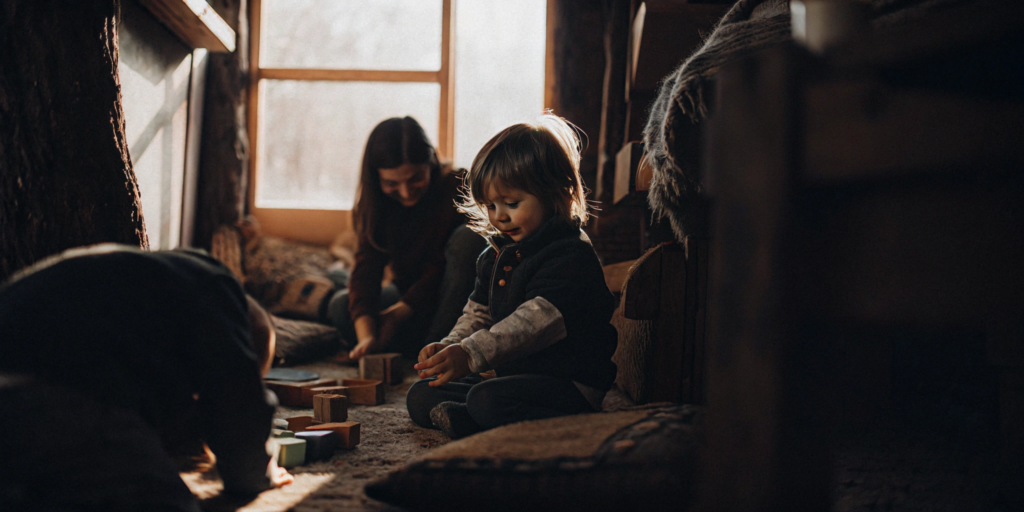
Think about the last time your child’s block tower came crashing down. Was it a failure, or was it a lesson in physics? The Reggio Emilia philosophy celebrates these moments as powerful learning opportunities. Mistakes are not seen as problems to be corrected, but as a natural and essential part of the discovery process. When children are allowed to experiment, test their theories, and see what doesn’t work, they develop critical thinking skills and resilience. Our teachers don’t rush in with the “right” answer. Instead, they might ask, “I wonder why that happened?” This approach encourages children to become persistent problem-solvers who aren’t afraid to try again, which is a cornerstone of The Project Approach.
What is the Teacher’s Role?
If you picture a traditional classroom, you probably imagine a teacher standing at the front of the room, leading a lesson for a group of seated children. In a Reggio Emilia-inspired classroom, that picture looks quite different. Here, the teacher isn’t a lecturer but a collaborator, a researcher, and a guide who learns right alongside your child. Their role is to create an environment rich with possibilities and then step back to observe, listen, and support your child’s unique learning path.
This approach requires a special kind of educator—one who is deeply curious, an excellent listener, and skilled at seeing the world through a child’s eyes. Our exceptional educators are trained to be partners in your child’s education, celebrating their ideas and helping them make meaningful connections. Instead of providing all the answers, they ask thoughtful questions that spark new ways of thinking. They see themselves as fellow investigators, joining children on a shared adventure of discovery. This dynamic builds a powerful relationship based on mutual respect, trust, and a shared joy in the learning process.
The Teacher as a Co-Learner
Think of our teachers as guides on an exciting expedition. Rather than handing your child a map with a pre-drawn route, they explore the trail together, marveling at the unexpected discoveries along the way. They are co-learners, actively engaged in the process with the children. If a child is fascinated by the shadow a block tower casts on the wall, the teacher gets down on the floor to explore it with them. They might ask, “I wonder what would happen if we moved the light?” This collaborative spirit shows children that their ideas are valued and that learning is a dynamic, shared experience, not a passive one.
Following Your Child’s Lead Through Observation
A key part of a teacher’s day is careful observation and listening. They pay close attention to the conversations children are having, the problems they are trying to solve, and the things that capture their imagination. These observations are the foundation of the curriculum. For example, if a teacher notices a group of children are repeatedly gathering leaves and sticks on the playground, they recognize this as a budding interest. They might then bring natural materials into the classroom for building and creating, introduce books about forests, and support the children in starting a long-term investigation. This is central to The Project Approach we use at Strong Start.
How Teachers Guide, Not Dictate
Because learning is driven by your child’s own curiosity, the teacher’s role is to provide the support and resources needed for that exploration to deepen. They don’t dictate what to learn but instead guide the process by asking open-ended questions and providing interesting materials. They might set up an art space with clay and wire after noticing a child is interested in sculpture, or they might help children research answers to their own questions. This approach empowers children to take ownership of their learning, building their confidence, critical-thinking skills, and a genuine passion for discovery that will last a lifetime. It’s a core part of our Reggio Emilia inspiration.
Provoking Thought and Discovery
Instead of giving children answers, teachers create “provocations”—thoughtfully arranged materials and activities designed to spark curiosity and encourage exploration. A provocation might be as simple as placing seashells and magnifying glasses on a table or setting up a light projector with colorful gels. These invitations to learn don’t come with instructions. They are designed to make children wonder, ask questions, and form their own theories. This approach honors the belief that children are natural researchers, capable of constructing their own understanding of the world when given the space and tools to test their ideas through hands-on discovery.
Building Lasting Relationships
The Reggio Emilia philosophy is built on a foundation of strong, respectful relationships. It recognizes that learning doesn’t happen in isolation but within a community of children, families, and educators. In this approach, parents are viewed as essential partners and a child’s first teacher. The ongoing dialogue between home and school is vital, creating a supportive network that wraps around your child. This collaborative spirit ensures that your child feels seen, understood, and secure. At Strong Start, we are deeply committed to partnering with parents, because we know that when we work together, we create the richest possible learning environment for your child to thrive in.
Specialized Roles: The Pedagogista and Atelierista
To support this dynamic learning environment, Reggio Emilia schools often include two unique roles: the pedagogista and the atelierista. The pedagogista is a pedagogical coordinator who works with teachers across the school, helping them reflect on their work, interpret children’s learning, and plan future projects. They are like a coach for the educators. The atelierista is a resident artist with a background in visual arts. They work with children and teachers in a dedicated studio space called the “atelier,” helping them explore different materials and express their ideas through the “hundred languages.” These specialists enrich our enrichment programs and ensure our curriculum remains thoughtful and inspiring.
Why the Classroom Itself is the “Third Teacher”
In the Reggio Emilia philosophy, the environment is seen as a living, breathing part of the educational experience, right alongside the teachers and the children. It’s not just a room with tables and chairs; it’s a dynamic space intentionally designed to provoke wonder, encourage relationships, and support in-depth exploration. Think of it as a partner in your child’s learning journey. This concept of the “third teacher” means the classroom itself does a lot of the teaching. It communicates that children are valued and that their work is important. When a space is beautiful, organized, and filled with interesting things to discover, it invites children to slow down, observe, and engage deeply. It’s a place where they feel comfortable taking risks, asking questions, and collaborating with their peers. The layout might guide them from a quiet reading nook to a bustling building area, while the materials on a shelf might spark a new question that leads to a week-long investigation. At Strong Start, we put immense thought into our classroom environments, ensuring they are rich with potential and reflect the identities and interests of the children who inhabit them. Every corner is designed to be a conversation starter, a place for discovery, and a canvas for your child’s incredible ideas.
Designing a Reggio Emilia Approach Classroom
A Reggio-inspired classroom feels more like a home or a studio than a traditional schoolroom. We believe the physical space should be designed to encourage exploration, creativity, and connection. You’ll notice an abundance of natural light, living plants, and easy access to outdoor areas, which helps children connect with the natural world. Instead of cluttered walls covered in commercial posters, you’ll see beautiful, thoughtful displays of the children’s ongoing projects and artwork. This not only celebrates their work but also makes their learning process visible to them and to others. The furniture is child-sized and arranged to create small, intimate spaces for individual focus as well as larger areas for group collaboration, empowering children to make choices about their learning.
The Atelier: A Space for Creativity
Imagine a space that’s part art studio, part science lab, and part workshop—that’s the atelier. It’s a special place in a Reggio-inspired school dedicated to creativity and discovery. Unlike a simple craft corner, the atelier is a vibrant studio filled with a rich variety of materials like clay, wire, paint, and recycled objects. This is where the concept of the “hundred languages” truly comes to life. It’s a space where children can explore their ideas and express their understanding of the world, whether through a detailed drawing, a complex sculpture, or a collaborative building project. A specially trained teacher, known as an “atelierista,” guides this exploration, helping children learn new techniques and think more deeply about their creations. This hands-on, creative process is a key part of our enrichment programs at Strong Start, providing children with the tools and the freedom to communicate their big ideas in countless creative ways.
Why We Choose Natural, Open-Ended Materials
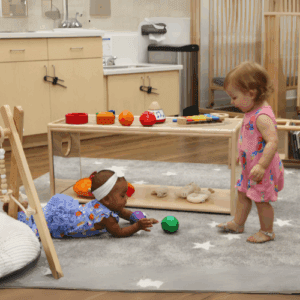
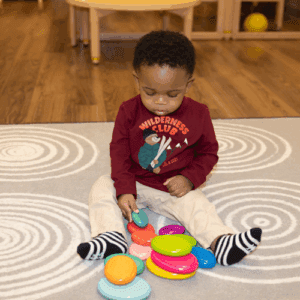
Walk into one of our classrooms, and you might not see rows of typical plastic toys. Instead, you’ll find shelves filled with “open-ended” materials—items that can be used in countless ways. Think natural objects like stones, shells, and wood slices, alongside real-world tools and recycled materials. We also provide rich art supplies like clay, wire, and various paints. These materials invite creativity and complex thinking because they don’t come with a set of instructions. A block can be a phone, a car, or part of a castle. This approach encourages children to use their imagination, solve problems, and express their unique ideas through what’s known as their “hundred languages.”
Making the Classroom Feel Like Home
The overall feeling of the classroom is just as important as what’s in it. The environment is intentionally designed to be beautiful, inviting, and orderly. When a space is calm and well-organized, it helps children feel secure and respected, allowing them to focus on their explorations. Everything has a place, which teaches children responsibility and care for their surroundings. This thoughtful organization makes materials accessible, empowering children to make their own choices and pursue their interests independently. By creating a space that is rich with possibilities and communicates respect, we invite children to see themselves as capable researchers and creators, ready to engage with the world around them.
How We Make Learning Visible
Have you ever wondered what’s really going on in your child’s mind when they’re completely absorbed in play? In a Reggio-inspired classroom, we don’t just guess—we make that learning visible. This is done through a practice called documentation, which is a thoughtful and intentional way of observing, recording, and sharing the moments of discovery that happen every day. It’s about seeing children’s experiences through their eyes and understanding the incredible thinking behind their actions. This process helps us appreciate not just what they create, but how they think and learn.
This isn’t about creating perfect artwork for the refrigerator. Instead, it’s about capturing the process: the questions they ask, the theories they test, the collaborations they form, and the “aha!” moments that light up their faces. By documenting their work through photos, notes, and videos, we create a story of your child’s learning journey. This practice is central to our Reggio Emilia inspiration and helps our educators, you, and your child see and celebrate their growth and capabilities. It transforms the classroom into a living portfolio of their curiosity and intellect, making their progress tangible and easy to follow. It also allows us to reflect on their experiences and plan meaningful next steps together.
How Documentation Reveals the Learning Process
When we watch children play, we’re interested in more than just what they are doing; we want to understand the “how” and the “why.” Our educators act as careful observers, taking notes on conversations and recording how children interact with materials and each other. This practice helps us see the thought process behind their play. For example, we might notice how a child experiments with balance to build a tall tower or listen to the story they create with animal figures. These observations are windows into their world, showing us their unique perspectives and problem-solving strategies as they unfold.
Making Thinking Visible with Photos and Stories
Words are just one way we tell the story of your child’s learning. We use photos, videos, and written narratives to capture moments that might otherwise be missed. A series of pictures can show the intense focus and persistence a toddler uses to fit a puzzle piece, while a short video can capture the joy and teamwork of children working on a group painting. These tools make your child’s thinking visible, creating a rich narrative of their development. Sharing these stories with you is a key part of our partnership with parents, helping you see your child’s day in a meaningful way.
How Discoveries Shape What’s Next
Documentation is more than just a record of the past; it’s a map for the future. By carefully reviewing our observations, our teachers can identify your child’s emerging interests and questions. This reflection is essential for planning what comes next. If we notice a fascination with shadows on the playground, we might bring in flashlights and different objects to explore light and reflection indoors. This responsive approach ensures that our curriculum is always relevant and engaging, flowing directly from the children’s own discoveries and supporting The Project Approach we use in our classrooms.
What Do Projects Look Like in the Classroom?
When you hear the word “project,” you might picture a specific, teacher-led craft with a predetermined outcome—everyone making the same paper plate animal. In a Reggio-inspired classroom, projects are something entirely different. They are long-term, in-depth investigations into topics that genuinely capture the children’s interest. A project might last for a few days, several weeks, or even months, depending on how the children’s curiosity evolves.
Instead of following a rigid lesson plan, our educators observe the children’s play, listen to their questions, and identify recurring themes. Did a group of toddlers become fascinated by the shadows on the playground? That could become a project. Did a preschooler ask why rain makes puddles? That question could spark a deep exploration of water. These projects are not about finding a single right answer or creating a perfect final product. They are about the process of discovery—of asking questions, forming theories, testing ideas, and learning together. This approach, known as The Project Approach, allows children to become active researchers and construct their own understanding of the world around them in a way that is both meaningful and memorable.
How Projects Emerge from Curiosity
At the heart of every project is your child’s own sense of wonder. We believe that children are born curious and have an innate desire to understand the world around them. Our teachers’ primary role is to notice and nurture that curiosity. They are expert observers, paying close attention to the conversations children have, the games they invent, and the questions they ask.
These observations are the seeds from which projects grow. If a teacher notices a child repeatedly gathering sticks and leaves, they might introduce books about birds’ nests or bring in different natural materials to see what happens next. The curriculum isn’t planned months in advance; it emerges directly from your child’s interests, ensuring that learning is always meaningful, engaging, and personally relevant to them.
Deep Dives into Topics They Love
Once a topic sparks interest, it becomes a shared journey of exploration. The learning doesn’t follow a straight line. Instead, it branches out in whatever direction the children’s questions lead. Teachers act as guides, posing thoughtful questions and providing materials to help children explore their ideas more deeply. For example, an initial interest in building with blocks could evolve into a study of architecture, with children drawing blueprints, looking at pictures of famous buildings, and creating their own complex structures.
This flexible, emergent style of learning is a core part of our Reggio Emilia inspiration. The project evolves as the children learn, allowing them to take ownership of their education and see themselves as capable researchers who can find answers to their own big questions.
Working Together to Find Answers
Projects are rarely a solo activity. Learning in a Reggio-inspired classroom is a social, collaborative experience. Children work together in small groups to discuss their ideas, solve problems, and build on each other’s discoveries. This process teaches them invaluable skills like communication, negotiation, and teamwork. They learn to listen to different perspectives, share their own thoughts respectfully, and work toward a common goal.
This collaborative environment fosters a powerful sense of community and shared purpose. In our Preschool Classrooms, you’ll see children huddled together, debating the best way to build a bridge or co-creating a story through drawings. They learn that their ideas are valued and that together, they can achieve more than they could alone. This is how they build not just knowledge, but also strong, supportive relationships.
How Are Parents Involved?
In a Reggio-inspired school, you aren’t just dropping your child off at the door—you are seen as an essential part of their education. This philosophy views parents, teachers, and children as a team, working together to create the best possible learning experience. Your insights, history, and goals for your child are not just valued; they are a critical piece of the puzzle. This collaborative spirit is woven into the fabric of daily life at school, ensuring your child feels supported by a connected community.
You’re an Essential Part of Our Community
The Reggio Emilia approach sees parents as a child’s first and most important teacher. Because of this, we view our relationship with you as a true partnership. The ongoing exchange of ideas between you and our educators is vital for understanding your child’s unique personality, strengths, and needs. This open dialogue allows us to tailor their learning journey in a way that feels authentic. We believe that truly partnering with parents creates a strong foundation for your child to grow and thrive, helping us see the whole child.
Ways to Get Involved in the Classroom
Your involvement is a cornerstone of our community, and we invite you to participate in classroom life in ways that feel comfortable for you. This doesn’t mean you need to be an expert! It can be as simple as sharing a family tradition, reading a favorite story, or bringing your unique skills and hobbies into the classroom. Whether you’re a musician, a gardener, or a storyteller, your contributions enrich our learning environment. This active participation shows your child that their home and school life are connected and that their family is an important part of their world at school.
Connecting Your Family to Our School
A strong, consistent connection between home and school helps your child feel secure and understood. We work hard to build that bridge through daily communication, documentation of their learning, and opportunities for you to share what’s happening at home. When you share stories about a weekend adventure or a new interest, it gives our teachers valuable insight that can inspire new classroom projects. This partnership ensures your child’s education is a cohesive experience, where learning is supported and extended both at home and at school. It creates a seamless world for your child, full of caring adults on the same team.
Reggio Emilia vs. Traditional Preschool: What’s the Difference?
When you start looking at preschools, you’ll quickly see that not all programs are the same. While every school wants to help your child learn and grow, the how can look very different. One program might have a structured schedule with teacher-led activities, while another feels more like a creative, collaborative workshop. This is where understanding a school’s core philosophy becomes so important. It’s the guiding belief that shapes everything from the classroom layout to the way teachers interact with children and how your child will spend their day.
The Reggio Emilia philosophy stands apart from more traditional models in a few key ways. It’s an approach born from a deep respect for children as intelligent, capable individuals with their own ideas and theories about the world. Understanding these differences can help you decide which environment feels like the right fit for your family and your child’s unique personality. It’s less about which one is “better” and more about which one aligns with your hopes for your child’s first school experience. Let’s look at what makes a Reggio-inspired classroom so distinct.
Child-Led Learning vs. Teacher-Directed Lessons
In many traditional preschools, the teacher sets the agenda. The curriculum is often pre-planned, with specific themes for each week—like “Letter A Week” or “Dinosaur Week.” Every child participates in the same activities at the same time.
The Reggio Emilia approach flips this model. Here, learning is child-led and emerges from the children’s own interests and questions. Instead of following a rigid plan, our educators observe what sparks curiosity in the classroom. If a group of children becomes fascinated by the way shadows move across the playground, that becomes the curriculum. This philosophy sees children as capable and intelligent explorers who can guide their own learning journey with the support of observant teachers.
Why the Process Matters More Than the Product
Think about the art projects that come home from preschool. In a traditional setting, the goal is often a specific outcome: a perfectly colored turkey or a cotton-ball snowman that looks just like the teacher’s example. The emphasis is on the final product.
In a Reggio-inspired classroom, the focus is on the process of creating and discovering. What matters most isn’t the finished piece of art, but the thinking, problem-solving, and collaboration that happened along the way. Our teachers carefully document the children’s work through photos and notes, not to grade them, but to understand how they are thinking and learning. This makes their learning visible and helps us plan meaningful next steps that build on their discoveries in our preschool classrooms.
How Relationships Form the Foundation
While most schools encourage parent involvement, the Reggio Emilia approach sees it as essential. Parents are considered the child’s first and most important teacher and are viewed as vital partners in the educational process. It’s about more than just chaperoning a field trip or attending a conference. It’s a true collaboration.
This philosophy is built on a strong sense of community between children, teachers, and families. We believe that a constant exchange of ideas between home and school creates the best possible environment for a child to thrive. This deep commitment to partnering with parents ensures that your child feels a seamless connection between their two most important worlds: home and school.
How Does Reggio Emilia Differ from Montessori?
Many parents find themselves comparing Reggio Emilia and Montessori, and for good reason—both are wonderful, child-centered philosophies that respect a child’s ability to learn independently. The main difference lies in how learning happens. Montessori uses a more structured curriculum with specific, self-correcting materials designed to teach particular skills, often through individual work. In contrast, the Reggio Emilia inspiration is built on an emergent curriculum where learning flows from the children’s own questions and interests. This often takes the form of collaborative, long-term projects where children work together in small groups to explore their theories. The teacher acts not as a director, but as a co-learner and researcher, guiding and documenting the journey alongside the children.
What It Takes to Be a Reggio-Inspired School
Choosing a Reggio-inspired school means choosing a program built on a deep and active commitment from everyone involved. It’s more than just a curriculum; it’s a philosophy that shapes every interaction, every space, and every decision. This approach requires a special kind of dedication from educators, a genuine partnership with families, and a belief in the power of community. When a school truly embraces these principles, it creates an environment where children don’t just learn—they flourish. It’s a promise to see, hear, and value every child for the incredible individual they are, and to walk alongside them on their unique learning path.
Unlike a traditional model where curriculum is delivered top-down, the Reggio Emilia approach is a living, breathing practice that evolves with the children. It asks teachers to be researchers, parents to be partners, and the environment to be a source of inspiration. This level of engagement is what makes the experience so rich and meaningful for children. It’s an investment of time, energy, and heart from the entire school community, all centered on the belief that children are full of potential and deserving of our deepest respect. This shared commitment is what transforms a classroom into a vibrant, supportive community where children feel safe to explore, question, and grow with confidence.
How Our Teachers Think Differently
In a Reggio-inspired classroom, you won’t find teachers standing at the front of the room delivering a pre-set lesson. Instead, our teachers act as co-learners and researchers, discovering right alongside your child. This philosophy requires exceptional educators who are curious, observant, and flexible. They see their role as a partner in discovery, carefully listening to children’s ideas and theories. They plan activities and long-term projects based on the children’s genuine interests, creating a learning environment that feels personal and exciting. This collaborative approach fosters a deep sense of respect and trust, empowering children to take ownership of their learning and see their teachers as trusted guides on their journey.
Making Time to Truly See Each Child
A core practice in our classrooms is the careful observation and documentation of your child’s learning. Teachers take time to watch, listen, and record the small but significant moments of discovery—through photos, notes, and transcripts of conversations. This isn’t about testing or grading. Instead, this documentation is a powerful tool that helps us understand your child’s thinking process and see the world from their perspective. By making their learning visible, we can reflect on their progress, share meaningful insights with you, and thoughtfully plan the next steps in their educational journey. It’s how we ensure that The Project Approach we use is truly responsive to their evolving curiosities.
Investing in Our School Community
We believe that you are your child’s first and most important teacher. That’s why a Reggio-inspired approach views parents as essential partners in their child’s education. We are committed to partnering with parents to build a strong, collaborative community around each child. The ongoing exchange of ideas and insights between home and school is vital. We encourage families to participate in the life of the classroom and share their unique skills, culture, and perspectives. This strong connection ensures that your child feels a sense of belonging and consistency between their two most important worlds, creating a supportive network that nurtures their growth and well-being.
Challenges and Considerations of the Reggio Emilia Approach
While the Reggio Emilia philosophy is incredibly inspiring, it’s also important to understand that it’s not a simple, plug-and-play curriculum. Because it’s a dynamic approach that depends heavily on the skills of the educators and the unique interests of the children, its implementation can have some complexities. This doesn’t mean it’s flawed; it just means that for this approach to truly succeed, a school needs a deep commitment to its core principles. Knowing about these considerations can help you ask the right questions when you’re looking for a program that is a good fit for your family and ensure the school you choose is genuinely living out the philosophy.
Is There Research to Support the Approach?
One question parents often ask is about the research behind the philosophy. Because the Reggio Emilia approach is an emergent curriculum that follows the child’s lead, it’s difficult to measure with traditional, standardized tests. As a result, there isn’t a large body of direct research that measures its impact in the way you might find for other models. However, studies on U.S. preschools that are inspired by Reggio Emilia show positive outcomes. They indicate that these environments are particularly effective for teaching science concepts, as they encourage children to actively engage with materials, ask questions, and develop their own theories—all foundational skills for scientific thinking.
Potential Implementation Challenges
The success of a Reggio-inspired classroom rests almost entirely on the shoulders of its teachers. This approach requires a special kind of educator—one who is a keen observer, a thoughtful questioner, and a creative thinker who can see the world through a child’s eyes. Finding and retaining teachers with this unique skill set is one of the biggest challenges. It requires a significant investment in professional development and a school culture that supports collaboration and continuous learning. At Strong Start, we know that our program is only as strong as our team, which is why we are so dedicated to supporting our exceptional educators with ongoing training and resources.
What Are the Benefits for Children?
When a school successfully creates a Reggio-inspired environment, the benefits for children are profound and long-lasting. This approach nurtures the whole child, fostering skills that go far beyond memorizing letters and numbers. It cultivates curiosity, creativity, and a deep love of learning that will serve them well throughout their lives. Because children are seen as capable and their ideas are taken seriously, they develop a strong sense of self-worth and the confidence to express their thoughts. They learn how to work with others, solve complex problems, and see challenges as opportunities for discovery. These are the foundational skills that help children become not just successful students, but also compassionate, engaged, and resilient people.
Welcoming New Experiences with Confidence
Children in Reggio Emilia programs learn to welcome new experiences because they are equipped with the tools to handle them. The focus on collaboration helps them build strong social skills, so they feel comfortable engaging with others and connecting with their community. By following their own interests, they find genuine joy in learning and become confident in their ability to express their unique ideas. The project-based work teaches them how to solve problems and think critically, empowering them to figure things out on their own. All of these experiences combine to create a child who isn’t afraid to try something new, because they trust in their own ability to learn and adapt. This confidence is something we see blossom in our enrichment programs, where children eagerly explore everything from cooking to art.
The Reggio Emilia Approach at Strong Start
At Strong Start, the Reggio Emilia philosophy isn’t just a page in a textbook—it’s the foundation of everything we do. We believe that children are born with incredible potential and an innate curiosity about the world. Our role is to provide the environment, the tools, and the relationships they need to explore their ideas and express themselves. We’ve thoughtfully woven the core principles of this approach into our classrooms, our curriculum, and our community. Here’s a closer look at how we bring this inspiring philosophy to life for your child every single day.
How Our Classrooms Invite Discovery
When you walk into one of our classrooms, you’ll notice it feels different from a traditional preschool. We see the environment as the “third teacher,” a space intentionally designed to be beautiful, calming, and full of possibilities. Instead of bright primary colors and plastic toys, you’ll find natural light, soft tones, and materials that invite exploration. We fill our rooms with open-ended resources like clay, wire, natural objects, and light tables. This approach encourages children to think creatively and collaborate with their peers. Every corner is set up to spark curiosity and support the incredible learning that happens through play and independent discovery.
We Nurture Your Child’s Innate Curiosity
We believe that children are the drivers of their own learning. Rather than following a rigid, pre-planned curriculum, our educators act as researchers alongside your child. They carefully observe what captures the children’s interest—from the way shadows dance on the wall to the discovery of a roly-poly bug in the garden. These moments of wonder become the starting point for in-depth explorations. This emergent curriculum, known as The Project Approach, allows learning to unfold organically. It ensures that your child is not just engaged, but truly invested in their education, because it’s built around the questions and ideas that matter most to them.
Partnering With Parents, Every Step of the Way
Your role in your child’s education doesn’t stop at drop-off. In the Reggio Emilia approach, parents are considered essential partners and a child’s first teacher. We deeply value your insights and expertise because you know your child best. We build a strong connection between home and school through daily communication, sharing documentation of your child’s progress, and creating opportunities for you to participate in classroom life. By partnering with parents, we create a supportive and cohesive community that surrounds your child. This collaboration is vital in helping your child feel secure, understood, and ready to thrive.
Related Articles
- Reggio Emilia Inspiration – Strong Start
- reggio infant classroom – Strong Start Early Care and Education
- early education – Strong Start Early Care and Education
Frequently Asked Questions
Is this approach just unstructured playtime? That’s a great question, and it’s something many parents wonder about. While it might look like simple play, it’s actually a very thoughtful and purposeful process. Our teachers are skilled observers who create an environment rich with opportunities for discovery. The freedom your child has is framed by this intentionality. Their play is their work—it’s how they research their theories, solve complex problems, and make sense of the world. So, while it isn’t rigid, it is deeply structured around your child’s own curiosity.
How will my child learn academic skills like reading and math? Academic skills are absolutely a priority, but we approach them in a way that feels meaningful to children. Instead of drills and worksheets, concepts like literacy and numeracy are woven directly into their projects and explorations. For example, children might measure ingredients for a baking project, count the blocks in a tower they’re building, or write signs and stories related to an investigation. By learning in context, they understand not just how to count or write, but why it’s useful, which builds a much stronger foundation for their future schooling.
What if my child is quiet and doesn’t have big, obvious interests? Every child has their own unique way of exploring the world, and our educators are experts at recognizing that. A huge part of their role is to be a careful observer and listener. They are trained to notice the quiet curiosities just as much as the loud ones. A child who spends time watching a snail cross the sidewalk or carefully arranging small stones is showing deep focus and interest. Our teachers know how to gently nurture these subtle sparks, providing materials and asking questions that help even the most reserved child’s ideas grow.
The blog mentions a strong parent partnership. How much am I expected to volunteer? We know that modern family life is incredibly busy, and “partnership” doesn’t mean you have to spend hours in the classroom every week. For us, partnership is all about communication and trust. It’s about you sharing your expert knowledge of your child with us, and us sharing their learning journey with you through photos and stories. It means we see ourselves as being on the same team. While we love having families share their skills or read a story, the most important part of the partnership is the open, supportive dialogue we build together.
How does this approach prepare my child for a more traditional kindergarten? This is one of the most important questions you can ask. A Reggio-inspired education prepares children for kindergarten and beyond by focusing on the skills that truly matter for long-term success. Instead of just memorizing information, your child will learn how to learn. They will practice asking questions, thinking critically, solving problems, and working with others. They develop confidence in their own ideas and the resilience to try again when something doesn’t work. These are the foundational skills that create adaptable, engaged, and capable students who are ready for any new learning environment.