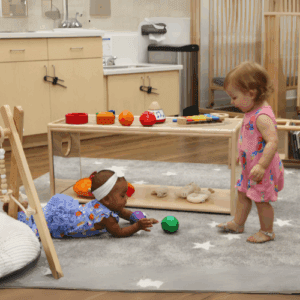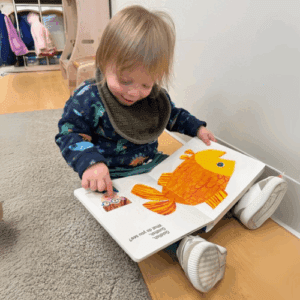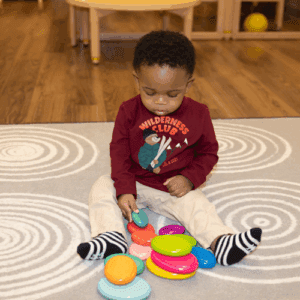
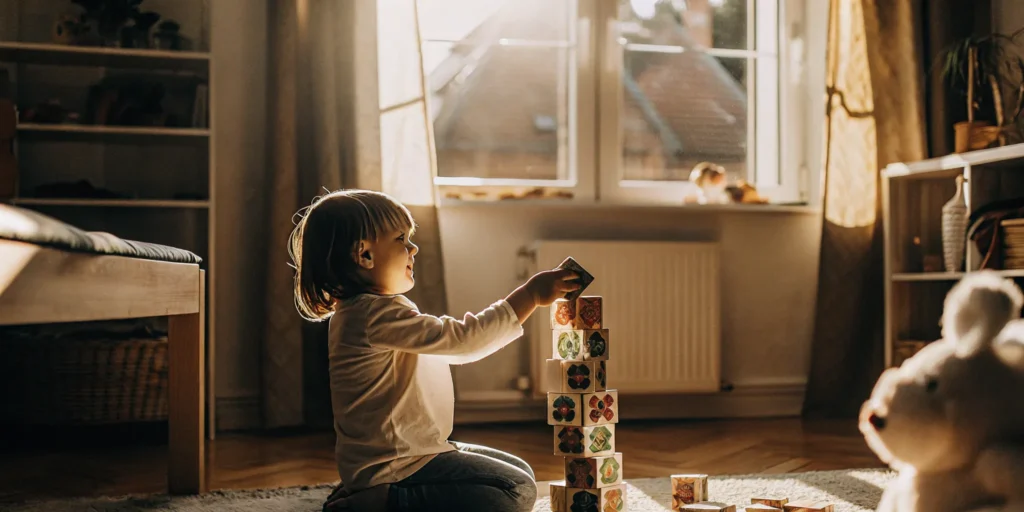
It might look like they’re “just playing,” but every block tower and make-believe game is serious work. Play is how children test theories, solve problems, and make sense of their world. This is the heart of a play based curriculum—a thoughtful approach that honors a child’s natural curiosity. This isn’t about leaving children to their own devices. It’s about creating a play-friendly environment where our exceptional educators skillfully guide them. By using materials from their own environment, this play curriculum helps children stretch their thinking and make incredible new discoveries.
Key Takeaways
- Play is the curriculum: Every activity, from building with blocks to dramatic play, is an intentional learning experience designed to teach foundational concepts in a hands-on, engaging way.
- It develops essential skills for school and life: Children learn how to solve problems, collaborate with peers, and manage their emotions—critical skills that are just as important for kindergarten readiness as knowing letters and numbers.
- Educators are thoughtful guides, not directors: Teachers actively support your child’s learning by asking questions that spark curiosity, introducing new materials, and observing their progress to help deepen their understanding.
What is Play-Based Learning, Really?
When you hear “play-based learning,” you might picture a room full of happy, busy kids. And you’re right, but there’s so much more happening beneath the surface. At its core,
This isn’t just unstructured playtime. It’s a thoughtful, intentional curriculum where learning happens through hands-on experiences. Whether they’re building a tower with blocks, mixing “potions” at a water table, or creating a story in the dramatic play area, children are developing critical skills. Our approach is inspired by philosophies like Reggio Emilia, which sees children as capable and competent learners who can guide their own educational journey. Through play, they learn to solve problems, communicate ideas, and work with others—all while having fun.
Play-Based vs. Traditional: What’s the Difference?
Many of us grew up with a more traditional school model—think desks, worksheets, and a teacher at the front of the room. Play-based learning flips that script. It rejects the idea that deep learning and joyful play are separate things. Instead, it blends a rich curriculum with engaging, hands-on methods.
In this environment, our exceptional educators act less like lecturers and more like thoughtful guides. They create inviting spaces, ask open-ended questions to spark thinking, and observe each child to understand their interests and needs. They support children as active explorers, gently guiding them toward new discoveries rather than simply telling them the answers. This creates a dynamic and collaborative classroom where every child’s voice is valued.
Why Learning Through Play Actually Works
This approach isn’t just a nice idea; it’s backed by solid research. Studies consistently show that for young children, playful learning can be more effective than direct instruction for developing key skills. When children are genuinely interested in what they’re doing, their brains are primed for learning. They’re not just memorizing facts for a test; they’re building a real, lasting understanding of how things work.
For example, research shows that children learn more vocabulary and develop stronger spatial skills during guided play than they do in other settings. From negotiating roles in a make-believe game to figuring out how to balance a block structure, play is how children build the foundational skills they’ll need for kindergarten and beyond.
What Makes a Great Play-Based Curriculum?
When you hear “play-based learning,” it’s easy to picture a room full of happy chaos. And while there’s definitely joy and energy, a truly effective play-based curriculum is far from chaotic. It’s a thoughtful and intentional approach built on a few core principles that work together to create a rich learning environment. Think of it less like a free-for-all and more like a carefully designed workshop where children are the lead inventors. It’s a delicate dance between freedom and structure, where curiosity is the main event and learning happens as a natural, joyful consequence.
This philosophy is deeply inspired by world-renowned approaches, and our own Reggio Emilia inspiration views children as capable, curious individuals with a right to an active role in their own learning. When these foundational blocks are in place, play becomes the most powerful engine for growth, laying the groundwork for everything from literacy and math to social and emotional well-being. It’s about seeing the immense potential in every moment of play and knowing how to nurture it.
The 5 Core Elements of True Play
So, what separates meaningful play from just passing the time? It comes down to a few key ingredients. When these elements are present, play transforms into a powerful learning tool. At Strong Start, our curriculum is built around these principles, ensuring that every activity is an opportunity for growth. We see children as active participants in their education, and our role is to create an environment where their natural curiosity can lead the way. This is where the real magic happens—when a child’s interests and a thoughtfully prepared environment come together.
Self-Chosen and Self-Directed
True play is born from a child’s own curiosity and choices. It’s the difference between being told to complete a puzzle and discovering that puzzle on a shelf and feeling an internal drive to figure it out. When children choose their own activities, they are more deeply engaged and motivated. This autonomy is crucial for building confidence, decision-making skills, and a sense of ownership over their learning. Our educators are experts at observing these interests and using them as a springboard for deeper exploration, a core tenet of The Project Approach. This child-led foundation ensures that learning is always relevant and exciting for your child.
Process-Oriented, Not Product-Oriented
In a play-based setting, the journey is always more important than the destination. Think about a child painting: the real learning happens as they mix colors, feel the texture of the paint, and experiment with brushstrokes—not in producing a perfect, fridge-worthy masterpiece. The focus is on the process of creating and exploring, which encourages children to take risks and try new things without the fear of “getting it wrong.” This builds resilience and a growth mindset. By celebrating effort and experimentation over the final product, we help children develop a lifelong love for learning and discovery.
Letting Your Child Lead the Way
At the heart of a great play-based program is the belief that children are the drivers of their own learning. When a child gets to choose what to play with—whether it’s building an elaborate block city or mixing “potions” at the water table—their engagement goes through the roof. This isn’t just about having fun; it’s about honoring their natural curiosity. Research shows that when children lead their own play, they develop a much deeper understanding of concepts and are more motivated to solve problems. This is where you see true creativity and critical thinking blossom. Our curriculum uses The Project Approach to build on these interests, turning a simple question into an in-depth investigation.
How to Guide Play Without Taking Over
One of the biggest misconceptions about play-based learning is that teachers just stand back and watch. In reality, our educators play a crucial and active role. Their job is to be a thoughtful guide, not a director. They skillfully balance unstructured free play with gentle support, creating what’s known as “guided play.” This might look like adding new materials to the block area to challenge a budding architect or asking open-ended questions like, “I wonder what would happen if we added more water?” This approach helps children make new connections and deepen their thinking without taking away their sense of ownership. It’s this partnership that makes the experience so powerful, and it requires truly exceptional educators to get it right.
Creating a Space That Sparks Curiosity
The classroom itself is a key part of the curriculum. We see it as the “third teacher”—an environment designed to invite exploration, collaboration, and discovery at every turn. A well-designed space is filled with open-ended materials that can be used in countless ways, like natural wood blocks, clay, paint, and fabrics. Instead of loud, overstimulating toys that do the work for the child, these materials encourage imagination and problem-solving. You’ll find cozy nooks for reading, accessible shelves with intriguing objects, and plenty of room for big, active play. Every corner of our preschool classrooms is intentionally designed to spark curiosity and empower children to explore their world.
How Play Helps Your Child Grow
It might look like they’re “just playing,” but every block tower, make-believe story, and finger-painted masterpiece is a powerful learning experience. Play is the natural language of childhood, and it’s through this joyful work that children build the essential skills they need for school and for life. When we create an environment that supports meaningful play, we’re not just keeping them busy—we’re helping them grow into capable, curious, and well-rounded individuals. Let’s look at some of the incredible ways play shapes your child’s development.
Building Problem-Solving and Critical Thinking Skills
When a child tries to figure out how to keep their block tower from toppling or how to get the water from one side of the sensory table to the other, they’re acting like a scientist. Play presents children with constant, low-stakes challenges that invite them to experiment, test theories, and think critically. They learn cause and effect, develop spatial awareness, and build resilience when their first idea doesn’t work out. This hands-on approach to problem-solving is at the heart of our Project Approach, where children’s questions guide their learning and they discover answers for themselves.
Growing Social Skills, Kindness, and Confidence
The playground and the dramatic play corner are some of the first places children learn to get along with others. Sharing a favorite toy, taking turns on the slide, or working together to build a fort requires negotiation, empathy, and self-regulation. Through these interactions, children learn to see things from another person’s perspective and express their own feelings in a healthy way. Our exceptional educators are always there to gently guide these moments, helping children build the confidence and kindness that form the foundation of strong friendships and positive social skills.
Understanding the Stages of Social Play
It’s fascinating to watch how children’s interactions with each other evolve. They don’t just jump into complex group games; they move through several stages of social play. Researcher Mildred Parten identified this progression, which starts with children playing alone, then moves to playing alongside a friend without much interaction (parallel play), and eventually blossoms into truly cooperative play where they share a common goal. You might see this in our toddler classrooms, where two children are happily digging in the sandpit side-by-side, each in their own little world. This isn’t antisocial; it’s a crucial developmental step. As they grow, these simple interactions become the training ground for learning how to communicate ideas, take turns, and solve problems together, all with the gentle guidance of our educators.
Developing Strong Communication Skills
Listen in on a group of preschoolers deep in a make-believe game, and you’ll hear some amazing communication skills at work. They’re creating storylines, assigning roles, and explaining their ideas to one another. This kind of play is a rich training ground for language development. Children expand their vocabulary, learn the back-and-forth rhythm of conversation, and practice articulating their thoughts clearly. It’s not just about talking—it’s about learning to be an effective communicator who can listen and connect with others. We believe in partnering with parents to celebrate and encourage this growing skill.
Improving Coordination and Physical Health
Running, jumping, dancing, and climbing aren’t just ways for kids to burn off energy—they’re essential for physical development. Active play helps children build strong muscles, improve their balance, and refine their coordination. But it’s not all about big movements. Activities like molding playdough, stringing beads, or using scissors help develop the fine motor skills and hand-eye coordination needed for writing later on. Our Enrichment Program includes activities like Fit Kids to make movement fun, ensuring children build healthy habits and a positive relationship with their bodies from the very beginning.
What Does a Play-Based Classroom Look Like?
When you step into a play-based classroom, you won’t find rows of desks or children sitting silently through lectures. Instead, you’ll see a vibrant, dynamic space buzzing with purposeful activity. You might see a small group of children building an elaborate city out of blocks, a pair of friends “writing” a menu in the dramatic play kitchen, and another child quietly examining a collection of leaves with a magnifying glass. It might look like simple fun, but every corner of the room and every material available has been thoughtfully chosen to inspire curiosity and support learning.
This environment is the heart of our approach, which is deeply inspired by the Reggio Emilia philosophy. We see the classroom as a “third teacher”—a setting that is just as important as the educators and the children in it. It’s a place where children are respected as capable individuals and active participants in their own education. They are free to explore their interests, collaborate with their peers, and make discoveries on their own terms. This intentional design transforms the classroom from a place of instruction into a world of inquiry and wonder, where learning happens naturally and joyfully.
Turning Playtime into Learning Time
Every playful activity in our classrooms is connected to important learning goals. That tower of blocks isn’t just a game; it’s a hands-on lesson in physics, collaboration, and problem-solving. When children work together to figure out how to make their structure stable, they are developing critical thinking skills that will serve them for life. This is where the real magic happens—play becomes the vehicle for deep, meaningful learning that sticks.
Our educators are experts at seeing and guiding the learning within the play. They use The Project Approach to help children explore topics that genuinely interest them, turning a simple question into an in-depth investigation. This method ensures that children aren’t just memorizing facts; they’re learning how to ask questions, find answers, and think creatively.
Creating Purposeful Play and Learning Zones
A play-based classroom is carefully organized into distinct learning zones that invite exploration. You’ll find a cozy reading nook filled with engaging books, a construction area with different types of blocks and building materials, an art space with easels and clay, and a discovery table for scientific investigation. This intentional design gives children the freedom to choose activities that capture their interest, which helps them develop independence and self-regulation.
By moving between these different areas, children learn to manage their time and make choices, all within a safe and supportive structure. The layout of our toddler and preschool classrooms is designed to be both stimulating and calming, giving children the space they need to focus, collaborate, and dive into their work. It’s a balanced environment that encourages both individual exploration and group collaboration.
Weaving Reading, Math, and Science into Fun
Academic skills aren’t taught in isolation; they are woven into the fabric of everyday play. Math comes alive when children count how many blocks they need for their tower, sort objects by color and size, or measure ingredients for a recipe in our Budding Bakers & Little Cooks program. Literacy skills grow as children tell stories in the dramatic play area, create signs for their block city, or share a book with a teacher.
Science is all about hands-on discovery. Children explore concepts like gravity while building with ramps, learn about biology by tending to a classroom plant, and experiment with different textures at the sensory table. By integrating these concepts into activities children already love, we make learning feel effortless and exciting, building a strong and positive foundation for their future academic journey.
The Teacher’s Role: More Than Just Watching
When you peek into a play-based classroom, you might see children busy with blocks, paint, or imaginative games. What you might not notice right away is the teacher’s incredibly active and intentional role in everything that’s happening. It’s a common misconception that in a play-based setting, teachers simply stand back and supervise. In reality, their work is complex, thoughtful, and deeply engaged. They are less of a lecturer at the front of the room and more of a skilled facilitator, a careful observer, and a supportive guide.
At Strong Start, our exceptional educators are trained to be co-learners alongside your child. They create rich, inviting environments and then thoughtfully interact with children to stretch their thinking and support their discoveries. They know when to step in with a thought-provoking question and when to step back to let a child work through a challenge on their own. This delicate balance is where the real magic of play-based learning happens, turning simple play into powerful learning experiences that build a foundation for a lifetime of curiosity and growth.
Guiding and Supporting, Not Directing
In a play-based classroom, the teacher acts as a “guide on the side” rather than a “sage on the stage.” Their goal isn’t to provide all the answers but to help children discover answers for themselves. Instead of directing the play, they support the direction your child wants to take it. For example, if a group of children decides the block area is now a zoo, the teacher might add animal figures or books about zoos to enrich the experience. This approach, inspired by the Reggio Emilia philosophy, respects children as capable and curious individuals, empowering them to take ownership of their learning and build confidence in their own ideas.
Specific Ways Teachers Guide Learning Through Play
So, what does this “guiding” actually look like day-to-day? It’s a series of thoughtful, in-the-moment actions. Our teachers might start by carefully setting up an invitation to play—perhaps a table with clay and natural objects. As children begin to explore, the teacher observes, listening to their ideas. If a child says, “I’m making a snail!”, the teacher might ask, “I wonder what kind of shell your snail has?” This simple, open-ended question encourages deeper thinking. They might also add a book about snails nearby or bring out spiraled pasta shapes to extend the play. It’s this active partnership—observing, questioning, and adding resources—that helps our exceptional educators turn a simple activity into a rich learning experience, all without taking over.
Asking Questions That Deepen Understanding
One of the most powerful tools a teacher has is the ability to ask good questions. Instead of asking closed-ended questions that have a single right answer (like “What color is that?”), our teachers ask open-ended questions that encourage deeper thinking. You’ll hear them say things like, “I see you’re using a lot of blue in your painting. Can you tell me about that?” or “What do you think might happen if we add more water to the sand?” These kinds of questions invite children to share their thought processes, use descriptive language, and explore concepts more fully. This technique is central to The Project Approach, where children’s questions and theories guide the curriculum.
How We Track Your Child’s Progress Through Play
While it may look like fun and games, teachers are constantly observing and assessing your child’s development. They watch how children interact with materials, how they solve problems, and how they communicate with their peers. These careful observations are far more telling than a traditional test. They allow teachers to understand each child as a whole person—their interests, their strengths, and the areas where they might need a little more support. This deep understanding allows us to tailor activities to your child’s needs and is a key part of how we partner with parents, sharing meaningful insights into your child’s progress and celebrating their unique journey.
What Does Play-Based Learning Look Like in Action?
It’s one thing to talk about the philosophy of play-based learning, but it’s another to see it come to life. When you step into one of our classrooms, you won’t see kids sitting silently at desks. Instead, you’ll see a vibrant, busy environment where learning is woven into every activity. This isn’t random, unstructured chaos; it’s a carefully designed experience where children are active participants in their own education. Each play area, or “invitation,” is intentionally set up by our educators to spark curiosity and encourage exploration, guided by our Reggio Emilia inspiration. Here are a few snapshots of what you might see on any given day.
Key Types of Play You’ll See in Our Classrooms
While every day brings new adventures, you’ll often see a few key types of play unfolding in our classrooms. Each one is rich with learning opportunities, helping children build a wide range of skills. From the busy energy of the block corner to the imaginative stories created in the dramatic play area, this is what purposeful play looks like up close. These aren’t just separate activities; they are interconnected ways children explore their world, test their ideas, and learn to connect with others. It’s in these moments that the real, foundational work of childhood happens.
Exploratory and Physical Play
This is the kind of hands-on, full-body learning that helps children understand the world and their place in it. Active play like running, jumping, and climbing helps children build strong muscles, improve their balance, and refine their coordination. But it’s not just about big movements. Quieter activities like molding playdough, stringing beads, or carefully using scissors are just as important. These actions develop the fine motor skills and hand-eye coordination that are the building blocks for writing. Our Enrichment Program is designed to support this physical development, making movement a joyful and integral part of your child’s day.
Constructive and Dramatic Play
The block area and the dramatic play corner are some of the first places children learn how to build a community. When they work together to create a towering fort or act out a family dinner, they are practicing essential social skills. This type of play requires negotiation, empathy, and self-regulation as children learn to share toys, take turns, and see things from another person’s perspective. It’s a powerful way to build confidence and kindness. Our exceptional educators are always nearby to gently guide these interactions, helping children navigate their social world and form the foundations of lasting friendships.
Exploring with Sensory Tables and Materials
Imagine a small group of toddlers gathered around a low table filled with water, soap bubbles, and ladles. They are giggling as they scoop and pour, watching how the bubbles move and pop. This is more than just splashing around. Through hands-on activities at the sensory table, children experiment with different materials and textures. They’re learning early physics concepts like volume and flow, developing fine motor skills, and practicing how to share space and tools with friends. Whether it’s sand, water, dried beans, or smooth stones, sensory play helps children make sense of the world around them in a tangible way.
Building Worlds Through Dramatic Play
In another corner of the room, you might find a bustling restaurant. One child is carefully writing down an order on a notepad, another is in the play kitchen “cooking” a meal, and a third is setting the table for a customer. This is dramatic play, and it’s a powerhouse for development. It provides children with opportunities to act out different scenarios, which fosters creativity and important social skills as they negotiate roles and collaborate with their peers. They’re practicing communication, empathy, and problem-solving, all while having a wonderful time creating a shared story together in our preschool classrooms.
Creating and Constructing with Blocks
The block area is often a hub of focused energy. Here, children engage in constructive play, using wooden blocks, magnetic tiles, and other materials to build towering structures, intricate roadways, or cozy houses for animal figures. This type of play is fantastic for supporting fine motor skills, but it also encourages critical thinking. As they design and build, children are constantly solving problems: How can I make my tower taller without it falling? What shape do I need to make this bridge stable? They’re learning about balance, gravity, and spatial awareness—the foundational concepts of engineering and math.
Expressing Ideas Through Art, Music, and Movement
Creativity is a language all its own. At the art easel, a child might be swirling bright colors together, expressing a feeling or an idea they don’t yet have the words for. During music time, children explore rhythm and melody, moving their bodies to the beat. Our Exploration Through The Arts program recognizes that these activities are essential outlets. They allow children to express their unique thoughts and feelings, promoting emotional development and self-confidence. Whether through painting, dancing, or singing, kids are learning to share their inner world and appreciate the creativity of others.
How to Support Play-Based Learning at Home
The wonderful thing about play-based learning is that it doesn’t have to stop at the classroom door. You can easily bring the same spirit of curiosity and discovery into your home to support your child’s development. It’s not about recreating a school environment or buying expensive new toys. It’s about shifting your perspective to see the learning opportunities that already exist in your daily life. As your partners in education, we want to share a few simple, actionable ways you can champion playful learning at home. By partnering with parents, we can create a consistent and nurturing world for your child to explore.
Create a Play-Friendly Space with Simple Materials
You don’t need a playroom overflowing with the latest gadgets to foster creativity. In fact, the simplest items often inspire the most imaginative play. Think about materials that can be used in many different ways, like building blocks, art supplies, or even everyday household items. A cardboard box can become a rocket ship, a fort, or a car. A set of pots and pans can be a drum kit or the tools for a pretend restaurant. Designating a small, accessible area where your child can freely and safely explore these open-ended items gives them the freedom to experiment and create without limits.
Follow Your Child’s Natural Curiosity
Children are born with an incredible sense of wonder. One of the best things you can do is follow their lead and show genuine interest in what fascinates them. If they’re captivated by a line of ants on the sidewalk, get down on the ground with them. Ask open-ended questions like, “Where do you think they’re going?” or “What do you notice about them?” This approach mirrors The Project Approach we use in our classrooms, where learning is guided by the children’s own questions. You don’t need to have all the answers; your role is to be a co-explorer, encouraging them to think, wonder, and discover on their own terms.
Find Learning Opportunities in Everyday Moments
Some of the most powerful learning experiences happen during ordinary routines. Simple, everyday activities can be turned into valuable moments of connection and discovery. When you’re sorting laundry, you can talk about colors and textures. While cooking dinner, you can count ingredients and observe how they change when heated. A walk around the block is a chance to talk about nature, count houses, or read street signs. By saying “yes” to these small moments, you show your child that learning is not a separate activity but a fun and exciting part of your child’s day.
Turn Chores into Counting Games
You can transform routine tasks into playful learning moments. Instead of seeing chores as something to get through, view them as opportunities for connection and discovery. When you’re sorting laundry, you can talk about colors and textures. While cooking, you can count ingredients together and talk about how they change when you mix or heat them. Setting the table becomes a math game when you ask, “How many forks do we need for our family?” These simple interactions build foundational skills in a natural, stress-free way, showing your child that learning is a joyful part of your child’s day.
Read Daily and Make Connections
Making reading a daily ritual is one of the most powerful things you can do, but it’s about more than just the words on the page. As you read, pause to ask questions, point to pictures, and connect the story to your child’s own experiences. This back-and-forth conversation is where the real learning happens. Through these shared stories, children expand their vocabulary, learn the rhythm of conversation, and practice putting their own thoughts into words. It’s not just about reading—it’s about learning to be an effective communicator who can listen, connect, and share their ideas with the world.
Balance Screen Time with Active Play
In a world full of screens, it’s more important than ever to make time for active, hands-on play. This doesn’t mean you need an elaborate plan; a simple dance party in the living room or building a pillow fort can do wonders. Active play helps children build strong muscles, improve their balance, and refine their coordination. But it’s not all about big movements. Activities like molding playdough, stringing beads, or using scissors help develop the fine motor skills needed for writing later on. Our Enrichment Program is built on this same idea—that joyful movement is essential for a healthy body and a happy mind.
Your Top Questions About Play-Based Learning
It’s completely natural to have questions when you hear the term “play-based learning.” For many of us who grew up with a more traditional school structure, it can be hard to picture how play connects to academic success. You want to know that your child is getting the best possible start and will be ready for the next step in their education. Let’s walk through some of the most common questions we hear from families.
“Will my child be ready for kindergarten?”
This is often the first and most important question on a parent’s mind, and the answer is a resounding yes. A play-based approach is one of the best ways to prepare children for kindergarten because it builds the whole child—not just their academic skills. Research shows that play-based learning can be more effective than direct instruction at helping early learners thrive. While they’re building a block tower, they’re learning physics and collaboration. While they’re in the dramatic play area, they’re developing language skills and empathy. This approach nurtures the social and emotional intelligence they’ll need to successfully transition into a formal school setting.
“Is it just chaos, or is there structure?”
From the outside, a bustling play-based classroom might look like unstructured fun, but it’s actually a carefully designed learning environment. This isn’t a free-for-all; it’s purposeful play. Our educators are experts at creating a framework that supports specific educational goals. They intentionally design play areas and introduce materials that encourage exploration and discovery. Teachers who have incorporated guided play into their lessons find that students are more engaged and joyful. The structure is flexible and child-led, but it’s always there, gently guiding your child toward new skills and understanding.
“Is this approach a good fit for every family?”
That’s a thoughtful question, and the honest answer is that it depends on your family’s educational philosophy. This approach is a wonderful fit for families who believe that learning is a natural, joyful process and that skills like collaboration, problem-solving, and emotional intelligence are just as critical as early academics. If you want your child to develop a deep love for learning by exploring their own interests in a hands-on way, then a play-based environment will feel like the perfect match. It’s less about rote memorization and more about building a true understanding of the world. The most important thing is to find a school that feels like a true partner in your child’s education, which is why we believe so strongly in partnering with parents to ensure our approach aligns with your family’s goals.
“How do you track my child’s progress?”
We don’t use tests or quizzes to measure learning. Instead, our educators track your child’s development through careful observation and documentation. They watch how your child interacts with others, solves problems, and engages with new materials. This method allows us to see a complete picture of your child’s growth—cognitively, socially, and emotionally. The strength of a play-based curriculum is its ability to harness children’s natural curiosity, and by observing them in their element, we gain deep insights into their unique strengths and areas for growth. We document these moments to share with you, so you can see your child’s progress firsthand.
Why Play is the Best Preparation for School
It’s one of the biggest questions we hear from parents: “Will a play-based program prepare my child for kindergarten?” The answer is a wholehearted yes. Play isn’t just what children do to pass the time; it’s the most powerful and effective way they learn. Think of it as their work. Through play, children build the foundational skills—academic, social, and emotional—that are essential for success in a formal school setting and for the rest of their lives.
A play-based curriculum doesn’t ignore school readiness. Instead, it approaches it in a way that honors how a child’s brain actually develops. Rather than focusing on rote memorization of letters and numbers, it creates meaningful experiences where children can discover concepts for themselves. This hands-on, inquiry-driven method builds a much deeper and more flexible understanding. It prepares children to be adaptable thinkers, collaborative classmates, and confident individuals who are genuinely excited about learning.
Building a Strong Foundation for Academics
Many of us grew up thinking of “play” and “learning” as two separate activities. But in early childhood, they are one and the same. When children are building a block tower, they’re experimenting with gravity, balance, and geometry. When they’re engaged in a Project Approach investigation about a garden, they’re learning biology, counting seeds, and developing new vocabulary. Research shows that this kind of hands-on exploration leads to a much deeper understanding of core concepts. It allows children to connect abstract ideas to the real world, which is how they truly retain knowledge and build a solid foundation for future academic success.
Developing Independence and Self-Control
Kindergarten readiness is about so much more than knowing the ABCs. It’s about being able to follow directions, manage feelings, and work with others. Guided play is the perfect training ground for these critical life skills. In our preschool classrooms, children learn to negotiate roles during dramatic play, share materials at the art easel, and solve problems that arise without an adult immediately stepping in. This process helps them develop greater self-regulation and independence. They learn to make choices, try different strategies when something doesn’t work, and see things from another person’s perspective—all skills that are absolutely essential for thriving in a school environment.
Creating a Lifelong Love of Learning
What is the ultimate goal of education? We believe it’s to inspire a genuine, lasting love of learning. A play-based curriculum is designed to do just that by tapping into a child’s natural curiosity. When learning is joyful and driven by their own interests, children see it as an exciting adventure, not a chore. Our entire philosophy is inspired by the Reggio Emilia approach, which views children as capable and full of wonder. By creating an environment where they can ask questions, explore their own ideas, and make discoveries, we help them become confident learners who aren’t afraid to take on new challenges. This positive attitude is the greatest gift we can give them as they prepare for school.
See the Power of Play for Yourself
Understanding the theory behind play-based learning is one thing, but seeing it in action is what truly makes it click. New research is continually showing that a play-based approach can be more effective than direct instruction for young children, helping them build not just academic skills, but social and emotional ones, too. When you step into a classroom where children are joyfully engaged in their own learning, you can feel the difference. It’s an environment buzzing with curiosity, collaboration, and genuine discovery. This is where children learn to ask questions, solve problems, and work together—all while having fun. It’s about creating a space where learning feels less like a task and more like an adventure. The power of this approach lies in its ability to meet children where they are, honoring their interests and using them as a springboard for deeper learning. Instead of memorizing facts, they are constructing knowledge through hands-on experiences, which builds a much stronger and more lasting foundation for their future education.
Choosing the Right Environment for Your Child
When you’re looking for a preschool or early care program, the right environment can make all the difference. A great play-based classroom is designed to harness your child’s natural curiosity. Look for spaces that are thoughtfully arranged with interesting materials that invite exploration and creativity. The goal is to find a program that understands how to create a setting where your child feels safe and inspired to explore. This kind of intentional environment is the foundation for effective learning, allowing children to follow their interests and make their own discoveries. You can get a feel for what this looks like by learning more about your child’s day in a well-structured, play-focused program.
Why Passionate Teachers Make the Difference
A beautiful classroom is just the beginning; the educators within it are the heart of a play-based program. Teachers who are passionate about this approach see students thrive because they know how to guide learning without taking over. They are experts at asking thoughtful questions, introducing new ideas, and creating experiences that lead to deeper understanding. These educators are skilled observers who can see what your child is interested in and help them build on it. At Strong Start, we believe in the power of exceptional educators who are not just teachers, but partners in your child’s development, celebrating their progress every step of the way.
Discover Our Approach to Playful Learning
We believe that when children are engaged in joyful, meaningful play, they don’t just grow academically—their overall well-being improves. Our curriculum is inspired by proven philosophies like Reggio Emilia and The Project Approach, which place the child at the center of their own learning journey. We create rich, hands-on experiences that allow children to explore their world, express their ideas, and build confidence. We invite you to see for yourself how our approach to playful learning helps children build a strong foundation for school and a lifelong love of discovery. We encourage you to schedule a tour at one of our schools in Trumbull, Shelton, or Wilton.
Related Articles
- Early Childhood Education: A Foundation for the Rest of Their Life
- Inquiry-Based Learning for Toddlers – Strong Start
- Early Childhood Development Archives – Strong Start
Frequently Asked Questions
How are you teaching things like letters and numbers if it’s all play? This is a great question, and it gets to the heart of our approach. We don’t separate “playtime” from “learning time”—we weave academic concepts directly into the activities your child is already excited about. For example, math happens naturally when children count the blocks in their tower or measure ingredients in a cooking project. Literacy skills are built as they create stories in the dramatic play area, “write” a menu for their pretend restaurant, or gather around a teacher for a captivating story. This method helps children build a real, meaningful connection to these concepts, which is far more effective than memorizing them from a worksheet.
Is there a daily schedule, or do kids just do whatever they want? While our classrooms are child-led, they are not a free-for-all. There is a predictable rhythm and routine to each day that helps children feel secure and confident. We have set times for meals, rest, and outdoor play, as well as blocks of time for both group activities and individual exploration in our learning zones. The structure is there to provide comfort and consistency, but within that framework, children have the freedom to make choices, follow their interests, and direct their own learning.
My child is pretty quiet. How do you make sure they’re participating and not getting overlooked? We believe every child communicates and participates in their own unique way. Our educators are trained to be keen observers, and they take the time to understand each child’s individual personality and temperament. For a quieter child, participation might look like intense focus on a building project or thoughtful observation of their peers. Our teachers are skilled at creating a safe, nurturing space where these children feel comfortable and can engage on their own terms, gently inviting them into group activities without pressure.
What’s the difference between this and just good old-fashioned playtime? The key difference is intention. While free play at home is wonderful and essential, our approach involves a thoughtful curriculum and highly skilled educators who guide the experience. They intentionally design the classroom environment with specific materials to spark curiosity and challenge children’s thinking. They ask open-ended questions to deepen understanding and introduce new vocabulary and concepts at just the right moment. It’s this purposeful facilitation that turns play into a rich, powerful learning experience.
Will my child have a hard time adjusting to a more traditional kindergarten classroom later on? Actually, we find the opposite is true. A play-based education is excellent preparation for the transition to kindergarten because it focuses on developing the whole child. Beyond academics, your child will learn how to solve problems, manage their emotions, communicate their ideas, and work well with others. They build confidence and independence by making choices and taking ownership of their learning. These are the foundational skills that help children adapt successfully to any new classroom environment and become engaged, curious, and resilient learners for life.