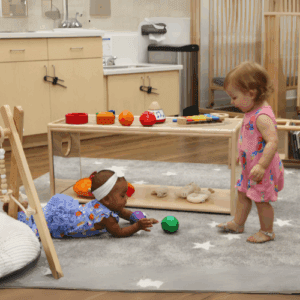
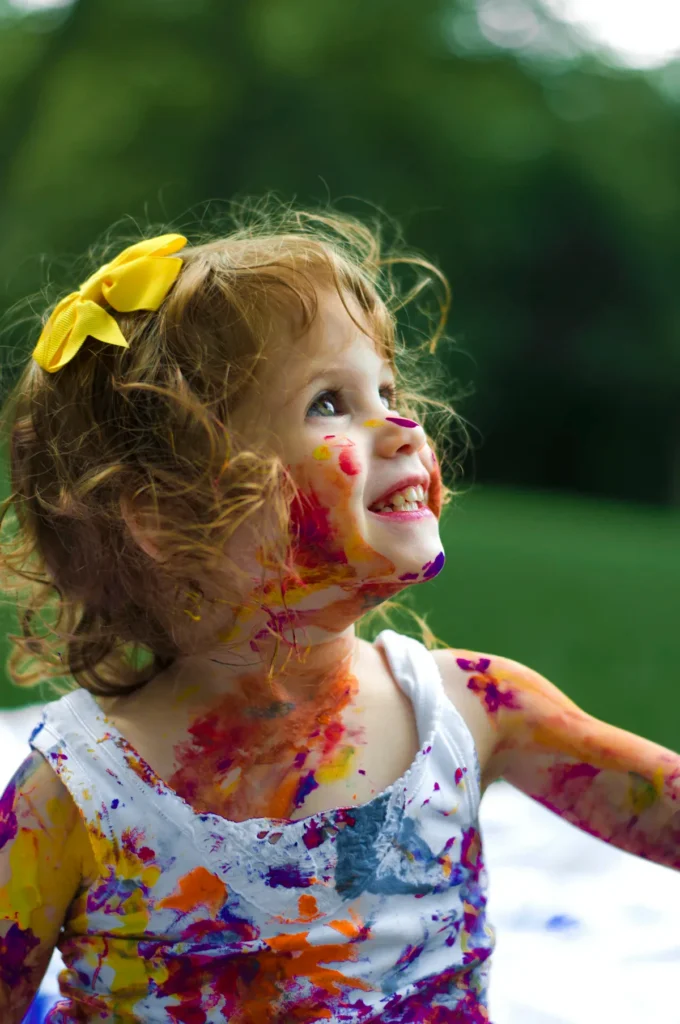
Toddlers are built to move. When you watch your one-year-old take their first steps or a three-year-old learn to jump, you’re seeing their brain and body connect in real-time. This foundational work builds essential gross motor skills for toddlers. Every climb, throw, and balancing act strengthens the pathways they need for everything from classroom focus to lifelong confidence. Understanding the “why” behind their wiggles is powerful. Here, we’ll share our favorite gross motor activities for toddlers, from simple games at home to using playground structures that challenge balance and coordination.
That big whole-body movement is called gross motor development, and it’s one of the most important things you can support during the toddler years.
At Strong Start Early Care & Education, we support every child’s movement development through a Reggio Emilia-inspired approach. Schedule a tour to see our programs in action.
In this guide, we’re sharing what we’ve learned about supporting gross motor growth, including 20 activities you can do at home or in a childcare setting.
What Are Gross Motor Skills, Anyway?
Gross motor skills involve the large muscle groups (legs, arms, core, and back) that power whole-body movement. They’re different from fine motor skills (like holding a crayon or buttoning a coat), which rely on smaller muscles in the hands and fingers.
For toddlers, strong gross motor development means being able to:
- Walk, run, and eventually skip or gallop
- Climb steps, playground structures, and low furniture
- Throw, kick, and catch balls
- Jump, hop, and balance on one foot
- Coordinate two sides of the body (bilateral coordination)
These abilities don’t just matter for gym class. They build core strength, body awareness, and spatial reasoning, all of which support learning, attention, and even reading readiness.
The Deeper Developmental Benefits of Movement
When your toddler is running in circles or trying to climb the sofa for the tenth time, it’s more than just burning off energy. These big movements are building critical pathways in the brain that support everything from coordination to cognitive function. Gross motor skills are the foundation for so much more than just physical strength; they help your child understand their body, navigate their world with confidence, and even prepare for academic tasks like reading and writing. Let’s look at some of the incredible developmental work happening behind the scenes when your child is on the move.
Motor Planning and Praxis
Have you ever watched your child pause and think before figuring out how to get over a pillow fort? That’s motor planning, or praxis, in action. It’s the brain’s ability to conceive of, plan, and carry out an unfamiliar movement. Gross motor skills, which use the large muscles in the arms, legs, and torso for actions like running, climbing, and throwing, are the building blocks for this process. Each time your toddler successfully coordinates a complex movement, they are strengthening their ability to problem-solve with their body. This skill is essential for learning new physical tasks, from riding a tricycle to participating in sports later on.
Proprioception and Body Awareness
Proprioception is your child’s internal sense of where their body is in space, and it’s developed through movement. When a toddler walks on an uneven surface or hangs from monkey bars, their muscles and joints send signals to the brain, building a mental map of their body. This “body awareness” is what allows them to move with control and coordination, navigating a busy playground without constantly bumping into things. At Strong Start, our Fit Kids enrichment program is designed to build this very sense, helping children move through their world with confidence and physical self-awareness.
Crossing the Midline
Imagine an invisible line running down the center of your child’s body. “Crossing the midline” is the ability to move an arm or leg across this line to the other side of the body. It might look simple, but it’s a significant developmental milestone. When a child reaches across their body to grab a toy or makes a big swipe with a paintbrush, they are teaching both sides of their brain to communicate effectively. This skill is a key component of coordination and is fundamental for future tasks like tracking words across a page while reading or writing their name.
Postural Control and Muscle Endurance
Postural control is the core strength and stability that allows a child to hold their body upright against gravity. It’s what helps them sit at a table without slumping or run without toppling over. Muscle endurance is what allows them to sustain that activity. Activities like climbing, pushing a toy stroller, or carrying a bucket of water help improve balance, strength, and endurance. Building this physical foundation not only supports more complex motor skills but also helps a child maintain the focus and attention needed for quiet activities and learning in a classroom setting.
Is Your Toddler on Track? Gross Motor Milestones by Age
Every child develops at their own pace, but here’s a general picture of what gross motor development looks like across the toddler years:
12-18 months:
- Pulls to stand, cruises along furniture
- Takes first steps, walks with wide stance
- Begins to crawl up stairs on hands and knees
- Throws objects (enthusiastically)
18 months-2 years:
- Walks more steadily, begins to run
- Climbs onto low furniture
- Kicks a large ball with some aim
- Begins to jump in place (may not fully leave the ground yet)
2-3 years:
- Runs with better coordination, starts and stops
- Jumps with both feet, starts learning to hop
- Pedals a tricycle
- Walks up stairs alternating feet (holding a rail)
- Catches a large ball with arms extended
3-4 years:
- Hops on one foot for several hops
- Gallops and skips (gallop usually before skip)
- Pumps legs on a swing
- Throws and catches with more control
- Navigates obstacles and uneven terrain
4-5 years:
- Skips smoothly
- Balances briefly on one foot
- Dribbles a ball, kicks with aim
- Climbs confidently on playground structures
- Rides a balance bike or beginner bicycle
If your child is significantly behind in multiple areas, talk to their pediatrician. Occupational or physical therapy can make a real difference when started early.
Tips for Success with Gross Motor Play
Now that you have a sense of the developmental timeline, let’s talk about how to put it all into practice. Supporting your toddler’s gross motor skills doesn’t require expensive toys or complicated setups. It’s about creating a safe space for movement, offering simple invitations to play, and following your child’s lead. The most effective activities are often the ones that feel like pure fun. Below are a few key tips to keep in mind as you encourage your little one to run, jump, and climb. These strategies help ensure that movement is always an engaging and confidence-building experience, not a chore.
Adapt Activities for Your Child’s Skill Level
One of the most important things to remember is that activities can almost always be adjusted to meet your child where they are. The goal is to provide a gentle challenge that builds confidence, not frustration. For example, an indoor obstacle course can be as simple as crawling over a few pillows for a one-year-old. For a four-year-old, you might add painter’s tape on the floor to walk along like a balance beam, shapes to jump between, and a tunnel to crawl through. The same goes for animal walks; a ‘bear crawl’ is great for building arm strength, while a ‘frog jump’ requires more coordination and power. Our exceptional educators are experts at observing each child and modifying activities to ensure they are always engaged and growing at their own pace.
20 Easy Gross Motor Activities Your Toddler Will Love
These activities range from simple home setups to classroom-style movement experiences. Most need little to no equipment.
Indoor Gross Motor Activities
1. Obstacle Course
Set up a living room course using couch cushions to jump over, pillows to crawl through, tunnels of chairs and tables, and tape lines to balance on. Kids love the challenge of navigating a path, and you can change it every time.
2. Freeze Dance
Play music and move freely. When the music stops, everyone freezes. This builds listening skills alongside coordination, and the giggles are a bonus.
3. Animal Walks
Call out animals and move like them across the room: bear crawl (hands and feet), frog jumps, crab walk (hands and feet, belly up), bunny hops. These engage different muscle groups and keep kids thinking.
4. Balloon Tapping
Give a toddler a balloon and challenge them to keep it in the air. It slows the movement enough for little ones to track and respond, with no sharp edges to worry about.
5. Rolling and Tumbling
On a soft rug or yoga mat, roll sideways like a log, do forward rolls (with support), or simply somersault. This builds vestibular awareness (the sense of body position that supports balance and attention).
6. Stair Practice
If you have stairs, supervised up-and-down practice is excellent for leg strength and alternating feet coordination. Make it a game: put a teddy bear at the top and race to reach it.
7. Indoor Basketball
A laundry basket and a soft ball make a simple hoop. Vary the distance and height. This is great for aim, throwing form, and the frustration tolerance of near-misses.
8. Pillow Mountain
Stack couch cushions into a “mountain” and let toddlers climb up and jump off onto a soft landing surface. Height judgment and landing control are real skills worth practicing.
9. Balance Beam
Lay masking tape in a straight or zigzag line on the floor. Walk along it heel to toe. You can also use a two-by-four board on the floor for more of a tactile surface. Balance practice is foundational for all movement.
10. Beanbag Toss
Toss beanbags (or rolled socks) into a bucket from different distances. Bilateral coordination, aim, and the satisfaction of a plunk: this one never gets old.
Want to see these activities in a structured early childhood setting? Visit Strong Start and schedule a tour today.
String Scavenger Hunt
This activity turns your living room into a gentle web of discovery. Hang lightweight items like puzzle pieces, large pasta shapes, or felt letters from strings of varying lengths, attached to chairs, doorknobs, or under a table. Your toddler’s mission is to navigate this space to collect the treasures. As they reach up high, crouch down low, and move around the strings, they are practicing a huge range of movements. This simple setup encourages problem-solving, body awareness, and the coordination needed to stretch and balance without getting tangled, making it a perfect rainy-day adventure.
Giant Cardboard Block Building
Before you break down those delivery boxes, give them a second life as giant building blocks. Stuff large cardboard boxes with crumpled newspaper, tape them shut, and you have a set of lightweight, oversized blocks. Toddlers can practice lifting, carrying, and stacking—all fantastic for building core strength. They can build tall towers just to knock them over (a lesson in cause and effect!), create bridges to crawl under, or make a fort to hide inside. This activity is a perfect example of how everyday items can become powerful tools for learning, a core principle of our Reggio Emilia-inspired curriculum.
The Floor is Lava
This classic game is a gross motor powerhouse. The rules are simple: the floor is hot lava, and you can only move by stepping on safe “islands” like pillows, cushions, or sturdy furniture. This game is incredible for developing motor planning, as your child has to strategize their path from one safe spot to the next. It also builds balance, jumping skills, and spatial awareness. You can even find “Floor is Lava” songs online to add to the fun. Just be sure to supervise closely and ensure all climbing surfaces are stable and safe for your little adventurer.
Vertical Bowling
Set up a simple bowling alley in your hallway. Stack lightweight plastic cups into a pyramid and give your toddler a soft ball to roll or throw. This activity is a two-for-one, engaging fine motor skills to carefully stack the cups and gross motor skills to aim and roll the ball with enough force to knock them down. It’s a fantastic way to practice hand-eye coordination and learn about cause and effect. As they get better, you can increase the distance or create a more complex tower to challenge their developing skills.
Paper Ball Fight
Need to burn off some serious energy indoors? A paper ball fight is your answer. Give your child a stack of old newspapers or scrap paper and let them have fun crumpling it into balls—a great workout for little hands. Then, create a barrier down the middle of the room with pillows. The goal is to throw all the paper balls onto the other side. This is a safe, fun way to practice throwing, aiming, and moving quickly. It’s a high-energy game that provides great sensory input and is perfect for getting the wiggles out.
Outdoor Gross Motor Activities
11. Bike or Scooter Riding
Balance bikes (no pedals) are excellent starting points from around age 2. Gliding teaches balance before coordination. Add a helmet and let them go.
12. Hill Rolling
Find a gentle grassy hill and roll down it. Pure joy, genuine vestibular work, and a reason to be outside.
13. Kicking Practice
Set up a soft ball and practice kicking toward a target (two cones, or a laundry basket on its side). Start close and move back as aim improves.
14. Playground Climbing
Monkey bars, climbing walls, and ladders all build upper body and grip strength along with problem-solving. Let kids move at their own pace rather than rushing them.
15. Sidewalk Hopscotch
Draw a classic hopscotch grid with sidewalk chalk. Hopping on one foot, jumping with two, and landing in squares all challenge coordination in different ways.
16. Running Races
Simple sprints across a yard or park are underrated. Short bursts of running build cardiovascular fitness and teach kids to accelerate and decelerate safely.
17. Puddle Stomping
After rain, let toddlers jump into puddles with boots on. The splashing feedback makes the experience vivid and exciting, and the unpredictable surface keeps their bodies working.
18. Bubble Chasing
Blow bubbles and have kids chase them. Running, lunging, reaching, jumping: bubble chasing pulls out a full range of movements without any instruction needed.
19. Wheelbarrow Walking
Hold a child’s legs at hip height while they walk on their hands across a short distance. This builds shoulder, core, and arm strength. Works best around age 3 and up.
20. Nature Hike
A slow walk on an uneven trail does more for gross motor development than a smooth sidewalk. Stepping over roots, navigating rocks, and climbing small hills all challenge balance and coordination naturally.
Helpful Gardening Tasks
Getting your hands dirty in the garden is more than just a sensory experience; it’s a full-body workout for your toddler. Simple tasks like pulling weeds build arm strength and require balance, while squatting to collect sticks strengthens their legs. Ask your little one to help carry a small, child-sized watering can to work on their muscle strength and coordination. This kind of purposeful work is fantastic for development because it has a clear beginning, middle, and end. They aren’t just moving for movement’s sake—they’re contributing. This hands-on, real-world learning is a core part of our enrichment programs, where we see how capable young children are when given a meaningful job.
Learning the Monkey Bars
Mastering the monkey bars is a rite of passage for a reason. It’s a complex skill that builds incredible arm and core strength, coordination, and motor planning. Don’t expect your toddler to swing across on the first try. The process starts with simply holding onto a bar and supporting their own body weight. From there, they might practice swinging back and forth before attempting to move from one bar to the next. This gradual progression helps them build momentum and, more importantly, confidence in their physical abilities. Our Reggio Emilia-inspired philosophy honors this process, encouraging children to tackle challenges at their own pace and discover what their bodies can do through exploration.
Progressive Ball Skills
Playing with a ball is a fundamental skill that grows with your child. You can make it more engaging by adding simple challenges. Use sidewalk chalk to draw a winding path and have your toddler try to roll the ball along the line. Set up a laundry basket as a target and practice throwing from different distances. Even just kicking a ball back and forth improves their aim and body awareness. These activities are crucial for developing hand-eye and foot-eye coordination. By starting simple and gradually adding difficulty, you help your child build skills without feeling overwhelmed, turning basic play into a powerful learning opportunity.
Mud Target Practice
If you’re willing to embrace a little mess, mud target practice is an unforgettable way to work on throwing skills. After a good rain, find a patch of dirt and draw a few chalk circles on a fence or the ground to create targets. Making mud pies or soft mud balls to throw is a fantastic sensory activity in itself. Then, let your toddler take aim! This creative game helps them practice throwing accuracy and coordination in a fun, low-stakes way. It’s a perfect example of how children can learn through investigation, testing how different materials work and what their bodies are capable of, all while engaging in imaginative play.
Activities That Combine Learning and Movement
The best toddler activities often do double duty. While your child is busy running, jumping, and climbing, their brain is just as active, making connections and absorbing new information. This is a core part of our philosophy at Strong Start, where we see learning as a fully integrated experience. Our Reggio Emilia-inspired approach recognizes that children use their whole bodies to explore, question, and understand the world. By combining movement with concepts like letters, colors, and directions, you’re not just tiring them out—you’re helping them build stronger neural connections in a way that feels like pure fun. Here are a couple of simple ideas that do just that.
Alphabet Name Hop
This activity is a fantastic way to help your child connect with the letters in their own name, which is often one of the first and most meaningful words they learn to recognize. Using sidewalk chalk outside or painter’s tape indoors, write the letters of your child’s name in a scattered path on the ground. Call out the letters one by one and have them hop from one to the next to spell their name. This simple game combines the gross motor challenge of hopping and balancing with the cognitive task of learning letters and sequencing. For a variation, you can use numbers, shapes, or even the names of family members.
Backyard Chalk Twister
Take the classic game of Twister outside with a bit of sidewalk chalk. Draw several large circles on the pavement in different colors—red, blue, yellow, and green are a great start. Then, start calling out commands like, “Right foot on blue!” or “Left hand on red!” This game is a powerhouse for development. Your child gets to practice balance, core strength, and motor planning as they stretch and move their body. At the same time, you’re reinforcing color recognition, an understanding of left and right, and the ability to follow multi-step directions. It’s a perfect way to turn a sunny afternoon into a full-body learning session.
How We Encourage Movement at Strong Start
At Strong Start, gross motor development isn’t something we schedule into a single “PE time.” Movement is woven into our daily environment: ample indoor and outdoor space, intentional design, and teachers who watch closely to know when a child is ready to try something new.
Our Reggio Emilia approach means we follow children’s lead. When a group of toddlers becomes fascinated by balance, testing every low edge, narrow ledge, and uneven surface, we extend that. We bring in wobble boards and balance beams, document what they’re trying to do, and create provocations that push their skills a little further.
This isn’t random play. It’s purposeful. Research consistently shows that strong gross motor foundations in early childhood predict better attention, academic readiness, and even social confidence. When children trust their bodies, they’re more willing to take risks in learning.
When to Talk to a Pediatrician About Gross Motor Skills
Most gross motor development follows a predictable sequence, even if the exact ages vary. Reach out to your child’s doctor if you notice:
- Significant asymmetry (only using one side of the body)
- Lack of progress in crawling, walking, or jumping over several months
- Toe-walking past age 3
- Falling frequently compared to peers
- Reluctance to participate in physical play (combined with other delays)
Early intervention through occupational or physical therapy can address motor delays effectively. The earlier, the better.
Helpful Resources for Guided Movement
Sometimes, even with the best intentions, it’s hard to come up with new ways to keep your toddler moving, especially on a rainy day or when you’re short on time. Having a few go-to resources for inspiration can make all the difference. Whether you need a quick five-minute activity or a structured movement song to guide you, the internet offers some fantastic tools for parents and caregivers. These resources can help you turn a moment of wiggly energy into a purposeful, skill-building experience without needing a lot of prep time or fancy equipment. It’s all about having a few tricks up your sleeve to make movement fun and easy.
Websites for Physical Activity Ideas
When you need a fresh idea, the activities in this post are a great place to start. Beyond that, many websites offer wonderful suggestions that range from simple home setups to more involved movement experiences. The best part is that most need little to no special equipment, relying on household items like pillows, tape, and laundry baskets. You can help your toddler develop these important skills by doing fun activities right at home. Websites like The Inspired Treehouse, run by a pediatric OT and PT, and of course, the Strong Start blog, are filled with creative and developmentally appropriate ways to encourage physical play.
YouTube Channels for Movement Songs
Using music and guided videos can be a huge help in getting kids moving and engaged, especially when their attention starts to wander. A good movement song can turn a grumpy afternoon around in minutes. Channels like GoNoodle, The Kiboomers, and Jack Hartmann offer upbeat songs with simple, repetitive actions that are perfect for toddlers. For something a bit calmer that also builds body awareness, Cosmic Kids Yoga tells stories through yoga poses. These videos are fantastic for brain breaks and provide a clear, guided structure that helps children learn to follow directions while strengthening their bodies. Remember, building strong gross motor foundations helps support everything from attention to academic readiness.
Is Strong Start Right for Your Family?
Strong Start Early Care & Education serves families in the Trumbull and Wilton, Connecticut areas with infant, toddler, preschool, and pre-K programs built on research-based, relationship-centered learning. We believe in knowing every child and family deeply, and that starts from day one.
Schedule a tour to see how we support your child’s full development, including the big whole-body movement that matters so much in these early years.
Frequently Asked Questions
What are the best gross motor activities for 1-year-olds?
At 12-18 months, focus on walking practice, pulling to stand, crawling over soft obstacles, and simple ball play. Keep activities short, safe, and exploratory.
How much movement does a toddler need each day?
The American Academy of Pediatrics recommends at least 60 minutes of physical activity per day for toddlers (ages 1-3) and at least 120 minutes for preschoolers (ages 3-5). Most of that can be unstructured active play.
Gross Motor vs. Fine Motor Skills: What’s the Difference?
Gross motor skills use large muscle groups for whole-body movement (walking, jumping, climbing). Fine motor skills use smaller muscles, mainly in the hands, for precise movements like writing, cutting, or buttoning.
When should toddlers be able to jump?
Most toddlers begin to jump with both feet leaving the ground between 24-30 months. If your child isn’t jumping by age 3, mention it to their pediatrician.
Can gross motor delays affect learning?
Yes. Gross motor development supports core strength, bilateral coordination, and body awareness, all of which contribute to sitting upright in school, holding a pencil, and sustained attention. Early support for motor delays can have meaningful academic benefits.
Key Takeaways
- Big movements build a smarter body: Gross motor activities do more than burn energy; they teach your child’s brain how to plan actions, understand where their body is in space, and coordinate both sides of their body, which are foundational skills for all types of learning.
- Everyday fun is powerful practice: You don’t need special equipment to support gross motor skills. Simple games like building a pillow obstacle course, having a paper ball fight, or helping in the garden are effective ways to build strength, coordination, and confidence through play.
- Meet your child where they are: Every toddler develops differently, so focus on providing gentle challenges that build confidence. Adapt activities to their current skill level and watch for consistent patterns or significant delays if you have concerns about their progress.
Related Articles
- 15 Social Development Activities for 2-3 Year Olds
- Best Early Childhood Education Activities for Toddlers
Written By
Marc Hoffman
Founder, Strong Start Early Care & Education
Marc founded Strong Start in 2014, inspired by his studies at Williams College, Yeshiva University, and research at Yale University. His child-centered, inquiry-based approach to early education has helped hundreds of families in the Trumbull and Bridgeport communities. As a parent himself, Marc understands the importance of finding a nurturing environment where every child can learn, grow, and flourish.