When we think about preparing our children for school, our minds often jump to letters, numbers, and colors. But what if the most important skill for learning isn’t academic at all? The ability to manage frustration, share with a friend, or ask for help is the true foundation for success. This is where a great emotional program makes all the difference. It’s designed for emotional skills development, giving kids the tools they need for the classroom and beyond. This guide will show you what these programs look like and how to find one that nurtures your child’s heart as much as their mind.
Key Takeaways
- Emotional intelligence is as important as academics: Helping children understand their feelings builds the foundation for school readiness, healthy friendships, and lifelong resilience.
- Effective programs integrate emotional learning: Look for a school that weaves social-emotional skills into daily activities like story time and guided play, rather than treating it as a separate lesson.
- Your role at home is essential: A child’s emotional growth depends on a strong partnership between school and family. You can reinforce these skills by validating your child’s feelings and modeling healthy coping strategies.
What Is an Emotional Development Program for Children?
Emotional development programs are designed to help young children understand their big feelings and the feelings of others. Think of it as a toolkit for life, teaching them how to manage emotions, build positive relationships, and make thoughtful decisions. It’s not about suppressing feelings, but about learning how to express them in healthy ways. A quality program weaves these lessons into everyday activities, from story time to playtime, creating a supportive space where children feel safe to learn and grow emotionally.
What Makes an Emotional Program Great?
A truly great program takes a holistic approach. It’s not just a single lesson on “being kind.” Instead, social and emotional learning is woven into the very fabric of the day. This includes creating a nurturing classroom environment, fostering positive relationships between children and their teachers, and providing clear instruction on emotional skills. The best programs also recognize that you, the parents, are a child’s first and most important teacher. That’s why a strong parent-school partnership is essential, ensuring that the skills learned at school are supported and reinforced at home. It’s a team effort.
What is Social-Emotional Learning (SEL)?
You’ll often hear the term Social-Emotional Learning, or SEL, used to describe these programs. At its core, SEL is the process of developing the skills needed to thrive in school and in life. This includes recognizing one’s own emotions, managing them effectively, understanding others’ perspectives, and building healthy relationships. Research shows that parents overwhelmingly want schools to teach these skills. It’s what helps children become more independent, cooperate with friends, and solve problems thoughtfully. SEL provides the foundation for children to not only learn better academically but also to become compassionate and capable individuals.
Connecting SEL to Neurodevelopmental Needs
Social-Emotional Learning goes hand-in-hand with your child’s brain development. When children learn to name their feelings and develop strategies to manage them, they are building crucial neural pathways for self-regulation. This ability to handle stress and navigate social situations is fundamental for healthy neurodevelopment. It allows their brains to move from a state of reaction to one of readiness—ready to listen, focus, and absorb new information. Research shows that children with strong emotional skills are better equipped to handle challenges, which improves their cognitive functions and academic performance. This emotional growth thrives on consistency, which is why a strong partnership between school and family is so important in reinforcing these foundational skills.
How the Pyramid Model Builds Social-Emotional Skills
Many high-quality early childhood programs use a framework called the Pyramid Model to guide their approach. Imagine a pyramid: the wide, sturdy base represents the positive relationships and supportive environments that every child needs. The next level up involves teaching specific social skills to all children, like how to share or take turns. For the small number of children who need extra help, the top of the pyramid represents more individualized support. This evidence-based framework ensures that every child gets the right level of support to build social and emotional competence and prevent challenging behaviors from the start.
Who Benefits from Emotional Learning?
The short answer is: everyone. Social-emotional learning isn’t just a phase for toddlers or a box to check before kindergarten. It’s a lifelong practice that benefits children, teenagers, and even adults. When we give children a strong emotional foundation, we’re equipping them with skills that will help them in their friendships, their future careers, and their personal well-being. This learning journey starts in early childhood but continues to evolve, adapting to meet new challenges at every stage of life. It’s a gift that truly keeps on giving, supporting individuals of all ages and abilities in building a more compassionate and connected world.
Programs for All Ages
While the groundwork for emotional intelligence is laid in the early years, the learning doesn’t stop there. Think of the skills your child learns in preschool as the first chapter in a much longer book. As children grow, programs continue to build on this foundation. For example, award-winning curricula like Emotional ABCs are designed for elementary-aged children to help them manage more complex feelings and social situations. This continued focus shows just how vital it is to start with a quality program that nurtures a child’s natural curiosity about their own emotions and the feelings of others, setting them up for success long after they leave their first classroom.
Support for Neurodivergent Individuals and Adults
A truly effective approach to emotional learning recognizes that every person is unique. This is especially important when supporting neurodivergent individuals, who may experience and process emotions differently. The goal is not to force a one-size-fits-all model but to provide tailored tools that honor their individual needs. For instance, specialized interventions like the Emotional Support Plan help autistic adults identify stressors and develop positive coping skills. This highlights the importance of an inclusive environment from the very beginning, where caring educators can adapt their approach to ensure every child feels seen, understood, and equipped to handle their emotions with confidence.
Why Is Emotional Development So Important for Young Children?
When we think about preparing our children for the future, we often focus on letters, numbers, and colors. But the ability to understand and manage feelings is just as critical. Emotional development is the foundation upon which all other learning is built. It gives children the tools they need to pay attention in class, make friends on the playground, and handle the inevitable frustrations of learning something new. A child who can name their feelings is better equipped to ask for help, and a child who understands empathy is more likely to be a kind and supportive friend. Investing in their emotional growth now gives them a sturdy base for a happy, healthy, and successful life. At Strong Start, we see this every day. Children who feel emotionally secure are more curious, confident, and eager to explore the world around them. This emotional well-being is the secret ingredient that helps them soak up new knowledge and build meaningful relationships.
How Emotional Skills Lead to School Readiness
A child’s ability to thrive in a school setting is deeply connected to their emotional skills. Think about it: learning requires focus, persistence, and the ability to work through challenges. Social and emotional learning (SEL) gives children the tools to do just that. When a child can manage their impatience while waiting for a turn or express their frustration without a tantrum, they can engage more fully in classroom activities. This self-regulation helps them become more independent learners and better collaborators. At Strong Start, our curriculum inspired by Reggio Emilia is designed to nurture these skills, preparing children not just academically, but emotionally for the journey ahead.
Helping Your Child Build Healthy Friendships
Friendships are one of the great joys of childhood, but they also require a complex set of skills. Emotional development is the key that helps children form and maintain these important bonds. When children can recognize and manage their emotions, they are better able to understand the feelings of others, share toys, take turns, and resolve disagreements peacefully. Learning to say, “I feel sad when you take my crayon,” instead of grabbing it back is a huge step. It’s how they learn to communicate their needs respectfully and build the foundation for empathy, kindness, and lasting friendships.
Raising a Resilient Child
The emotional skills your child learns today will support them for the rest of their lives. Learning to cope with big feelings like disappointment, anger, and anxiety in a healthy way builds resilience. This ability to bounce back from challenges is crucial for mental well-being. Strong emotion regulation is a protective factor that helps children handle stress as they grow. By creating a safe space to explore feelings, we are giving them a priceless gift. We are teaching them that their emotions are valid and that they have the inner strength to handle whatever life sends their way, which is a core part of our founding philosophy.
What Does a Strong Emotional Development Program Look Like?
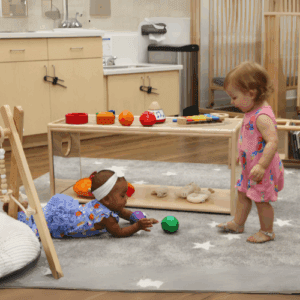
When you walk into a classroom that truly nurtures emotional growth, it doesn’t feel like a formal lesson is underway. Instead, you’ll see emotional learning woven into every part of the day. A strong program creates an environment where children feel safe to express exactly who they are, big feelings and all. It’s a place where curiosity about emotions is encouraged just as much as curiosity about bugs, blocks, or books.
This looks different for a baby than it does for a four-year-old, but the foundation is the same. It’s about intentional interactions and a thoughtfully designed space that supports social connection and self-discovery. At Strong Start, our approach is inspired by philosophies like Reggio Emilia, where the environment itself is considered a teacher. Cozy corners for quiet reflection, group tables that encourage collaboration, and materials that invite children to work together all play a role. The goal is to help children understand their own feelings and begin to recognize them in others, building a strong foundation for empathy and self-awareness from their very first day.
What Kind of Activities Will My Child Do?
A great program uses fun, hands-on activities to make abstract concepts like emotions feel concrete and understandable. For infants, this might be as simple as a caregiver mirroring their expressions and responding to their cues with gentle words and comfort. As children grow into toddlers, teachers might use puppets to act out common scenarios like sharing a toy or feeling left out. In our Preschool Classrooms, children might read a story and discuss how the characters are feeling, draw pictures in a “feelings journal,” or work together to create a “calm-down corner” filled with comforting items. These activities help children build a vocabulary for their feelings and practice healthy ways to express them.
Specific Tools and Frameworks for Emotional Regulation
Beyond daily activities, many programs use specific, research-backed tools to give children a concrete way to understand and manage their feelings. These frameworks provide a common language for children, teachers, and parents, making it easier to talk about emotions. They often use simple, memorable concepts that children can easily grasp and apply when they feel overwhelmed. These tools aren’t just about stopping a tantrum; they’re about teaching a child what’s happening inside their body and brain and giving them the power to respond thoughtfully. This is where the expertise of exceptional educators shines, as they can introduce and guide children through these powerful frameworks.
The Emotional ABCs Toolbar: Pause, Rewind, and Play
Think of the Emotional ABCs Toolbar as a simple remote control for feelings. This award-winning, interactive tool helps children learn to pause when a big emotion hits, rewind to figure out what caused it, and then choose a better way to play out the situation. It’s an evidence-based program that uses engaging activities to teach children how to identify what they’re feeling, calm themselves down, and make thoughtful choices. By giving children a clear, step-by-step process, it demystifies overwhelming emotions and builds their confidence in their ability to handle them. This is a fantastic way to build the self-regulation skills that are so important for success in school and in friendships.
Personalized Emotional Support Plans (ESPs)
While some tools are designed for specific age groups, the principles behind them can be adapted to support anyone. For example, the concept of a Personalized Emotional Support Plan (ESP) shows how powerful a structured approach can be. While the formal ESP model was developed for adults, its core ideas are incredibly useful for children. It involves helping an individual identify their personal warning signs for stress, create a list of go-to calming strategies, and know who their support people are. For a child, this might look like working with a teacher to recognize that they get frustrated when a tower of blocks falls and creating a plan to take three deep breaths or find a quiet corner when that happens. This proactive approach empowers children by giving them a predictable plan for managing tough moments.
How Play Teaches Children About Their Feelings
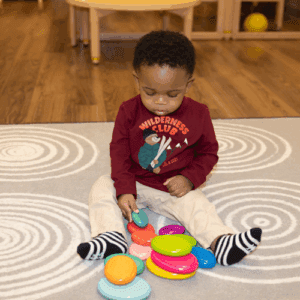
Children learn best through play. It’s how they make sense of the world, and their emotional world is no exception. When children are playing, they are constantly experimenting with social and emotional skills. Building a block tower with a friend involves cooperation and negotiation. A game of make-believe allows them to practice empathy by stepping into someone else’s shoes. At Strong Start, we use The Project Approach to turn children’s natural curiosity into deep, hands-on investigations. A simple interest in building a fort can become a rich lesson in teamwork, problem-solving, and managing the frustration that comes when the blankets keep slipping. Teachers guide these moments, helping children navigate challenges and celebrate successes together.
How Teachers Coach Emotional Skills and Mindfulness
A teacher’s role in emotional development is less about instructing and more about coaching. Our exceptional educators are trained to be “emotion coaches” who guide children through their feelings in real-time. When a child is upset, a teacher gets down on their level to offer support, not just a solution. They help children identify what they’re feeling by giving it a name: “It looks like you’re feeling frustrated that the puzzle piece won’t fit.” Then, they guide them toward healthy coping strategies, like taking a few deep “belly breaths” or finding a quiet space to relax. This responsive coaching helps children build the tools they need to manage their emotions independently over time.
How Do Social-Emotional Programs Work Day-to-Day?
You might be wondering how these big ideas about emotional intelligence translate into a typical day for your little one. Social-emotional learning isn’t a separate class scheduled between naptime and snacks. Instead, it’s woven into every interaction, activity, and routine. At Strong Start, our educators intentionally create a nurturing environment where children can practice these skills in real, everyday moments. From the morning greeting to the afternoon goodbye, every part of the day is an opportunity to learn about feelings, friendships, and finding solutions together. Here’s a closer look at what that looks like in our classrooms.
A Daily Practice: Emotional Check-Ins
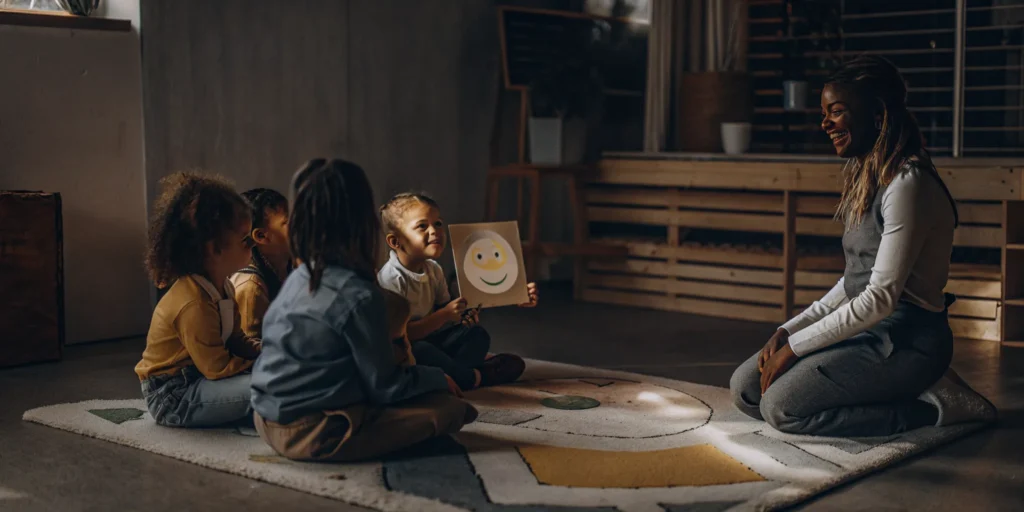
The day often begins with a gentle emotional check-in. This might be a “feelings chart” near the door where children can point to a face that shows how they feel: happy, sad, tired, or excited. During morning circle, a teacher might ask, “How is everyone’s heart feeling today?” This simple routine does something powerful: it validates every emotion and shows children that it’s okay to feel however they feel. It also gives our educators important insight into how to best support each child throughout the day. This practice strengthens our partnership with parents, creating a consistent and supportive circle of care around your child from home to school and back again.
Naming Feelings with Books and Songs
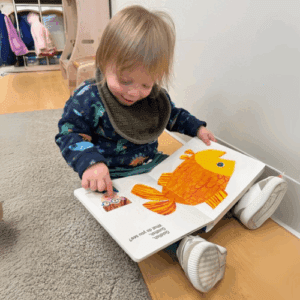
Stories and songs are some of the most powerful tools we have for exploring emotions. You’ll often find our classrooms gathered for a story about a character who is feeling frustrated, brave, or shy. Afterward, the teacher guides a conversation, asking questions like, “How do you think the little bear felt when his tower fell down? Have you ever felt that way?” We also use music and movement to express feelings that are too big for words. These activities help children build a rich vocabulary to describe their inner world. This creative exploration is a cornerstone of our Reggio Emilia-inspired approach, where learning happens through expression and discovery.
Teaching Problem-Solving and Conflict Resolution
When two toddlers both want the same red truck, it’s more than a conflict; it’s a learning opportunity. Instead of simply separating them, our teachers act as coaches. They get down on the children’s level and help them use their words. They might say, “I see two friends who both want the truck. What can we do so you can both have a turn?” They guide the children toward solutions, like using a timer or finding a similar toy. This approach, central to The Project Approach, teaches essential life skills. Children learn that their feelings are heard, that problems can be solved peacefully, and that they are capable of finding fair solutions with their friends.
Simple Activities that Build Empathy
Empathy is the ability to understand and share the feelings of another, and it’s a skill we practice every day. This might look like a group art project where children have to work together to create something beautiful, learning to share space and materials. It could be a role-playing game where they pretend to be community helpers, imagining what it’s like to be a doctor caring for a patient. Our exceptional educators are skilled at spotting these teachable moments, helping children notice when a friend is sad and think of ways to help. Through these shared experiences, children learn to see the world from different perspectives and build a foundation for kind and compassionate friendships.
How You Can Support Your Child’s Emotional Growth
Your child’s emotional learning doesn’t stop when they leave the classroom. In fact, the skills they practice at school are most effective when they are supported and reinforced at home. As a parent, you are your child’s first and most important teacher, especially when it comes to understanding feelings. Think of it as a partnership: we introduce the concepts and tools at school, and you help your child practice them in the real world. This collaboration is at the heart of our approach, and we believe that a strong parent-school partnership is the key to helping your child thrive.
Supporting your child’s emotional growth doesn’t require a special degree or complicated techniques. It’s about being present, intentional, and consistent in a few key areas. By creating a safe emotional environment, modeling healthy coping skills, and engaging in simple, fun activities, you can make a profound difference in your child’s ability to understand themselves and connect with others. These everyday moments are where the most meaningful learning happens, building a foundation of emotional intelligence that will last a lifetime.
Create an Emotionally Safe Space at Home
An emotionally safe space begins with a foundation of physical well-being. For children to explore their feelings, they need consistent routines, healthy food, and plenty of sleep. Our commitment to health and safety at school is designed to support this, but a predictable home environment is just as important. Beyond the basics, an emotionally safe home is one where all feelings are allowed and validated. It’s a place where your child knows it’s okay to be sad, angry, or frustrated without fear of judgment. You can create this by acknowledging their feelings, even if you don’t agree with the behavior. Simply saying, “I can see you’re very upset that playtime is over,” shows them their feelings matter.
Model Healthy Ways to Manage Big Feelings
Children are expert observers, and they learn how to handle their emotions by watching you. When you experience a moment of frustration, like spilling your coffee or getting stuck in traffic, you have a powerful opportunity to teach. Instead of reacting impulsively, try narrating your own process out loud. You could say, “I’m feeling really frustrated right now, so I’m going to take a few deep breaths to calm down.” By modeling healthy coping skills, you show your child that big feelings are normal and manageable. You’re giving them a real-life script they can use when their own emotions feel overwhelming.
Creating a Common Language for Feelings
One of the most powerful things you can do is to help your child build a vocabulary for their emotions. When children have the words to describe what’s happening inside, they are less likely to express their feelings through hitting, crying, or tantrums. You can start by simply naming the feelings you see. For example, saying, “You look so excited to see grandma!” or “I can see you’re feeling sad that we have to leave the playground.” This validates their experience and gives them the language to use next time. Using books and songs is another wonderful way to explore emotions together, just like we do in our classrooms. By consistently naming feelings, you create a shared language that helps your child feel understood and more in control of their emotional world.
Bring Learning Home with Fun Family Activities
You can reinforce emotional skills through simple, playful activities that fit right into your daily routine. Activities that help children recognize and name their feelings make them more aware of themselves and more empathetic toward others. Try reading books and talking about how the characters might be feeling. You can also draw pictures of different emotions or play a game where you make faces to match feelings like “surprised,” “silly,” or “grumpy.” This approach mirrors The Project Approach we use in our classrooms, where learning is driven by curiosity and discovery. These shared moments not only build skills but also strengthen your connection with your child.
The Teacher’s Role in Emotional Skills Development
A great emotional development program is more than just a set of activities. It comes to life through dedicated teachers and a thoughtfully designed environment. At Strong Start, we focus on turning social-emotional learning theory into daily practice. This means our educators are not just teaching; they are actively modeling, guiding, and creating a space where your child can feel secure enough to explore their feelings and build relationships. It’s a hands-on approach that requires continuous learning, a supportive classroom culture, and a strong connection between school and home.
Why Ongoing Teacher Training Matters
For children to develop strong social-emotional skills, the adults guiding them need the right tools and support. That’s why we prioritize ongoing professional development for our exceptional educators. Effective teacher training helps our team understand how to keep children engaged and ready to learn about their emotions. It equips them with strategies to model empathy, guide problem-solving, and create a positive classroom dynamic. When teachers feel confident in their ability to support emotional growth, they can better help every child build a foundation for self-awareness and resilience. This commitment ensures our approach is always thoughtful, current, and effective.
Designing a Classroom That Feels Safe and Supportive
A child’s classroom should be a place where they feel emotionally and psychologically safe. We design our learning environments to be warm, welcoming, and predictable, which helps children feel secure enough to be themselves. This goes beyond physical safety; it’s about building caring relationships between teachers and children, and among the children themselves. We make sure the learning content matters to them and that they have a say in their day. Creating this supportive atmosphere also involves a strong partnership with parents. When families and educators work together, it creates a consistent and reassuring world for your child, strengthening their confidence and sense of belonging.
How Teachers Track Your Child’s Emotional Growth
Understanding your child’s emotional progress is a key part of our partnership with you. Unlike academic subjects, emotional growth isn’t measured with tests. Instead, our teachers use careful observation and documentation to track development. They look for milestones like a child’s growing ability to identify their feelings, show empathy for a friend, or use words to solve a small conflict. We believe clear communication is essential, so we make a point to share these observations with you. We provide regular updates on your child’s day and offer practical tips you can use at home. This collaborative approach ensures we are all working together to support your child’s journey toward becoming a confident, emotionally intelligent individual.
Do These Programs Actually Work? The Evidence Says Yes
It’s natural to wonder if a focus on emotional skills really makes a difference. As a parent, you want to know that the time and energy invested in a program will truly help your child. The great news is that the answer is a clear and resounding yes. Decades of research show that high-quality emotional development programs give children a powerful advantage, not just for school, but for life. Let’s look at what the studies say.
What the Research Says About Academic and Social Success
When children learn to understand their feelings and get along with others, they’re better prepared for the classroom. At this point, experts agree that social-emotional learning really does help kids both academically and socially. A child who can manage frustration is more likely to stick with a tricky puzzle. A child who can communicate their needs is better at working with classmates on a group activity. These skills create a positive cycle: when children feel confident and capable in social situations, they can focus more easily on learning. This foundation sets them up for success from their very first day of school.
Measurable Improvements in School Climate
When a classroom is filled with children who can express their needs and understand their friends, the entire atmosphere changes for the better. This is the direct result of effective social-emotional learning. A child who has the tools to manage frustration is more likely to persevere with a challenging puzzle instead of giving up. A child who can communicate their ideas is better able to collaborate with classmates on a group project. These skills create a positive cycle: as children grow more confident in social situations, they can focus more easily on learning. This creates a calmer, more cooperative, and productive learning environment for everyone, setting the stage for academic success from the very beginning.
Significant Financial Return on Investment
Investing in a high-quality early education program that prioritizes emotional development provides incredible long-term value. While it may seem abstract, the skills children learn—like self-regulation, problem-solving, and empathy—are foundational for future success in school and life. Programs like Positive Action show how structured, evidence-based approaches are trusted by schools because they deliver clear results. For parents, the return on investment comes from giving your child the tools to prevent future behavioral and academic challenges. By building a strong emotional foundation now, you are investing in your child’s lifelong well-being, resilience, and ability to thrive in a complex world.
The Lifelong Benefits of Early Emotional Learning
The positive effects of a strong emotional foundation extend far beyond the classroom walls. Landmark studies have followed children into adulthood and found that high-quality early childhood education offers incredible long-term advantages. Children who participate in these programs often grow into adults with better health, stronger problem-solving skills, and more stable careers. By learning how to build healthy relationships, manage stress, and approach challenges with resilience, your child is gaining tools they will use for the rest of their life. It’s about nurturing a happy, well-rounded person who is ready for whatever comes their way.
The Bigger Picture: Emotional Wellness and Youth Mental Health
The skills your child learns in their first few years—how to name their feelings, calm their body, and connect with others—are more than just preparation for kindergarten. They are the building blocks for lifelong emotional wellness. When we talk about emotional development, we are really talking about the foundation of mental health. Giving children a strong start in understanding their inner world equips them to handle the inevitable challenges of growing up. It’s a proactive approach that nurtures resilience, confidence, and the ability to seek support when needed, setting the stage for a healthy and balanced life.
Understanding the Need for Emotional Support
Emotional development is the foundation upon which all other learning is built. It gives children the tools they need to pay attention in class, make friends on the playground, and handle the inevitable frustrations of learning something new. This early groundwork is crucial because it teaches children that their feelings are valid and manageable. When children feel emotionally secure, they are more open to learning and better equipped to form healthy relationships. This is why our founding philosophy at Strong Start is centered on nurturing the whole child. We believe that supporting a child’s emotional well-being is just as important as teaching them their ABCs, creating a sturdy base for their future mental health.
Practical Coping Strategies for Stress
Children are expert observers, and they learn how to handle their emotions by watching you. When you experience a moment of frustration, like spilling your coffee or getting stuck in traffic, you have a powerful opportunity to teach. Instead of reacting impulsively, try narrating your own process out loud. You might say, “Wow, I’m feeling really frustrated right now. I’m going to take a deep breath to help my body calm down.” This modeling is one of the most effective ways to teach coping skills. It shows your child that everyone has big feelings and that there are healthy ways to manage them. This is a key part of our partnership with parents, as reinforcing these strategies at home makes them even more powerful.
Where to Find Help in a Crisis
Sometimes, a child’s emotional needs may require more support than what can be provided at home or in the classroom, and that’s perfectly okay. Knowing where to turn for help is a sign of strength. Your pediatrician is always a great first point of contact, as they can rule out any physical issues and connect you with local resources. Many community organizations also offer programs designed to address youth mental health by integrating social-emotional learning and supportive care. If you ever feel your child is in immediate crisis, don’t hesitate to seek professional help. Building a support network for your family is a vital part of nurturing your child’s long-term emotional wellness.
Overcoming Common Challenges Together
Supporting a child’s emotional growth is a true partnership between home and school. While the goal is always to work together, it’s helpful to recognize that both families and educators can face hurdles along the way. Understanding these common challenges can help everyone find better ways to connect and ensure children get the consistent support they need to thrive. When we know what to look for, we can build stronger bridges between a child’s two most important worlds.
From differing communication styles to a simple lack of resources, these obstacles are real, but they are not insurmountable. The best early childhood programs are aware of these potential issues and proactively work to address them, creating an environment where both children and their families feel seen, heard, and supported.
Closing the Knowledge Gap for Teachers and Parents
One of the biggest challenges is ensuring everyone is on the same page. Sometimes, educators may not have received in-depth training on the latest social-emotional learning (SEL) strategies, making it difficult to teach these skills with confidence. On the other side, you as a parent might not be sure what SEL looks like in the classroom or how to continue the lessons at home. This knowledge gap can create a disconnect. That’s why high-quality programs prioritize continuous professional development, ensuring their staff are always learning. When you see a school committed to exceptional educators, you know they are investing in the expertise needed to guide your child’s emotional journey effectively.
Prioritizing Cultural Sensitivity and Communication
Every family has a unique background, with distinct values and ways of communicating. A one-size-fits-all approach to family engagement simply doesn’t work. The real challenge for educators is to build genuine, trusting connections that respect and honor the culture of each family. This requires more than just a monthly newsletter; it means creating opportunities for open, two-way dialogue. A strong program actively seeks your input and insights because they know you are the expert on your child. This commitment to partnering with parents is crucial. When schools and families build this kind of relationship, it creates a seamless web of support that helps children feel secure and understood.
Making the Most of Limited Resources
Effectively nurturing emotional development requires more than just good intentions. It requires a well-designed environment, appropriate materials, and enough teachers to provide individual attention. Schools with limited resources may struggle to meet the diverse emotional needs of every child, especially as more children require specialized support. This is where quality standards make a difference. For instance, programs that pursue NAEYC accreditation are held to rigorous standards for staffing, curriculum resources, and creating a supportive classroom atmosphere. These benchmarks ensure a school has the foundational support needed to run an effective emotional development program, giving your child the best environment for growth.
How to Choose the Right Emotional Development Program
When you’re looking for an early education program, it’s easy to focus on the ABCs and 123s. But finding a school that truly nurtures your child’s emotional intelligence is just as important for their long-term happiness and success. The right program provides a safe space for your little one to understand their feelings, build empathy, and develop healthy social skills. So, what should you look for?
It comes down to a few key areas: the program’s commitment to quality, its teaching philosophy, and how it includes you in your child’s journey. A great program doesn’t just teach children about emotions; it creates an environment where emotional learning is woven into every part of the day. By asking the right questions and knowing what to look for, you can find a program that will give your child a strong foundation for emotional well-being that will last a lifetime.
Look for Quality Indicators and Accreditation
One of the clearest signs of a high-quality program is its accreditation status. For early childhood education, NAEYC accreditation is the gold standard. This means the center has voluntarily undergone a rigorous review process and meets top national standards for everything from curriculum to teacher qualifications and safety. An accredited school is committed to excellence and continuous improvement.
Beyond accreditation, look for a program that can show you how it keeps children engaged in social-emotional learning. A quality program will have clear goals and intentional practices for teaching these skills, ensuring that every child feels seen, heard, and supported in their emotional growth. This commitment shows that the school understands how to create a truly effective learning environment.
Find an Age-Appropriate Curriculum and Approach
Emotional development looks very different for a one-year-old than it does for a four-year-old. That’s why a one-size-fits-all curriculum just doesn’t work. Look for a program that tailors its approach to fit the unique developmental stage of each age group. For infants and toddlers, this might mean focusing on building secure attachments and naming basic feelings. For preschoolers, it could involve more complex activities around problem-solving and empathy.
A school inspired by philosophies like Reggio Emilia often excels here, as it views children as capable and curious learners. This approach allows teachers to follow the children’s interests and create meaningful, play-based experiences that naturally build emotional skills.
Considering Modern, Digital Program Formats
While hands-on, play-based learning is the heart of early childhood education, technology can serve as a valuable tool to support your child’s emotional journey. The most effective use of digital formats isn’t about replacing face-to-face interaction with an app, but about strengthening the connection between school and home. Think of it as a bridge. A high-quality program might use a secure platform to share photos and notes about your child’s day, giving you specific moments to talk about, like when they successfully took turns with a friend. This approach uses technology to reinforce learning and bolster the parent-school partnership. Research confirms that strong home connections are a key part of successful social-emotional learning, and modern tools can make that collaboration seamless and supportive.
Prioritize a Strong Parent-School Partnership
Your child’s emotional learning doesn’t stop when you pick them up at the end of the day. The most effective programs are the ones that see you as a true partner in your child’s education. Look for a school that prioritizes open, consistent communication. Do they share daily updates about your child’s social interactions and emotional milestones? Do they offer resources or suggestions for continuing the learning at home?
A strong program makes partnering with parents a core part of its mission. When families and educators work together, it creates a consistent and supportive environment for children. This collaboration not only reinforces what your child is learning but also strengthens your family relationships and ensures your child feels supported from all sides.
Support Your Child’s Emotional Growth with Strong Start
At Strong Start, we believe that helping children understand their feelings is the foundation for a happy, successful life. We know that social and emotional learning is essential for equipping children with the skills they need to manage their emotions, set goals, and build positive relationships. That’s why we weave these lessons into every part of our day, from circle time to the playground. Our entire educational approach is designed to nurture not just curious minds, but also kind and resilient hearts.
We focus on giving children the tools they need to express themselves, starting with a vocabulary for their feelings. By helping a child identify and name an emotion like frustration or excitement, we empower them to understand and handle it in a healthy way. This practice is a cornerstone of our preschool classrooms, where children learn to navigate social situations with confidence and empathy. Our educators are trained to guide these interactions, turning everyday challenges into valuable learning moments that build emotional intelligence step by step.
Of course, this journey is a team effort. We see ourselves as your partners in raising emotionally intelligent children, and we know that the most important learning happens with you. Through open communication and shared resources, our commitment to partnering with parents ensures that the skills your child develops at school are supported and strengthened at home. By working together, we create a consistent and caring environment where your child feels safe to explore their emotions and grow. We are dedicated to providing a nurturing space where every child can begin their emotional journey on the right foot.
Related Articles
Frequently Asked Questions
Will a focus on emotions take time away from learning academics like reading and math? It’s a common question, but it’s actually the opposite. Emotional skills are the foundation that makes all other learning possible. When a child can manage their frustration, focus their attention, and cooperate with others, they are far more prepared to absorb academic concepts. Think of it this way: a child who can calmly ask for help with a puzzle is in a much better position to learn than a child who gets overwhelmed and gives up. Social-emotional learning doesn’t compete with academics; it supports them.
My child is only a toddler. Isn’t it too early to start teaching them about emotions? It’s never too early to start building an emotional foundation. For infants and toddlers, this doesn’t look like a formal lesson. It’s about responsive caregiving, like a teacher who comforts a crying baby and says, “I see you’re sad. Let’s have a cuddle.” For a toddler, it might mean helping them name a feeling when they get frustrated over a toy. These simple, consistent interactions build a sense of safety and begin creating the vocabulary they will need to understand their feelings as they grow.
How is this different from just teaching my child to “behave” or “be nice”? This is a great question because the difference is key. Traditional discipline often focuses on correcting behavior, while emotional development focuses on understanding the feeling behind the behavior. Instead of just saying, “Don’t grab,” an emotion coach helps a child understand, “You feel frustrated that your friend has the toy you want. Let’s find a way to ask for a turn.” It’s about teaching children the skills to solve problems and manage their feelings, rather than just expecting them to follow rules.
What if my child has big tantrums or is very shy? How does a program handle different personalities? A quality program recognizes that every child is unique and meets them where they are. For a child who has big feelings, teachers act as calm, supportive guides, helping them learn strategies to regulate those emotions. For a child who is more reserved, educators create a safe and encouraging environment where they can build confidence at their own pace. The goal isn’t to change a child’s personality but to give them the specific tools they need to thrive as themselves.
How will I know if my child is making progress emotionally? Emotional growth doesn’t come with a report card, so progress is measured through observation. You might notice your child starting to use feeling words at home, like saying “I’m mad” instead of hitting. You may see them try to comfort a friend who is sad or suggest a solution during a disagreement over a toy. Our teachers share these observations with you regularly, so we can celebrate these important milestones together and ensure we are working as a team to support your child’s development.
Teaching children to name and manage big feelings is closely connected to how adults respond to their behavior at home and at school. If you want to reinforce these emotional skills in your daily parenting, read our guide on positive discipline for toddlers — gentle strategies that support self-regulation and cooperation without punishment.
Written By
Marc Hoffman
Founder, Strong Start Early Care & Education
Marc founded Strong Start in 2014, inspired by his studies at Williams College, Yeshiva University, and research at Yale University. His child-centered, inquiry-based approach to early education has helped hundreds of families in the Trumbull and Bridgeport communities. As a parent himself, Marc understands the importance of finding a nurturing environment where every child can learn, grow, and flourish.