Was your toddler sleeping well, and now, suddenly, they’re not? You’re likely dealing with a sleep regression. One minute, they’re going down easily, and the next, bedtime battles are back and 2 a.m. wake-ups are the new normal. From the 26 month sleep regression to the notorious 3 year old sleep regression, these phases can feel endless. The 3.5 year old sleep regression, in particular, can be a real doozy. You’re probably asking, how long does 3 year old sleep regression last? and, more importantly, how do you survive it? Let’s get you some answers—and some sleep.
Sleep regressions are a normal part of child development — but knowing that does not make them easier to live through. This guide breaks down when sleep regressions happen by age, what causes each one, and what you can actually do to get through it.
Is your toddler’s sleep affecting their development? The educators at Strong Start Early Care and Education can help — contact us today or call (203) 307-5500.
What Is a Sleep Regression, Really?
A sleep regression is a period when a child who was sleeping well suddenly starts waking more frequently, resisting sleep, or napping in shorter stretches. Regressions typically last two to six weeks, though they can stretch longer when families are navigating other changes like a new sibling, a move, or starting daycare.
During a regression, nothing is broken. Your child has not unlearned how to sleep. What is happening is that their brain is developing rapidly, and that growth disrupts the routines that once worked. Regressions are temporary — but they are easier to navigate when you understand what is driving them at each age.
When Do Toddler Sleep Regressions Happen?
Handling the 12-Month Sleep Regression
When it hits: Around the first birthday, often between 11 and 13 months.
What is happening developmentally: Your baby is likely on the verge of walking — or has just started. They are also experiencing a surge in language development and may be transitioning from two naps to one. All of this creates a perfect storm of sleep disruption.
Signs of the 12-month regression:
- Increased night wakings after months of sleeping through
- Resistance to naps or shortened nap times
- More fussiness and clinginess at bedtime
- Early morning wakings
How to cope: Hold steady with your routine. The nap transition from two to one can feel bumpy — some days your toddler may need two short naps, others just one longer one. Aim for the single nap to happen around noon to 1 p.m. once the transition is underway. Keep bedtime consistent even when naps are irregular.
Handling the 18-Month Sleep Regression
When it hits: Between 17 and 20 months. This is one of the most intense sleep regressions parents report.
What is happening developmentally: The 18-month regression coincides with a massive leap in autonomy. Toddlers this age are asserting independence in every area of life — sleep included. They understand more of what is being said to them, they are developing opinions, and separation anxiety often peaks around this time. Combine that with the onset of molars for many kids, and you have a rough stretch.
Signs of the 18-month regression:
- Strong protests at bedtime (crying, screaming, climbing out of the crib)
- Multiple night wakings with demands for a parent’s presence
- Early rising despite seeming exhausted
- Increased tantrums around sleep times
How to cope: The 18-month regression often requires parents to recommit to consistent responses. If your toddler has learned that crying will bring you back into the room, the regression period can stretch out. Decide in advance how you want to respond — brief check-ins, extended comfort, or staying until they fall asleep — and apply that response consistently every night. Inconsistency tends to prolong regressions at this age.
Strong Start’s educators understand how sleep and development intersect. We support families across Trumbull, Wilton, and Bridgeport — call (203) 307-5500 or schedule a tour today.
The 2-Year (and 26-Month) Sleep Regression
When it hits: Around the second birthday, sometimes as early as 20 months or as late as 26 months.
What is happening developmentally: The 2-year sleep regression often coincides with several big changes at once: the transition from crib to toddler bed, potty training beginning, and an explosion in language and imagination. Many 2-year-olds are also experiencing an increase in nighttime fears as their imagination becomes more active.
Signs of the 2-year regression:
- Bedtime stalling (“one more hug,” “I need water,” “I’m scared”)
- Nighttime fears or reports of bad dreams
- Difficulty settling at naptime or dropping naps
- Resistance to the crib-to-bed transition
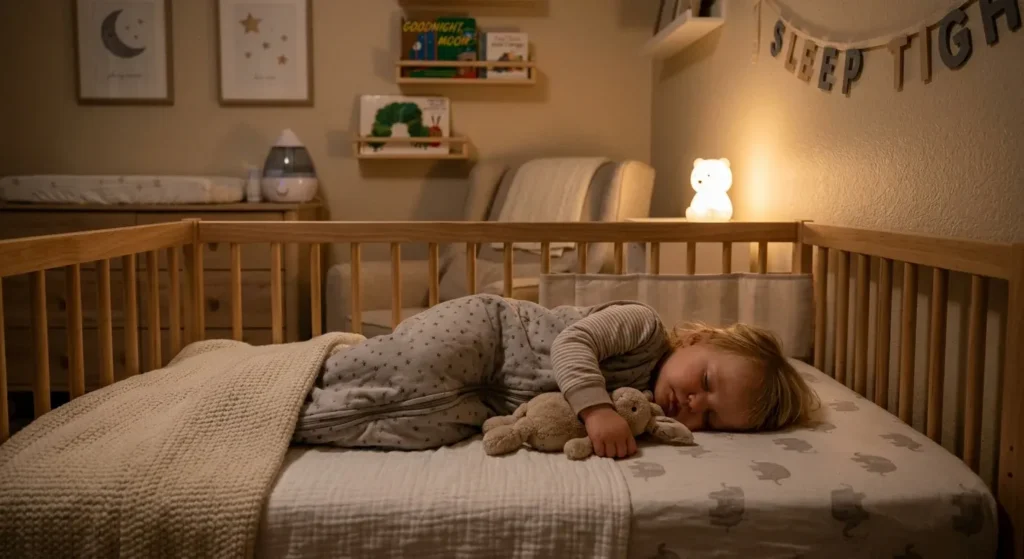
How to cope: A predictable, calming bedtime routine is your most powerful tool at this age. Two-year-olds thrive on knowing exactly what comes next. If fears are present, validate them without reinforcing avoidance — acknowledge the fear, provide comfort, and gently hold the boundary. A nightlight and a comfort object can help. For families navigating the crib-to-bed transition at the same time, consider delaying non-urgent transitions until sleep has stabilized.
The 3-Year (and 3.5 Year) Sleep Regression
When it hits: Between 3 and 3.5 years, often correlating with the start of preschool or other big life changes.
What is happening developmentally: Three-year-olds are in the thick of imaginative play, and their brains do not always power down easily. Nightmares and night terrors become more common at this age. Many children this age are also working through big social experiences at school, processing them during sleep. This is also the time when many children transition away from naps entirely, which can make the stretch from lunch to bedtime feel very long.
Signs of the 3-year regression:
- Difficulty falling asleep despite seeming tired
- Nightmares or night terrors
- Requests for a parent to stay in the room
- Dropping naps but still struggling to make it to bedtime
How to cope: A consistent wind-down routine that starts 30 to 45 minutes before sleep helps 3-year-olds shift gears. Limit screens in the hour before bed, which can overstimulate. If nightmares are a factor, validate the fear briefly, then use a calm and confident tone to reassure your child that they are safe.
Understanding Preschooler Sleep Needs
At three, your child’s inner world is incredibly rich and complex. This imaginative boom means their brain doesn’t always have an ‘off’ switch at bedtime. They might be processing big social interactions from their day, especially if they’re in a dynamic preschool classroom. Nightmares and night terrors can also become more frequent as their minds work to sort through new experiences and feelings. Remember, your child hasn’t forgotten how to sleep. This regression is a sign of incredible cognitive growth. Their brain is busy building new connections, and sometimes, that work happens at 2 a.m. Understanding this can help shift your perspective from frustration to fascination.
Navigating Nap Transitions and New Fears
Many three-year-olds begin to resist or drop their afternoon nap, which can be a tricky transition. An overtired preschooler often has a harder time falling and staying asleep at night. Instead of forcing a nap, try instituting a daily “quiet time” with books or calm activities. When new nighttime fears appear, your response is key. Acknowledge the feeling (“It sounds like you feel scared”) without feeding the fear. Then, confidently reassure them of their safety. This is a phase where a strong parent-child connection makes all the difference. We believe in partnering with parents to create consistent strategies between home and school, which is especially helpful during these developmental shifts.
Is It a Sleep Regression or Something Else?
Not every stretch of bad sleep is a regression. It helps to distinguish between:
- Regression: Temporary disruption tied to developmental leaps, with a clear start point in a previously good sleeper. Usually resolves in two to six weeks.
- Sleep association problem: Your child needs a specific condition (nursing, rocking, a parent’s presence) to fall asleep, and wakes at night needing that condition to be re-created. This is common and fixable, but it does not resolve on its own the way a regression does.
- Environmental factors: Illness, travel, a new sibling, or daycare transitions can all temporarily disrupt sleep. These often resolve when the disruption passes. For more on how toddler regression after a new baby can affect sleep, see our complete guide.
- Nap timing issue: If nap times shift and do not adjust, this can push bedtime back and create early-morning wakings. Adjusting the schedule often helps.
If your child’s sleep challenges persist beyond eight weeks, or if you notice other developmental concerns alongside the disruption, speak with your pediatrician.
Rule Out Sickness or Discomfort First
Before you decide you’re in the middle of a sleep regression, it’s important to rule out any underlying physical issues. A sudden change in sleep is often one of the first signs that a toddler isn’t feeling well. Common culprits like teething, an ear infection, a simple cold, or even just an itchy pajama tag can make it impossible for your child to get comfortable. Prioritizing their health and safety by doing a quick check for a fever or other signs of illness can save you a lot of guesswork. A true sleep regression is tied to developmental growth, while poor sleep from sickness is a symptom that should resolve once your child feels better. If the sleep disruptions continue long after your child is healthy, or if you have other concerns, it’s always a good idea to check in with your pediatrician to get their expert opinion.
How to Manage Any Toddler Sleep Regression
Regardless of the age, a few approaches tend to make regressions shorter and less miserable:
Stick to a Consistent Routine
Sleep regressions are not the time to experiment with new schedules. Your child’s nervous system craves predictability during periods of rapid growth. A bedtime routine that is the same every night — bath, pajamas, books, song, lights out — provides an anchor when development is in flux.
For more on why some toddlers take so long to fall asleep and how to help, that guide goes deeper on bedtime stalling and calming wind-down routines.
Establish a Predictable Bedtime and Wind-Down Period
Your bedtime routine is your secret weapon. A consistent, calming wind-down period that begins 30 to 45 minutes before you want your child to be asleep is non-negotiable during a regression. This routine signals to their brain and body that it’s time to shift gears from the busyness of the day. This means turning off screens at least an hour before bed, as the blue light can interfere with melatonin production and keep them wired. Instead, focus on quiet activities like a warm bath, reading a few books, or doing a simple puzzle together. The specific activities matter less than the predictability of the sequence. This is something we practice daily in our classrooms, as predictable routines help children feel secure and understand what to expect next.
Time Naps Strategically (or Use Quiet Time)
The nap struggle is real, especially around ages two and three. If your toddler is fighting their nap for more than 30 minutes, it might be a sign that their sleep needs are changing. However, most toddlers aren’t ready to drop the nap entirely without becoming overtired. On days when a nap just doesn’t happen, your best move is to shift bedtime earlier—sometimes as early as 6:00 or 6:30 p.m.—to compensate for the lost sleep. You can also introduce “quiet time.” This means an hour in their room with books and quiet toys, with the rule that they don’t have to sleep, but they do have to rest. This low-pressure approach often leads to a nap, and if not, it still provides the restorative downtime their brain needs. This is a strategy often used in preschool programs to accommodate the varying sleep needs of children.
Respond Calmly (Without Starting New Habits)
It is okay to offer comfort during a regression. The goal is to respond to your child’s increased need without introducing new sleep associations that will be hard to break once the regression ends. Brief check-ins, a reassuring voice through the door, or a short cuddle before returning to your own bed can balance compassion with consistency.
Set Clear and Consistent Boundaries
When your toddler is screaming for you at 2 a.m., it’s natural to want to do whatever it takes to quiet them down. However, sleep regressions often get longer when our responses are inconsistent. If you sometimes bring them into your bed, sometimes offer a snack, and other times insist they stay in their room, your child learns that protesting is worth a try—because it sometimes works. The most effective strategy is to decide on your response ahead of time and stick with it. This doesn’t mean you have to be rigid or unfeeling, but it does mean your child knows exactly what to expect when they call for you, which reduces their motivation to keep testing the limits.
Communicate Expectations During the Day
The middle of a bedtime battle is not the time to negotiate or explain new rules. Instead, talk about sleep expectations during a calm, happy moment in the middle of the day. You can use simple, positive language like, “Tonight, we’re all going to work on staying in our own beds so we can get good sleep and have energy for the park tomorrow.” You can even role-play with stuffed animals, having them go to sleep in their “beds” and stay there all night. This proactive communication helps your toddler understand the goal when they aren’t in an overtired, emotional state, making them more likely to cooperate when the time comes.
Use Tools Like a “Bedtime Pass” to Manage Stalling
For toddlers who have mastered the art of stalling with endless requests for water, hugs, or trips to the potty, a “bedtime pass” can be a game-changer. Create a simple, physical card that your child can trade in for one final request after they’ve been tucked in. This gives them a sense of control and acknowledges their need, but it also creates a clear, visual limit. Once the pass is used, you can gently remind them, “You used your pass for tonight! Now it’s time for sleeping.” This tool helps shift the dynamic from a power struggle to a shared understanding of the rules, empowering your child while maintaining a firm boundary.
Consider Gentle Sleep Support Strategies
Many parents feel that the only options for sleep issues are to either let their child “cry it out” or resign themselves to years of sleepless nights. Thankfully, there’s a wide middle ground of gentle, supportive strategies. These methods focus on reassuring your child and being physically or verbally present while still holding the boundary that it’s time for sleep. The goal is to offer comfort in a way that doesn’t create a new habit you’ll have to break later, like rocking or feeding to sleep. It’s about finding a response that feels right for your family and applying it with loving consistency until the regression passes.
The Consistent Return Method
This approach is a structured way to offer reassurance without getting drawn into a lengthy interaction. After you complete the bedtime routine and say goodnight, you leave the room. If your child calls for you or gets out of bed, you wait a predetermined amount of time (say, two minutes), then go back in. You offer a brief, boring, and consistent verbal reassurance like, “I love you, it’s time to sleep,” gently guide them back to bed, and leave again. You repeat this process, perhaps extending the time between check-ins slightly, until they fall asleep. The key is to be a calm, predictable presence, not an entertaining one.
The Chair Method
Also known as “camping out,” the chair method is a gradual approach that can be very effective for children who have a lot of separation anxiety. You start by putting a chair next to your child’s bed and sitting in it until they fall asleep. You don’t interact much, but your presence is a comfort. Every few nights, you move the chair a little further away from the bed, toward the door. Eventually, the chair is in the hallway, and then it’s gone altogether. This method takes patience and can last several weeks, but it allows you to support your child physically while slowly teaching them to fall asleep independently.
Empower Your Child with Choices and Positive Reinforcement
Toddlers are on a mission to assert their independence, and a lot of bedtime resistance is simply a power struggle. You can reduce these struggles by giving your child a sense of control over their routine. When they feel like they have some say in the matter, they are often more willing to cooperate with the parts that are non-negotiable, like the actual act of going to sleep. This strategy works because it meets their deep developmental need for autonomy. By offering small, acceptable choices, you empower them to become a willing participant in the bedtime process rather than an opponent.
Offer Simple Choices in the Bedtime Routine
You can easily integrate choices into your existing routine without derailing it. The key is to only offer two options, both of which you are happy with. For example, ask, “Do you want to wear your dinosaur pajamas or your star pajamas?” or “Should we read the truck book or the bunny book?” As experts suggest, letting your child make these small decisions helps them feel powerful and respected. This simple shift can transform the mood of the entire evening, turning a nightly battle into a collaborative effort to get ready for bed.
Use a Sticker Chart for Motivation
For children three and older, a sticker chart can be a powerful visual motivator. Create a simple chart with a goal, like “Staying in My Bed All Night.” Each morning that your child achieves the goal, they get to put a sticker on the chart. After earning a certain number of stickers (start small, like three), they earn a small reward, like a trip to a special park or choosing a family movie. This system focuses on celebrating success and reinforces the desired behavior with positive attention, which is far more effective than focusing on what went wrong the night before.
Address Nighttime Fears Calmly
As your toddler’s imagination blossoms, so can their fears. Monsters under the bed and scary shadows become very real to them, and these anxieties often surface at night. When your child calls out in fear, it’s important to respond with calm confidence. Acknowledge their feeling (“It sounds like you were scared”) without validating the fear itself (“There are no monsters in your room. You are safe.”). You can offer a quick cuddle and a reassuring phrase, then firmly guide them back to the expectation of sleep. Our exceptional educators use this same strategy to help children process big feelings during the day, building their emotional resilience and confidence.
Protect Daytime Naps at All Costs
When nights are rough, the instinct is to keep your toddler up later to compensate. This usually backfires. Overtired toddlers have a harder time falling asleep and staying asleep. Protect nap times during regressions. If your child is resisting the nap, try an earlier bedtime instead.
Connect More During Waking Hours
Children going through a developmental leap often need more daytime connection with caregivers. Extra one-on-one time, physical play, and responsive interaction during the day can reduce the intensity of bedtime separation anxiety at night. This aligns with the kind of relationship-centered care we prioritize at Strong Start, where teachers build genuine bonds with children that help them feel secure both during the day and at night.
Remember, This Phase Is Temporary
Regressions are finite. Knowing that this will end — typically within two to six weeks — helps parents weather the sleepless nights with more patience. Lower your expectations for productivity during this stretch, and ask for help if you need it.
Ready to find a care program that understands your child’s full development? Contact Strong Start Early Care and Education or call (203) 307-5500 to schedule a tour at our Trumbull, Wilton, or Bridgeport location.
Common Pitfalls to Avoid During a Sleep Regression
When you’re exhausted, it’s easy to fall into traps that can accidentally make a sleep regression last longer. Knowing what not to do is just as important as knowing what to do. In the middle of the night, when you’re on your fifth trip to your toddler’s room, it’s tempting to try anything to get a few more hours of sleep. But some of those quick fixes can create new habits that are harder to break than the regression itself. By being aware of a few common pitfalls, you can support your child through this temporary phase without making things more complicated for either of you down the road.
Don’t Let Them Get Overtired
It seems logical: if your toddler is exhausted, they’ll sleep better. But with toddlers, the opposite is often true. An overtired toddler has a much harder time falling asleep and staying asleep because their body releases stress hormones like cortisol to keep them going, resulting in a frustrating “second wind.” This is why it’s so important to fiercely protect nap times, even when your toddler resists. If a nap just isn’t happening, try moving bedtime earlier instead of later. A 6:30 p.m. bedtime might feel strangely early, but it can be the key to breaking the cycle of overtiredness and helping everyone get a better night’s sleep.
Avoid Making Too Many Big Changes at Once
A sleep regression is a sign that your child is already managing a huge internal developmental leap. Their little world is shifting, and adding more change on top of that can be overwhelming. Try to avoid tackling other major milestones, like potty training or moving to a big kid bed, at the same time. If a big change is unavoidable—like starting a new school or welcoming a sibling—the key is to be extra patient and offer more support. At Strong Start, we believe in partnering with parents to create consistency between home and school, which is especially critical during times of transition.
Be Cautious with Sleep Aids and Apps
When you’re desperate for sleep, the promise of a magic app or a new sleep schedule can be incredibly tempting. But a sleep regression is not the time to overhaul your entire system. Your child’s brain is already working overtime, and their nervous system craves predictability and a responsive environment. Introducing a new, rigid schedule or a gadget they have to get used to can add more stress to the situation. This doesn’t mean sleep aids are always bad, but the middle of a regression is a time for consistency, not experimentation. Stick with the simple, calming routine that you know works, and trust that this phase will pass.
When Should You Call the Doctor?
Most sleep regressions are a normal part of development. Contact your child’s pediatrician if:
- The sleep disruption lasts longer than eight weeks with no improvement
- Your child seems in pain, is not eating well, or is not meeting developmental milestones
- You notice other behavioral changes alongside the sleep disruption
- Night terrors are frequent, very prolonged, or associated with injury risk
Why Sleep Regressions Are a Sign of Growth
At Strong Start Early Care and Education, we know that what happens at night affects how children show up during the day. Well-rested children are better able to engage in the play-based learning and relationship-building that forms the foundation of early childhood development. Our Reggio Emilia-inspired approach supports children’s growth across all domains — including the emotional regulation skills that make it easier for children to settle and sleep.
If you have questions about your child’s development, sleep, or readiness for our programs, we are here to help. We serve families in Trumbull, Wilton, and Bridgeport, Connecticut. To learn more about what makes Strong Start different, explore our guide on toddler speech development or schedule a tour today.
Frequently Asked Questions About Toddler Sleep Regressions
How long does the 3-year-old sleep regression last?
Most sleep regressions last two to six weeks. The duration depends on the age of the child, how consistent caregivers are in their responses, and whether other life changes are compounding the disruption. Regressions tied to major transitions — such as starting preschool or welcoming a new sibling — may last longer.
Do all toddlers have sleep regressions?
Not every child experiences every regression with equal intensity. Some children move through developmental leaps with minimal sleep disruption, while others are more sensitive to the changes. Both are normal. If your child has consistently slept well and suddenly hits a rough patch, a regression is the most likely explanation.
What is the hardest toddler sleep regression?
Parents most commonly report the 18-month sleep regression as the most difficult. This is because it coincides with a significant surge in autonomy and separation anxiety, making consistent responses harder to maintain when a toddler is screaming at the door.
Is the 2-year sleep regression a real thing?
Yes. The 2-year sleep regression is well-documented and coincides with several simultaneous developmental changes including language explosion, increased imagination and associated nighttime fears, and often the crib-to-bed transition.
Should I change my toddler’s schedule during a regression?
In most cases, no. Maintaining the existing schedule provides stability during a period of development. The exception is if the schedule has clearly shifted — for example, a nap that has become too long and is pushing bedtime back significantly. In that case, a modest schedule adjustment may help.
How can I tell if it’s a regression or just a bad night?
A regression is typically tied to a specific developmental milestone, has a clear onset in a previously good sleeper, and resolves within a few weeks. If the disruption persists beyond two months, is accompanied by other symptoms such as ear pain, fever, or refusal to eat, or does not follow a clear developmental trigger, contact your pediatrician.
Key Takeaways
- Stick to your routine and boundaries: Consistency is your best friend during a sleep regression. A predictable bedtime routine and a calm, consistent response to night wakings will help your child feel secure and get back on track faster.
- Reframe the disruption as development: Sleep regressions are not a step backward; they are a sign of incredible cognitive growth. Remembering that this phase is temporary and tied to your child’s development can help you respond with more patience and less frustration.
- Empower your child and connect during the day: Reduce bedtime battles by offering small, simple choices during the routine to give your child a sense of control. Spending extra one-on-one time during waking hours can also fill their connection cup, making nighttime separation easier for them to handle.
Related Articles
Written By
Marc Hoffman
Founder, Strong Start Early Care & Education
Marc founded Strong Start in 2014, inspired by his studies at Williams College, Yeshiva University, and research at Yale University. His child-centered, inquiry-based approach to early education has helped hundreds of families in the Trumbull and Bridgeport communities. As a parent himself, Marc understands the importance of finding a nurturing environment where every child can learn, grow, and flourish.