
We know emotional intelligence (EQ) is just as vital as IQ for a child’s lifelong success. It’s the key to understanding big feelings and building strong relationships. At Strong Start Early Care & Education, our curriculum in Trumbull and Shelton is designed to help children work through their emotions with confidence. Because this important learning continues at home, we’ve gathered our favorite strategies for teaching children emotional intelligence. These tips will help you support your child’s emotional growth, laying a strong foundation for toddler emotional intelligence and beyond.
Model Your Own Emotional Process
One of the most powerful ways children learn is by watching the adults around them. When you openly model your own emotional process, you give your child a real-time lesson in managing feelings. This doesn’t mean you have to be perfect; it means being honest. You can verbalize your feelings and demonstrate healthy coping strategies in the moment. For example, saying, “I’m feeling a little frustrated because I can’t find my keys, so I’m going to take a few deep breaths to calm down,” shows your child that feeling frustrated is normal and that there are constructive ways to handle it. This practice normalizes emotions and provides a clear, actionable script they can use when they experience similar feelings.
Share Age-Appropriate Personal Stories
Sharing brief, simple stories about your own emotions can make the abstract concept of feelings more concrete for your child. As noted by the National Association for the Education of Young Children (NAEYC), this is a technique educators use to help children feel more comfortable sharing. You could say something like, “I was nervous before I had to speak at a meeting today, but I remembered to take a big breath, and it helped me feel brave.” These small anecdotes show that everyone, even a grown-up, has feelings they need to manage. It builds a connection and creates a safe space for your child to begin sharing their own emotional experiences without fear of judgment.
Separate Feelings from Behaviors
A foundational rule in emotional coaching is to validate the feeling while setting a boundary on the behavior. It’s essential to send the clear message that all emotions are acceptable, but not all actions are. A classic example is stating, “It’s okay to feel angry that your brother took your toy, but it’s not okay to hit.” This approach helps your child understand that their internal experience is valid and not something to be ashamed of. At the same time, it teaches them responsibility for their actions and encourages them to find healthier ways to express those big feelings, like using their words or asking a grown-up for help.
Use Books, Play, and Art to Explore Emotions
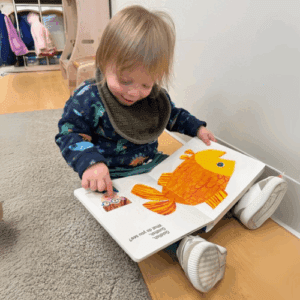
Sometimes, talking directly about feelings can be intimidating for a young child. Creative and playful activities provide a low-pressure way to explore complex emotions. Books with characters experiencing different feelings, imaginative play, and art projects can all serve as powerful tools. These methods allow children to process emotions at a distance, making it easier for them to understand and relate to different emotional states. By incorporating these activities into your routine, you give your child a rich vocabulary and a diverse toolkit for understanding both their own feelings and the feelings of others.
Emotion Charades and Puppet Play
Play is the language of childhood, making it the perfect medium for teaching emotional intelligence. You can play emotion charades by taking turns acting out feelings like “surprised,” “sad,” or “excited” and guessing what they are. This simple game helps children connect emotions to facial expressions and body language. Puppets are another fantastic tool, as they allow children to project their feelings onto a character. A child might have a puppet express anger or fear that they aren’t ready to claim as their own, providing a safe outlet to act out and resolve challenging scenarios.
Creative Expression Through Art and Music
Art and music can be incredible outlets for feelings that are too big for words. You can encourage your child to draw their feelings—perhaps using angry red scribbles or calm blue waves. As one early childhood strategy suggests, you can pair calm painting activities with soft music to explore peaceful feelings. Similarly, putting on an energetic song can be a great way to dance out frustration or excitement. These activities don’t just distract your child; they teach them how to channel their emotional energy into a creative and constructive form of self-expression, a skill that will serve them for life.
Review Past Reactions Together
After an emotional moment has passed and everyone is calm, it can be helpful to gently revisit what happened. This isn’t about placing blame but about creating a learning opportunity. You can look back at the situation and talk through the response. Focus on praising their successes, no matter how small. For instance, you could say, “I know you were really disappointed when we had to leave the park. I was so proud of how you used your words to tell me you were sad.” This reinforces the positive coping strategies they used and shows them that you notice and value their efforts to manage their emotions.
Praise Their Emotional Growth
When you see your child successfully manage a big feeling, acknowledge it with specific praise. Instead of a generic “good job,” try to name the skill they demonstrated. According to The Gottman Institute, it’s effective to praise their emotional growth by saying something like, “You seemed really frustrated, but you asked for help instead of throwing the toy. That showed amazing self-control!” This specific feedback highlights the exact behavior you want to encourage, making it more likely that they will use that strategy again in the future. It celebrates their progress and helps them build a positive identity as someone who is capable of handling their feelings.
Build Empathy Through Helping Others
Emotional intelligence isn’t just about understanding our own feelings; it’s also about recognizing and responding to the feelings of others. Empathy is a skill that can be nurtured through practice. Involving your child in simple acts of kindness is a great way to build this muscle. This could be as simple as helping you make a get-well card for a sick relative, putting food in the bowl for a family pet, or helping a younger sibling with a task. These experiences encourage children to think beyond themselves and consider the needs and feelings of those around them, laying the groundwork for compassionate relationships.
Important Considerations for Parents
As you support your child’s emotional development, it’s helpful to keep a few key ideas in mind. This journey is more of a marathon than a sprint, and having the right perspective can make all the difference. These considerations can help you stay grounded, manage your own expectations, and know when it might be time to bring in extra support. Remember, your goal is to be a supportive guide, not a perfect expert, and every small step you take makes a positive impact on your child’s emotional well-being.
A Note on Using Screens to Soothe
In moments of high stress, it can be tempting to hand a child a tablet or turn on the TV to calm them down. However, the American Academy of Pediatrics warns against this practice. When screens are used as a pacifier, children miss the crucial opportunity to feel their emotions and learn how to work through them. True self-regulation develops when children are given the space and support to tolerate discomfort and find their own way back to a state of calm. Instead of a screen, try offering a hug, a quiet space to sit, or simply your calm presence.
The Importance of Your Own Self-Awareness
Our ability to teach emotional intelligence is directly tied to our own emotional awareness. If we struggle to identify and manage our own feelings, it will be challenging to model those skills for our children. Taking time for self-reflection can be incredibly valuable. For some, this might mean talking with a friend or partner, while for others, it could involve seeking therapy to develop healthier ways of expressing emotions. When you understand your own triggers and responses, you are better equipped to respond to your child’s big feelings with patience and empathy rather than reacting out of your own stress.
Remember, You Don’t Have to Be Perfect
The pressure to be a perfect parent can be overwhelming, but it’s important to remember that perfection isn’t the goal. Research from The Gottman Institute found that even the most effective “emotion-coaching parents” only use all the recommended steps about 20-25% of the time. What matters most is consistency and creating an environment where feelings are treated with respect. There will be times when you’re tired or stressed and don’t respond ideally. In those moments, modeling how to apologize and repair the connection is a powerful emotional lesson in itself.
Knowing When to Seek Outside Help
While these home-based strategies are incredibly effective, there are times when a child or family may need additional support. Recognizing when to reach out for help is a sign of strength and a key part of supporting your child’s well-being. There are several avenues for support, from school-based programs to professional therapy, that can provide specialized tools and guidance. Trust your instincts; if you feel that your child’s emotional struggles are persistent or overwhelming, exploring these options is a proactive and loving step.
School-Based Social and Emotional Learning (SEL)
Many schools and early childhood centers have programs designed to teach emotional skills. These are often called Social and Emotional Learning (SEL) programs. Don’t hesitate to ask your child’s school or daycare what they offer. SEL curricula explicitly teach children how to recognize emotions, manage stress, and build healthy relationships with their peers. This creates a consistent message between home and school, reinforcing the skills you are working on and showing your child that emotional intelligence is valued by all the important adults in their life.
How Strong Start Supports Social-Emotional Growth
At Strong Start, we see ourselves as your partners in fostering this crucial development. Our entire approach is built to create a secure environment where children learn to understand, manage, and express their emotions constructively. Our exceptional educators are trained to guide children through social situations and emotional challenges with care and respect. The collaborative nature of our Reggio Emilia-inspired curriculum and The Project Approach naturally encourages children to communicate their feelings, listen to others, and work through disagreements, building a strong foundation for emotional intelligence every single day.
Professional Support for Your Child
If your child’s emotional challenges seem to go beyond typical developmental stages, seeking help from a child therapist or counselor can be incredibly beneficial. Professionals can teach children specific strategies for understanding and managing their feelings in a one-on-one or small group setting. Therapy can provide a safe space for your child to explore their emotions and equip them with a personalized toolkit for handling anxiety, anger, or sadness. It’s a proactive way to give your child the support they need to thrive emotionally and socially.
Which Children Can Benefit From These Practices?
In any group of people, there are going to be those who are more attuned to the feelings and the nonverbal cues through which people communicate their feelings, both consciously and unconsciously. These people have the uncanny ability to read the subtleties on faces, hear the emotion in voices, and to read body language. But there are also those who are not good at these things at all. In fact, for many people, it is a daily struggle. This struggle is a hallmark of Autism, and while there are many people who struggle with nonverbal cues who show no signs of being on the Autism spectrum, the increased awareness and diagnosis of Autism has brought attention to this issue. If we were to generalize for just a moment, we would say that boys struggle more than girls with nonverbal cues.
Creating a Home Emotional Toolkit
To mirror the emotional support children receive in our Toddler Program, you can create a ‘Calm Down Corner’ at home. This includes:
The Name It to Tame It Method: Help your child label specific feelings. Instead of just “mad,” use words like “frustrated” or “disappointed.”
Visual Emotion Charts: Use pictures of faces to help non-verbal toddlers point to how they feel.
Sensory Tools: Soft pillows, stress balls, or “calm down jars” to help with self-regulation.
Learn What Faces Mean
While some children struggle with a lack of intuitive understanding of facial expressions, many can learn cognitively what they mean. One way they can learn is by looking at faces and putting words to them that describe an emotional state. You can do this through the use of magazines. Gather a collection of magazines on different topics, such as psychology, sports, and beauty magazines.
Find a time when you child can concentrate and sit still and grab a magazine or two. Flip through the pages and ask your child what emotions they see. If you see one particular face that seems to you to express one clear emotion help your child come to the conclusion that it is that emotion that is being expressed. If they seem to be missing the mark, you can even cut out the faces and make a poster of different emotions, and group all the happy faces together and all the angry faces, etc. You can make this more dynamic by doing this with television or commercials, with the sound down. Or you can make it into a game that you play with your child anywhere you go, observing the faces and gestures of people and naming the emotions that they are conveying. This exercise of putting a name to an emotion is a great step to understanding the emotions of others, as well as their own emotions.
Our educators at both the Trumbull and Shelton campuses integrate Reggio Emilia-inspired activities that encourage children to express their ‘hundred languages’ of emotion.
What is Emotional Intelligence in Children?
Before we can nurture a skill in our children, we first have to understand it ourselves. Emotional intelligence, often called EI or EQ, isn’t about suppressing feelings or always being happy. Instead, it’s the ability to recognize, understand, and manage our own emotions, as well as recognize, understand, and influence the emotions of others. For a child, this means learning to handle their feelings in healthy and productive ways. It’s a foundational skill that helps them work through challenges, from a frustrating puzzle to a disagreement with a friend. At its core, emotional intelligence is about being smart with feelings, which is a skill that will serve them for their entire lives.
This ability to manage emotions is a cornerstone of our approach at Strong Start. We believe that when children feel secure and understood, they are free to explore, learn, and grow. Our exceptional educators are trained to guide children through their big feelings, helping them build a strong emotional foundation right alongside their academic and social skills. By creating a nurturing environment, we help children see their emotions not as obstacles, but as important sources of information that help them understand themselves and the world around them. This focus on the whole child is what prepares them to become confident and capable learners.
A Clear Definition of Emotional Intelligence (EI)
Emotional intelligence is the capacity to be aware of, control, and express one’s emotions, and to handle interpersonal relationships judiciously and empathetically. Think of it as a different kind of smarts. While IQ helps with learning facts and solving logical problems, EI helps with navigating the social world. According to the experts at Understood.org, “Emotional intelligence (EI) is a skill that helps kids handle their feelings in a good way.” It’s what allows a child to calm themselves down after a disappointment, to share a toy because they see a friend is sad, or to express their needs clearly instead of having a tantrum.
The Role of Emotional Self-Regulation
A huge piece of the emotional intelligence puzzle is something called “emotional self-regulation.” This is simply the ability to manage how you feel and how you show those feelings. For a young child, this is a massive developmental task. It’s the difference between a toddler throwing a block in anger and a preschooler saying, “I’m mad because you took my toy.” Learning to self-regulate doesn’t happen overnight. It starts with co-regulation, where a caring adult helps a child calm down, and gradually, the child learns to use those strategies on their own. This is a skill we actively foster in our toddler classrooms, where learning to manage big emotions is a key part of the daily routine.
Understanding the Purpose of Emotions
It’s easy to label some emotions as “good” (like happiness) and others as “bad” (like anger or sadness). But a core principle of emotional intelligence is understanding that all emotions have a purpose. They are messengers that give us important information. As the Gottman Institute explains, “sadness can make us slow down and think, while anger can give us energy to deal with a problem or protect ourselves.” When we teach children this, we help them stop fighting their feelings and start listening to them. Instead of saying, “Don’t be sad,” we can ask, “It looks like you’re feeling sad. What might that be telling you?” This shift helps children develop a healthier relationship with their full range of feelings.
Why Teaching Emotional Intelligence is So Important
Focusing on emotional intelligence is one of the greatest gifts we can give our children. It lays the groundwork for their future well-being, relationships, and even their academic and professional success. When children learn to manage their emotions, they are better equipped to handle the inevitable ups and downs of life. They develop resilience, which allows them to bounce back from setbacks instead of being overwhelmed by them. Research consistently shows that children with higher emotional intelligence are more likely to have positive social relationships, demonstrate empathy for others, and feel more confident in themselves. These aren’t just “soft skills”; they are essential life skills that contribute to a happier, more balanced life.
At Strong Start, we see the direct impact of this every day. Our curriculum, inspired by the Reggio Emilia philosophy, views children as capable and competent. A huge part of that competence is their ability to understand and express their feelings. When a child can say, “I’m frustrated,” they are more likely to seek help and persist with a challenging task. When they can recognize sadness in a friend, they are more likely to offer comfort, strengthening their social bonds. By integrating social-emotional learning into everything we do, from group projects to story time, we help children build these critical skills in a supportive and authentic way.
The Benefits of High EI in Childhood
The positive effects of high emotional intelligence in childhood are far-reaching. According to the National Association for the Education of Young Children (NAEYC), “Children with higher emotional intelligence are better able to pay attention, are more engaged in school, have more positive relationships, and are more empathic.” These benefits create a positive feedback loop. A child who can manage their frustration is more likely to stay engaged in a learning activity, which leads to greater academic success. A child who can understand a friend’s perspective is more likely to build strong friendships, which contributes to their overall happiness and sense of belonging.
Success in School and Beyond
While we often focus on ABCs and 123s to prepare children for school, emotional intelligence is arguably just as critical for their success. A child who can follow directions, manage impulses, and work cooperatively with peers is set up for a positive school experience. These skills, rooted in emotional intelligence, are what teachers look for in a “ready-to-learn” student. This foundation extends far beyond the classroom. In the long run, adults with high EI are often more successful in their careers and report higher life satisfaction. By nurturing these skills early, we are preparing children not just for kindergarten, but for life.
Key Developmental Milestones for Emotional Skills
Like learning to walk or talk, emotional skills develop over time. It’s helpful for parents to have a general idea of the timeline. Toddlers are just beginning to identify basic emotions like happy, sad, and mad. By age four, most children start using simple strategies to cope with things that upset them, like hugging a favorite stuffed animal or asking for a hug. According to research from the Gottman Institute, it’s around age 10 that kids begin to consistently use more complex strategies to handle their feelings. Understanding these milestones helps us have realistic expectations and provide age-appropriate support for our children as they grow in our preschool classrooms and beyond.
Proven Frameworks for Nurturing Emotional Skills
While the concept of emotional intelligence can feel big and abstract, there are concrete frameworks that make it easier to teach and practice. One of the most effective and widely used is the RULER method, developed at the Yale Center for Emotional Intelligence. RULER is an acronym that stands for the five core skills of emotional intelligence. By breaking it down into these five areas, it gives parents and educators a clear roadmap for what to focus on. This isn’t about memorizing steps, but about integrating a new way of thinking and talking about feelings into your daily life. It provides a shared language that helps children and adults connect and communicate more effectively about their inner worlds.
Another powerful tool is the Mood Meter, which works hand-in-hand with the RULER skills. It helps children move beyond simple feeling words like “good” or “bad” and develop a more nuanced emotional vocabulary. At Strong Start, we use similar visual tools and strategies inspired by The Project Approach to help children explore complex topics, including their own emotions. When children can see and categorize their feelings, it makes them less mysterious and more manageable. These frameworks transform an abstract concept into practical, everyday skills that you can start building with your child today.
The RULER Method: Five Core Skills
The RULER method provides a clear, five-step framework for building emotional intelligence. It’s a sequence that builds on itself, helping children (and adults!) become more aware and skilled in handling emotions. The goal is to make these five skills a natural part of your family’s communication style. When you consistently model and talk about Recognizing, Understanding, Labeling, Expressing, and Regulating emotions, you give your child a powerful toolkit for life. Let’s look at what each of these skills means in practice.
Recognizing Emotions
The first step is simply Recognizing emotions in oneself and others. This involves paying attention to clues from our bodies, faces, and voices. You can practice this by asking your child, “How does your body feel right now? Is your tummy tight? Are your shoulders relaxed?” You can also play a game while reading a book or watching a show, asking, “What do you think that character is feeling? How can you tell from their face?” This teaches children to become emotional detectives, tuning into the subtle cues that reveal how people are feeling.
Understanding Emotions
Once an emotion is recognized, the next step is Understanding its cause and consequences. This involves asking “why.” You can say, “You seem frustrated. I wonder if it’s because that tower keeps falling down?” This helps your child connect the feeling to the event that triggered it. It also involves thinking about what might happen next. “When you feel angry, sometimes you want to yell. What happens when we yell?” This skill helps children develop critical thinking about their emotional lives, moving from simply feeling an emotion to understanding its context.
Labeling Emotions
Labeling is about putting a name to the feeling. This requires building a rich emotional vocabulary beyond “mad, sad, and glad.” Instead of “mad,” you could introduce words like “frustrated,” “annoyed,” “irritated,” or “furious.” The more precise the word, the better a child can understand and communicate their experience. You can say, “It sounds like you’re not just sad, but maybe a little disappointed that we have to leave the park.” This simple act of naming a feeling can make it feel less overwhelming and more manageable.
Expressing Emotions
This skill focuses on learning how and when to show our feelings. Every family and culture has different ideas about what’s appropriate. The goal is to teach children that all feelings are okay, but not all behaviors are. You can set clear boundaries by saying, “It’s okay to feel angry, but it’s not okay to hit. Let’s find a safe way to show your anger, like stomping your feet or punching a pillow.” This helps children learn to express their emotions in a way that is respectful of themselves and others, a key focus of our partnership with parents.
Regulating Emotions
Finally, Regulating emotions is about learning strategies to manage them. This is the skill that helps us think before we act. For young children, this often starts with simple strategies like taking deep “belly breaths,” finding a quiet space to calm down, or asking for a hug. As they get older, they can learn more complex strategies like positive self-talk or problem-solving. You can help by creating a “calm-down corner” in your home with comforting items, and by modeling how you manage your own big feelings.
Using the Mood Meter to Identify Feelings
The Mood Meter is a fantastic visual tool that helps build the RULER skills, especially Labeling. It’s a square divided into four colored quadrants: red (high energy, unpleasant feelings like anger or fear), blue (low energy, unpleasant feelings like sadness or disappointment), green (low energy, pleasant feelings like calm or content), and yellow (high energy, pleasant feelings like excitement or joy). It helps children and adults pinpoint their emotional state with more precision than just saying “I feel bad.” You can have a Mood Meter on your fridge and check in as a family: “Where are you on the Mood Meter right now?” This simple practice builds emotional awareness and vocabulary in a fun, accessible way.
How Parenting Styles Shape Emotional Growth
As parents, we are our children’s first and most important teachers, especially when it comes to emotions. The way we respond to our child’s feelings—and our own—creates the emotional climate of our home and profoundly shapes their developing emotional intelligence. Researchers have identified several distinct parenting styles related to emotions, and understanding them can help us be more intentional in our approach. It’s not about being a perfect parent, but about being a mindful one. Recognizing our own patterns is the first step toward adopting habits that will best support our children’s emotional health.
The most effective approach is known as “Emotion Coaching.” This style is built on empathy and connection, viewing a child’s emotional moments as opportunities for teaching and building intimacy. It stands in contrast to other styles that might dismiss, disapprove of, or ignore a child’s feelings. At Strong Start, our philosophy is grounded in this idea of connection and guidance. We strive to be emotion coaches in the classroom, and we are committed to supporting families in bringing this positive, empowering approach into their homes. Understanding these different styles can illuminate the path toward raising an emotionally intelligent child.
Emotion Coaching: A Parent’s Guide
According to Dr. John Gottman, who pioneered this research, Emotion-Coaching parents follow a simple, five-step process when their child is upset. First, they become aware of the child’s emotion. Second, they see it as an opportunity to connect and teach. Third, they listen with empathy and validate the child’s feelings (“I can see you’re very disappointed”). Fourth, they help the child label the emotion. And finally, if needed, they help the child problem-solve while setting limits on behavior (“It’s okay to be angry, but it’s not okay to throw things. What’s a better way to handle this?”). This approach teaches children that their feelings are valid and that they are capable of managing them.
Parenting Styles That Can Hinder EI
While most parents have the best intentions, some common parenting styles can unintentionally get in the way of a child’s emotional development. These styles aren’t about being a “bad” parent, but they miss the key opportunities for connection and teaching that emotional moments provide. By recognizing these patterns in ourselves, we can consciously shift toward a more supportive, emotion-coaching approach. Understanding these styles can be a powerful tool for self-reflection and growth, helping us align our actions with our desire to raise emotionally healthy children.
The Dismissing Parent
The Dismissing parent sees their child’s emotions, especially negative ones, as unimportant or trivial. They might try to quickly fix the problem or distract the child from their feelings, often with phrases like, “You’re fine,” “Don’t cry,” or “It’s not a big deal.” While they mean well and want their child to be happy, this approach sends the message that certain feelings are invalid or should be ignored. Over time, a child may learn to suppress their emotions or believe that there is something wrong with them for feeling sad, angry, or scared.
The Disapproving Parent
The Disapproving parent takes things a step further, viewing negative emotions as a sign of weakness or bad behavior. They may criticize or punish a child for expressing feelings like anger or sadness. They might say things like, “You shouldn’t feel that way,” or “Stop that crying or I’ll give you something to cry about.” This style can be damaging because it teaches a child that their natural emotional responses are wrong or unacceptable. This can lead to feelings of shame and can make it very difficult for a child to learn to trust and manage their own emotions.
The Laissez-Faire Parent
The Laissez-Faire parent is accepting of all emotions but offers little guidance on how to manage them. They are empathetic and validating, but they don’t set limits on behavior or help the child problem-solve. For example, they might allow a child to scream and hit during a tantrum without intervening or teaching other ways to express anger. While this approach validates the child’s feelings, it doesn’t equip them with the skills they need to regulate their emotions or express them in socially appropriate ways, which can lead to challenges in school and with peers.
Practical Ways to Build Emotional Intelligence at Home
Building emotional intelligence doesn’t require special tools or a rigid curriculum; it happens in the small, everyday moments you share with your child. It’s about being present, listening, and using daily interactions as opportunities for learning and connection. The key is to create a home environment where feelings are openly and respectfully discussed. When children feel safe to express their full range of emotions without fear of judgment or dismissal, they are already on the path to emotional health. This foundation of trust and acceptance is the most important thing you can provide.
You can weave these practices into your existing routines, like talking about the day at dinner, reading bedtime stories, or comforting your child after a fall. At Strong Start, we integrate social-emotional learning into all our activities, from art projects to block building, and you can do the same at home. Our enrichment programs, for example, use creative expression to help children explore their feelings. By being intentional and consistent, you can turn ordinary moments into powerful lessons that will help your child build a strong emotional foundation for life.
Put a Name to It
Is you child understand emotions more, you can help them transfer their understanding to their emotions. This can be begun quite early to help children understanding their intense emotions that can be quite overwhelming to a small child. When they are displaying an emotion, ask them if they are feeling X. They will soon come to associate that word with their emotions and will be more quickly be able to say, “I’m feeling X.” This ability allows a child an outlet to express their emotions, rather than just acting out. You can do this to your own emotions too. When you child, or another driver, or life gets you frustrated, name it! Say “Oh! I’m so frustrated!” Don’t forget the positive emotions! Be sure to say, “I’m so happy!”, or “ I feel so calm and peaceful right now.” Children need to be exposed to words for all the emotions.
Validate!
One very important thing you can do is validate your child’s feelings. Not only does every person benefit from validation, but when you repeat back what they are expressing, you are giving the input in an audio form, so they hear it as well as saying it and feeling it. Every extra connection will strengthen their understanding of emotions and the role they play in our culture.
Strong Start Early Care understands that the emotional security of your child is foundational to their success in life and we invest in it every day. Call us today to learn more about us.
If you notice your child struggling with big transitions, such as starting preschool or reacting to a new baby in the family, our team is here to partner with you. Contact us today to learn more about our social-emotional learning approach.
Frequently Asked Questions
My toddler doesn’t have many words yet. How can I start teaching them about emotions? This is the perfect age to start building a foundation, even before they can talk much. You can focus on naming the feelings you see in them, saying things like, “You look so frustrated that the block tower fell down,” or “Wow, you are so happy to see grandma!” Using books with clear pictures of characters’ faces is also a great way to point out different emotions. Most importantly, they are watching you, so when you model your own feelings in a simple way—like saying “Oops, I’m surprised!” when you drop something—you’re giving them their very first lessons.
What’s the difference between validating my child’s anger and letting them get away with hitting or throwing things? This is a crucial distinction and one of the most important parts of emotion coaching. Validating the feeling means you connect with their internal experience first. You can say, “I can see you are incredibly angry right now.” This shows them their feeling is understood and accepted. The next step is to calmly and firmly set a boundary on the behavior. You might follow up with, “It is okay to feel angry, but it is not okay to hit. We can punch this pillow or stomp our feet to get the anger out.” You’re sending the clear message that all feelings are welcome, but not all actions are.
I wasn’t raised to talk about feelings and I’m not great at it myself. How can I teach my child something I’m still learning? It’s completely okay to learn alongside your child. In fact, it can be a powerful experience for both of you. You don’t have to be an expert. Start small by simply narrating your own feelings in a low-stakes way, like saying, “I’m feeling a little tired, so I’m going to rest for a few minutes.” The goal isn’t perfection. There will be times you don’t handle a situation perfectly, and that’s okay. Modeling how to apologize and reconnect after you’ve lost your cool is one of the most valuable emotional lessons you can teach.
Is it really so bad to tell my child “you’re fine” or “stop crying” when they’re upset? While the intention behind these phrases is almost always to soothe your child, they can accidentally send the message that their feelings are wrong, invalid, or just too much for you to handle. When a child hears “you’re fine,” but they don’t feel fine, it can be confusing. A simple shift in language can make a world of difference. Instead of trying to stop the feeling, try to acknowledge it by saying something like, “I see how sad you are that we have to leave the park.” This opens the door for connection and helps them feel understood, which is often what they need to calm down.
This feels like a lot to remember in the heat of the moment. What’s the most important thing to focus on if I’m just starting? If you’re going to focus on just one thing, start by becoming an “emotion detective.” Your only job is to notice and gently name the feelings you see in your child throughout the day, without any pressure to fix them. Simple observations like, “You seem really proud of that drawing,” or “It looks like you’re feeling disappointed that your friend went home,” are incredibly powerful. This single practice builds your child’s emotional vocabulary and shows them that you see and accept their inner world, which is the foundation for everything else.
Key Takeaways
- Model the Behavior You Want to See: Children learn how to handle big feelings by watching you. Show them it’s normal to have emotions by talking through your own, and always validate their feelings to teach them that what they feel is okay, even if their actions need guidance.
- Use Creative Outlets to Explore Emotions: Go beyond direct talks by using books, art, and imaginative games to build your child’s emotional vocabulary. These activities provide a safe, low-pressure way for them to understand their own feelings and those of others.
- Act as an Emotion Coach, Not a Critic: View emotional outbursts as opportunities to connect and teach, rather than moments for discipline. By listening with empathy and helping your child name their feelings, you give them the tools to manage their emotions and build resilience.